Real italian risotto by radim gerlich
Risotto: How to Make Creamy Risotto, Which Rice to Use, and Recipes from Mushroom to Kroupoto
Updated Nov 20, 2026
Risotto is an Italian dish made with short-grain rice that you toast in fat, deglaze with wine, then cook in hot stock added a ladle at a time, stirring often, until the grains release their starch and turn into a creamy, flowing porridge with a firm center to each grain. You don't need cream or flour: the rice makes its own creaminess, and cold butter with Parmesan finishes it at the end. Plan on roughly 20–25 minutes at the stove from the first ladle of stock. Below you'll find the full method, which rice to buy, risotto with chicken, pork and ground meat, and recipes from mushroom risotto to kroupoto (Czech barley risotto).
Risotto is creamy because of starch, which is released from the surface of the rice into the liquid as the grains rub against each other and stock is added gradually. That's why it isn't cream or cheese that makes it creamy, but technique. Classic Italian risotto rests on five steps:
Soffritto – finely chopped shallot or onion is softened in butter or oil until translucent; it shouldn't brown.
Tostatura – dry, unwashed rice is toasted for 2–3 minutes, stirring constantly, until the edges of the grains turn translucent.
Wine – pour it in and stir until it has completely evaporated; only a gentle acidity remains.
Stock, a ladle at a time – hot, and only enough each time to keep the rice just below the surface, for another 20–25 minutes.
Mantecatura – off the heat, stir in cold butter and grated cheese vigorously until the risotto starts to shine.
Finished risotto should be all'onda, or "wavy": when you tilt the plate or tap its underside with your palm, it spreads out like a slow wave. It isn't rice in sauce, nor a firm mound you could slice. The grain is tender but still slightly firm in the center, al dente like good pasta.
The difference from ordinary boiled rice is what happens to the starch. You cook long-grain rice in a measured amount of water under a lid so the grains stay loose and separate. With risotto you want the opposite: to coax the starch out of the surface of the grains and let it thicken the liquid around them. That's why rice for risotto is never rinsed.
Seasonal baking plans, tested recipes and kitchen tricks that save you time. Unsubscribe in one click.
A basic risotto recipe is simple: for 4 servings as a main course, count on roughly 300–350 g rice, 2 shallots, 150–250 ml dry white wine, 1–1.5 liters hot stock, 50–100 g cold butter and 50–100 g Parmesan. If you're serving risotto as a side or a smaller course, half the rice is enough. You'll find exact proportions in each recipe below; they vary with how many other ingredients go into the pot.
Pot: a wide stainless steel pot with a heavy bottom. A heavy bottom spreads heat evenly so the rice sticks less, and a wide base means the grains cook in a thin layer and at the same pace.
Stock alongside on the stove: hot the whole time. Cold stock would stop the cooking every time and the rice would cook unevenly.
Shallot cut as evenly as possible: tiny pieces would burn before the larger ones turn translucent.
Don't rinse the rice: the starch on the surface of the grains is exactly what turns risotto creamy.
Salt as you go, not at the end: add salt as soon as you taste that it's missing, so it gets inside the grains and not just into the liquid. But be careful: the stock and the Parmesan are salty on their own.
Stir often, not frantically: stirring rubs the grains together and releases starch. You don't have to stand over the pot with a spoon nonstop, but don't leave the risotto unattended for even a minute.
Start tasting at minute 18: the only reliable test for doneness is to bite into a grain. Tender, with slight resistance in the center. Cooked to mush is already past the line.
The most common mistake is adding too much stock near the end. Then you wait for the excess to be absorbed while the rice overcooks. The second most common is letting the risotto stand: the cream thickens every minute, which is why it's served right away on warmed plates.
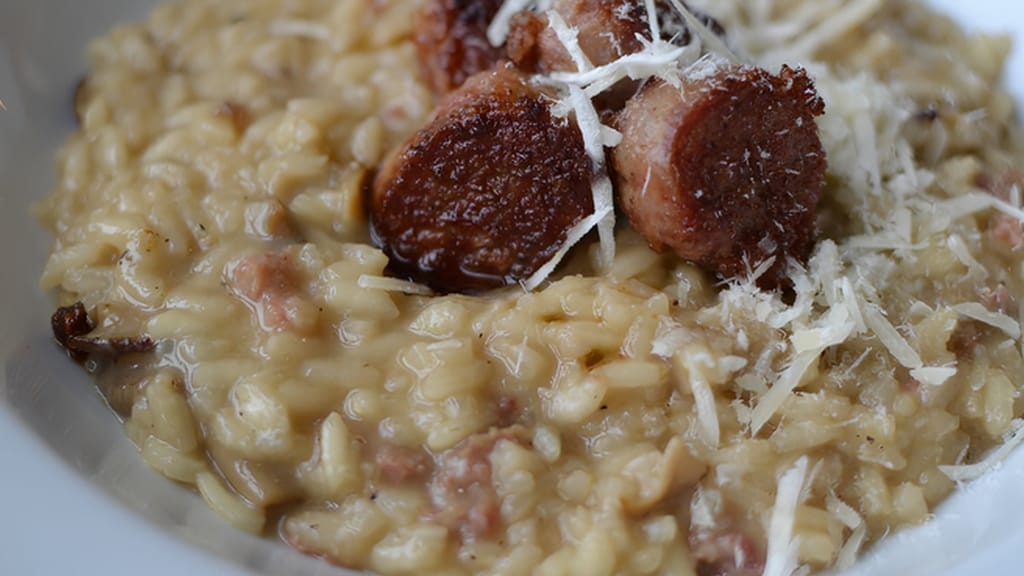
This exact method, from shallot through wine to butter and Parmesan, is used in authentic Italian risotto with mushrooms and salsiccia. It also shows how to work mushrooms and salsiccia into the classic without overcooking anything.
Real italian risotto by radim gerlich
Authentic Italian risotto with mushrooms and salsiccia
For risotto you need Italian short- or medium-grain rice with a high starch content: arborio is the most widely available, cooks often reach for carnaroli, and vialone nano is the third classic. All three release enough starch into the stock for creaminess while keeping a firm center to the grain. The difference lies in the ratio of two starches: amylopectin is released into the stock as you stir and creates the creaminess, while amylose helps the grain hold its shape.
Arborio rice – large, round grains with lots of surface starch. It gives a very creamy risotto and forgives a small slip, but it overcooks more easily and loses its shape toward the end. Ideal for first attempts and for risotto with a purée, such as pumpkin risotto with meatballs.
Carnaroli rice – a longer grain that, according to guides to Italian rice, holds its shape better than arborio and tolerates longer cooking. Italian cooks recommend it specifically for all'onda risotto. It's pricier, but when you're cooking for guests and don't want to risk a mushy result, it's worth it.
Vialone nano – smaller, round grains that, according to the same guides, absorb a lot of liquid. It's traditionally used in the Veneto for looser risottos, mainly with seafood and vegetables.
The province of Pavia is considered Italy's rice capital, and carnaroli is among its main varieties. That's why on packages of good risotto rice you'll mostly see Lombardy and Piedmont.
What doesn't work: jasmine or basmati rice. They have little surface starch, stay loose, and no creaminess forms no matter how much you stir. Long-grain rice suits pilaf, spicy fried rice with meat and vegetables or an oven-baked risotto with chicken and vegetables, not classic risotto. And if you have leftover rice cooked for lunch, you can't turn it into risotto; for more ideas, see the article what to cook with rice.
Use a stock you'd happily drink yourself: a light chicken or vegetable stock for most risottos, beef for risottos with meat and pumpkin, fish or vegetable stock for seafood. The rice absorbs all of it as it cooks, so every flavor, even an exaggerated one, ends up on the plate. That's why you shouldn't cook in strong, concentrated bouillon: it's so salty that you can't season the risotto as you go, and the mantecatura with Parmesan will oversalt it completely.
Homemade stock is best. If you don't have any, dilute bouillon more weakly than the package says and add salt gradually.
Amount: plan on more stock than the recipe prescribes. Rice absorbs differently depending on variety, age and the width of the pot; if you run out before the risotto is done, top up with hot water.
Temperature: the stock should be gently bubbling on the neighboring burner. Every ladle of cold stock stops the simmer and the grains cook unevenly.
The wine for risotto should be a dry white, one you'd drink by the glass: its acidity balances the butter and cheese at the end. It goes in right after the rice is toasted and is always cooked off completely, until no liquid is left on the bottom; the harshness of the alcohol disappears and only a gentle freshness remains. Sweet wine doesn't belong here; the risotto would be bland and sour at the same time. Reach for red wine only deliberately, for example in a mushroom risotto with beef stock, and expect the rice to turn purple.
If you're planning risotto as one item in a weekly menu, you'll find inspiration for other days in the article what to cook for lunch.
Creamy risotto without cream comes from the mantecatura: take the pot off the heat, add a few cubes of cold butter and grated Parmesan, and stir vigorously for a minute or two. Cold butter combines with the hot, starchy liquid into a glossy emulsion, and the cheese thickens and seasons it. If you added the butter warm or on the stove, it would just melt and the risotto would turn greasy instead of creamy.
Butter cold from the fridge, cut into cubes.
Parmesan freshly grated, not from a ready-made bag. Bagged grated cheese is often dusted with anti-caking agents and melts less well. Grana Padano or Gran Moravia work in place of Parmesan too.
Off the heat. On the stove the cheese would seize into strings.
A splash more stock if the risotto is too thick after the mantecatura. It should flow, not stand.
Feel free to leave out the cream. A splash in risotto does no harm, but it's a crutch for rice that didn't release its own creaminess: either it was long-grain, or it was cooked with too much stock added at once.
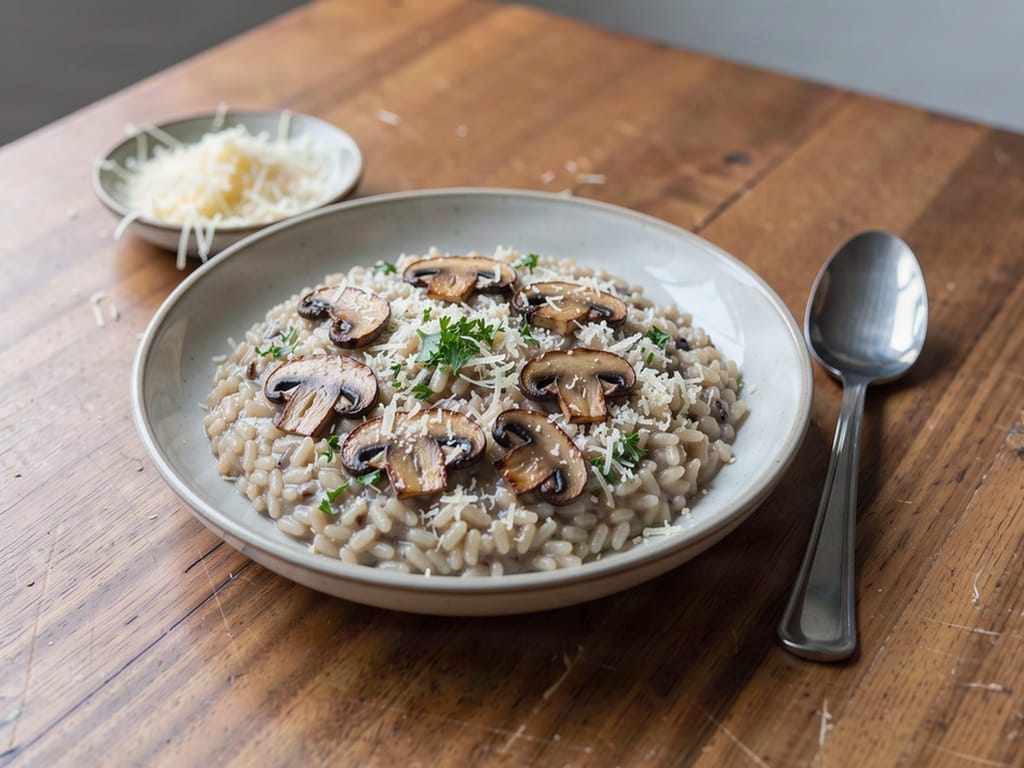
Mushroom risotto is best made with dried mushrooms: their soaking water gives the risotto a deeper flavor than any bouillon. That's the idea behind Italian mushroom risotto made with dried mushrooms, where the mushrooms go into the pot together with the water they were simmered in. The recipe is built on chicken bouillon, though, so it isn't vegetarian; if you want mushroom risotto without meat, make the stock from vegetables.
A general tip for mushroom risotto with fresh mushrooms: sear the mushrooms separately in a hot pan and stir them into the risotto only in the second half of cooking. In the pot with the rice they would just steam and release water, while in the pan they pick up color and aroma.
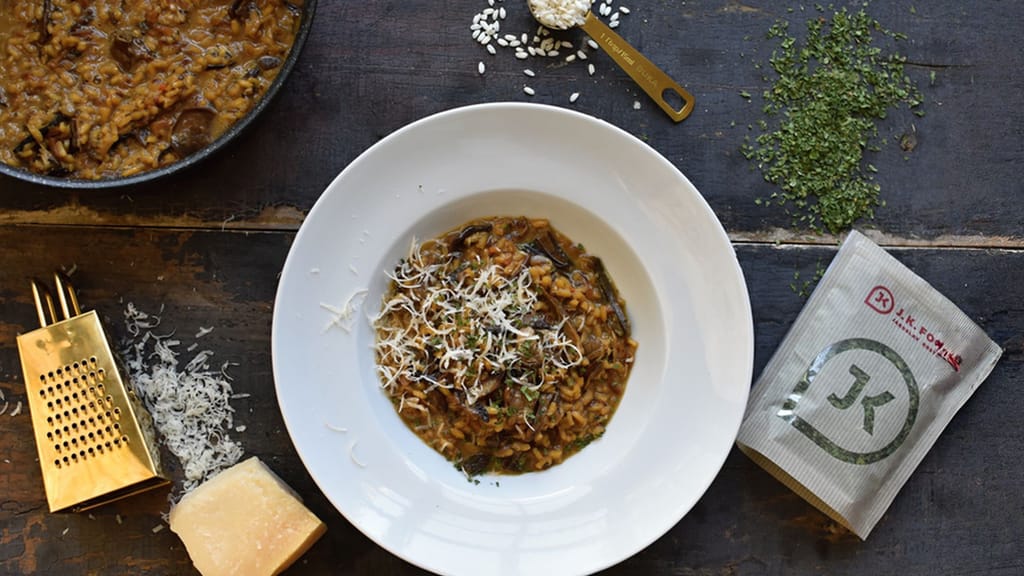
Italian mushroom risotto with kostera seasoning
Italian mushroom risotto made with dried mushrooms
Risotto with chicken is made by browning the chicken separately and returning it to the rice at the end so it doesn't dry out; simmering pieces of meat in the stock for 25 minutes doesn't do them any favors. Boneless thigh meat works best, as it stays juicy even after longer time in the heat, while breast dries out quickly. Season the pieces with salt and pepper, brown them in a pan until golden and finish them in the risotto pot for the last few minutes so they're cooked through to the center, that is to at least 74 °C (165 °F) (USDA FSIS). Don't pour away the pan juices; stir them into the rice.
We don't yet have a classic ladle-by-ladle chicken risotto on Yumsto. The closest is a poultry version, creamy risotto with turkey roulade, spinach and Gran Moravia cheese: the meat is prepared separately and only laid on the risotto on the plate, exactly following the principle above.
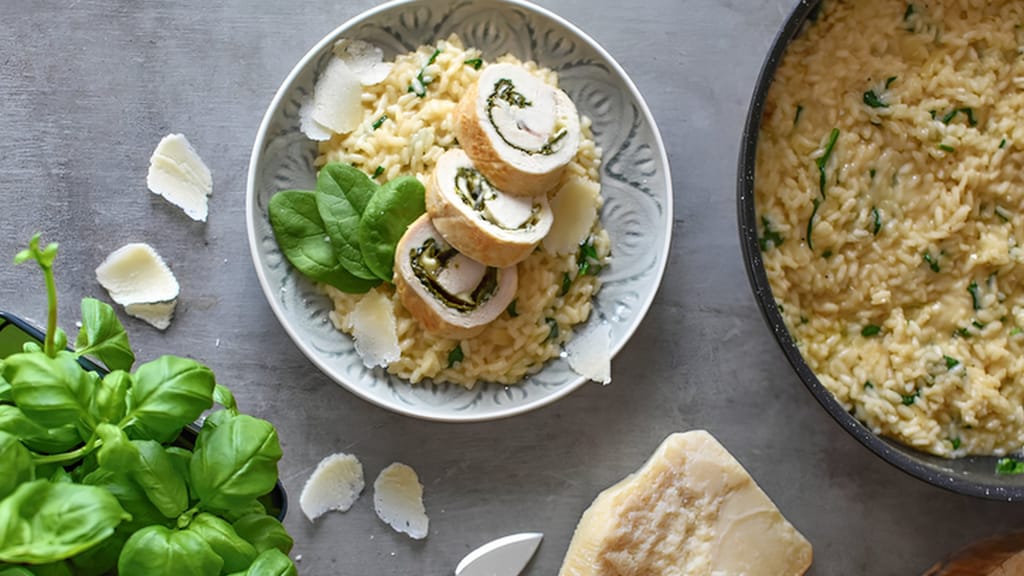
Creamy risotto with turkey roulade, spinach and gran moravia cheese
Creamy risotto with turkey roulade, spinach and Gran Moravia cheese
The easiest way to make risotto with chicken and vegetables is in a single casserole in the oven, without standing at the stove: baked risotto with chicken and vegetables is briefly sautéed on the stove and then finished covered in the oven.
A heads-up: this is the Czech take on risotto, not Italian risotto. Basmati doesn't release creaminess, so the result is more a juicy braised rice with meat and vegetables, exactly what most of us remember as "risotto" from the school canteen. It suits a family lunch and reheats better the next day than classic risotto.
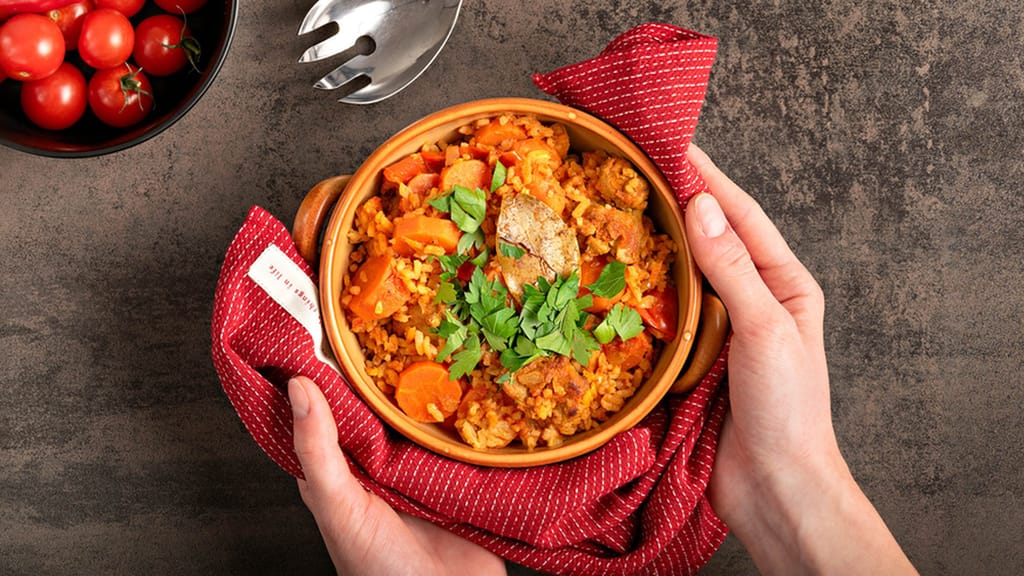
Baked risotto with chicken and vegetables
One-pot baked risotto with chicken and vegetables
Pork risotto, Italian style, most often means salsiccia, a raw Italian pork sausage that gives the risotto fat, spice and saltiness. Italian risotto with salsiccia and Gran Moravia cheese shows both approaches at once: part of the sausage is cooked right in the rice, part is fried crisp and put on top.
Salsiccia is raw, so it has to be cooked through to the center. The US food safety agency USDA FSIS recommends cooking ground pork to an internal temperature of at least 71 °C (160 °F). So don't add the pieces to the rice only at the very end, and cook slices in the pan until they reach 71 °C (160 °F) inside; color alone isn't a reliable guide.
If you don't have salsiccia, a good raw sausage or pork shoulder cut into small cubes works, browned separately and returned to the risotto halfway through cooking. Smoked meat is a different chapter; we'll get to that with the kroupoto.
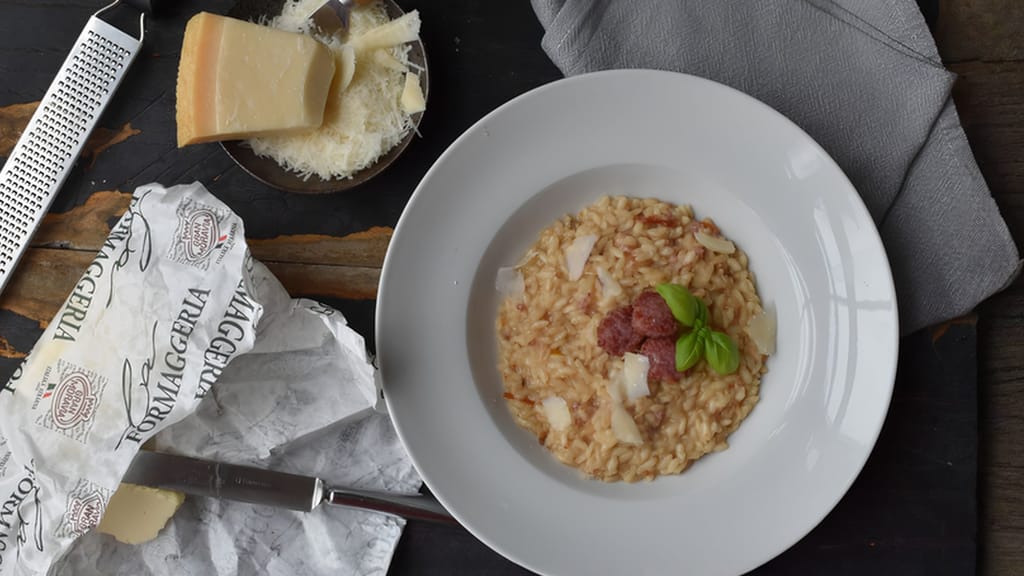
Italian risotto with salsiccia and gran moravia cheese
Italian risotto with salsiccia and Gran Moravia cheese
Risotto with ground meat is best when you shape the meat into small balls and brown them separately; crumbled ground meat cooked directly in the rice loses its juices and turns the creaminess grainy. That's how Italian pumpkin risotto with meatballs does it: the roasted pumpkin purée gives the risotto color and sweetness, and the browned balls with Parmesan give a salty counterpoint.
If you don't want the pumpkin, the principle works for plain risotto too: brown ground meat balls flavored with Parmesan until golden and cook them until they reach 71 °C (160 °F) inside, then set them on the finished risotto. A good compromise for kids who don't like mushrooms.
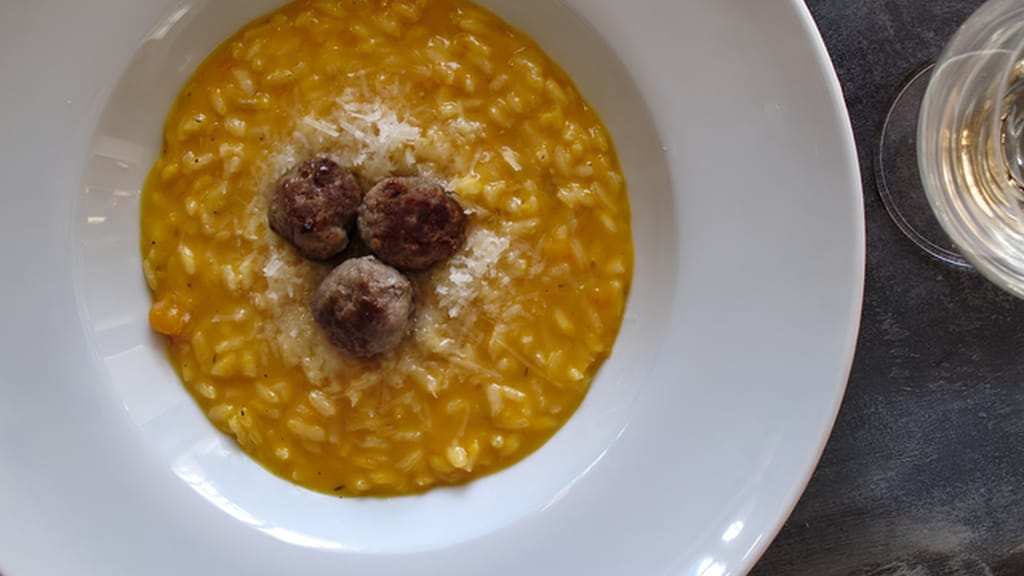
Italian pumpkin risotto with meatballs
Italian pumpkin risotto with ground meatballs
Risotto with seafood or vegetables is all about timing: each ingredient goes into the pot at a different moment so nothing overcooks. Risotto with green asparagus and seafood shows this best, with the asparagus stalks going into the rice earlier and the tips only warmed through at the very end. You'll find more ideas in the article shrimp and seafood in a pan, with pasta and risotto.
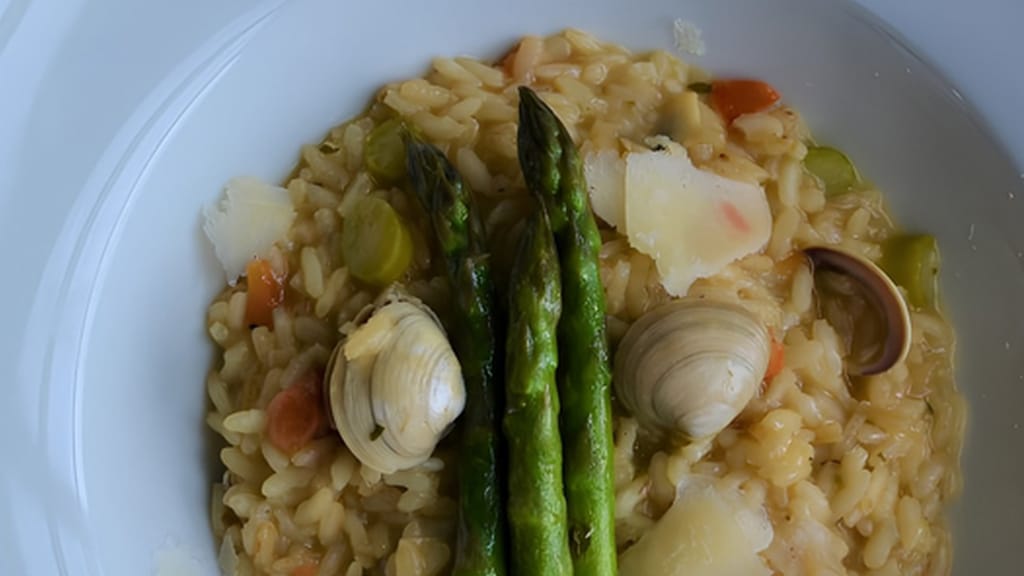
Green asparagus and seafood risotto
Risotto with green asparagus and seafood
Risotto with fish works best when you sear the fish separately and briefly and lay it on the risotto only when serving, so it stays juicy. That's exactly how halibut with Italian risotto and spinach is made.
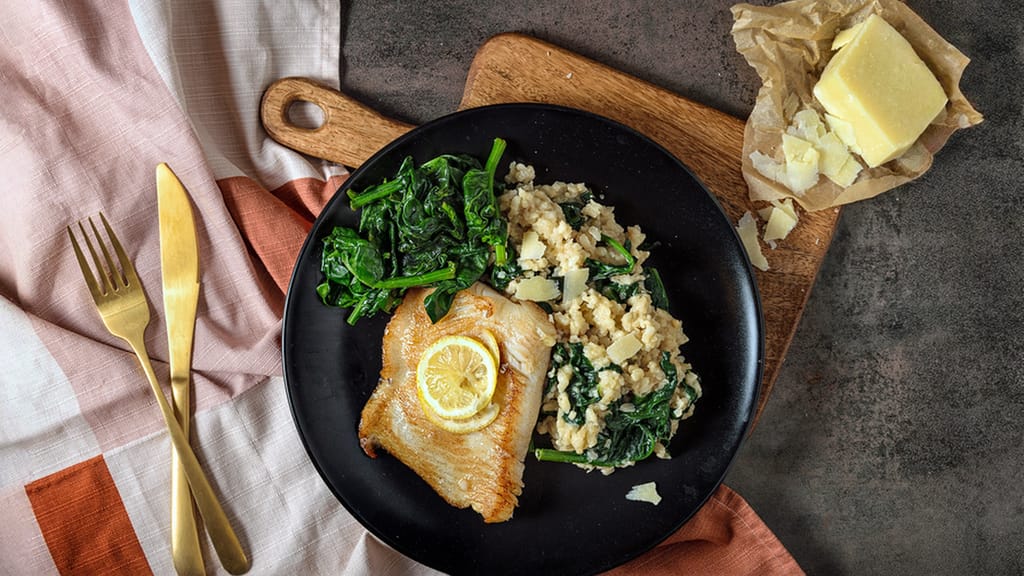
Halibut with italian risotto and spinach
Halibut with Italian risotto and spinach
Risotto without meat is vegetarian only if you cook with vegetable stock and a cheese made without animal rennet; that needs watching, because genuine Parmesan is made with rennet from calves' stomachs. For a vegan version, leave out the butter and cheese and finish the creaminess with good olive oil and a squeeze of lemon.
For a quick vegan rice dish in the spirit of risotto, try the recipe for risotto with tofu, peas and zucchini. It isn't a creamy Italian risotto, more a rice skillet with smoked tofu, but for a fast dinner it's just right.
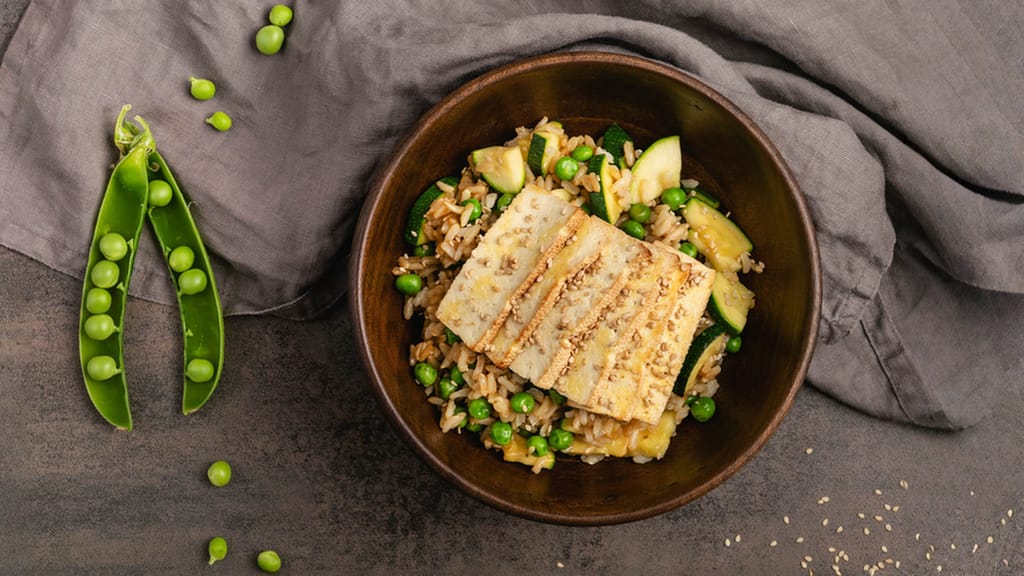
Tofu risotto with peas and zucchini
Vegan risotto with tofu, peas and zucchini
Risotto without rice can be made from rolled oats: the creaminess comes from the oats and blended peas instead of the starch in rice. Pea and oat "risotto" with a poached egg shows how, a vegetarian serving for one.
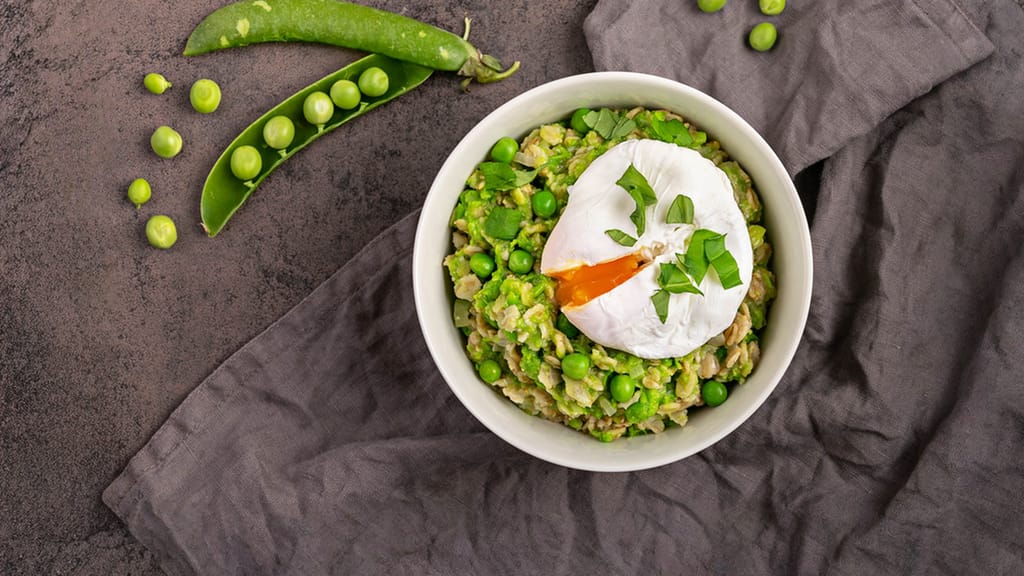
Pea and oat "risotto" with poached egg
Pea and oat "risotto" with a poached egg
Kroupoto is a Czech risotto made with pearl barley instead of rice: the barley is cooked separately and then mixed with the browned ingredients, so you don't have to stand at the stove with a ladle. That's how kroupoto, great on its own or as a side dish is made, with bacon, button mushrooms and Moravian smoked meat.
Pearl barley releases less starch than risotto rice, so kroupoto won't be as flowing. In return it holds its shape, tastes just as good the next day, and goes with smoked meat better than any rice. If you want it creamier, stir in a spoonful of cold butter and a handful of grated cheese at the end, just as with the mantecatura.
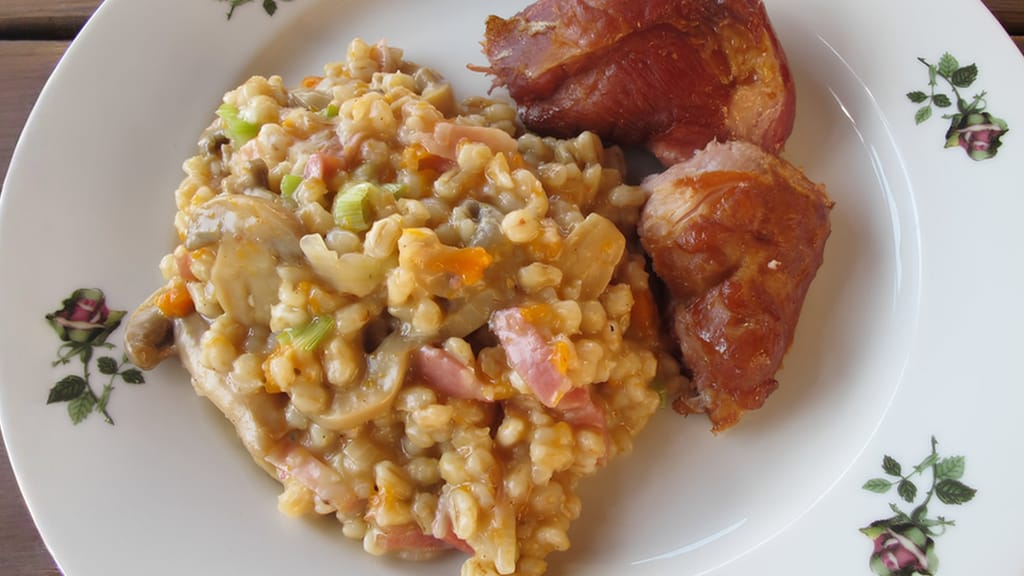
Smoked barley risotto: great on its own or as a side
Kroupoto with smoked meat, on its own or as a side dish
Risotto is best right away; once reheated it will never be all'onda again, because the starch sets in the fridge. Reheat it in a pan with a spoonful of stock or water, stirring, until it's hot all the way through. The best use for leftovers is something else, though: from chilled risotto make arancini, Sicilian fried risotto balls in a coating, or risotto patties fried in a pan until crisp.
Risotto with canned pork is a quick pantry meal: soften an onion in oil, add the rice, pour in water or stock and cook until tender, then stir in the contents of the can, juices included, and just heat through. The meat in the can is already cooked, so it only needs warming; long cooking would make it fall apart. The liquid from the can tends to be salty, so only salt the rice after tasting. You can add peas, corn or bell pepper, and top it with grated cheese.
Replace the wine in risotto with the same amount of stock, and finish with a squeeze of lemon juice or a splash of white wine vinegar to add the missing acidity. Acidity is the main thing wine gives a risotto, and it balances the butter and cheese. Without it, the risotto will taste flat. Non-alcoholic wine works too, just choose a dry one, not a sweet one.
Risotto made with rice is naturally gluten-free because rice contains no gluten, but watch out for bouillon and ready-made stocks, which may contain it, so read the ingredients. Parmesan, butter and wine are gluten-free. Kroupoto is not gluten-free, because pearl barley comes from barley. If you're cooking for someone with celiac disease, also check any cured meats and sausages you add.
Stiff risotto has too little liquid or has stood too long; mushy risotto comes from overcooking or from pouring in too much stock toward the end. You can rescue a stiff one with a ladle of hot stock and a short, vigorous stir off the heat. Overcooked mush can't be undone, so next time start tasting earlier, add smaller amounts of stock, and try carnaroli rice, which holds its shape better than arborio.
Yes, you can partly cook risotto ahead: cook it only halfway, about 12 minutes after the first ladle of stock, then spread it in a thin layer on a baking sheet so it cools quickly, and refrigerate. Just before serving, return it to the pot and finish with hot stock for roughly 6–10 minutes, then do the mantecatura. Many restaurants work this way. Fast cooling matters: the NHS advises cooling cooked rice within an hour and eating it from the fridge within 24 hours.
One recipe worth heating the oven for, one tip, and one deal from the shop. Nothing else.