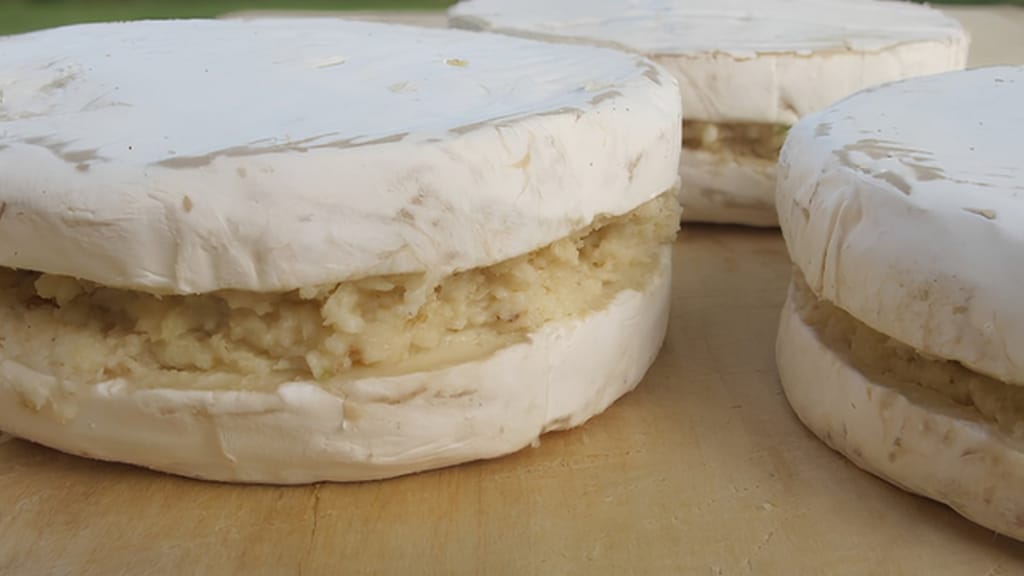
Garlic camembert stuffed with walnuts
Baked Hermelín in the Oven: What Temperature and How Long So It Doesn't Leak
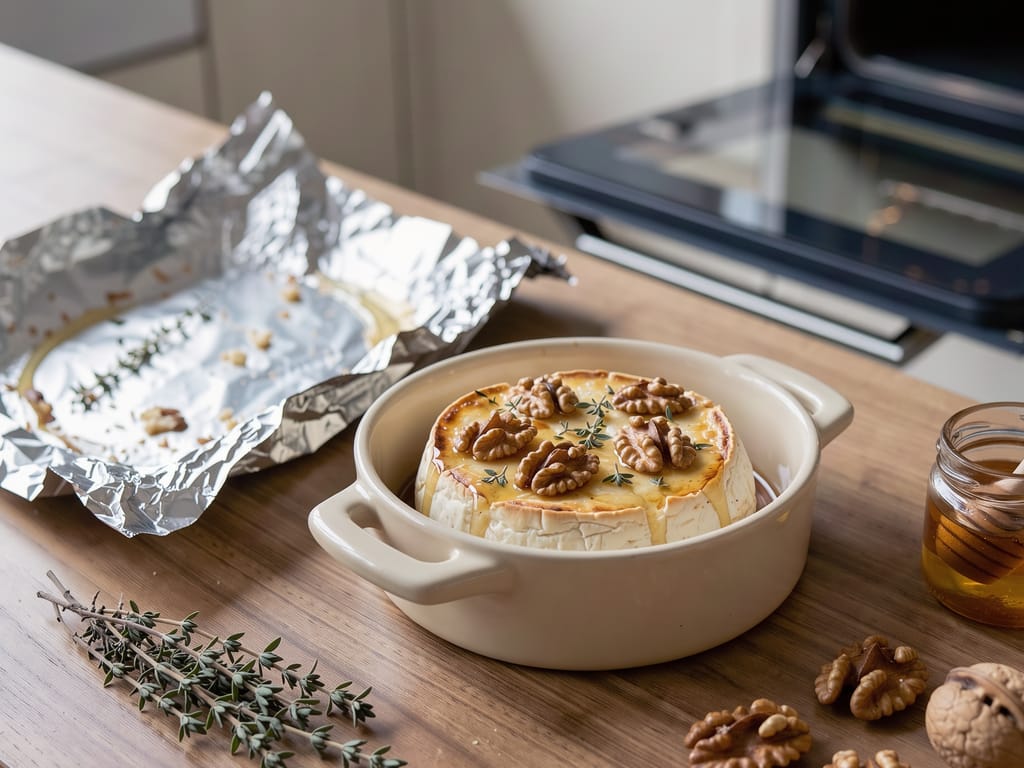
Updated Nov 17, 2026
You can bake hermelín (a Czech camembert-style cheese) in the oven at 200°C (400°F) for 8–10 minutes wrapped in aluminum foil, until it turns soft inside. That's the timing Svět sýrů, the website of the maker of Sedlčanský Hermelín, gives for a whole cheese wrapped in foil on the grill, and it works the same way in a preheated oven. Then unwrap it, drizzle with honey or a marinade, and give it 1–2 more minutes so the top browns. Hermelín won't leak if its rind is intact, the cheese is on the young side, and you take it out when it feels soft to the touch rather than waiting until it runs.
Bake hermelín in the oven at 200°C (400°F) for about 8–10 minutes wrapped in foil, then 1–2 minutes without it. These figures come from Svět sýrů, the website of the maker of Sedlčanský Hermelín, in a recipe for a whole cheese wrapped in foil on a grill heated to about 200°C (400°F). In an oven preheated to the same temperature, hermelín behaves similarly, except that an oven heats more evenly from all sides than a grill.
The method at a glance:
Preheat the oven to 200°C (400°F) so the cheese doesn't go into a cold oven.
Brush the hermelín with oil, season it, and wrap it in aluminum foil (or put it in a small dish).
Bake for 8–10 minutes, until it softens inside.
Unwrap it, drizzle with honey or a marinade, and put it back for 1–2 minutes so the top browns and the marinade caramelizes.
Treat the time as a guide, not a rule. A large hermelín, cheese straight from the fridge, or several pieces on one baking sheet need longer; a ripe, already soft cheese needs less. That's why you should check it by touch: gently press the top through the foil. When it springs back like a puffed-up little pillow and you can feel a liquid center, it's done. The producer describes the same signal for grilling: the cheese is ready when it starts to puff up gently.
Seasonal baking plans, tested recipes and kitchen tricks that save you time. Unsubscribe in one click.
Hermelín leaks when the rind splits, and it splits when you bake the cheese too long, it's too ripe, or the rind has been cut. The inside turns into a liquid cream as it bakes, and the only thing holding it together is the white bloomy rind.
Choose a younger, firmer cheese. The riper and softer the hermelín, the faster it runs. For baking, reach for a cheese that's still firm to the touch in the fridge, not one that already sags in its packaging.
Don't cut the rind. No deep slashes and no poking with a fork (more on that below).
Watch the end, not the start. Check a few minutes before the time is up. An overbaked hermelín first puffs up, then the rind splits on the side and the cheese spills out.
Keep it snug. Foil pressed against the sides or a dish only slightly bigger than the cheese will hold the shape even if the rind gives way. On an open baking sheet it spreads into a pancake.
Let it rest for a minute. Right out of the oven the inside is at its runniest; a minute on the counter and the cheese thickens a little, so you can move it to a plate in one piece.
Foil is your insurance that the cheese won't leak and stays juicy; a dish gives a better browned top and nicer serving. Both work, so it depends on what you want from the hermelín.
Foil: the cheese steams in its own moisture, the flavorings don't evaporate, and even if the rind splits, the cheese only spills into the foil pouch. At the end, open the foil so the top can brown. Good when you're baking several pieces at once, or baking hermelín for the first time and don't want to risk it.
Baking dish: choose a ceramic or cast-iron one, just slightly bigger than the cheese. The hermelín bakes uncovered, so the top turns golden and any topping browns. You serve it right in the dish and dip bread into it: nothing to transfer, nothing runs off on the way.
Compromise: cover the dish with foil for the first 8–10 minutes, then take it off.
What not to do: put the hermelín on a baking sheet with nothing around it. It will stick, and when the rind first splits, it will run all over the sheet.
If you want the hermelín not to leak, leave the rind intact. A cut is exactly the spot where the melted center escapes.
A light, shallow crosshatch (the rind only, not into the cheese itself) makes sense in just two cases:
you're baking in a dish, where leaking doesn't matter, and you want honey, garlic, or herbs to soak in,
you want to serve the hermelín as a dip: cut open the top and dip straight from the dish.
If you want to flavor it inside, it's cleaner to slice it in half horizontally, fill it, and put it back together, as in the garlic hermelín stuffed with walnuts. The cut is then on the inside and the rind around the edge holds.
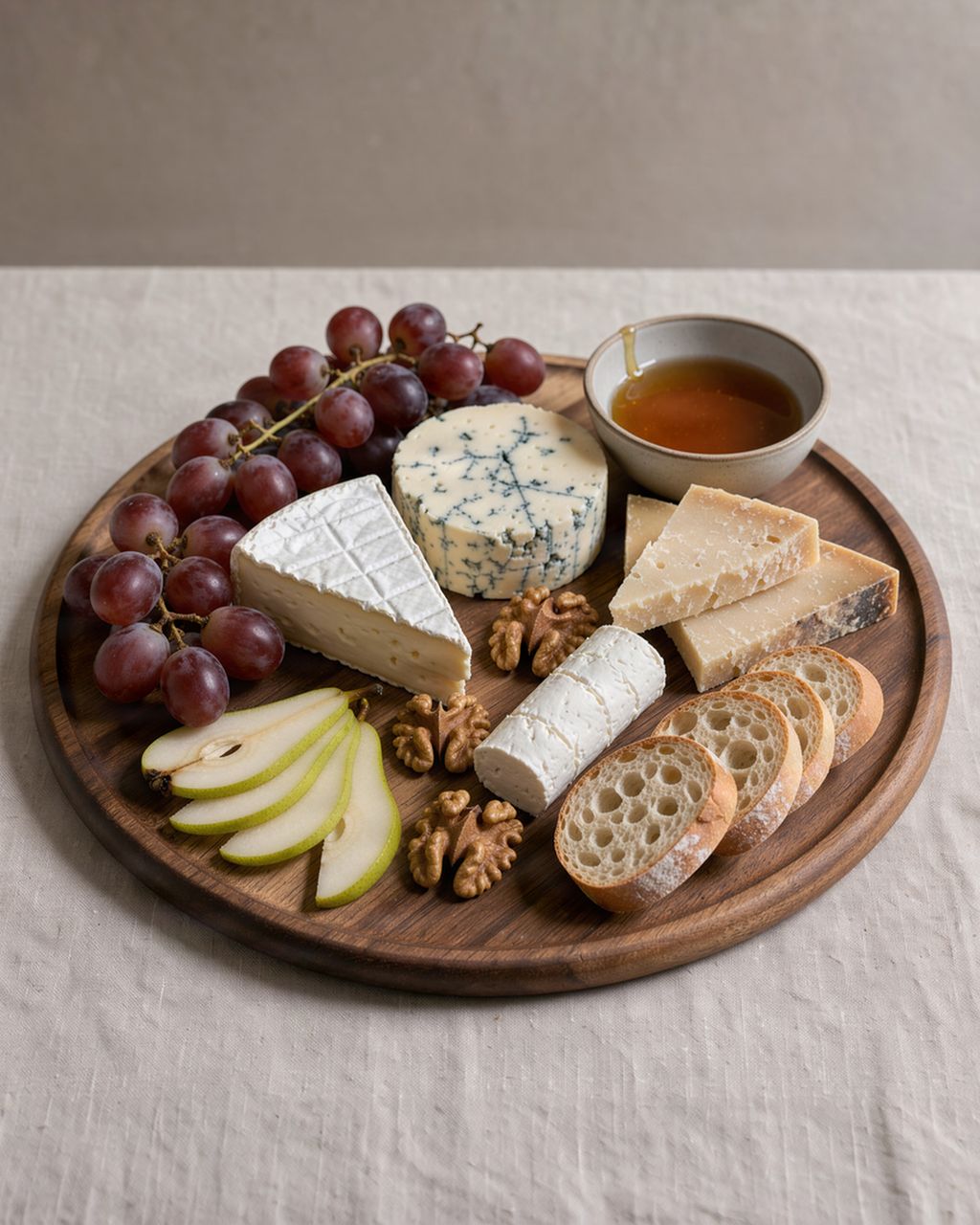
Garlic camembert stuffed with walnuts
Garlic hermelín stuffed with walnuts
Baked hermelín works best with a mix of sweet, salty, and crunchy: honey or cranberries, garlic or bacon, and nuts. A rich, slightly bitter cheese needs contrast.
Honey + thyme + walnuts are the classic. Add the nuts only for the last 1–2 minutes without the foil, or they turn bitter.
Garlic, olive oil, and rosemary: brush them on before wrapping, and chop the garlic finely so it has time to soften.
Cranberries or cranberry sauce: the tartness beautifully cuts the richness. Add it on the finished cheese.
Bacon: wrap the hermelín in slices of bacon instead of foil; the bacon holds it together and crisps up as the fat renders.
Grapes, figs, or pear: baked next to the cheese in a dish, their juice mixes with the melted cheese.
Pickled peppers, chili, black pepper: for a spicy version, brush on oil mixed with the spices.
Caramelized onion: make it in a pan ahead of time and put it on the cheese at the end.
The seasoning rule: dry spices and oil before baking; honey, fruit, nuts, and sauces at the end, or they burn or run into the foil.
In an air fryer, bake hermelín at 180°C (355°F) for about 8–10 minutes. Svět sýrů, the website of the maker of Sedlčanský Hermelín, gives this alternative with its grilled hermelín recipe: you put the cheese on a piece of parchment paper or foil with the edges turned up.
An air fryer has little space and a strong airflow, so the cheese heats faster from the top. That's why:
put it on parchment paper or foil with raised edges (or in a small dish), so any leakage doesn't drip to the bottom of the basket,
check it before the time is up,
add nuts and honey only at the very last moment.
On the grill you'll find two methods from the producer, each with a different time because it's a different technique:
Wrapped in foil (Svět sýrů recipe): the whole cheese wrapped in foil on a grill heated to about 200°C (400°F) for 8–10 minutes, then unwrapped and finished for 1–2 minutes. The cheese heats through from all sides in its own steam, so it's done faster.
Unwrapped on a tray (instructions on the Sedlčanský Hermelín na gril package): the cheese sits on foil or a grill tray and is grilled for 5–7 minutes per side, turning it, until it puffs up gently. It heats only from below, so it's turned and grilled a little longer overall.
For tips on what else to put on the grate without meat, see the article Grilling: how to prepare meat, vegetables, and meatless options.
Baked hermelín goes best with bread for dipping and something tart or fresh.
toasted bread or baguette, ideally your own homemade bread cut into thicker slices,
a leafy salad with a sharp dressing, arugula,
cranberries, pickled vegetables, dill pickles,
grapes, apples, or pear,
with beer, or as a warm starter at an autumn dinner.
Have raw hermelíns left over? Instead of baking them, you can marinate them. We go into how long marinated hermelín keeps in the article Pickled hermelín and utopenci: how long they keep and how to store them.
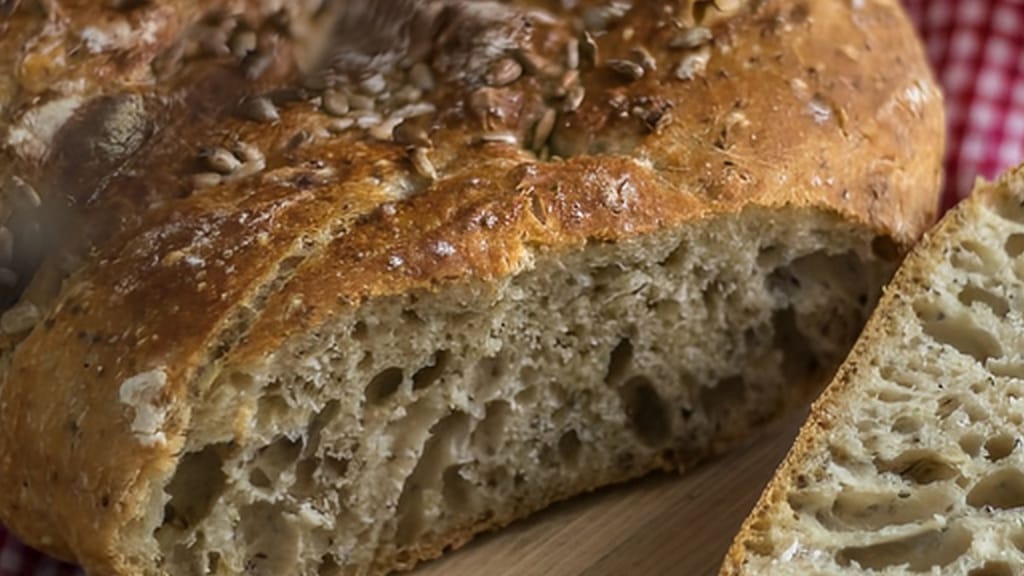
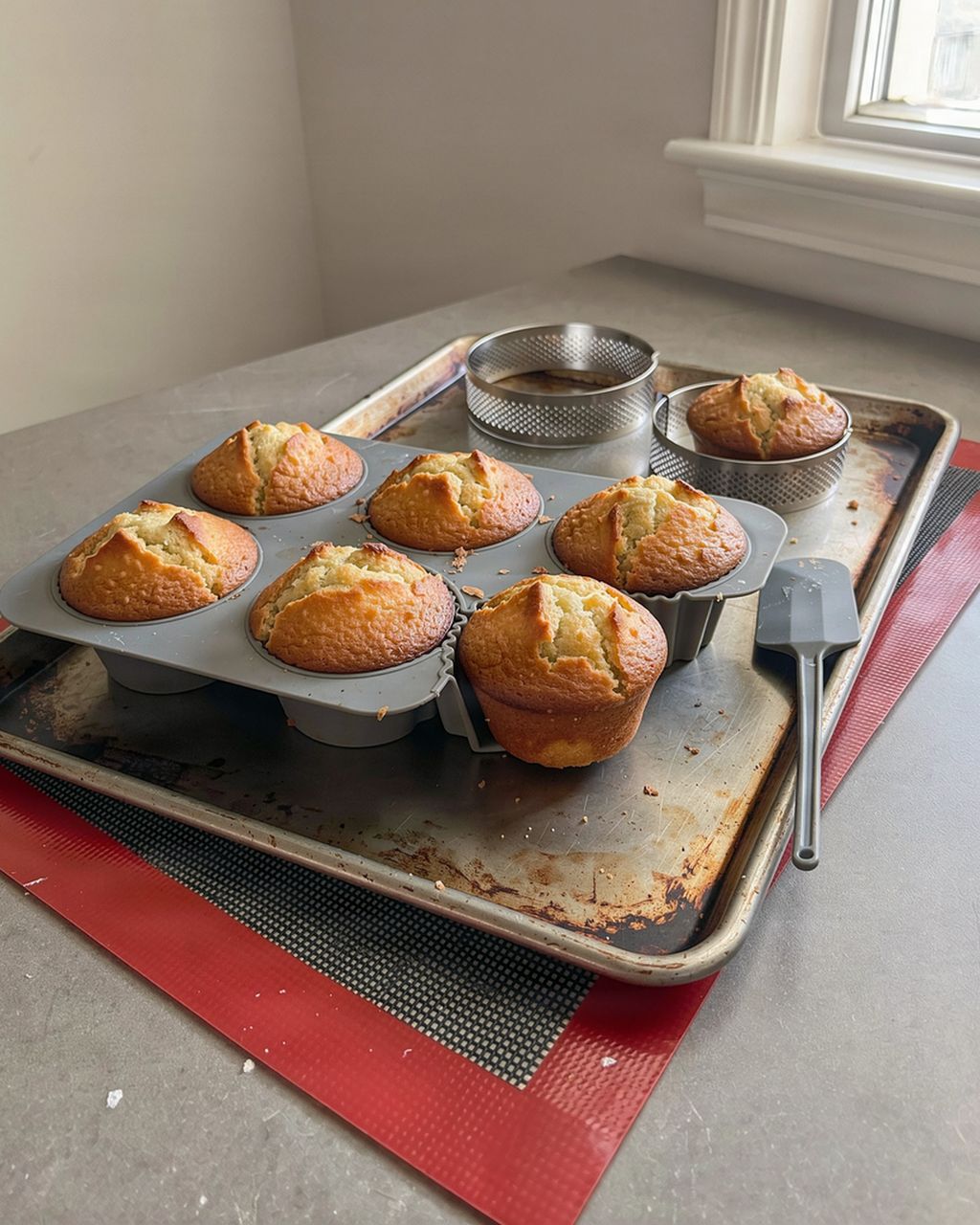
Homemade bread
Homemade bread for baked hermelín
Yes, preheat the oven to 200°C (400°F) before the hermelín goes in. In a cold oven the cheese heats slowly and unevenly, the rind softens before the center melts, and the cheese is more likely to split. The times the producer gives (8–10 minutes) assume a hot heat source.
You can bake hermelín straight from the fridge. The baking time just gets a few minutes longer, and you tell when it's done by touch, not by the clock. A cold center melts later, so take the cheese out when it springs back like a puffed-up little pillow. Don't leave it out on the counter for long to warm up: the producer recommends keeping raw hermelín in the fridge at 2–8°C (36–46°F).
When you bake several hermelíns at once, the time goes up slightly, because more cold cheeses cool the oven down and each one heats through more slowly. Spread them out on a baking sheet with gaps between them, wrap each one separately in foil, and check them one by one. Smaller or riper ones will be done sooner, so take them out right away.
Put leftover baked hermelín in the fridge within 2 hours of baking and eat it within 3–4 days, as the US agency USDA/FSIS advises for cooked leftovers. When reheated it won't turn creamy and runny like the first time. It tends to go rubbery, so it's better to slice it onto toasts or use it in a baked pasta dish.
For the grill the producer gives 200°C (400°F), and for an air fryer 180°C (355°F) for the same time. So in the oven's convection mode, stay within 180–200°C (355–400°F) and start checking the cheese earlier. Circulating air heats more intensely, so the cheese is often done a little faster than with conventional baking.
One recipe worth heating the oven for, one tip, and one deal from the shop. Nothing else.