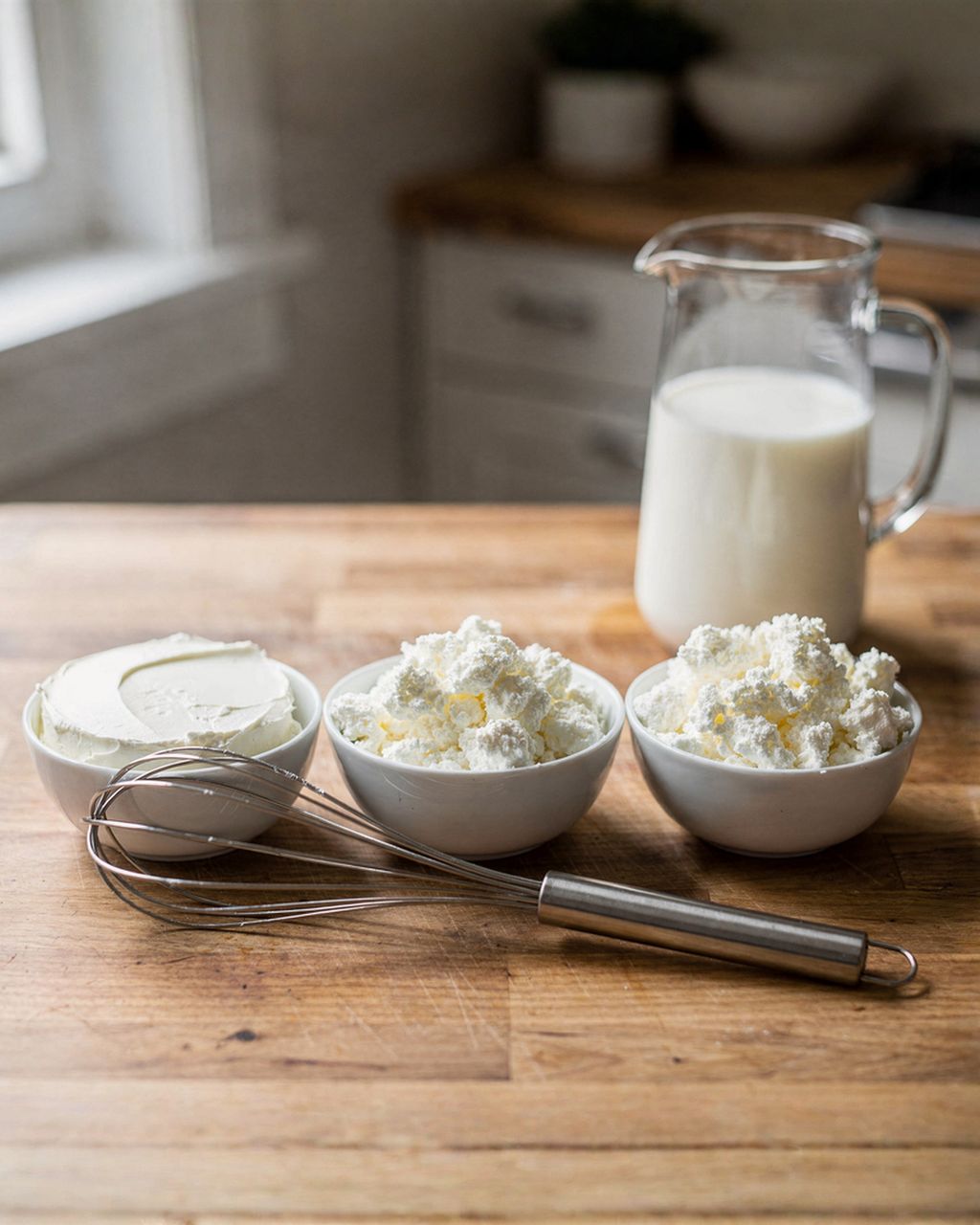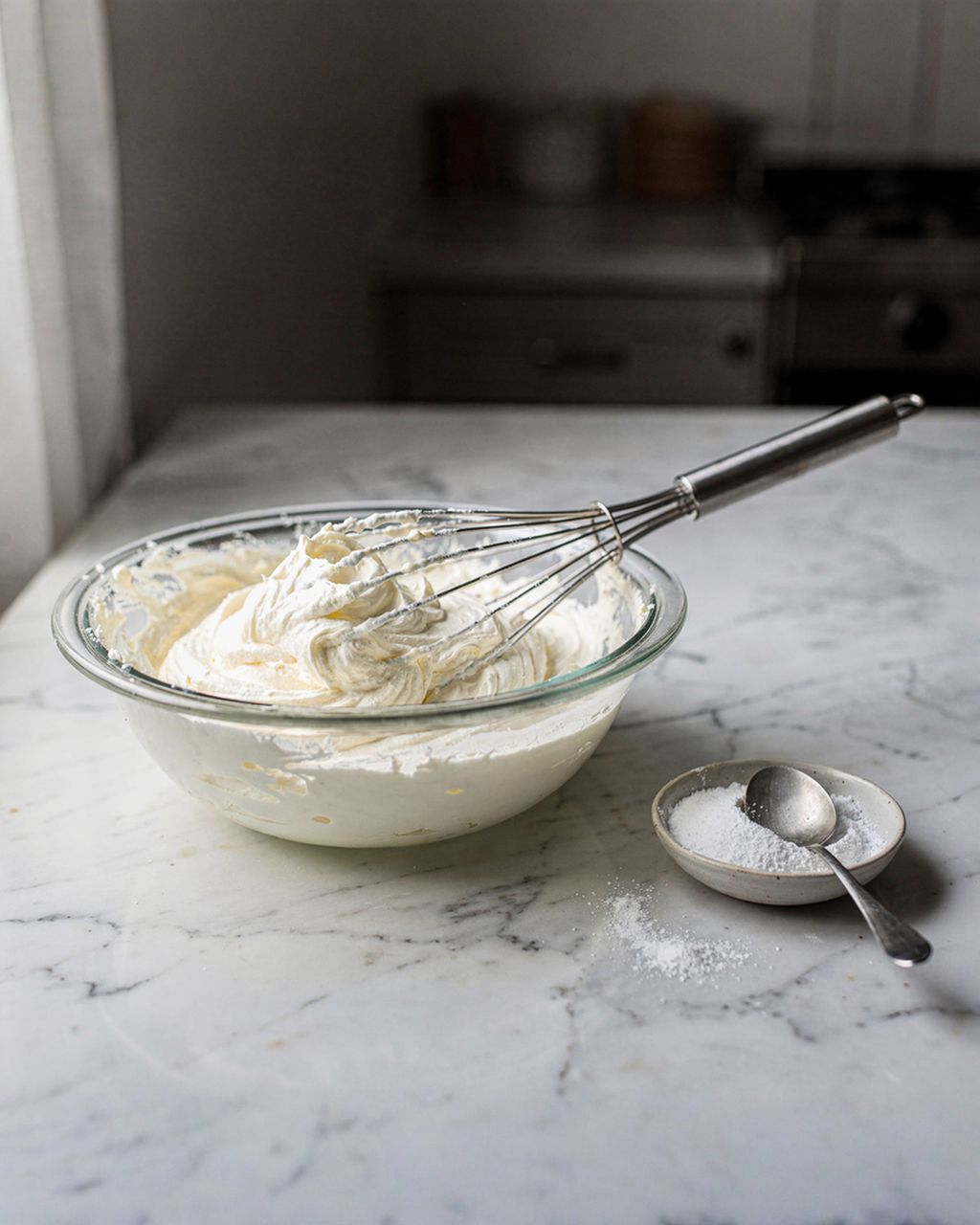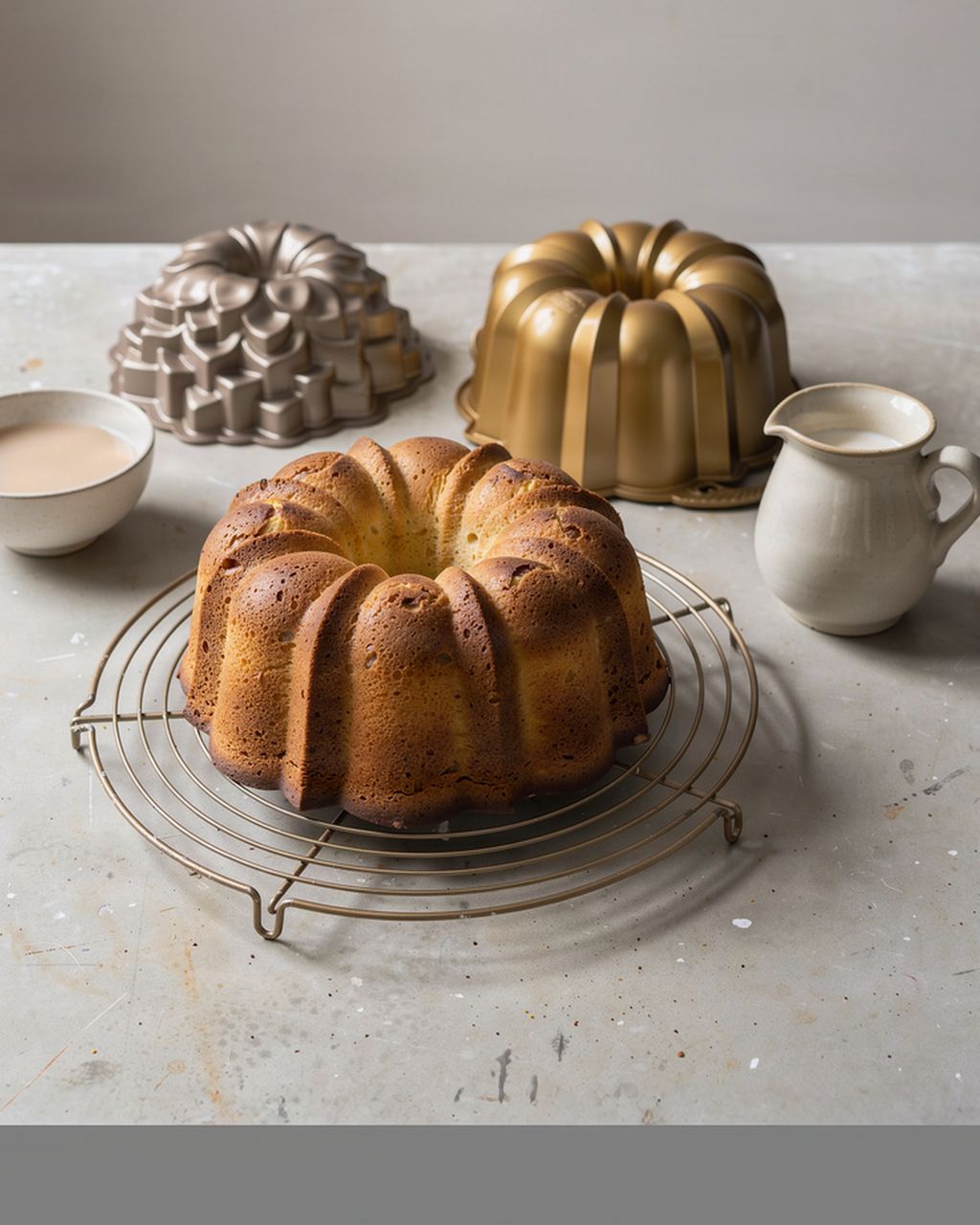
Light and airy génoise sponge cake
Types of Cake Frosting and Filling: How to Choose One That Holds Its Shape
Updated Oct 17, 2026
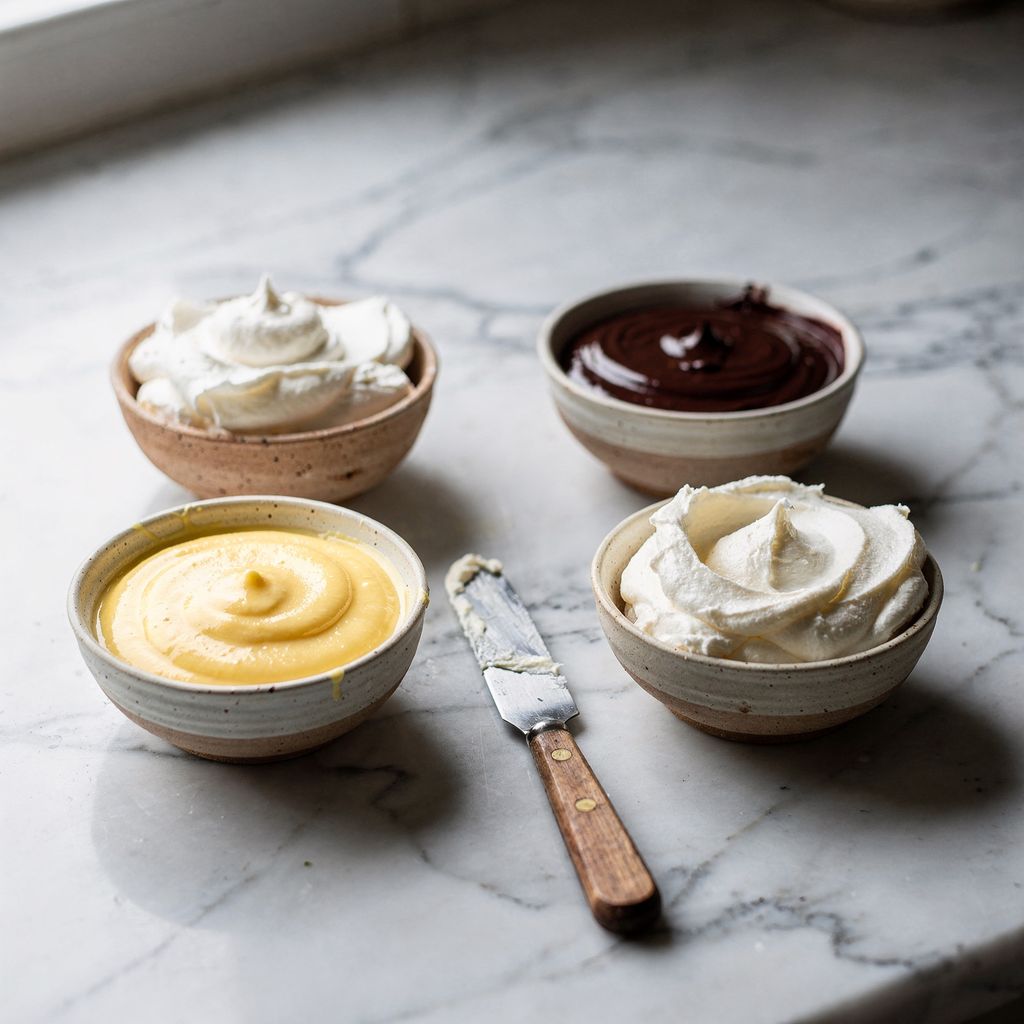
Choose your cake frosting by how firmly it needs to hold and where the cake will sit, not by flavor. The types of cake cream fall into five basic families: buttercream (American, meringue-based and pudding-based), ganache, whipped cream, pastry cream, and cheese-based creams made from quark, mascarpone or cream cheese. Fruit, pistachio and other flavored creams aren't a family of their own, just one of these bases with flavor added. The firmest are 2:1 ganache and meringue buttercream; the most delicate are unstabilized whipped cream and pastry cream. For each one you'll find the ratios in grams, how firm it is, how long it lasts out of the fridge and how to firm it up.
For a tiered cake or a cake under fondant, go for ganache or meringue buttercream; for a light fruit cake, stabilized whipped cream; for roll cakes and layer cakes, pastry cream; and for carrot or gingerbread cake, cream cheese frosting. Here's the whole map in five lines:
Buttercreams – American for cupcakes, piped decorations with sharp detail and a cake that has to travel by car (the sweetest); Swiss and Italian meringue buttercream for smooth coating on wedding and tiered cakes (silky, less sweet, stable up to about 26 °C / 79 °F); pudding buttercream as the cheaper Czech classic.
Ganache – chocolate cakes, a base under fondant, drips. Holds its shape better than any other cream.
Whipped cream frosting – no-bake and fruit cakes. The lightest flavor, but without stabilization it belongs in the fridge.
Pastry cream (crème pâtissière) – filling for roll cakes, choux pastries and layer cakes. It doesn't hold its shape on its own; with butter or whipped cream it does.
Cheese creams made with quark, mascarpone and cream cheese – carrot cake, cheesecake, tiramisu. Fresh-tasting and moderately stable.
You can build a fruit or pistachio cream on any of these bases, as the flavoring section below shows. Choose your frosting only after you've chosen the cake layers, and according to where the cake will stand. A dry sponge needs a moister cream, while a butter cake can handle a fresh cheese-based one. If this is your first time making frosting and you'd like to go step by step, start with the guide to how to make cake frosting: five basic types.
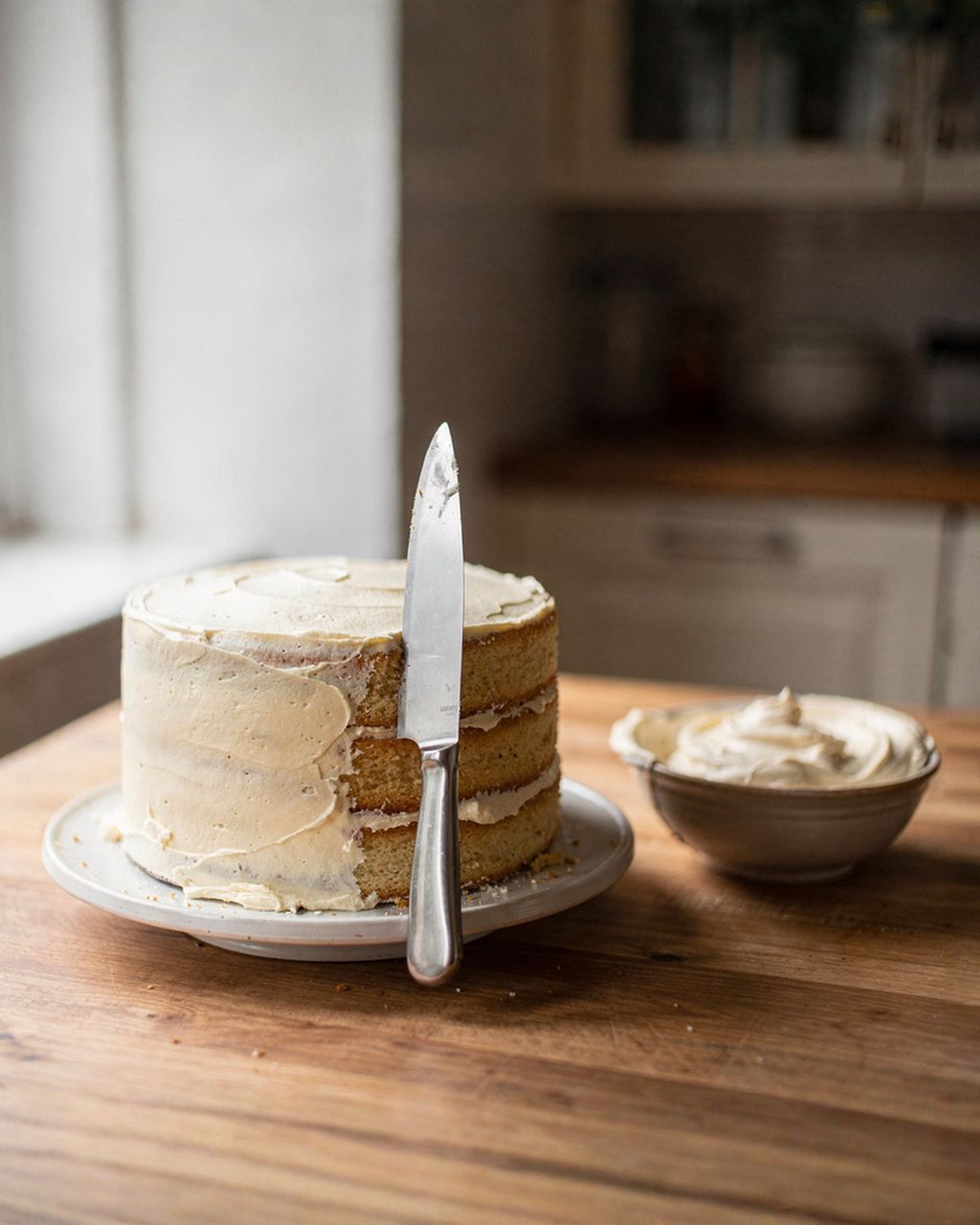
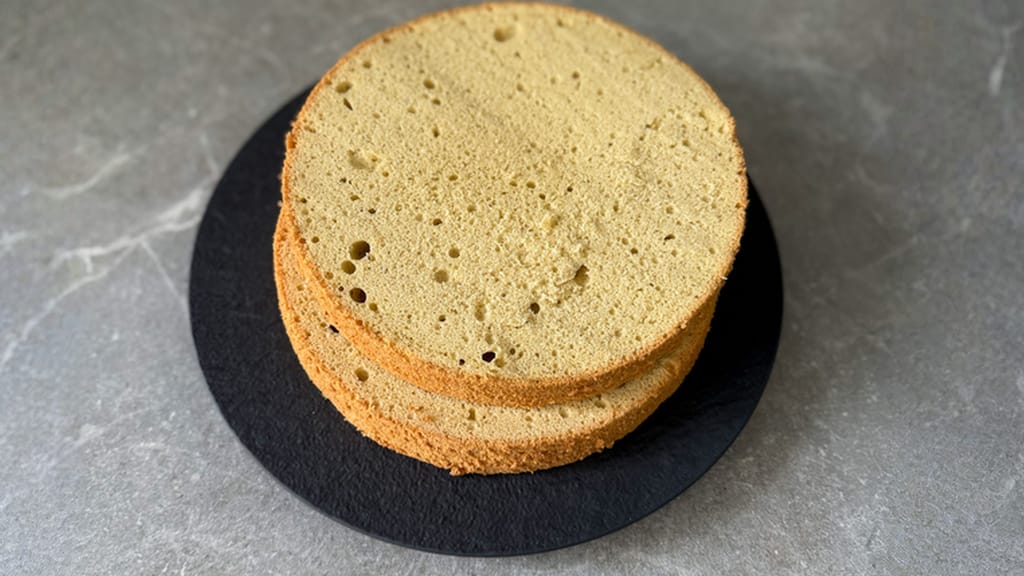
Light and airy génoise sponge cake
A fluffy Génoise sponge layer — a neutral base that goes with any cake frosting
Out of the fridge, 2:1 ganache and buttercreams last longest (4–6 hours at 20–22 °C / 68–72 °F, according to pastry practice), while unstabilized whipped cream and pastry cream last the shortest time (30 minutes to 1 hour). Two things decide it: how much fat the cream has, which holds its shape at room temperature, and how much water and milk protein it has, which heat wrecks and in which bacteria multiply. From firmest to softest:
2:1 ganache (dark chocolate) – holds sharp edges and supports fondant and another tier. 4–6 hours out of the fridge at 20–22 °C.
Italian and Swiss meringue buttercream – smooth and supportive, 4–6 hours at 20–22 °C; it starts to soften above 26 °C (79 °F).
American buttercream – forms a crust that protects it; about as resistant as meringue buttercream (4–6 hours at 20–22 °C), just sweeter.
Mousseline and pastry cream with butter – holds its shape, but contains milk and eggs, so no more than 2 hours out of the fridge.
Cream cheese, mascarpone and quark cream – holds as long as it stays cold; 1–2 hours out of the fridge.
Whipped cream stabilized with gelatin – keeps its shape, but put the cake back in the cold within 2 hours at most.
Unstabilized whipped cream and plain pastry cream – start weeping water within 30–60 minutes; go straight from the fridge to the table.
For creams with a lot of water and milk protein — whipped cream, pastry cream, diplomat cream, mousseline and cheese creams — the general food-safety two-hour rule applies: according to the US USDA, they shouldn't sit at room temperature for more than 2 hours, or more than 1 hour in heat above 32 °C (90 °F).
For 2:1 ganache and buttercreams the longer time is only a matter of practice, even though ganache is made with cream and buttercream with butter. Pastry chefs routinely leave them out longer (the 4–6 hours mentioned above) because they contain little free water — but official food-safety guidance applies two hours to anything containing cream. As soon as you add whipped cream, pudding, cheese or fresh fruit, always stick to the two-hour rule. For a detailed breakdown of what will survive a summer party or a car ride, see the article on cake frosting that holds up out of the fridge.
Buttercream holds its shape better than any other cake frosting: it lasts for hours at 20–22 °C (68–72 °F), handles sharp decoration and carries the weight of another tier. The reason is simple — butter has its own temperature range that whipped cream and pastry cream lack: below 15 °C (59 °F) it's hard, at 18–22 °C it's workable and still supportive, above 26 °C (79 °F) the frosting starts to collapse, and butter melts at 32–35 °C (90–95 °F). That gives the frosting a skeleton that holds up on its own.
The price you pay is flavor: buttercream is greasier and richer than anything else. That's why it suits dry, bold cake layers (cocoa, nut, gingerbread) and works less well with delicate fruit sponges. Buttercream comes in three main forms — American, meringue-based and pudding-based — and the article on buttercream for cakes: classic, Swiss, or pudding-based helps you choose between them.
American buttercream is simply butter whipped with powdered sugar, and the ratio of the two determines how sweet it is and how hard a crust it forms:
1:1 (butter:powdered sugar, by weight) – the least sweet, hardly forms a crust in the air. Best for filling.
1:2 to 1:2.5 – the classic sweet version, which dries into a delicate crust. For cupcakes and everyday decorating.
Up to 1:4 – a stiff frosting for fine details and patterns that must not spread.
Bring the butter to 20 °C (68 °F), whip it on its own for about 5 minutes until pale, and only then add the sugar. At the end, add 1–2 tablespoons of cream per 250 g of butter — it makes the frosting silkier and removes any sugary graininess. For flavor, the seeds from half a vanilla pod per 250 g of butter and a pinch of salt to cut the sweetness are enough.
Meringue buttercreams use the same butter, but instead of sugar you whip in a warmed egg-white meringue — the result is silky, nowhere near as sweet, and the professional standard for smooth cake coating.
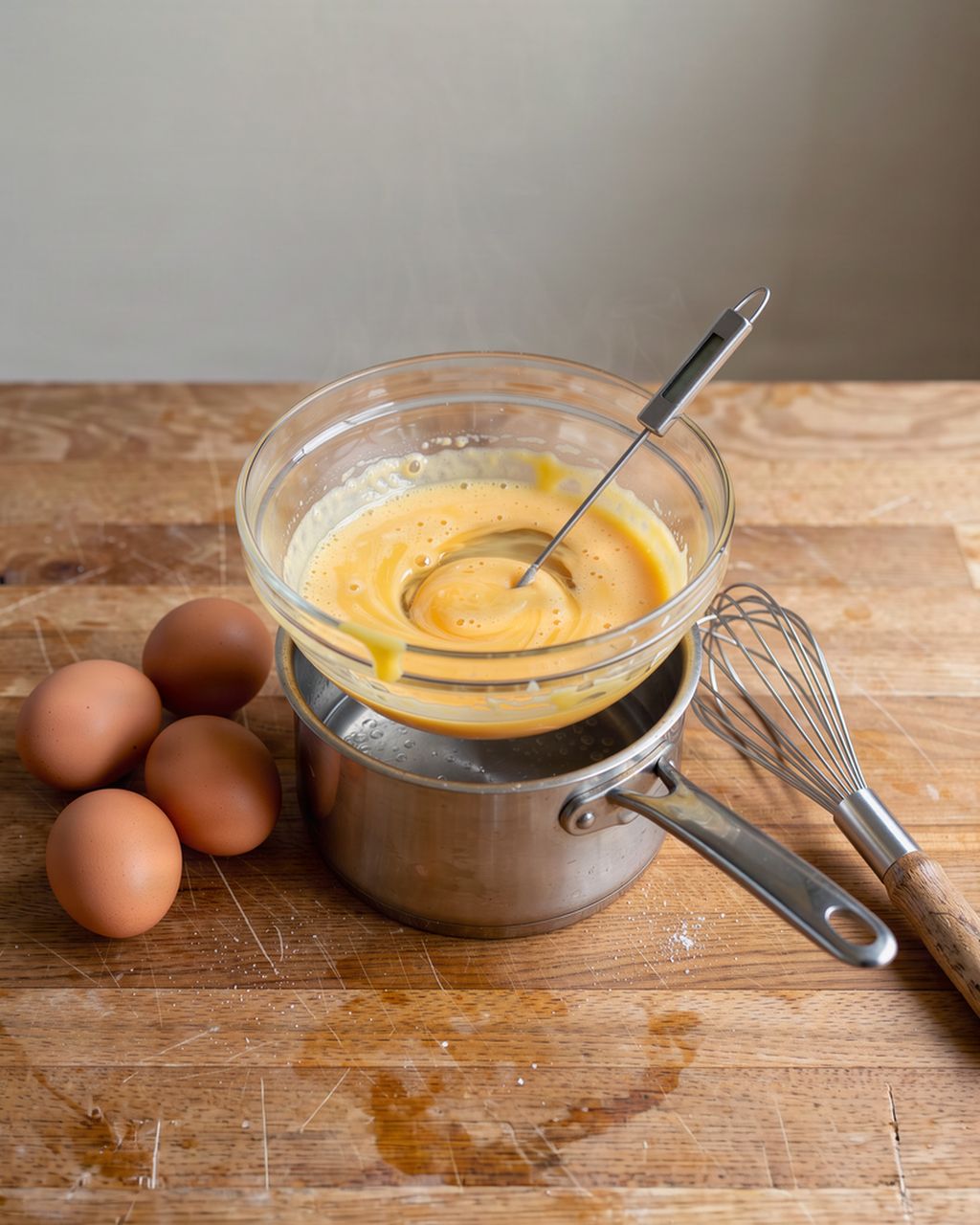
Swiss (SMBC): whisk the egg whites with sugar over a bain-marie until the mixture reaches 71 °C (160 °F), the temperature pastry chefs treat as the pasteurization point for egg whites. Then whip until cooled below 25 °C (77 °F) and only then add the butter, cube by cube. The whole method, plus how to rescue a curdled or runny frosting, is in the article on Swiss meringue buttercream step by step.
Italian (IMBC): sugar syrup cooked to 118 °C (244 °F) is poured in a thin stream into the whipped meringue. It's a step more laborious, but the most stable of the whole family.
Ratio you can start from for both: 1 part egg whites : 2 parts sugar : 3 parts butter, by weight — for example 100 g egg whites, 200 g sugar and 300 g butter for roughly 600 g of frosting.
Both keep for a week in the fridge and for months in the freezer. Let them come to room temperature and whip them again before using — they go through a stage where they look spoiled, and then they come together.
Pudding buttercream is a cooled cooked pudding whipped into whipped butter — less sweet than American buttercream, cheaper than meringue buttercream, and firm enough to both fill and coat a cake. A starting recipe: 1 sachet of pudding mix (about 40 g) cooked with 500 ml of milk and 60–80 g of sugar, for 250 g of butter.
One thing decides success: the pudding and the butter must be the same temperature, ideally 20–22 °C (68–72 °F). Cold pudding makes the buttercream curdle like cottage cheese, and warm pudding melts it. So after cooking, cover the pudding with plastic wrap pressed right onto the surface, let it cool to room temperature (not in the fridge) and add it by the spoonful to butter that has been whipped for 5 minutes until pale. Why it curdles and how to rescue it is covered in the article on pudding buttercream that's smooth and firm.
Whipped cream frosting is the lightest cake filling, but without stabilization it lasts barely half an hour out of the fridge before it starts to weep water. If the cake isn't going straight from the fridge to the table, stabilize the cream.
What has to be right before you start whipping:
Whipping cream with at least 30% fat, ideally 33–36%; under Czech Decree No. 397/2016 Coll., high-fat cream has at least 35% fat. Cream under 30% fat won't whip, no matter what you do.
Everything cold, both cream and bowl — around 4 °C (39 °F). Warm cream takes twice as long to whip and is easier to overwhip into butter.
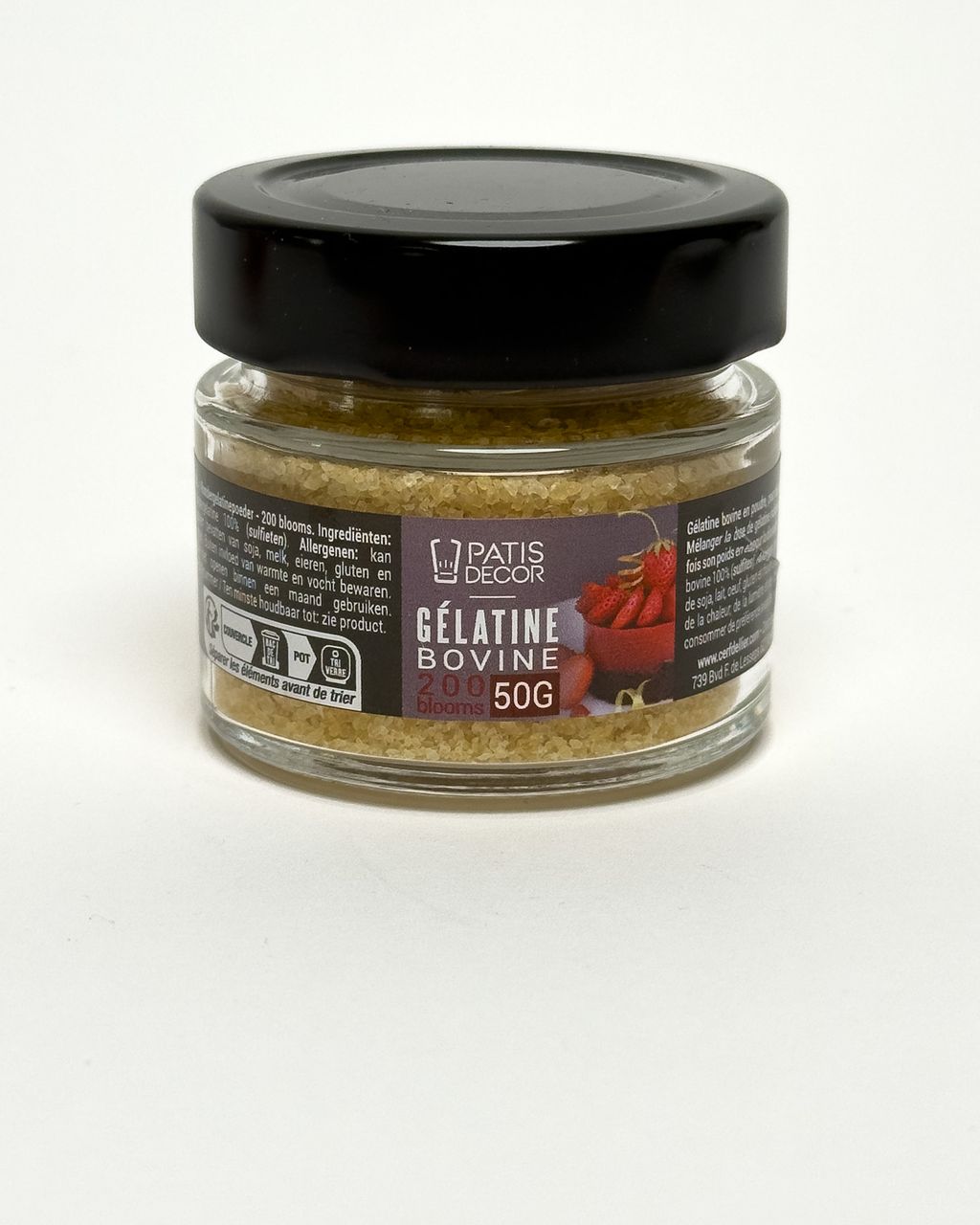
Stabilizing with gelatin: let about 5 g of powdered gelatin (calculated for 200 Bloom) bloom in 30 ml of cold water, dissolve it, let it cool to lukewarm and, while whisking, pour it into 500 ml of cream whipped to soft peaks (so roughly half-whipped). Cream stabilized this way holds its shape even out of the fridge, but still put the cake back in the cold within 2 hours at most. You'll find the amounts for a filling that slices into neat portions, and for coating, in the article on firm whipped cream frosting for cakes with gelatin.
Stabilizing without gelatin: 100 g of mascarpone per 250 ml of cream, or 1 tablespoon of pudding mix per 250 ml of cream. The flavor stays light, and the cream just holds.
Where it belongs: no-bake cakes, sponge cakes with fresh fruit, anything where the cream should be a supporting player rather than the main flavor. If you're looking for more frostings that aren't heavy — whipped yogurt, diplomat cream or mousse — have a look at light cake frosting and how to firm it up.
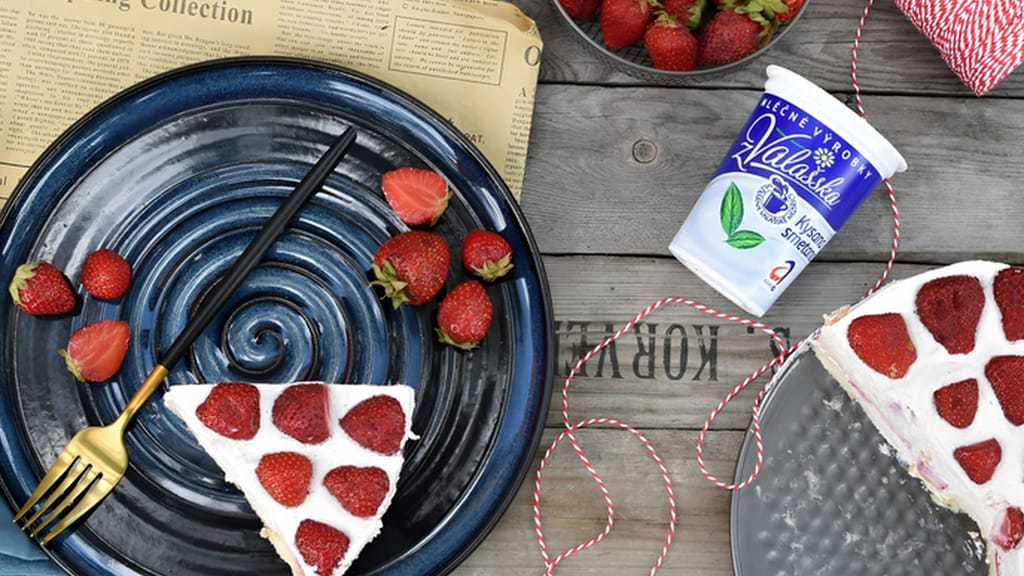
No-bake strawberry cake – a classic from my childhood
No-bake strawberry cake — an example of a cake where light whipped cream works better than buttercream
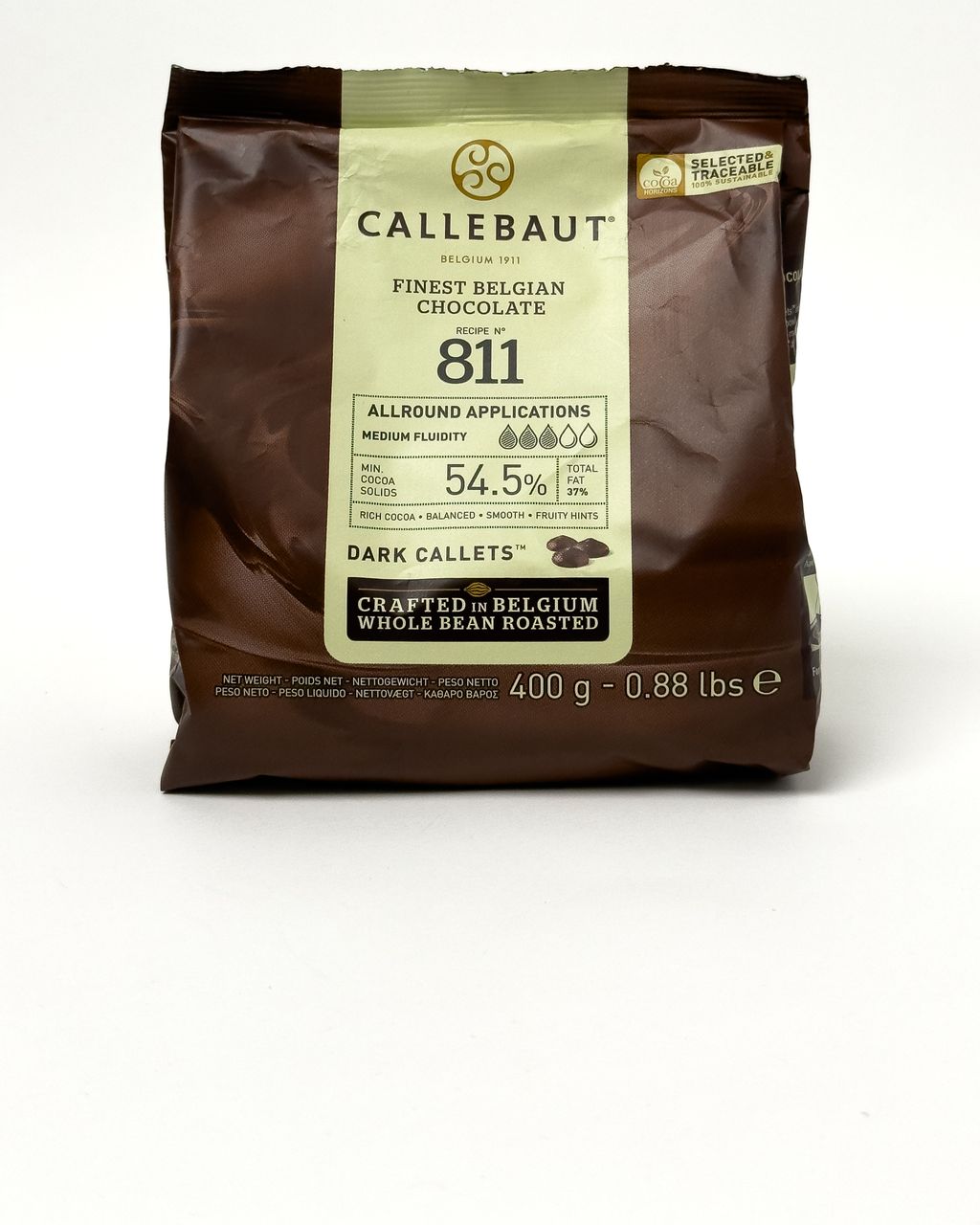
Ganache is an emulsion of chocolate and cream, and everything depends on their ratio: 1:1 is a glaze and drip, 2:1 is a firm filling and a base under fondant, and 1:2 can be chilled and then whipped into a light whipped ganache. The ratios are by weight and apply to dark chocolate with about 54% cocoa (such as Callebaut 811):
1:1 (chocolate:cream) – pourable while warm, and once cooled it has the consistency of a thick cream. Glaze, drip, soft filling.
2:1 – sets into a firm cream after a few hours on the counter. The best filling for tiered cakes, base under fondant and for sharp edges.
1:2 – chill for at least 4 hours, then whip. You get a fluffy whipped ganache that's much less sweet than buttercream. In Czech baking it's called Parisian cream, and the article on firm Parisian cream for cakes explains how to mix it so it holds even in a taller cake.
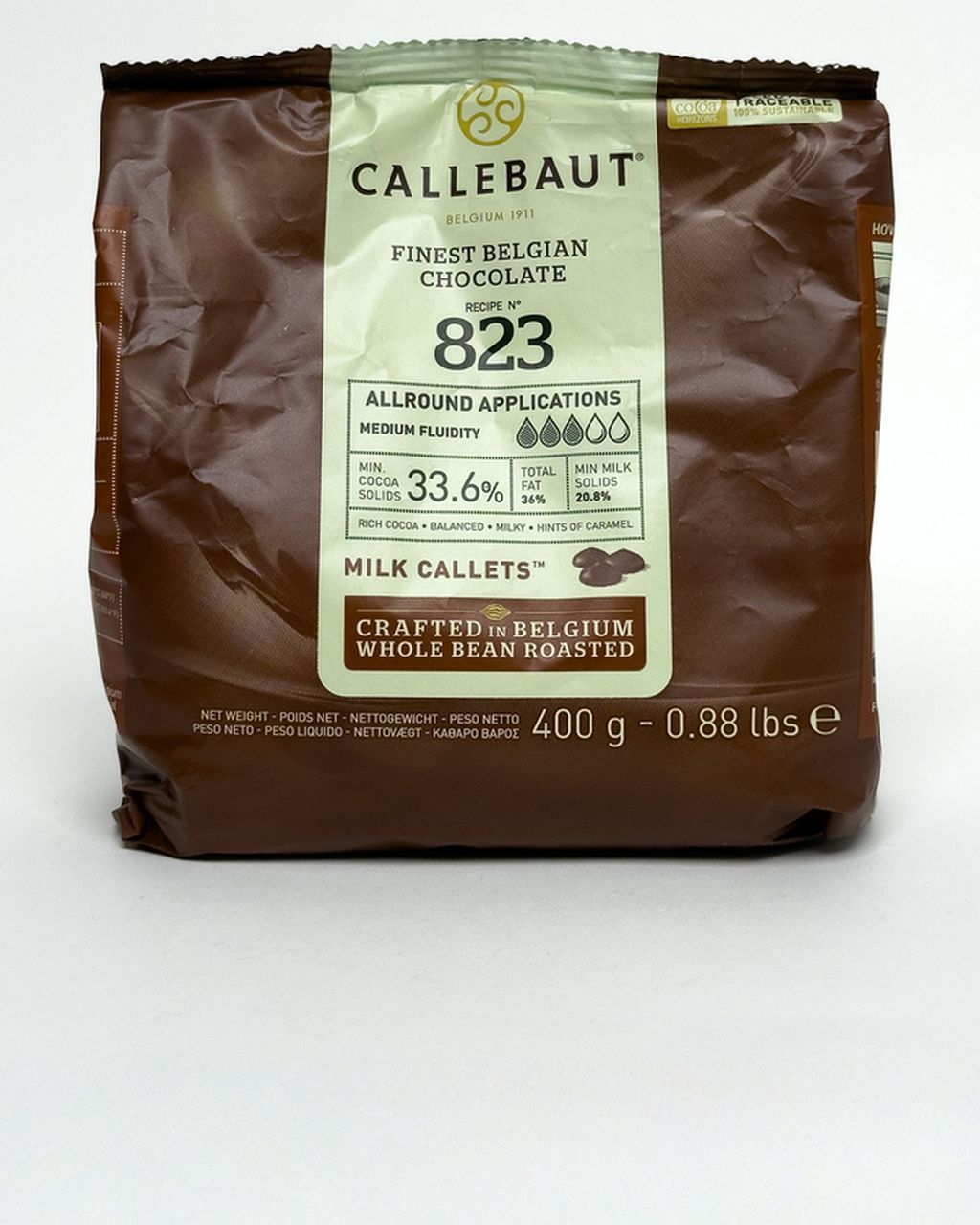
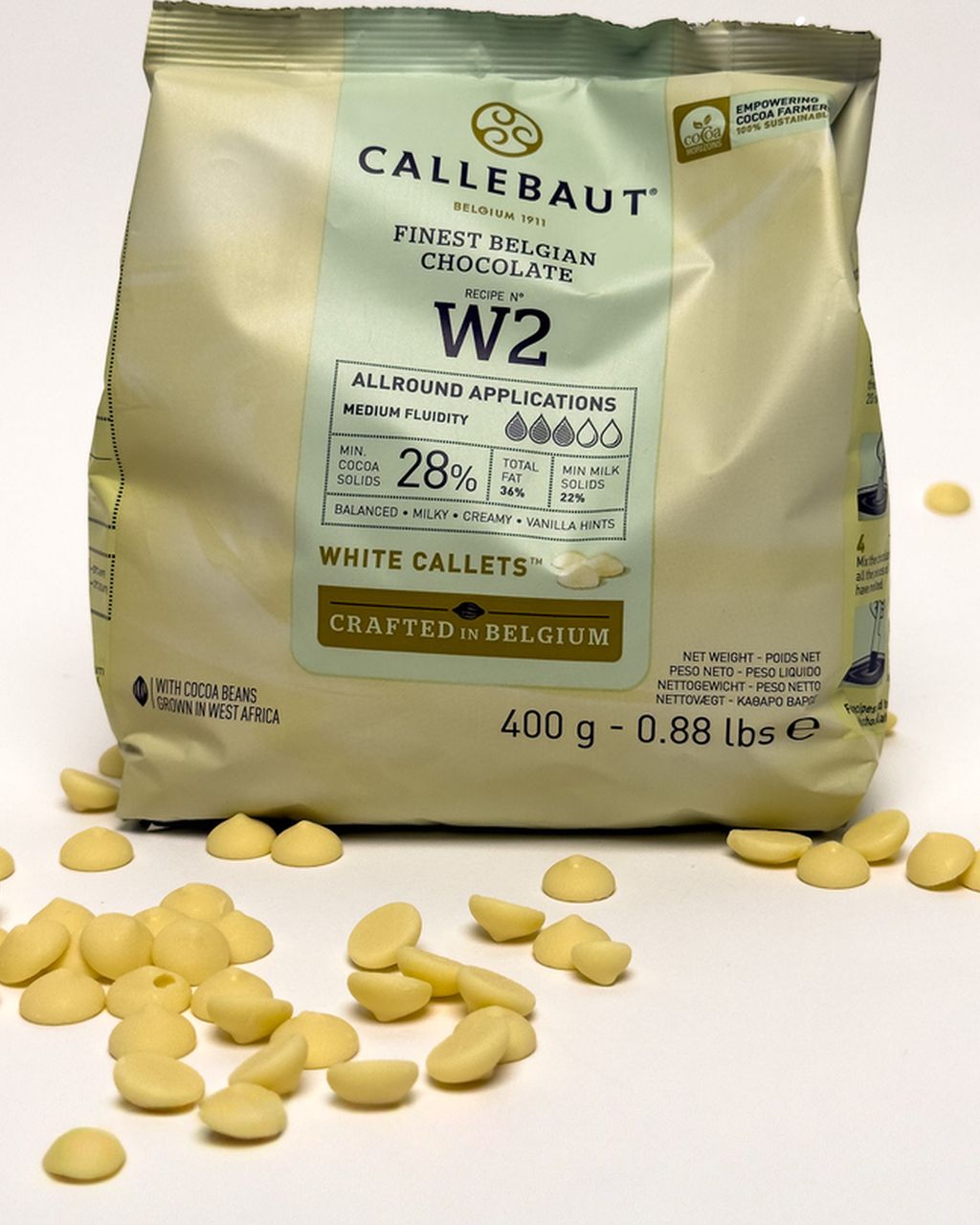
Milk and white chocolate have less cocoa solids and more sugar and milk solids, so they set less well — you need roughly 1.5× as much milk chocolate (e.g. Callebaut 823) as dark (about 3:1 for a filling), and for white chocolate (e.g. Callebaut W2) roughly 3:1 to 4:1. For a drip, let the ganache cool to 32–35 °C (90–95 °F) — warmer will run down to the board, colder will stop halfway down the side.
A method that won't let you down: bring the cream just to a boil, pour it over chopped chocolate, leave it for 2 minutes and only then stir, from the center outward. A detailed table of ratios for every type of chocolate is in the article Chocolate ganache: ratios, preparation and use in desserts, a comparison of ganache with chocolate buttercream and mascarpone cream is in chocolate cake frosting: Parisian, buttercream, or mascarpone, and if you're tempted by a mirror finish instead of a cream, take a look at mirror glaze.
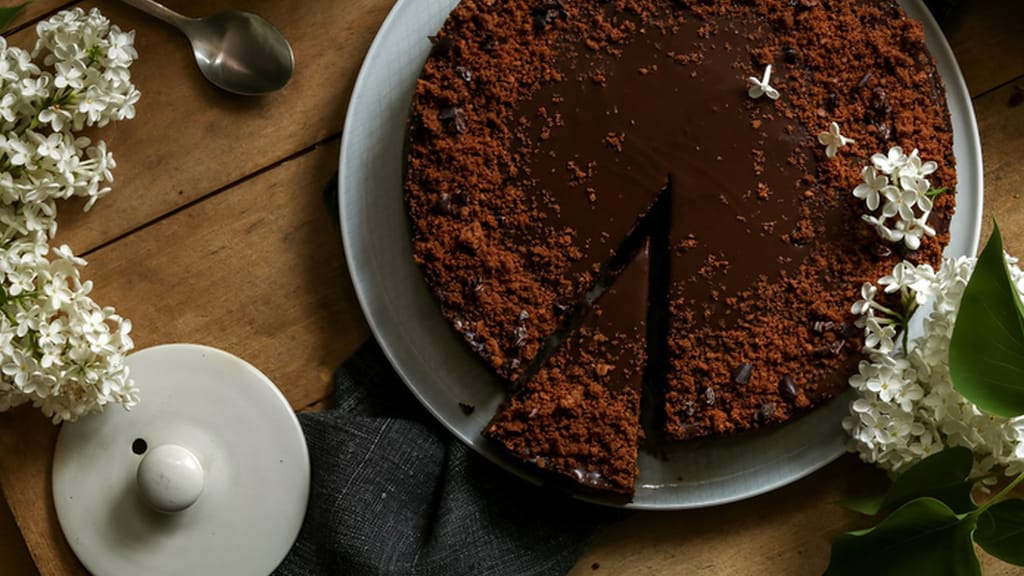
Simple chocolate cake
A simple chocolate cake — the kind of cake layer that chocolate ganache suits best
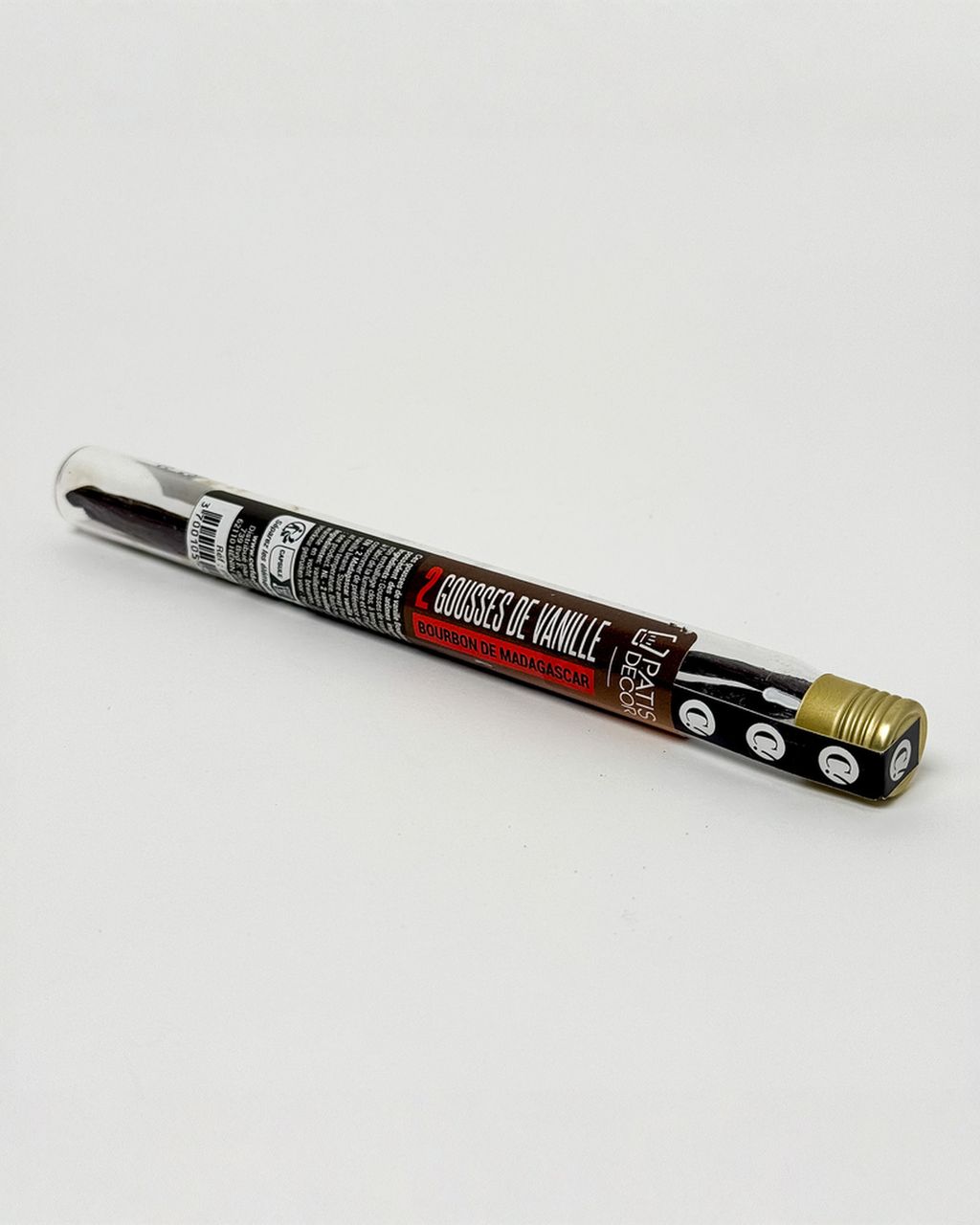
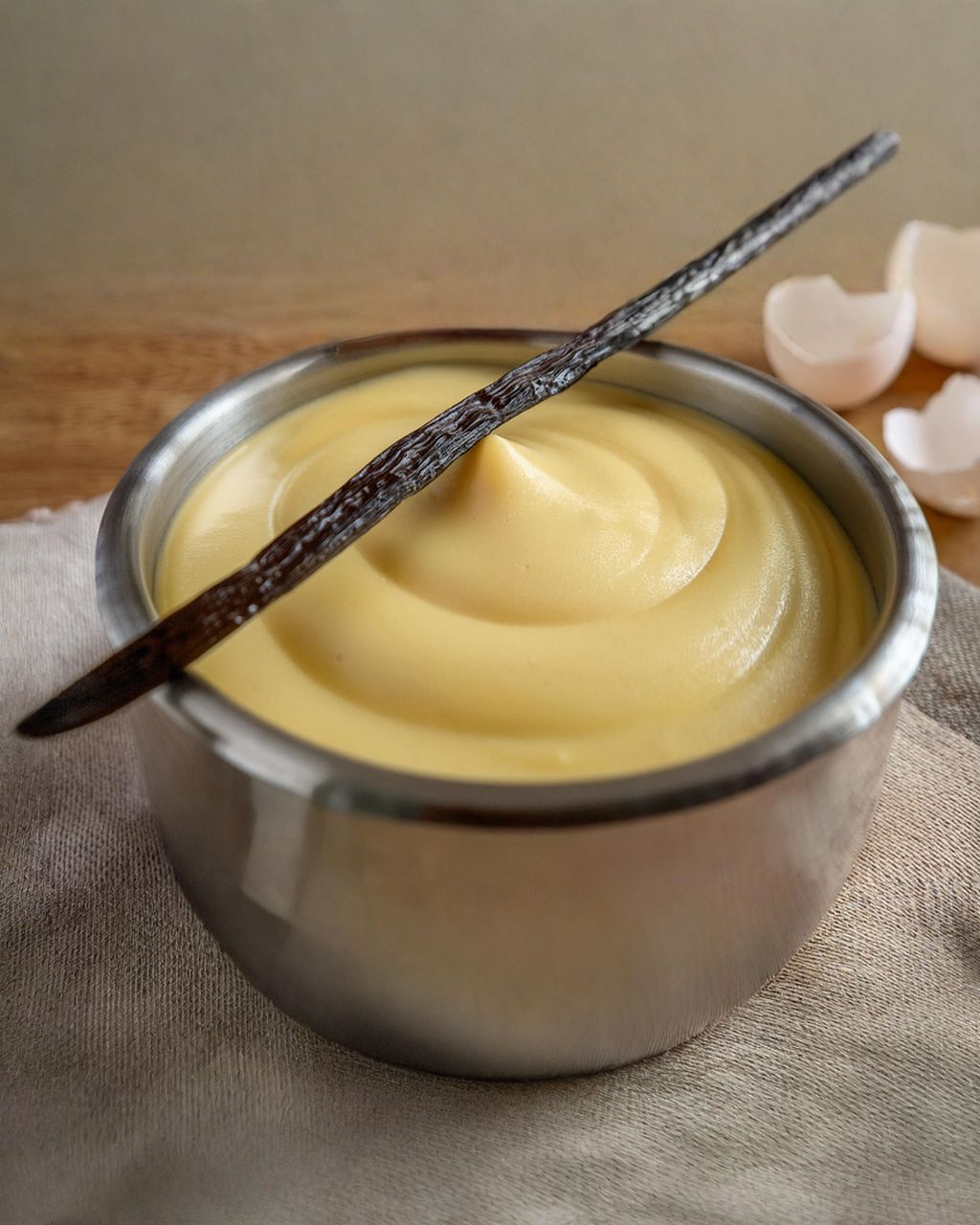
Pastry cream is a cooked cream of milk, egg yolks, sugar and starch — on its own it doesn't hold its shape, but it's the base for the two best fillings for layer cakes. Ratios to start from: about 80 g of starch and 6–8 egg yolks per 1 liter of milk (so 40 g of starch per 500 ml) and 150–200 g of sugar. The best flavor comes from a vanilla pod split lengthwise and steeped in the warm milk.
One rule can't be skipped: the cream must come to a boil and bubble for at least a minute. Egg yolks contain the enzyme amylase, which breaks down starch, and only boiling destroys it. So let the cream really bubble for at least a minute, or it will thin out as it cools. Cover the finished cream with plastic wrap pressed directly onto the surface so no skin forms, and whisk it smooth before using.
What else you can build from it:
Diplomat cream = chilled pastry cream + whipped cream, roughly 2:1. Lighter and fresher, ideal for cakes with fruit. For a cake that will be sliced, add 4–6 g of gelatin per 500 g of pastry cream, dissolved while the cream is still warm.
Mousseline = pastry cream + butter at 30–50% of the cream's weight, that is 150–250 g of butter per 500 g of pastry cream. It holds its shape and can be used for coating as well as filling; it's the classic filling of a Fraisier strawberry cake.
Both versions, and how much gelatin or butter each cake can take, are covered in the article on crème diplomate and mousseline: how to firm up pastry cream for cakes.
It keeps in the fridge for 2–3 days and can't be frozen — after thawing the starch releases water. The whole method, step by step, is in the article Crème pâtissière: perfect pastry cream.
Cheese-based creams are the freshest choice for very sweet cake layers because their tanginess balances the sugar. But all three share two weaknesses: they don't cope well with heat, and they overwhip easily. So you firm them up with fat (butter, cream, white chocolate) or gelatin, and put them into a warm room only at the last moment.
Mascarpone cake frosting is mascarpone whipped 1:1 with cold whipping cream and powdered sugar; it's creamy, not very sweet and holds as long as it's cold. Mascarpone has around 40% fat, so the mixture thickens almost instantly. Stop whipping the moment it thickens, not when it reaches stiff peaks; overwhipped mascarpone turns grainy and you can't bring it back. The second rule: the mascarpone must be cold, as warm mascarpone separates. Why mascarpone curdles or goes runny and how to make it firm is covered in the article mascarpone cream: why it curdles or thins out.
The firmest version uses white chocolate: melted white chocolate sets as it cools and the frosting holds up even under another cake layer, while reducing the powdered sugar you need. You'll find the ratio that keeps it from being too sweet in the article on mascarpone and white chocolate cake frosting.
Where it suits: tiramisu, pumpkin and nut cakes, cupcakes — anywhere you want creaminess without the sweetness of buttercream.
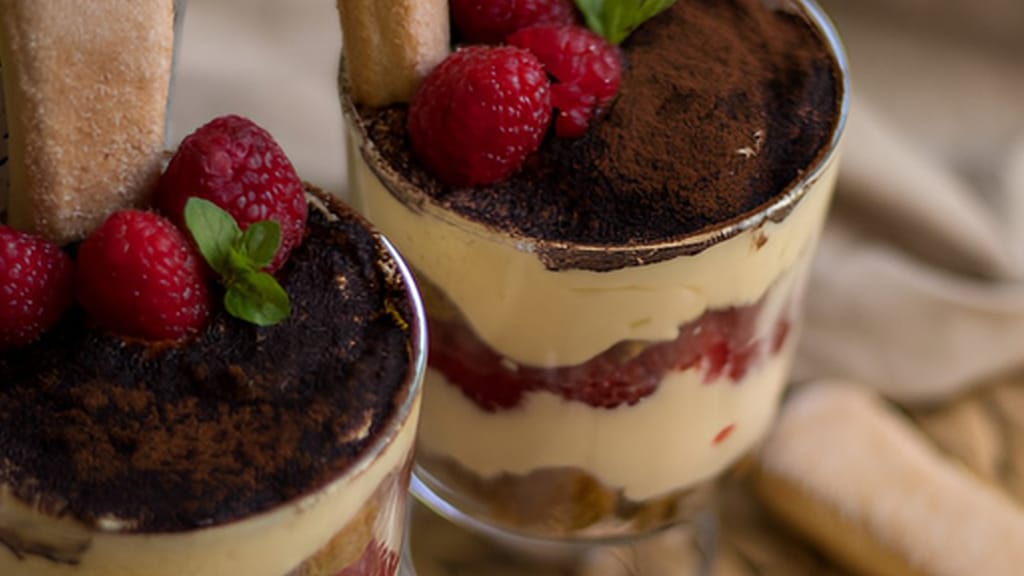
Raspberry tiramisu
Tiramisu with raspberries — the classic use of mascarpone cream
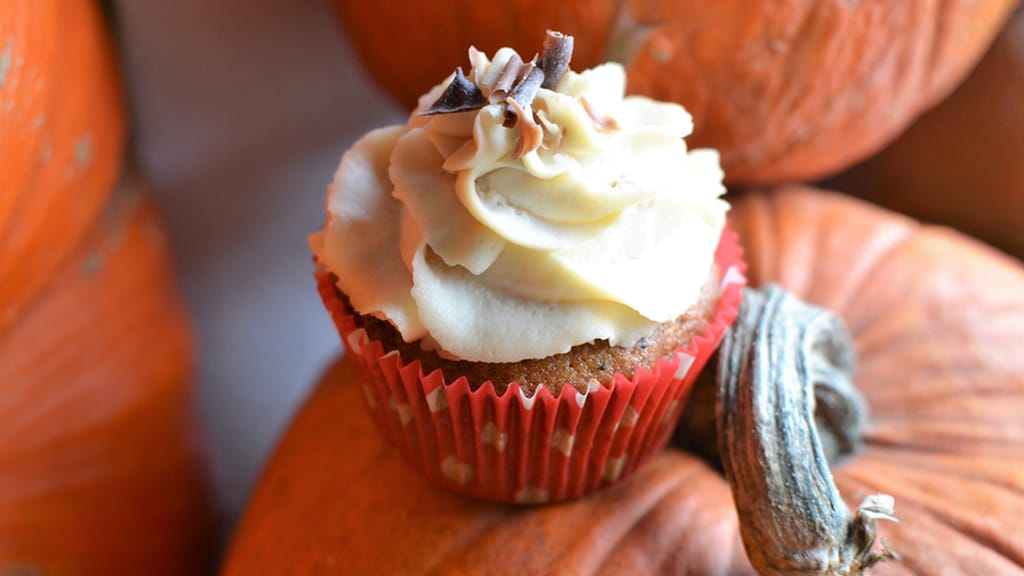
Autumn pumpkin cupcakes with mascarpone cream
Autumn pumpkin cupcakes with mascarpone frosting — mascarpone cream on cupcakes
Cream cheese frosting is butter and full-fat cream cheese in a 1:1 ratio whipped with powdered sugar, usually 150–250 g of sugar per 250 g of cheese; it's fresh, slightly tangy and holds as long as it's cold. The butter isn't there as an extra: sugar draws water out of the cheese, and without butter the frosting would turn runny.
Two things decide the result: use dense block cream cheese, not the spreadable kind in a tub (it has more water), and mix it only briefly on low speed. Long mixing makes it runny. Whip the butter separately until pale and fold in the cold cheese only at the end.
Where it suits: carrot cake, gingerbread and pumpkin cake, red velvet.
Quark frosting is sieved quark (tvaroh, a fresh curd cheese) whipped with sugar, often with whipped cream or butter; it's the lightest and cheapest of the cheese creams and a homemade classic for no-bake cakes. Always sieve firm quark or blend it smooth — whipping won't dissolve the grains.
For no-bake cakes that need to be sliced into neat portions, add gelatin: roughly 10 g of powdered gelatin per 500 g of quark, bloomed and dissolved, then stirred into the frosting at room temperature. In cold frosting, gelatin sets into strings; the safeguard is to stir 2–3 tablespoons of the frosting into the warm gelatin first and then add that mixture back into the rest. When to reach for gelatin, when for mascarpone and when for whipped cream is covered in the article quark cake frosting that holds.
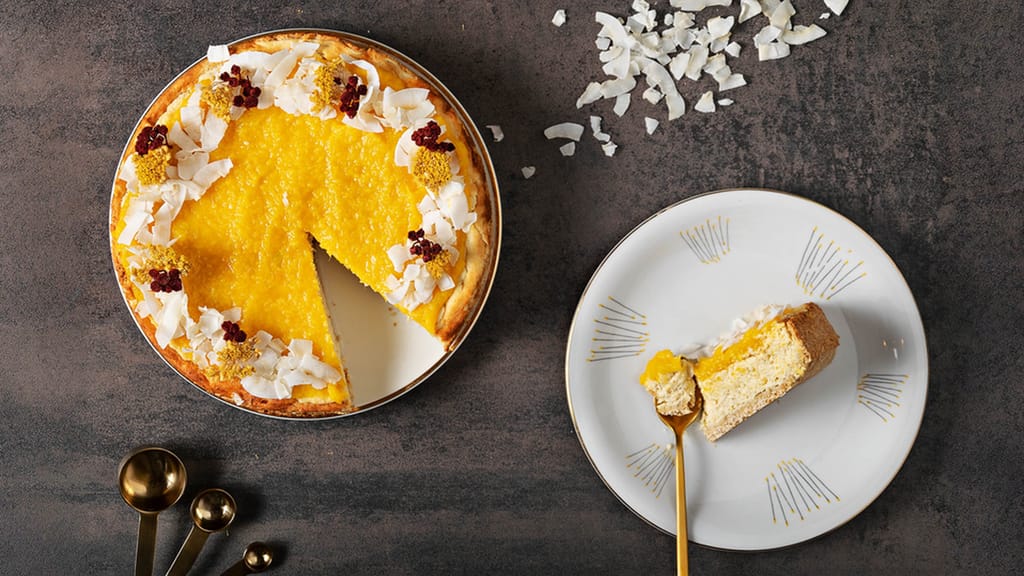
Mango cheesecake
Mango quark cake — quark frosting in a no-bake cake that holds its shape
Fruit or nut cream isn't a family of its own — it's one of the five basic creams (most often buttercream, mascarpone, whipped cream or diplomat) with flavor added in concentrated form. Fresh fruit or thin purée doesn't belong directly in a frosting: the water in them curdles buttercream and dissolves whipped cream.
Ways to add fruit flavor, from the safest:
Freeze-dried fruit powder – zero water, intense flavor; 10–20 g per 250 g of buttercream.
Reduced purée – boil the purée down to half its volume and chill it; for buttercream, no more than 1 part purée to 4 parts frosting.
Fruit curd or thick jam – not in the frosting, but as a separate layer inside a dam of firmer frosting.
How to make strawberry, raspberry and cherry frosting that doesn't weep water is covered in the article on fruit cake frosting. Nut creams work the other way around — the paste is fat, so the frosting tends to firm up: pistachio paste is added at 10–20% of the frosting's weight. Whether to use paste or whole nuts, and how to get a green color without a chemical aftertaste, is in the article on pistachio cake frosting.
You can firm up cake frosting in five ways: with gelatin, chocolate, butter, mascarpone or starch — and in every case with chilling, which finishes the job. Which to choose depends on what the frosting contains:
Gelatin – for whipped cream, quark, diplomat cream and fruit creams. As a rough guide, 1–2 g of 200 Bloom powdered gelatin per 100 g of frosting (less for coating, more for slicing). Sheet gelatin has a different strength, so if you swap, recalculate by weight and the Bloom on the package.
Chocolate – white chocolate firms up mascarpone, whipped cream and cream cheese; dark chocolate turns ganache into the firmest cream there is.
Butter – turns pastry cream into mousseline and cream cheese into a stable coating.
Mascarpone – firms up whipped cream and quark without gelatin, and the flavor stays light.
Starch or pudding mix – 1 tablespoon per 250 ml of whipping cream.
After assembling, leave a cake with any kind of frosting in the fridge for at least 2–4 hours, ideally overnight: the fat sets, the gelatin fully firms up and the frosting bonds with the cake layers. You'll find gelatins, agar, pectin and other thickeners in one place in the gelling agents and binders category.
For a 20 cm (8-inch) cake with three layers, count on roughly 700–900 g of frosting with a thin coating; for a tall layer and rich decoration, better 1–1.2 kg. Those 700–900 g split into 150–200 g for each filling layer and 400–500 g for coating the sides and top. A rough guide for other sizes, always for three layers and a thin coating:
15 cm – 450–600 g
18 cm – 600–750 g
20 cm – 700–900 g
24 cm – 1.1–1.4 kg
cupcake – 40–60 g for one generous swirl
For taller cakes and multiple tiers, there's a detailed chart of how much frosting you need by diameter and height.
Two tips that will save you from last-minute recalculating. Set aside about 100 g of the total for a crumb coat — a thin sealing layer that traps the crumbs and, after 20 minutes in the fridge, makes the final coat smooth. And make about a tenth more than you think you need: making half a batch of buttercream to finish a cake you've already started is the worst way to spend an evening.
Most spoiled frostings can be rescued with temperature: a curdled frosting is almost always too cold, and a runny one almost always too warm. Specifically:
Buttercream curdled into little grains – the butter was colder than the meringue (or pudding). Warm a quarter of the frosting over steam until liquid, stir it back in and whip for 2 minutes. It comes together.
Buttercream is runny and shiny like soup – it's too warm. Put the bowl in the fridge for 15 minutes and whip again.
Mascarpone turned grainy – it's overwhipped. Fold in 1–2 tablespoons of cold cream by hand; you can't rescue it beyond that. Next time stop as soon as the frosting thickens.
Ganache has split and is releasing oil – add a spoonful of hot milk and run an immersion blender at the bottom of the container so you don't whip air into it. The emulsion comes back.
Pastry cream is runny after cooling – it didn't bubble long enough. Bring it back to a boil with a spoonful of starch mixed into cold milk and cook for a minute.
Whipped cream is weeping water – it's either overwhipped or unstabilized. Drain it and briefly whip it again with a spoonful of mascarpone.
Frosting thinned out after coloring – you used liquid coloring. For deep colors, especially black and red, you need a gel color, such as ProGel black — a few drops are enough and the consistency doesn't change. How many drops for which shade is shown in the frosting color chart.
A cake with buttercream or meringue buttercream keeps in the fridge for 4–5 days and one with ganache for up to a week, but a cake with pastry cream, whipped cream or quark cream should be eaten within 2–3 days. It comes down to water and egg content: the wetter and more protein-rich the cream, the shorter the window. Keep the cake covered, or it will absorb fridge odors and the layers will dry out. Let it stand on the counter for 30–60 minutes before serving — cold buttercream tastes like a lump of fat, while tempered buttercream is creamy.
Buttercreams, meringue buttercreams and ganache freeze very well and keep for 2–3 months, but pastry cream and whipped cream can't be frozen. Buttercream is just fat and sugar, which don't mind thawing: leave it in the fridge overnight, bring it to 20 °C (68 °F), then whip it again. Pastry cream releases water after thawing because the starch loses its structure, and whipped cream collapses. Cheese creams made with quark or cream cheese survive with a slight loss of smoothness.
Use 2:1 ganache or meringue buttercream under fondant — both set into a firm layer that fondant doesn't slide on and that holds sharp edges. Whipped cream, pastry cream and quark cream aren't suitable under fondant: they contain too much water, and after a few hours the moisture starts to dissolve the fondant, so it sweats and slumps. Before covering the cake with fondant, chill the coated cake for 30 minutes so the surface really firms up.
American buttercream, ganache, whipped cream, cream cheese, mascarpone and quark creams are all egg-free — only meringue buttercreams and pastry cream made with yolks contain eggs. For pregnant women, small children or people with an egg allergy, the simplest options are ganache or stabilized whipped cream, though both contain milk. Pudding buttercream made with store-bought pudding mix is egg-free too, since the powder is just starch with flavoring and coloring.
Use gel food coloring rather than liquid: gel is a concentrated pigment, so you only add a few drops and the consistency isn't affected. Liquid coloring adds an extra spoonful of water to the frosting, and buttercream then won't hold its shape. For ganache and white chocolate, use only fat-based colorings: water would make the chocolate seize into lumps. Mix the color briefly and let the frosting rest for 20 minutes, as the shade will deepen.
Frosting usually leaks out of the sides because it's soft and the upper layers press it outward — either the frosting was warm or you piled it on too thickly. Keep the filling layer around 5 mm, weigh the assembled cake down with a small plate and put it in the fridge for an hour to settle. For juicy fillings (fruit, lemon curd), first pipe a dam of firmer buttercream or ganache around the edge of the layer and pour the filling inside it.
One recipe worth heating the oven for, one tip, and one deal from the shop. Nothing else.