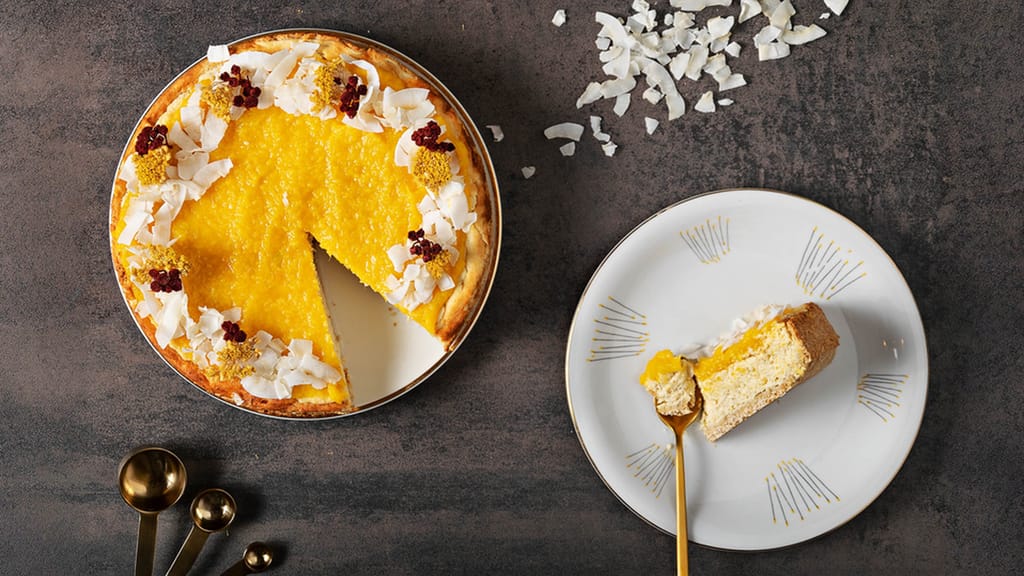
Mango cheesecake
Light Cake Filling: Which Creams Aren't Heavy and How to Set Them So They Hold
Updated Oct 17, 2026
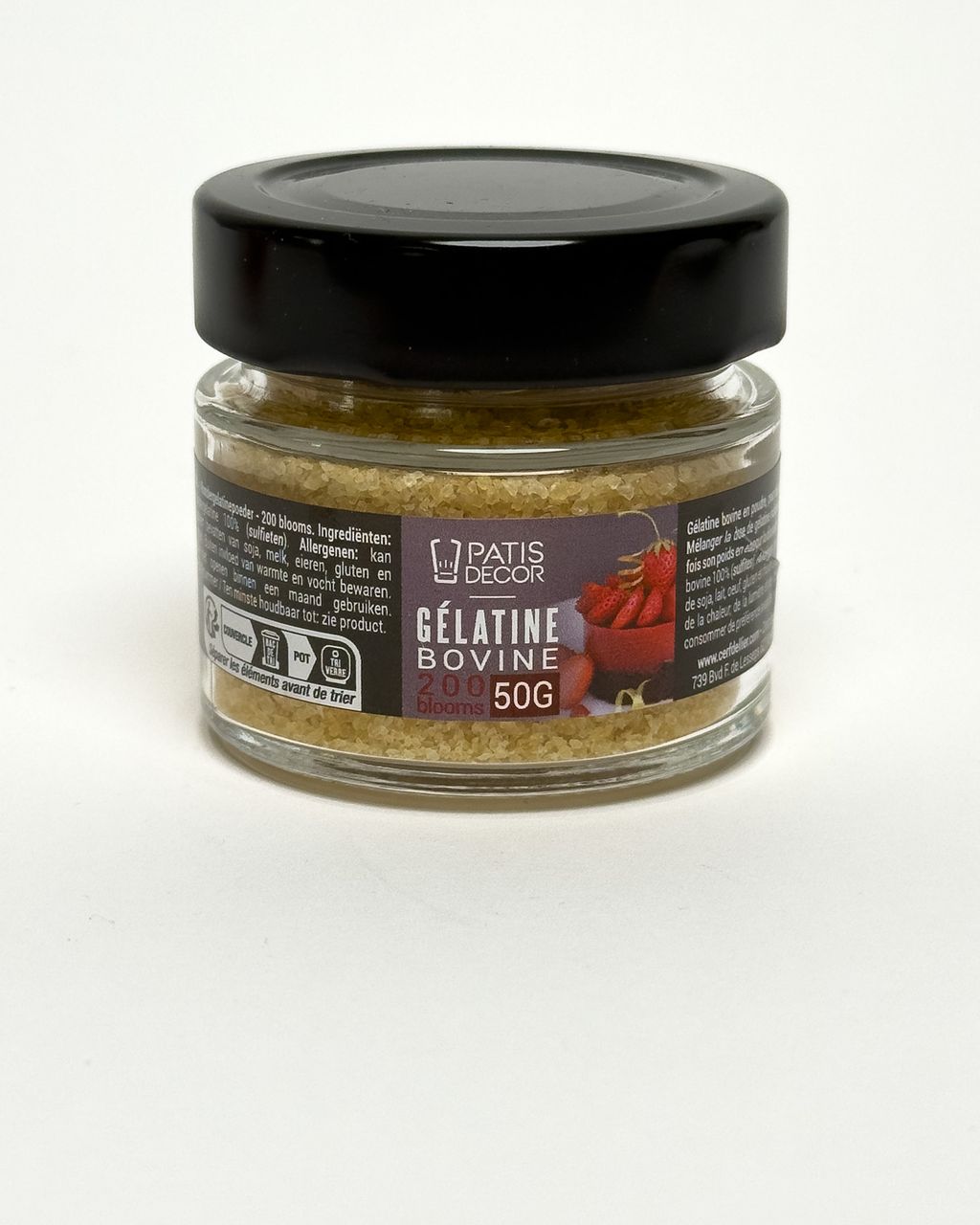
A light cake filling is built on yogurt, part-skim quark or fruit mousse, and its fluffiness comes mainly from the air in whipped cream. To slice cleanly, it needs gelatin: roughly 10–16 g of powdered 200 bloom gelatin per 1 kg of cream, depending on how much liquid it contains. Below you'll find four light creams, exact ratios, and a method that sets the cream in a cake ring and gives you sharp, clean edges.
There are four light cake creams: yogurt cream, whipped quark cream, fruit mousse and stabilized whipped cream. Mascarpone cream, ganache and buttercreams are richer.
Whether a cream feels fluffy in your mouth depends mainly on air and density. Whipped cream adds air, while butter and mascarpone make a cream dense even after you whip it.
Each light cream can be set in a different way, so think about what you want from your filling:
Yogurt cream (plain yogurt + whipping cream + gelatin): the freshest and tangiest. It contains the most liquid, so it needs the most gelatin.
Whipped quark cream (part-skim quark + whipping cream): has more body and is the best choice for a tall cake. It's covered in detail in the article Quark cake filling that holds its shape.
Fruit mousse (fruit purée + whipped cream + gelatin): airy and full of fruit flavor, with a firmness that depends on how much purée it contains.
Stabilized whipped cream: the most air. Whipping cream has 30% fat or more, so in flavor it's the richest of the four. You'll find out how to set it in the article Firm whipped cream filling for cakes.
A full overview of cake creams, including the rich ones, is in the article Types of cake cream and which cake each one suits.
For 1 kg of finished cream, use 10–16 g of powdered 200 bloom gelatin. The lower end is for creams with plenty of fat and whipped cream, the upper end for watery, acidic creams. The more liquid a cream has, the more gelatin it needs to hold it.
Yogurt cream: 14–16 g per 1 kg. With less, your slice will slump sideways.
Fruit mousse: 12–14 g per 1 kg. When purée makes up more than half the mixture, stick to the upper end.
Whipped quark cream: 10–12 g per 1 kg. Quark holds a bit on its own.
Stabilized whipped cream for a layer: 5–6 g per 500 ml of cream.
These ratios are for a cake that sets in a ring and is sliced cold from the fridge. If you only want the cream in a bowl or a glass, roughly two-thirds of that is enough.
The ratios are calculated for powdered beef gelatin, 200 bloom. Bloom expresses gel strength: the higher the number, the less gelatin you need. One "gold" sheet is roughly equal to 2 g of powdered 200 bloom gelatin. Whether beef gelatin can be swapped for pork is discussed in the article Beef or pork gelatin. You'll find other setting agents, from agar to pectin, among the gelling agents and binders.
Strings don't form because of the gelatin itself, but because of the big difference in temperature. When warm gelatin hits cold yogurt, it sets before it has been mixed in. Here's the method:
Let it bloom. Sprinkle powdered gelatin over 5–6 times its weight in cold water (10 g of gelatin in 50–60 ml) and leave it for 10 minutes.
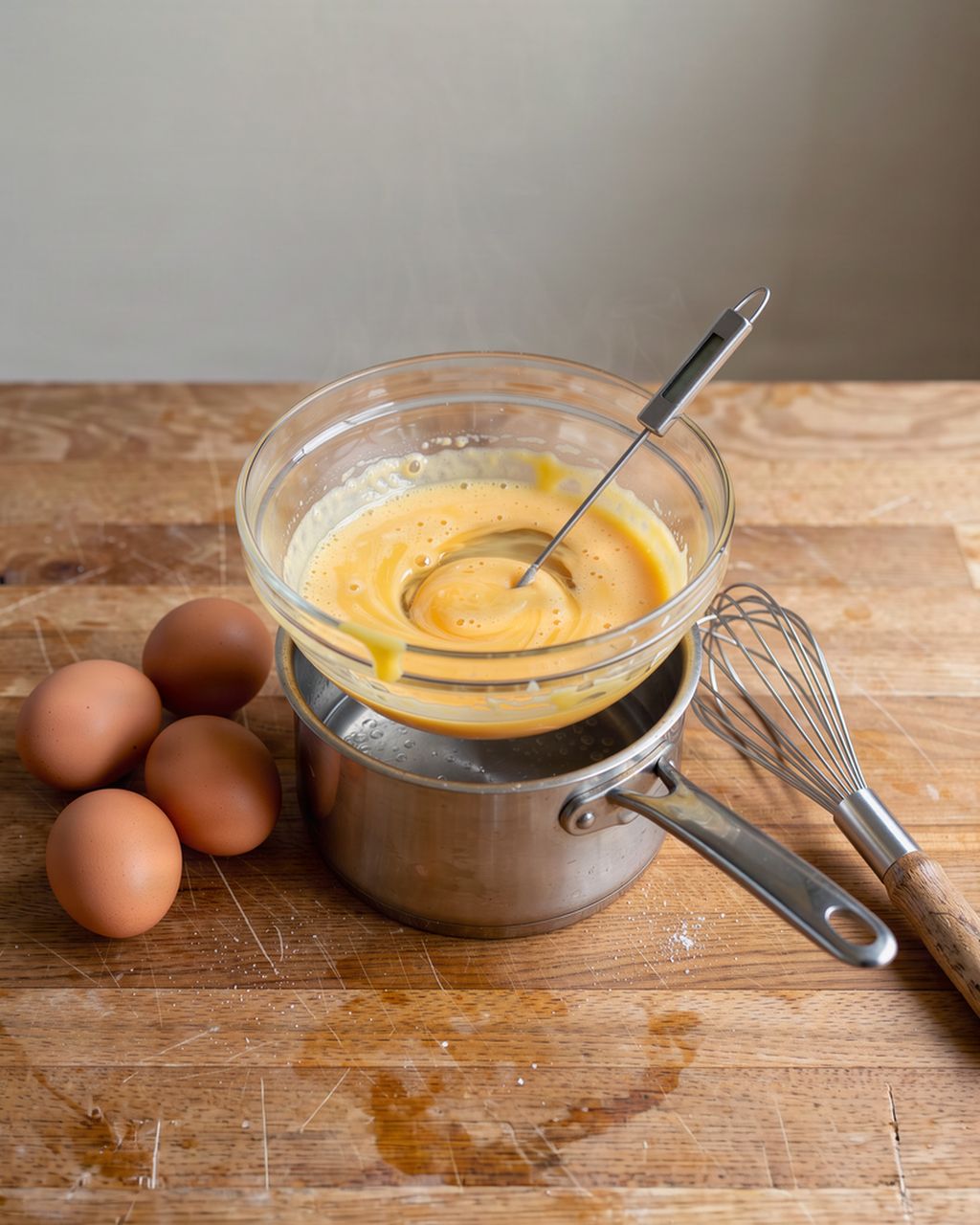
Dissolve it. Heat it to 50–60 °C (120–140 °F), for example in the microwave in short bursts of a few seconds. Never boil it, because boiling weakens the gelatin.
Even out the temperatures. Stir 2–3 tablespoons of the cream into the warm gelatin, and only then pour this mixture into the rest and whisk it in right away. The cream shouldn't be ice-cold; room temperature is ideal.
Fold in the whipped cream. Whip the cream only to soft peaks and fold it in with a spatula in two batches. Cream whipped stiff would make the filling lumpy.
Fill right away. A cream with gelatin starts to set within 10–15 minutes, so have your cake ring ready in advance.
If your cream won't whip or it's curdling, the article Cream won't whip: 6 causes can help.
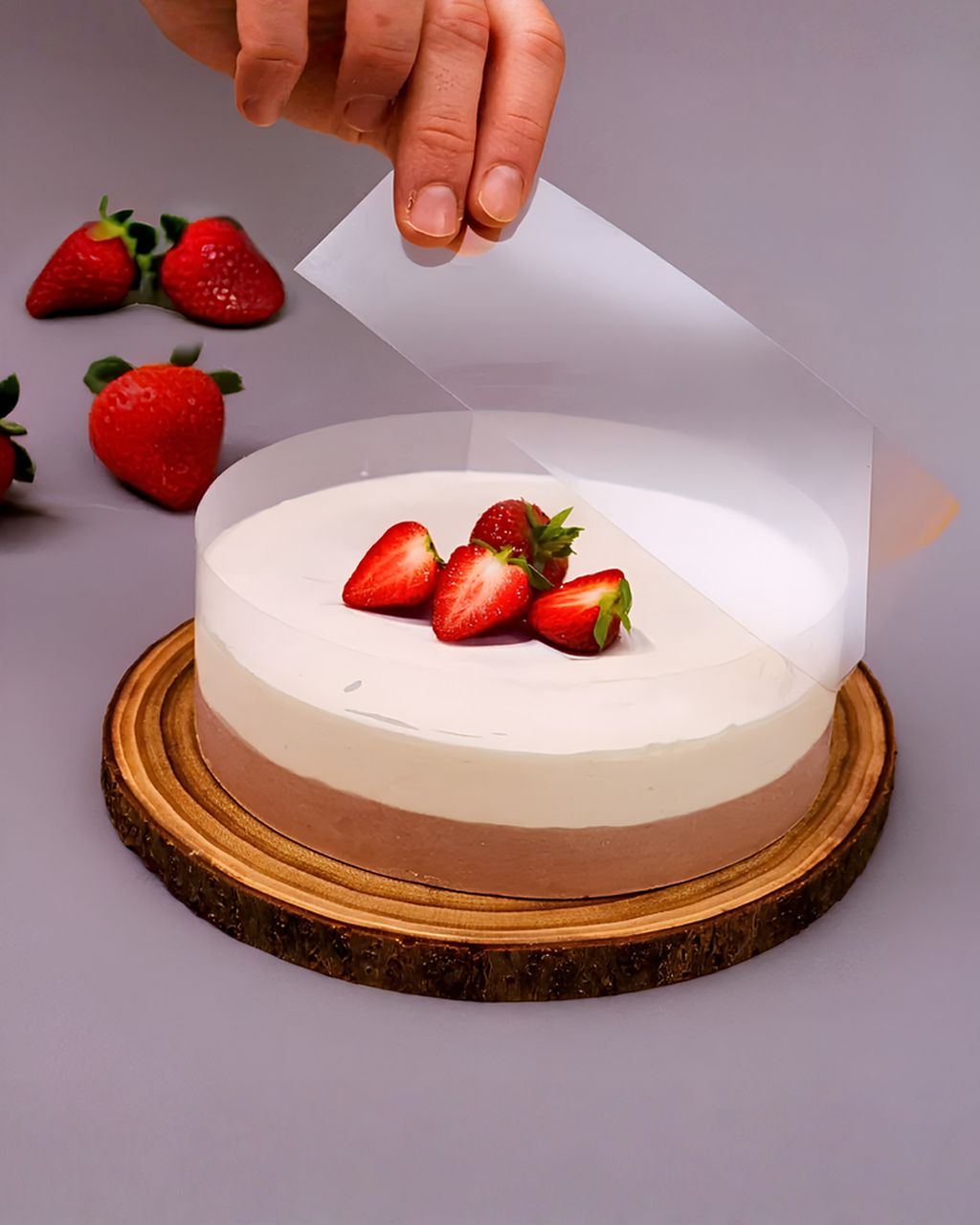
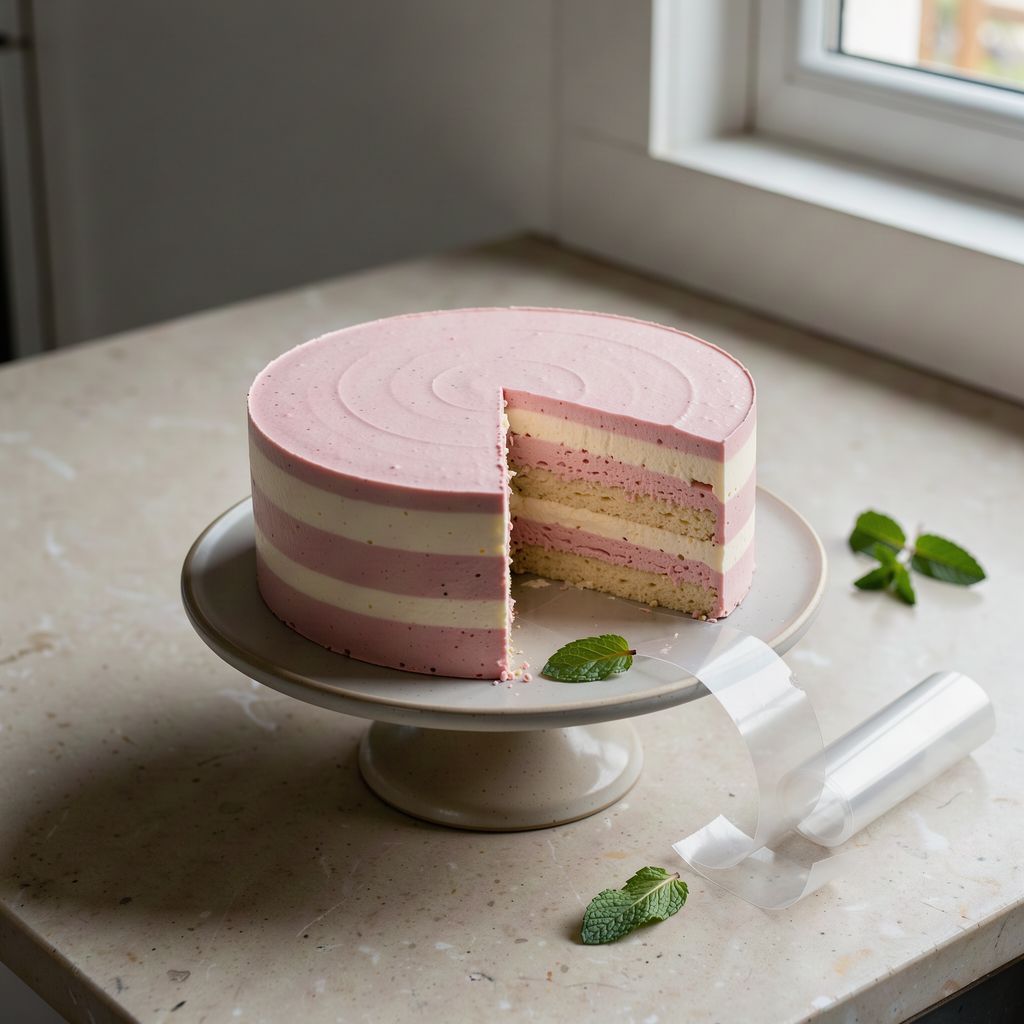
A light cream needs support until it sets, and a cake ring lined with acetate strip provides it. The film is smooth and airtight, so the cream won't stick to it. Once the cake has set, you simply peel it off and the sides stay straight and glossy, with no knife marks.
Place the ring on a board, put the sponge inside and wrap the strip around the inside of the ring so the ends overlap by about 2 cm.
Pour or spoon the cream onto the sponge and smooth it out. If you're making several layers, let each one set for at least 30–60 minutes before adding the next.
Leave the cake in the fridge for at least 6 hours, ideally overnight. Gelatin only reaches its full strength after several hours in the cold.
Remove the ring, slowly peel off the strip and slice with a knife dipped in hot water and wiped dry.
Patisdécor pastry strip is 35 mm tall. That's enough for one layer of cream, for desserts in small rings or for the top layer of a cake. For a cake 7–8 cm tall you need a wider film, or two strips on top of each other with a small overlap.
You get fresh flavor without water from a flavoring paste or a thickened purée, not from fresh chopped fruit. Juicy fruit (watermelon is over 90% water) thins the cream and then the gelatin isn't enough.
An honest comparison:
Fresh fruit in the cream tastes best, but it releases water. Put it between the layers, not in the cream itself. We write more about it in the article Fruit cake filling that doesn't release water.
Fruit purée carries flavor well, but treat it as liquid and add gelatin at the upper end of the range. It will be thicker and more intense if you reduce it by about a third over low heat.
Flavoring paste gives strong flavor and color with almost no liquid, so it doesn't throw off the gelatin ratio. The flavor is aromatic rather than "straight from the garden fruit", which is why it works best where fresh fruit in the cream doesn't.
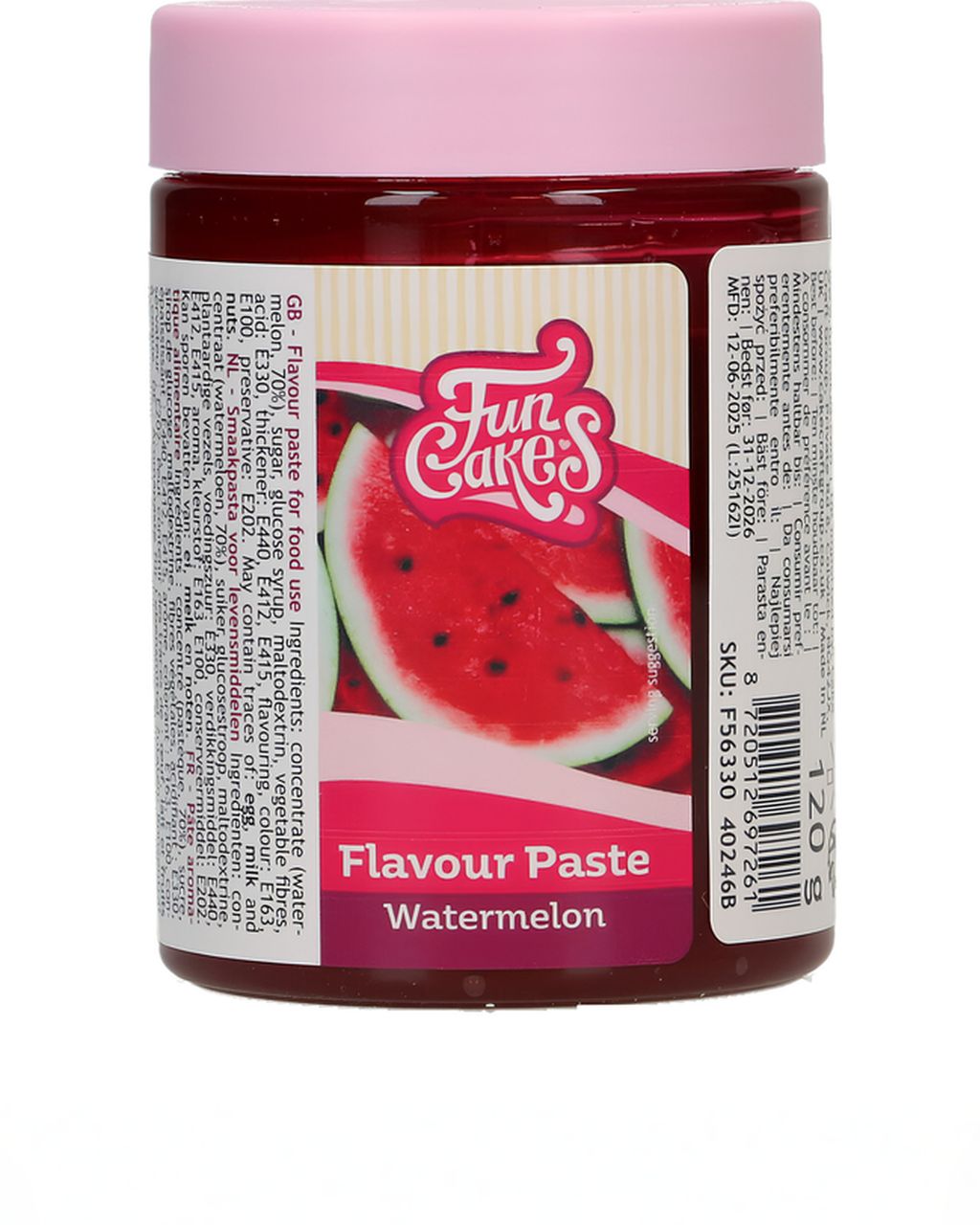
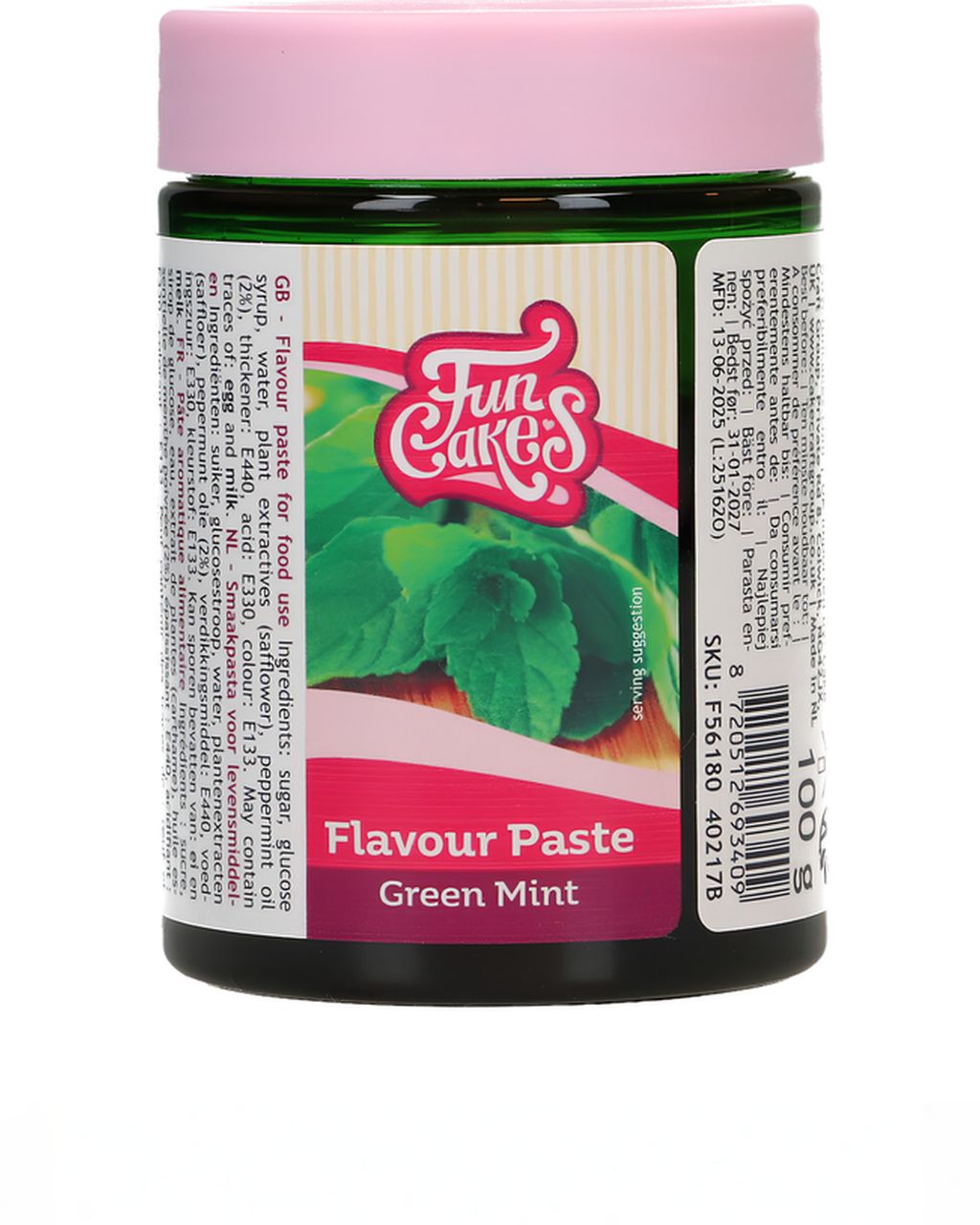
With watermelon, a paste makes the most sense. Fresh watermelon is practically unusable in a cream, and FunCakes watermelon paste gives a yogurt cream a summery flavor and a pink color. You can infuse mint from fresh leaves in warm milk or cream (leave it to steep for 20–30 minutes and strain). A fresher, greener flavor comes from FunCakes mint paste, which suits a cocoa sponge or berries. Add the paste in small amounts: start with a teaspoon per 250 g of cream, taste, and only then add more. Follow the dosage on the label.
Mango cake filling made from paste, purée or both is built along similar lines.
If you want to try a light cream on a whole cake, the first one to try is the mango quark cake, where whipped quark cream holds the layers. Without a ring, you can try a fluffy quark cream in the pink roulade with quark cream. The airiest option is in the tartlets with light ricotta and quark cream.
Mango cheesecake
Mango quark cake with a light whipped cream
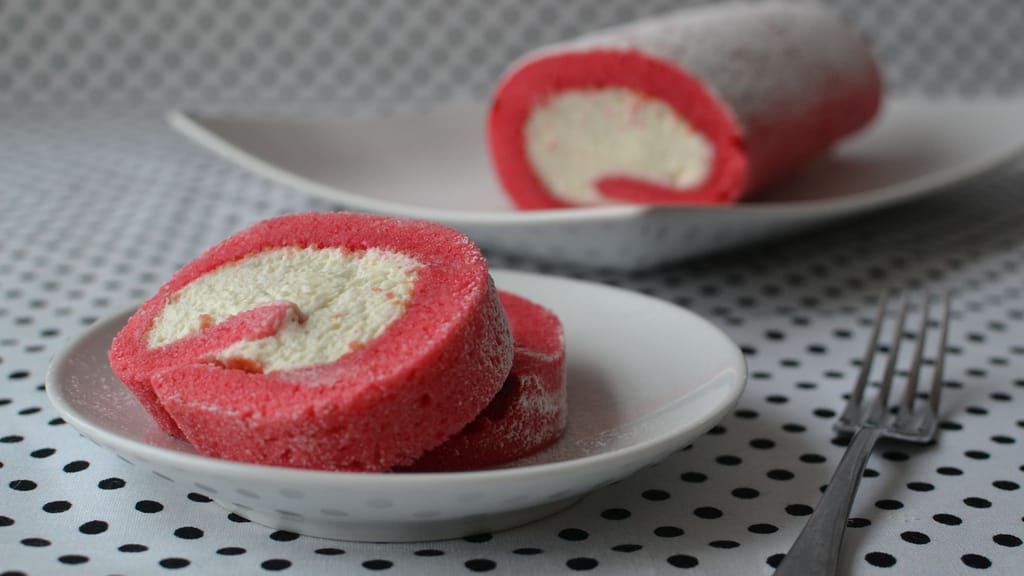
Fluffy pink swiss roll with cream cheese filling
Fluffy pink roulade with light quark cream
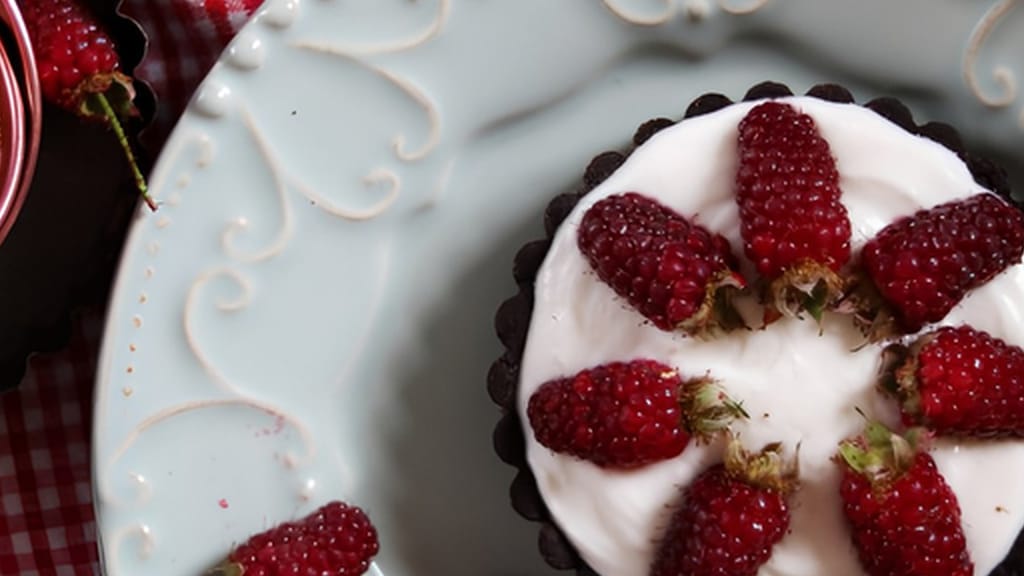
Tartlets with light ricotta and curd cheese cream
Tartlets with light ricotta and quark cream
A light cream with gelatin isn't suitable for a warm party or under fondant: it's a fridge cake that lasts about 1–2 hours at room temperature before it starts to soften. Fondant draws water from a moist cream, goes soft and starts to dissolve or sweat. For an outdoor summer party, reach for something more stable; you'll find an overview in the article Cake cream that holds up outside the fridge. If you want something creamier but still not buttery, try mascarpone cream that won't curdle.
You can, but the texture will be different: agar gives a more brittle, jelly-like cut rather than a creamy one. Agar has to be boiled briefly and starts to set at around 35–40 °C (95–105 °F), so stir it into the cream quickly while it's still warm. Agar is much stronger than gelatin, so you only need a fraction of the amount. The exact ratio varies by brand, so test it on a small batch and follow the label.
A cake with a yogurt or quark filling keeps in the fridge for 2–3 days. Cover it so it doesn't absorb odors, and slice it cold. Fruit layers under the cream will start to soften the sponge after the second day.
Yes, a cream set with gelatin freezes well, and it's best without fruit between the layers. Wrap the cake tightly in plastic wrap and thaw it overnight in the fridge, not at room temperature. Yogurt cream may be slightly less smooth after thawing.
You can, and the cream will be thicker because Greek yogurt contains less liquid. You'll need less gelatin than for a regular yogurt cream, roughly 12 g instead of 14–16 g per 1 kg of cream. With full-fat Greek yogurt, the cream will be denser and creamier.
One recipe worth heating the oven for, one tip, and one deal from the shop. Nothing else.