Chocolate cupcakes with salted caramel cream
Updated Sep 5, 2026
There are five basic ways to make cake frosting: buttercream (butter beaten with sugar or with a whipped meringue base), whipped cream frosting (whipped cream, almost always stabilised), pastry cream or crème pâtissière (milk, egg yolks, starch), ganache (chocolate and cream), and cream cheese or mascarpone frosting (fresh cheese beaten with sugar). The real difference between them boils down to one thing you actually care about: how long each one holds its shape. Below you'll find gram-accurate ratios, key temperatures, and a decision guide for which frosting to reach for depending on what you're baking and where the cake needs to survive.
Cake frosting comes in five basic types: buttercream, whipped cream frosting, pastry cream (crème pâtissière), ganache, and cream cheese/mascarpone frosting. The ratios below are by weight unless stated otherwise:
Buttercream — 1 part egg whites : 2 parts sugar : 2–3 parts butter. The most stable of all — holds its shape even at room temperature.
Whipped cream frosting — whipping cream at least 30% fat, ideally 33% or higher, chilled to 4°C, plus a stabiliser (about 3g gelatine per 250ml). The lightest in flavour, the shortest shelf life.
Pastry cream (crème pâtissière) — 500ml milk : 4 egg yolks : 100g sugar : 40g cornflour : 25g butter. Thick, meant for layering and fillings, not for coating a cake on its own.
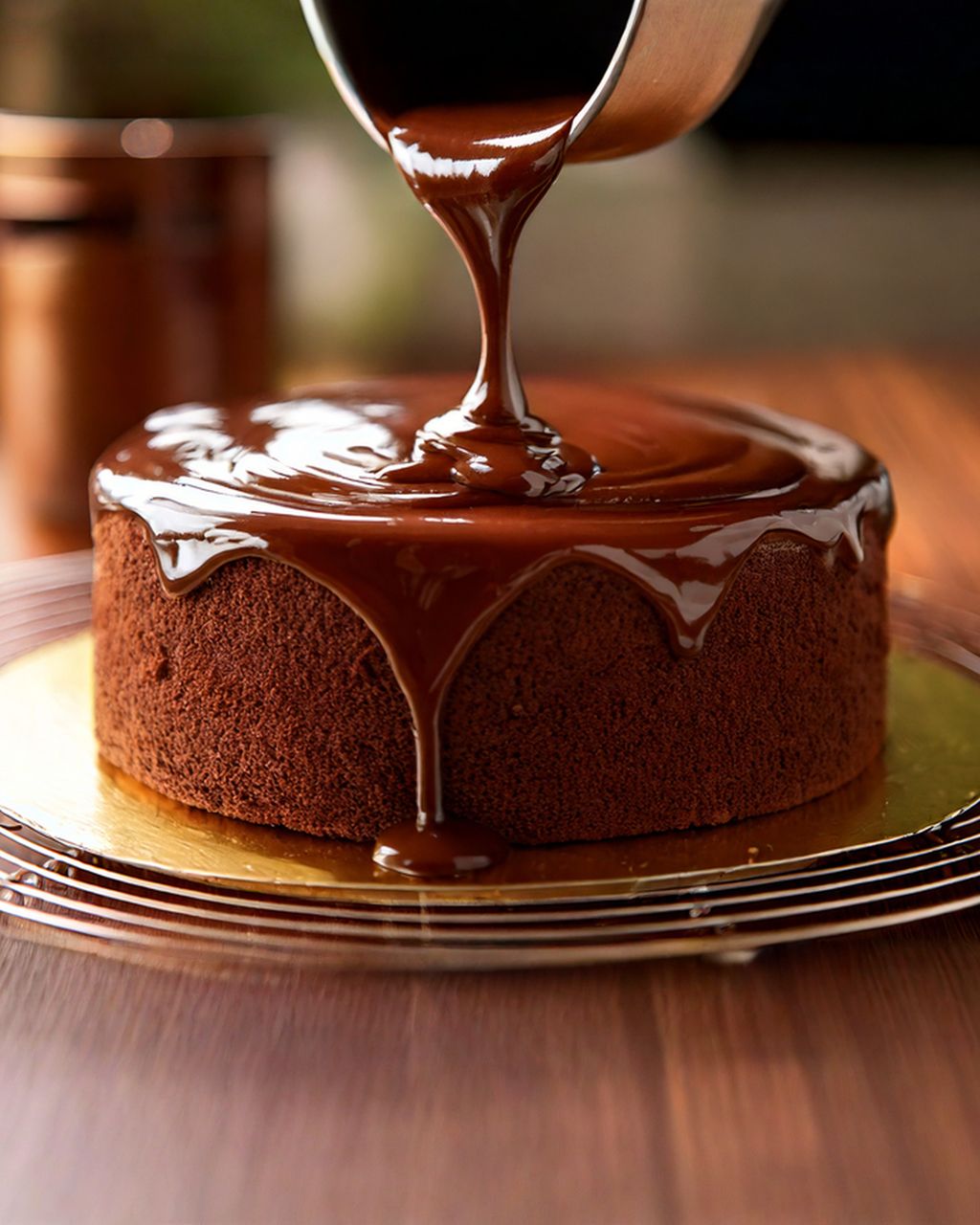
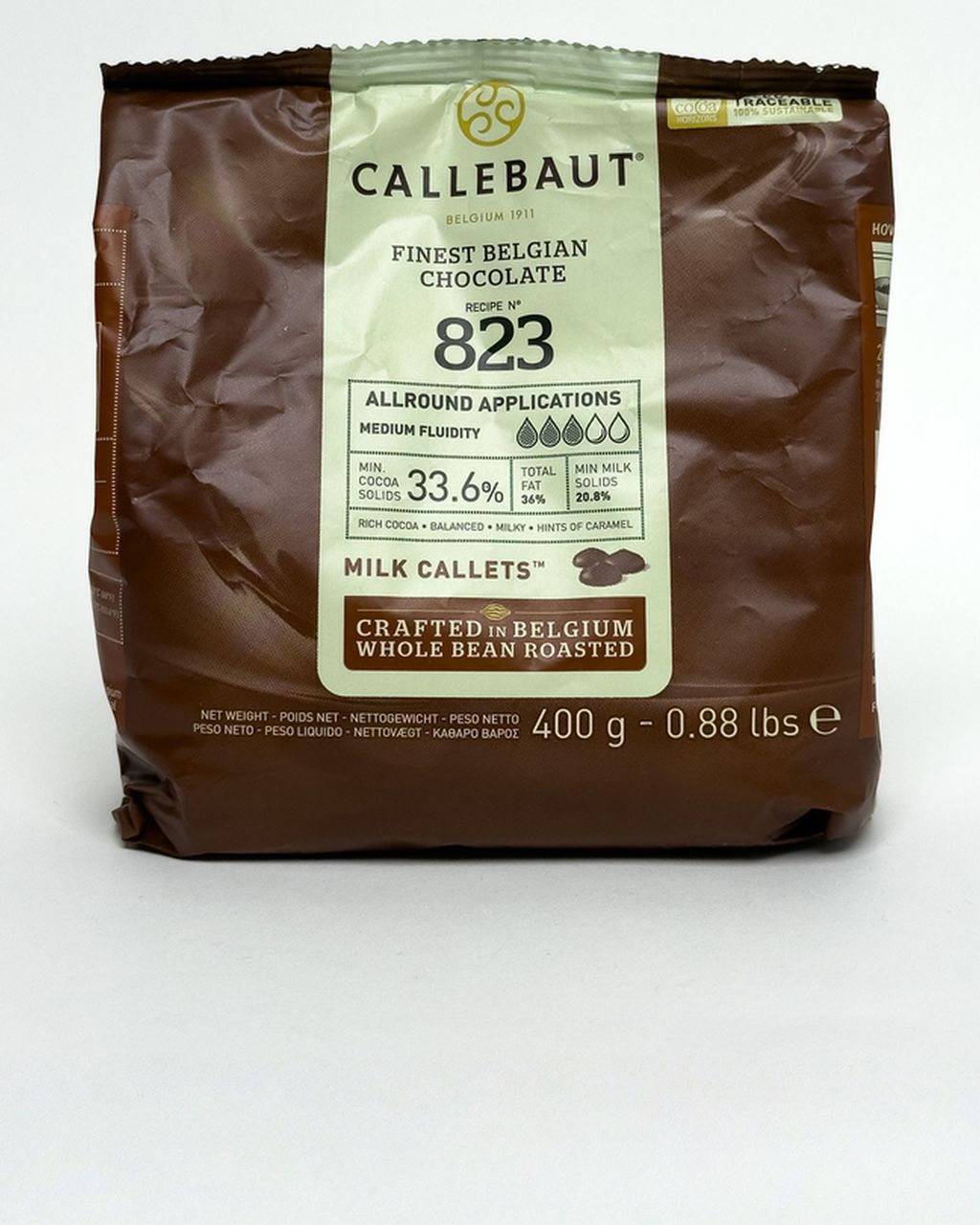
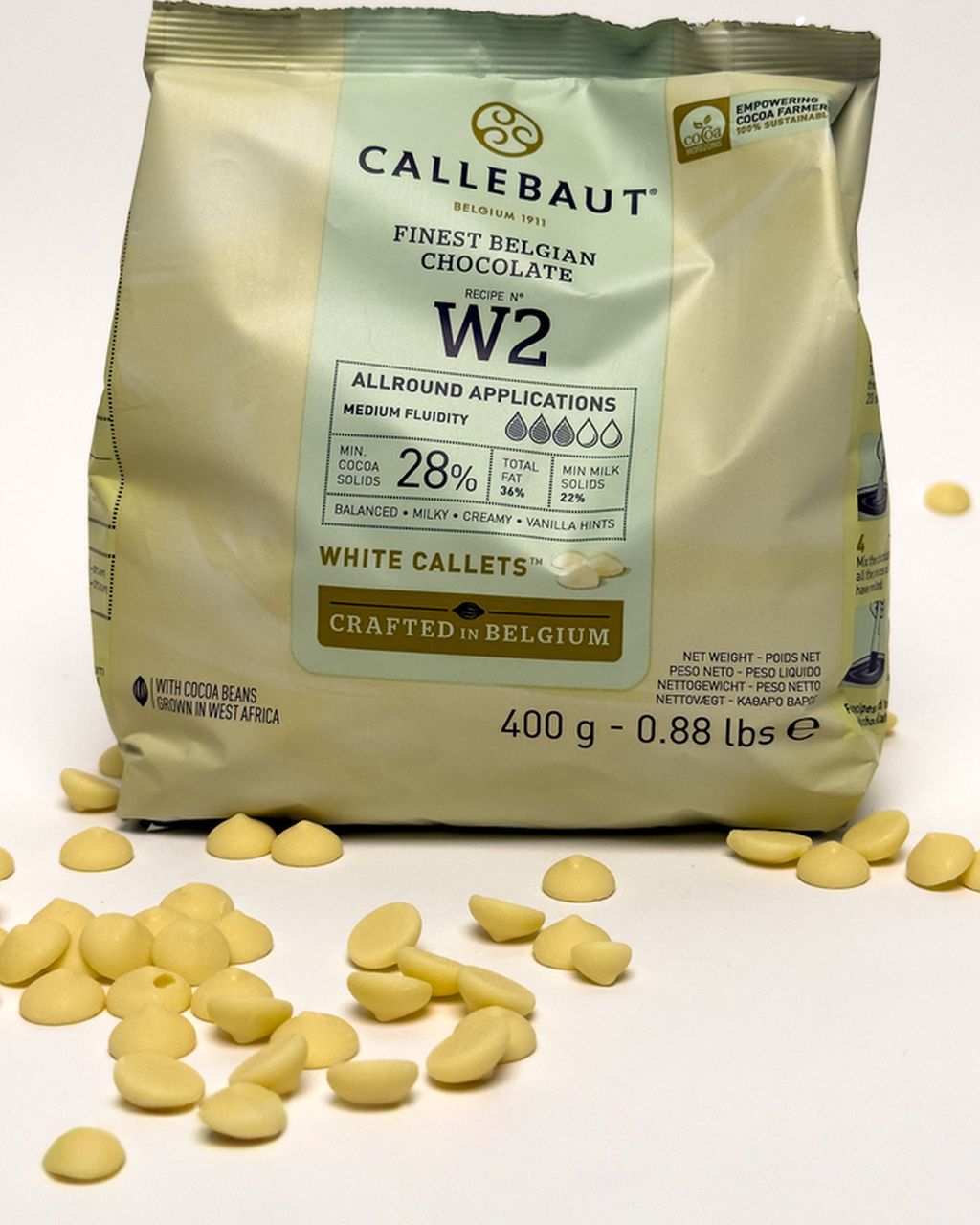
Chocolate ganache — dark chocolate to cream ratio 2:1, milk chocolate 2.5:1, white chocolate 3:1. Smooths out the best and holds up best under fondant or icing.
Cream cheese and mascarpone frosting — 500g cream cheese (quark-style) : 250g mascarpone : 80g icing sugar. The quickest to make and the least sweet.
Everything else in cake decorating is really just a combination of these five. Diplomat cream is pastry cream folded with whipped cream in a 2:1 ratio. Mousseline cream is pastry cream whipped with butter. Whipped ganache is ganache made with the ratio flipped, chilled, then whipped up. Once you've nailed the basics, the variations are just arithmetic.
Buttercream holds its shape better than any other cake frosting because its structure comes from butterfat, not air bubbles or starch. That's why you can pipe sharp rosettes on it, why it won't let fondant slide off, and why you can drive it halfway across the country without worrying.
It comes in two versions, and the difference between them matters a lot.
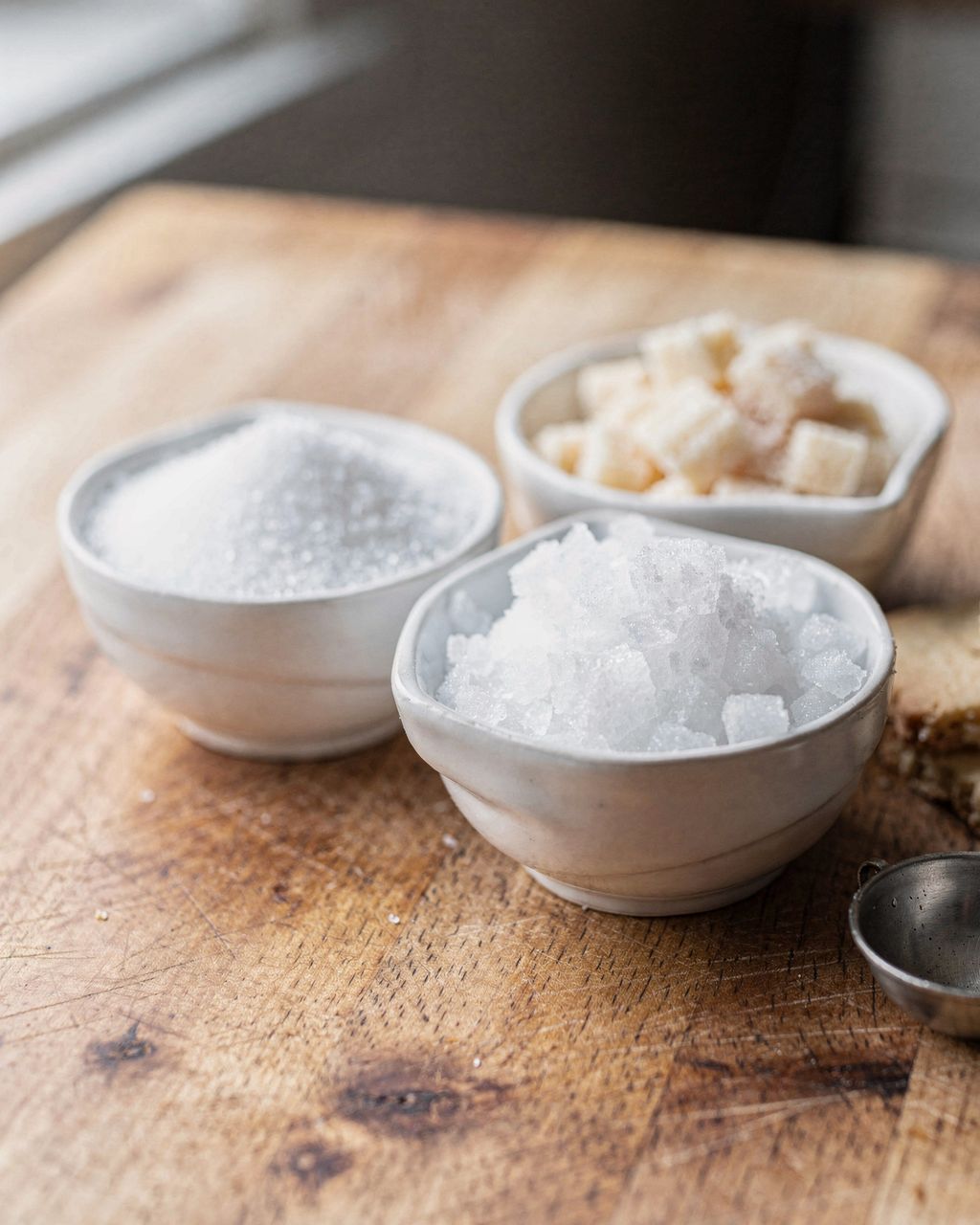
Quick (American) buttercream — beat 250g of softened butter until pale and fluffy, then gradually mix in 200g of icing sugar, a pinch of salt, and vanilla. Ten minutes of work. It is, however, quite sweet, and you can sometimes feel sugar crystals on your tongue.
Swiss meringue buttercream — heat 100g egg whites and 200g sugar in a bain-marie, stirring constantly, to 70–72°C until the sugar has fully dissolved (rub between your fingers — it should feel completely smooth). Whip into a stiff, cooled meringue — the bowl should feel just lukewarm to the touch, not warm. Then add 200–300g of butter at 20–22°C, a chunk at a time. Flavour-wise, it's a different league entirely: silky, far less sweet, and takes flavouring beautifully.
One temperature decides everything. Butter colder than 18°C will break the meringue into lumps; butter warmer than 25°C will melt it and thin out the frosting. Leave it on the counter and press it — it should give under your finger but not look glossy or greasy.
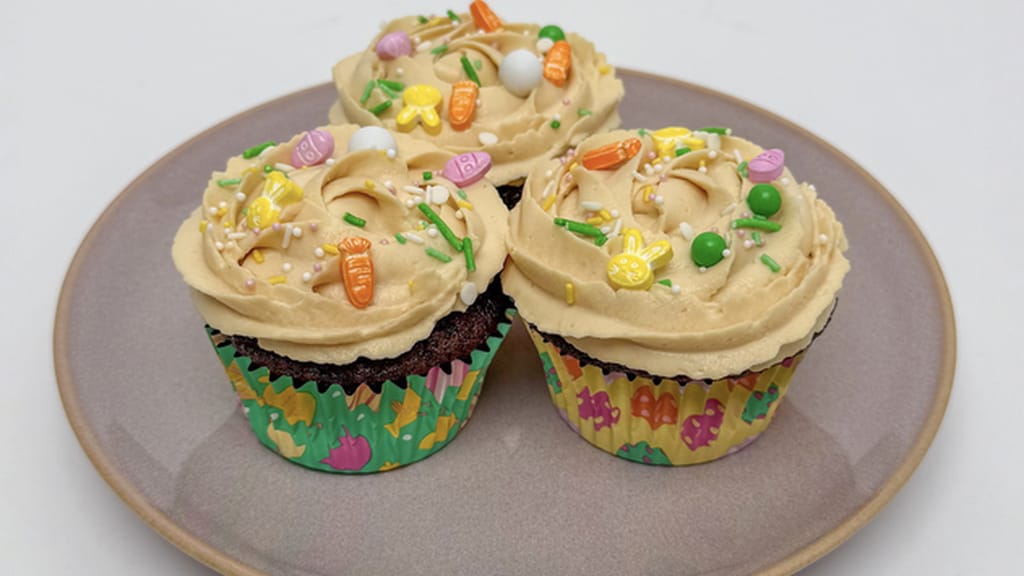
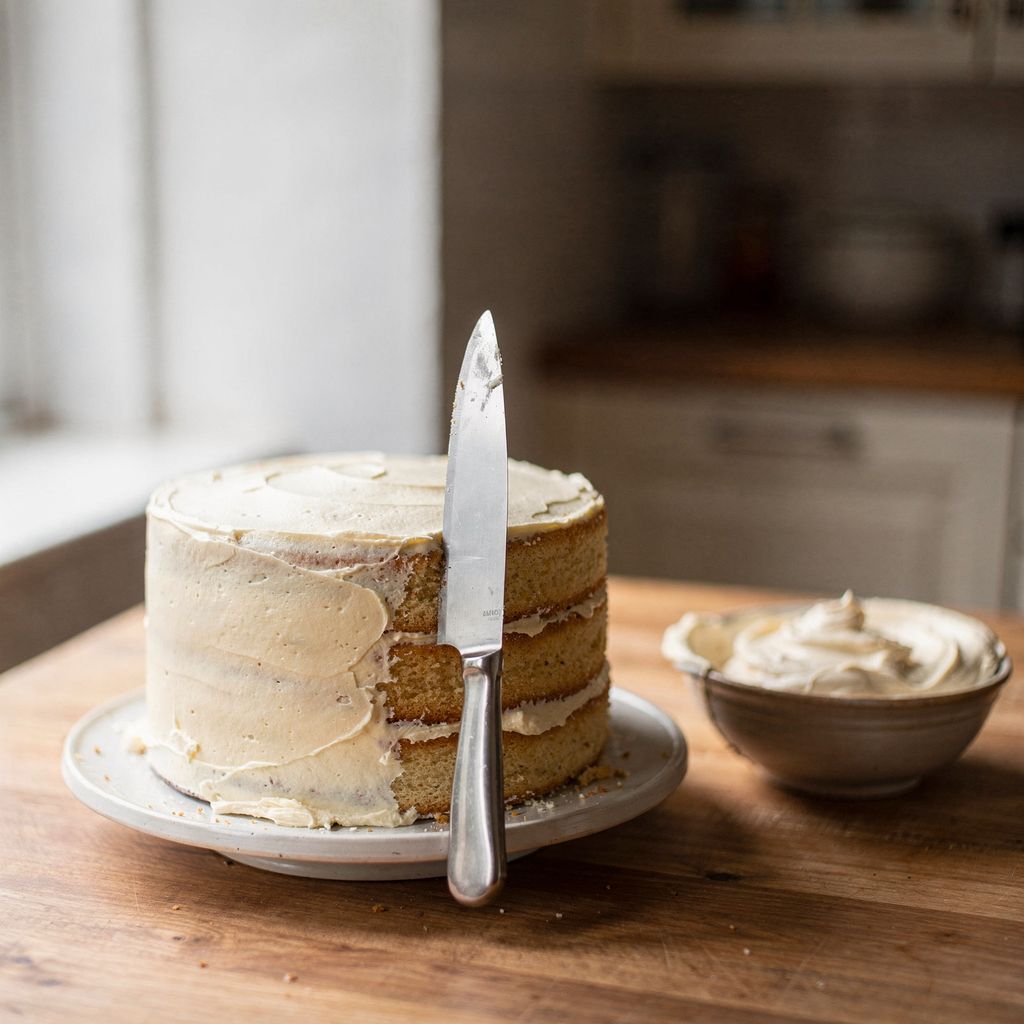
Chocolate cupcakes with salted caramel cream
Chocolate cupcakes with caramel buttercream — a frosting that holds sharp piped peaks
Whipped cream frosting needs proper whipping cream — by regulation at least 30% fat; from 33% up, it whips noticeably more willingly and holds its peaks longer. Without stabilising, it'll last on a cake for about a day before it starts weeping water. Anything under 30% fat won't give you firm peaks at all — there's simply not enough fat for the air bubbles to cling to.
What actually works for stabilising it:
Gelatine — about 3g of powdered gelatine per 250ml of cream. Let it bloom in 2 tablespoons of cold water, melt it gently (never let it boil), and cool it until just lukewarm. Pour it in a thin stream into cream that's already whipped to soft peaks, then whip briefly to combine. Cold gelatine added to cold cream will form rubbery threads — avoid that.
Mascarpone — 125g per 250ml of cream. The easiest route, and it tastes lovely too. The frosting ends up richer and slightly less airy.
Whipped cream stabiliser or instant pudding powder — 1 sachet (8–10g) per 250ml of cream. Quick and reliable, but it will never taste as purely of cream as the gelatine version.
The cream, bowl, and whisk should all go into the fridge for at least an hour beforehand. Whip on medium speed, not full power — slower whipping creates smaller, more stable bubbles. Stop the moment the cream holds a soft peak that gently curls over at the tip. A moment longer and you've got butter.
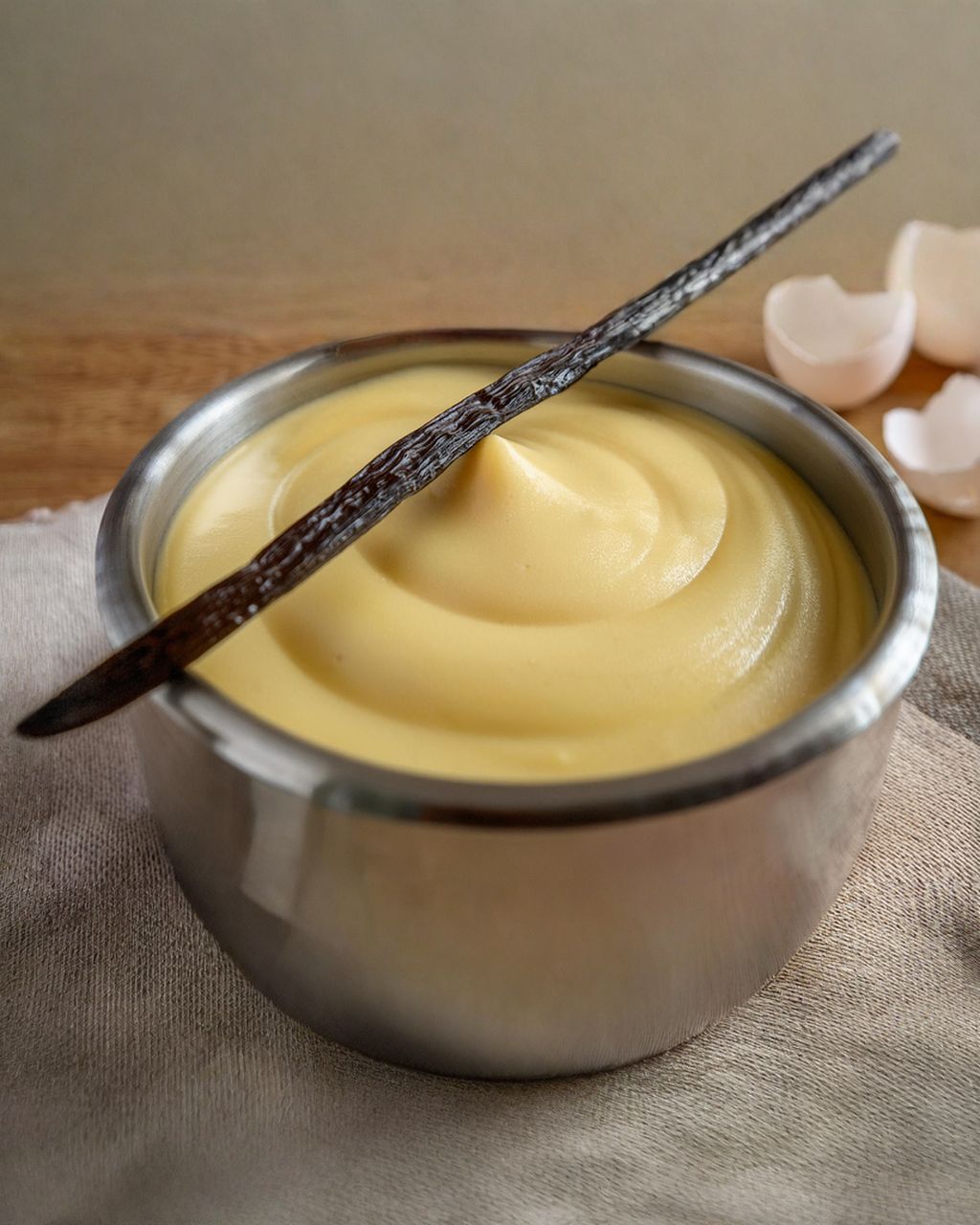
Pastry cream is made from 500ml milk, 4 egg yolks, 100g sugar, 40g cornflour, and 25g butter — and once it thickens, it needs a further 1–2 minutes of proper simmering. That's not a minor detail, it's the whole trick: egg yolks contain the enzyme alpha-amylase, which breaks starch back down. If you just thicken the cream and take it off the heat too soon, it'll turn watery in the fridge by the next day.
A foolproof method:
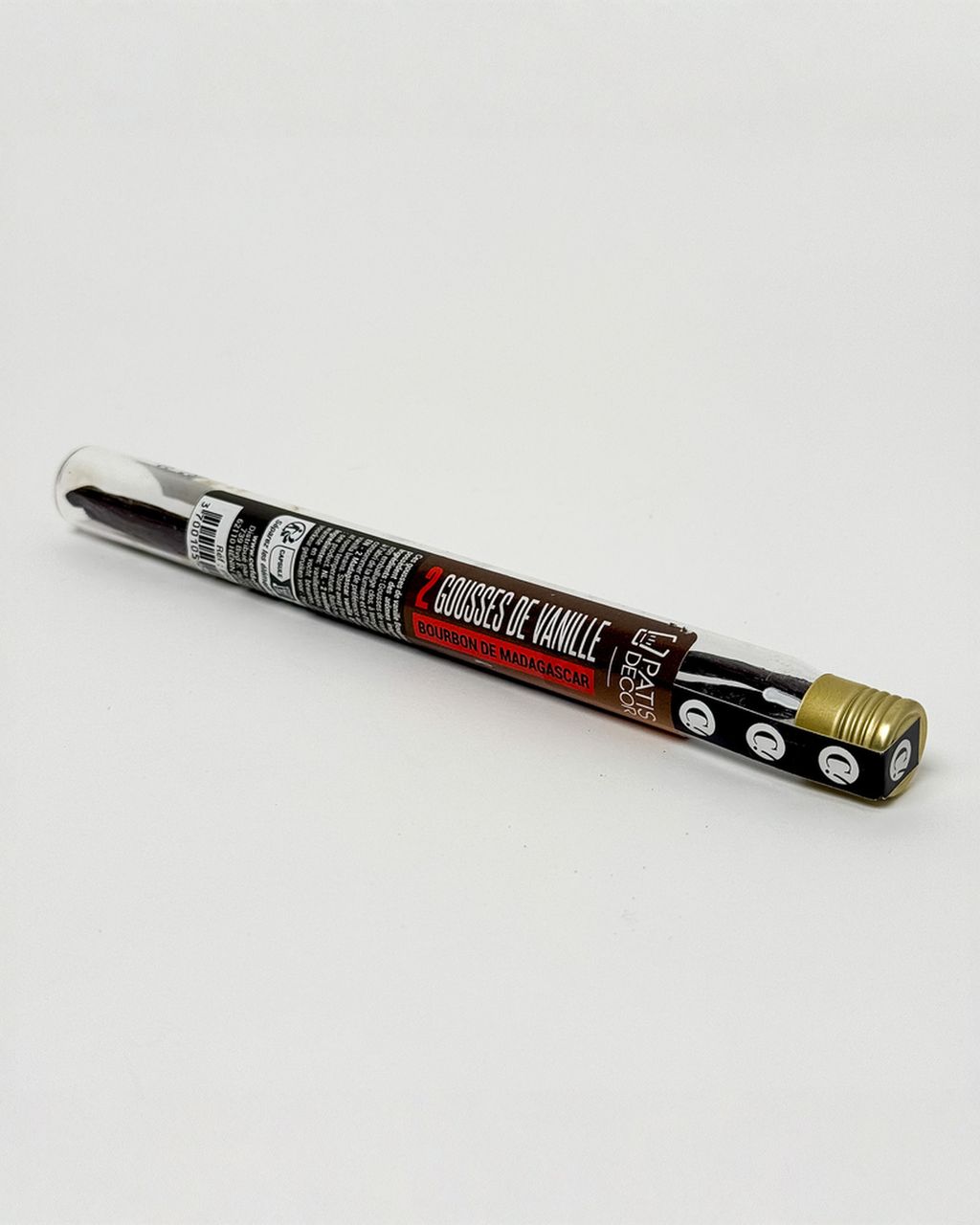
Bring the milk to the boil with a scraped vanilla pod.
Whisk the egg yolks, sugar, and cornflour together in a bowl until smooth.
Whisking constantly, pour in the hot milk — just a ladleful first to temper the yolks, then the rest.
Pour it back into the pan and, whisking constantly, cook until it thickens. Then keep it on the heat for another 1–2 minutes, until a few large bubbles break the surface.
Take it off the heat, stir in the butter, and immediately transfer to a shallow dish. Cover with cling film pressed directly onto the surface, otherwise it'll form a skin.
Chill in the fridge to 4°C, then whisk smooth again before using. Straight out of the fridge it will always look like set jelly — that's normal, whisking brings it back.
Pastry cream on its own is too thick to spread over a cake, and it tends to drag and stick to the knife. But it's ideal for layering, and as diplomat cream — two parts pastry cream folded with one part whipped cream — you get a filling that's both light and holds a clean slice. For the full method, including variations, see our step-by-step guide to crème pâtissière.
Ganache is an emulsion of chocolate and hot cream, and you control its firmness purely through the ratio. For cake frosting, by weight:
Dark chocolate (55–70%) — 2:1 (200g chocolate : 100g cream) for a firm filling or under fondant. 1:1 for a soft, spreadable glaze.
Milk chocolate — 2.5:1. It has less cocoa solids and more milk fat, so it needs less cream.
White chocolate — 3:1. Softest on its own, so it needs the most chocolate.
Whipped ganache (ganache montée) — flip the ratio to 1:2 (100g chocolate : 200g cream), chill overnight, and whip the next day. You'll get an airy chocolate frosting somewhere between whipped cream and mousse.
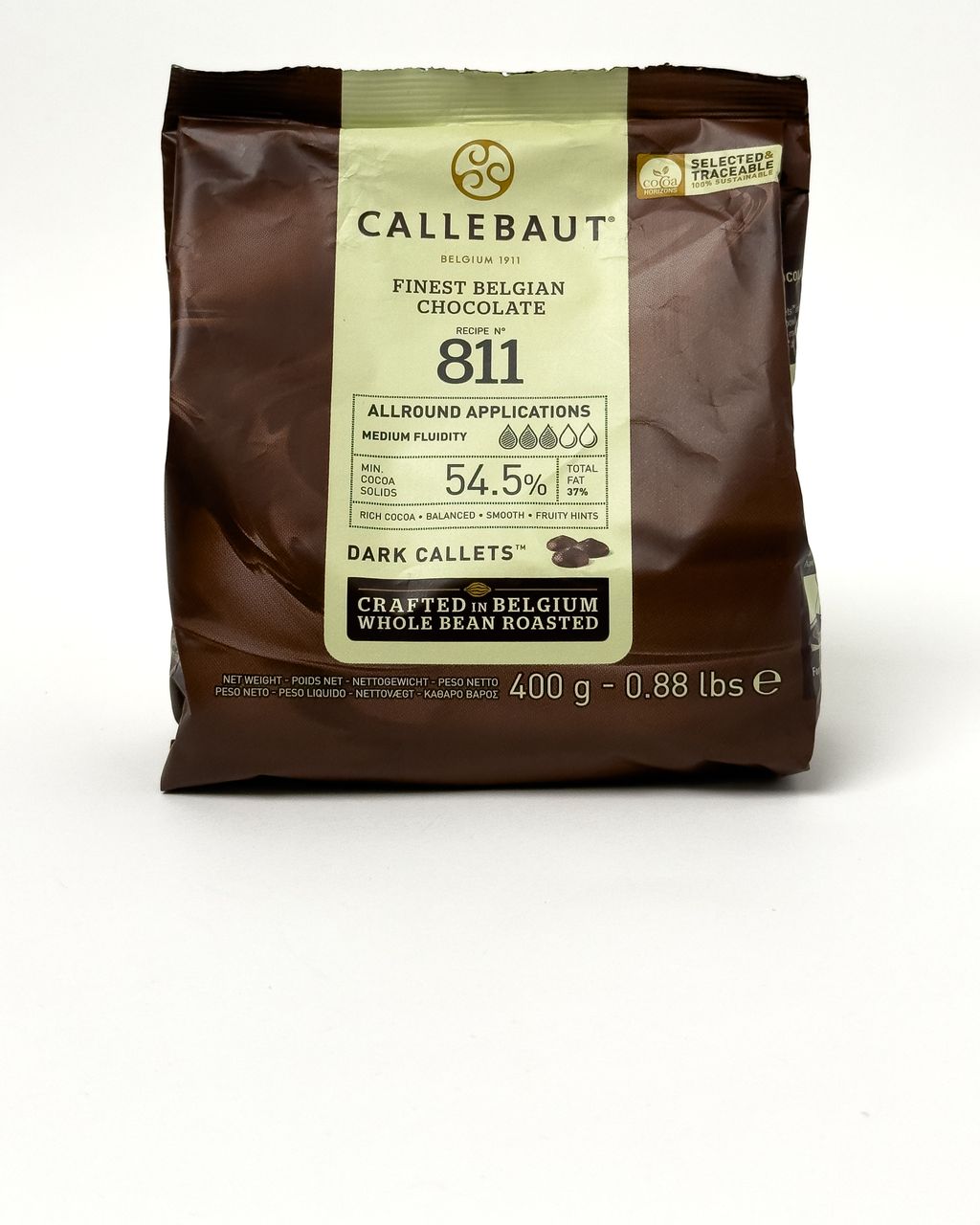
The brand of chocolate affects the ratio too — more cocoa butter means a firmer ganache, so with a premium couverture above 70%, cut the chocolate amount by about a tenth.
Method: finely chop the chocolate, pour over cream heated just below boiling point, let it sit for a minute, then stir with a spatula from the centre outward. A glossy, thick centre will form first, gradually pulling in the rest. Stir the whole bowl straight away and you'll end up with a greasy, grainy mess instead.
Let the ganache set at room temperature for 6–8 hours, not in the fridge — in the fridge it firms up too fast and unevenly.
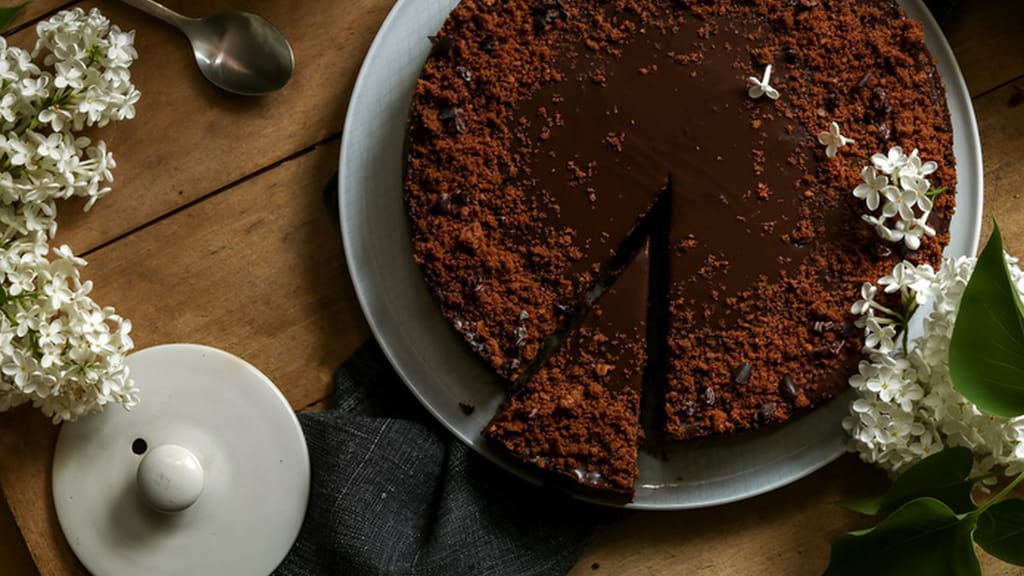
Simple chocolate cake
A simple chocolate cake — the sponge ganache suits best of all
Cream cheese frosting takes five minutes, no cooking and no meringue whipping required: beat 500g of tub cream cheese (quark-style), 250g mascarpone, and 80g icing sugar until smooth. It's the least sweet of the five and pairs best with tart fruit.
Two things that make or break it:
The cream cheese must be well drained. Tub-style cream cheese holds onto water, which will seep into the sponge within two days. Let it hang in muslin for an hour, or use a firmer, drier block-style cream cheese instead.
Everything must be cold, and beat it only briefly. Mascarpone is over 40% fat and curdles if overbeaten — instead of a smooth frosting, you'll get a grainy mass with whey leaking out. Beat on medium speed just until combined, not a second longer.
A cream-based variation: beat 500g cream cheese with sugar, whip 250ml cream separately to firm peaks, and fold it in with a spatula — never with a mixer. The frosting turns out airier but doesn't hold as long.
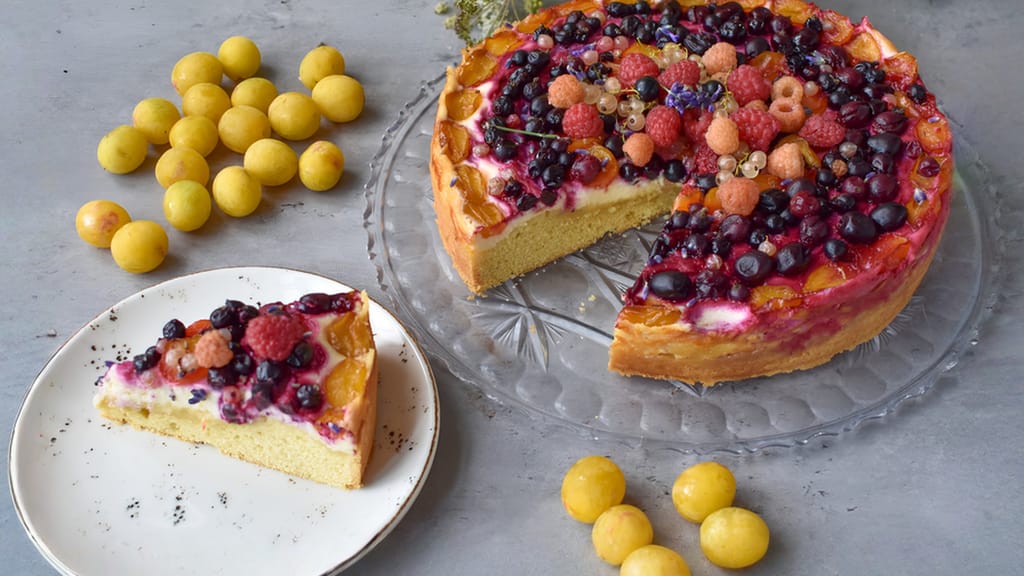
Summer mascarpone and curd cheese cake with loads of fresh fruit
A summer cake with mascarpone, cream cheese, and fresh fruit — cream cheese frosting in action
For coating, layering, and transporting a cake, reach for buttercream or ganache; for a light fruit cake, go with whipped cream or cream cheese frosting; for filling layers and roulades, use pastry cream. In more detail, based on what the cake needs to do:
Layer cakes, fondant coating, transport, hot weather → buttercream or ganache. The only two that can bear weight and heat.
Piped decorations, sharp rosettes, lettering → buttercream. Whipped cream will melt, cream cheese will slump.
A light cake with fresh fruit → whipped cream or cream cheese frosting. Buttercream would overpower the fruit.
Filling between layers, roulades, choux pastries → pastry cream or diplomat cream.
A cake made a day ahead → ganache or buttercream. Both actually taste better on day two.
A cake that'll be eaten within two hours → whipped cream frosting, no need to even stabilise it.
And one thing people tend to underestimate: frosting needs a sponge that can actually support it. A soft pound cake or an overly moist sponge will collapse under a dense frosting. A classic sponge (génoise-style) is the safest base for most of these five frostings.
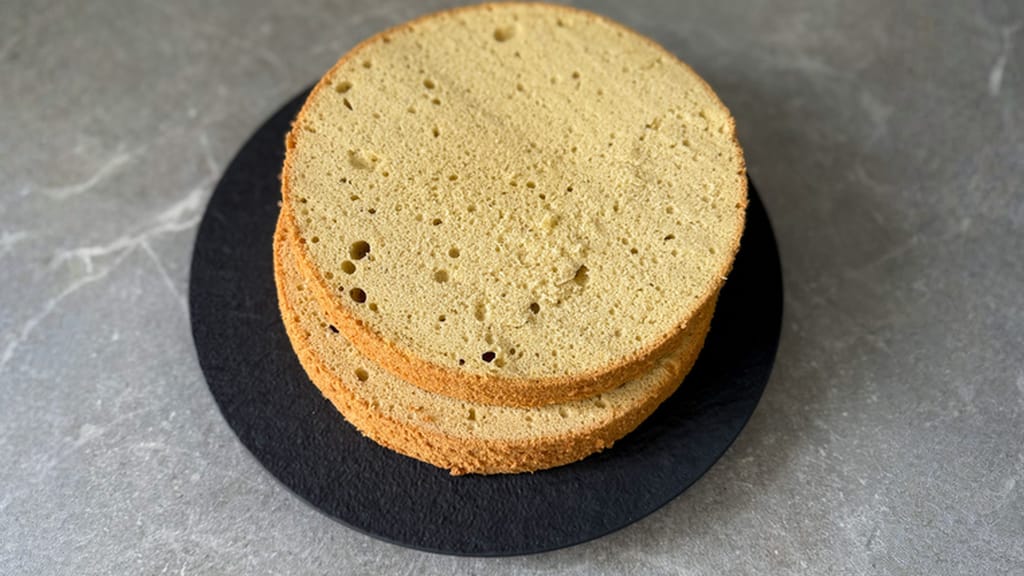
Light and airy génoise sponge cake
A light, airy génoise sponge — the base for all five frostings
For a 20cm three-layer cake, plan on roughly 1kg of frosting total — about 400–500g for the filling between layers and 500–600g for coating the top and sides. For an 18cm cake, around 700g is enough; for 24cm, plan on 1.4–1.6kg.
Two practical tips on quantity:
The layer between tiers should be 5–8mm thick. Any thinner and it gets lost in the sponge; any thicker and it'll get pushed out sideways under the weight of the layers above, causing the cake to bulge.
Always make about a fifth more than your calculation for coating the outside. A thin crumb coat, which seals in the crumbs, uses up a surprising amount, and having to whip up more frosting halfway through is a hassle.
Almost every ruined batch of cake frosting comes down to temperature or overbeating — and most of the time, you can rescue it without starting from scratch.
Buttercream looks curdled and lumpy. The butter was colder than the meringue. Let the bowl sit over lukewarm water for 10 minutes, then keep beating — it'll come together.
Buttercream is runny, shiny, or greasy-looking. The butter was too warm. Chill the bowl in the fridge for 20 minutes, then beat again.
Whipped cream has been overbeaten and turned grainy. There's still hope: fold in 2–3 tablespoons of cold, unwhipped cream with a spatula and mix gently by hand. But if the whey has already started separating out, it's turned to butter and there's no going back.
Mascarpone frosting has split. On low speed, slowly drizzle in cold cream a tablespoon at a time until it comes back together.
Pastry cream is runny, or turns watery by the next day. It wasn't cooked long enough. Return it to the pan, bring back to the boil, and simmer for 1–2 minutes — this finishes cooking the starch and destroys the enzyme from the egg yolks.
Ganache has split into fat and solids. Add a tablespoon of hot milk and blend with a stick blender on the lowest setting, keeping the blade near the bottom to avoid pulling in air. The emulsion almost always comes back together.
Buttercream and ganache keep in the fridge for 5–7 days, pastry cream for 3 days, cream cheese frosting for 2–3 days, and unstabilised whipped cream frosting for just a day. In more detail:
Buttercream — 5–7 days in the fridge in an airtight container, up to 3 months in the freezer. Bring it to room temperature before using and whip it again, otherwise it'll stay lumpy.
Ganache — 5–7 days in the fridge. Firm 2:1 dark ganache keeps for 2 days even at room temperature; keep soft 1:1, milk, white, and whipped ganache in the fridge after just a few hours. Warm gently when reheating, or it will split.
Pastry cream — up to 3 days in the fridge, with cling film pressed onto the surface. Don't freeze it — the starch will weep water once thawed.
Cream cheese and mascarpone frosting — 2–3 days in the fridge, after which it starts to release whey.
Whipped cream frosting — the same day if unstabilised, 2 days if stabilised with gelatine.
A finished cake made with egg, milk, or cream-based frosting always belongs in the fridge. Leave it out for a maximum of two hours — and considerably less on a hot day. Take it out of the fridge 30–45 minutes before serving; cold buttercream tastes like a mouthful of fat, but at room temperature it tastes like frosting.
Yes — three of the five basic frostings don't need eggs at all. Ganache, whipped cream frosting, and cream cheese/mascarpone frosting are naturally egg-free. Pastry cream can be made with starch alone: for 500ml of milk, use 55g of cornflour instead of 40g and skip the yolks entirely. You'll lose some colour and buttery flavour, but it will still thicken properly. For buttercream, go for the quick American-style version, which is also egg-free.
You can only freeze a fully assembled cake if it's made with buttercream or ganache — the other three types won't survive freezing. First, let the cake firm up unwrapped in the freezer for an hour, then wrap it in two layers of cling film or foil; it'll keep for 1–2 months. Thaw slowly: overnight in the fridge, then 30–45 minutes at room temperature — otherwise moisture condenses on the surface. Pastry cream weeps water after thawing, whipped cream frosting separates into liquid whey, and cream cheese frosting turns grainy — make cakes with these fresh, and only freeze the plain sponge if needed.
Use gel or powder colouring, never liquid. Liquid food colouring is mostly water, and it will thin your frosting — with buttercream, even a few drops can break the emulsion. Add gel colouring a toothpick-tip at a time to the finished frosting, mixing briefly between additions; the colour will also deepen after an hour in the fridge, so don't over-colour straight away. For ganache and chocolate frostings, use only oil-based (fat-soluble) colours — water-based ones will make it seize instantly.
You can make all five types by hand — just expect buttercream to take longer and tire your arm out. Whipped cream, cream cheese, and pastry cream frostings turn out just as well by hand — in fact, for whipped cream, a hand whisk is actually an advantage since it's much harder to overwhip. Ganache isn't whisked at all — it's just stirred with a spatula. Swiss meringue buttercream is the only one where you're looking at a solid 15 minutes of continuous whisking without a mixer.
The most reliable substitute is chilled coconut cream — put a tin of full-fat coconut milk in the fridge overnight, scoop off just the solid layer from the top, and whip it like cream. It also works in ganache, where you can swap in coconut cream for dairy cream 1:1 (the ratio to chocolate stays the same). Plant-based whipping creams (oat, soy) work too, but need longer whipping and tend to be noticeably sweeter, so cut back on the sugar in the recipe. Milk thickened with starch won't help here — without fat, there's nothing to whip into structure.
One recipe worth heating the oven for, one tip, and one deal from the shop. Nothing else.