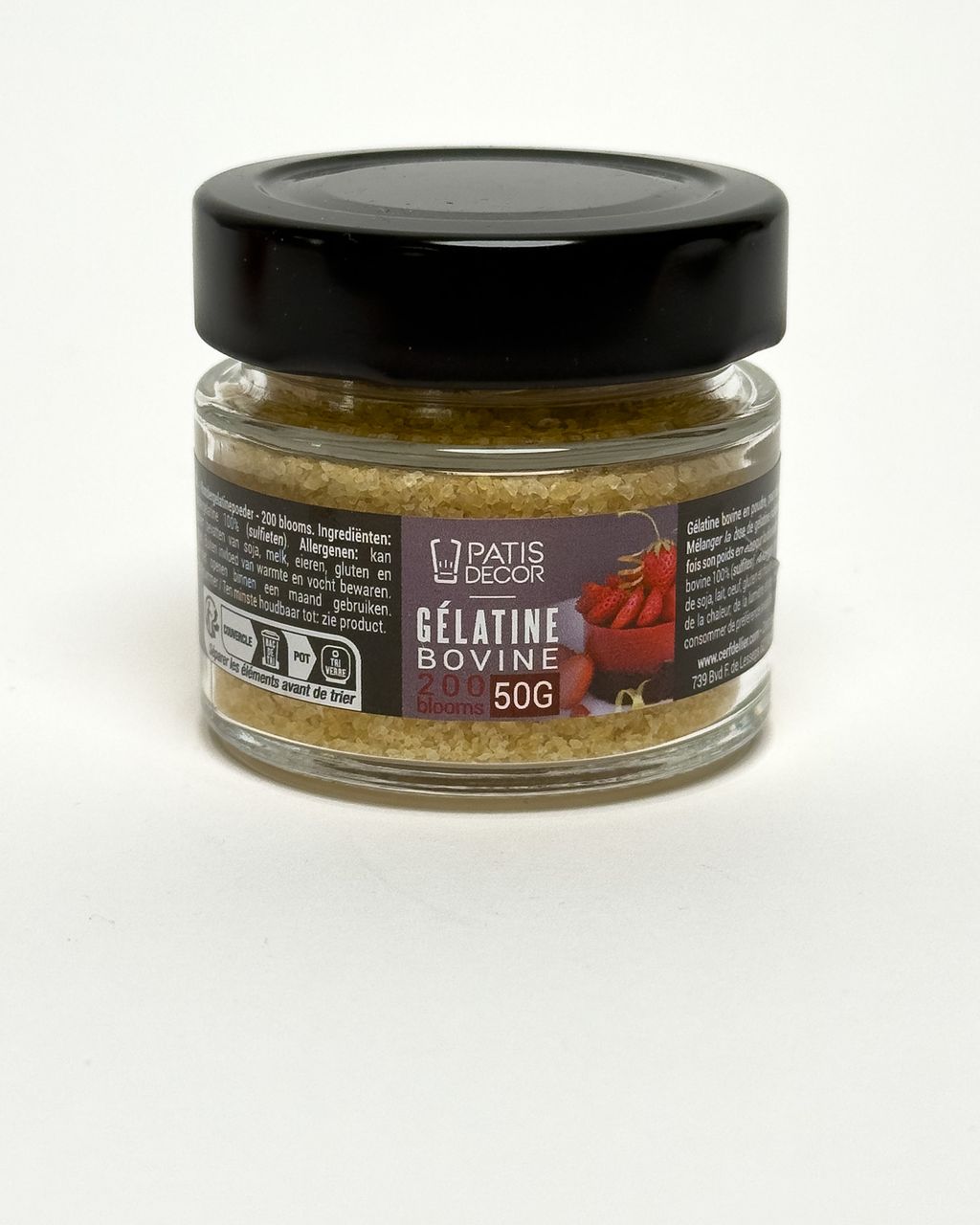
Beef Gelatin Powder 200 Bloom
Stabilized Whipped Cream for Cakes: How to Set It with Gelatin So It Holds
Updated Oct 15, 2026
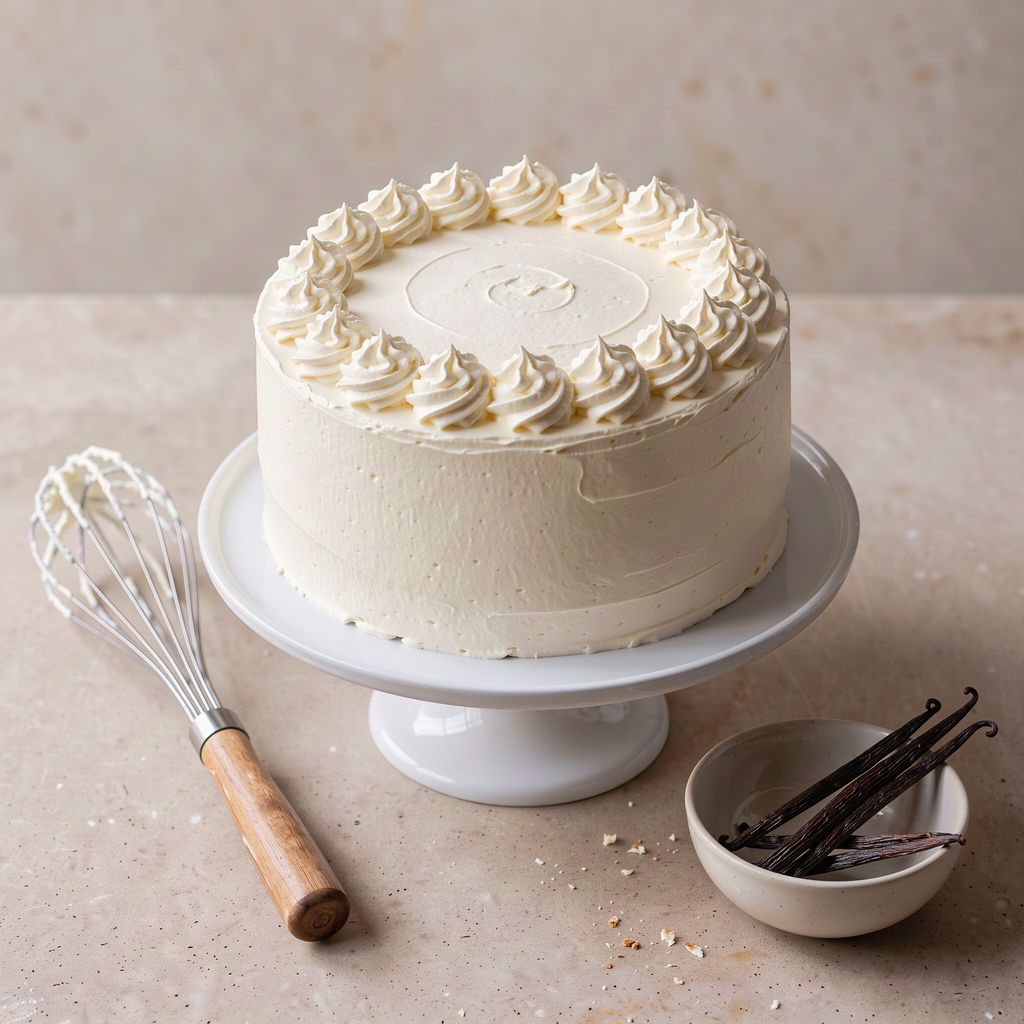
To make a firm, stabilized whipped cream for cakes, whip dissolved gelatin into cream with 33–40% fat: about 1 g of 200 Bloom powdered gelatin per 100 ml (scant ½ cup) of cream for filling, and 1.2–1.5 g for frosting and piping. The gelatin forms a fine network in the cream that traps air, so the cream doesn't run, doesn't weep, and the cake slices cleanly even the next day. The whole trick comes down to three things: the right amount, gelatin that is dissolved but never boiled, and slowly combining warm gelatin with cold cream.
For 500 ml (about 2 cups) of cream, you need 5–7.5 g of 200 Bloom powdered gelatin, depending on the job the cream has to do in the cake. These amounts are for cream with 33–40% fat:
Filling between layers: 1 g per 100 ml of cream (5 g per 500 ml). The cream is still soft and silky, but it won't ooze out at the sides.
Frosting and piping: 1.2–1.5 g per 100 ml (6–7.5 g per 500 ml). It holds sharp edges, rosettes, and piped decorations.
Tall cake, warm room, transporting: up to 2 g per 100 ml (10 g per 500 ml). The cream is denser here, closer to a mousse, so don't go any higher or it will turn rubbery.
For the water, use 5–6 times the weight of the gelatin: 25–30 ml of cold water for 5 g of gelatin. Sugar (40–60 g of powdered sugar per 500 ml of cream) doesn't affect firmness, so you can adjust the sweetness independently.
If you're adding fruit purée to the cream, count it as extra liquid: add roughly 1 g of gelatin for every 100 g of purée, and don't use more than 100 g of purée per 500 ml of cream. Fresh pineapple, kiwi, and papaya contain enzymes that break down gelatin, so the cream won't set. Always simmer these fruits briefly first, or use canned or stewed fruit instead.
To stabilize whipped cream with gelatin, dissolve the bloomed gelatin to about 50 °C (122 °F), match its temperature to a little of the whipped cream, then whip it into the rest in a thin stream. The whole process takes about 20 minutes including blooming and has seven steps: chill → bloom → dissolve → whip to soft peaks → temper → stream in → whip to finish.
Chill the cream and the bowl. Cream with 33–40% fat should be at 4–6 °C (39–43 °F). Put the bowl and whisk in the fridge for 15 minutes. Warm cream whips slowly and is easy to overwhip.
Bloom the gelatin. Sprinkle it into the cold water (not the other way around, or it will clump), stir, and let it stand for 10 minutes. It will thicken into a firm gel.
Dissolve it, but don't boil it. Use a water bath or the microwave in 5–10 second bursts, until it's completely clear with not a single grain left. 40–50 °C (104–122 °F) is enough. Above 60–70 °C (140–158 °F), gelatin weakens if held there for long, and boiling weakens it even faster.
Whip the cream to soft peaks. Add the sugar and vanilla and whip on medium speed. The peak should flop over, not stand up.
Temper. Quickly stir 2–3 tablespoons of the whipped cream into the dissolved gelatin (which should be around 35–40 °C / 95–104 °F, just lukewarm to the touch). This evens out the temperatures.
Stream it in. With the mixer running on low speed, pour the gelatin mixture into the cream in a thin stream.
Whip to firm peaks for just a few seconds, until the cream holds its shape and has a smooth sheen. Use it right away: it starts to set within 5–10 minutes.
Put the finished cake in the fridge for at least 4 hours, ideally overnight. Gelatin only reaches full strength once it's chilled.
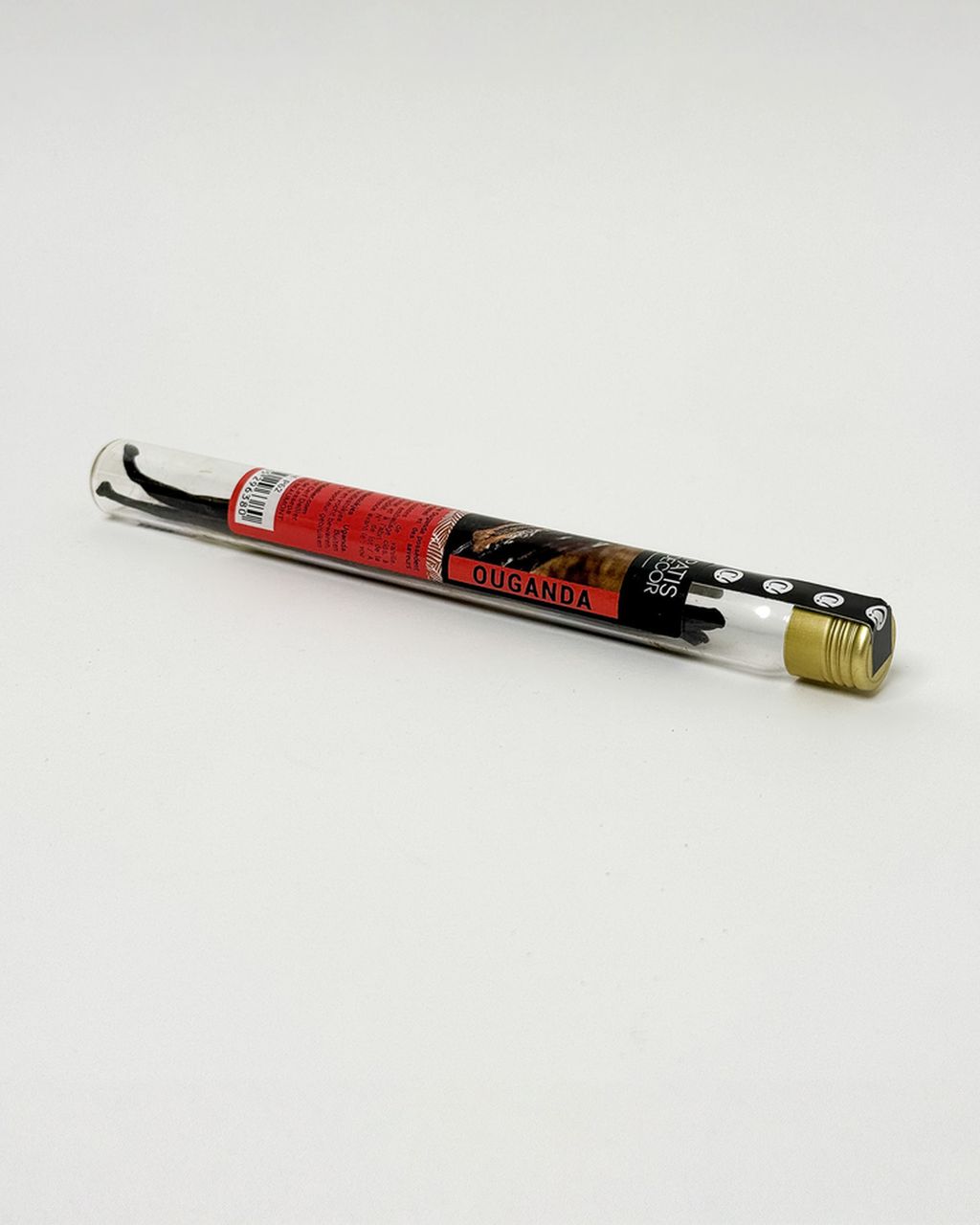
For vanilla whipped cream, scrape the seeds from half a vanilla bean into every 500 ml of cream. For a stronger flavor, warm the cream with the scraped pod a day ahead, chill it overnight, and only then whip it. Cold, well-rested cream actually whips even better. You'll find how much vanilla to use in what in our article on how much vanilla to use in cookies, custard, and sweet bread.
Lumps and rubbery strings form when warm gelatin hits cold cream and sets before it can disperse. Cream straight from the fridge is around 5 °C (41 °F), while gelatin begins to set below roughly 20–25 °C (68–77 °F), so a drop of poured-in gelatin sets within a second. That's why there's an in-between step with a few spoonfuls of cream.
The most common mistakes and how to fix them:
Rubbery strings in the cream: the gelatin went into the cream all at once or without tempering. Next time, pour it in a thin stream into the already tempered mixture.
The cream doesn't hold: too little gelatin, boiled gelatin, or fresh tropical fruit with enzymes. Check the amount in grams, not in sheets.
The cream is grainy and greasy: the cream is overwhipped and the fat has started to separate into butter. After adding the gelatin, whip only to firm peaks, no longer.
The cream set in the bowl before you could spread it: you're working too slowly, or you've made too much at once. For a large cake, make two smaller batches one after the other.
The cream is rubbery and springy: too much gelatin. Don't go over 2 g per 100 ml of cream.
Powdered and sheet gelatin work the same way. What matters is the weight and the gel strength, known as the Bloom value. The higher the Bloom, the firmer the gel from the same amount. The amounts in this article are for 200 Bloom powdered gelatin, which is a common pastry strength and the most predictable to work with.
Sheets differ in both weight and strength: ordinary supermarket sheets weigh 1.7–2 g, while weaker-strength pastry sheets can weigh 2.5–3.3 g. "6 sheets" in a recipe can therefore mean 10 g or nearly 20 g, and a completely different result. Always weigh them.
To convert between strengths, pastry chefs often use the square-root rule: weight of new gelatin = original weight × √(original Bloom ÷ new Bloom). This is because gel strength rises roughly with the square of the concentration, not in a straight line. For example, if you use a weaker 160 Bloom gelatin instead of 5 g of 200 Bloom → 5 × √(200 ÷ 160) ≈ 5.6 g.
Powdered gelatin has one practical advantage in whipped cream: you can weigh it to a tenth of a gram and don't have to squeeze water out of it, so you know exactly how much liquid goes into the cream. You'll find all the gelling ingredients we carry in the gelling agents and binders category.
For a cake that has to hold its frosting, rosettes, and a few hours on the table, gelatin is the most reliable choice. The other options work too, but each has a trade-off:
Gelatin: the firmest hold, no effect on flavor, and the cream stays light. It requires an exact amount and quick work, and it isn't vegetarian.
Packaged whipped cream stabilizer (starch-based): the easiest, but it holds less. It's enough for a filling, but often not for frosting a tall cake. We explain why and when to use it at all in whipped cream stabilizer: why it's used and when you don't need it.
Mascarpone: the cream is dense and creamy, and it holds very well without cooking anything, but it's heavier and tastes cheesy. See mascarpone and white chocolate cake cream.
Agar: a plant-based alternative, but trickier. To dissolve it, you first have to boil it (it melts at around 85 °C / 185 °F), and it sets at just 32–40 °C (90–104 °F), so it's hard to work into cold cream and the gel is more brittle.
For exact amounts of milk powder, starch, white chocolate, and other homemade substitutes, see what to use instead of whipped cream stabilizer. If you're not sure which cake cream to choose in the first place, start with the overview of types of cake cream and the general guide on how to make cake cream.
Well-stabilized whipped cream (1.2–1.5 g of gelatin per 100 ml) lasts roughly 2–3 hours at a room temperature of 20–22 °C (68–72 °F) without slumping. After that it softens, because the gelatin gel starts to soften at around 30 °C (86 °F) and the cream fat even sooner.
Take the cake out of the fridge just before serving, not an hour ahead.
For a summer garden party or a car ride, use the upper amount of 2 g per 100 ml and keep the cake in the shade.
In direct sun or above 25 °C (77 °F), no whipped cream will hold. For an event like that, choose a buttercream, ganache, or mascarpone cream.
To keep the filling between layers from squeezing out at the sides, pipe a ring of thicker cream around the edge of the cake layer. Our article on the cream dam: how to fill a cake so the filling doesn't leak shows how. For smooth sides and sharp edges, take a look at frosting a cake with cream or ganache.
Whipped cream stabilized with gelatin gives you three classic firm cake creams: Bavarian cream, crème diplomate, and quark cream. Fold it into a vanilla crème anglaise and you get Bavarian cream. Combined with pastry cream, it makes crème diplomate, a firmer, creamier filling for cakes and slices. And with quark, you can make a quark cake cream that holds its shape.
You can't make the cream itself ahead, because it sets in the bowl within 10 minutes, but you can assemble the finished cake a day in advance. It keeps in the fridge for 2–3 days and slices best on the second day.
Yes, gelatin helps the cream hold up in the freezer better than plain whipped cream. Freeze the cake uncovered, wrap it in plastic once it's solid, and thaw it slowly in the fridge overnight, not at room temperature.
A plant-based whipping product made with hydrogenated fat usually doesn't need stabilizing, as it holds on its own. Among other plant-based options, chilled coconut cream (just the solid part) or plant-based creams made for whipping whip up well. For these, 1–1.5 g of gelatin per 100 ml helps, just as with dairy cream, but the result is less fluffy. Ordinary oat cooking cream is low in fat and won't whip, even with gelatin.
Yes, add gel coloring to the cream before whipping or in the last few seconds of whipping. Liquid colors aren't suitable: they thin the cream, so it holds its shape less well.
One recipe worth heating the oven for, one tip, and one deal from the shop. Nothing else.