Vanilla mascarpone with raspberries
Updated Sep 18, 2026
You can replace whipped cream stabilizer with gelatine, cornstarch and icing sugar, mascarpone, milk powder, instant pudding powder, white chocolate, or whipped egg white — and very often you don't need it at all if you use whipping cream with at least 33% fat and chill everything properly. That little sachet isn't magic: it's just modified potato starch with sugar and a pinch of phosphate. Below you'll find every substitute with the exact amount for 250ml of cream, how long it holds its shape, and where it works best (and where it doesn't).
Whipped cream stabilizer is a small sachet containing 10–13g of modified potato or corn starch, sugar, and a stabilizing agent (usually calcium phosphate), stirred into 200–250ml of chilled cream before whipping. That's genuinely all it is — which is exactly why it's so easy to replace with things you already have at home.
For whipped cream to hold its shape, the fat structure surrounding the air bubbles needs to stay intact. It breaks down for two reasons: water separates out (the cream starts "weeping") or heat softens the fat and the bubbles collapse. Every effective substitute does one of three things:
Binds free water — cornstarch, icing sugar, milk powder, pudding powder.
Adds fat, which reinforces the structure — mascarpone, cream cheese, white chocolate.
Creates a gel network that holds the foam from the outside — gelatine, agar.
Pick based on the job at hand: piping rosettes for a hot venue? Go for gel or fat. Just need a dollop for a dessert in an hour's time? Cornstarch is plenty.
For 250ml of whipping cream (at least 33% fat), use one of these seven substitutes:
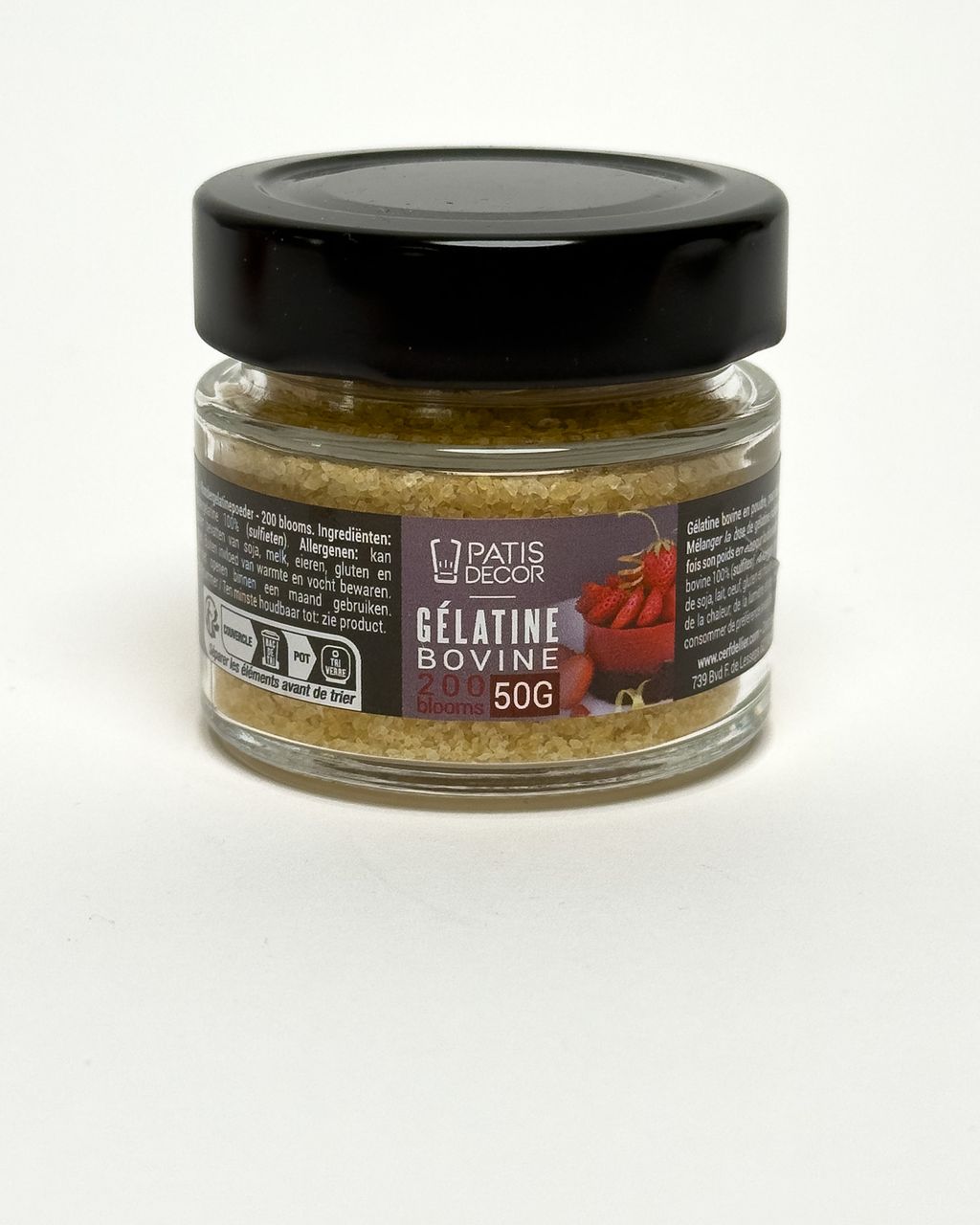
Gelatine — 2g of powder (½ teaspoon) or 1 sheet. Holds reliably overnight, and often into the next day too if kept cold. The firmest of them all.
Cornstarch + icing sugar — 4g of starch (1 level teaspoon) mixed with 2 tablespoons of icing sugar. Holds for about 24 hours — closest to the shop-bought sachet.
Mascarpone or cream cheese — 50–80g. Holds for 2–3 days, with a richer, slightly cheesy flavour.
Skimmed milk powder — 10–20g (1–2 tablespoons). Holds for about 24 hours, and stays flavour-neutral.
Instant pudding powder (the no-cook kind, just stirred into milk) — 10g (1 tablespoon) plus 2 tablespoons icing sugar. Holds for 2 days, but adds flavour and a slight tint.
White chocolate, whipped as a ganache— 100g. Holds for 3–4 days and copes even in a warm room, though it's on the sweet side.
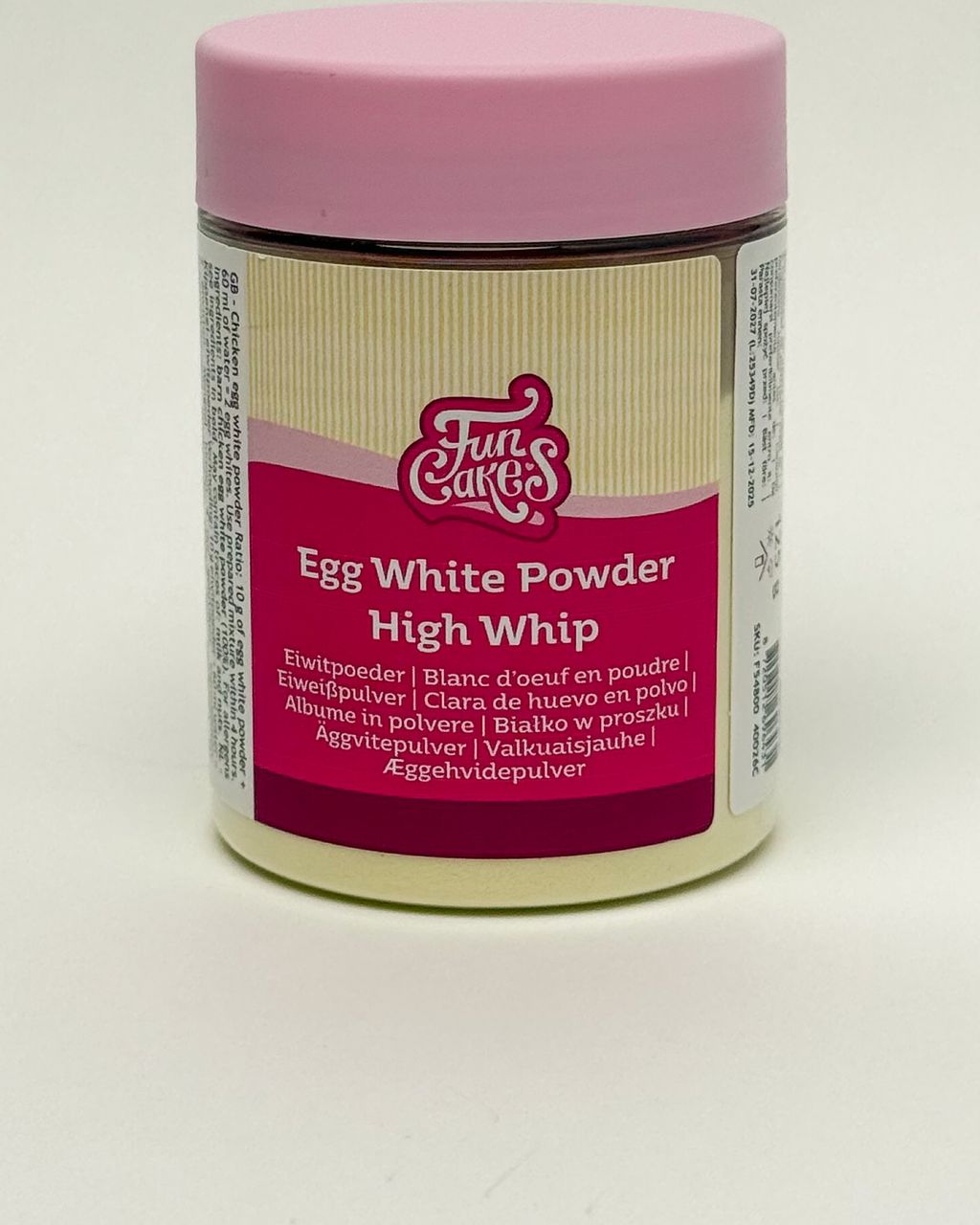
Egg white — 1 medium egg white, whipped separately and folded in. Holds for about 12 hours and adds extra volume.
Worth noting: neither lemon juice nor cream of tartar is a proper substitute. Cream of tartar (about ¼ teaspoon per 250ml) firms the foam slightly but adds a tangy taste — for the same job, reach for cornstarch or gelatine instead.
Gelatine is the most reliable stabilizer substitute and the only one that holds sharply piped decorations and tiered cakes — it's what professional pastry chefs reach for. For 250ml of cream, you need 2g of powdered gelatine (about ½ teaspoon) or one sheet.
Sprinkle the gelatine over 1 tablespoon of cold water and let it bloom for 5 minutes. Don't stir.
Melt it over a water bath until clear — never above 60°C, or it will lose its setting power.
Let it cool to 35–40°C. It needs to be liquid but not hot.
Whip the cream to soft peaks, then pour in the gelatine in a thin stream while whipping continuously.
Whip to firm peaks and chill for at least an hour.
How long it holds: reliably overnight, and often the day after too if kept cold. That said, don't rely on it to hold a cake for two days ahead.
The most common mishap: the gelatine sets into rubbery little lumps. That means it was too cold when it met the ice-cold cream. The fix is lukewarm gelatine, a thin stream, and the whisk running the whole time — never pour it in all at once from a spoon. Gelatine is animal-derived, so it's off the table for vegetarians.
The same principle holds together things like a no-bake fruit cake, where the whipped cream layer needs to support fruit and still slice cleanly.
Cornstarch with icing sugar is basically a homemade version of the sachet stabilizer — for 250ml of cream, mix 1 level teaspoon (about 4g) of cornstarch or potato starch with 2 tablespoons of icing sugar, and add it once the cream starts to thicken.
Why mix it with sugar first: dry starch sprinkled straight into liquid cream clumps up, and no amount of whipping will break it down again. The sugar keeps it dispersed.
Stick to the amount given. Above roughly 6g of starch per 250ml, the whipped cream starts tasting starchy and leaves a coating on your palate. The result holds its shape in a display case or the fridge for about a day — plenty for a cake you're eating today.
Icing sugar on its own works too, just less effectively: it typically contains up to 3% anti-caking starch, and its fine grains thicken cream somewhat by themselves. Use 2–3 tablespoons. For more on how icing sugar differs from caster sugar, see our article on icing sugar in baking.
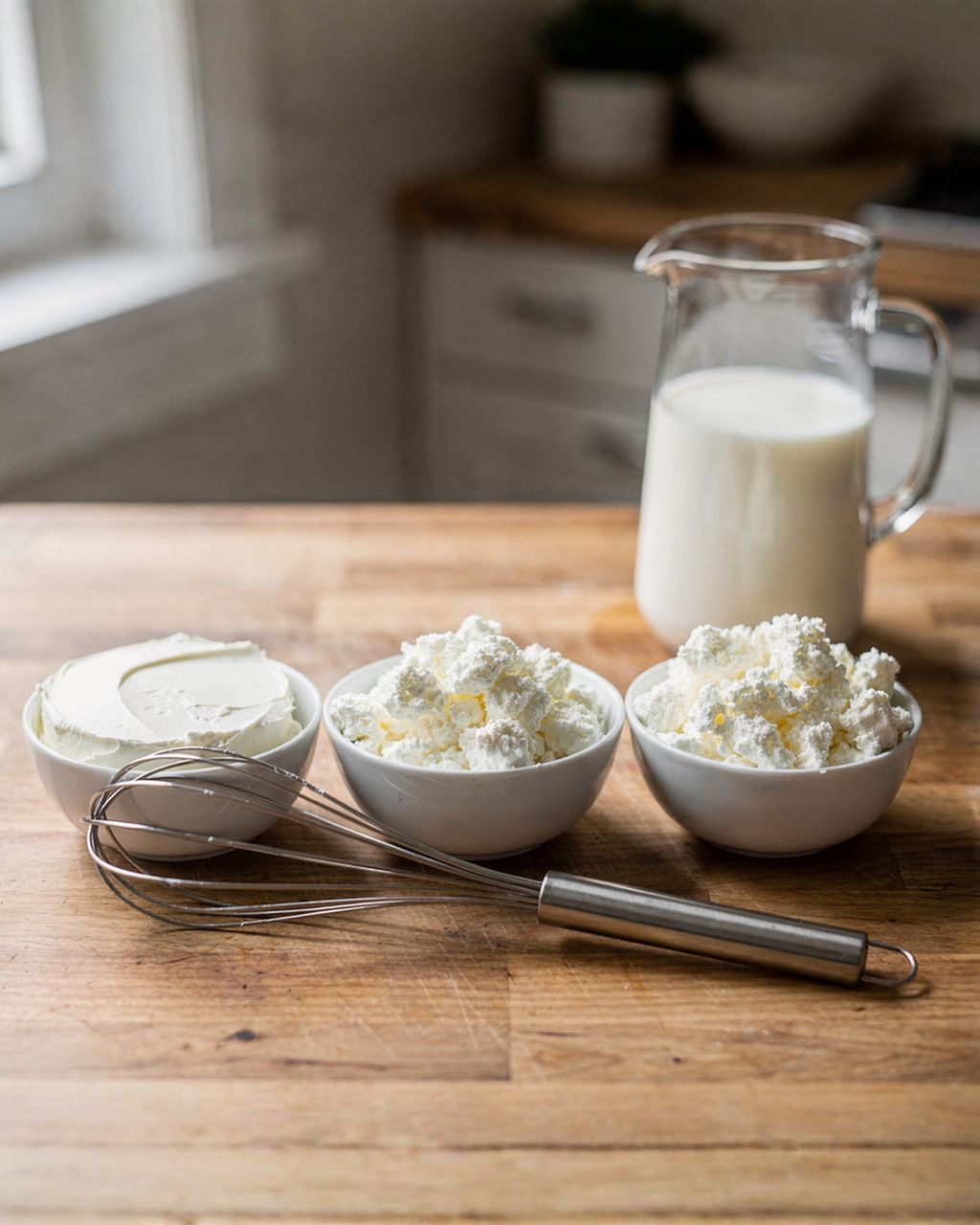
Mascarpone stabilizes whipped cream through fat — it runs roughly 40–47% fat versus the 30–33% in standard whipping cream, which reinforces the fat structure around the air bubbles. For 250ml of cream, use 50–80g of mascarpone, a ratio of roughly 3:1 to 5:1 (cream to mascarpone).
Unlike the other substitutes, you add this one at the start: put cold mascarpone and cold cream in the bowl together and whip them at the same time. Watch out for over-whipping — there's a lot of fat here, so the point where it turns grainy comes sooner than with plain cream.
Cream cheese works the same way (less fat, more tang), as does sieved curd cheese. Push the curd through a sieve first, or it'll stay grainy. The more cheese you add, the less this resembles whipped cream and the more it becomes a proper filling — which is often exactly what you want for a cake filling, a roll, or a no-bake cake.
If you're out of mascarpone, check out our guide on what to use instead of mascarpone in cake.
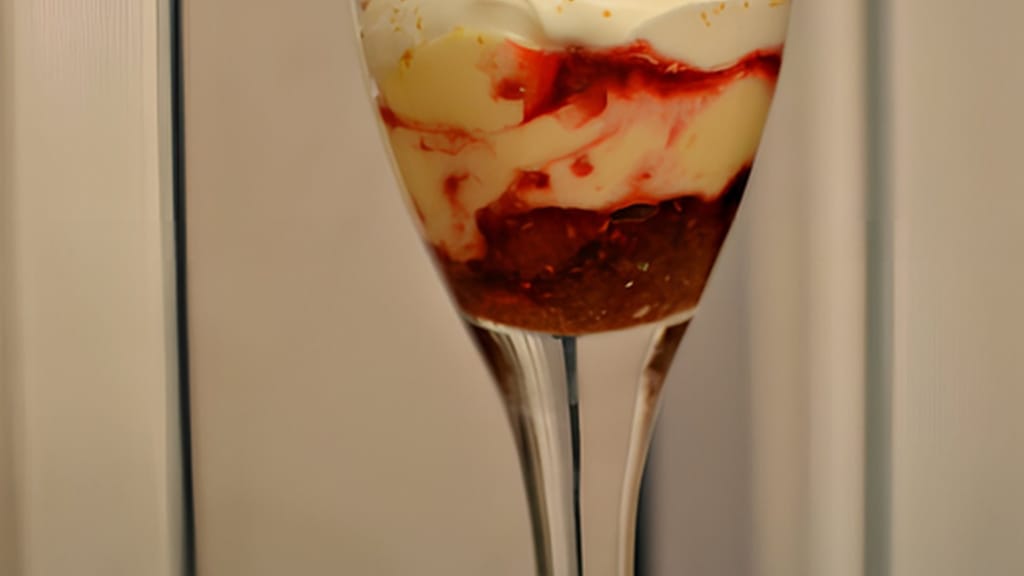
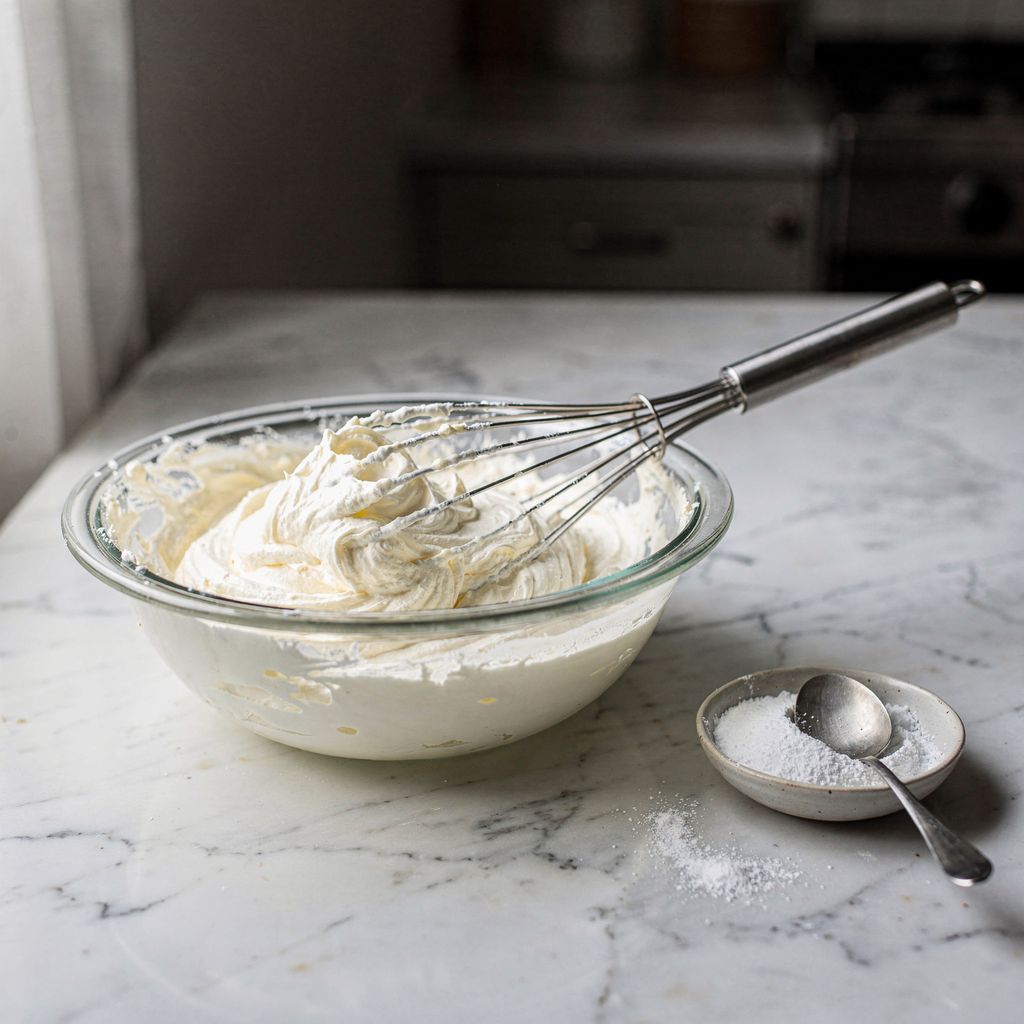
Vanilla mascarpone with raspberries
Vanilla mascarpone with raspberries — mascarpone as a whipped cream stabilizer in practice
Skimmed milk powder is the most neutral stabilizer substitute: sift 1–2 tablespoons (10–20g) in with the sugar and add it once the cream starts to thicken. The milk proteins bind free water so the cream doesn't start weeping. The flavour barely changes — though above 20g per 250ml you'll start to notice a milky aftertaste and a touch of starchiness.
Instant pudding powder — the no-cook kind that's just stirred into milk — is essentially a flavoured stabilizer: starch plus sugar plus vanilla. Use 1 tablespoon (about 10g) with 2 tablespoons of icing sugar. It holds for two days and is the most convenient option if you don't mind the cream taking on flavour and a light creamy tint. It'll disappear into a chocolate or coffee dessert, but it will overpower fresh strawberries.
Whipped white ganache holds its shape for 3–4 days and is the only substitute that copes even in a warm room — cocoa butter firms up at room temperature, whereas dairy fat softens. For 250ml of cream, use 100g of white chocolate.
Melt the chocolate and pour over 100ml of hot cream (taken from the total amount). Stir until smooth.
Add the remaining 150ml of cold cream and mix.
Cover and refrigerate for at least 4 hours, ideally overnight. This step can't be rushed — the cocoa butter needs time to crystallise.
Whip the cold mixture to firm peaks. It comes together fast, so go slow and keep checking.
The trade-off for that firmness is sweetness: white chocolate brings its own sugar, so don't add any more. The same method works with dark chocolate, just in a smaller amount — about 85g of dark chocolate per 250ml of cream — though what you get is a chocolate mousse-style cream, not whipped cream as such.
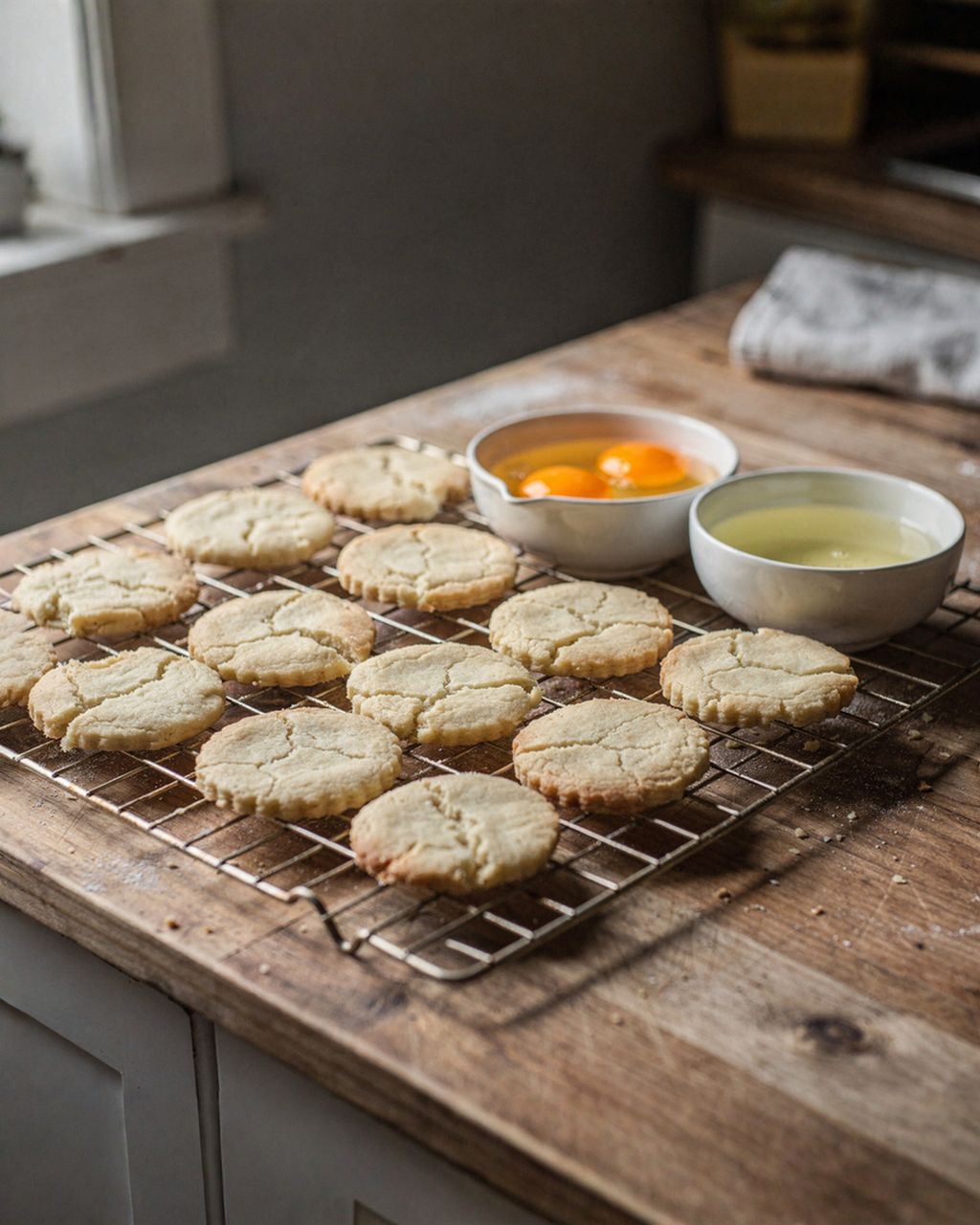
Egg white, whipped separately and folded into finished whipped cream, firms it up while also adding volume — you'll get noticeably more from 250ml of cream than you would otherwise. Whip 1 medium egg white with 1 tablespoon of caster sugar to stiff peaks, then fold it into the whipped cream in three additions with a spatula, working from the bottom up.
The result is light and airy, but it holds for the shortest time of any substitute here — expect around 12 hours in the fridge. It suits mousse-style desserts and sundaes, not piped decorations.
Good cream, whipped while properly cold, holds its shape just fine on its own — a stabilizer or substitute only really matters once time or heat start working against the cream. Before you reach for any of them, check these first:
At least 33% fat. Look for cream simply labelled "whipping cream" or "double cream" with at least 33–35% fat — the lighter pouring or single creams (around 10–18% fat), sold for cooking, will never whip, not even with a whole tub of stabilizer. As a rule of thumb, go for at least 33%.
Cream chilled to 4°C or below. Leave it in the fridge for at least 12 hours, and store it at the back of a shelf, not in the door, where it's a few degrees warmer.
Bowl and whisk in the freezer for 15 minutes. A metal bowl works best — plastic tends to hold onto a greasy film that deflates the foam.
Add the sugar only once you're halfway through whipping. Adding it at the start slows down foam formation.
Finish the last minute by hand. A stand mixer can cross the line from stiffly whipped cream to butter within seconds.
You will, however, always want a stabilizer or substitute when the whipped cream needs to survive hours on a cake, a car journey to a party, or sitting out on a table in summer. Heat softens the fat structure and the foam collapses no matter how good the cream you bought was.
Whipped cream most often fails for four reasons: over-whipping, cream that isn't fatty enough, adding the stabilizer too late, and lumps from dry starch. If it's over-whipped and grainy but hasn't split yet, rescue it by whisking in 1–2 tablespoons of cold liquid cream by hand — slowly, and stop as soon as it comes back together.
Other common problems:
Water and fat granules have separated. There's no coming back from this one — keep whipping and you'll end up with homemade butter and buttermilk instead.
The cream starts weeping after a few hours. You added the substitute too late, or the cream has less than 33% fat. Starch and milk powder both need to go in at the soft-peak stage.
Lumps of starch. The starch went into the cream on its own — always mix it with sugar first.
Bits of gelatine.The gelatine was too cold, or it was poured in all at once.
The cream tastes starchy. You went over the starch amount. Stick to 4g per 250ml.
The cream won't whip up at all. Check the label: if it's a cooking cream, the fat content is too low and no foam will form.
For piped decorations and tiered cakes, go with gelatine or whipped white ganache; for fillings, mascarpone or cream cheese; for a quick decoration on today's dessert, cornstarch with icing sugar; for a neutral flavour, skimmed milk powder; and for mousse-style sundaes, whipped egg white. In more detail:
Piped decorations and tiered cakes — gelatine, or whipped white ganache. Nothing else will hold a sharp edge.
Cake fillings and roulades — mascarpone or cream cheese. They give the cream body and can carry the weight of the sponge.
A decoration for a dessert you're eating today — cornstarch with icing sugar. Two minutes' work.
Whipped cream that shouldn't taste of anything else — skimmed milk powder.
Mousse-style sundaes and light desserts — whipped egg white.
Gelatine-free (vegetarian) — mascarpone, cornstarch, milk powder, and white chocolate all work.
If you're weighing up cake creams more broadly, not just for firmness, take a look at the five basic types of cake cream.
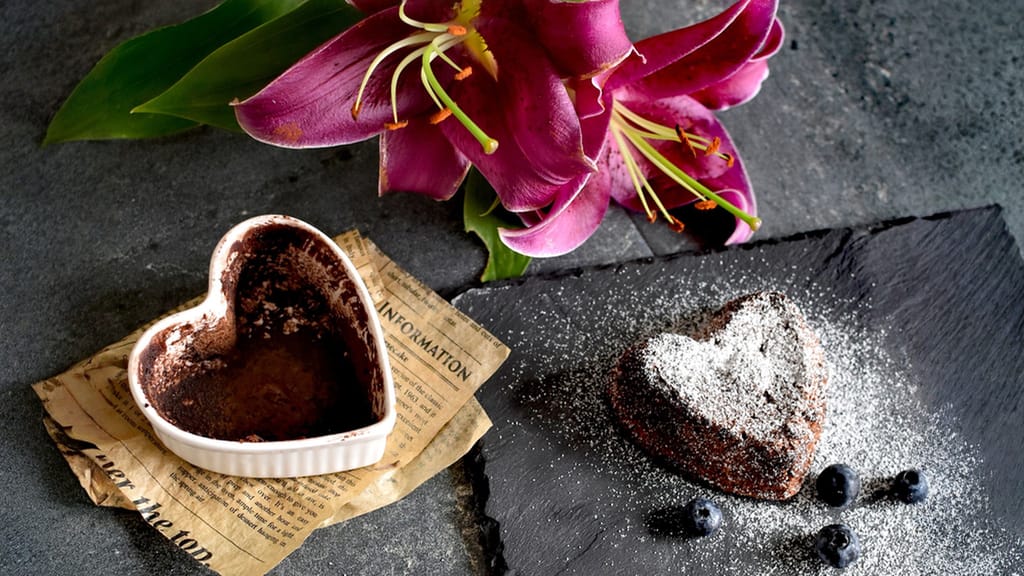
And if you want to see how softly whipped cream behaves on a plate with no stabilizer at all, this dessert is exactly the case for it — a dollop meant to last all of two minutes before you eat it.
Chocolate fondant with fruit and whipped cream
Chocolate fondant with fruit and whipped cream — where you really don't need a whipped cream stabilizer
With a stabilizer substitute, whipped cream keeps in the fridge for roughly a day to four days depending on what you used: cornstarch, milk powder, and gelatine reliably hold overnight; mascarpone lasts 2–3 days; whipped white ganache lasts 3–4 days. Without any stabilizer or substitute, expect only 4–6 hours before it starts weeping and collapsing. Always keep it covered — whipped cream picks up fridge odours fast.
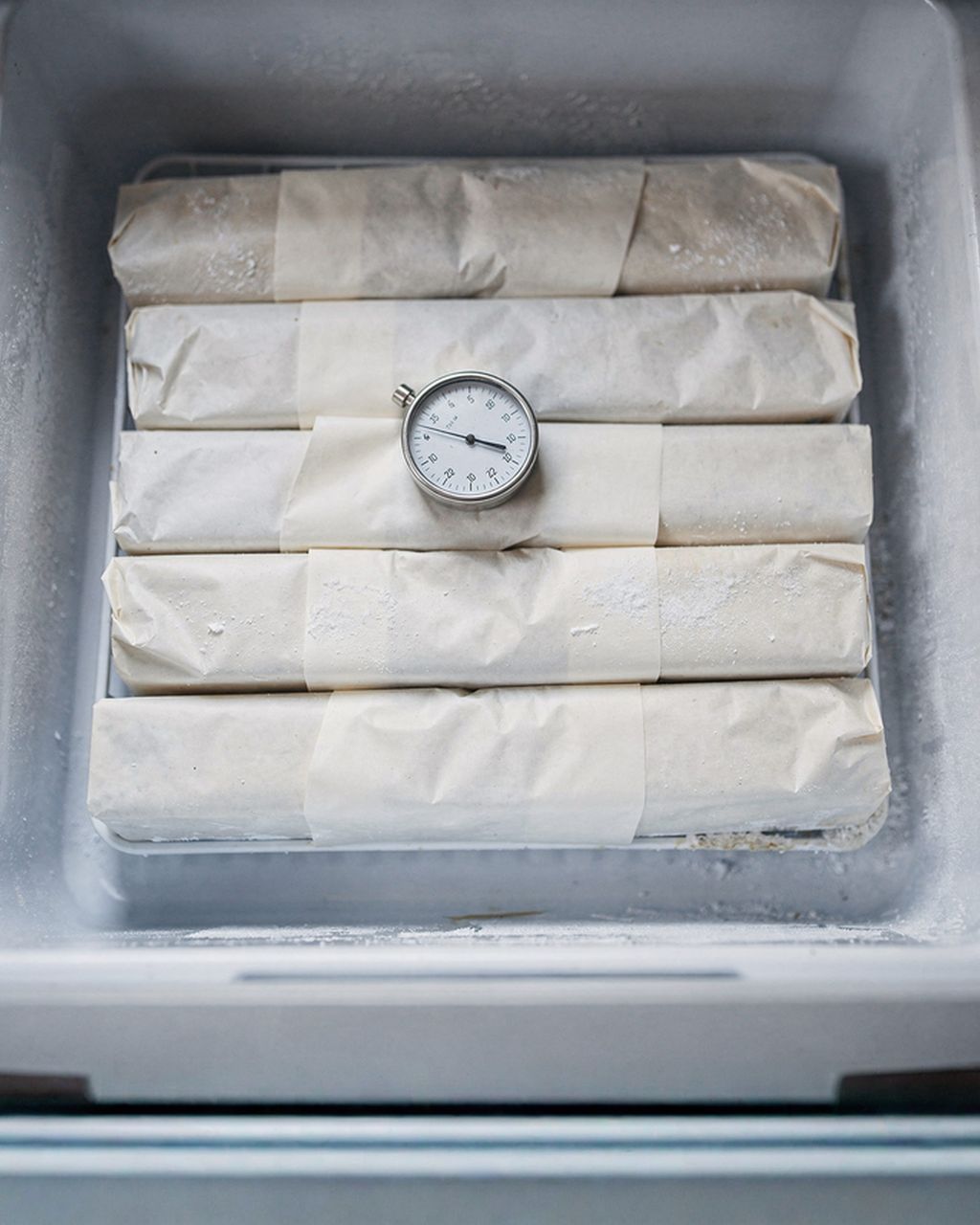
Yes, and the freezer is actually the best way to store whipped cream for longer than a few days. Pipe rosettes onto baking paper, freeze until solid, then transfer to an airtight container — it'll keep for 2–3 months. Thaw in the fridge for about 20 minutes and never re-whip it after thawing, as it will break down. Versions made with gelatine, mascarpone, or white chocolate freeze best.
Agar is the vegan stabilizer substitute: dissolve ½ teaspoon of agar powder in 3 tablespoons of water, let it cool to lukewarm, and pour it in a thin stream while whipping plant-based cream that's already at soft peaks. Agar sets faster and firmer than gelatine, so it must go in immediately in a thin stream, or you'll end up with jelly-like lumps. Alternatively, without agar, you can use the solid fat skimmed from chilled full-fat coconut cream, or melted vegan white chocolate (100g per 250ml).
Yes, but the pectin in it doesn't actually do anything here — jam sugar only thickens whipped cream the way fine sugar would, so it's weaker than starch. For 250ml, use 2 tablespoons and expect a noticeably sweeter result; cornstarch with icing sugar is more reliable. Add it only once the cream has started to thicken.
From 250ml of whipping cream you'll get roughly 500ml of whipped cream — volume roughly doubles when whipped, and a stabilizer substitute doesn't change that much. That's enough to cover and fill a 20cm cake, or to top six desserts with a dollop. Adding whipped egg white boosts the volume a bit more; mascarpone brings it down slightly.
One recipe worth heating the oven for, one tip, and one deal from the shop. Nothing else.