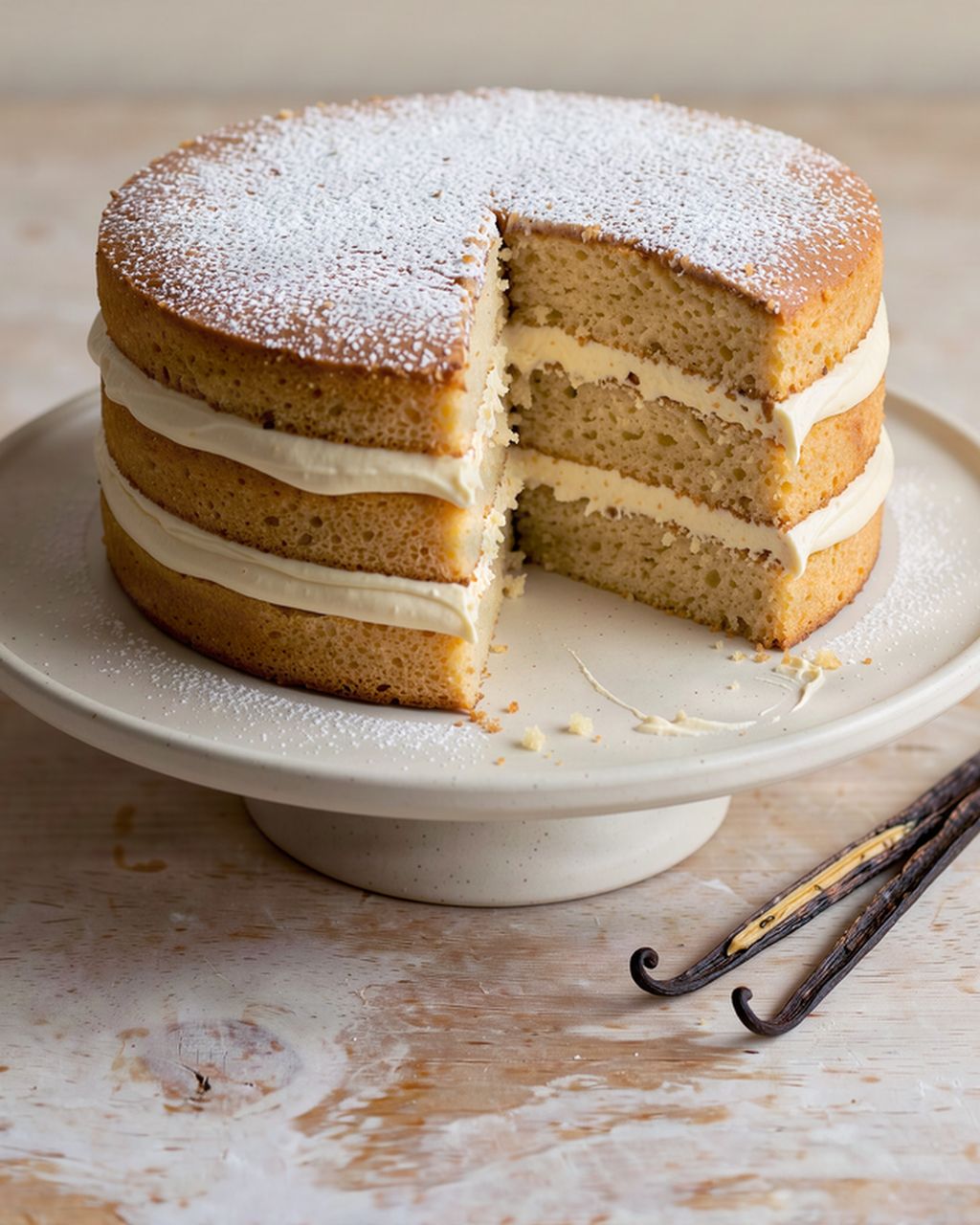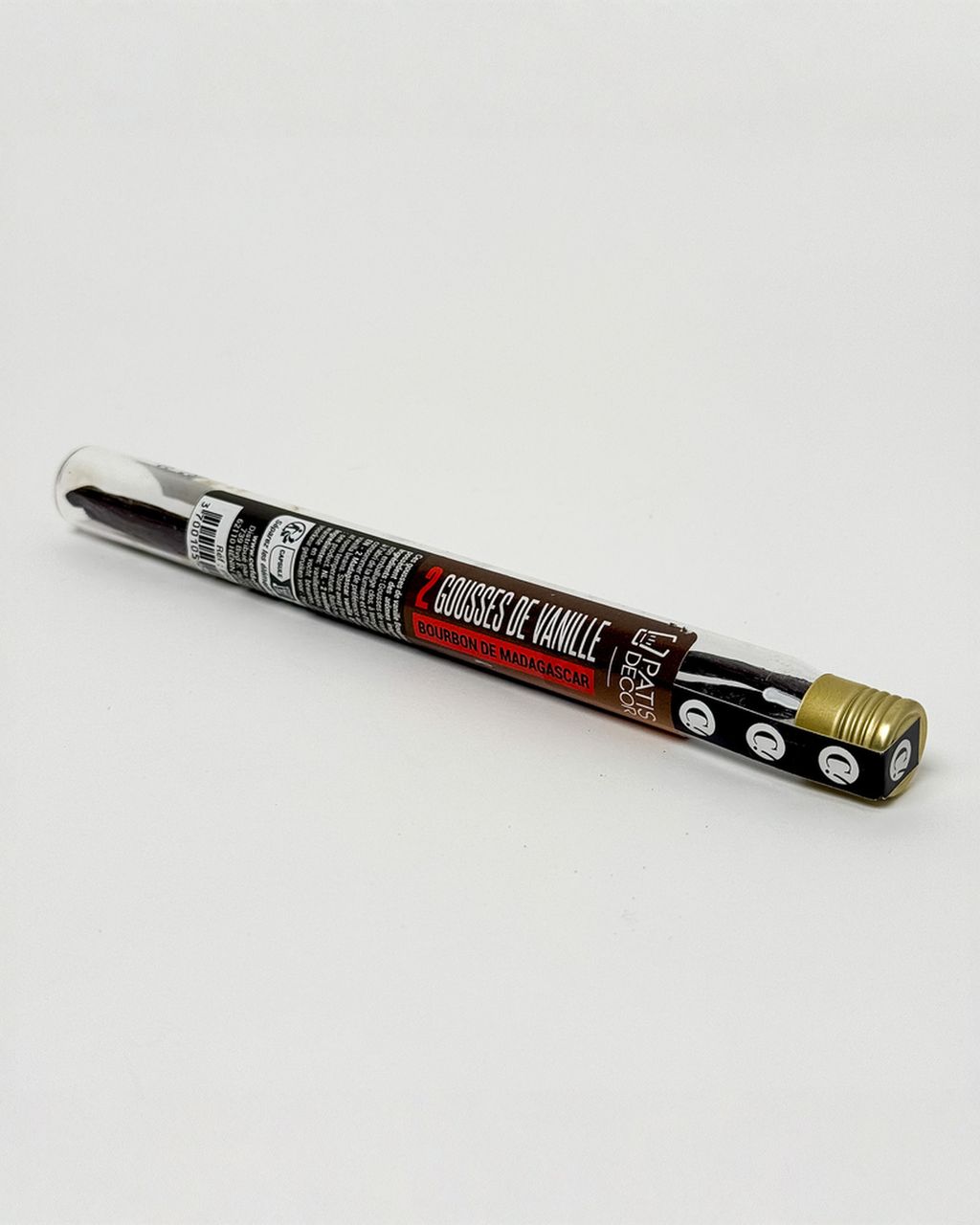
Madagascar Bourbon Vanilla Beans, 2 pcs
Pudding Buttercream: Why It Curdles and How to Make It Smooth and Firm for Cakes
Updated Oct 17, 2026
Pudding buttercream is cooled pudding whipped into soft butter, and it almost always curdles for the same reason: the pudding and the butter aren't the same temperature when you combine them. Bring both to 20–23 °C (68–73 °F) and add the pudding to the whipped butter a spoonful at a time. You'll get a smooth, firm buttercream that holds between cake layers and in piped rosettes. And if it does curdle, it can almost always be rescued.
Pudding buttercream (butter-and-pudding cream) is an emulsion: thick, cooked pudding, which is mostly water, and butter, which is roughly 80% fat. Whipping breaks the butter into tiny droplets and works the pudding into it so the water and fat stay together. Elsewhere it's known as German buttercream.
The classic Czech ratio, which is hard to get wrong:
500 ml whole milk (about 2 cups)
1 packet pudding powder (about 40 g), or 40 g cornstarch if you're making the pudding from scratch
80–120 g sugar, depending on how sweet you want the buttercream
200–250 g butter with 82% fat
More butter means a firmer, more stable buttercream; less butter means a lighter but softer one. Use 250 g for filling and covering a cake, and 200 g is enough for a light filling for small pastries. Reduced-fat or light butter and reduced-fat vegetable spreads aren't suitable. They contain more water, and the buttercream easily turns runny.
If you want to make the pudding entirely without a packet mix, you'll find the full method in Homemade pudding without a packet. This article is about what to do with the pudding afterward.
A real vanilla pod steeped in the milk gives the strongest flavor. Ordinary vanilla pudding powder contains only starch, flavoring, and coloring, so the buttercream ends up tasting more "yellow" than vanilla.
Vanilla pod – 1 pod per 500 ml of milk. Split it lengthwise, scrape out the seeds with a knife, add both to the milk, heat it almost to a boil, and leave it to steep, covered, for 15–20 minutes. Then remove the pod and cook the pudding. We carry Madagascar Bourbon vanilla pods. Bourbon vanilla has a full, creamy aroma that suits a milky buttercream best.
Vanilla paste or extract – convenient, and added to the finished buttercream (1–2 teaspoons). The flavor is good, just without the depth of a steeped pod.
Vanilla sugar – best as an extra in the buttercream. The difference from vanillin sugar is explained in Vanilla sugar or vanillin sugar.
You'll find all the types of vanilla we carry in the vanilla for baking category. Tip: tuck a scraped, dried pod into a jar of sugar, and in a week you have your own vanilla sugar.
Pudding buttercream curdles when the pudding and the butter meet at different temperatures, and the fat and water stop holding together. What it looks like depends on which one is warmer:
The pudding is cold (from the fridge) – the butter stiffens into tiny bits on contact with it. The buttercream looks grainy, like cottage cheese or curdled milk, and weeps liquid at the edge of the bowl. This is the most common case.
The pudding is warm – the butter melts in it. The buttercream is shiny, thin, and greasy, and won't hold its shape.
The pudding is added all at once – even at the right temperature, the butter can't bind with that much water so quickly. That's why you add it by the spoonful.
There's a skin on the pudding – the set bits won't mix into the buttercream and leave lumps that are easily mistaken for curdling.
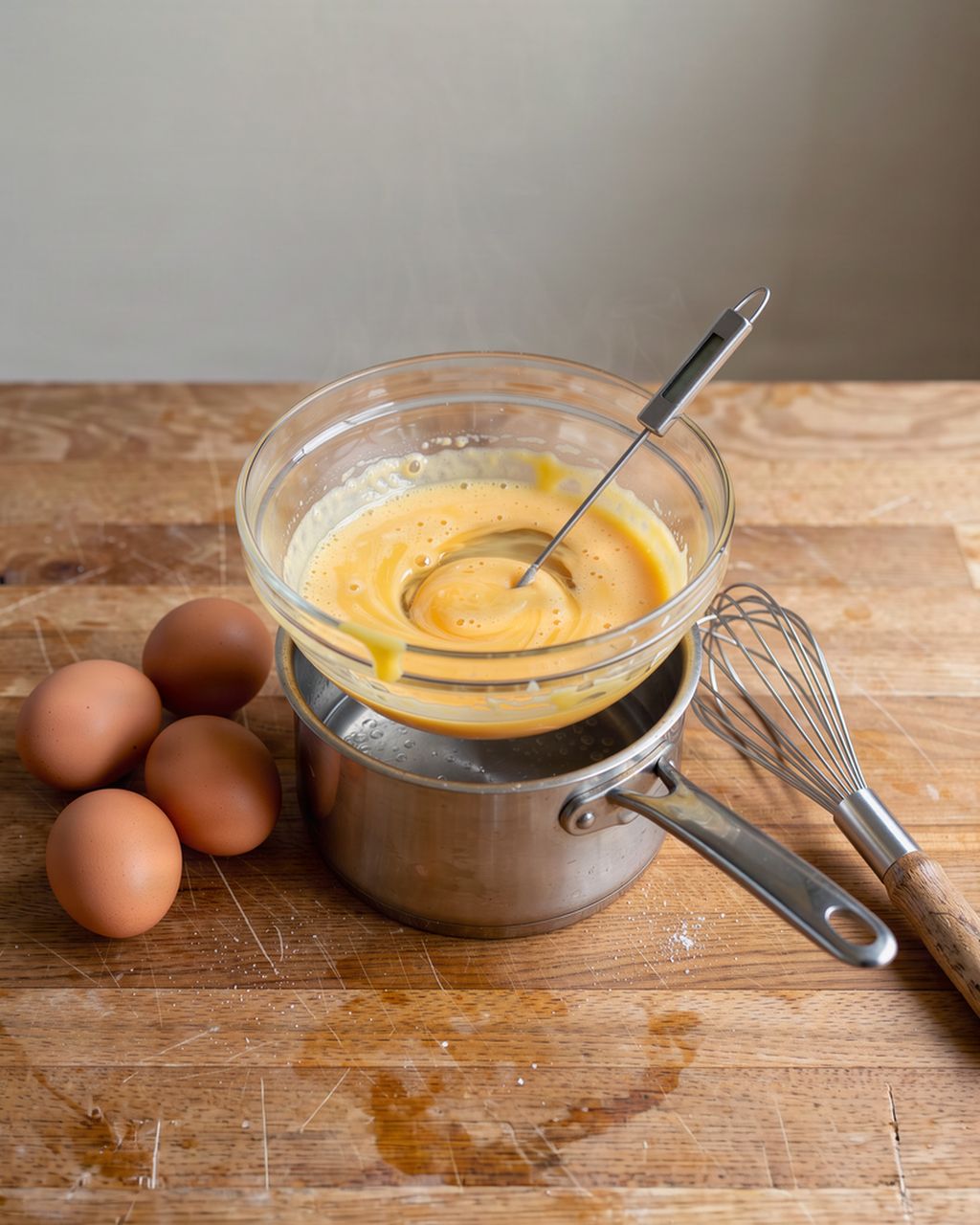
The ideal is for both to be at 20–23 °C (68–73 °F): the butter gives easily when you press it with a finger but isn't shiny or runny, and the pudding feels cool to the touch, not cold. A kitchen thermometer will do more for you here than any trick.
Your buttercream won't curdle if you get three things right: matching temperatures, well-whipped butter, and pudding added by the spoonful.
Cook a thick pudding – a little thicker than you'd want for eating with a spoon. Keep cooking it for 1–2 minutes after it thickens so the starch cooks through and the buttercream doesn't taste floury.
Cover it with plastic wrap pressed right onto the surface – the wrap has to touch the pudding, or a skin will form.
Let it cool at room temperature, usually 2–3 hours. If you're in a hurry, set the bowl in a cold water bath and stir now and then. If the pudding spent the night in the fridge, let it warm up to room temperature for 1–2 hours.
Take the butter out of the fridge at the same time you cook the pudding. In 2–3 hours both will be at the same temperature.
Briefly whisk the pudding on its own to make it smooth. You can press any lumps through a sieve.
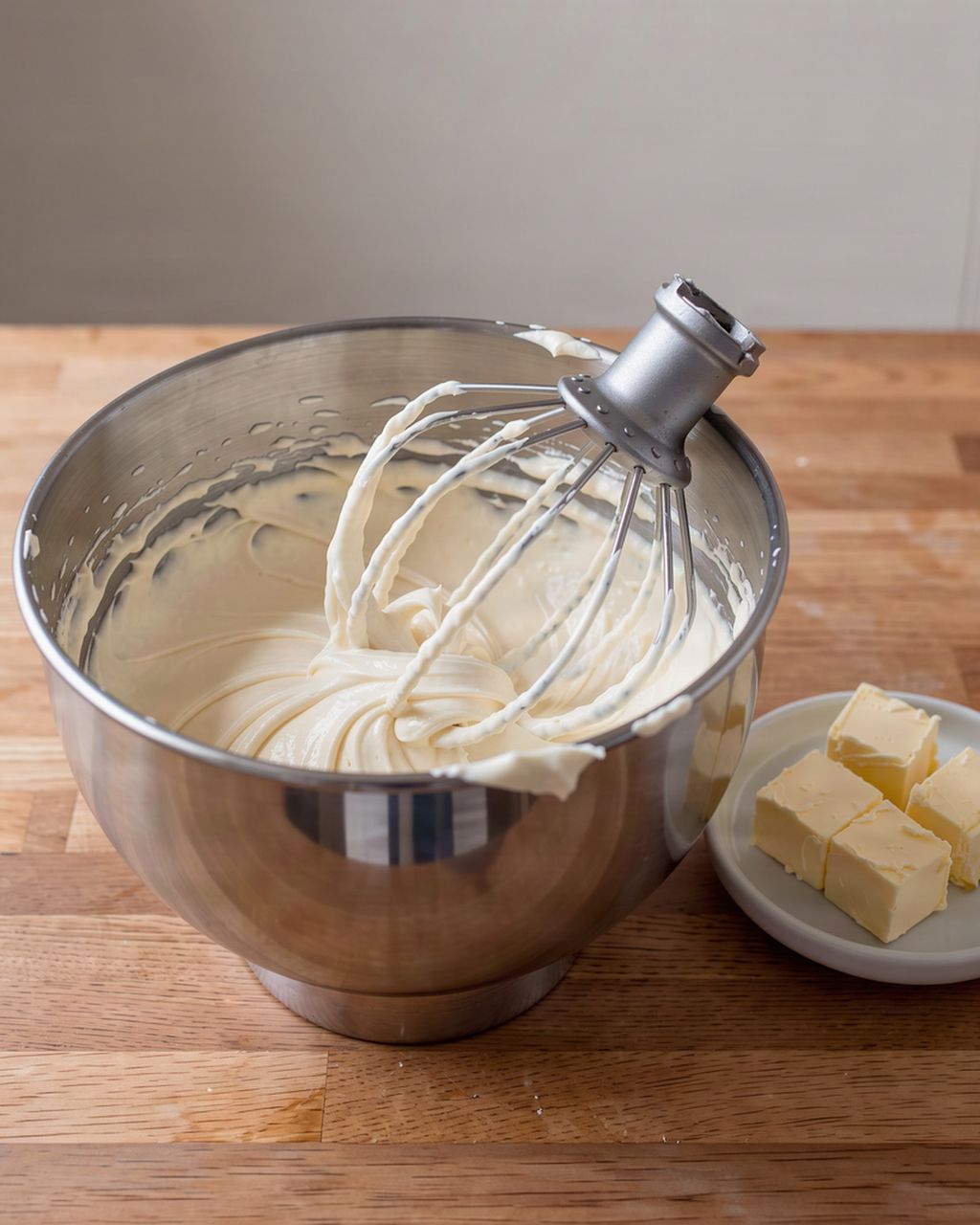
Whip the butter until pale – 3–5 minutes on high speed, until it turns white and fluffy.
Add the pudding 1–2 spoonfuls at a time, and add the next only once the previous one is fully blended in.
The finished buttercream is smooth with a matte sheen, holds a sharp peak, and doesn't weep.
You can almost always rescue curdled pudding buttercream by adjusting the temperature. Don't throw anything out, and don't rush to add more butter or sugar.
If the buttercream is grainy like cottage cheese, it's too cold:
Warm the side of the bowl with a hair dryer, or hold it over a pot of hot water for 5–10 seconds, and keep whipping. Repeat in short bursts until the buttercream comes together.
Or take out 2–3 tablespoons of the buttercream, melt them until liquid (a few seconds in the microwave), and pour them back in while whipping.
Time often helps too: let the buttercream sit at room temperature for 20–30 minutes, then whip it again.
If the buttercream is runny and greasy, it's too warm:
Put the whole bowl in the fridge for 10–15 minutes until the edges start to firm up, then whip again. Repeat if needed.
Don't waste time adding powdered sugar. It will thicken the buttercream, but it makes it far too sweet and doesn't solve the temperature problem.
If the buttercream still won't hold after three rounds, the problem is usually the recipe, not the temperature: the pudding was too thin, or there wasn't enough butter. In that case, whip in another 50 g of softened butter.
To make a lighter pudding buttercream, replace half the butter with whipped cream and firm it up with gelatin. It's airier and less buttery, and still holds up in a cake.
Approximate quantities for a 20–22 cm (8–9 inch) cake:
500 ml milk cooked into pudding and cooled to 20–23 °C (68–73 °F)
125 g butter
200 ml heavy whipping cream with 33% fat
6–8 g powdered gelatin and 30–40 ml cold water
Method:
Sprinkle the gelatin over the cold water and let it bloom for 10 minutes.
Melt it to a liquid, about 50 °C (122 °F), over low heat or in the microwave. Never boil it, because boiling weakens it.
Whip the butter until pale and add the pudding by the spoonful, as for the classic buttercream.
Stir 2–3 tablespoons of the buttercream into the melted gelatin so the temperatures even out, then quickly whip it into the whole batch. Cold buttercream would instantly seize the warm gelatin into rubbery strings.
Whip the cream to soft peaks and fold it in with a spatula.
Pour the buttercream straight into a cake ring or between the layers. It sets in the fridge in 3–4 hours.
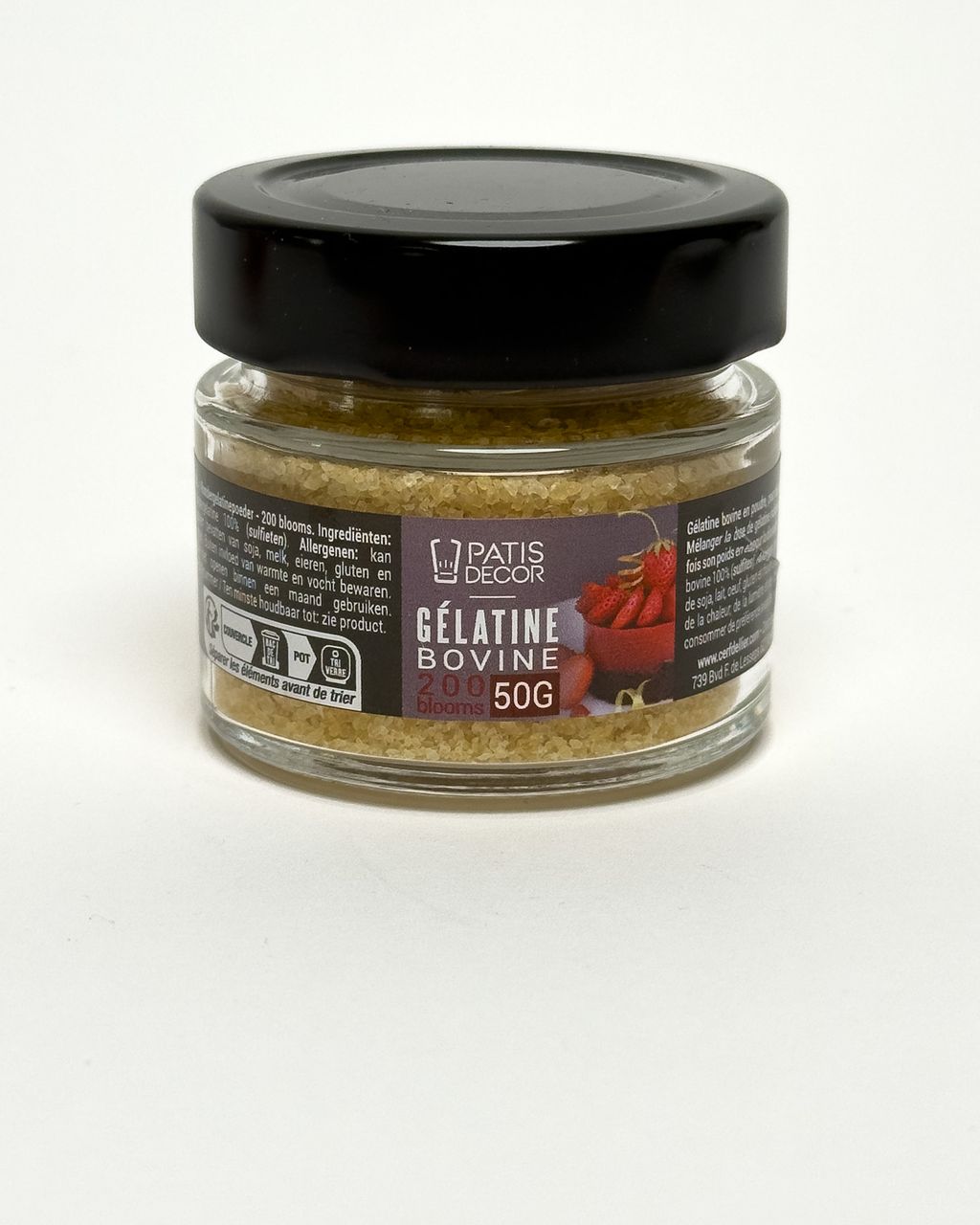
Gelatin at 200 bloom is medium strength, and the ratio above is based on it. For leaf gelatin, use the same weight only for gold (about 200 bloom). For silver (about 160 bloom), use about an eighth more, so 7–9 g. We carry powdered beef gelatin, 200 bloom. It's beef instead of pork, and the result is the same. When one can replace the other is explained in Beef or pork gelatin. Agar isn't suitable here: it sets differently, and the buttercream would turn into more of a jelly.
Gelatin buttercream isn't elastic enough for piping, so it belongs inside the cake. Save the classic butter version for decoration. For more light fillings, see Light cake filling, and for the French route with whipped cream, Crème diplomate and mousseline.
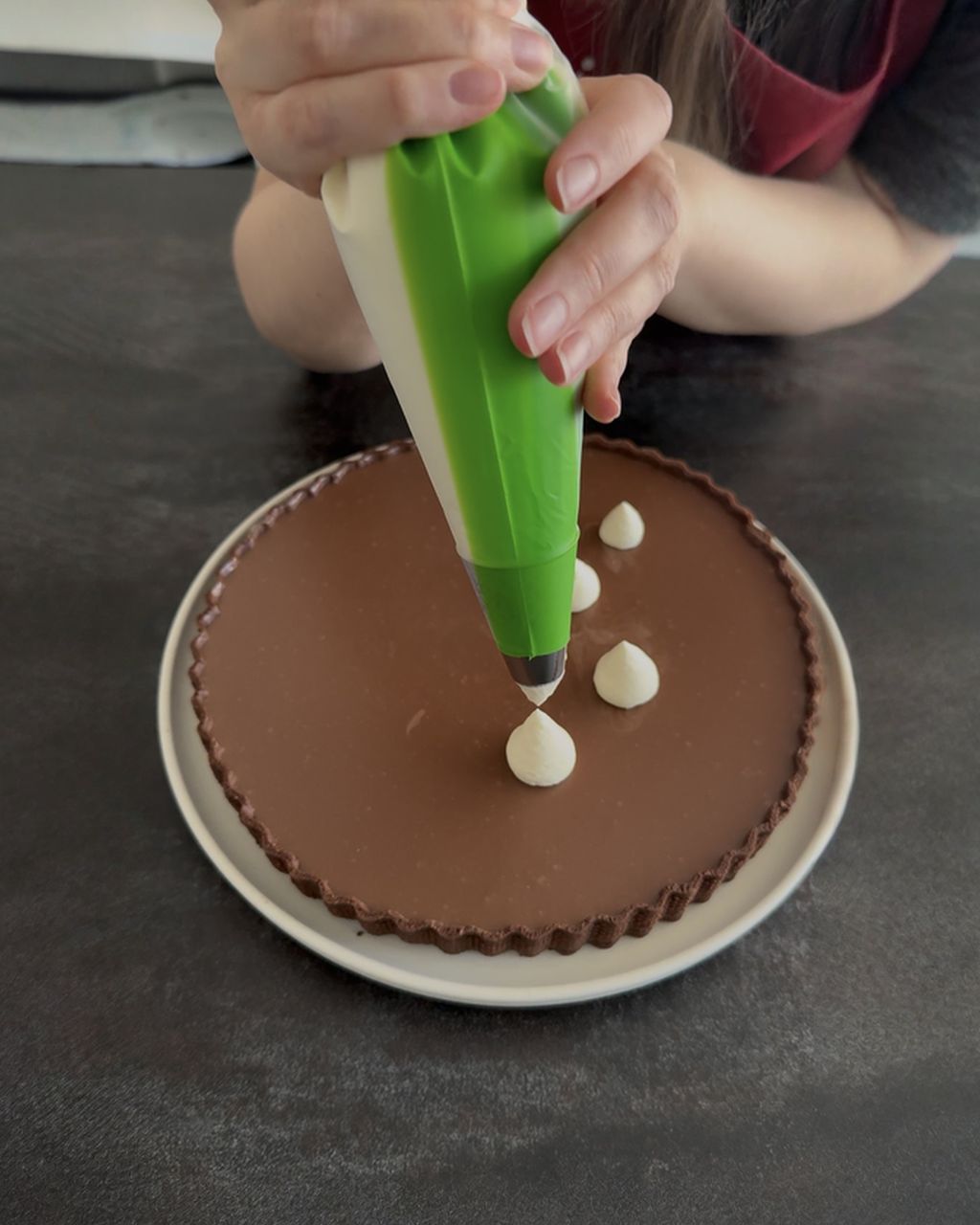
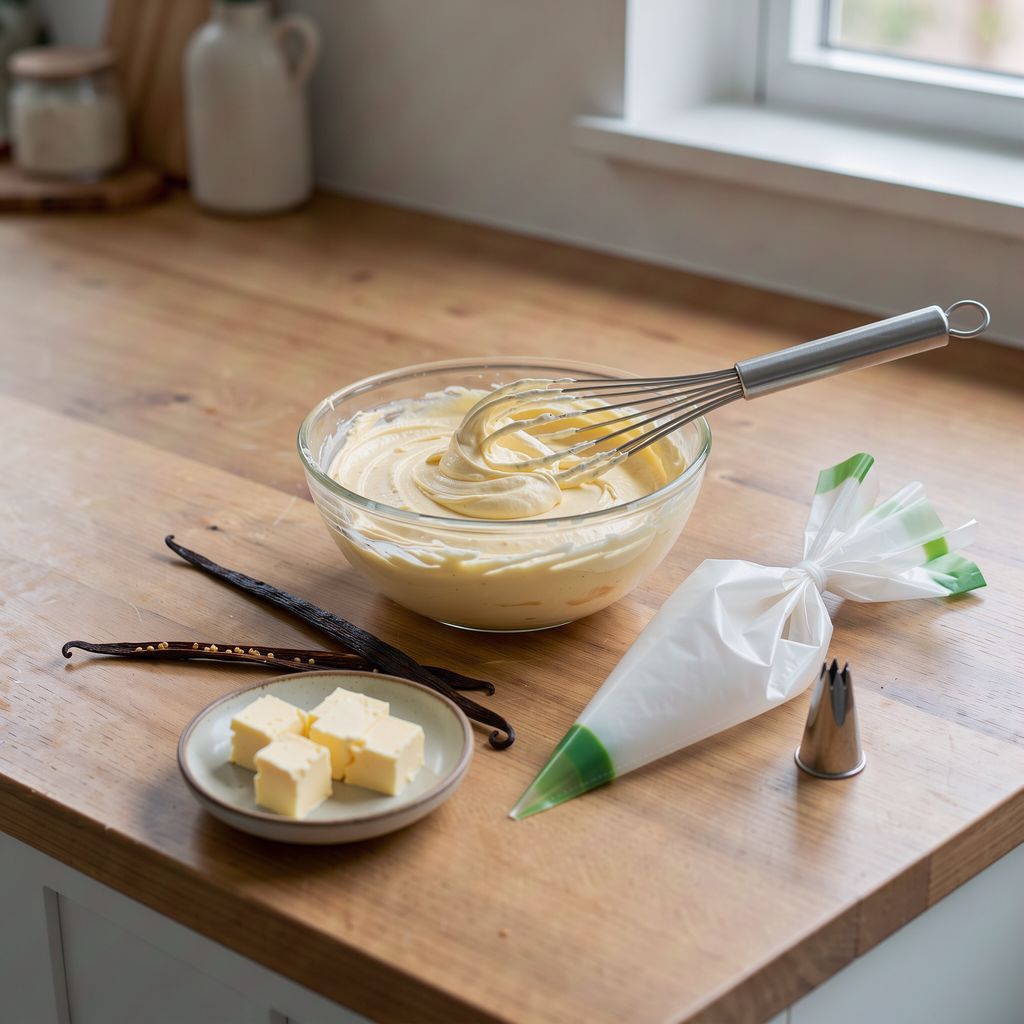
For piping, you need pudding buttercream that's slightly firmer than for filling. Chill it briefly (15–20 minutes in the fridge) until it holds a sharp peak, and fill the bag only two-thirds full.
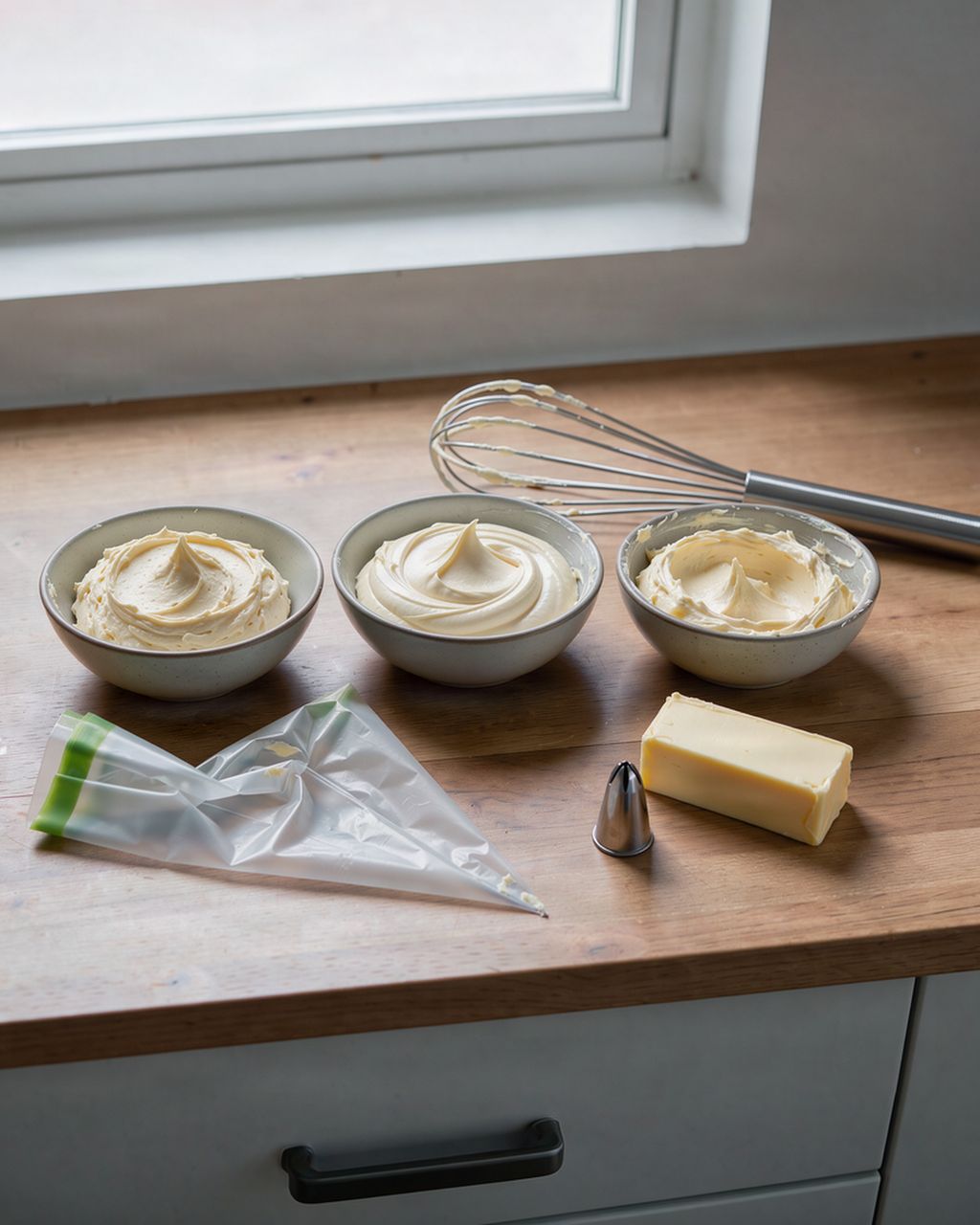
Bag – disposable piping bags, 36 × 20 cm, are hygienic and you don't have to wash the grease out of them. A cloth or silicone bag lasts for years, but the fat is hard to get out of it. Both work, it's a matter of convenience.
Tip – for rosettes, decorative borders, and swirls on cupcakes, an open star is the most versatile. The JEM Open Star Decorating Tip #18 makes clear ridges, and the buttercream passes through it without effort. A closed star makes deeper, tighter ridges, which look nice on choux puffs and cream horns. A plain round tip is enough for dots and for filling.
Warm hands – hold the bag by the twisted top end, not in your palm. If the buttercream in the bag starts to look shiny and loses its definition, put it in the fridge for 5–10 minutes.
Pipe straight down – hold the tip 1–2 cm (about ½ inch) above the surface, squeeze, stop the pressure, and only then pull the tip away.
The whole piping technique is covered in more depth in Spritz cookies without a cookie press.
Pudding buttercream is the best choice when you want a properly creamy filling without raw eggs and without boiling a sugar syrup. It's inexpensive, tastes of milk and vanilla, and holds up in a cake and in piped decoration.
Pudding buttercream – soft, not as sweet as buttercream made with powdered sugar, and easy. It softens in warmth and isn't ideal under fondant, because it contains more water.
Swiss meringue buttercream – firmer, smoother, and better for covering a cake. It takes more work. See Swiss meringue buttercream.
Whipped cream and mascarpone fillings – lighter, but less forgiving if left standing. See Mascarpone cream.
For a detailed comparison of the three main buttercreams, see Buttercream for cakes: classic, Swiss, or pudding.
Pudding buttercream keeps for 2–3 days in an airtight container in the fridge. Before using it, let it come up to room temperature for 1–2 hours and give it a short re-whip. Used cold, it will be hard and may curdle as you whip it.
Yes, pudding buttercream can be frozen for up to 1 month. Thaw it slowly in the fridge overnight, let it come to room temperature, then whip it again. Versions with gelatin and whipped cream don't freeze as well because they release water.
The easiest way is to start with chocolate pudding. Or stir 100 g of chopped dark chocolate into hot vanilla pudding made with 500 ml of milk. Chocolate firms up the buttercream, so whip it at the upper end of the 20–23 °C (68–73 °F) range.
You can use 100% vegetable fat instead of butter. The buttercream will be more stable, but it won't taste of butter. A good compromise is half butter and half vegetable fat. Don't use reduced-fat or light butter, or reduced-fat vegetable spreads (light margarine). They contain more water and the buttercream turns runny.
Yes, gel food colors work best for pudding buttercream. They're concentrated and add almost no water. Add them on the tip of a toothpick, a little at a time, because the color deepens during an hour in the fridge. Liquid colors thin the buttercream at the amounts you'd need and can make it curdle. Keep in mind that butter makes the buttercream yellowish, so you won't get a pure white or a deep blue.
One recipe worth heating the oven for, one tip, and one deal from the shop. Nothing else.