Piping Bags 36x20 cm, 100-Pack
How Much Frosting for a Cake: Chart by Diameter & Height
Updated Oct 15, 2026
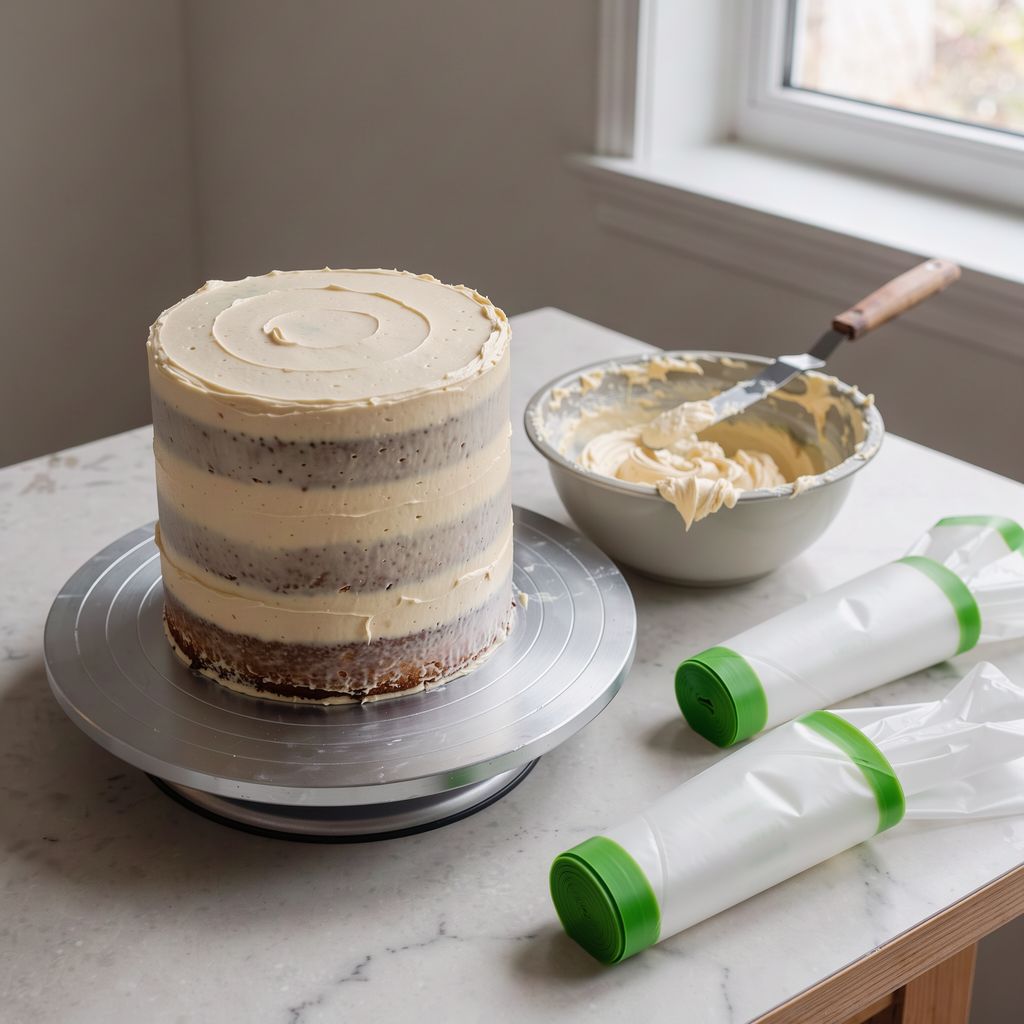
How much frosting you need for a cake depends mainly on its diameter and height: a 20 cm cake that's 8 cm tall uses about 1,250 g of buttercream, while the same cake at 10 cm tall needs around 1,600 g – covering filling, coating, and a simple border. Below you'll find a chart for diameters from 15 to 26 cm, broken down by filling, coating, and decorating, plus conversions for ganache, mascarpone, and whipped cream. So you don't end up whipping a second batch at midnight.
For a round 20 cm cake that's 8 cm tall, you'll need about 1,250 g of buttercream; for a 26 × 10 cm cake, up to 2,400 g – including filling, coating, and a simple border.
These figures apply to buttercream (meringue-based, American, or pastry-cream style) and a round cake. A height of 8 cm means 3 sponge layers and 2 layers of frosting; 10 cm means 4 layers of sponge and 3 of frosting. The filling allows for a 0.8 cm layer of cream, the coating for a thin crumb coat plus a final smooth layer, and the decorating for a simple border on both the top and bottom edge. The totals already include about a 10% buffer and are rounded to the nearest 50 g.
Ø 15 cm × 8 cm: filling 260 g · coating 350 g · decorating 120 g · total ~800 g
Ø 15 cm × 10 cm: filling 390 g · coating 400 g · decorating 120 g · total ~1,000 g
Ø 18 cm × 8 cm: filling 360 g · coating 440 g · decorating 150 g · total ~1,050 g
Ø 18 cm × 10 cm: filling 540 g · coating 510 g · decorating 150 g · total ~1,300 g
Ø 20 cm × 8 cm: filling 460 g · coating 500 g · decorating 170 g · total ~1,250 g
Ø 20 cm × 10 cm: filling 690 g · coating 580 g · decorating 170 g · total ~1,600 g
Ø 22 cm × 8 cm: filling 540 g · coating 580 g · decorating 180 g · total ~1,450 g
Ø 22 cm × 10 cm: filling 810 g · coating 670 g · decorating 180 g · total ~1,850 g
Ø 24 cm × 8 cm: filling 660 g · coating 660 g · decorating 200 g · total ~1,650 g
Ø 24 cm × 10 cm: filling 990 g · coating 750 g · decorating 200 g · total ~2,150 g
Ø 26 cm × 8 cm: filling 760 g · coating 740 g · decorating 210 g · total ~1,900 g
Ø 26 cm × 10 cm: filling 1,140 g · coating 840 g · decorating 210 g · total ~2,400 g
A short cake (6 cm, 2 sponge layers and 1 layer of frosting) needs half the filling amount shown in the "8 cm" row, and about 15% less for coating. For a 20 cm cake, that works out to roughly 900 g in total.
Frosting quantities come down to two areas: circle area × layer thickness gives you the filling, and top + sides × coating thickness gives you the coating. Buttercream weighs about 0.9 g per 1 ml, so the volume in cm³ roughly matches the weight in grams.
Filling: one 0.8 cm layer on a 20 cm cake = 314 cm² × 0.8 cm ≈ 230 g. Multiply by however many layers you have.
Coating: the top and sides of a 20 × 8 cm cake together have an area of about 820 cm². A crumb coat (2 mm) plus a final smooth layer (4 mm) add up to roughly 6 mm of frosting, plus about 15% for what you'll scrape back into the bowl with your spatula.
Decorating: a simple shell or pearl-dot border uses roughly 1.3 g per cm of circumference. Two borders on a 20 cm cake (circumference 63 cm) come to about 170 g.
Two practical rules follow from this. Diameter scales up faster than you'd expect: a 26 cm cake has 1.7× the area of a 20 cm cake, not just a third more. And every extra layer of frosting adds the full area of the circle, so going from 3 to 4 sponge layers is the single biggest jump in consumption – for a 20 cm cake, that's the jump from 1,250 to 1,600 g. If you like thick layers of frosting (1.5 cm), roughly double the filling column.
For ganache, multiply the chart's gram figures by 1.3; for mascarpone cream, by 0.8; and for whipped cream, by 0.6. Each one fills the same layer with a different weight, because they vary in density:
Buttercream (meringue-based, American, or pastry-cream style): × 1
Chocolate ganache: × 1.3 – dense, with no air in it
Mascarpone and cream frosting: × 0.8
Plain whipped cream: × 0.6 – full of air, but you still need the same volume
Example: a 20 × 8 cm cake coated in ganache needs roughly 500 × 1.3 = 650 g of ganache for the coating alone. We don't recommend whipped cream for coating a tall cake, though – it slides down the sides. For a breakdown of which frosting holds up to a smooth coat, which handles sharp edges, and which is best kept for filling only, see our article on types of cake frosting and where each one works best.
For a simple top-and-bottom border on a 20 cm cake, plan on about 170 g of frosting; rosettes around the edge add another 150–200 g. The decorating column in the chart only covers that simple border, so add extra for anything more elaborate:
Rosettes around the top edge: 10–15 g each; a 20 cm cake fits 12–14 rosettes, so about 150–200 g total.
Piped flowers and ruffles on the sides: plan on roughly another full coating's worth, so add the value from the coating column.
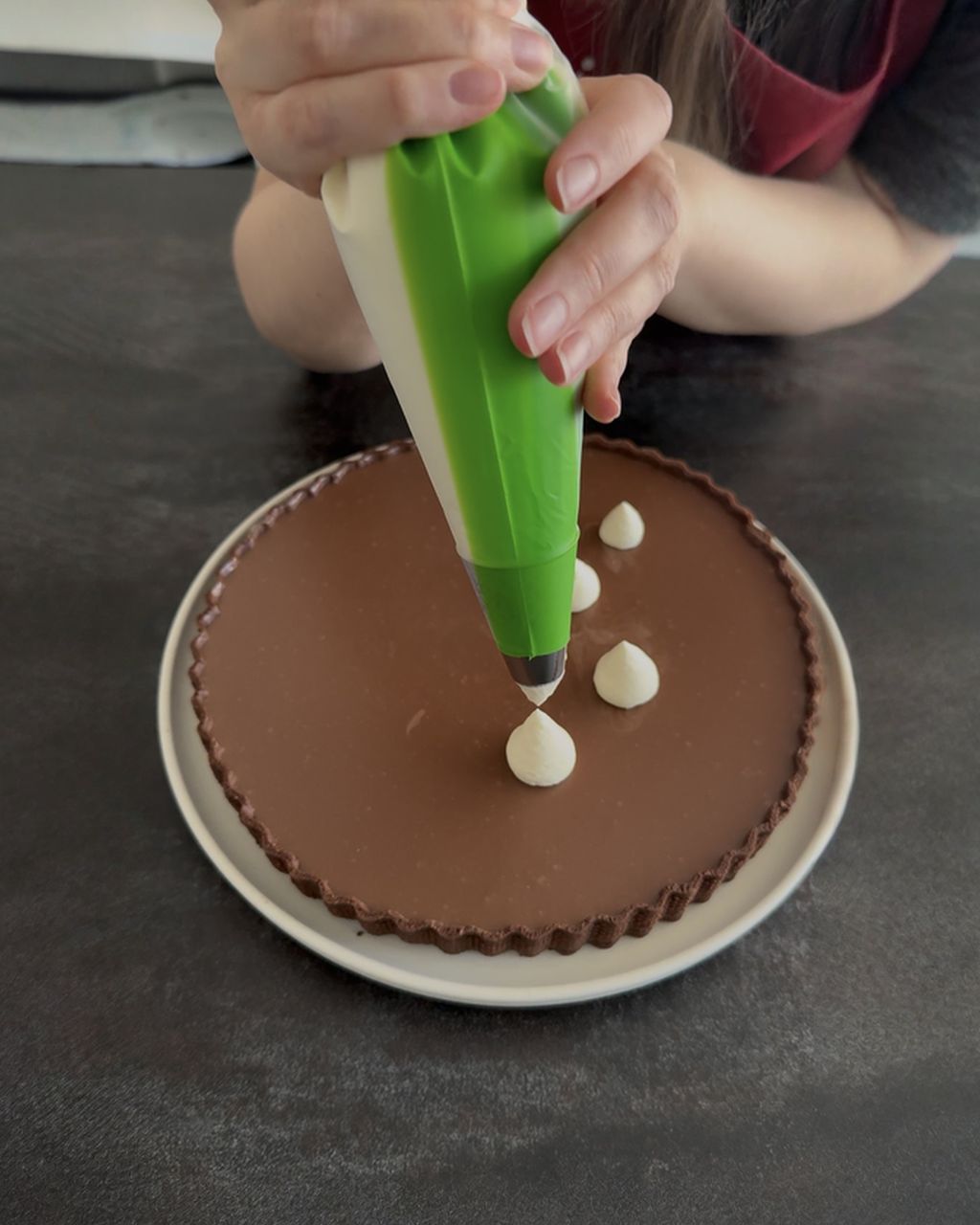
Lettering: 30–50 g, piped from a small bag fitted with a fine tip.
Chocolate drip: this is separate from the frosting – about 100–150 g of ganache is enough for a 20 cm cake.
For which tip to use for shells, pearl dots, or rope borders, see our article Cake decorating tips: which one for what, and how to choose. Always set the decorating frosting aside before you coat the cake. Crumbs that get scraped into the bowl during coating will leave streaks when they pass through the tip.
To avoid running out of frosting, weigh the whole batch and divide it into three bowls – filling, coating, and decorating – according to the chart, before you even start assembling the cake. You almost always run short on the coating, because filling tends to get applied by eye, and more disappears into the layers than you'd expect.
Weigh the whole batch and divide it into three bowls according to the chart: filling, coating, and decorating.
Divide the filling bowl by the number of layers. For a 20 × 10 cm cake, that's 3 × 230 g. Weigh each layer directly on the scale as you spread it on the sponge.
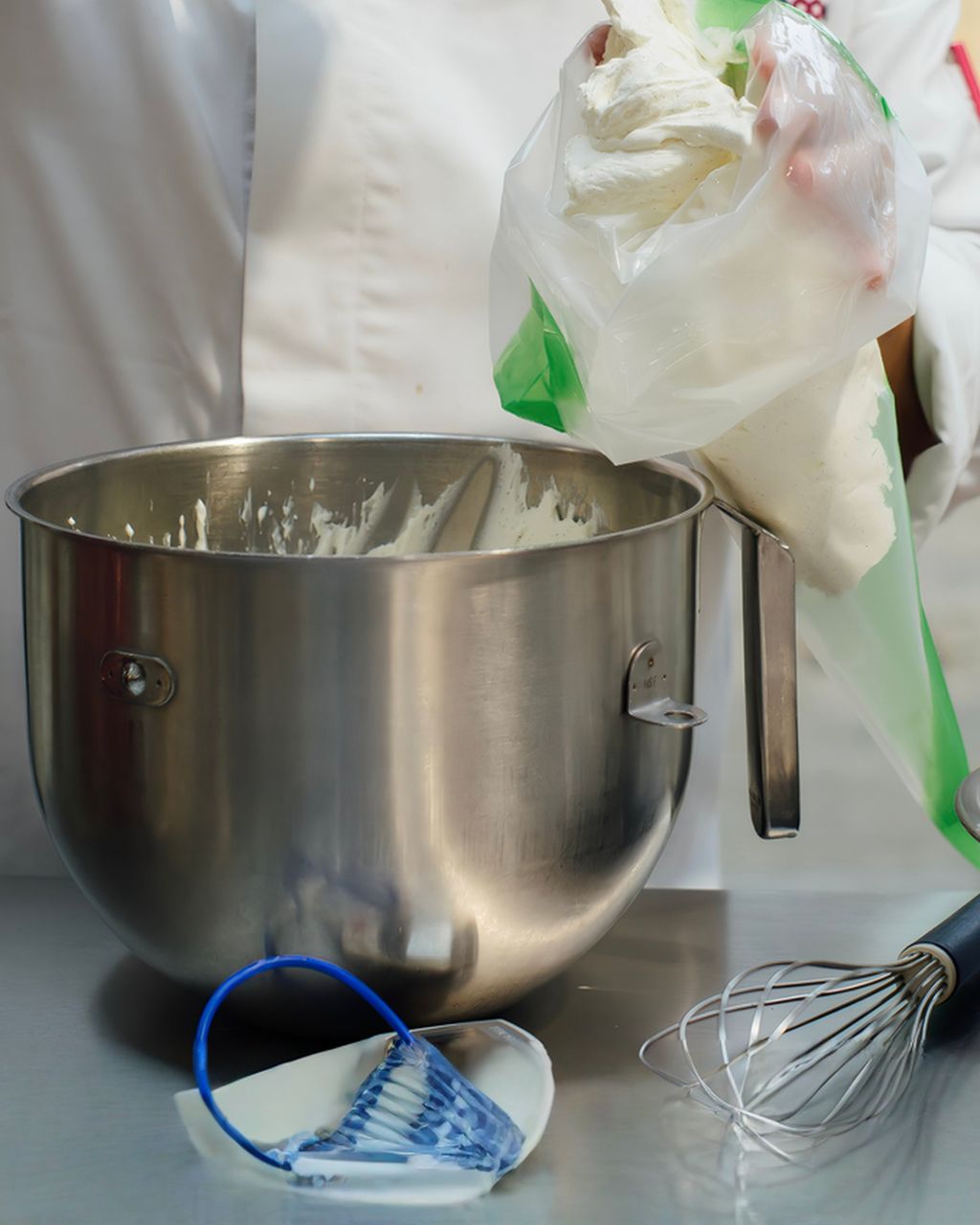
Pipe a dam around the edge of each sponge layer using a 36 cm piping bag so the filling doesn't spread out to the sides. We explain how in our article frosting dams: how to fill a cake without the filling leaking out. For large cakes and full coating, a 46 cm bag works better. Only fill the bag two-thirds full, or the frosting will push back out the top.
If any frosting is left over from filling, add it back into the coating bowl – never the other way around.
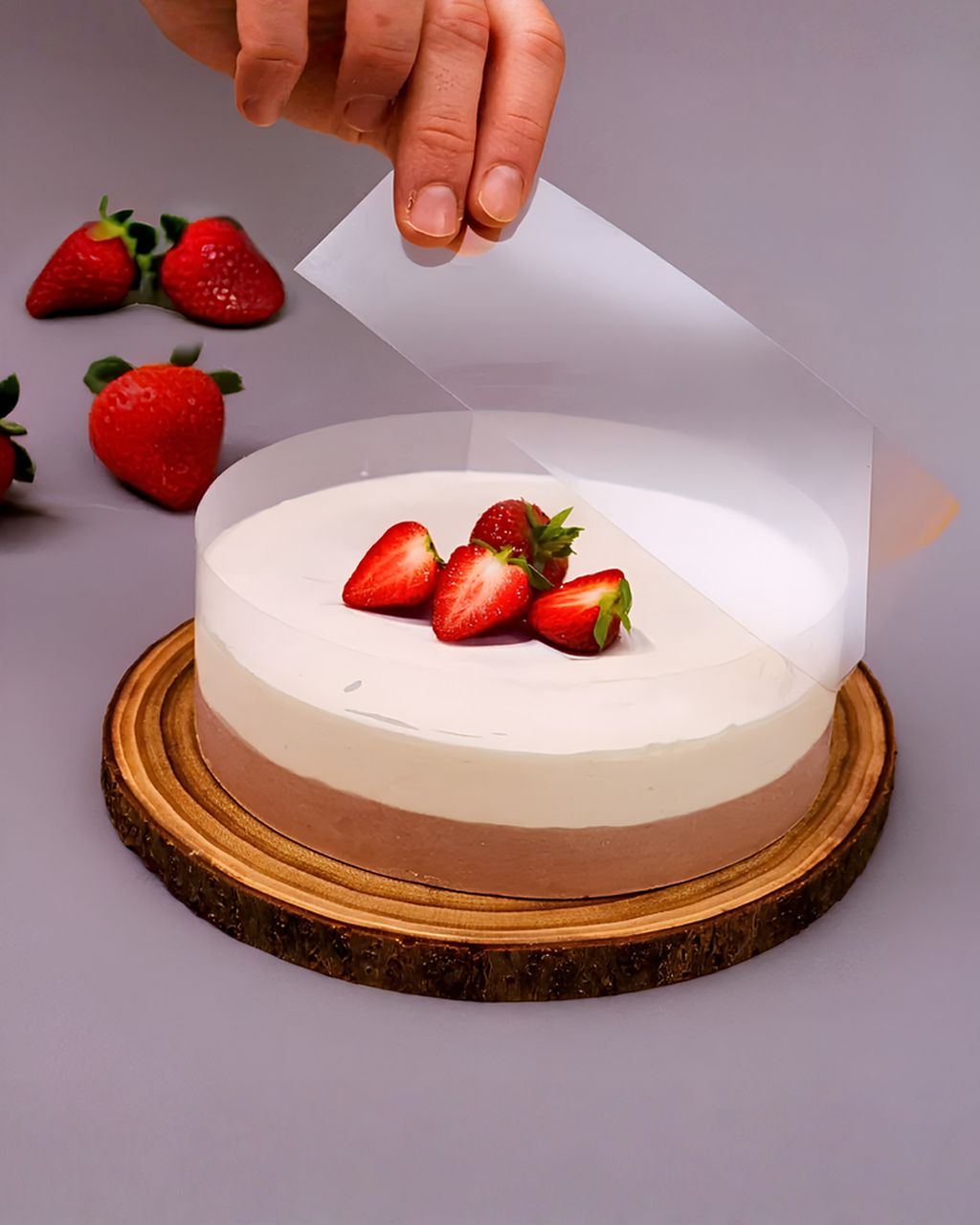
For the most precise layers, assemble the cake inside a cake ring lined with acetate strip. The sponge layers then sit exactly on top of each other, the frosting can't spread outward, and once chilled you get straight sides that need only a thin coating. You'll find rings in various diameters in our cake rings & boards category.
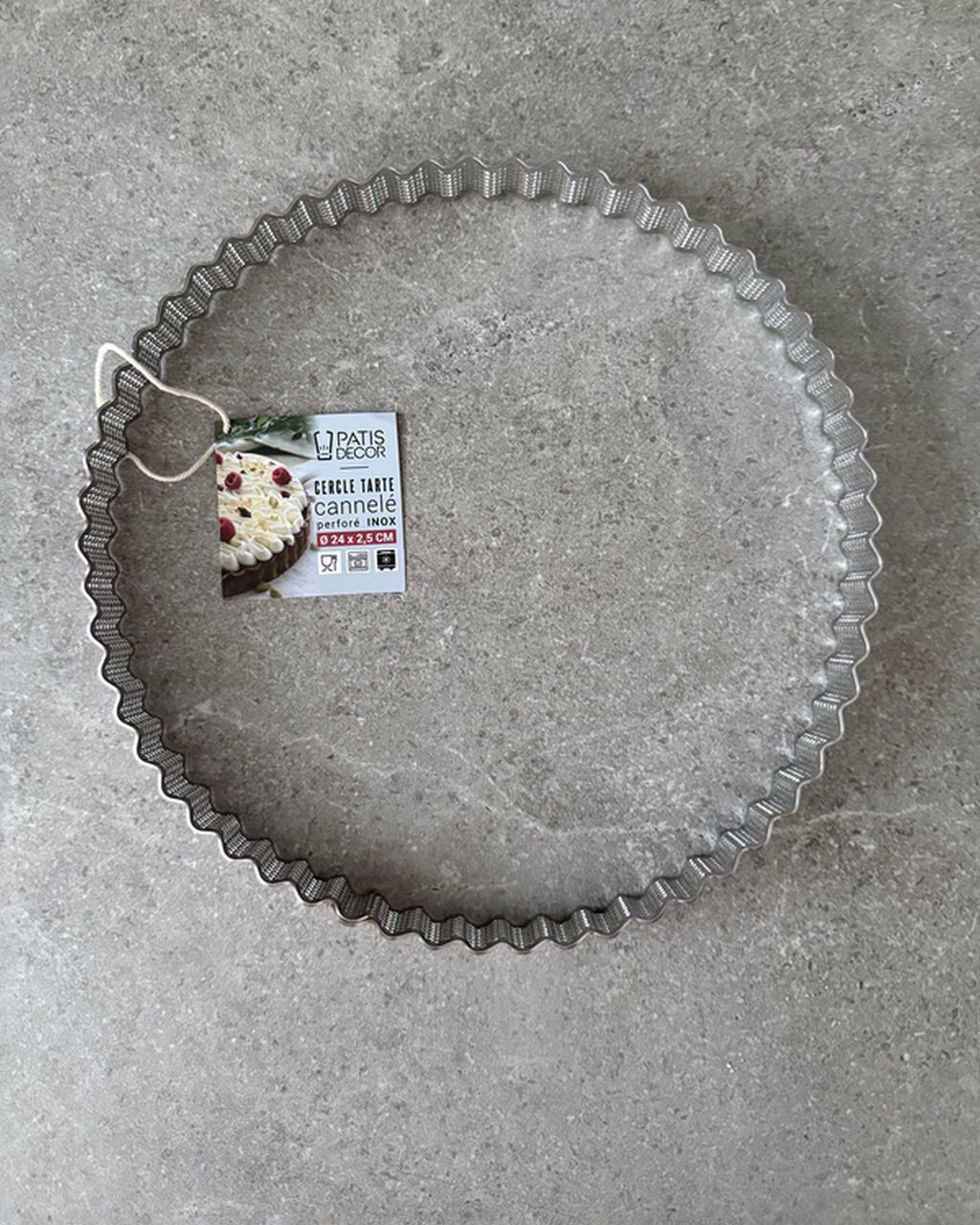
A quick note on what we actually stock: our perforated stainless-steel ring, Ø 24 cm, has a fluted edge, designed mainly for scalloped tart shells. It can support acetate strip when assembling a cake, but a smooth or adjustable ring gives cleaner sides. We don't currently carry one in that style at 24 cm. The Patisdécor acetate strip is 35 mm tall. That's enough for a short cake or a single layer; for a cake 8–10 cm tall, overlap two strips on top of each other, or use a wider strip instead. You'll find more on working with acetate strip in our article Acetate cake collars: what they're for and how to build a cake with one.
For 12 people, plan on a round 20 cm cake that's 8–10 cm tall, which means 1,250–1,600 g of buttercream. A 20 cm cake at 8 cm tall yields 12–14 generous slices. For 20 people, go up to 24 cm and about 1,650–2,150 g of frosting.
A square cake needs roughly 25–30% more frosting than a round one with the same side length as the diameter. A 20 × 20 cm square has an area of 400 cm², while a 20 cm round cake has only 314 cm². Take the figures from the round-cake chart and multiply by 1.3.
For a tiered cake, just add up the chart figures for each tier – the 10% buffer is already built into those numbers. A two-tier cake with 15 cm and 20 cm layers, both 10 cm tall, needs roughly 1,000 + 1,600 = 2,600 g. On top of the bottom tier, where the upper tier will sit, you can skip the final smooth coat and border – that only saves a few tens of grams, so just treat it as extra buffer.
For one cupcake with a swirled rosette, you need 30–40 g of buttercream, so about 400–500 g for a dozen. A tall piped rosette using a 1M or 2D tip will use closer to the upper end, while a flat spread with a spatula needs only around 20 g.
Both meringue-based and American buttercream freeze well – stored in an airtight container, they'll keep in the freezer for about 3 months, or in the fridge for up to 5 days. Before using, thaw it in the fridge, let it come to room temperature, then re-whip briefly to make it smooth again. Pastry-cream-based buttercream is made with milk, so use it within 2–3 days in the fridge and don't freeze it – once thawed, it breaks and weeps water. Whipped-cream or mascarpone frostings handle the freezer just as poorly.
One recipe worth heating the oven for, one tip, and one deal from the shop. Nothing else.