Dried Egg White
Swiss Meringue Buttercream: How to Make It and Fix It When It Curdles or Runs Soft
Updated Oct 17, 2026
Swiss meringue buttercream starts with egg whites and sugar cooked over simmering water to 160 °F (71 °C), whipped until cool, then beaten with soft butter. It's silky, less sweet than classic powdered-sugar buttercream, holds sharp edges on a cake and pipes beautifully. You can make it in 30 minutes, and if it curdles or turns soupy along the way, you can almost always save it. You just need to work out whether it's too warm or too cold.
Swiss meringue buttercream (also called egg-white buttercream) is built on Swiss meringue: you warm egg whites and sugar over a water bath until the sugar dissolves, then whip them into a stiff, glossy meringue. Once the meringue has cooled, you beat in the butter.
Compared with classic buttercream made from butter and powdered sugar, it's less sweet, not grainy and doesn't feel greasy.
Compared with Italian buttercream (egg whites with hot sugar syrup at 245–250 °F / 118–121 °C), it's simpler: you don't have to cook a syrup and pour it into the running mixer.
Compared with custard-based buttercream, it holds its shape and edges better, but it doesn't last as long out of the fridge.
For the differences between the meringues themselves, see French, Swiss or Italian meringue. If you're choosing a buttercream for a cake, the comparison classic, Swiss or custard-based will help.
For Swiss meringue buttercream you need egg whites, sugar and butter in a ratio of 1 : 1.7 : 2.5 by weight. Weigh the whites rather than counting them: one egg white weighs 30–40 g.
120 g egg whites (about 4 whites)
200 g granulated sugar
300 g butter with 82% fat, softened to 18–20 °C (64–68 °F)
a pinch of salt, 1 teaspoon vanilla extract
This makes roughly 620 g of buttercream, enough to fill and coat an 18–20 cm (7–8 inch) cake or to top 12–15 cupcakes. Want a firmer buttercream with more butter flavor? Add butter up to a ratio of 1 : 3, but it will be more sensitive to heat.
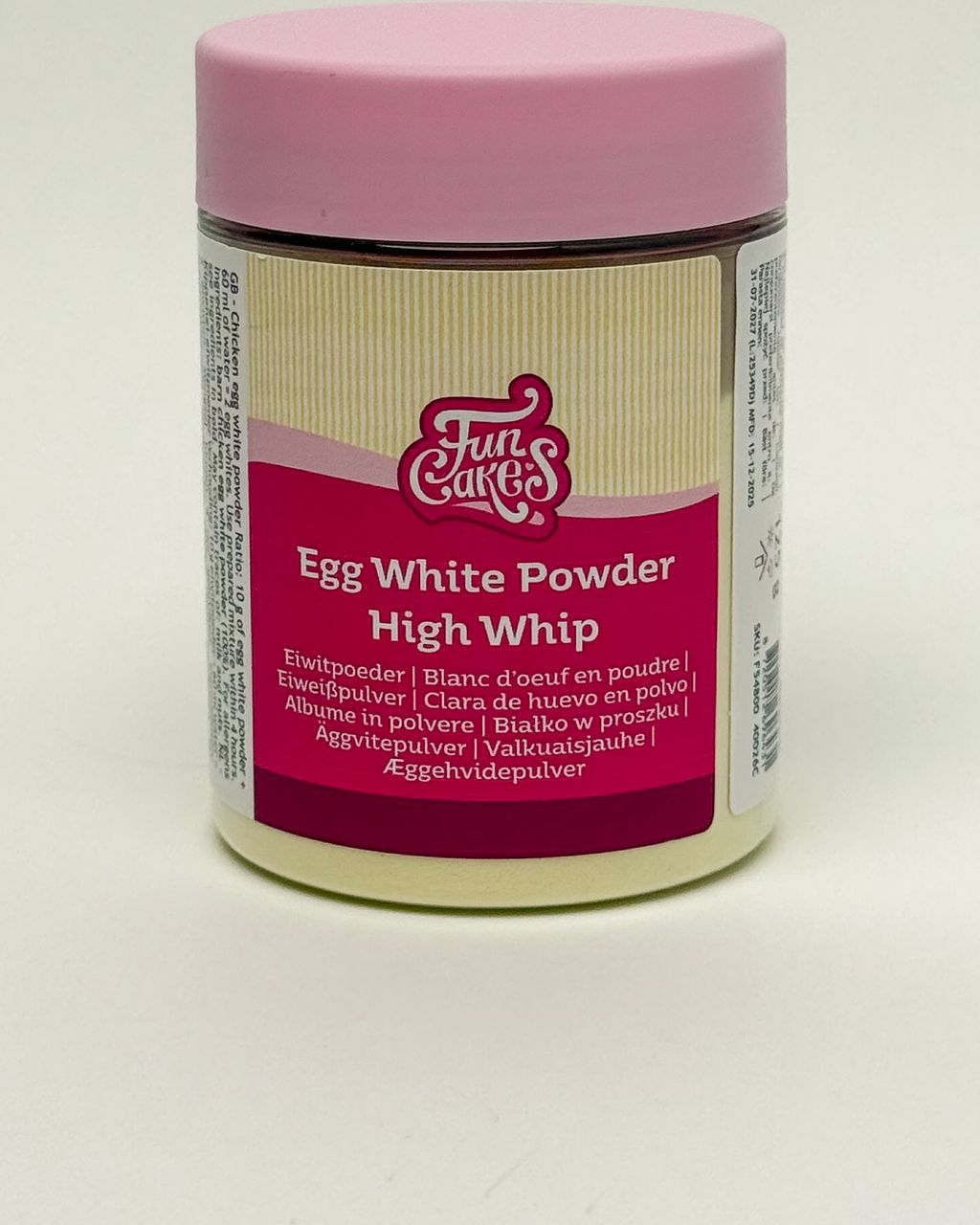
No egg separating: instead of fresh whites you can use dried egg white powder. According to the manufacturer, 10 g of powder mixed with 60 ml of water makes two egg whites. For this batch, that means about 17 g of powder and 100 ml of water. Let the powder hydrate for 15–20 minutes, then continue as usual. Carton pasteurized egg whites work too, though some whip less well. You'll find dried egg whites and other baking basics among the baking ingredients.
The method has three stages, and each has its own temperature: heat the whites with sugar to 160 °F (71 °C) → whip the meringue and let it cool below 77 °F (25 °C) → beat in butter at 64–68 °F (18–20 °C). Hit these temperatures and the buttercream will work.
Heat the egg whites with the sugar and salt in a metal or glass bowl set over a pot of gently simmering water. The bowl must not touch the water. Whisk constantly so the whites don't curdle against the side of the bowl. In 5–8 minutes the mixture will reach 71 °C (160 °F).
How to tell it's ready without a thermometer: rub a drop of the mixture between your fingers. It should feel smooth, without a single grain of sugar, and hot to the touch.
Why it matters: undissolved sugar stays in the buttercream like grit. Heating to 71 °C (160 °F) also pasteurizes the whites.
The bowl must be clean and grease-free. Wiping it with a paper towel and a drop of vinegar is enough. A trace of fat or yolk weakens the meringue.
Pour the hot mixture into the bowl of your stand mixer and whip on high speed for 8–12 minutes. The finished meringue is stiff, glossy and holds a sharp peak. Most importantly, it must cool to 22–25 °C (72–77 °F): the bottom of the bowl should feel neutral to the touch, not lukewarm.
This is the most common mistake with this buttercream. Warm meringue melts the butter and you end up with soup. If the bowl hasn't cooled even after 12 minutes, hold a cold, damp towel against the outside, or put it in the fridge for 5 minutes and then keep whipping.
Switch to medium speed and add the butter a tablespoon at a time (20–30 g). Add the next piece only once the previous one has been mixed in. The butter should be 18–20 °C (64–68 °F): a finger should sink into it, but it shouldn't look shiny or greasy.
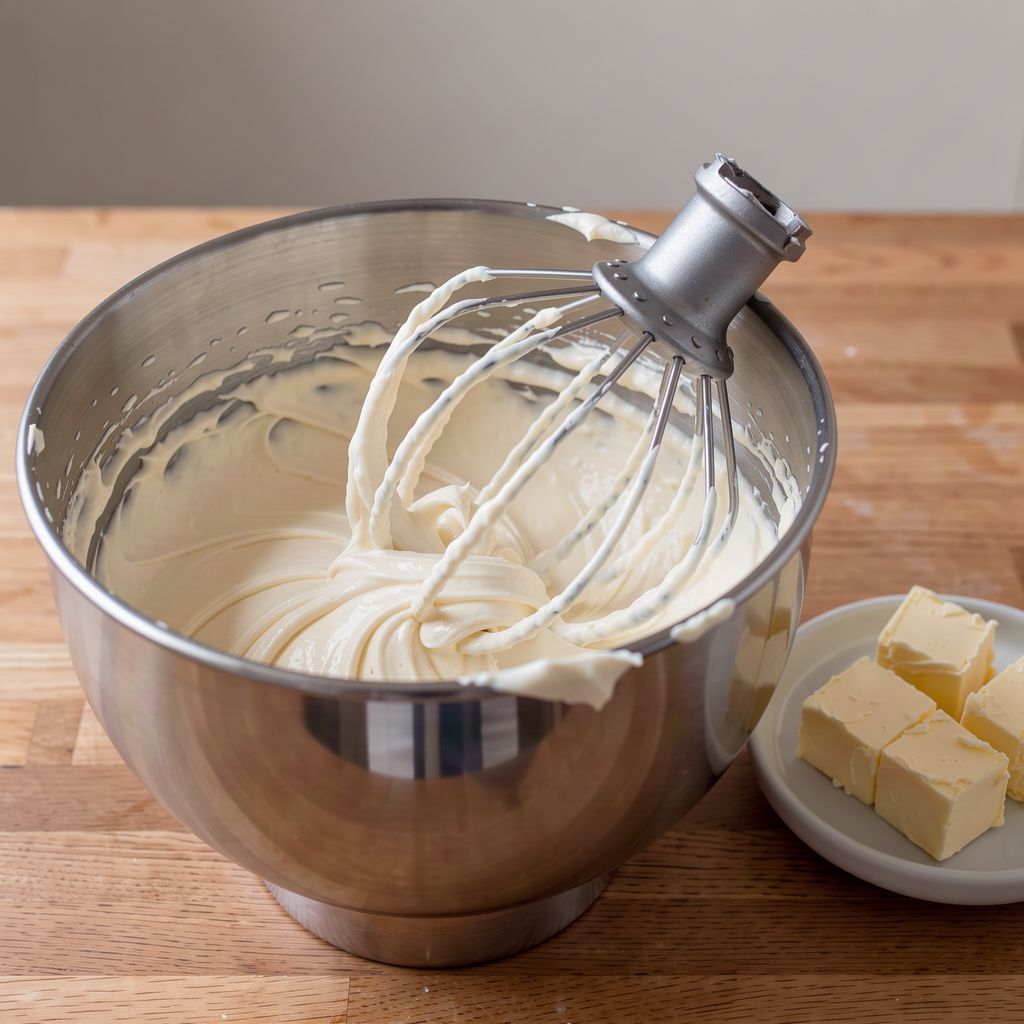
About halfway through the butter, the buttercream almost always turns soupy or curdles. That's normal, so don't panic and keep whipping. After adding the last piece, whip for another 3–5 minutes. The buttercream will suddenly come together into a smooth, velvety mass. Finally, add the vanilla or another flavoring and mix on low speed for 1–2 minutes with the paddle attachment. This pushes out air bubbles and makes the buttercream spread easily.
Runny Swiss meringue buttercream is too warm, and you can rescue it by chilling it in the fridge and whipping again. Either the meringue was warm or the butter too soft, so the fat melted instead of forming an emulsion.
Put the whole bowl in the fridge for 10–15 minutes. The edges of the buttercream should start to firm up, but not the center.
Put the bowl back on the mixer and whip on medium speed for 2–3 minutes.
If the buttercream is still soft, repeat. One or two rounds is usually enough.
Adding powdered sugar or more butter won't help: you'll only make the buttercream too sweet or too heavy, and the temperature problem remains.
Curdled Swiss meringue buttercream, with lumps of butter floating in liquid, is too cold, and you can bring it together by whipping more and gently warming the bowl. The butter firmed up before it could take in the water from the meringue.
Keep whipping first. Curdling halfway through fixes itself within 3–5 minutes on high speed.
Warm the side of the bowl: blow a hair dryer over it for 10–20 seconds, or wrap the bowl briefly in a towel soaked in hot water, and whip.
Take some out and melt it: melt 2–3 tablespoons of the buttercream in the microwave (about 10 seconds) and pour it back into the running mixer.
Buttercream from the fridge behaves the same way: first let it soften at room temperature for 1–2 hours, then re-whip it briefly. If it curdles, the hair dryer will help.
You can lighten Swiss meringue buttercream by whipping it longer and with white icing color, and tint it with gel colors. Butter gives it a creamy yellow tone, so without whitening it will never be completely white.
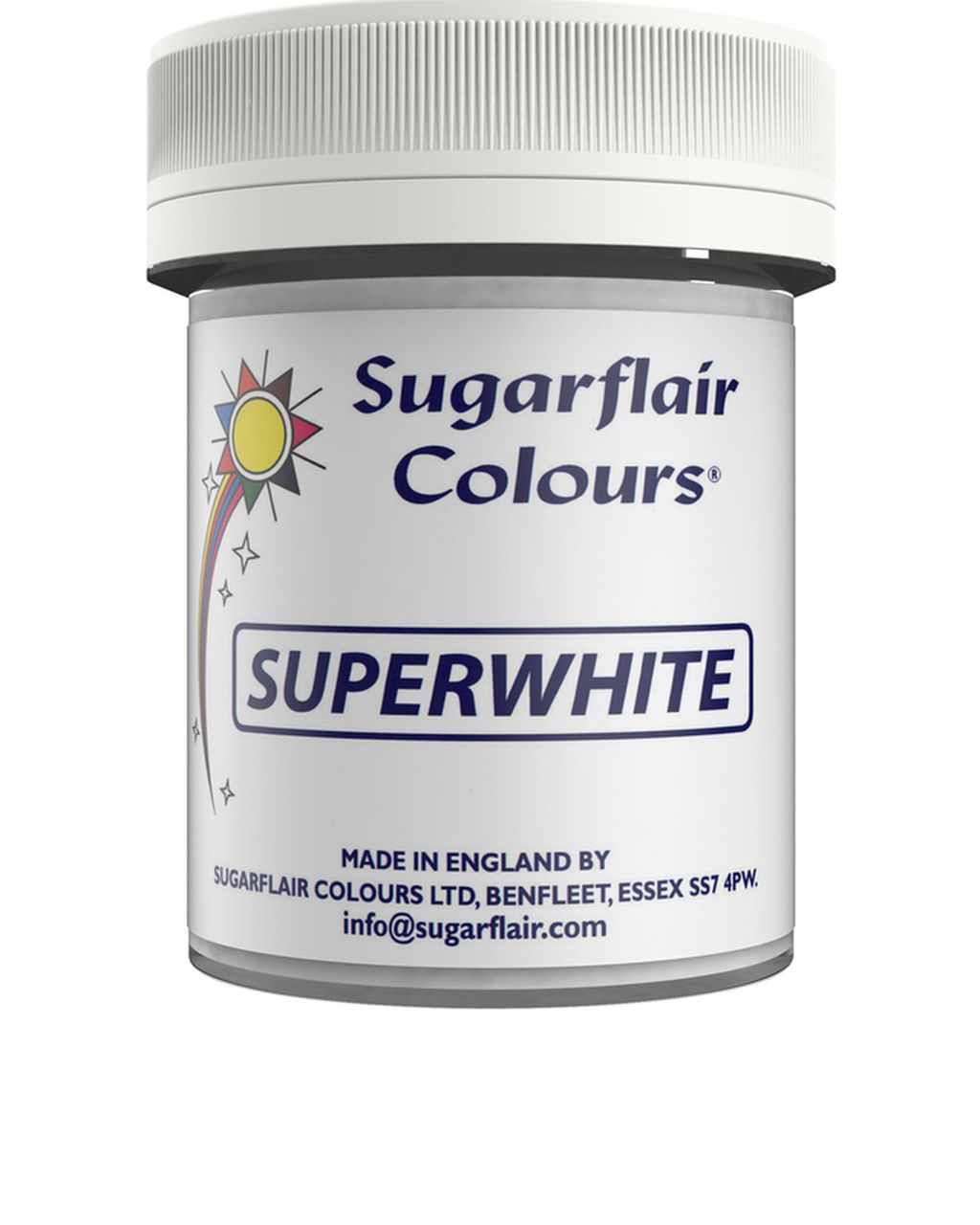
White: 5–8 minutes of whipping visibly lightens the buttercream. For a snow-white cake, add Sugarflair Extra White icing color a little at a time. A knife tip per 100 g of buttercream is enough, and add more only after mixing. A cheap home trick is a speck of violet gel color, which optically cancels out the yellow. If you overdo it, though, the buttercream turns gray. For more on whitening, see Snow-White Buttercream.
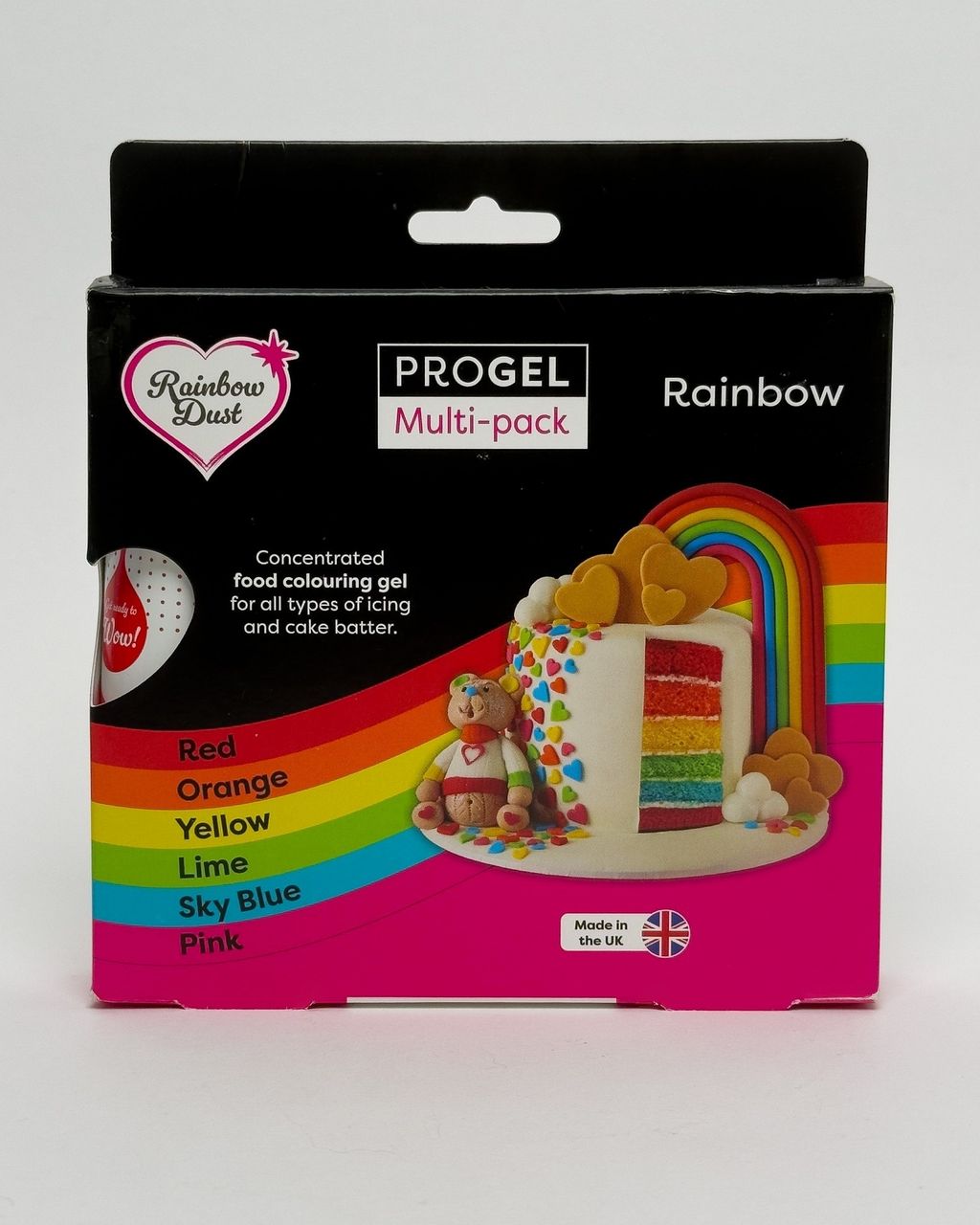
Colors: gel colors such as the ProGel Rainbow Set are concentrated, so they don't thin the buttercream. Liquid colors from the supermarket add water and, in larger amounts, can make the buttercream curdle. Add color with a toothpick, then let the buttercream stand for 1–2 hours, as the color deepens during that time.
Deep shades (red, black, navy) need a lot of coloring, and the buttercream can turn bitter. Oil-based colors suit these better, as they blend into butter more readily. For a dark buttercream, first add melted chocolate as described in the flavoring section below, since on a brown base you need much less coloring.
You can add chocolate, fruit purée, nut paste or coffee to Swiss meringue buttercream, always into the finished, fully emulsified buttercream, at room temperature and in small amounts.
Melted chocolate: 100–150 g for the batch in this article, cooled to 30 °C (86 °F).
Fruit purée or fruit paste: 2–4 tablespoons. More liquid will curdle the buttercream, so first thicken the purée by simmering it down by half.
Pistachio, hazelnut or caramel paste: 60–100 g.
Instant coffee: 1–2 teaspoons dissolved in a teaspoon of hot water.
Swiss buttercream is ideal for macaron filling because it handles flavoring well.
Swiss meringue buttercream is great for filling and coating cakes, sharp edges, piped decoration and cupcakes. It also makes a good base under fondant. For how to prepare it, see Fondant for Cakes.
Heat is its limit. At 25 °C (77 °F) and above, the buttercream starts to soften and won't last at a summer garden party. For warm conditions, choose a sturdier option from Cake Frosting That Holds Up Outside the Fridge. If classic buttercream puts you off with its greasiness, also read Buttercream That Isn't Greasy.
Swiss meringue buttercream keeps for 5–7 days in an airtight container in the fridge. Before using it, let it soften at room temperature for 1–2 hours and re-whip it briefly. If it curdles, warm the side of the bowl with a hair dryer.
Yes, you can freeze Swiss meringue buttercream for up to 3 months in a well-sealed container. Thaw it overnight in the fridge, let it come to room temperature, then re-whip it until smooth.
You can use powdered sugar instead of granulated sugar in Swiss meringue buttercream, but granulated is more reliable. Powdered sugar often contains a little starch as an anti-caking agent (up to 3%), so the buttercream can turn out slightly more matte, and the sugar clumps more easily over the heat. Granulated sugar dissolves completely as you whisk.
Swiss meringue buttercream tastes distinctly of butter because it is less sweet than classic buttercream. A pinch of salt, good vanilla or another flavoring (chocolate, fruit paste) helps, and above all, whipping it long enough to lighten it.
Swiss meringue buttercream can be made with margarine, but it tastes flatter than the butter version. Choose a baking margarine with 80–90% fat, and look for the word "margarine" right on the package. Reduced-fat margarines and spreads contain more water, so the buttercream curdles more easily.
One recipe worth heating the oven for, one tip, and one deal from the shop. Nothing else.