Moss cake with pistachios and banana cream
Pistachio Cake Filling: Paste or Ground Nuts, and How to Get the Green Color Right
Updated Oct 17, 2026
The best pistachio cake filling is made from pure pistachio paste and white chocolate: roughly 300 g chocolate, 100 g cream and 60–80 g paste give you a smooth, firm ganache for filling, and with more cream you can whip it for piping. Ground nuts taste good too, but the filling turns out gritty. And the green? Natural pistachio is more olive than emerald – a pinch of gel color just fine-tunes it. Below you'll find the ratios, the difference between paste and ground nuts, and how to tint it so it still looks like pistachio.
For a smooth cake filling, use paste and save ground pistachios for sprinkling and for the batter. Paste is nuts ground until they release their oil and turn into a thick, glossy cream – it melts into ganache without a trace. Ground pistachios are still tiny pieces; you'll feel them as grit in the filling, and it will never be silky.
A quick comparison:
Pure pistachio paste (100% pistachios) – the most intense flavor and a smooth texture. For filling and covering a 20 cm (8-inch) three-layer cake, plan on 90–120 g of paste. The downside: the price.
Sweet pistachio spread from a jar – convenient, but depending on the brand it usually contains 15–50% pistachios, some more, with the rest mostly sugar and vegetable oil – you'll find the percentage on the label. The flavor is weaker and the filling sweeter.
Ground pistachios – cheaper, but gritty. Use them in a filling only if you don't mind the texture; otherwise scatter them between the layers instead.
Roasted salted pistachios – not for filling. The salt and roasted flavor overpower the delicacy, and the paste turns out brown.
The label decides: pistachios should be the first ingredient, and ideally nothing else. Pure paste is usually olive to khaki green and thick, and it may have a layer of oil on top – that's fine, just stir it in before weighing.
Sweet pistachio spread (the kind you put on bread) can be used in ganache, but plan for it differently: use a third more of it and cut back on the chocolate, because the sugar and oil soften the filling. If it contains a lot of vegetable oil, the ganache won't set as firmly in the fridge.
Homemade paste needs shelled, unroasted pistachios, a powerful blender and 10–15 minutes of patience. Here's how:
Blanch unsalted shelled pistachios in boiling water for 1 minute, drain and cool them in cold water.
Squeeze the purple-brown skins off between your fingers – they're what dulls the color.
Dry them and set them in a 80–100 °C (175–210 °F) oven for 10–15 minutes so they aren't damp. Don't roast them golden.
Blend in batches with breaks so the blender doesn't overheat. First you get flour, then a clump, and finally a glossy paste.
The green color comes from chlorophyll. According to studies on roasting pistachios, heat turns it into olive-brown pigments, and Maillard reactions kick in on top of that – which is why roasted paste smells richer but looks brown. If you want green, don't roast; if you want a deeper flavor, roast lightly and then adjust the color. You'll find more on skinning and grinding nuts without releasing their oil in the article Nuts for Baking: How to Roast, Skin and Grind Them.
White chocolate firms up the filling, sweetens it and doesn't overpower the pistachio. Its cocoa butter sets in the fridge and gives the ganache the firmness to hold up the tiers of a cake. Dark or milk chocolate would smother both the pistachio flavor and color – with pistachio, they only work as a contrasting layer.
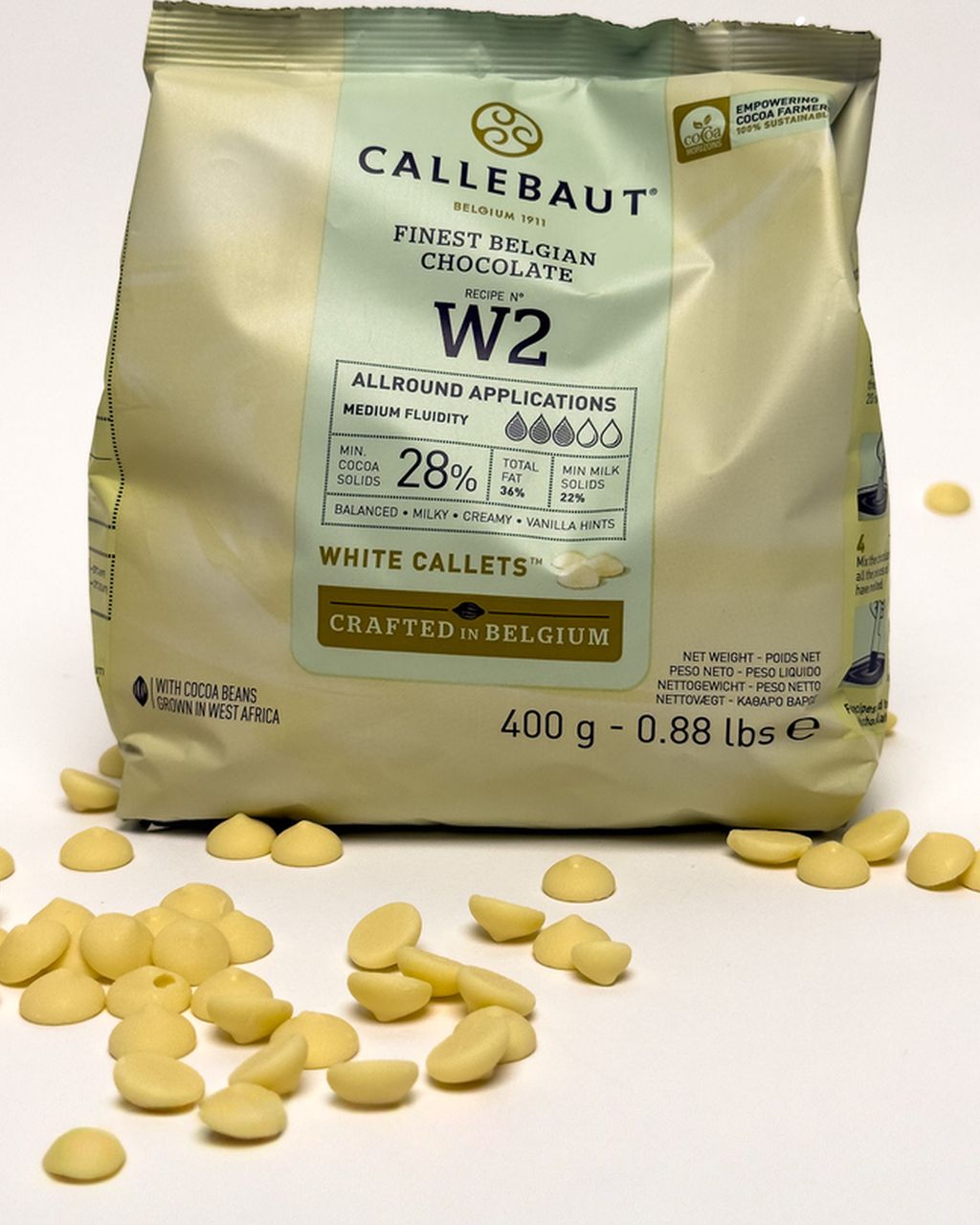
Choose chocolate with a good share of cocoa butter, not a coating. We work with Callebaut W2 white chocolate: it's milky and vanilla-like, not overly sweet, and the callets melt evenly, so you don't need to chop them. But any other good-quality white chocolate works too – take a look at our white chocolate for baking and creams. What to avoid: bar chocolate with vegetable fat and coatings – ganache made from them tends to be greasy, or it sets into a crumbly mass.
For filling and covering a cake, keep the ratio of white chocolate to cream at about 3:1 and add paste at 20–27% of the chocolate's weight. White chocolate has less cocoa solids than dark, so it needs more chocolate for the same firmness.
Three tried-and-true variations (whipping cream, 33% fat):
Firm ganache for filling and covering: 300 g white chocolate, 100 g cream, 60–80 g pistachio paste. This makes about 460–480 g of filling – enough for a smaller cake or a thinner coating. For a 20 cm (8-inch) three-layer cake, make 1.5 times the batch: 450 g chocolate, 150 g cream, 90–120 g paste.
Softer filling between layers: 250 g white chocolate, 125 g cream, 50–60 g paste.
Whipped ganache for decorating: 150 g white chocolate, 100 g hot cream + 250 g cold cream, 40–50 g paste.
Method for the firm ganache: heat the cream to just below boiling (80–90 °C / 175–195 °F), pour it over the chocolate, let it stand for 1 minute, then stir from the center outward into a glossy emulsion. Mix in the paste when the ganache is around 40 °C (105 °F) – use an immersion blender held below the surface so you don't blend in air. Cover with plastic wrap pressed directly onto the surface and leave it to set overnight at room temperature, not in the fridge – that way it will be spreadable, not rock-hard.
Pistachio paste is roughly 45% fat, so ganache made with it is softer overall than plain white ganache – that's why you should stick to the 3:1 ratio. You'll find how to cover a cake with it for straight sides and sharp edges in the article How to Cover a Cake with Cream or Ganache.
Whipped ganache needs 8–12 hours in the fridge before you whip it – otherwise it stays liquid. Pour hot cream over the chocolate, stir, add the paste, then stir in the cold cream and chill overnight. Whip at medium speed and keep an eye on it: as soon as it holds a soft peak, stop. A few seconds longer and it turns grainy, like over-whipped cream. We cover the ratios and how to rescue split ganache in detail in the article Whipped White Chocolate Ganache.
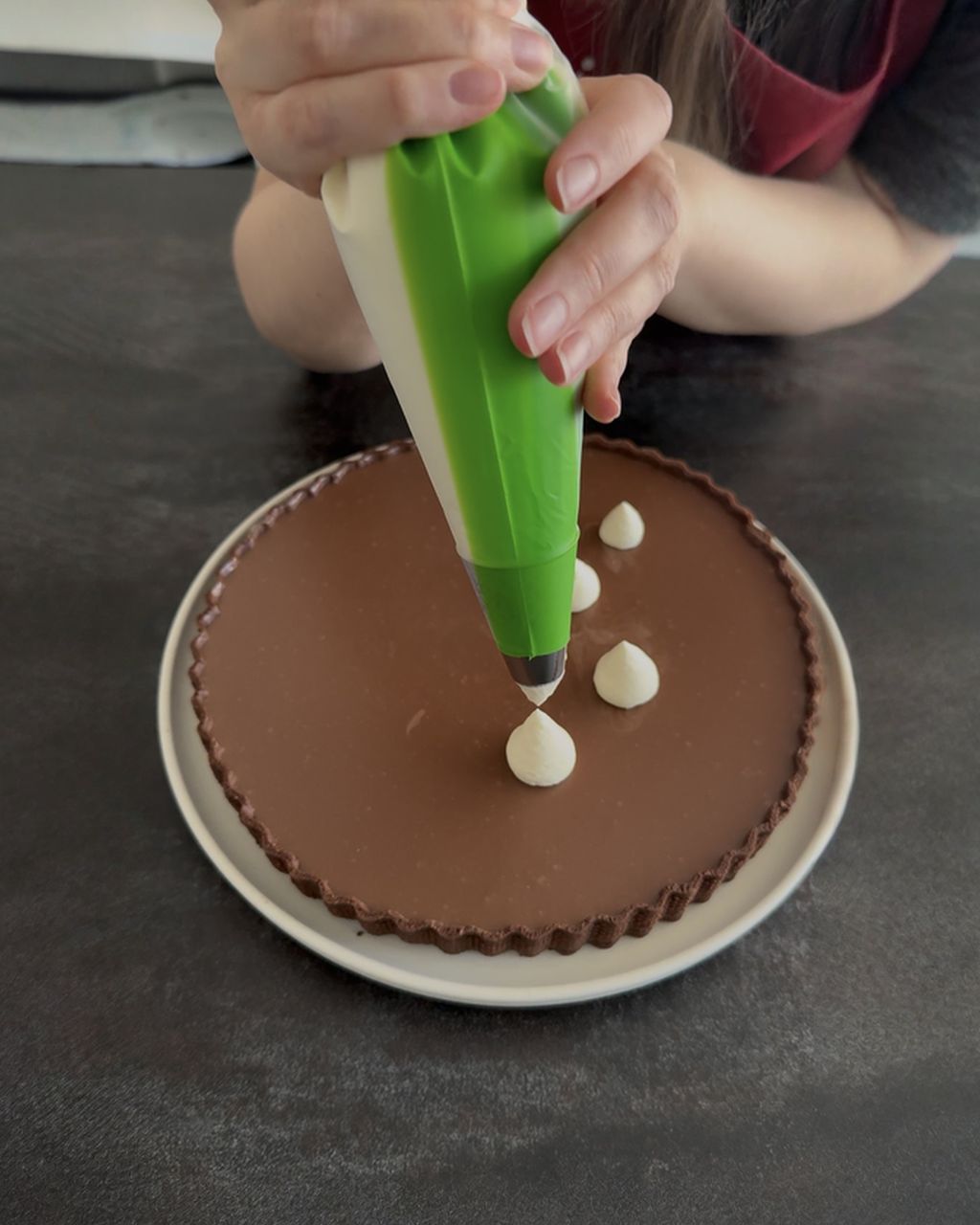
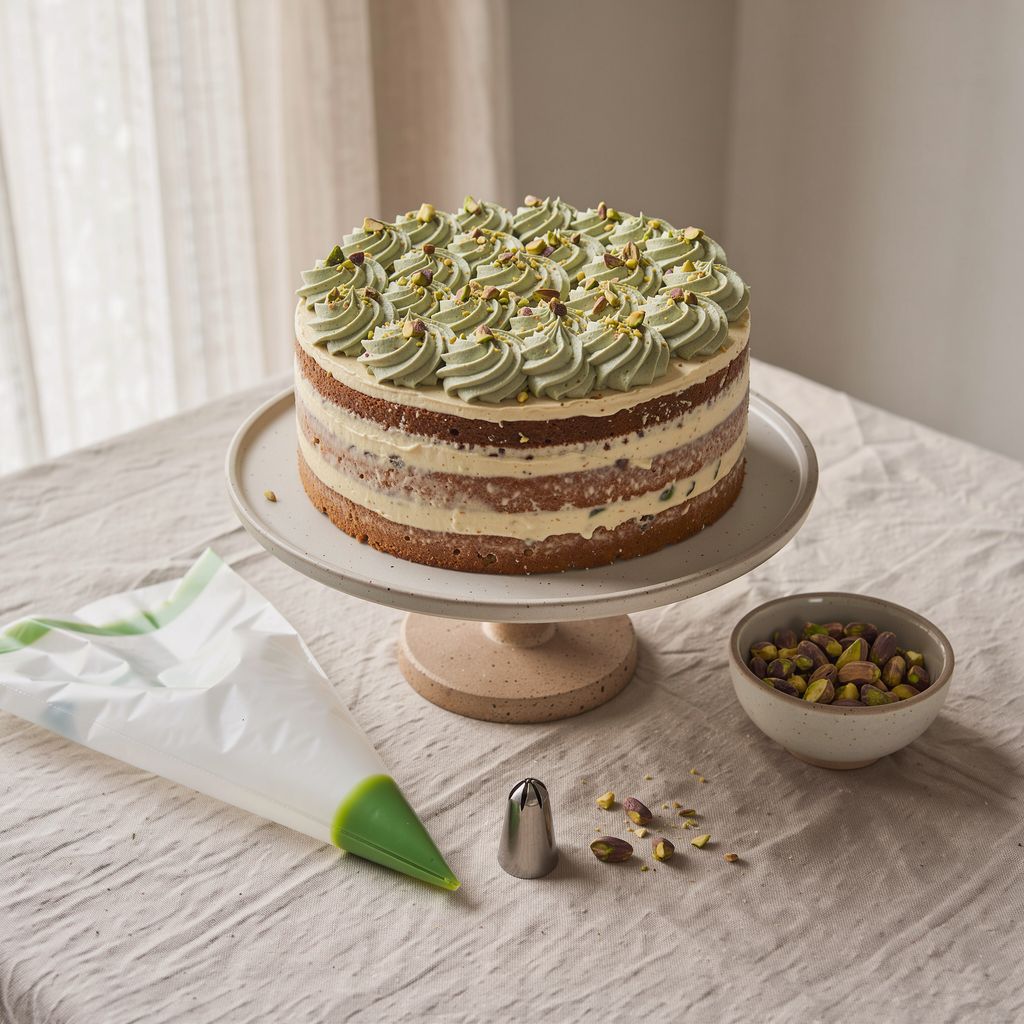
For rosettes and full flowers on top of a cake or on cupcakes, the JEM Drop Flower #2D tip is handy – its teeth are twisted, so you can pipe a rosette in one motion. Pair it with a 36 × 20 cm piping bag: it holds enough filling for the whole top of a cake at once, so you don't have to refill midway through decorating. Fill the bag only two-thirds full and hold it by the top end, not in your palm – the warmth of your hand softens ganache quickly.
Pistachio cream made with white chocolate tends to be pale khaki – for a natural pistachio green, all it needs is a drop of gel color on the tip of a toothpick. The paste adds a warm olive undertone, the chocolate lightens it to ivory, and the result is more beige-green. Nothing wrong with that, it just may not look like pistachio on a cake.
How to do it:
Color the finished cream, not the cream you heat for the ganache. Only then do you see the true shade.
Pick up the color with a toothpick, not a dropper. For 500 g of cream, start with an amount the size of a grain of rice.
Stir, wait 10 minutes, and only then add more. Gel colors darken in the cream over a short time.
Aim for a sage to light olive green. If the cream looks like toothpaste, there's too much color.
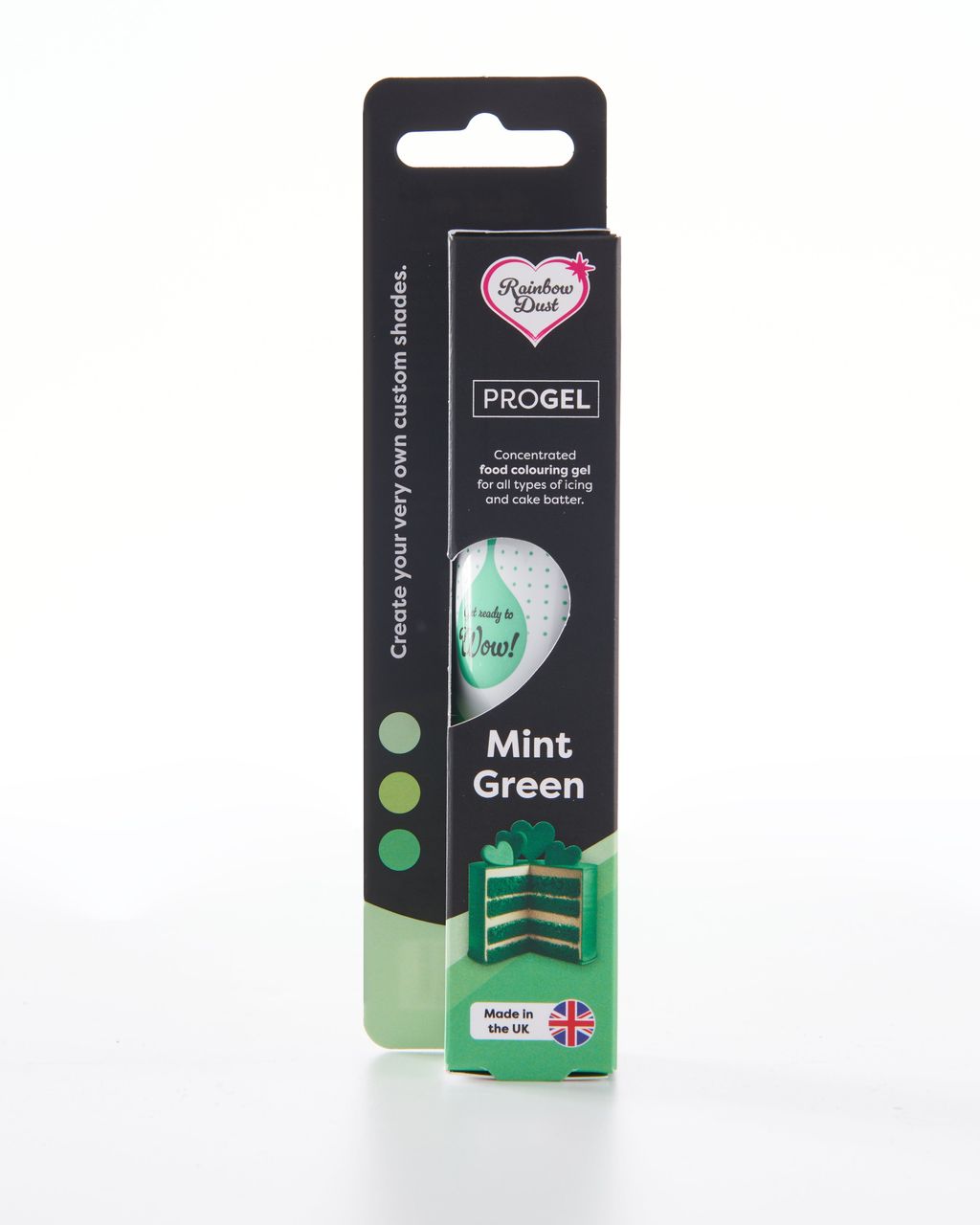
We use ProGel gel color in Mint Green. Honestly: on its own it's a cool, slightly bluish green. But in pistachio cream, the paste's olive undertone warms it up, and together they give exactly that subtle, believable shade. If you're coloring a cream without paste (just flavoring), the mint will look cold – in that case, add an equally tiny pinch of yellow.
And when is gel color not enough? Don't put gel into pure melted chocolate (without cream) – the water in it can thicken the chocolate into lumps. Chocolate needs an oil-based color, such as Sugarflair oil-based Light Green. In ganache made with cream, gel color is fine.
Natural alternatives that we don't sell but that work: matcha (it gives green, but also bitterness and a tea flavor – 1/4 teaspoon is enough) or dried spinach powder (almost neutral in flavor in a small amount, though the color is darker). For a truly green cream with no coloring, the best route is homemade paste from blanched, unroasted pistachios.
The most common cause is temperature: overheated chocolate releases fat, and paste added to hot ganache adds even more. An overview of problems and fixes:
Oil on the surface, grainy filling – the ganache overheated or the paste went in too soon. Cool it to 35–40 °C (95–105 °F), stir in 1–2 tablespoons of warm cream and restore the emulsion with an immersion blender.
The ganache won't set – not enough chocolate, or a sweet pistachio spread with vegetable oil. Add melted white chocolate (50 g for every 300 g of filling) and blend again.
The filling is gray or brown – paste made from roasted pistachios or with the skins left on. You can rescue the flavor and adjust the color with gel; next time, reach for paste made from unroasted nuts.
Whipped ganache turns grainy – over-whipped or not chilled enough. Melt a quarter of it to 30 °C (86 °F), return it to the rest and mix briefly.
The filling is too sweet – white chocolate is sweet on its own. A drop of lemon juice or a pinch of salt balances the flavor, or you can increase the amount of paste.
Pistachio pairs best with tart fruit and a delicate sponge: raspberries, sour cherries, lemon or apricot. The acidity lifts the sweet white chocolate and the nutty flavor stands out.
Inspiration from our recipes:
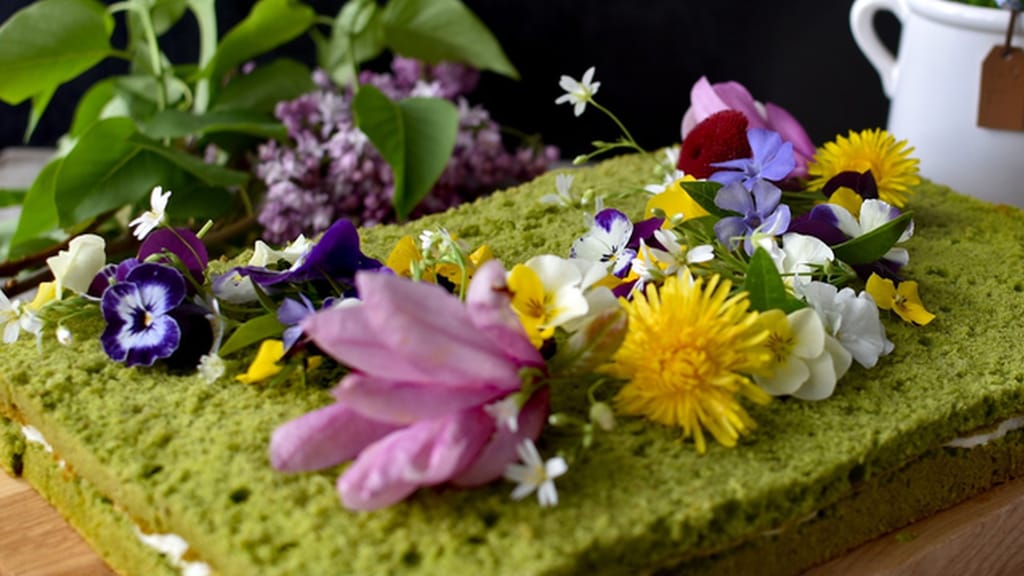
Moss Cake with Pistachios and Banana Cream – pistachios in a green "moss" on top, where pistachio ganache is a natural choice for the filling.
Pistachio Cupcakes with Lemon Curd and Mascarpone Cream – a showcase of how lemon balances pistachio. Whipped pistachio ganache piped with a #2D tip also suits the top.
If you want a lighter cream, you can also mix pistachio paste into mascarpone – how to make it firm so it doesn't split is in the article Mascarpone Cake Cream. And if pistachio has won you over, try the Dubai-style pistachio chocolate with kataifi too.
Moss cake with pistachios and banana cream
Moss Cake with Pistachios and Banana Cream
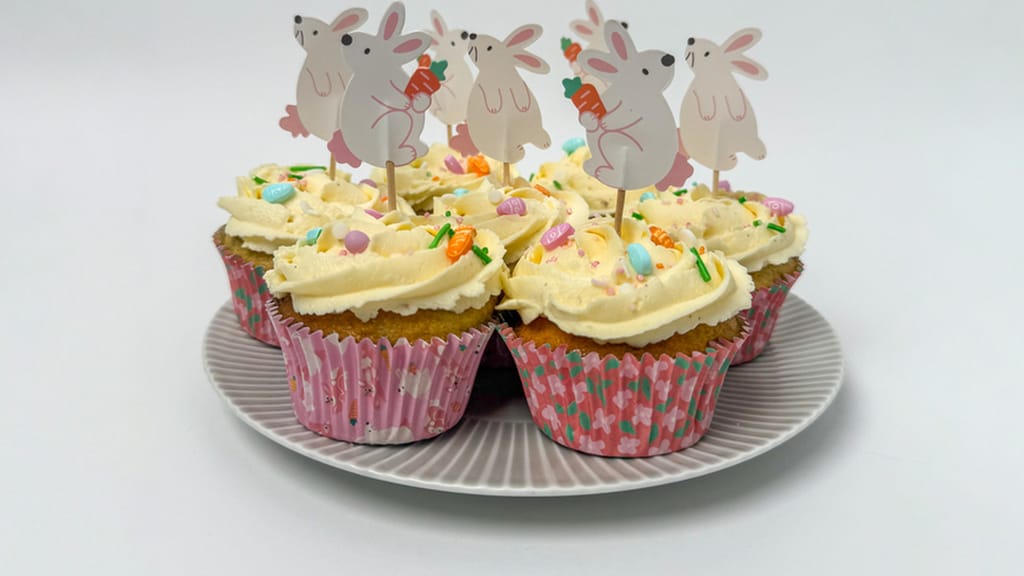
Pistachio cupcakes with lemon curd and mascarpone cream
Pistachio Cupcakes with Lemon Curd and Mascarpone Cream
Pistachio white chocolate ganache keeps for 5–7 days in an airtight container in the fridge, and a finished cake made with it keeps for 3–4 days. Before using, let it soften at room temperature for 30–60 minutes and stir briefly so it turns smooth again.
Yes, you can freeze firm pistachio ganache for up to 3 months. Thaw it slowly in the fridge overnight, then bring it back together with an immersion blender. Freeze whipped ganache before whipping it, and whip it only after it has thawed.
Firm pistachio ganache at a 3:1 ratio will hold fondant, as long as you chill the cake after covering it and the ganache sets completely. Whipped ganache and soft fillings don't belong under fondant – they're too soft and the fondant would ripple on them.
You can, but the pistachio gets lost – milk chocolate overpowers the delicate nutty flavor and the cream turns brown. If you want to use it, add at least 100 g of paste per 300 g of chocolate, or better yet, make a milk chocolate ganache as a contrasting layer next to the pistachio one.
No, pistachios are tree nuts, which are a mandatory labeled allergen in the EU. Don't serve a cake with pistachio cream to guests with nut allergies, and watch out for any tools that have come into contact with the paste.
One recipe worth heating the oven for, one tip, and one deal from the shop. Nothing else.