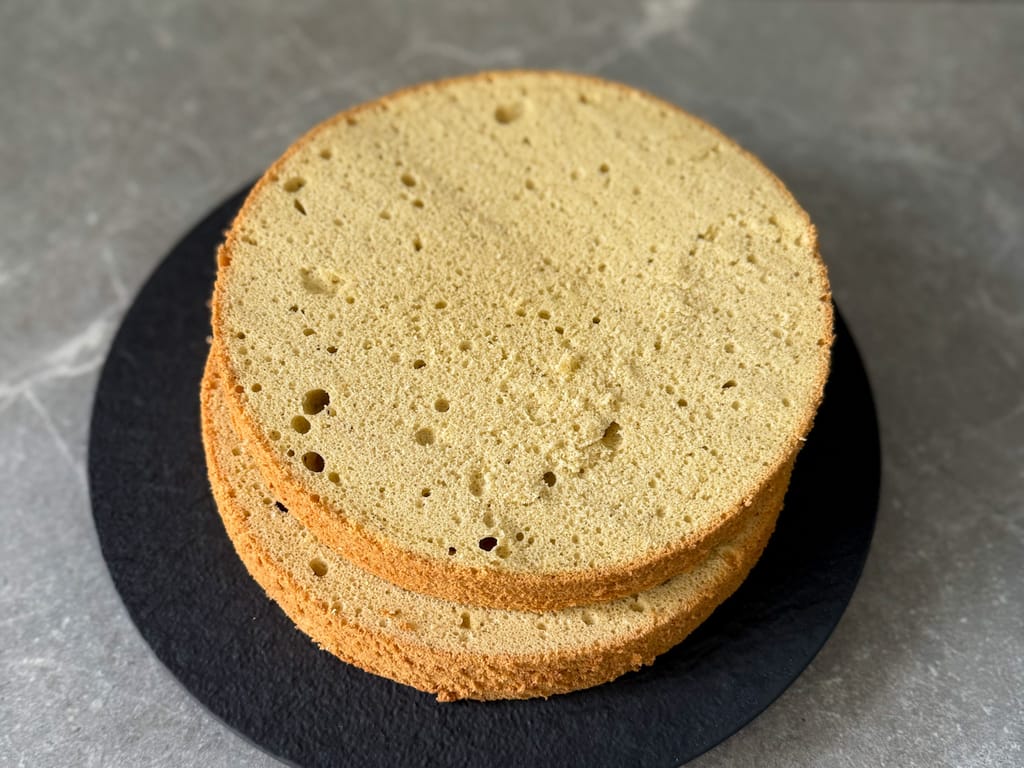
At a glance
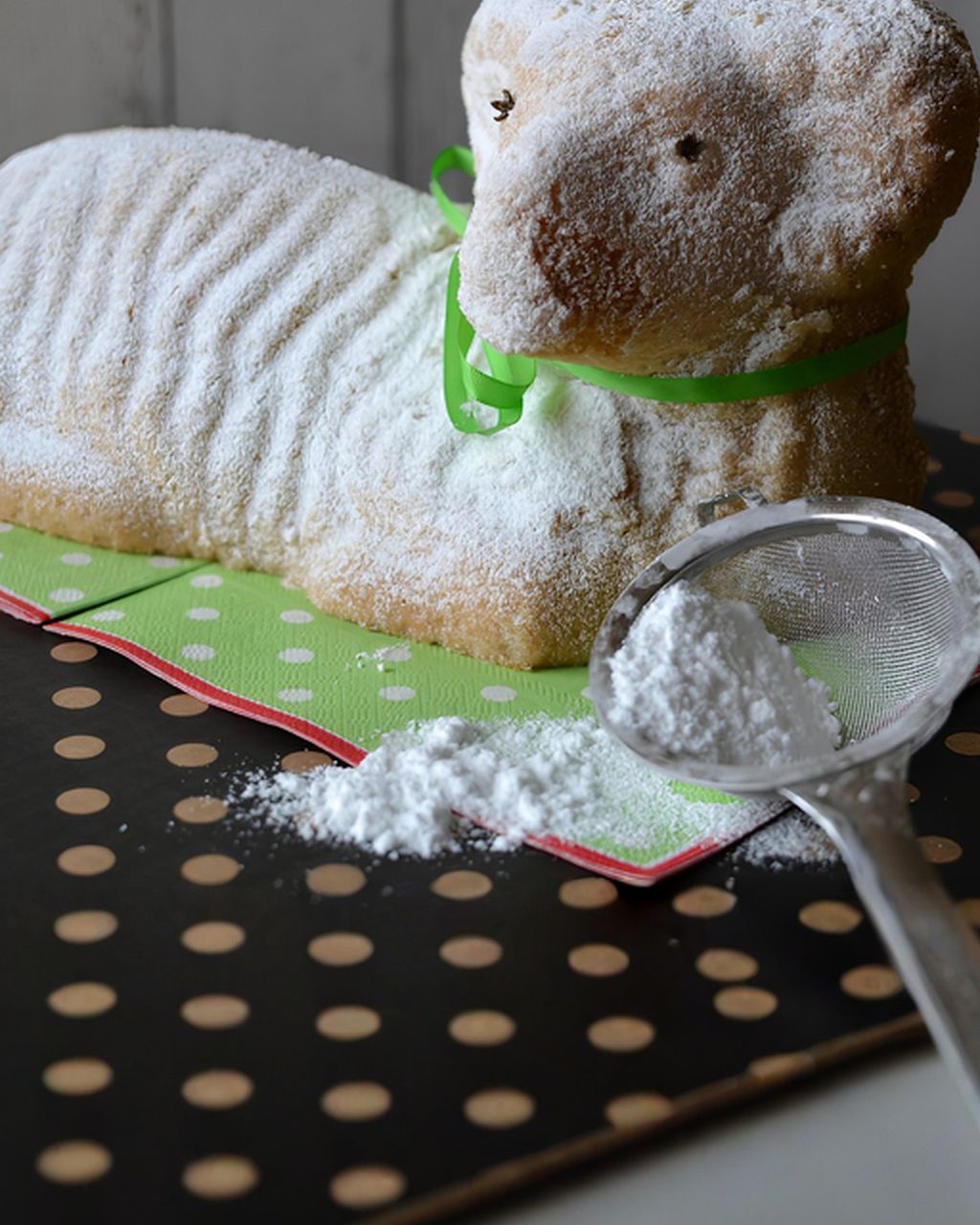
You're making a classic French Génoise sponge – a light, airy cake that's sturdy enough to layer and fill. The key is whipping egg whites to stiff peaks, gently folding in yolks and flour to keep all that volume, then baking low and slow without opening the oven door (this part is crucial!). The cake actually gets easier to slice after resting overnight, so patience pays off here.
1/9
Separate the eggs
Carefully separate the egg whites from the yolks. Getting the correct ratio is essential for this recipe, so it's best to weigh out your ingredients precisely in advance.
For this step
0/22/9
Whip to stiff peaks
Put the egg whites in a clean bowl along with the granulated and vanilla sugar. Whip on high speed until you get a really stiff, glossy meringue. It should form sharp peaks that don't droop.
For this step
0/23/9
Gently add the yolks
Reduce the mixer speed to its lowest setting. Gradually add all the egg yolks to the meringue. Wait until they're fully incorporated and check that the mixture still holds a stable peak on the whisk.
How it went
Nobody has tried this recipe yet
Be the first to say how it went.
Anyone can answer, without signing in or buying. Answers aren't verified. The percentage is the share of “Worked out” answers, shown from 5 answers.
Tips from the Yumsto kitchen
Why it works
There's no butter, oil or baking powder in this batter – all the lift comes from air bubbles in the whipped egg whites. Sugar whipped with the whites turns them into a firm, glossy meringue that can take the yolks and flour. Ungreased pan sides let the batter cling and climb as it bakes. The low temperature and long bake help the sponge rise evenly without a tall dome.
Tips
The bowl and whisk must be spotless and grease-free, and there mustn't be a trace of yolk in the whites, or they won't whip stiff. Sift the flour and fold it in quickly and lightly – every extra stir costs volume. Get the batter into the tin and into the oven right away. Once baked, leave the sponge in the pan for 5–10 minutes, run a knife around the sides and invert the pan onto a rack. That evens out the surface.
Troubleshooting
Sunken center: it was underbaked or the oven was opened too early. Dense, rubbery layer at the bottom: the flour wasn't fully folded in, or the meringue deflated. A cracked top doesn't matter – you'll trim it off the next day.
Filling the sponge
A sponge without butter is naturally on the dry side. Brush the layers with syrup before filling – sugar dissolved in water works, or fruit juice, or a dash of liqueur for adults.
Storage
Wrapped in plastic wrap, the cooled sponge keeps at room temperature for up to 2 days. It freezes for up to a month; thaw it still wrapped so it doesn't get damp.
Common questions
Is the sponge lactose-free?
Yes, there's no dairy in the batter. Lactose only comes in with whatever filling you choose.
Can I bake it without the fan setting?
Yes – set the oven about 10–20 °C higher and watch the time, as every oven bakes a little differently. Check with a skewer.
How do I scale it for a 24 cm tin?
A 24 cm tin has about 1.44 times the area of a 20 cm one. Multiply every ingredient by 1.44, but height and baking time may change, so check with a skewer.
Why rest the sponge overnight?
The crumb settles, so it slices cleanly and crumbles less. Cut straight after cooling, it tends to tear.
Want a recipe like this every Thursday?
One recipe worth heating the oven for, and one tip that saves you time. Nothing else.