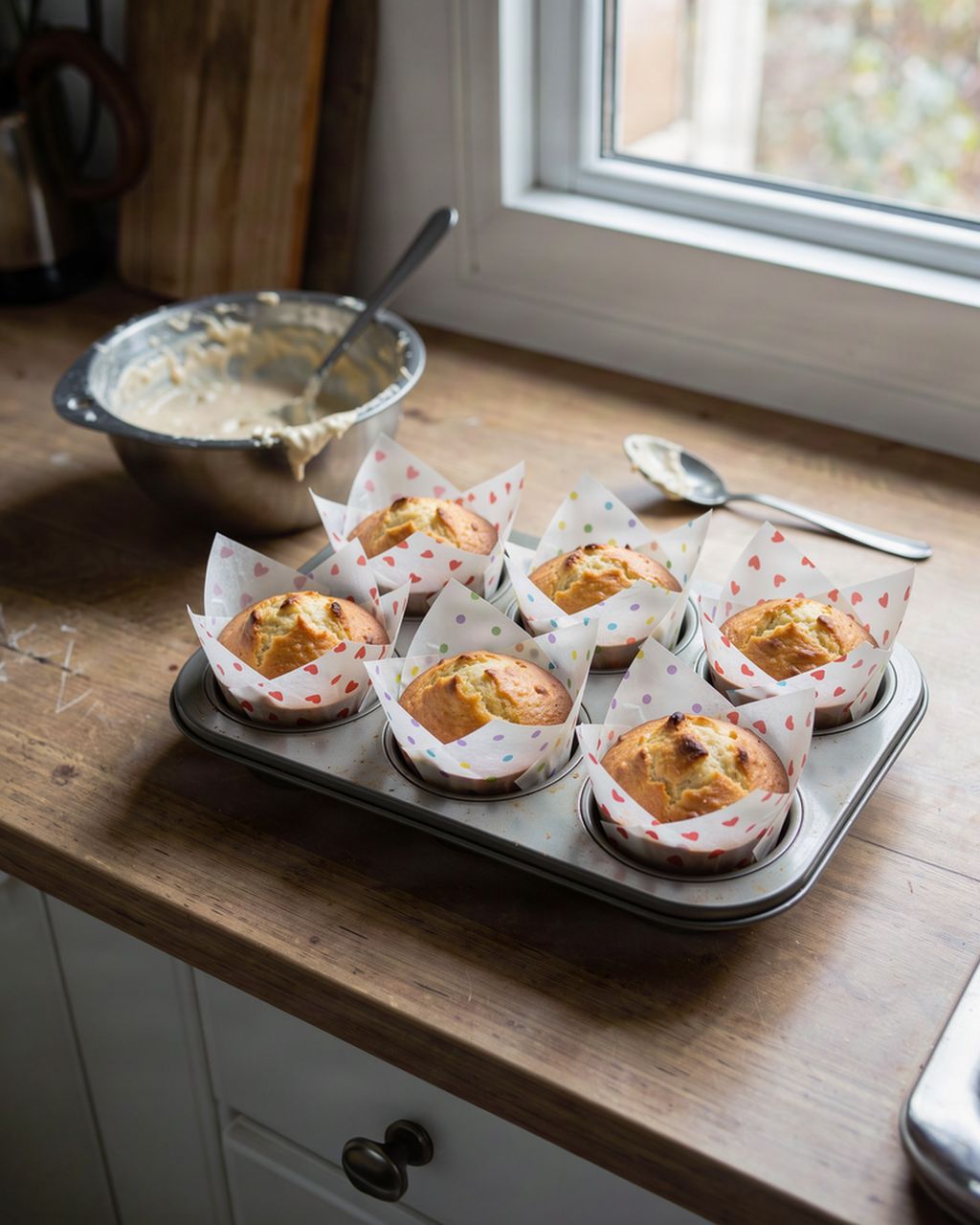
Pistachio cupcakes with lemon curd and mascarpone cream
Mascarpone Frosting: Why It Curdles or Turns Runny, and How to Make It Firm Enough for Cakes
Updated Oct 17, 2026
Mascarpone cream usually goes wrong in one of two ways: it either **curdles** into grains, because you overwhipped it or poured something warm (like melted gelatin) into the cold cream, or it turns **runny**, because the mascarpone was warm or you added too much sugar or liquid. Both can be rescued, and both can be prevented: keep everything cold, use cream with at least 33% fat, use powdered sugar, and whip only until the cream holds a peak. And when you need the cream to stand up in a layer cake or as a rosette on a cupcake, stabilize it with gelatin: **4 g gelatin per 250 g mascarpone**.
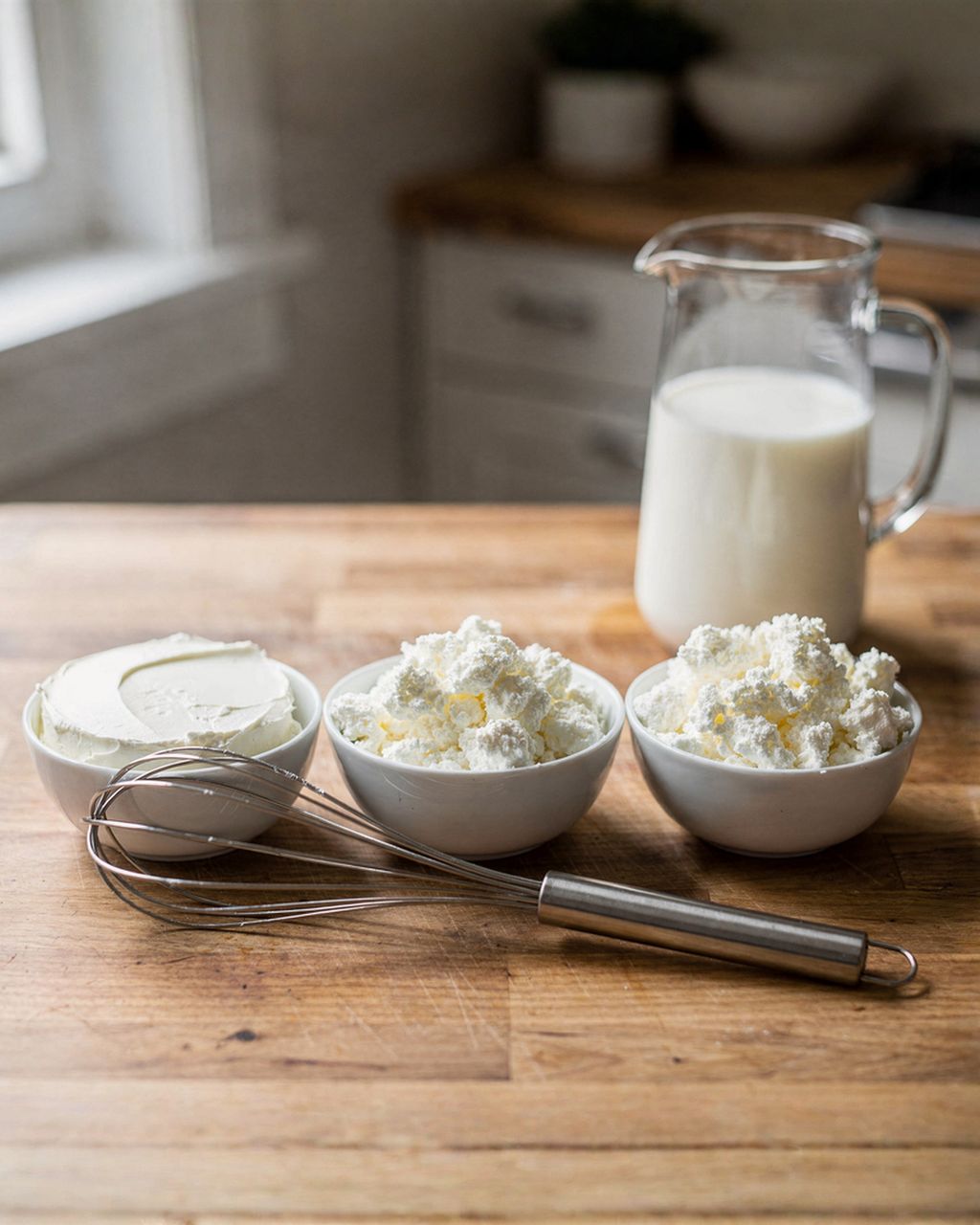
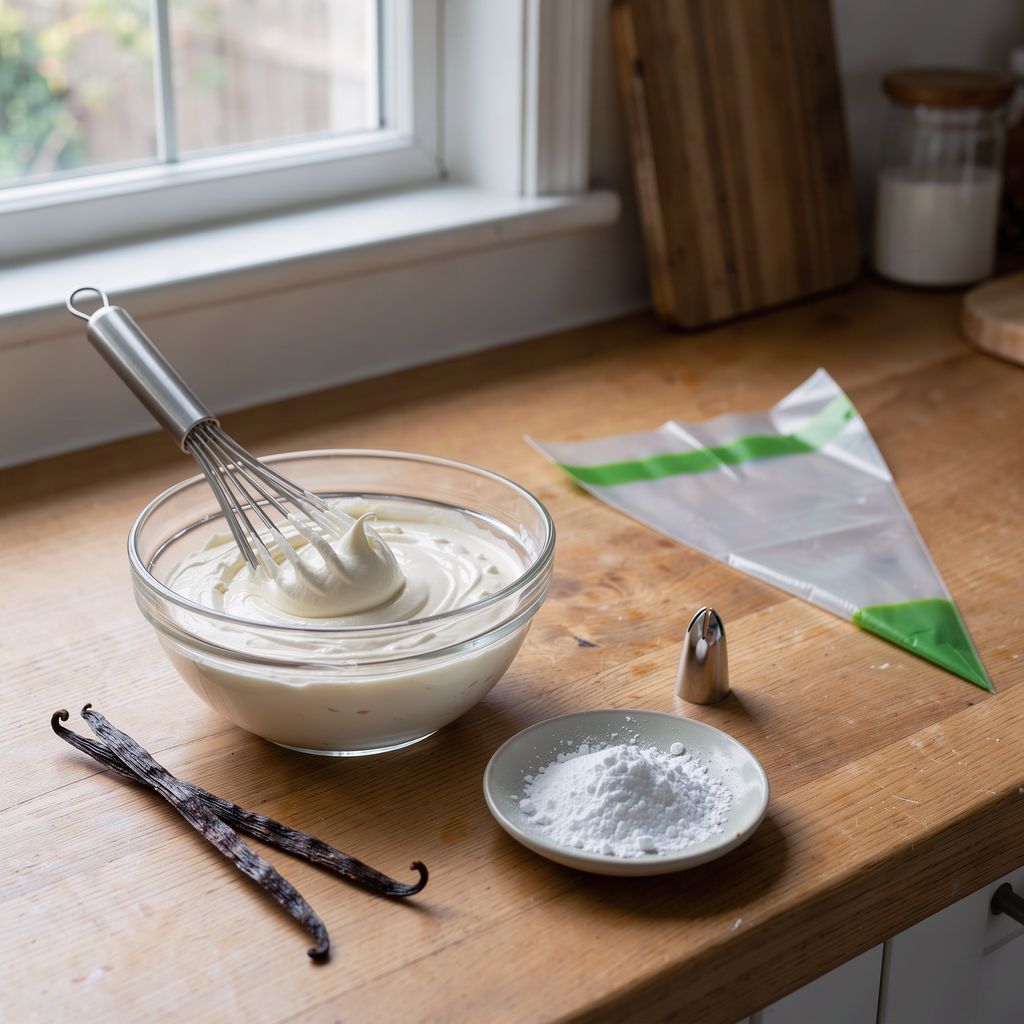
Mascarpone cream is a whipped mixture of mascarpone, heavy whipping cream and powdered sugar, most often flavored with vanilla. This basic ratio works for both fillings and cupcakes:
250 g mascarpone (straight from the fridge)
200–250 ml heavy whipping cream, at least 33% fat (straight from the fridge)
50–60 g powdered sugar
seeds from ½ a vanilla bean
It makes about 500–560 g of cream, enough for 12 cupcakes with tall rosettes, or for the filling and a thin coating on an 18 cm (7-inch) cake.
Mascarpone is around 40% fat, so it whips up fast and holds its shape better than whipped cream alone. But that high fat content is also exactly why the cream so easily tips over into grains. If you don't have mascarpone or want a lighter base, take a look at what to use instead of mascarpone in cakes.
The method is: cold ingredients, first briefly smooth the mascarpone with the sugar, then pour in the cream and whip only until you reach stiff peaks. The whole whipping process takes 1–3 minutes, not ten.
Everything cold. Both the mascarpone and the cream straight from the fridge (4–6 °C / 39–43 °F). In a warm kitchen, put the bowl and whisk in the freezer for 10 minutes.
Mix the mascarpone with the sugar and vanilla with a spatula, or on the lowest speed for just 20–30 seconds, until smooth. Don't whip it on its own to incorporate air.
Pour in the cold cream and whip on medium speed (not on maximum).
Watch for the moment when whisk trails appear and the cream starts to hold. From then on, whip in bursts of a few seconds and check. It's done when the peak on the whisk stands up and only bends slightly.
Do the last few strokes by hand with a spatula or whisk. Your hand won't overwhip it, but a mixer can in 15 seconds.
The cream is right when it's smooth, glossy and velvety. As soon as it turns matte and tiny grains appear on the surface, it's already a step beyond where you want it.
Mascarpone cream curdles when the fat globules clump together during whipping into butter-like grains and separate from the liquid. The three most common causes:
Overwhipping. The most common culprit. Mascarpone is already thick and rich, so only a few seconds on high speed separate the ideal consistency from grains.
Whipping on maximum. High speed warms the cream through friction and the fat comes together faster. Medium speed is slower, but you stay in control of the cream.
A big temperature difference. If you pour warm melted gelatin, melted chocolate or lukewarm liqueur into ice-cold mascarpone, the fat around them instantly seizes into lumps.
You can rescue curdled mascarpone cream with liquid cream or by adding back a softened third of the cream, depending on how badly it has curdled.
Slightly grainy but still holding? Add 2–3 tablespoons of cold liquid (unwhipped) cream and fold it in by hand with a spatula. The liquid cream coats the grains again and the cream smooths out.
Clearly curdled and releasing liquid? Take out about a third of the cream and let it soften for 10–15 minutes at room temperature (or hold it over a warm water bath for a few seconds), then whip it back into the rest on the lowest speed. Then put the cream in the fridge for 20 minutes.
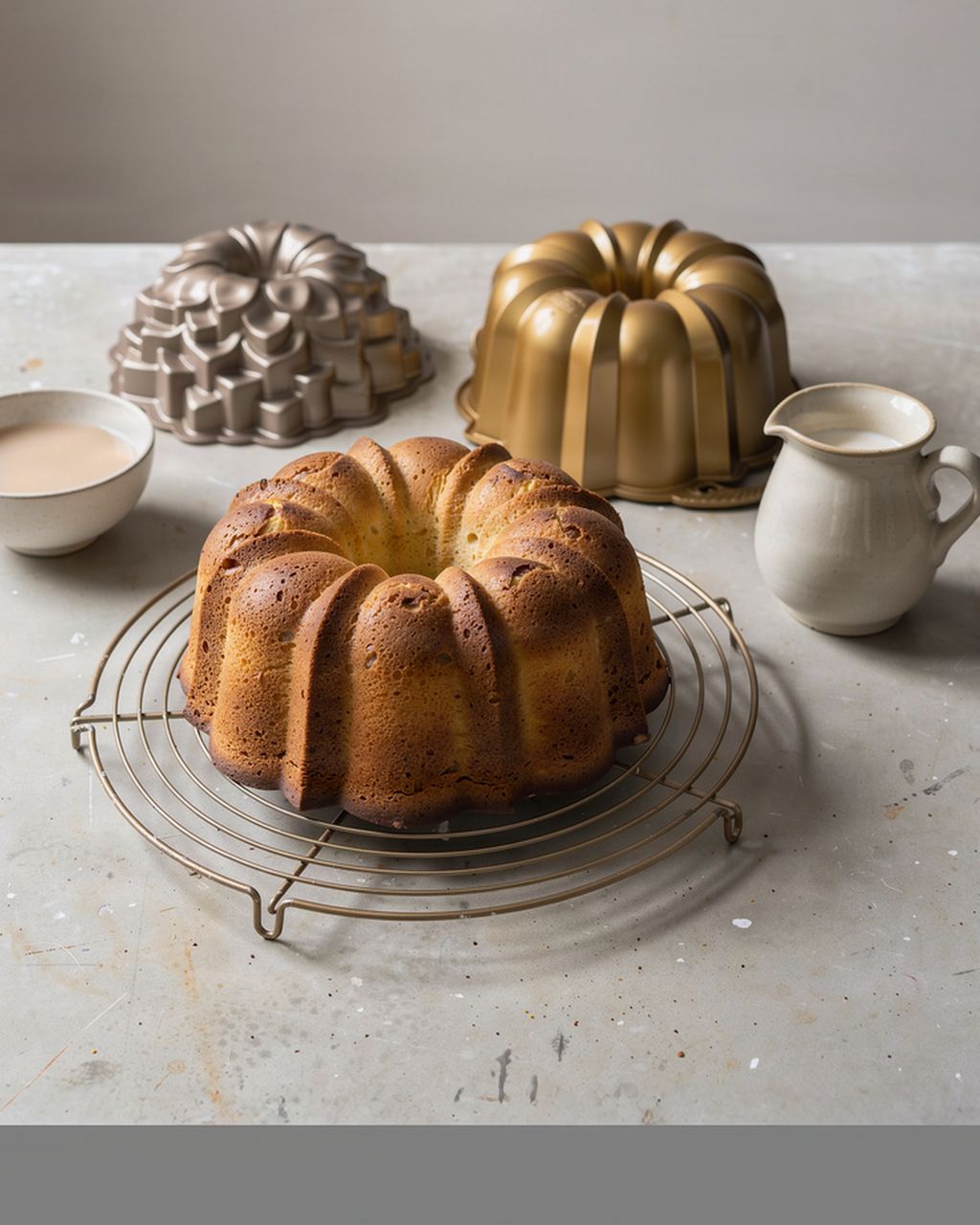
Completely buttery, with liquid at the bottom? It won't turn smooth again. Don't throw it out: bake it into a bundt cake or muffin batter in place of some of the fat and dairy.
Mascarpone cream is runny when the mascarpone was warm, when it contains too much sugar or liquid, or when the cream was lower than 33% fat. Specifically:
Warm mascarpone. Above roughly 10 °C (50 °F), the fat softens and the cream has nothing to hold it up. Mascarpone that has sat out on the counter for an hour won't whip properly anymore.
Granulated sugar or too much sugar. Sugar draws water out of the dairy and the cream loosens. Granulated sugar also doesn't dissolve and feels gritty. Use powdered sugar and stick to 50–60 g per 250 g mascarpone. The same applies to vanilla sugar in a packet, which is granulated; for what to use instead, see the article what to use instead of a vanilla bean and when vanilla sugar works.
Too much liquid. Espresso, liqueur, lemon juice or fruit purée: without stabilizing, a cream made from 250 g mascarpone can take 2–3 tablespoons at most. Any more needs gelatin (see below), or it will run. To see how to work fruit purée into a cream without it releasing water, check out mango cream for cakes and cupcakes.
Weak cream. Cooking cream (12%) won't hold the cream up, and whipping cream with 30% fat makes a softer cream. Go for 33% and up.
You can thicken runny mascarpone cream in three ways: by chilling it, by adding cold mascarpone, or by using gelatin.
Chill it. Put the bowl in the fridge for 30 minutes, then briefly (10–20 seconds) whip it again. This is often enough, because the problem was only temperature.
Add cold mascarpone. Folding in 50–100 g of ice-cold mascarpone with a spatula thickens the cream without making it too sweet.
Rescue it with gelatin. If it's runny because of added liquid, neither chilling nor whipping will help. Stabilize it using the method in the next section.
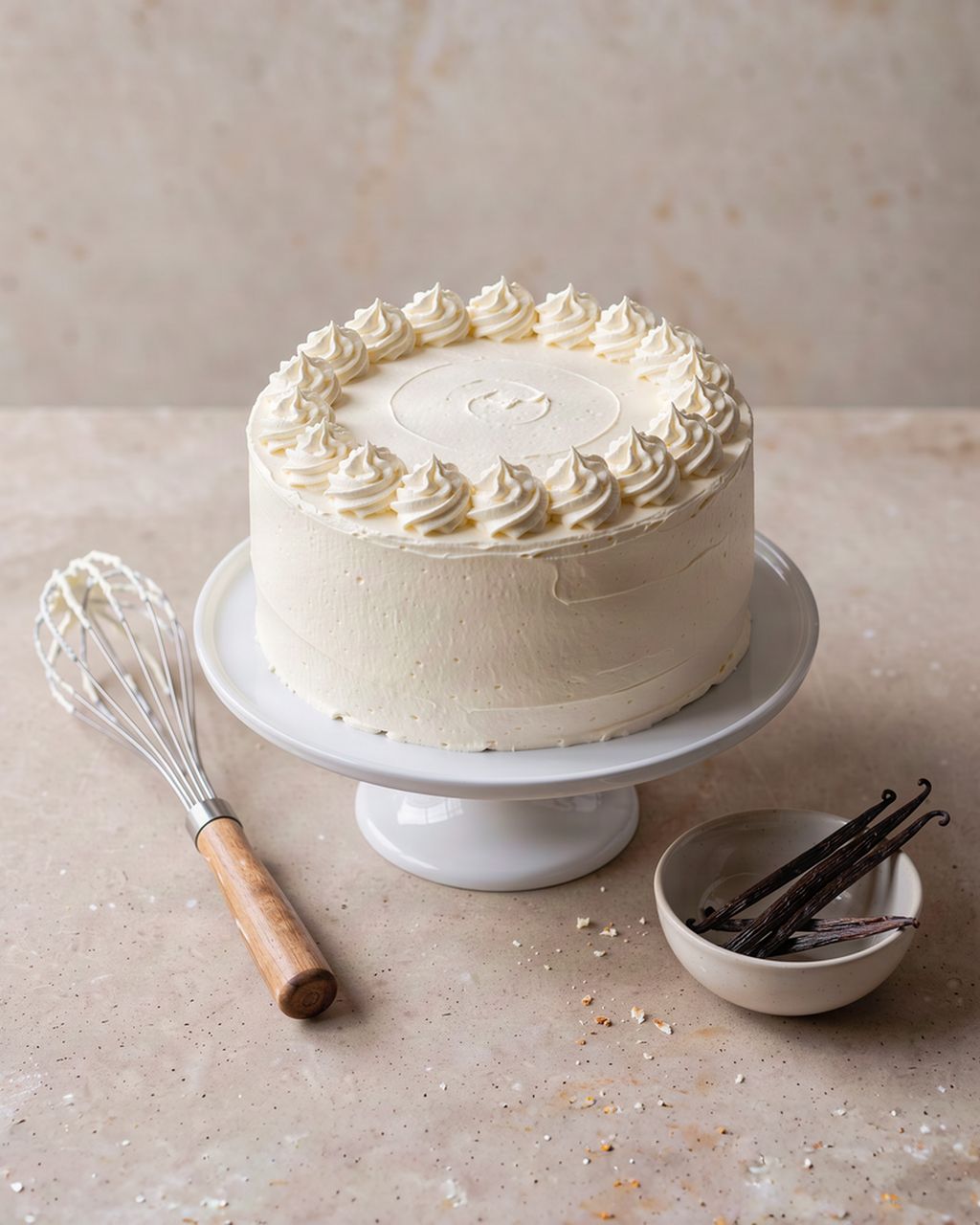
You can make a firm mascarpone cream that holds between cake layers and as a sharp rosette on a cupcake by adding 4 g powdered gelatin per 250 g mascarpone and 250 ml cream. The cream stays creamy, but once chilled it holds its shape and won't give way even under the weight of another cake layer.
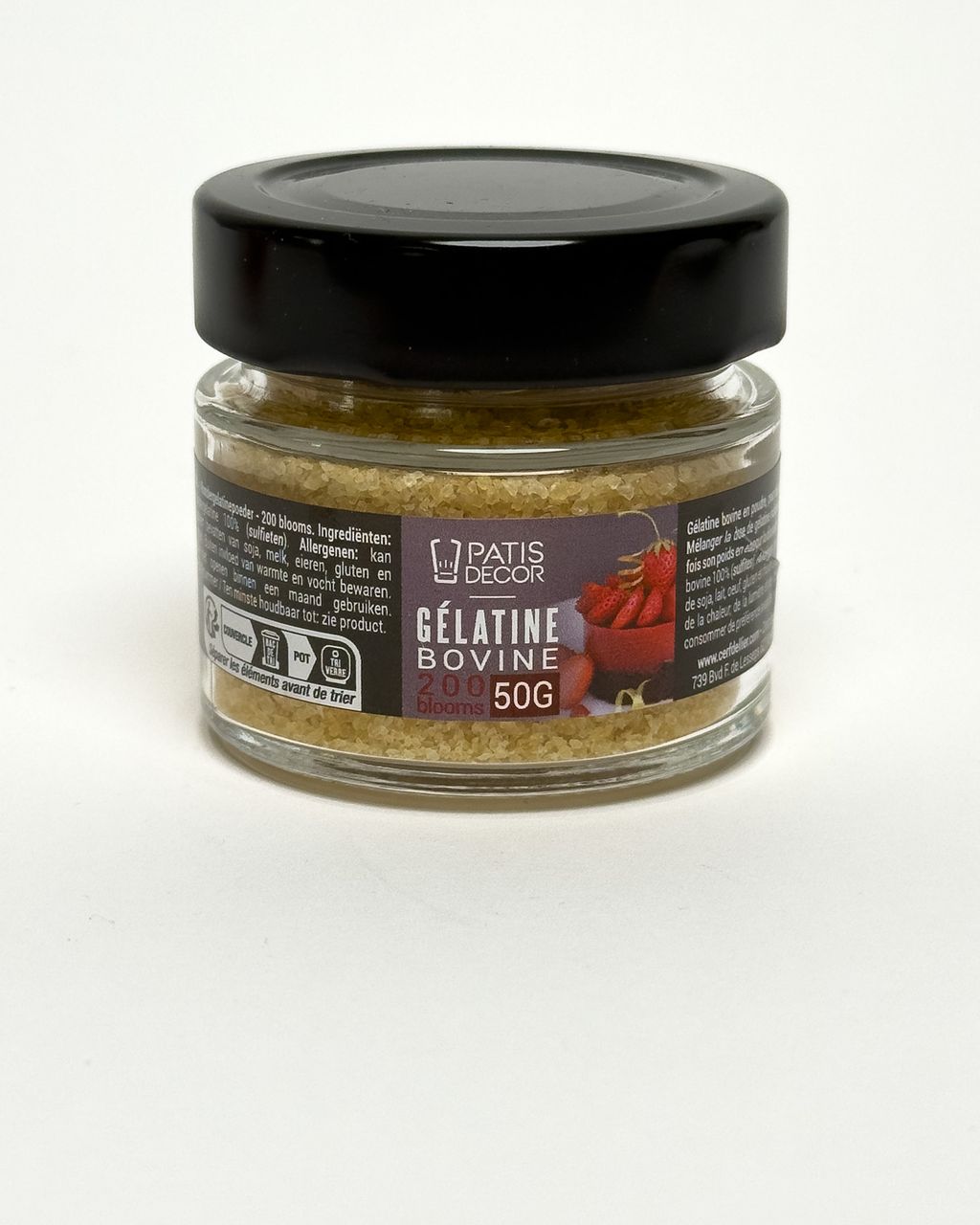
The quantities are calculated for powdered beef gelatin, 200 bloom, which we carry:
Sprinkle 4 g gelatin (about 1½ level teaspoons) into 24 ml cold water (6× more water than gelatin) and let it bloom for 10 minutes.
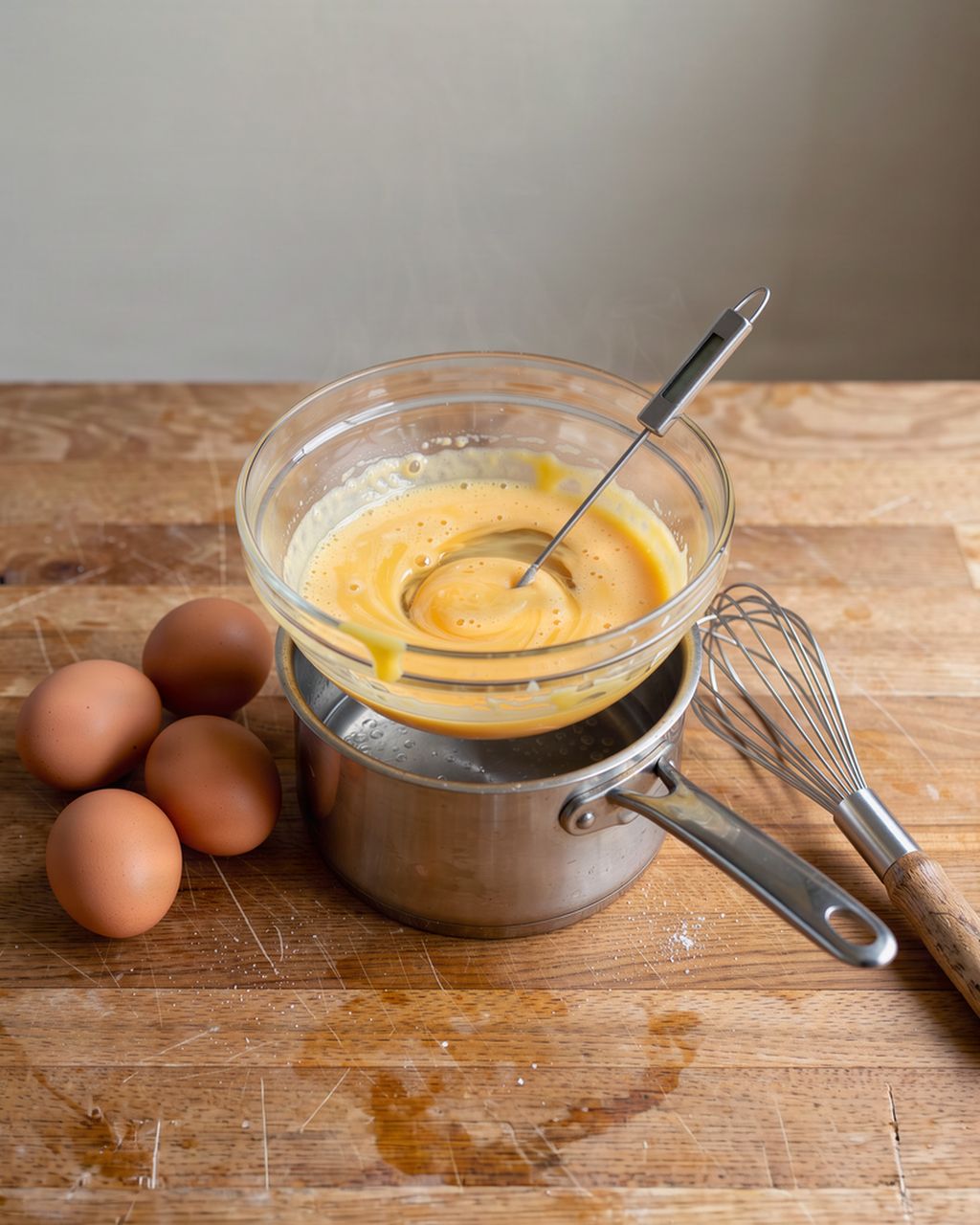
Melt it for a few seconds in the microwave (5–10 s) or in a water bath to about 50–60 °C (120–140 °F). It must not boil, as boiling weakens its strength.
Whip the cream following the basic method, but only to a soft peak. The gelatin will finish the job.
Temper it: stir 2–3 tablespoons of the finished cream into the warm gelatin. This evens out the temperatures and prevents lumps.
Pour it in a thin stream into the cream while whisking on low speed, then mix for another 10–15 seconds.
Use it right away. For cupcakes, fill a piping bag and decorate within 10 minutes; for a cake, spread it straight between the layers. Then leave the cake in the fridge for at least 4 hours (ideally overnight).
Bloom matters. Bloom is the strength of gelatin. Sheet gelatin from the store is often lower than 200 bloom, so you need slightly more of it, and if you swap in a different one, the amount may not come out right. To learn how to recalculate the amount, see the article what the Bloom number means and how to convert gelatin strength. You'll find other stabilizers in the gelling agents and binders category.
When to skip the gelatin: for a cream that's eaten with a spoon, you don't need it, for example in tiramisu with raspberries or mini tiramisu with blackberries and Earl Grey in little glasses. Gelatin is for cream that has to stand on its own.
You can firm up mascarpone cream in four ways: with gelatin, with a whipped cream stabilizer, with white chocolate, or with a higher share of mascarpone. Gelatin is the most reliable for cakes and decorating; a stabilizer is enough for a lighter cream that will be eaten right away; white chocolate both firms and flavors but adds sweetness; and more mascarpone thickens the cream with no additives.
Gelatin – the firmest and most resistant to heat; the cream holds even in a layer cake. It doesn't affect the flavor. It takes a few extra minutes of work and careful attention to temperatures. It isn't vegetarian.
Whipped cream stabilizer (a packet from the supermarket, usually modified starch) – convenient, and you sprinkle it straight into the cream. It firms things up only mildly: it's enough for a filling between two layers, but too weak for a tall rosette or a coating under heavier decorations.
White chocolate – the cocoa butter firms the cream once chilled and gives it a milky, vanilla sweetness (a caramel flavor comes only from caramelized white chocolate). But it's sweeter and more expensive. The article mascarpone and white chocolate cream for cakes has the exact ratios.
More mascarpone, less cream – a 2:1 ratio instead of 1:1 gives a thicker cream with no additives. But it's heavier and richer.
If you're not sure whether mascarpone cream is the right choice for your cake at all, compare it with the others in the overview types of cake fillings and frostings and where each works best.
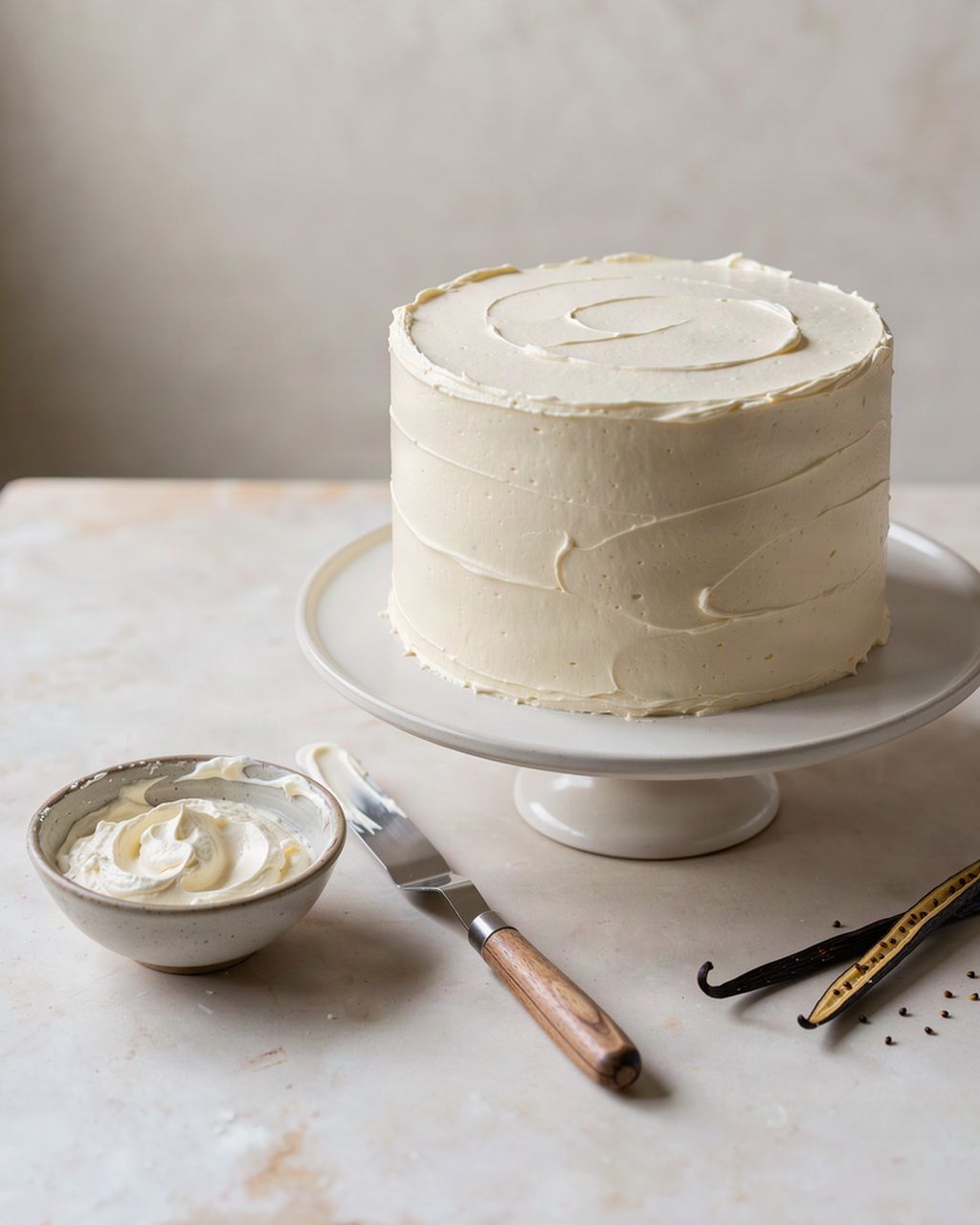
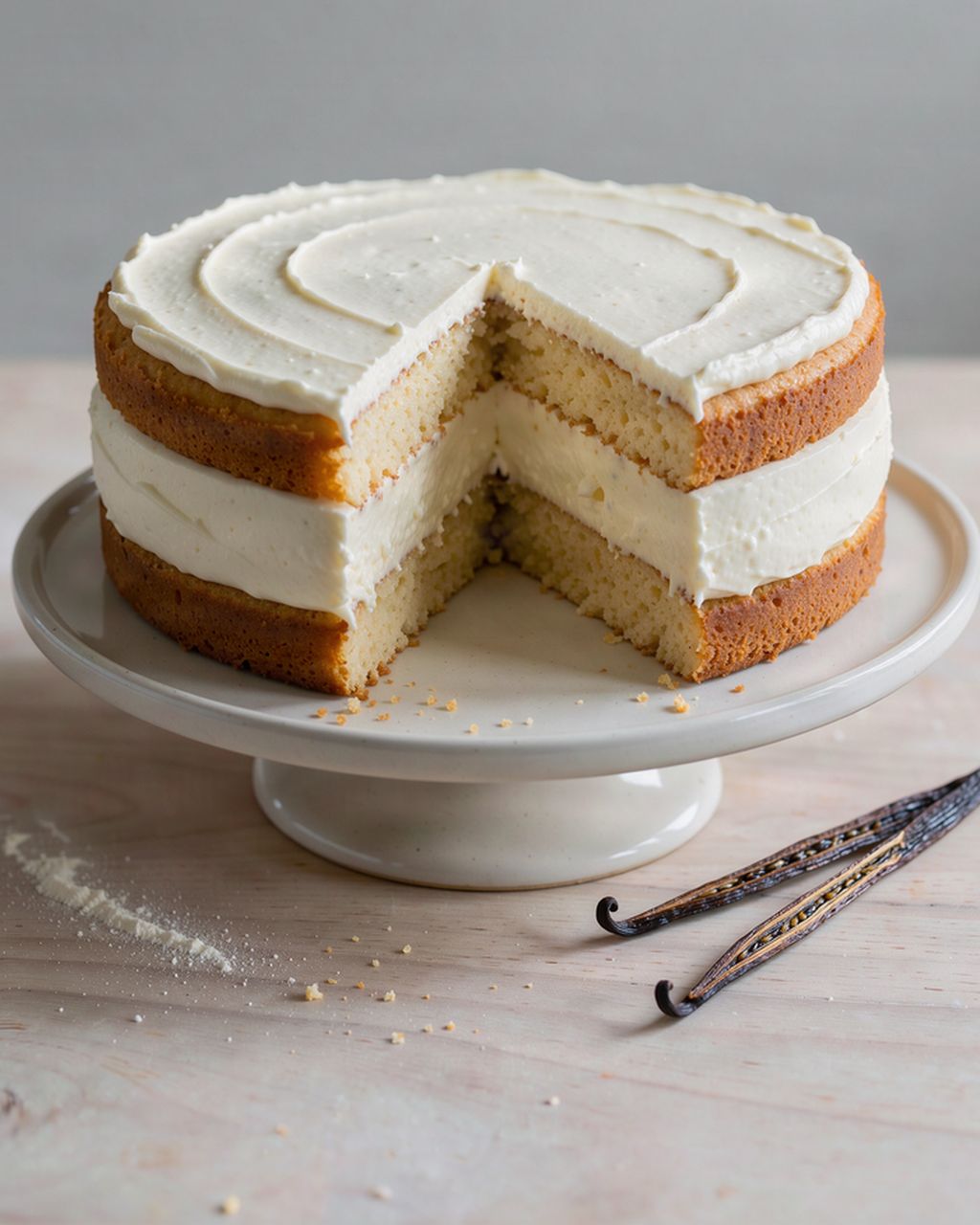
The most vivid and cleanest flavor comes from seeds from a vanilla bean: for 250 g mascarpone, the seeds from half a bean are enough. The cream stays white with the typical black flecks, and you add no liquid to it.
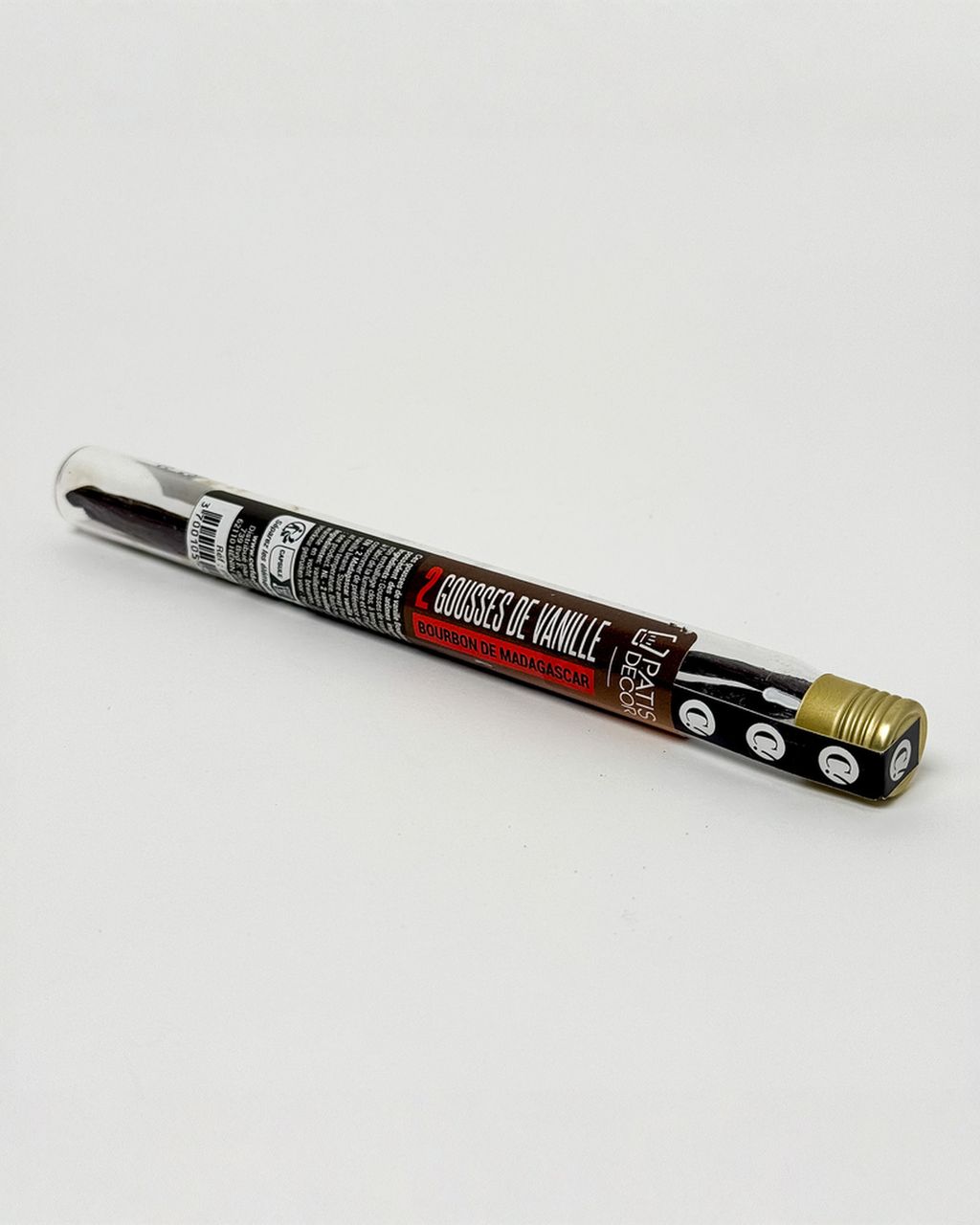
Bean – the best aroma, zero liquid. Don't throw away the scraped pod: bury it in sugar and in two weeks you have your own vanilla sugar. We carry Madagascar Bourbon vanilla beans, the classic creamy Bourbon vanilla.
Vanilla paste – a compromise: seeds and aroma, with a bit of sugar syrup. 1 teaspoon per 250 g.
Extract – it works, but it adds liquid and alcohol. Stick to 1 teaspoon.
Vanillin sugar / flavoring – cheap, flat flavor, plus granules on top. We don't recommend it for a cream where vanilla is the main flavor.
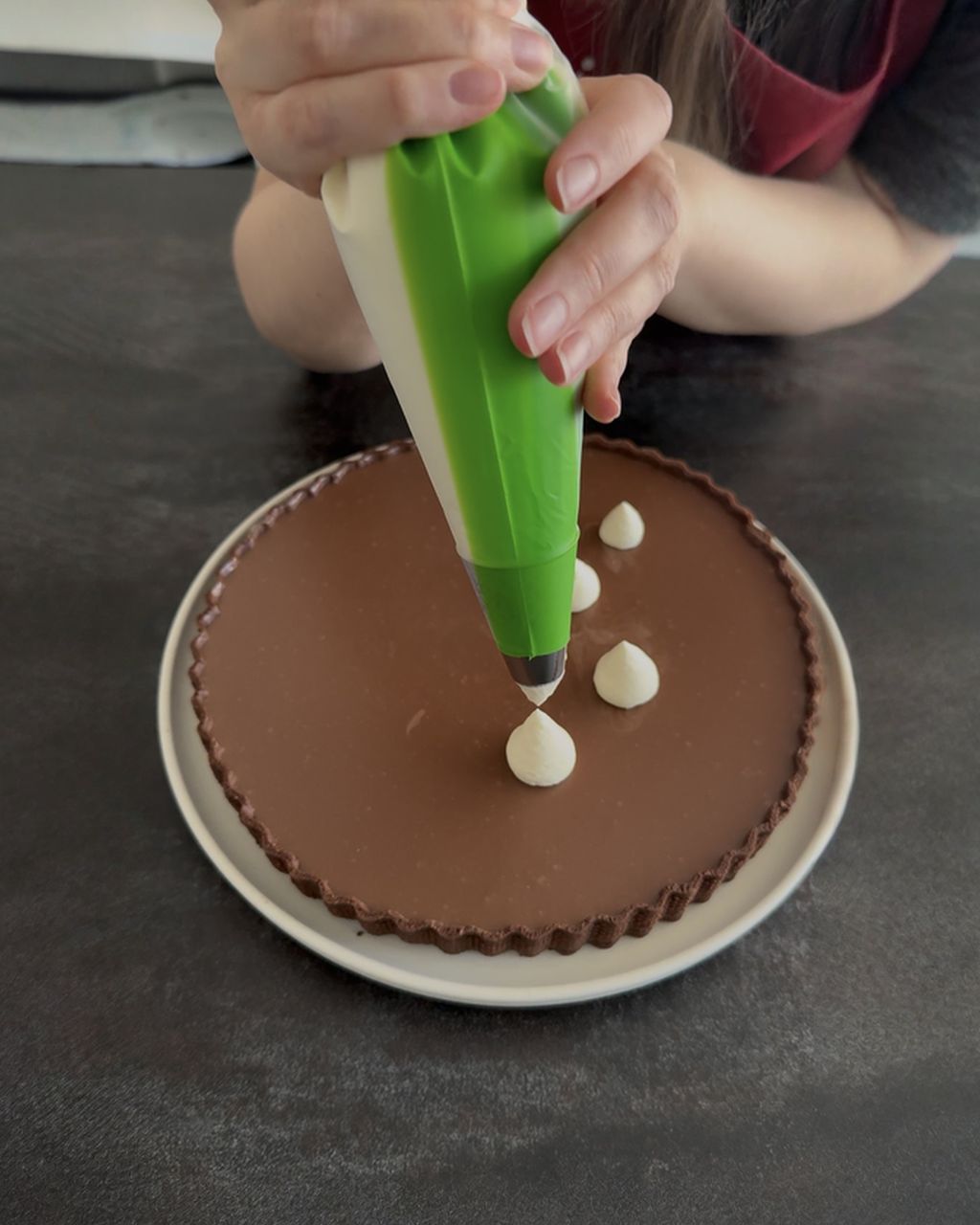
For cupcakes, pipe mascarpone cream stabilized with gelatin, from a disposable piping bag with an open or closed star tip. The JEM Drop Flower #2D tip with a closed star makes the classic rosette, giving full, deeply ridged flowers.
Fill the bag no more than two-thirds full. A large 36 × 20 cm piping bag holds enough cream for about 6 cupcakes. More cream in the bag means more heat from your palm and softening cream.
Hold the bag upright, about 1 cm above the cupcake. Start in the middle, squeeze out a "heart", then guide the cream in a spiral outward and all the way around. At the end, release the pressure and only then pull the tip away.
Count on 40–50 g of cream for one tall rosette.
Between batches, put the bag back in the fridge for 5 minutes if the cream starts to lose its sharp edges.
Put decorated cupcakes straight in the fridge for at least an hour, so the gelatin can firm up the cream.
You can see mascarpone cream on cupcakes in practice in our pistachio cupcakes with lemon curd and mascarpone cream and tiramisu cupcakes with mascarpone cream.
Pistachio cupcakes with lemon curd and mascarpone cream
Pistachio cupcakes with mascarpone cream and lemon curd
Mascarpone cream keeps in the fridge for 2–3 days, either in a sealed container or in a finished cake. Don't leave it out of the fridge for longer than about 2 hours, since it softens in the warmth and dairy-based creams spoil quickly.
Mascarpone cream stabilized with gelatin can be frozen for up to a month, ideally already assembled in a finished cake. Thaw it slowly in the fridge overnight. Cream without gelatin often releases a little water and turns grainy after thawing, so freeze only the stabilized version.
Mascarpone cream isn't suitable under fondant, even when stabilized with gelatin: it's soft and moist, and the fondant will gradually start to sweat and slide off. Use ganache or buttercream under the covering, and keep the mascarpone cream inside as a filling.
For a 20 cm (8-inch) cake with two layers of filling and a thin coating, plan on about 1 kg of cream: 500 g mascarpone, 400 ml cream and 100–120 g powdered sugar. With gelatin, use 7–8 g of powder dissolved in 42–48 ml of water.
Color mascarpone cream with gel or powdered food coloring, not liquid. With gel colors, a few drops are enough for the whole batch, so the cream isn't thinned out. Add the color at the end and fold it in with a spatula, so further whipping doesn't push the cream into grains.
One recipe worth heating the oven for, one tip, and one deal from the shop. Nothing else.