Walnut milk
Everyday Vegan Recipes: Lunches, Dinners, Desserts and Baking Without Animal Products
Updated Nov 20, 2026
Everyday vegan recipes rest on three things: a pantry stocked with legumes, tofu, coconut milk and spices; a few substitutes with clear ratios; and technique that brings the flavor meat and butter would otherwise provide. With them you can make a lunch in twenty minutes, a curry that lasts two days, a sweet snack for the kids and an overnight loaf of bread. Whether you're getting ready for Veganuary (vegan January) or just want to cook without animal products a few days a week, here's the whole method: what to swap for what, what to cook for lunch and dinner, what to bake, and what to watch for on labels.
Every animal ingredient has a plant-based substitute, and you can usually swap them 1:1. Here's the quick-reference version:
Eggs: 3 tablespoons aquafaba (chickpea canning liquid), or 1 tablespoon ground flaxseed + 3 tablespoons water, or ½ mashed banana in sweet batters.
Milk: plant-based drink (oat, soy, almond) 1:1.
Cream: coconut milk or coconut cream 1:1, or a cream made from soaked cashews.
Butter: plant-based baking fat 1:1, or oil at 80 g oil per 100 g butter.
Cheese: nutritional yeast as a topping, cashew cream in place of cream cheese.
Meat: tofu, legumes and mushrooms (especially oyster mushrooms).
A substitute doesn't copy the original in every way, though. In a batter, eggs bind, leaven and add moisture all at once, while butter carries flavor and makes things tender. That's why, for each ingredient below, you'll find which job the substitute takes over and where it hits its limits. If you also want to track down the less obvious animal-derived ingredients (gelatin, carmine, whey in sweets), see our article on what vegans don't eat and which hidden ingredients to watch for.
Choose your egg substitute by what the egg does in the recipe. For binding and moisture, flax or fruit is enough; for foam you need aquafaba; for a savory breakfast, tofu.
Aquafaba: 3 tablespoons (about 45 ml) = 1 egg, 2 tablespoons = 1 egg white. This is the liquid from a can of chickpeas, which can be whipped into a foam like egg white. It works in muffins, sponge batters and mousse-style desserts. Whip it in a clean, dry bowl and add a pinch of acid (a few drops of lemon juice) so the foam holds better.
Flax "egg": 1 tablespoon ground flaxseed + 3 tablespoons water = 1 egg. Let it sit for 5–10 minutes until it thickens into a gel. It binds dense batters, cookies, flatbreads and patties, but it won't make anything fluffy. Use ground flax; whole seeds bind nothing.
Banana or applesauce: ½ banana or about 60 g applesauce = 1 egg. Only for sweet recipes, as you'll taste it. The batter will be moister and denser, so add a little extra baking powder.
Tofu instead of scrambled eggs. Mash plain tofu with a fork, heat it in a pan with a little onion and a pinch of turmeric for color, and add salt. If you can find black salt (kala namak), it adds a distinctly eggy aroma.
Where eggs can't be replaced: in recipes with more than three eggs that carry the whole structure (true sponge cake, soufflé, egg custard). For those, reach for a recipe developed as vegan from the start.
Replace milk 1:1 with a plant-based drink. In shops you'll find these labeled "drink" rather than "milk", because under EU rules the word milk is reserved for animal milk. For cooking coconut milk, it's an established kitchen name.
Oat is the most neutral and doesn't curdle when heated. It suits porridge, pancakes, yeast doughs and béchamel.
Soy is the thickest and behaves most like cow's milk in baking. Mixed with a teaspoon of vinegar or lemon juice, it thickens and replaces buttermilk (more in our article on what to use instead of buttermilk).
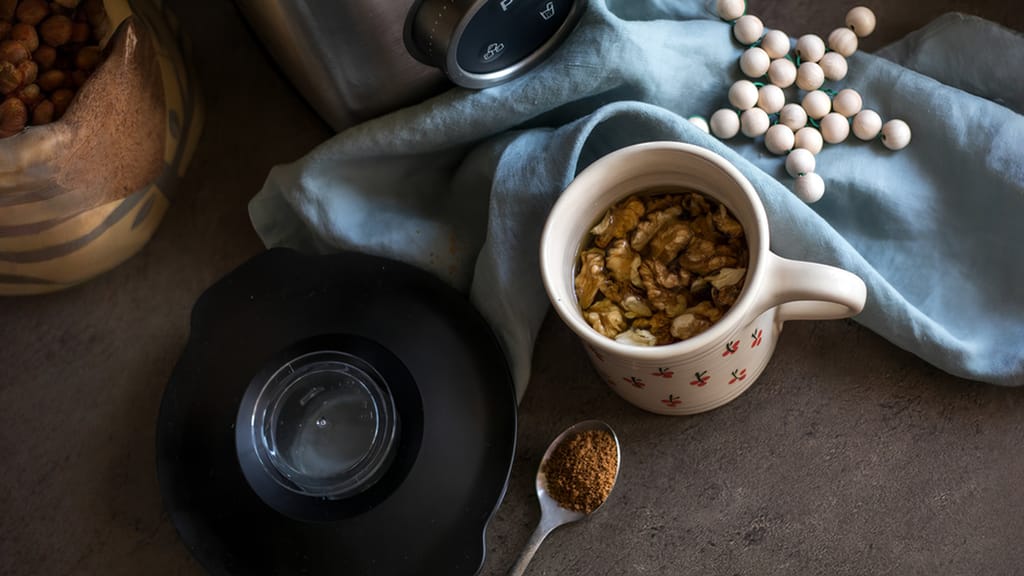
Almond and walnut are lightly sweet, ideal for smoothies and desserts. You can make walnut milk at home from soaked walnuts; it keeps in the fridge for a day or two.
Cream in sauces and curries can be replaced with coconut milk or coconut cream 1:1. If you don't want a coconut flavor, soak 150 g cashews for at least 3 hours, drain them and blend with 150 ml water until smooth. You get a neutral cream that thickens soups and sauces. Add it to hot dishes at the very end and just heat it through.
Walnut milk
Homemade walnut drink as a milk substitute
Replace butter with plant-based baking fat 1:1, or with oil: use 80 g oil for every 100 g butter. Butter contains around 80% fat and the rest is mostly water, so when you swap in oil, make up the missing 20 g with water or a plant-based drink.
Block-style plant-based fat is for where the butter has to stay firm: shortbread and Linzer-type doughs, crumb toppings, puff pastry. Watch out for margarines "with butter flavor": some contain whey or butter, so read the ingredients.
Oil suits creamed and poured batters, muffins and fruit sheet cakes. Use a neutral rapeseed (canola) or sunflower oil.
Coconut fat sets in the fridge like butter, so it suits no-bake bases and creams. Refined coconut fat doesn't smell of coconut.
In a pan, butter is the easiest thing to replace: use olive or rapeseed (canola) oil. And where butter gave flavor, such as on mashed potatoes, add a spoonful of good oil and a pinch of nutmeg.
Replace cheese depending on whether you want saltiness, creaminess or meltiness from it. The third is the hardest, and store-bought plant-based substitutes melt in different ways, so start with the first two.
As a topping instead of Parmesan: nutritional yeast, 1–2 tablespoons per serving of pasta or risotto. It has a nutty, "cheesy" flavor. Even better, mix it 1:1 with dry-toasted, ground cashews or almonds and a pinch of salt.
Instead of cream cheese and ricotta: the cashew cream from the cream section above, made thicker (less water) and seasoned with lemon, salt and nutritional yeast. For a sweet version, use vanilla and sugar instead of salt. It's covered in detail in our article on vegan cake and cheesecake.
Instead of quark (tvaroh, a Czech fresh curd cheese) or feta: crumbled plain tofu marinated overnight in the fridge in olive oil, lemon, salt and oregano.
You can't replace meat with a single ingredient, only with a combination of texture and flavor: tofu gives you a piece that browns, legumes give heartiness, and mushrooms give juiciness and umami (that full, "meaty" flavor). In vegan cooking you therefore almost always season with something salty and bold: soy sauce or tamari, tomato paste, smoked paprika, browned onion.
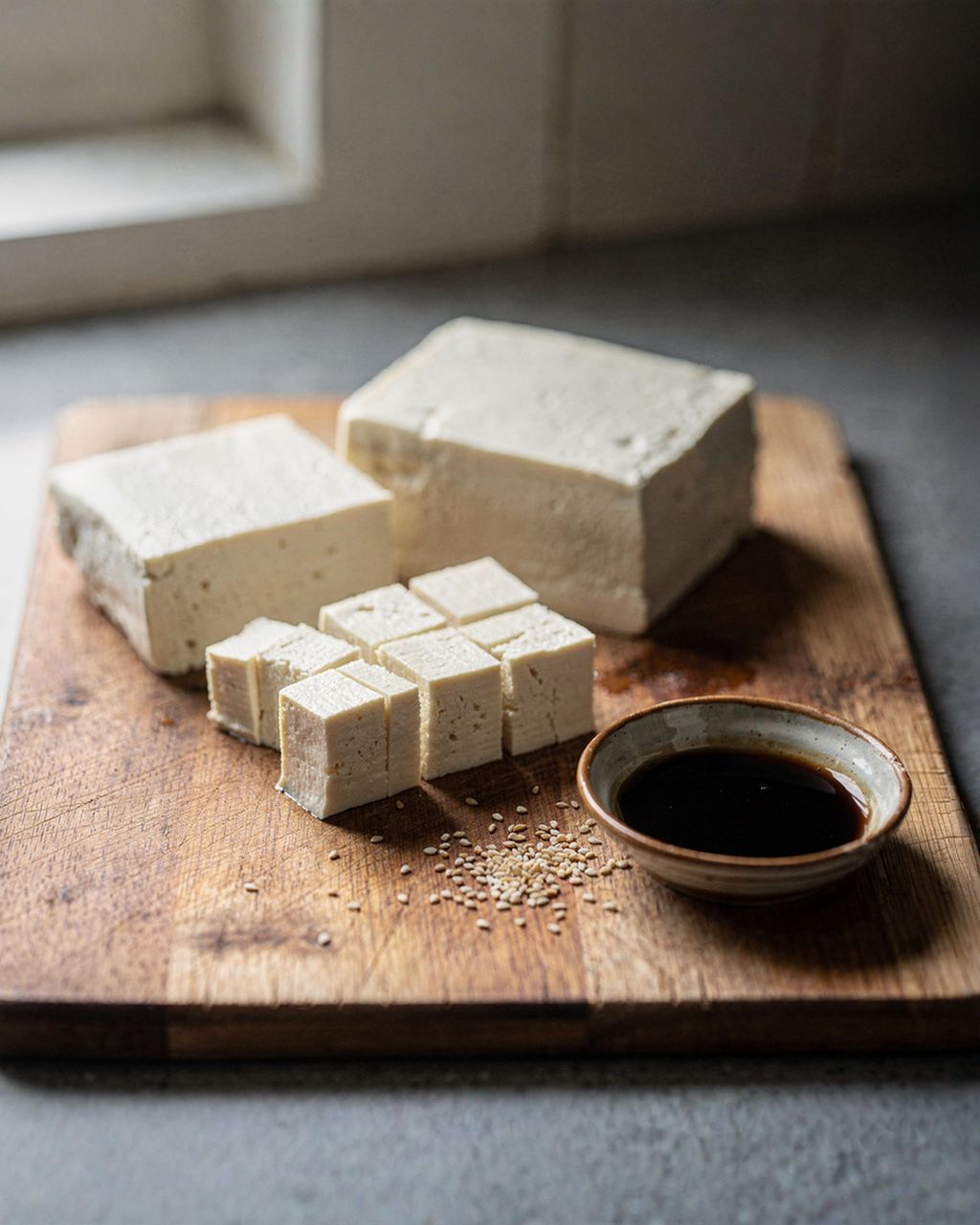
Tofu: plain is neutral and soaks up marinade, while smoked tofu has flavor of its own and only needs searing. You'll find how to handle it below, and in detail in our article tofu: what it is and what to cook with it.
Legumes: canned chickpeas save an hour of cooking; rinse them before use, but keep the liquid for aquafaba. Red lentils don't need soaking and cook down in 15 minutes, so they're ideal for soups and curries.
Mushrooms: oyster mushrooms torn into strips and fried until crisp resemble pulled meat. Button mushrooms add juiciness to sauces.
The basics of a vegan pantry, enough to cook everything in this article: cans of chickpeas and beans, red lentils, coconut milk, canned tomatoes and tomato paste, tofu, soy sauce, rice and pasta, rolled oats, nuts and seeds, cumin, curry spice, smoked paprika, ginger and garlic.
Seasonal baking plans, tested recipes and kitchen tricks that save you time. Unsubscribe in one click.
The most reliable vegan lunches and dinners are one-pot curries, legume soups and salads, seared tofu with rice, and vegetables or mushrooms as the main dish. They all rest on the same principle: first cook an aromatic base (onion, garlic, ginger, spices) in fat, and only then add liquid. Spices release far more aroma in hot oil than in water, and this one step makes the difference between a bland dish and a flavorful one.
The second rule: finish with acid. A spoonful of lime or lemon juice, a splash of vinegar or a tomato balances the sweetness of sweet potatoes and coconut and "wakes up" the whole dish. Without acidity, a legume dish tastes flat even when it's well salted.
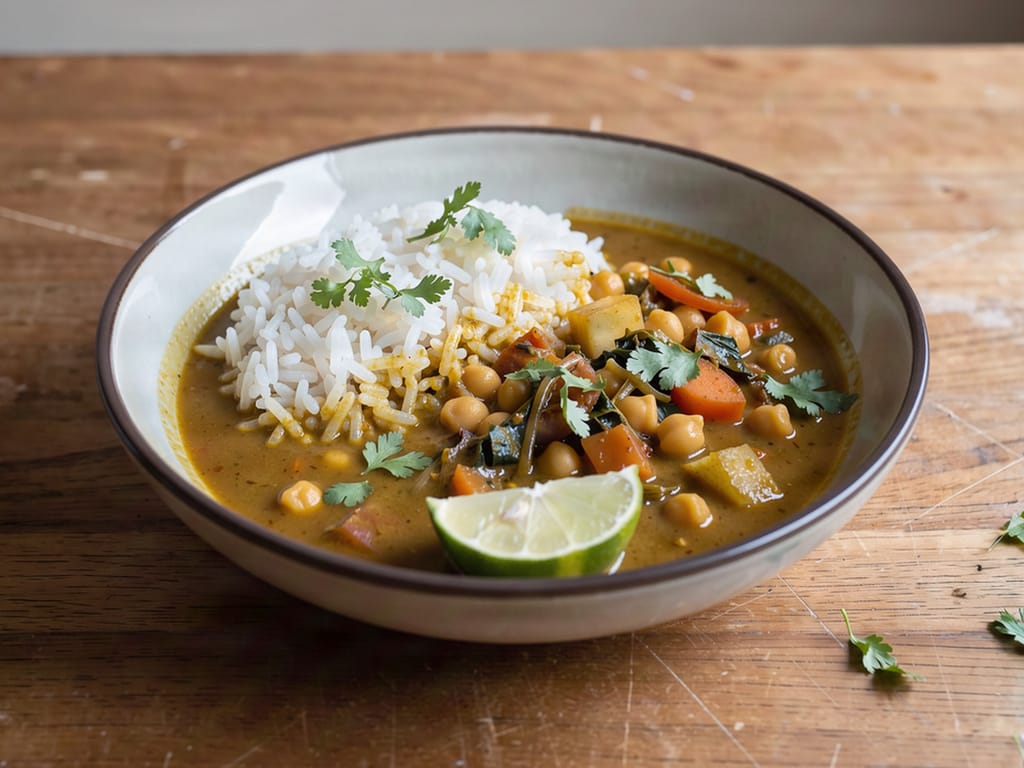
You can make a vegan curry in 40–60 minutes from chickpeas or red lentils, coconut milk or cream, and spices, and it tastes even better the next day.
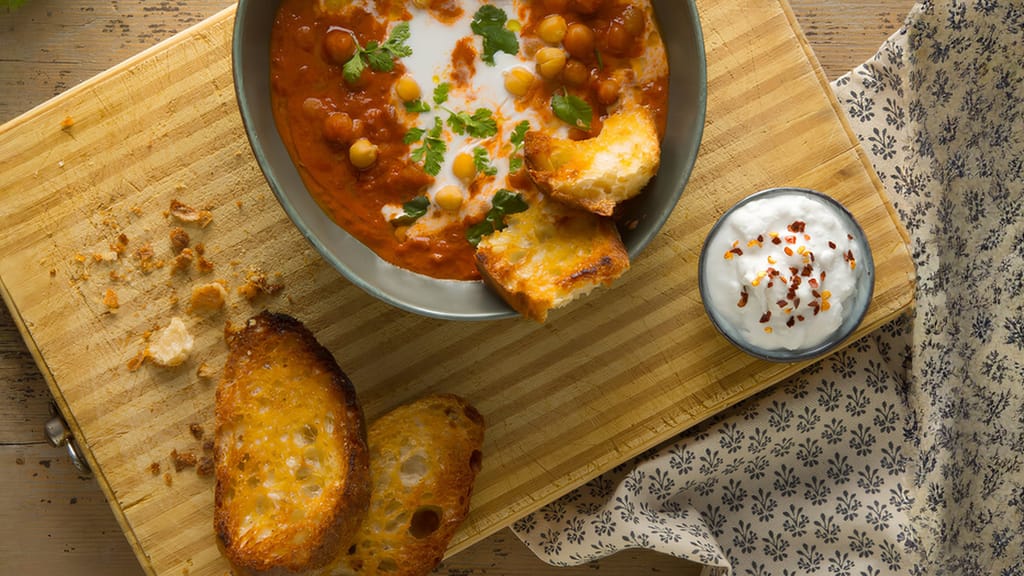
Chickpea curry with coconut cream and fresh apple juice
Chickpea curry with coconut cream and apple juice
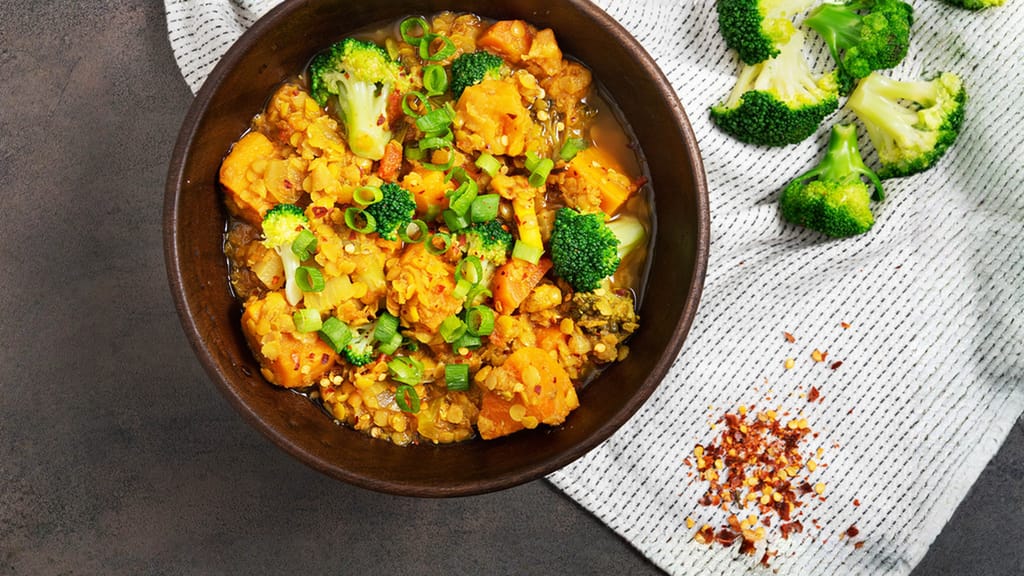
Sweet potato curry with red lentils
Sweet potato curry with red lentils
Chickpea curry with coconut cream and apple juice is ready in about an hour; first fry the chickpeas for a few minutes with the spices and tomato paste so they soak up the flavor, and the apple juice gives the curry a gentle fruity sweetness. You can have sweet potato curry with red lentils in 43 minutes for four, and the lime juice at the end balances the sweetness of the sweet potatoes.
Legumes are the cheapest foundation of vegan cooking, and whether from a can or red lentils, they take no longer than pasta.
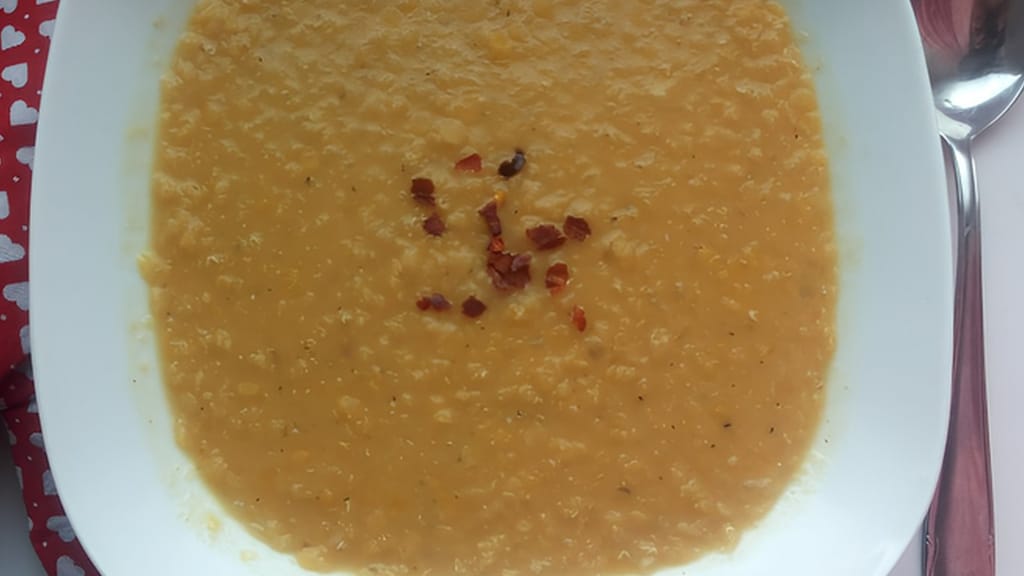
Red lentil soup with coconut milk and chilli
Red lentil soup with coconut milk and chili
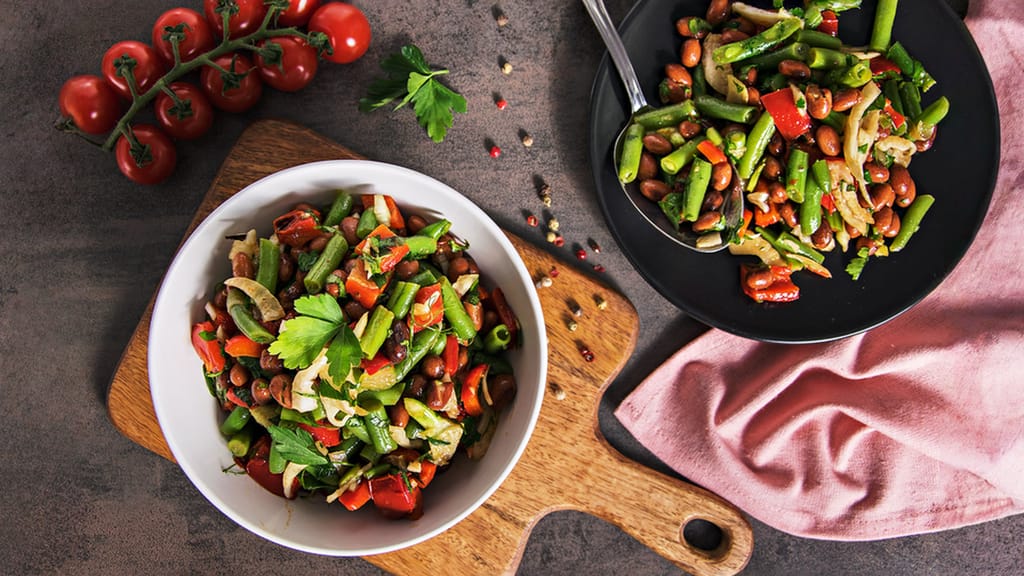
Borlotti bean salad with grilled peppers and fennel
Borlotti bean salad with grilled pepper and fennel
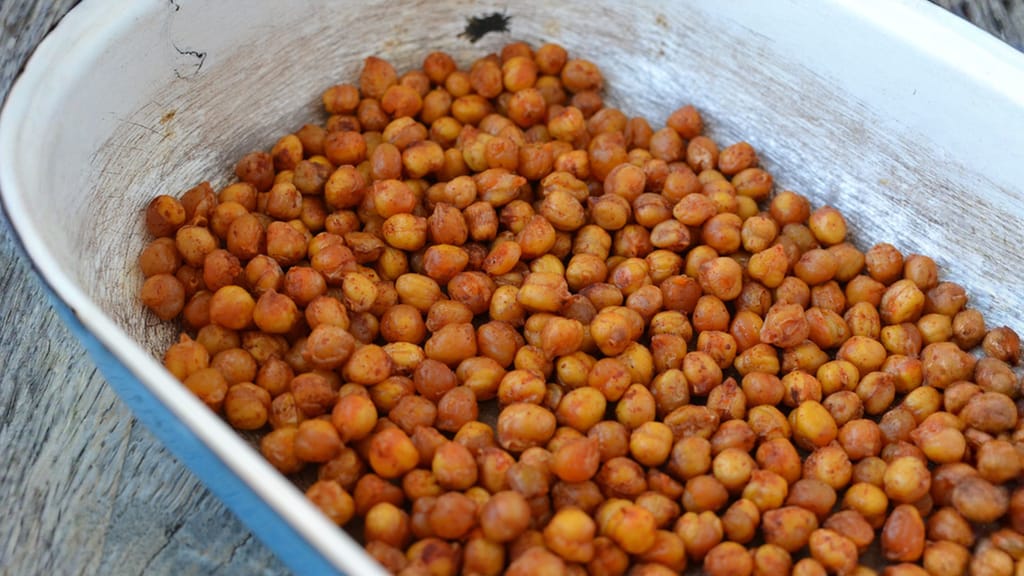
Crispy roasted chickpeas with spices
Crispy spiced roasted chickpeas
Red lentil soup with coconut milk and chili is ready in 35 minutes; scald the lentils with boiling water before cooking to get rid of any off taste. Borlotti bean salad with grilled pepper and fennel is an ideal packed lunch, because a few hours in the fridge only improve it. With crispy spiced roasted chickpeas, drying is what matters: damp chickpeas won't crisp up, and add the spices only after roasting, as they would turn bitter in the oven.
Tofu tastes good when you get the water out, season it well and sear it in a hot pan until golden. The only bland tofu is tofu that stews in its own liquid in the pan.
Press it. Wrap plain tofu in a kitchen towel, weigh it down with a board and a pot, and leave it for 15–20 minutes. The water drains out, so it then soaks up the marinade and browns in the pan instead of steaming.
Season it. Coat the cubes in soy sauce with garlic and ginger, or in smoked paprika with salt. For thin cubes, 15 minutes is enough.
Sear it flat. Get the pan properly hot, add the tofu in a single layer and don't move it until it releases by itself. For an extra-crispy crust, coat it in a spoonful of cornstarch before frying.
Risotto with tofu, peas and zucchini shows how little it takes: in 36 minutes you have dinner for two, with smoked tofu seared golden and light soy sauce instead of salt.
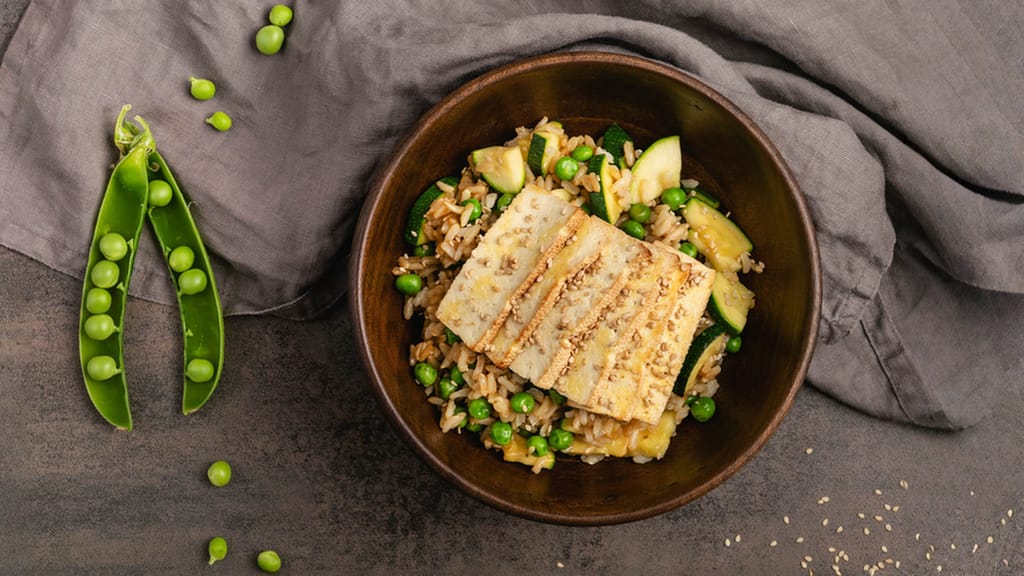
Tofu risotto with peas and zucchini
Risotto with smoked tofu, peas and zucchini
Vegetables and mushrooms hold up as a vegan main dish when you sear them until browned and give them a bold sauce; steamed, unseasoned vegetables are just a side.
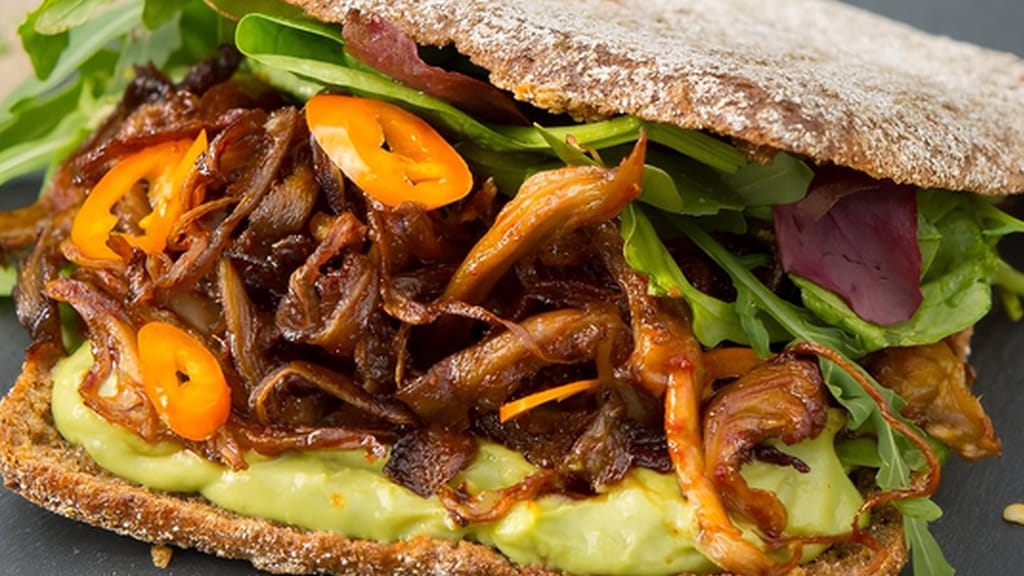
Oyster mushroom sandwich with bbq sauce, avocado and wasabi
"Oyster mushroom" sandwich with BBQ sauce, avocado and wasabi
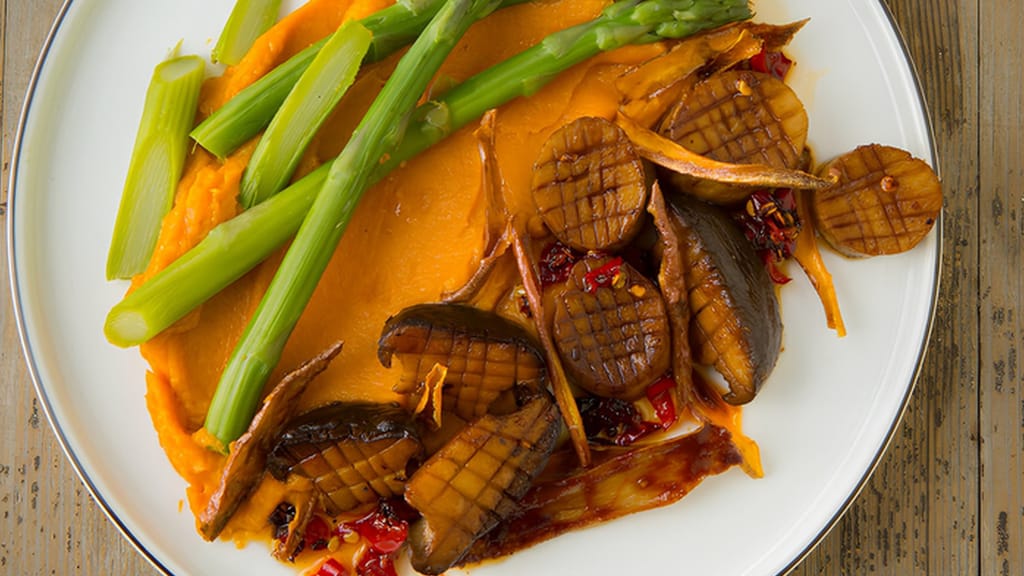
Sweet potato mash with asparagus and mushrooms
Sweet potato mash with asparagus and mushrooms
In the "oyster mushroom" sandwich with BBQ sauce, avocado and wasabi (37 minutes), oyster mushrooms torn into thin strips and fried until crisp play the role of meat. Sweet potato mash with asparagus and mushrooms, ready in 47 minutes, shows how coconut milk can replace butter in a mash.
The fastest vegan dishes are a smoothie (2 minutes), avocado toast with oyster mushrooms (16 minutes), guacamole (17 minutes), apple and nut salad (23 minutes), red lentil soup (35 minutes) and tofu risotto (36 minutes). What speeds them up most is the pantry: canned chickpeas and beans, red lentils, and ready-made tofu that only needs searing. If you don't feel like shopping, you'll find inspiration in our article on what to cook from nothing, using pantry staples.
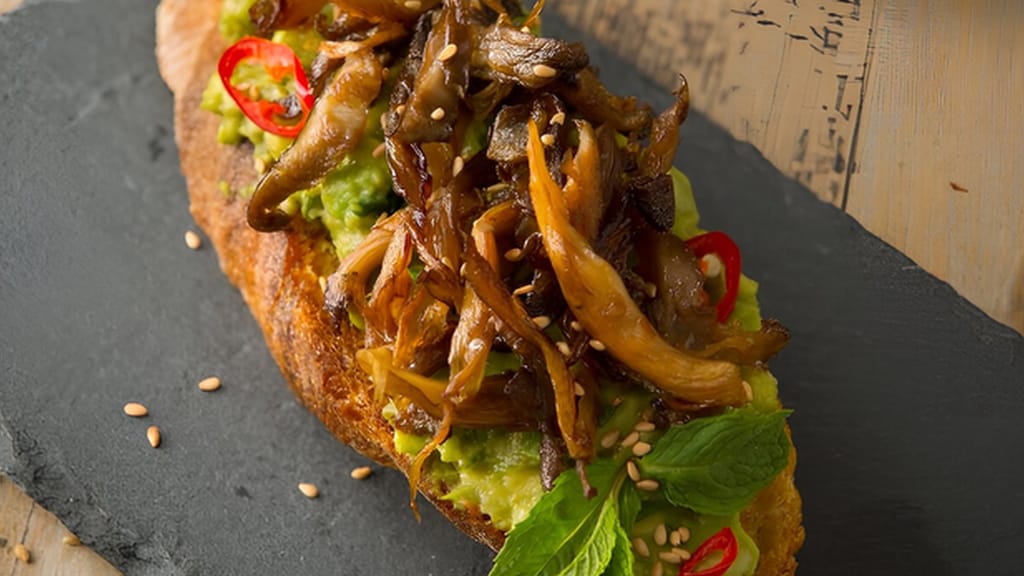
Avocado toast with crispy roasted oyster mushrooms
Avocado toast with roasted oyster mushrooms
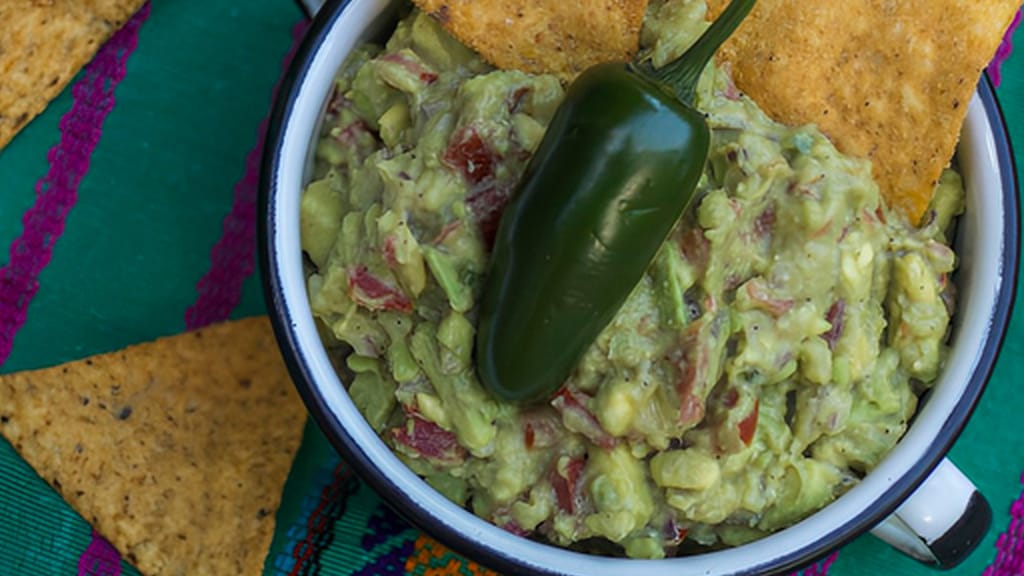
Guacamole
Guacamole with lime and jalapeño
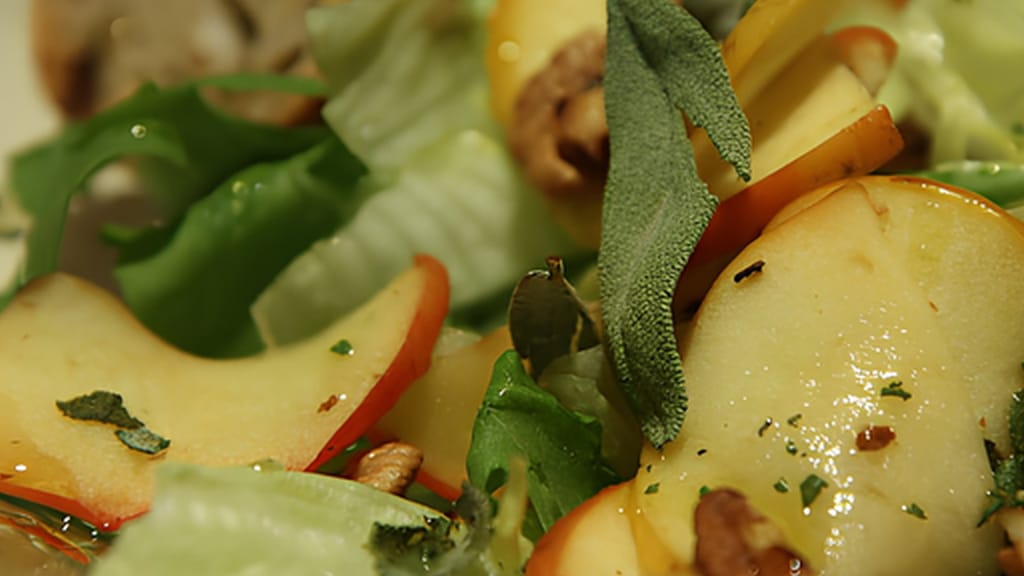
Apple, walnut and crispy sage leaf salad
Warm salad with apples, nuts and crispy sage
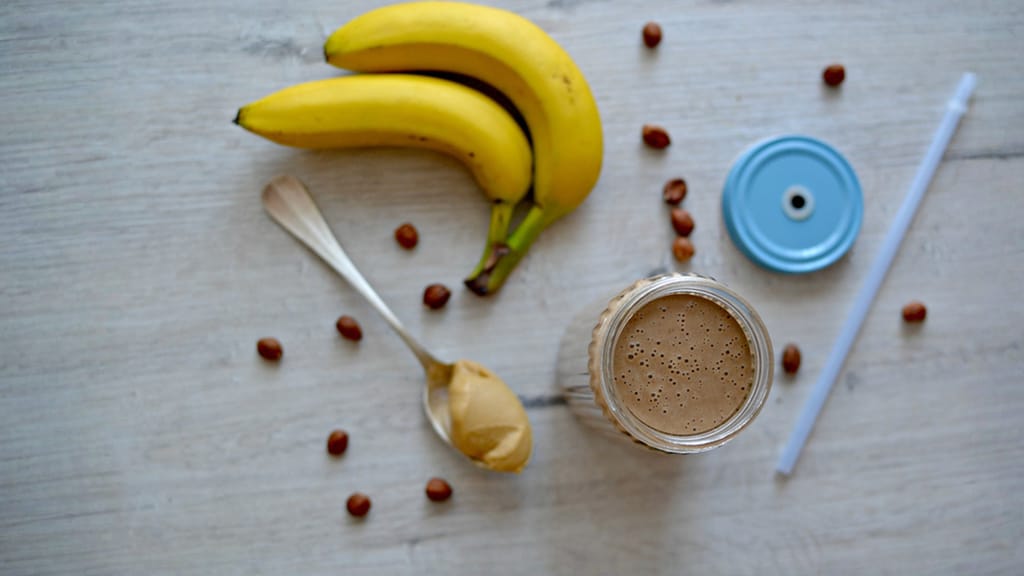
Peanut butter banana smoothie
Smoothie with peanut butter, bananas and almond drink
For the avocado toast with roasted oyster mushrooms, let the fried mushrooms drain on a paper towel so the bread doesn't go soggy. Guacamole works as a spread and a dip, and if you don't eat it right away, press plastic wrap directly onto the surface so it doesn't brown. The salad with apples, nuts and crispy sage leaves is a warm winter salad ready in 23 minutes. The smoothie with peanut butter and bananas just needs blending; you'll find more combinations and ratios in our article smoothies: recipes and ratios.
Zucchini and cauliflower are the most versatile vegetables for a vegan main dish: zucchini browns quickly in a pan and adds moisture to batters, while cauliflower caramelizes in a 220°C (430°F) oven and, blended, thickens soup without cream. For both, the rule is: give them high heat and space. On a crowded baking sheet or pan they release water and you end up with soft, gray pieces.
Zucchini is best seared in a hot pan, grated into fritters or blended into soup.
Seared, served with rice: zucchini is one of the three main ingredients in risotto with tofu, peas and zucchini. Cut it into evenly sized pieces and add only as much to the pan as will lie in a single layer.
Zucchini fritters with chickpea flour: salt the grated zucchini and squeeze the water out; chickpea flour then holds the batter together even without eggs. Guacamole goes well with them.
Cream-free creamy zucchini soup: thicken it with a cooked potato or a handful of soaked cashews instead of cream. For more ways to make velvety soups, see our article on cream soups with zucchini, cauliflower and more.
The easiest way to make cauliflower a vegan main course is in the oven: broken into florets, with oil and spices, at 220°C (430°F).
Spiced roasted cauliflower: roast evenly sized, dried florets with oil, cumin and turmeric in a single layer until the edges are dark golden. Serve with rice or as a side to chickpea curry.
Cauliflower "steak": cut slices about 2 cm thick through the middle of the head so they hold together on the core, and sear them with smoked paprika.
Cream of cauliflower soup: blended cauliflower with a potato and a splash of coconut milk is velvety even without cream; season with nutmeg and lemon.
Cauliflower curry: pre-roast the florets in the oven until golden, and add them to the curry only for the last few minutes so they don't fall apart.
Vegan desserts rely on dates, bananas, coconut milk, nut butters and cocoa. The simplest are no-bake: oat and date balls (20 minutes), blueberry popsicles made with coconut milk, and cardamom rice with coconut cream and mango. In them, honey is replaced by maple, agave or date syrup.
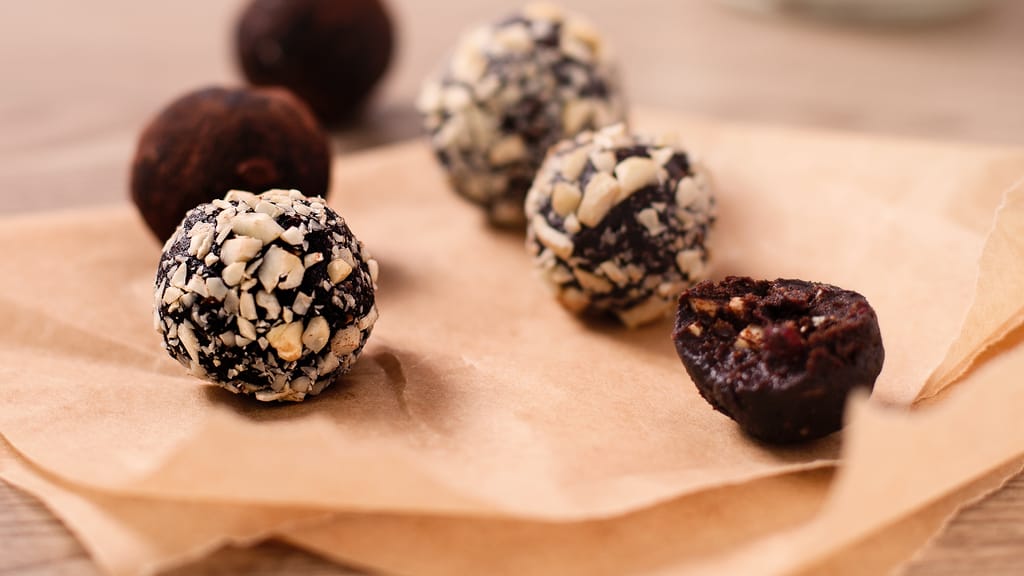
Cocoa date & oat balls
Cocoa oat and date balls

Blueberry popsicles
Blueberry coconut milk popsicles
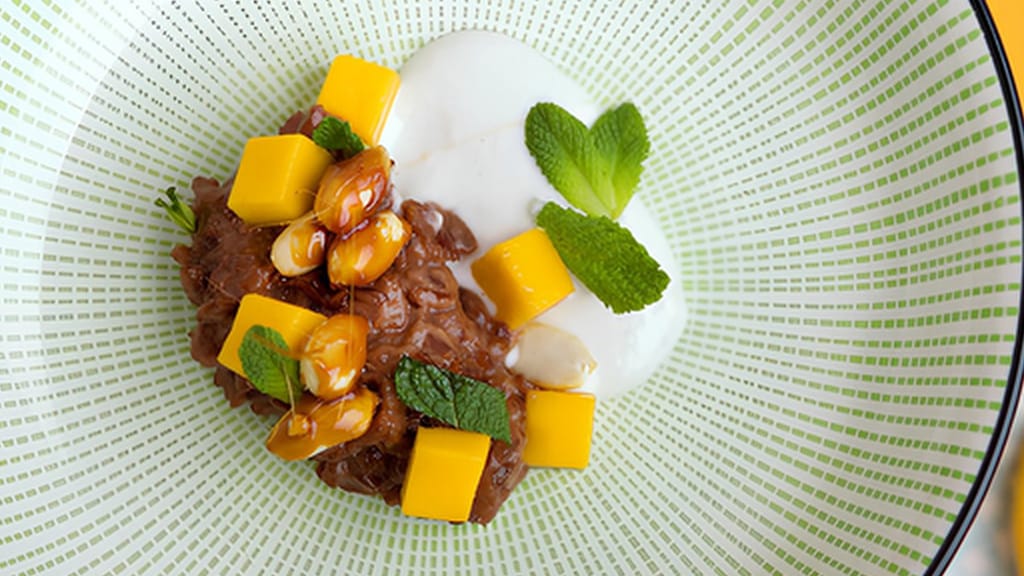
Cardamom rice with coconut cream and mango
Cardamom rice with coconut cream and mango
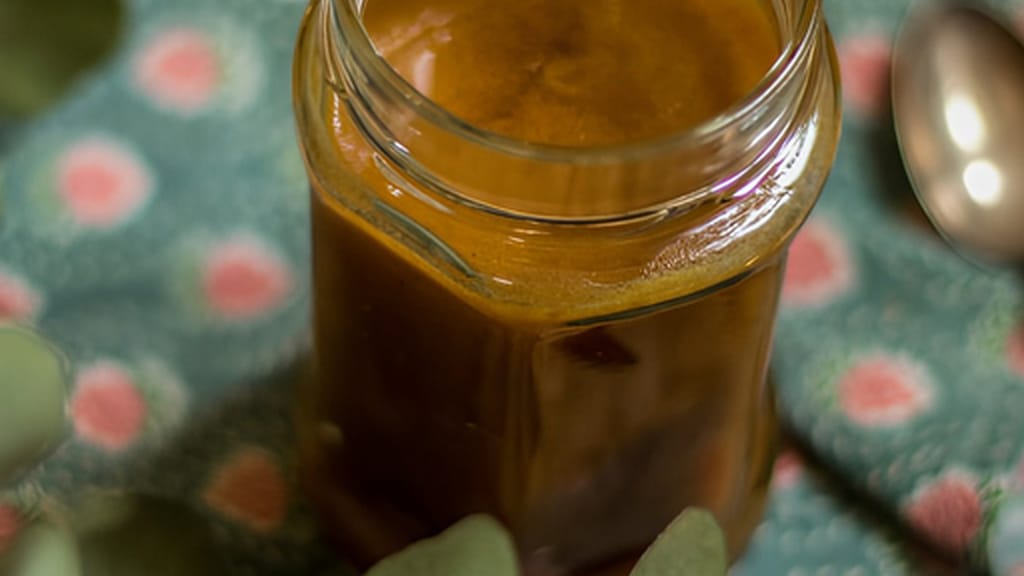
Homemade date syrup
Homemade date syrup instead of honey
For the cocoa oat and date balls, dampen your hands so the mixture doesn't stick. The blueberry popsicles need only three ingredients and a night in the freezer. Cardamom rice with coconut cream and mango is a vegan take on rice pudding (93 minutes). And date syrup isn't cooked, so keep it in the fridge and use it within three days.
Vegan baking works when you find a substitute with the same function for each ingredient: fat instead of butter, aquafaba or flax instead of eggs, plant-based drink instead of milk. The easiest to convert are yeast doughs, bread and focaccia (often vegan from the start), poured cakes and gingerbread. The hardest are recipes built on eggs, like sponge cake or bábovka (Czech Bundt-style cake), and for those it pays to reach for a recipe developed as vegan.
Three detailed guides for festive baking:
Vegan bábovka: what to use instead of eggs, butter and milk so it stays moist and comes out of the pan.
Vegan Christmas cookies: which classics work and what to use instead of butter, eggs and honey.
Vegan cake and cheesecake has its own chapter on cashew and coconut creams.
Three rules apply to vegan cakes:
Leaven a little more. Without eggs, batter rises less, so add about a quarter more baking powder, or a teaspoon of vinegar with baking soda: the acid and soda create bubbles.
Don't overmix. Without eggs, the batter is held together mainly by gluten, and if you overmix it the cake will turn rubbery. Mix only until the ingredients come together.
Let the cake cool in the pan. Vegan batters are more fragile while hot, so turn the cake out only after 10–15 minutes.
The simplest example of this principle is a plain bublanina (Czech fruit sheet cake): made with oil instead of butter and a spoonful of vinegar in the plant-based drink instead of eggs.
Homemade bread needs only flour, yeast, salt, water and seeds; mix it in the evening and a long overnight rise does the work for you. Homemade focaccia is vegan by its very nature, with olive oil playing the role of butter.
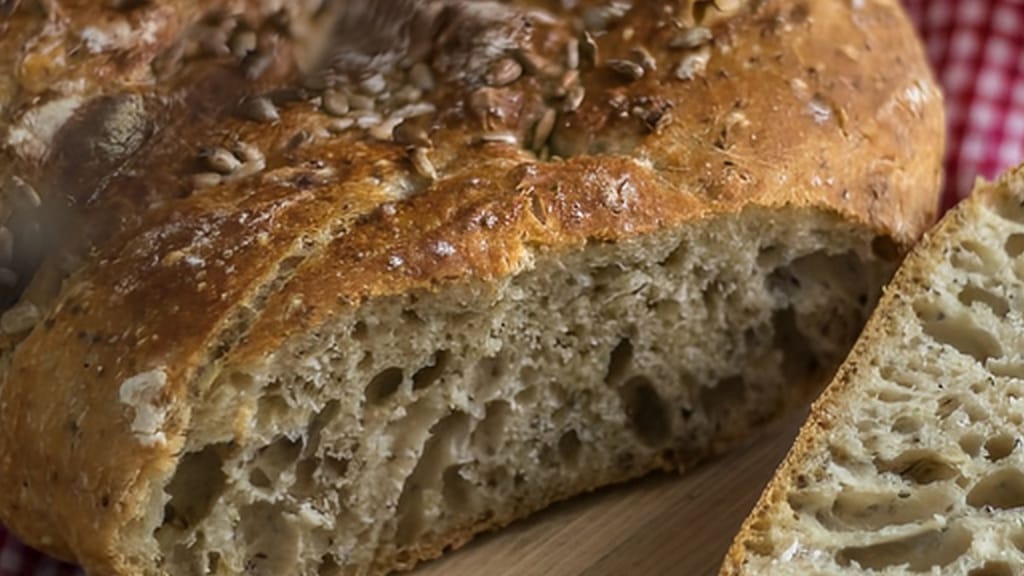
Homemade bread
Homemade overnight seeded bread
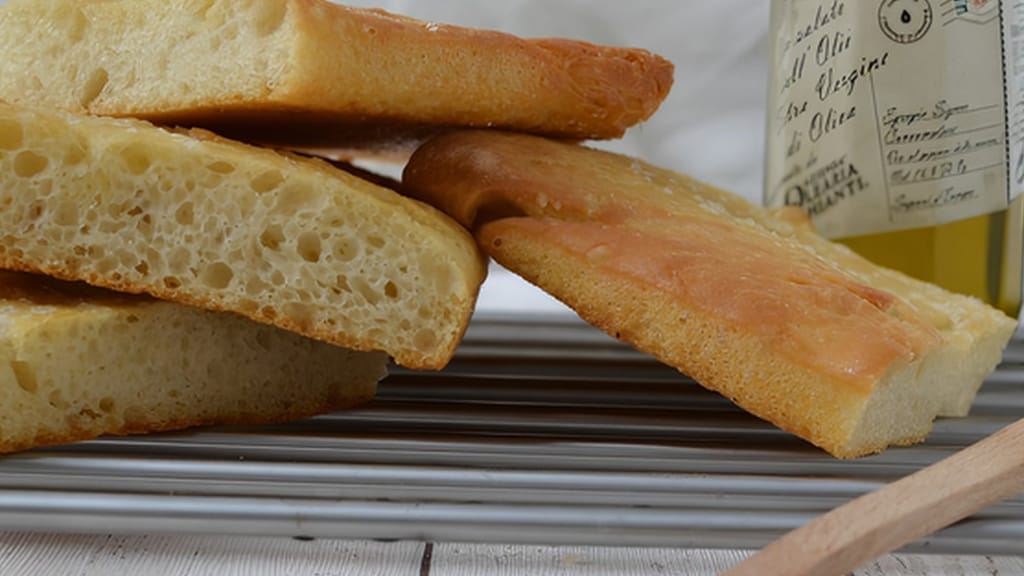
Homemade focaccia
Homemade focaccia with olives and oregano
You can put together a week of vegan dinners from six dishes and one leftovers day, if you cook the curry in a double batch. Here's what a first week could look like, say in January for Veganuary:
Monday: red lentil soup with coconut milk, with bread.
Tuesday: risotto with tofu, peas and zucchini.
Wednesday: sweet potato curry with red lentils, in a double batch.
Thursday: leftover curry (it tastes better the next day) with an apple and nut salad.
Friday: oyster mushroom sandwich with BBQ sauce.
Saturday: focaccia with borlotti bean salad, which you can make in the morning.
Sunday: chickpea curry with coconut cream and, for dessert, cardamom rice with mango.
For snacks and breakfasts, keep cocoa balls, crispy chickpeas and bananas for smoothies on hand. Shop from the pantry list above; if you're watching your budget, you'll find more tips in our article on cheap lunch and dinner ideas. And if you don't yet want to give up eggs and dairy completely but want to cut back on meat, there's a guide of its own: everyday meat-free meals.
Kids like vegan dishes best when they can pick them up or dip them: date balls, popsicles, fritters, veggie dips and creamy soups. Recipes from this article that work well with kids:
Cocoa oat and date balls: kids can roll them on their own.
Blueberry popsicles: just coconut milk, blueberries and syrup.
Guacamole with carrot, cucumber and pepper cut into sticks.
Red lentil soup: for smaller children, cook it with less curry spice and blend it.
Zucchini fritters with a dip.
When cooking for kids, watch for allergens that often turn up in vegan cooking: peanuts and tree nuts, soy (tofu, soy sauce), sesame and gluten. For small children, use nuts only finely ground or as a smooth nut butter, and don't give whole nuts.
In vegan recipes, replace honey 1:1 with maple, agave or date syrup. Maple syrup is closest in flavor. Agave is neutral and sweeter, so you can use a little less. You can make date syrup at home from soaked, blended dates, but it is thicker and tastes of caramel. Maple and agave syrups are thinner than honey, so in a batter reduce the other liquid by about 1–2 tablespoons and watch the consistency.
Replace gelatin in a vegan dessert with agar, a plant-based gelling agent made from seaweed. Unlike gelatin, agar has to be boiled for at least 1–2 minutes (longer if the package says so) or it won't set, and it sets at room temperature. Dose it according to the package, as strength varies between brands, and expect a firmer, more brittle set than with gelatin. For mousse-style desserts, try whipped aquafaba instead of gelatin.
Wine and beer are not always vegan, because they are sometimes fined with animal-derived substances such as gelatin, egg white, casein or isinglass (from fish bladders). Fining agents are usually not listed in the ingredients. On wine, egg or milk has to be declared only if detectable traces remain in the drink, and isinglass is not declared at all. Beer often has no ingredient list at all. The only reliable guide is a "vegan" label on the bottle, or asking the producer.
Cooked vegan curry and legume dishes keep in a sealed container in the fridge for about three days and freeze well. After cooking, let them cool quickly and get them into the fridge within two hours. Freeze in portions. Curry made with coconut milk may separate a little after thawing, but you just need to stir it as it heats through. Store cooked rice separately: according to the NHS, cool it within 1 hour, refrigerate it, eat it by the next day and reheat it only once.
Whip aquafaba to stiff peaks in a completely clean, dry bowl, with a pinch of acid and some patience: it takes 5–10 minutes, longer than egg whites. Use the liquid from a can of unsalted or lightly salted chickpeas, and if it is thin, simmer it on the stove until reduced by a third, then let it cool. For every 100 ml of aquafaba, add a few drops of lemon juice or a pinch of cream of tartar, and once the foam holds soft peaks, add the sugar a spoonful at a time.
One recipe worth heating the oven for, one tip, and one deal from the shop. Nothing else.