- Season
- Year-round
- Price
- Low
Calories and nutrition per 100 g
- 125 kcal
- 12 g protein
- 7.5 g fat
- 2.3 g carbs
Plain Tofu
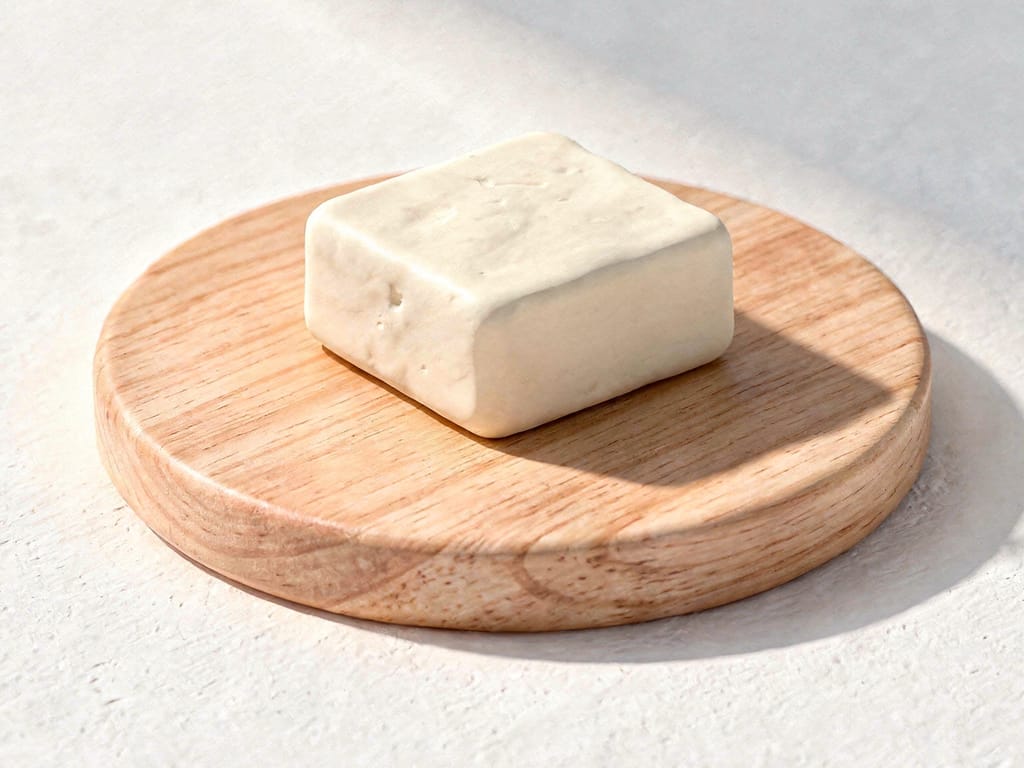
Plain tofu is white, unflavoured tofu made from soybeans, water and a coagulant: soy milk is curdled and the curds are pressed into a firm block. It tastes almost neutral, so it is usually pressed, marinated and pan-fried or baked before eating.
Do not leave it out; it is a chilled product. Producers give storage at 2–8 °C or below 8 °C.
Keep unopened tofu in the fridge and use it by the date on the pack. Once opened, follow the pack: Lunter says use within 24 hours at up to 5 °C, another producer within 2 days, another straight after opening. If there is no instruction, put the rest in a closed container, cover it with fresh cold water and eat it by the next day. Eat cooked tofu, kept in a closed box, within 3 days.
Raw tofu keeps for about 3 months in the freezer. Freeze it in its packing water, thaw overnight in the fridge, then squeeze it in your hands like a sponge. Thawed, it is spongy, soaks up more marinade and has a meatier bite.
Good tofu has three or four ingredients: water, soybeans, a coagulant and perhaps salt. A longer list means stabilisers and usually a wetter block. The calcium content depends on the coagulant and is on the label. Organic certification rules out genetically modified soy. Buy it from the chiller, in an undamaged pack, and check the use-by date.
Tempeh. You stay with soy, but it is made from whole fermented beans, so it is coarser, nutty and slightly bitter, and holds its shape on its own. It is harder to change its flavour with a marinade, though.
Seitan has a similar texture without soy, but it is made of gluten. For a soy allergy, use roasted chickpeas, or halloumi if dairy is fine.
Wrap a block of firm tofu in a tea towel or paper towels, weigh it down with about a kilogram (a pan, tins) and press for 20–30 minutes; 50–100 ml of water can easily come out. Then season it with salt: for 200 g of pressed tofu, 3 tablespoons of soy sauce, a tablespoon of rice vinegar or lemon juice, a teaspoon of maple syrup, garlic and ginger, for at least 30 minutes. Quicker still, simmer the cubes for 5 minutes in salted water, about a teaspoon of salt per half litre.
Cube half an opened block into a clear vegetable broth with soy sauce and let it steep for 5 minutes just below the boil. Whatever you will not use by the next day, freeze straight away; thawed, it suits a bolognese sauce or a marinade.
Roughly what one measure weighs, scooped the way you normally would in the kitchen.
Pan-fry pressed cubes coated in a thin layer of starch for 10–12 minutes, bake them for 25–30 minutes at 200–220 °C, or air-fry them for 12–15 minutes at 200 °C. In curries and stir-fries add tofu fried separately, only for the last two or three minutes. Crumbled, it makes a tofu scramble; crumbled after freezing, a bolognese sauce.
Soaked soybeans are ground, soy milk is pressed out of them, heated and curdled with a salt or an acid. The curds are poured into a mould and pressed; the more pressure and the longer, the firmer the block. The most common coagulant is calcium sulphate (E516); the traditional Japanese one is nigari (magnesium chloride, E511). Labels in Czech shops show a short list: soybeans, water and calcium or nigari. Firm tofu is still roughly 70–85 % water. That is why it steams rather than fries in a pan, and why marinade barely gets in until you press the water out.
On its own it tastes almost neutral, lightly of soy. It takes on whatever you season it with, especially salt and salty condiments. Firm tofu is smooth and springy; frozen and thawed, it becomes spongy and fibrous.
Seasonal baking plans, tested recipes and kitchen tricks that save you time. Unsubscribe in one click.
3 min read
Tofu is made from three things: soybeans, water and a coagulant. The beans are soaked and ground, soy milk is pressed out, heated and curdled. The curds are poured into a mould and pressed. Calcium sulphate (E516) sets slowly and gives a smoother block with a lot of calcium; nigari (magnesium chloride, E511) sets fast and the block tends to be firmer. Silken tofu sets right in its pack, is not pressed and has the consistency of a dense pudding.
Plain tofu is white firm tofu without any flavouring. Unlike smoked tofu, you have to season it yourself; Lunter gives 0.2 g of salt per 100 g for its plain tofu and 1.1 g for the smoked one. For all the types and what each is good for, see Tofu: what it is, the different types and how to cook it.
Tofu tastes bland for two reasons: it is full of water that dilutes every flavour, and it has little flavour of its own. Press it, or freeze it first, and season it with salt and salty condiments rather than oil. An oil marinade cannot soak into watery tofu; it sits on the surface and burns when you fry.
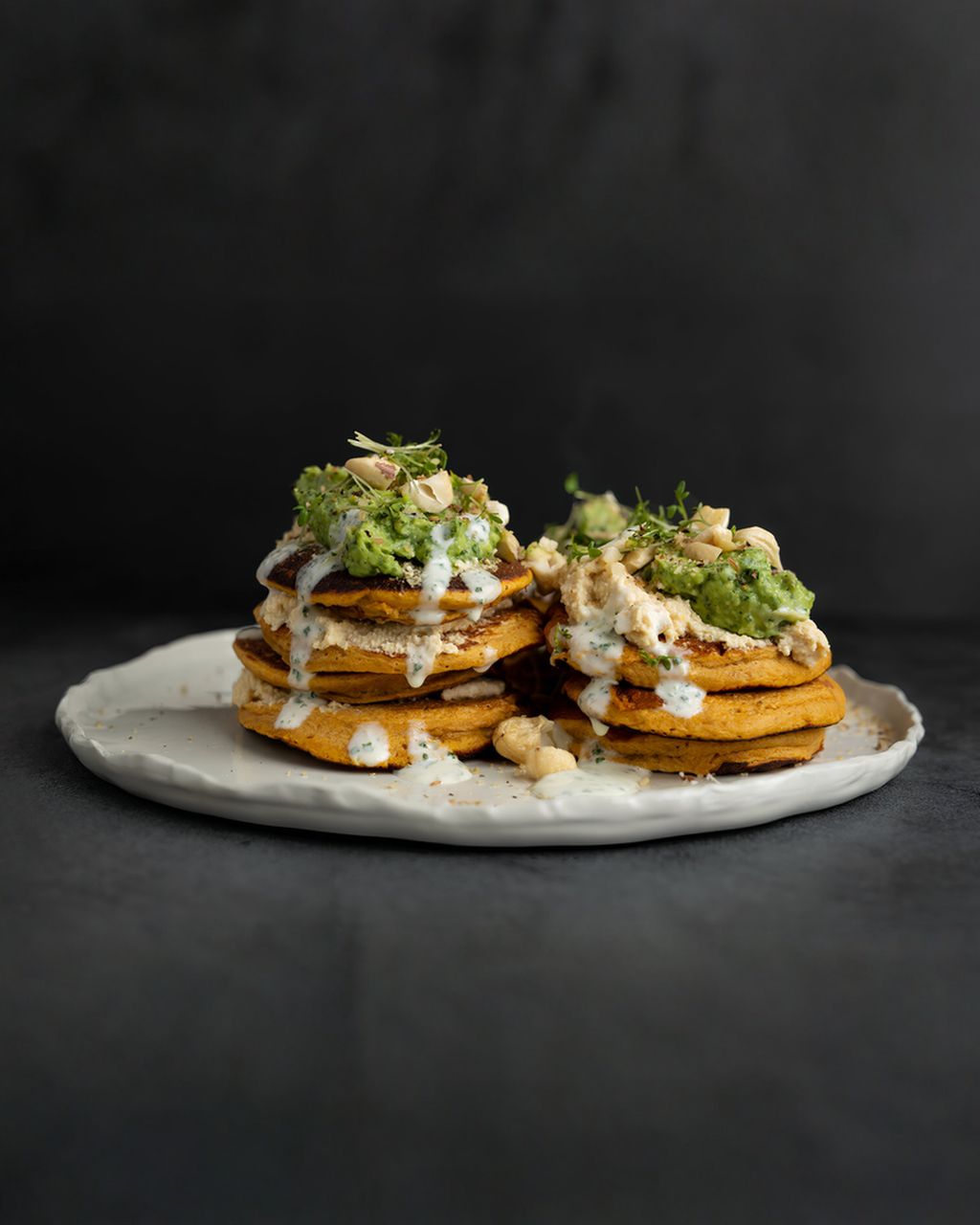
Press it for 20–30 minutes under about 1 kg. In a hurry, slice it first; slices release their water in five minutes. Squeeze frozen and thawed tofu like a sponge and it will take marinade right through. Neutral tofu also works in creamy sauces: in sweet potato pancakes with avocado mash and cashew cream, 50 g of plain tofu is blended with cashews, nutritional yeast and lemon.
Coat pressed cubes of about 2 × 2 cm in a tablespoon of corn or potato starch per 200 g of tofu. In a pan, heat 2–3 tablespoons of oil, lay the cubes in a single layer and leave them untouched for 3–4 minutes, then brown them all over, 10–12 minutes in total. In the oven, bake them on a lined tray for 25–30 minutes at 200–220 °C, turning halfway; in an air fryer, 12–15 minutes at 200 °C.
Salt only at the end; salt at the start draws water to the surface. Add sauce at the last moment and only briefly, or the crust goes soft.
According to the labels of tofu sold in Czechia, firm plain tofu has roughly 87–134 kcal, 10.5–14 g of protein, 5–8 g of fat and up to 2.3 g of carbohydrate per 100 g. Lunter Tofu natural, for example, lists 125 kcal, 12 g of protein, 7.5 g of fat and 2.3 g of carbohydrate. Softer tofu holds more water and so has less protein and energy; the exact figure is on the pack.
Soy protein contains all nine essential amino acids. How much calcium tofu has depends on the coagulant and is on the label. How tofu fits among other plant proteins is covered in vegan protein: best sources and protein content.
Unopened tofu belongs in the fridge and the date on the pack applies. Once opened, the window is short and depends on the producer: Lunter gives 24 hours at up to 5 °C, Pappudia 2 days, SoYum says use immediately after opening. Always follow the pack, and if it says nothing, put the rest in a closed container with cold water and eat it by the next day.
Spoiled tofu smells sour to vinegary, feels slimy and its liquid turns thick and cloudy. If in any doubt, throw it out. Frozen, it keeps for about 3 months.
Tofu always contains soy, one of the allergens that must be highlighted on the pack. If you are allergic to soy, avoid it. Plain tofu is made from soy, water and a coagulant and contains no gluten; flavoured and marinated versions, however, often contain soy sauce made with wheat, so check the ingredients on a gluten-free diet.