At a glance
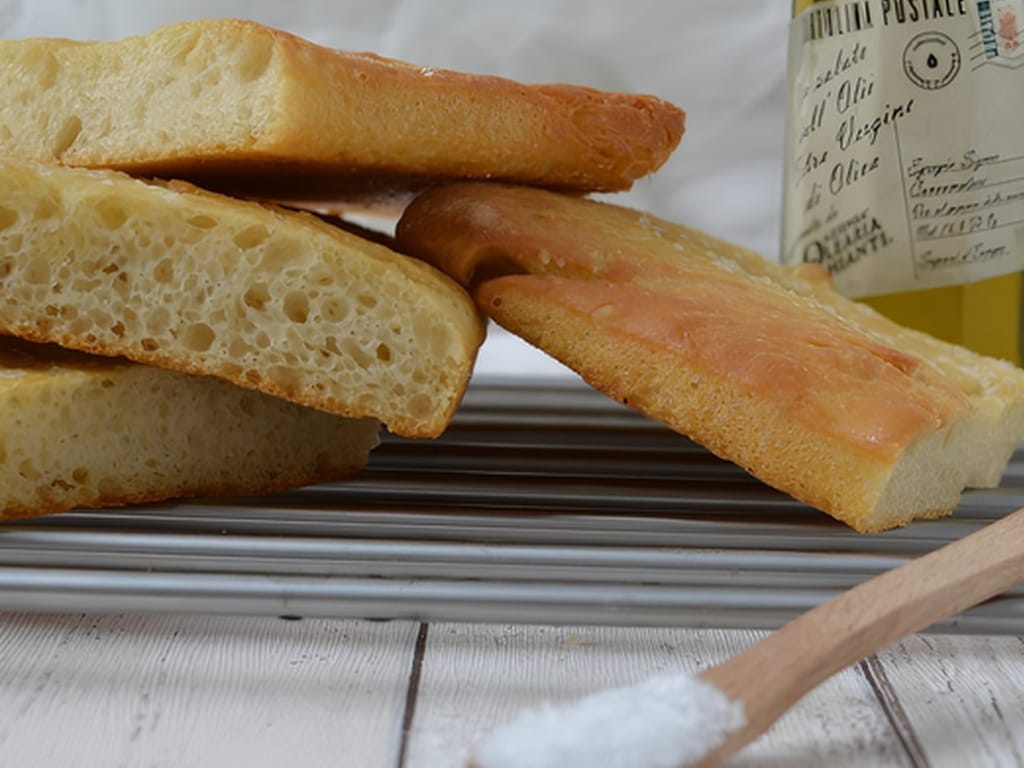
You'll mix up a simple yeast dough and let it rise for an hour before stretching it onto oiled baking sheets. The fun part comes next—topping your focaccia with coarse sea salt and whatever add-ins you love (olives, herbs, cheese, or more), then baking it until golden and crispy in about 25 minutes.
-
1/4
Make the dough and let it rise
Crumble the yeast into the lukewarm water and let it stand for about five minutes so it dissolves and starts working. In a bowl, mix the flour with the fine sea salt, pour in the yeast water and stir with a wooden spoon into a fairly loose, sticky dough. Cover the bowl with a kitchen towel and let the dough rise in a warm spot for about an hour, until it has clearly grown in volume.
For this step
0/4 -
2/4
Stretch the dough onto the sheets
Grease two baking sheets with olive oil. Divide the dough in half, put each half on a sheet, drizzle lightly with olive oil and press it out with your fingers into the corners. If the dough sticks to your fingers, dip them in flour now and then.
For this step
0/1 -
3/4
Top the surface
Sprinkle the dough with coarse sea salt, black olives and fresh oregano; you can add other herbs or anything else you like too. To bake a filling inside, spread it over just one half of the dough and cover it with the other half.
For this step
0/3
How it went
Nobody has tried this recipe yet
Be the first to say how it went.
Anyone can answer, without signing in or buying. Answers aren't verified. The percentage is the share of “Worked out” answers, shown from 5 answers.
Tips from the Yumsto kitchen
Why it works
The high share of water in the dough, 800 ml to 1 kg of flour, gives focaccia a moist crumb with big holes. The olive oil on the sheet crisps the bottom, and the high heat sets a golden crust before the crumb dries out.
Tips
The dough is loose and sticky, and that's how it should be; don't add extra flour or the focaccia will turn tough. If the dough springs back as you stretch it, let it rest on the sheet for a few minutes, then carry on. Before topping, you can press dimples into the dough with your fingers to catch the oil and salt.
Substitutions
You can swap the all-purpose flour for bread flour; the focaccia will be chewier and more open. Instead of 42 g of fresh yeast, use 14 g of instant yeast and mix it straight into the flour. Olives and oregano can be swapped for cherry tomatoes, rosemary or thinly sliced red onion.
Storage
Focaccia is best on the day it's baked. Wrap it, once cool, in a kitchen towel or paper bag and eat within 2 days. You can freeze it sliced for up to 3 months; after thawing, crisp it up for a few minutes in a hot oven.
Serving
Serve it with soups and salads, or with cheese and cured meats. Torn into pieces, it's also good for dipping in olive oil.
Common questions
Why is the dough so loose?
It's meant to be. Lots of water makes the focaccia moist and airy. Work it with floured or oiled hands.
How do I know the dough has risen enough?
It will have visibly grown in volume and have bubbles on the surface. In a cooler kitchen it can take longer than an hour.
Which temperature should I use, 220 or 250 °C?
A thicker focaccia needs a lower temperature and longer baking to cook through. Bake a thin one hotter and shorter, and it will be crisper.
Can I bake just one large focaccia?
You can, but on one sheet it will be twice as thick and take longer to bake. Make sure it's cooked through in the middle.
Featured in our guides
Want a recipe like this every Thursday?
One recipe worth heating the oven for, and one tip that saves you time. Nothing else.