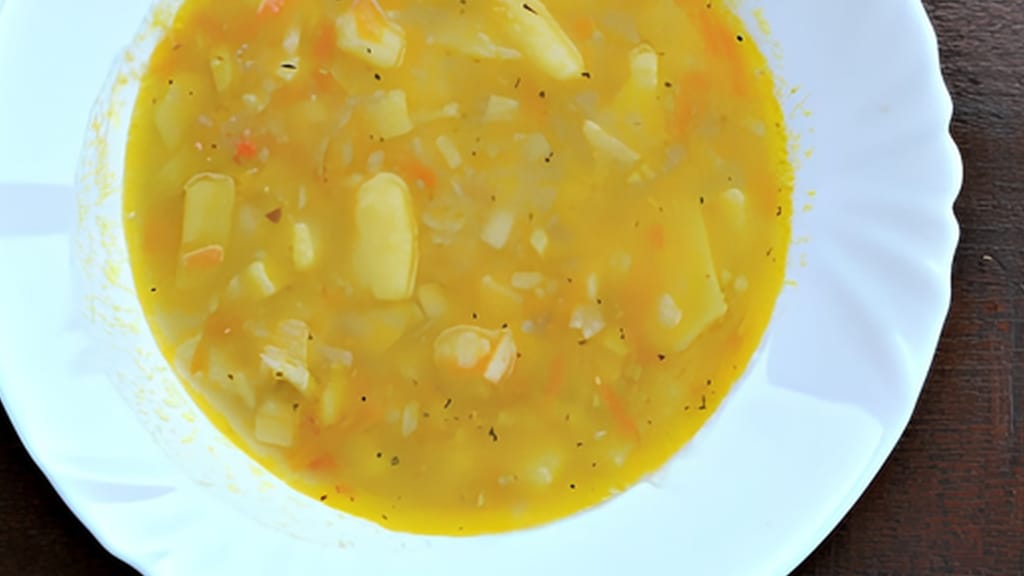
Quick potato soup
Cheap Meals: What to Cook Quickly and on a Budget for Lunch or Dinner, for the Whole Family and for Two Days
Updated Nov 20, 2026
Cheap meals rest on a few basic ingredients: potatoes, legumes, pasta, rice, eggs, cabbage and carrots, with chicken thighs, ground meat or pork shoulder added now and then. From them you can make a quick dinner in half an hour, a hearty lunch for the whole family, or one big pot that feeds you for two days. Below you'll find what to cook from each ingredient, how to cook ahead safely, and where you save the most when shopping and cooking.
The cheapest foundation for budget cooking is ingredients that keep well, store easily and stretch to plenty of servings:
Potatoes – the cheapest side dish and main ingredient, they keep for weeks in a cellar or pantry.
Legumes – dried lentils, beans and peas are among the cheapest foods of all per serving; canned ones cost more but are still cheap.
Pasta – dry, long-lasting and cooked in ten minutes.
Rice – about as cheap as pasta, but you have to handle leftover rice more carefully.
Eggs – the cheapest animal-based ingredient for a quick dinner.
Cabbage – one head is enough for several meals and keeps a long time in the fridge.
Carrots – cheap all year round, they add sweetness to soups, sauces and goulash.
Chicken thighs – much cheaper than breasts and they don't dry out when roasted for longer.
Ground meat – a cheap choice among meats that stretches well with vegetables or legumes.
Pork shoulder – a cheaper cut of pork that stays juicy when slow-roasted.
What matters is the price per serving, not per kilo. A kilo of lentils or pasta makes more servings than a kilo of meat, and when you combine ingredients, the meat only adds flavor while the cheap rest forms the base of the meal. Seasonal vegetables (cabbage and carrots in winter, zucchini and tomatoes in summer) are also cheapest in season.
To make sure cheap ingredients really last, store them properly. Keep potatoes in a dark, cool place, but not in the fridge, and away from onions, next to which they sprout faster. Transfer legumes, pasta and rice into airtight containers and keep them dry so pantry moths can't get into them. Cabbage and carrots belong in the fridge's vegetable drawer, where they keep for weeks. Put eggs in the fridge, but not in the door, where the temperature fluctuates.
We send seasonal cooking and baking plans and recipes made from everyday ingredients. Unsubscribe in one click.
Potatoes are the most versatile cheap staple: you can make soup with them, bake them in the oven, roast them in their skins or grate them into pancakes. For soups and bakes, reach for all-purpose (type B) potatoes, which hold their shape without being firm. For more ideas on using raw, boiled and leftover potatoes, see the article what to cook with potatoes.
Which potato suits what: type A (waxy, salad) holds its shape and suits salads and pan-frying, type B (all-purpose) is versatile for boiling, soups and baking, and type C (floury) breaks down when cooked, so it's best for mash, potato pancakes, dumplings and potato dough. If you only have one bag at home, go for type B.
You can make a more filling soup for cold days in 40 minutes: creamy potato soup with milk is thickened with a light roux and needs only potatoes, onion, milk and seasoning. Potatoes cooked ahead can go into baked potatoes with cottage cheese and vegetables, where they're bound together by eggs beaten with milk.
Potato pancakes (bramboráky) are a classic of budget cooking, and all you need is raw potatoes, eggs, flour, garlic and marjoram. The more water you squeeze out of the grated potatoes, the crispier they'll be.
Quick potato soup
Quick potato soup: ready in about 35 minutes from shallot, carrot, potatoes and bouillon.
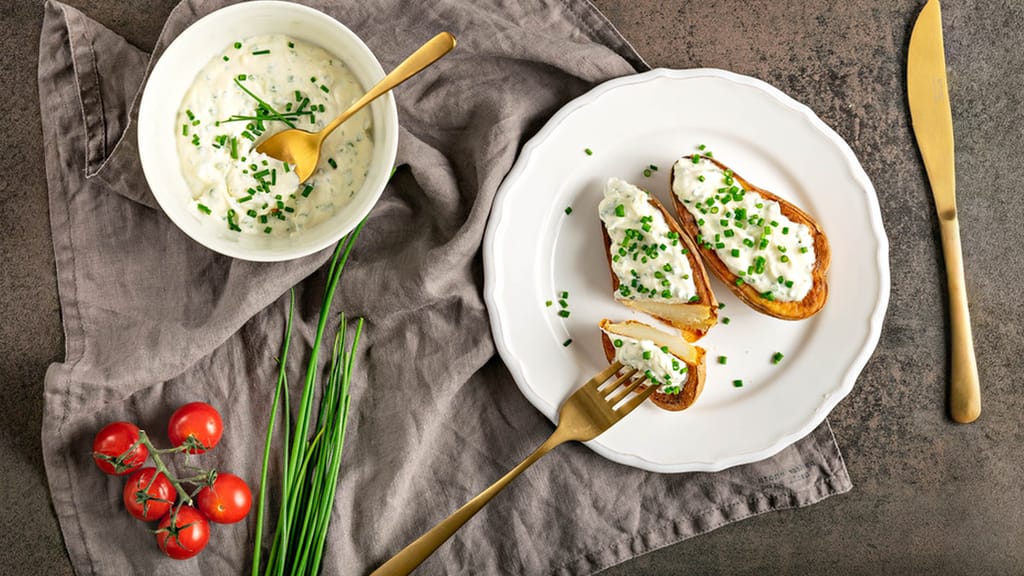
Baked potato with whipped herb curd cheese
Baked potato with whipped herb quark: a cheap dinner from three ingredients.
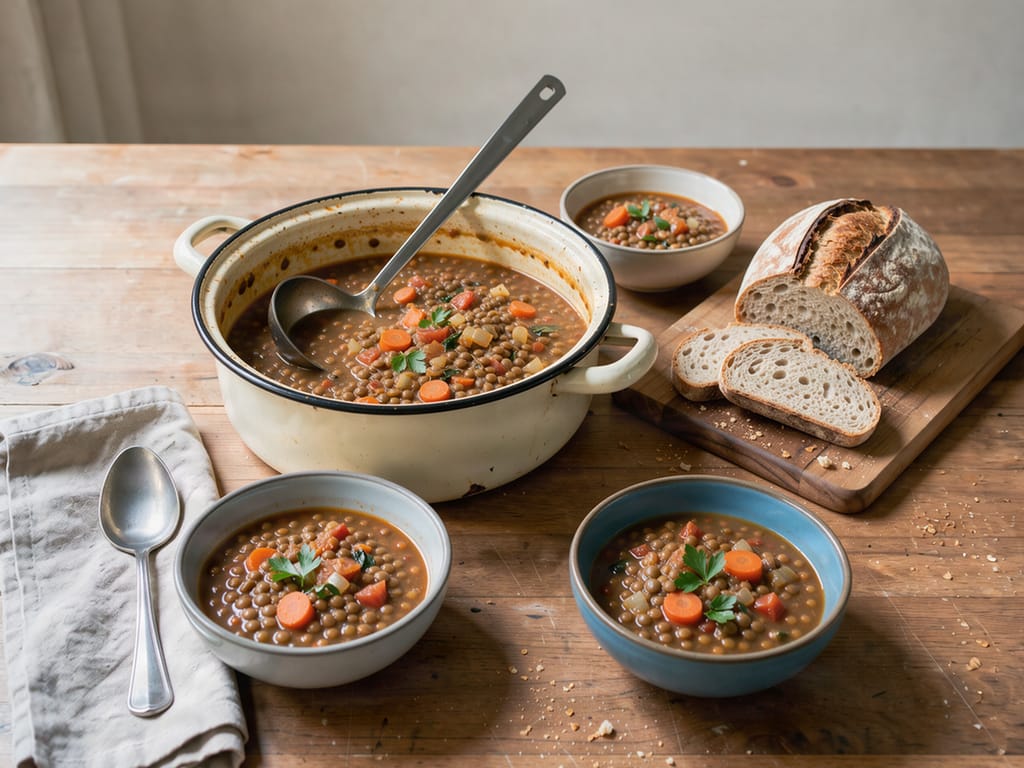
Legumes are the cheapest route to a hearty meal: from a few handfuls of dried lentils or beans you can cook a pot for the whole family. The fastest are red lentils, which need no soaking and cook down to a creamy consistency in 15–20 minutes. Brown lentils don't need soaking (soaking only shortens the cooking time), while beans do; both hold their shape and suit thick dishes meant to last several days.
Approximate cooking times for legumes:
red lentils without soaking: about 15–20 minutes,
brown lentils without soaking: about 20–30 minutes (shorter after soaking),
beans soaked overnight: about 1–1.5 hours,
chickpeas soaked overnight: about 1–2 hours.
The exact time depends on the age of the legumes; older ones take longer. They're done when they're soft all the way through.
From pantry staples you can make a quick tomato soup with beans in under 40 minutes, using canned tomatoes and white beans. Couscous with chickpeas and roasted vegetables is vegetables and chickpeas roasted on one sheet pan and mixed with couscous, ready in about an hour.
For more ideas for dried and canned beans, see the article what to cook with beans.
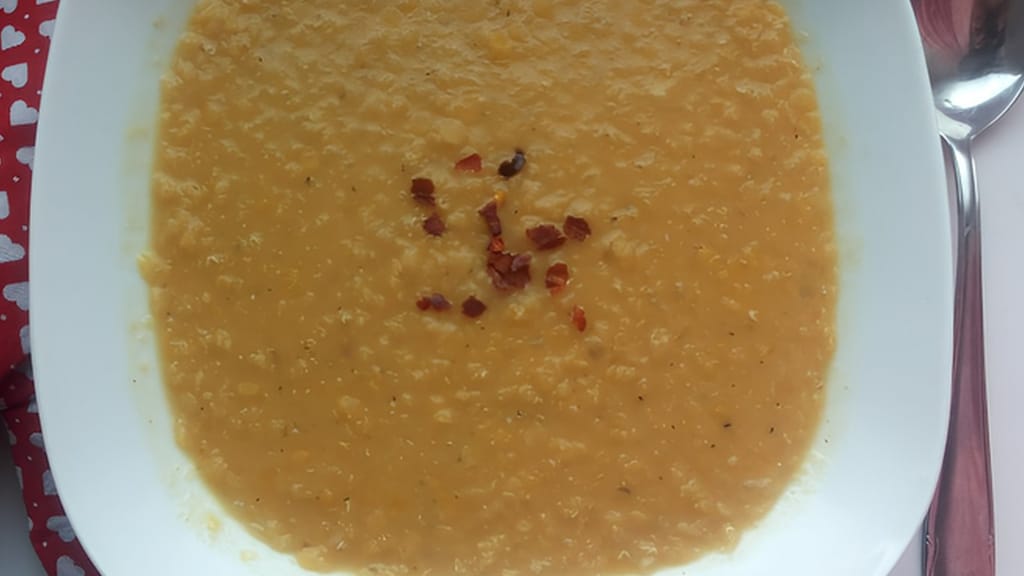
Red lentil soup with coconut milk and chilli
Red lentil soup with coconut milk and chili: vegan, ready in 35 minutes.
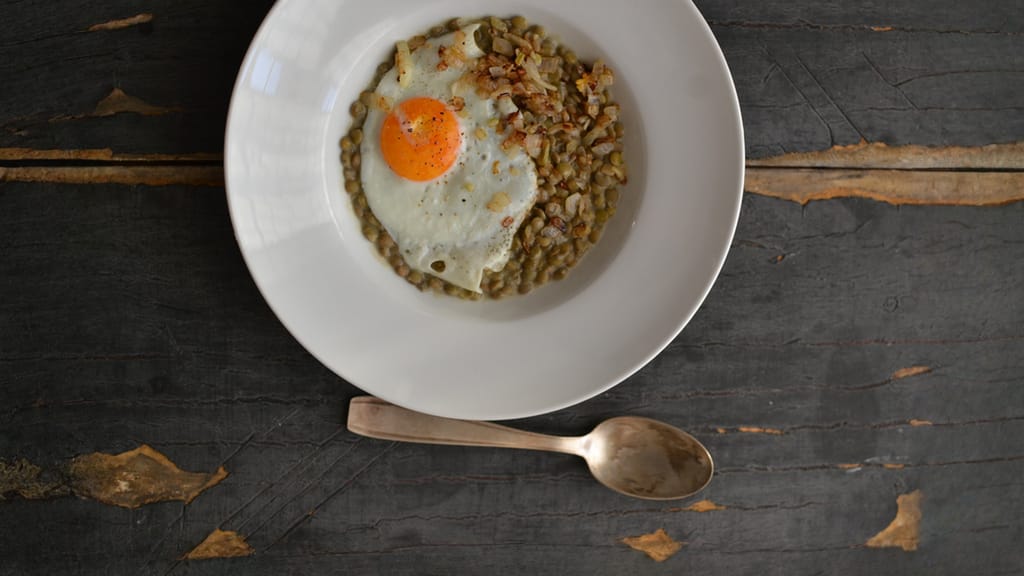
Sour lentils with a fried egg
Sour lentils with a fried egg (čočka na kyselo): a Czech classic made with brown lentils, soaked overnight according to the recipe.
Pasta and rice are the fastest cheap staples: in ten to fifteen minutes you have a base that needs only vegetables, eggs or a little meat. Plain dry pasta is cheaper than fresh and keeps for months, and rice is great for one-pot meals.
A few tricks to get more out of cheap pasta. Cook it in plenty of salted water and save a cup of the cooking water before draining: the starch in it brings the sauce together, so you don't need to add cream. For baking, drain it a minute or two earlier than the package says, as it finishes cooking in the oven. And the simplest sauce is canned tomatoes, garlic and oil, simmered while the pasta cooks. For ideas with white and fermented cabbage, which goes wonderfully with pasta, see the article what to cook with cabbage.
For three people you can make a baked chicken and vegetable risotto in a single pot, ready in about an hour, and it finishes cooking by itself in the oven.
Treat leftover cooked rice more carefully than other leftovers. The NHS recommends cooling cooked rice within 1 hour, putting it straight into the fridge, eating it by the next day and reheating it only once. So don't cook rice ahead for more than one day. For what to do with leftover rice before that day is up, see the article what to cook with rice.
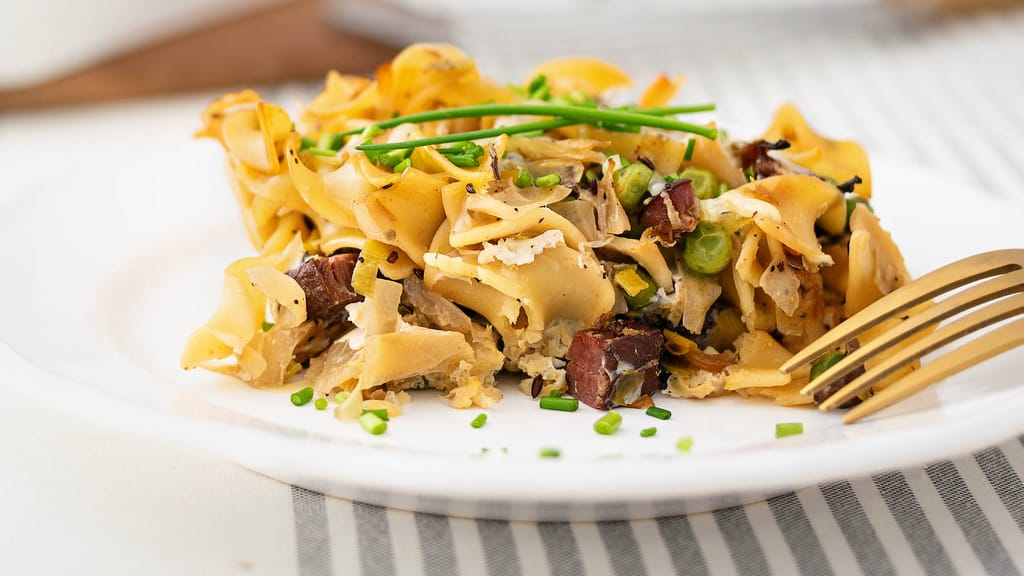
Ham and cabbage flecky pasta bake
Ham and cabbage noodles (šunkofleky): the two cheapest ingredients, pasta and cabbage, in about 30 minutes.
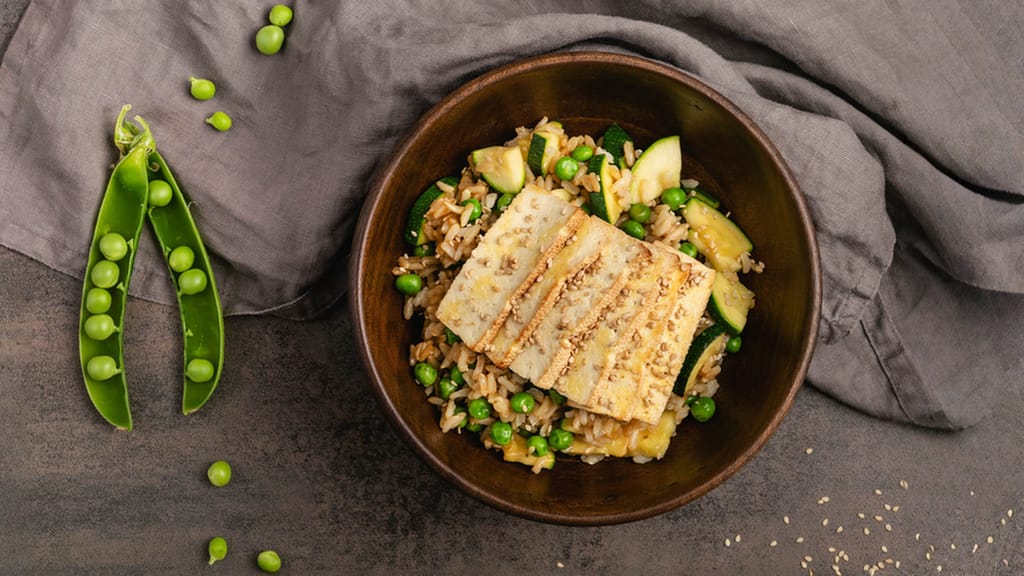
Tofu risotto with peas and zucchini
Risotto with tofu, peas and zucchini: a vegan quick dinner in under 40 minutes.
Eggs are the cheapest animal-based ingredient for a quick dinner: an omelet or fried eggs are ready in 5–10 minutes, and more filling egg dishes in 30–40 minutes. They go well with potatoes, legumes and vegetables. For small children, pregnant women and older people, prepare eggs with the yolk and white fully set. They save you money elsewhere than in the pan, too: beaten eggs bind leftovers in a baked casserole, a fried egg turns a simple legume dish into a main course, and a hard-boiled egg completes a vegetable sauce. For plenty more ideas from breakfast to dinner, see the article what to cook with eggs.
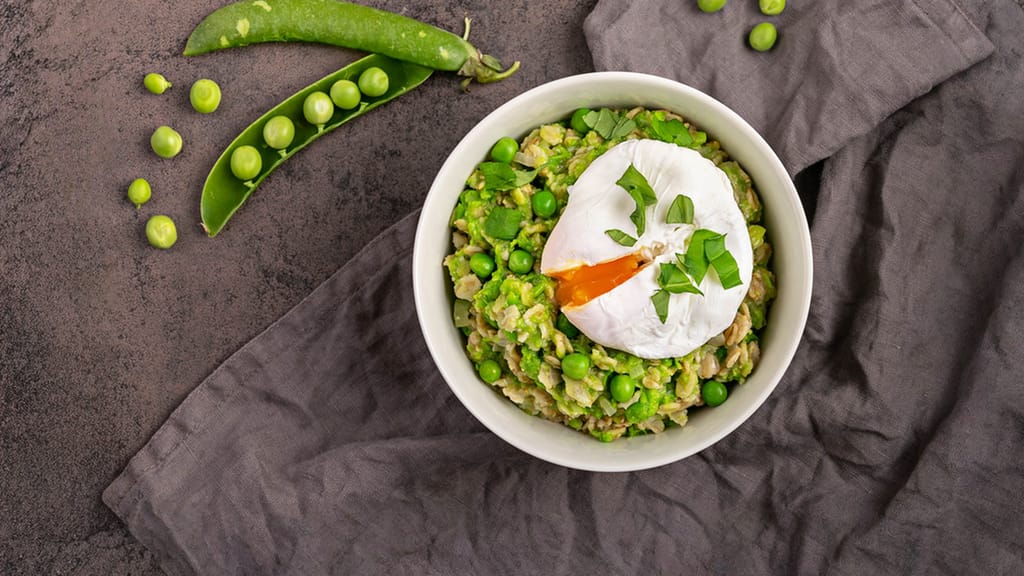
Pea and oat "risotto" with poached egg
Pea oat "risotto" with a poached egg: a cheap dinner in under half an hour, with rolled oats in place of rice. For small children and pregnant women, prepare a hard-boiled egg.
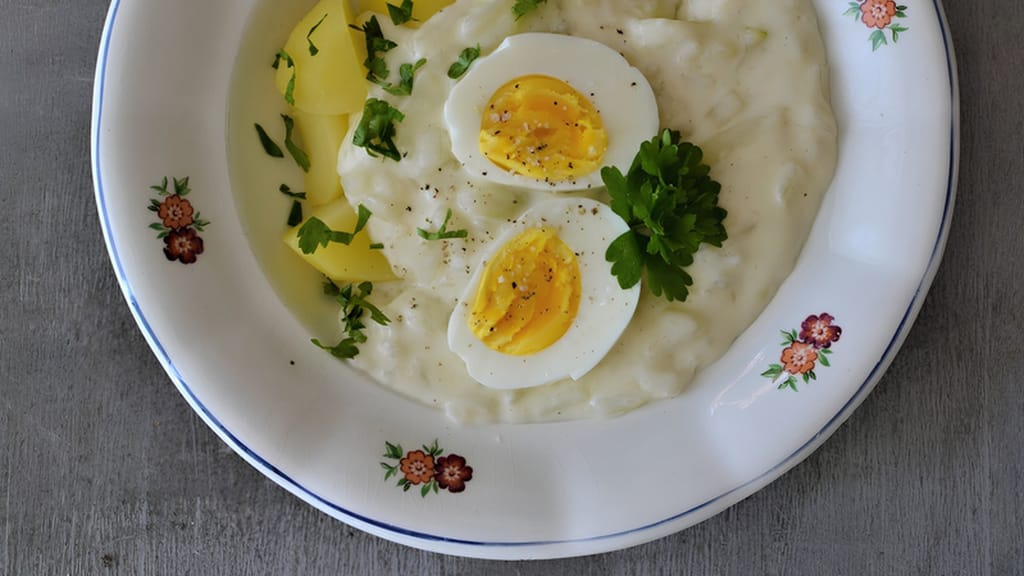
Creamed kohlrabi with potatoes and boiled egg
Thickened kohlrabi with potatoes and a boiled egg: a hearty meal in under 40 minutes.
If you want meat without spending much on it, reach for chicken thighs, ground meat or pork shoulder. All three are cheaper than breast, tenderloin or leg, and thanks to their fat and connective tissue they can handle longer cooking and reheating the next day without drying out.
When buying meat, you save mostly by choosing the cut. Buy bone-in, skin-on thighs, which cost less than boneless, and bone them at home if the recipe calls for it. Stretch ground meat with grated carrot, mushrooms or a handful of red lentils; nobody will notice on the plate. And when buying shoulder, take a bigger piece and freeze part of it raw for the following week.
For a big batch, it pays to cook sugo bolognese, a slow-simmered Bolognese sauce from ground pork, which simmers for at least two hours and makes enough for several meals. For more ideas, see the articles chicken thighs: what to cook with them, what to cook with ground meat and the classic vepřo knedlo zelo (roast pork with dumplings and sauerkraut).
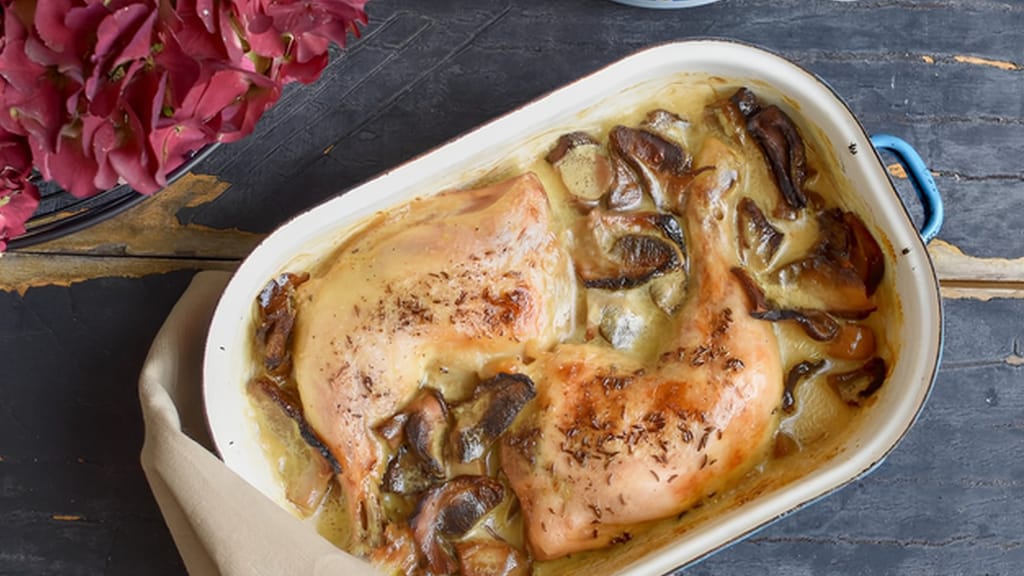
Roasted chicken thighs with fragrant wild mushrooms
Chicken thighs roasted with fragrant wild mushrooms: one roasting pan and about an hour and a half.
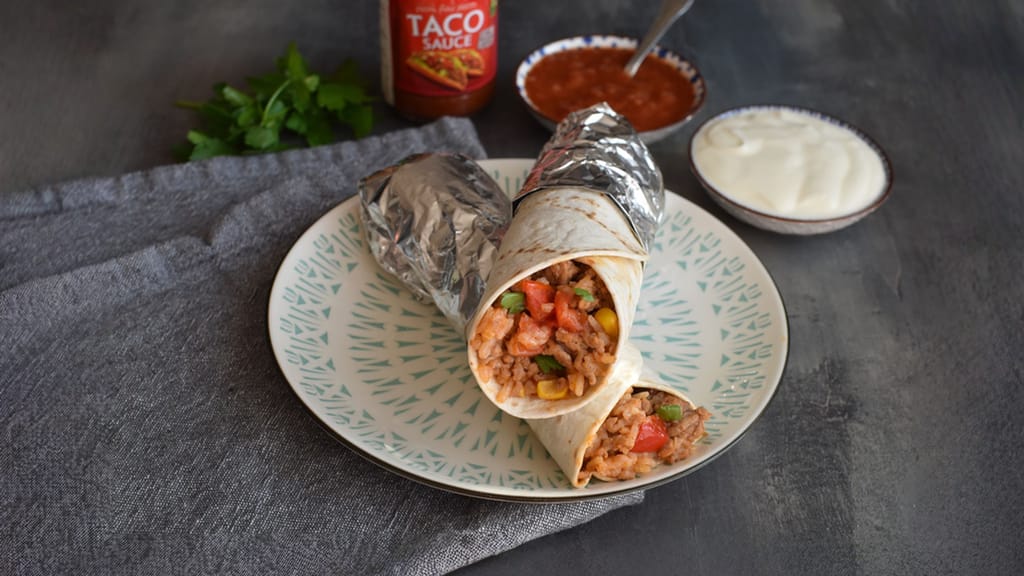
Mexican burrito with beans and ground beef
Mexican burrito with beans and ground meat: beans and rice stretch the meat to four servings.
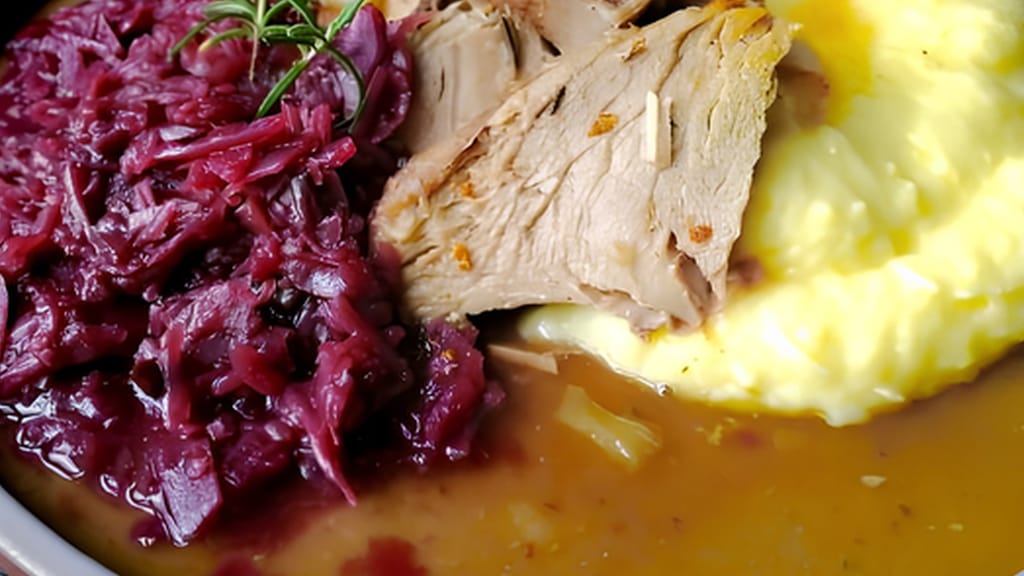
Slow-roasted pork with red cabbage
Slow-roasted pork with red cabbage: a long roast turns cheap shoulder into a special-occasion meal.
One-pot meals suit two days best: goulashes, thick soups, sauces and baked casseroles that taste just as good or better the next day. You cook once, wash one pot and save time and energy. Of the dishes above, the Bolognese sauce, sour lentils, tomato soup with beans and slow-roasted pork are especially suitable.
Not everything reheats equally well, though. Goulashes, sauces, legumes and thick soups taste better the next day because the flavors meld. Fried foods go soft, and pasta or noodles in soup soak up the broth and turn mushy, so cook them separately and add them to the plate. Reheat baked casseroles in the oven so the surface stays crisp.
To keep food safe over several days, follow three rules from the US food safety agency USDA FSIS:
In the fridge within 2 hours. Put cooked food in the fridge no later than 2 hours after cooking, or within 1 hour if the room is above 32°C (90°F). Divide a big pot into smaller, shallow containers so it cools faster.
Reheat to 74°C (165°F). Reheat leftovers to 74°C, ideally measured with a thermometer.
Eat within 3–4 days. Use cooked leftovers within 3–4 days. In practice: what you cook on Sunday, you eat by Wednesday at the latest. Whatever you won't eat by then, freeze right away, not on the last day.
Rice has stricter rules according to the NHS (see above): eat cooked rice by the next day and reheat it only once, so for a multi-day meal it's better to cook it fresh.
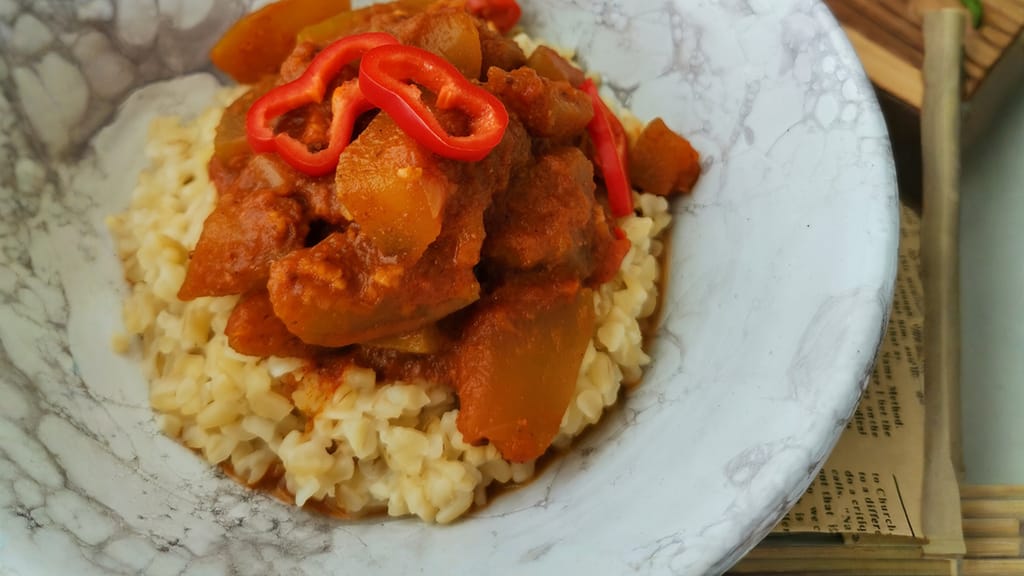
Zucchini goulash
Zucchini goulash: a vegan pot in under 50 minutes that tastes even better the next day.
For a big family or guests, cooking in a roasting pan or a large pot works best: baked dishes, goulashes and soups multiply easily, and a cheap base (potatoes, polenta, legumes, pasta) carries most of the serving. Treat meat as a seasoning rather than the main bulk.
As a rough guide, count per adult about 80–100 g dry pasta, 60–80 g dry rice, 200–250 g potatoes as a side or 60–80 g dry legumes. Children usually eat half to two thirds of that. If you're not sure, cook more of the side: it's the cheapest part of the meal and you'll use the rest the next day.
When cooking for a lot of people, two more things help. Cook dishes that are served from one container and don't need finishing at the last minute. And set out something so everyone can season their own plate (sour cream, grated cheese, chili), so one dish suits both kids and adults.
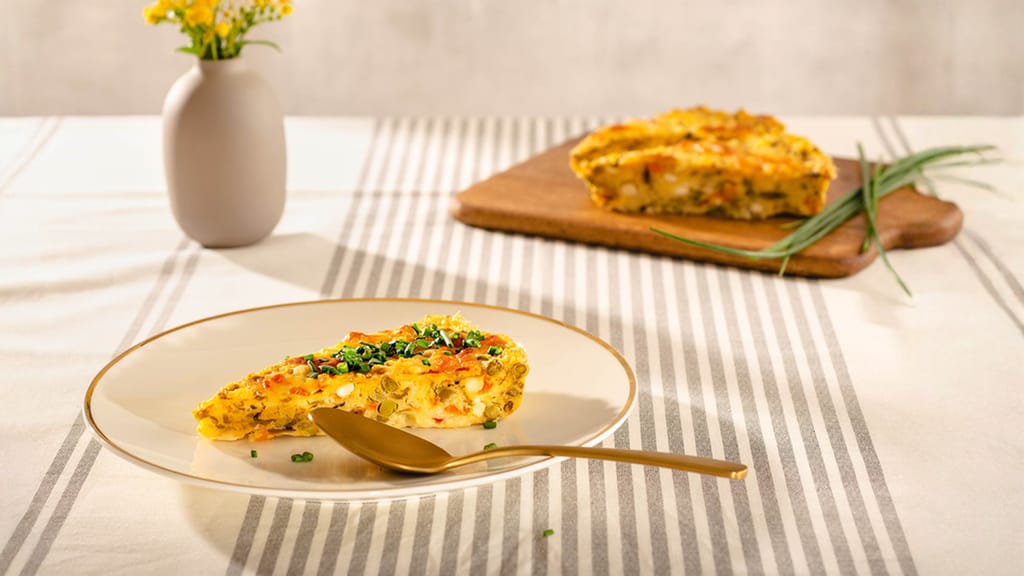
Polenta vegetable bake
Polenta and vegetable pie: ten servings in under an hour, according to the recipe.
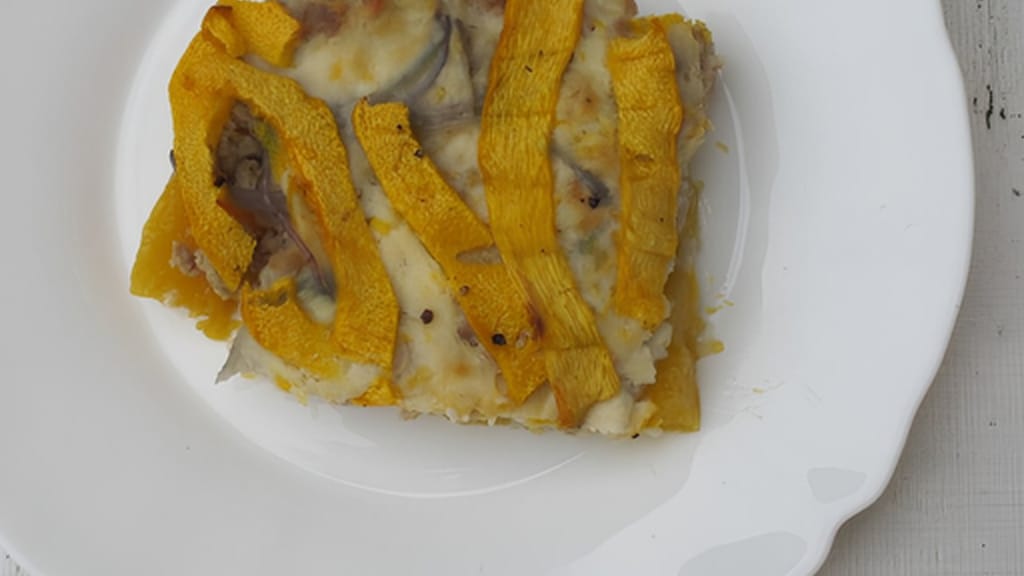
Baked pumpkin with ground meat
Pumpkin baked with ground meat: an autumn take on lasagna, where slices of pumpkin replace the pasta.
Cheap meatless meals tend to be the cheapest of all, because they're built on legumes, potatoes, eggs and vegetables. Of the dishes in this article, these are meat-free:
vegan: red lentil soup with coconut milk, risotto with tofu, peas and zucchini, and zucchini goulash,
vegetarian: quick potato soup, baked potato with herb quark, baked potatoes with cottage cheese, sour lentils with a fried egg, tomato soup with beans, couscous with chickpeas, pea oat risotto with a poached egg, thickened kohlrabi and polenta pie (the Parmesan in it is made with calf rennet, so strict vegetarians can replace it with a cheese made with microbial rennet).
Watch out for the creamy potato soup with milk: the recipe cooks it in lard, so it isn't meat-free. To make a meatless meal filling, combine a legume with a grain or potatoes (lentils with bread, beans with rice) and add eggs or a dairy product. For more ideas for Czech and main dishes without meat, see the article meatless meals, and for purely plant-based lunches and dinners, everyday vegan recipes.
You save the most by planning, using leftovers and the freezer, not by chasing discounts. Specifically:
Plan your week. Come up with 3–4 main dishes and shop from a list. When two dishes share ingredients (cabbage in noodles and as a side, carrots in soup and in goulash), nothing goes moldy in your fridge.
Buy whole and long-lasting. A whole chicken, a head of cabbage and a bag of potatoes cost less than portioned or pre-prepared ones. Stock up on legumes, pasta, rice and canned goods.
Watch the price per kilo. The shelf label in the store shows the unit price. A bigger pack is usually cheaper, but only if you manage to use it up.
Cook by season. In fall and winter cabbage, carrots, onions and pumpkin, in summer zucchini and tomatoes. Seasonal vegetables are both cheapest and tastiest.
Cook big, eat twice. One big pot uses less energy than the same amount of food cooked in several batches. You eat it one day, reheat it the next and freeze the rest.
Transform leftovers. Bake cooked potatoes, add leftover pasta to noodle dishes, put leftover vegetables into soup. For what to cook when you don't feel like going shopping, see the article what to cook from nothing.
Use the freezer as a pantry. Freeze in portions and label containers with the date. Soups and sauces freeze very well; how to freeze soup so it doesn't lose flavor is covered in the article on soups.
Save energy. Cook with a lid on, use the oven for several things at once (potatoes and vegetables on one sheet pan) and soak legumes so they cook for a shorter time.
The fastest cheap dinner is made with eggs: an omelet or fried eggs are ready in 5–10 minutes. More filling cheap dinners made with eggs, oats, pasta and rice are on the table within 30–40 minutes. Pea oat risotto with a poached egg takes under half an hour, ham and cabbage noodles about 30 minutes, and risotto with tofu, peas and zucchini just under 40 minutes. If you have potatoes cooked ahead, baked dishes come together faster too.
Yes, cheap meals made with dried legumes work out cheaper per serving than canned, but canned saves you time and cooking energy. You can get the best of both by cooking a big batch of dried beans or chickpeas at once and freezing them in portions: you have your own "canned" legumes at the price of dried. Red lentils don't even need soaking, so dried ones are fast and cheap at the same time.
The USDA FSIS recommends thawing leftovers in the fridge, in cold water or in the microwave, not on the counter at room temperature. According to FSIS, you can also reheat frozen leftovers straight from frozen without thawing, it just takes longer. Always reheat them to 74°C (165°F).
The USDA FSIS advises covering food in the microwave, stirring and rotating it during heating so it heats evenly, and checking the temperature with a thermometer: it should reach 74°C (165°F). After heating, let the food stand for a while so the heat evens out. Spread thick dishes in a shallow layer, and they will heat faster and more evenly.
With potatoes and eggs you can cheaply make a baked casserole, potato pancakes, or potatoes with a hard-boiled egg and sauce. Slice cooked potatoes, pour over eggs beaten with milk and bake in the oven, or grate raw potatoes with an egg and flour for potato pancakes. If you also have kohlrabi or an onion, add them and the dish will be more filling.
One recipe worth heating the oven for, one tip, and one deal from the shop. Nothing else.