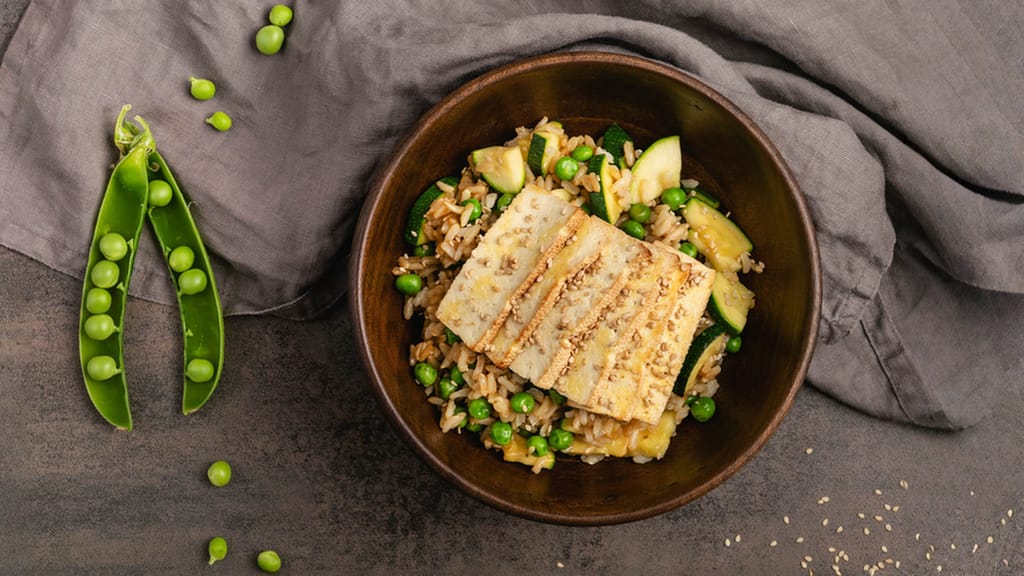
Tofu risotto with peas and zucchini
Tofu: What It Is and What to Cook With It So It Tastes Good
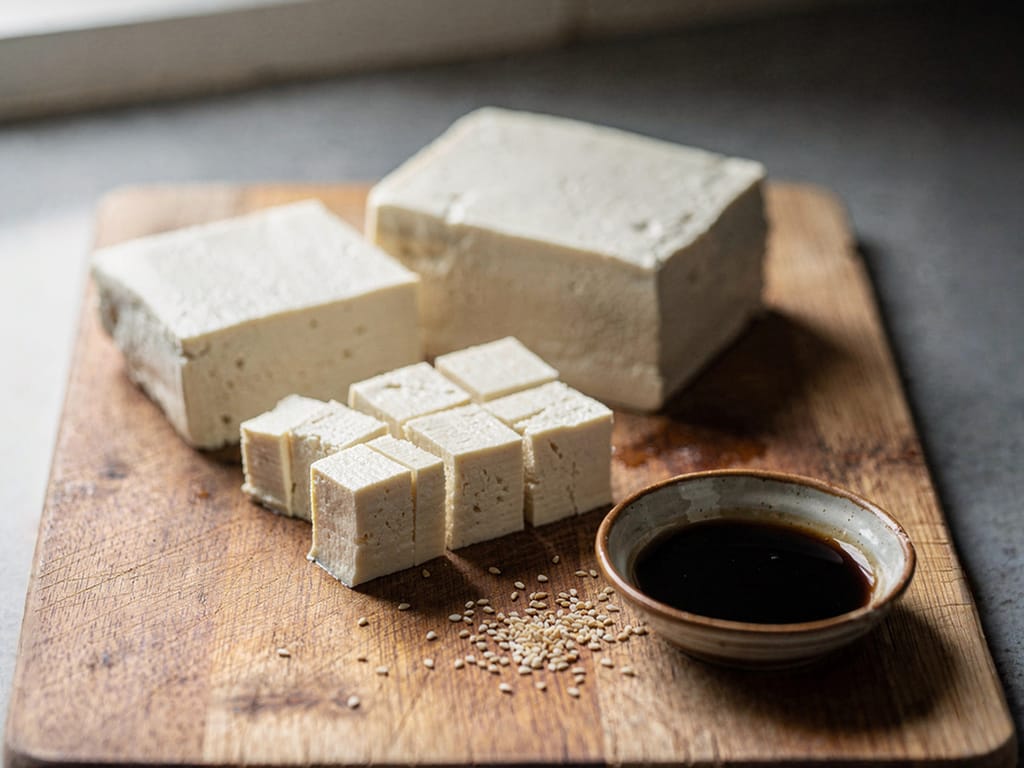
Updated Nov 18, 2026
Tofu is curdled, pressed soy milk, made on the same principle as cheese or quark (tvaroh, a Czech fresh curd cheese) from cow's milk. On its own it tastes almost neutral, which is both its strength and its trap: it soaks up whatever you give it, but if you give it nothing, it gives nothing back. Most failed tofu isn't bad tofu. It's unpressed tofu thrown into a lukewarm pan. In this guide you'll find which type suits which dish, how to press and marinate tofu so it isn't bland, and above all what to cook with it: crispy cubes from the pan or oven, curry, stir-fry, smoked tofu spread, "scrambled eggs," soups, pasta and a creamy silken tofu dessert.
Tofu is made from three things: soybeans, water and a coagulant. The beans are soaked and ground, and soy milk is pressed out of them. The milk is heated and curdled with a salt or an acid. The resulting curds are drained into a mold and pressed. The more pressure and the longer the pressing, the firmer the block.
The coagulant is what matters most, because it determines both texture and composition:
Calcium sulfate (gypsum, E516) – the most common. It sets slowly, gives a softer, smoother block and sneaks a considerable amount of calcium into the tofu.
Nigari (magnesium chloride, E511) – the traditional Japanese coagulant, taken from seawater after the salt has crystallized. It sets quickly, the block tends to be firmer and sweeter in flavor, but it adds only a fraction of the calcium.
Glucono delta-lactone (GDL) – a slow-acting acid that curdles the milk right in the package, with no pressing. This is how silken tofu is made.
Firm tofu is still roughly 70–85% water (depending on the brand and pressing). That explains almost everything that happens with it in the kitchen: why it steams in the pan rather than fries, why a marinade has nowhere to soak in, and why removing the water is the first step of nearly every recipe.
Tofu originated in China, where it has a tradition of more than a thousand years, and from there it spread to Japan and Korea. The types you buy today diverged there: Japanese silken kinugoshi, firmer Chinese blocks, dried soy skin yuba. Each of these traditions grew up around a different technique, and that technique still tells you what each type is good for.
Seasonal baking plans, tested recipes and kitchen tricks that save you time. Unsubscribe in one click.
In a Czech store you'll mostly find four types of tofu, and each suits something different:
Plain tofu (white, firm) – for the pan, the oven, curry, stir-fry, risotto and "scrambled eggs." It tastes neutral, so you have to season it yourself.
Smoked tofu – for bread, spreads, pasta and potatoes. It's salty and smoky and can be eaten straight from the package.
Marinated tofu – already flavored (with soy sauce, herbs, chili); just sear it and add it to a bowl, wrap or salad.
Silken tofu – for creamy soups, sauces, dressings and desserts. It's not for the pan, because it falls apart.
Beyond these four there are soft and extra-firm tofu (which differ only in water content) and specialties like fermented tofu and yuba. The rule is simple: the less water, the better it holds its shape and the more protein per hundred grams. The difference between types is less about flavor than about what you can do with them. Silken tofu falls apart in the pan, and extra-firm stays a rubbery cube in a soup. Choose by the job, not by whatever happens to be on the shelf.
Plain firm tofu is the all-purpose type for most cooking: it holds its shape and stands up to the pan, the oven and the grill. Firm tofu can be cubed and sautéed, and extra-firm even survives being skewered and turned on a grate.
It's worth pressing both before cooking. Extra-firm needs less time because the manufacturer has already pressed out much of the water for you, but even so a surprising amount of water runs out after twenty minutes under a weight.
Smoked tofu is firm tofu that has been through a smokehouse, and in Czechia it's the most common type on the shelves: for many people "tofu" automatically means this. It has a pronounced salty, smoky flavor, so unlike white tofu it needs no marinade and can be eaten straight from the package.
It works best where you'd otherwise reach for bacon or ham: cut into strips for pasta, in a sandwich, in potato salad, or dry-fried in a pan until crisp. Salt carefully, because smoked tofu is already salty.
Marinated tofu is firm tofu that the manufacturer has left to soak in a marinade, most often made from soy sauce, ginger, garlic or herbs. It saves you the marinating step, but not the pan step: straight from the package it's soft and wet, and only searing gives it flavor and texture. Keep in mind that flavored varieties tend to be saltier and often contain wheat from the soy sauce.
Silken tofu is unpressed: it sets right in its carton, so it keeps all its water and has the consistency of a thick pudding. Don't slice or press it, just turn it out and blend it.
Its real superpower is emulsifying: blended silken tofu holds fat and water together, so you can make a creamy dressing, a mayonnaise-like sauce or a chocolate cream without a drop of cream. Add it to soup at the end and only warm it through, don't boil it, because boiling breaks it into flakes.
Fermented tofu (sufu) is tofu pickled and aged in brine, and yuba is dried skin from soy milk; you'll find both mainly in Asian grocery stores.
Sufu (also called "Chinese cheese") is pickled in a salty brine with rice wine and ages for months. The result is creamy, extremely salty and used by the spoonful as a seasoning, not as a main ingredient. Stinky tofu (chòu dòufu in Chinese) ages in a brine of fermented vegetables and smells exactly as its name promises; in China and Taiwan it's a street-food delicacy.
Yuba isn't tofu in the strict sense: it's the skin that forms on the surface of heated soy milk and is collected in layers. Fresh, it is silky smooth; dried, it's soaked and has a surprisingly meaty, fibrous texture.
Tofu tastes bland for two reasons: it's full of water, which dilutes every flavor, and it has no strong flavor of its own. The fix is three steps in this order: press the water out, optionally freeze it beforehand, and season it with salt and salty flavorings, not oil. Only then sear it until crisp (see the later chapter). None of the steps is difficult, and each solves a different problem.
Pressing is the most important step, and most people skip it. Wrap a block of firm tofu in a kitchen towel or paper towels, put it on a plate, weigh it down with something around one kilogram (about 2 lb; a skillet, cans, or a cutting board with a pot) and leave it for 20 to 30 minutes.
Easily 50–100 ml of water will run out. This does two things at once: it frees up space for the marinade and, above all, it rids the surface of water that would evaporate in the pan and steam the tofu instead of frying it. Unpressed tofu won't brown, however long you leave it in the pan.
In a hurry? Slice the tofu before pressing; thinner slices release water in five minutes. Don't press smoked or silken tofu: smoked is already dry enough, and silken would be crushed.
Freezing changes the structure of tofu permanently, and for the better. The water inside the block expands into ice crystals as it freezes, the crystals push the protein network apart, and when you thaw the tofu the water drains away and leaves little pockets behind. A smooth block turns into a sponge.
Why you'd want that: the sponge soaks up marinade where smooth tofu never could, and after searing it has a noticeably meatier, more fibrous bite. This is nothing new: in Japan tofu was frozen like this over the winter, and the freeze-dried blocks became kōya-dōfu, still an ingredient in its own right.
How to do it: freeze the block in its package water, thaw it overnight in the fridge, then squeeze it in your palms like a dish sponge. Don't be gentle this time: the more water you squeeze out, the more marinade fits inside. After thawing the color will be slightly yellowish, which is normal.
An oil-based marinade barely works on tofu. Tofu is watery and the fat has no way of soaking in, so it just sits on the surface and burns when you sear. You get flavor inside with salt and salty flavorings: soy sauce, miso paste or a salt brine.
A basic marinade that works on almost anything: for 200 g of pressed tofu, 3 tablespoons soy sauce, 1 tablespoon rice vinegar or lemon juice, 1 teaspoon maple syrup or honey, a grated garlic clove and a small piece of ginger. Leave the cubed tofu in it for at least 30 minutes, ideally overnight in the fridge, and stir now and then.
The fastest option when you're short on time: simmer the cut tofu for five minutes in salted water (about a teaspoon of salt per half a liter). The salt goes right through the block, and the tofu stops tasting like "nothing" before it even reaches the pan.
And one counterintuitive tip: an acidic or oily marinade (lemon, vinegar, herbs) gives better results when you add it after searing, onto the hot cubes. They soak it up like roasted vegetables and the crust stays crisp.
Crispy tofu comes down to three things: pressed firm tofu, a thin coating of starch and high heat. In the pan it takes 10–12 minutes, in the oven 25–30 minutes at 200–220°C (400–425°F). Both are the foundation for most of the other dishes in this article.
Starch. Coat the pressed cubes (about 2 × 2 cm) in a thin layer of cornstarch or potato starch, about a tablespoon per 200 g. It's easiest in a closed bowl or a bag, where you shake the cubes. Starch swells when heated and bakes into a thin, firm lattice that forms the crust and also keeps the tofu from steaming in its own moisture. Flour works worse; the crust is softer and heavier.
In the pan. Get the oil properly hot (2–3 tablespoons for a large skillet) before adding the cubes, put them in a single layer and let them sit untouched for 3–4 minutes. This is where it most often goes wrong: if you stir the tofu, you tear off its crust and the rest sticks to the pan. Turn it once the side releases on its own, and sear all around, 10–12 minutes in total.
In the oven. 200–220°C (400–425°F), 25–30 minutes, flipping halfway. Drizzle the cubes with a tablespoon of oil, spread them on a baking sheet lined with parchment paper and don't overcrowd it, since packed-in cubes steam. The oven gives a more even result, handles a bigger batch and you don't have to stand over it.
Salt at the very end. Salt draws water out of the surface, and if you add it at the start, it works against everything above. If you marinated the tofu in soy sauce, don't salt it at all.
Serve crispy cubes with rice and steamed vegetables, toss them into a salad instead of croutons, or stir them in a pan for the last minute with two tablespoons of sauce (soy sauce with maple syrup, sweet chili, peanut). Add the sauce only at the end and briefly, otherwise the crust turns soft. For how tofu works alongside roasted vegetables, see roasted carrots with a fried egg, tofu and avocado.
Firm plain tofu, seared separately beforehand, belongs in both curry and stir-fry. If you drop it raw into the sauce, it soaks it up but goes soft and stays pale; seared tofu holds its shape and the crust takes up the sauce like a sponge.
Tofu in curry. Cook the curry sauce with coconut milk and vegetables as usual, and stir the crispy tofu in only for the last two or three minutes so it keeps its crust. Our chickpea curry with coconut cream or sweet potato curry with red lentils will serve as the sauce base; add tofu to them at the end as an extra protein.
Stir-fry with vegetables. Sear the tofu until crisp and set it aside. In the same pan over the highest heat, briefly stir-fry the vegetables so they stay crisp-tender, and return the tofu only with a starch-thickened sauce, for just half a minute.
Smoked tofu is easiest to turn into a spread for bread, "bacon" for pasta, a sandwich filling and a side for potatoes. Because it's already flavored and salty, it's the fastest tofu in the fridge: no pressing or marinating, just slice it and sear it if you like.
Smoked tofu spread. Combine grated or blended smoked tofu with mayonnaise or a plant-based yogurt alternative (such as a fermented soy or coconut product), mustard, scallions and a pickle; it needs hardly any salt, since the tofu brings its own.
In pasta. Cut smoked tofu into strips or 1 cm cubes and sear dry or in a drop of oil for 5–6 minutes, until the edges turn crisp, as if you were frying bacon. Stir it into pasta with a cream or tomato sauce, with spinach or with peas, and finish with plenty of black pepper. It also works in place of chorizo in quick pasta with sun-dried tomatoes; just add more olive oil.
On bread and in a sandwich. Cut smoked tofu into thin 3–4 mm slices and sear them briefly on both sides, 1–2 minutes, so they sweeten and crisp up. On toasted bread, add mustard or hummus, the tofu slices, tomato, cucumber and lettuce. Cold from the package it's good too, just less pronounced.
With potatoes. Seared cubes of smoked tofu are great in potato salad or with roasted potatoes, where they replace bacon. Roast potato wedges for 35–40 minutes at 210°C (410°F), and for the last 10 minutes add tofu cubes and onion to the baking sheet so they brown together. Serve with sauerkraut or a cucumber salad.
Marinated tofu is already seasoned, so you just sear it and build a meal around it: a rice bowl, skewers, a wrap or a warm salad. Since it carries the marinade within it, it suits a quick dinner in under 20 minutes.
Rice bowl. Cut marinated tofu into cubes and sear in a pan for 8–10 minutes until golden. In a bowl, put cooked rice, pickled or grated vegetables (carrot, cucumber, cabbage), avocado and the tofu, and drizzle with a spoonful of soy sauce mixed with lime and a drop of sesame oil.
Grilled skewers. Thread cubes of marinated tofu (or extra-firm tofu you marinate yourself) onto skewers, alternating with zucchini, bell pepper and onion. Grill on a hot grate or grill pan for 8–10 minutes, turning every 2–3 minutes. Serve with herb yogurt or peanut sauce and bread.
Wrap or tortilla. Roll seared strips of tofu in a tortilla with hummus, lettuce, tomato and pickled red onion. You can toast the tortilla in a dry pan for a minute per side so it holds together. It makes a good packed lunch.
Warm salad. Sear the marinated cubes and toss them while still hot onto lamb's lettuce, arugula or spinach with roasted pumpkin or beets. The hot tofu slightly wilts the leaves, and the leftover marinade from the pan works as a dressing; just thin it with a spoonful of vinegar.
Tofu "scrambled eggs" are made from crumbled firm or soft plain tofu, briefly sautéed with turmeric and salt. It looks and behaves like scrambled eggs and makes a quick breakfast.
The technique rests on three things: crumble the tofu by hand into coarse pieces and don't press it much, since a little moisture keeps the "egg" juicy; turmeric gives it the yellow color; and kala namak (black salt), added at the end, gives it the typical "eggy" smell thanks to its sulfur compounds. Serve with toasted bread, avocado, tomatoes or spinach.
For soups, use either silken tofu, which softens the soup, or cubes of firm or smoked tofu, which stay in it as a garnish. Add firm tofu only for the last 5 minutes; just warm silken tofu through and don't boil it.
Clear broth with tofu. Into a vegetable broth with leek, carrot and mushrooms, add cubes of firm tofu (2 cm), a tablespoon of soy sauce and let it steep for 5 minutes below a simmer. Top the bowl with scallions, cilantro or noodles. It's a quick dinner and a good way to use up half an opened block.
Miso soup. The best-known tofu soup is Japanese miso soup with cubes of silken tofu and wakame seaweed; stir the miso paste in only after taking the broth off the heat, since boiling would take away its aroma.
Creamy silken tofu soup. Silken tofu replaces cream in creamy soups: pumpkin, broccoli, cauliflower. Take the cooked soup off the heat, add 150–200 g of silken tofu per liter and blend until smooth; the soup thickens and mellows, and if you only reheat it afterward, it won't curdle.
Mushroom soup with smoked tofu. At the end, add dry-seared cubes of smoked tofu to a mushroom soup. The smoky flavor stands in for smoked meat; season the soup with salt only after adding the tofu, because it salts the soup a little itself.
For pasta and risotto, use firm plain tofu cut into cubes and seared separately, or smoked tofu, which adds flavor on its own. Silken tofu has a different role here: blended, it makes a creamy sauce with no cream.
Risotto with tofu. In risotto with tofu, peas and zucchini, smoked tofu stands in for meat. Cook the rice according to the package, sauté the zucchini and peas in a hot pan, add the rice and tofu, and season with soy sauce at the end. Serve with lemon zest and fresh herbs.
Pasta with creamy silken tofu sauce. Silken tofu blended with garlic, lemon and olive oil makes a sauce reminiscent of Alfredo; just warm it through with the hot pasta, don't boil it. Our quick pasta with zucchini and lemon works well as the vegetable base.
Tofu bolognese. Sear crumbled tofu (ideally frozen beforehand, since it's more fibrous) until brown, then simmer it in tomato sauce; a spoonful of soy sauce adds the depth that meat would otherwise carry.
In sweet cooking, silken tofu replaces cream, quark or eggs: blended, it gives a smooth, thick cream that holds its shape and doesn't taste of soy if you flavor it well. Blending takes 5 minutes, setting in the fridge 2–6 hours.
Chocolate cream. For 300 g of silken tofu, use 100–150 g of dark chocolate; melt it, blend the two until smooth and chill in the fridge until set into a thick cream, about 2 hours. The tofu does the work of the cream here and doesn't taste of soy.
No-bake "cheesecake." Silken tofu blended with coconut oil, lemon and vanilla sets on a cookie crust in 4–6 hours in the fridge to a sliceable consistency. The lemon is key here, as it overpowers the soy undertone.
Vanilla cream and smoothie. Silken tofu blended with banana and vanilla makes a quick breakfast cream or a layer in glass dessert cups with fruit and granola; with frozen fruit and a plant-based drink (such as soy or oat), you can turn it into a thick smoothie.
Depending on the type, tofu has roughly 5 to 20 g of protein and 40 to 175 kcal per 100 g. The gap between the lightest and the most substantial type is several-fold, and it comes down mostly to water content. There is no single figure for "tofu," and if you see one somewhere, it almost certainly applies to just one specific type.
Approximate values per 100 g (check the package for the exact number, as brands differ):
Silken tofu – about 5–7 g protein, 40–60 kcal
Firm plain tofu – about 9–17 g protein, 80–145 kcal, depending on the brand
Extra-firm tofu – about 16–19 g protein and 140–165 kcal, depending on the brand
Smoked tofu – about 14–20 g protein and 135–175 kcal, plus noticeably more salt
Soy protein contains all nine essential amino acids, which can't often be said of plant sources. For how tofu stacks up against other plant proteins, see our article vegan protein: sources, protein content and how to work it into your diet.
The calcium content depends on the coagulant. Tofu set with calcium sulfate can contain over 600 mg of calcium per 100 g, roughly like a hard cheese; tofu set with nigari has only a fraction of that. You'll find the amount on the label. Tofu is low in fiber: most of it leaves with the okara when the soy milk is strained, and depending on the coagulant and brand about 1–2.3 g per 100 g remains, less in softer types.
Isoflavones are natural components of soybeans; their amount varies considerably between brands and types of tofu.
You can recognize good tofu by a short ingredient list. Once opened, use it within 3–4 days (silken within 2–3), and always go by the manufacturer's date and instructions on the package first.
When shopping, look at two things in the ingredients: the coagulant and the number of ingredients. Good tofu has three or four items on the label: water, soybeans, a coagulant and perhaps salt. A longer list means stabilizers and usually a more watery block. Organic (BIO) certification for soy rules out genetically modified beans; in the EU, GMO soy in food must be labeled, so you're unlikely to run into it in tofu, but with imported tofu it's an extra assurance. Czech and Austrian small producers make tofu in small batches, and the difference in flavor compared with an industrial block is noticeable, especially in smoked tofu.
Storage depends on the packaging:
Tofu packed in water (refrigerated) – once opened, put it in a lidded container, cover with clean cold water and change the water every day. Use within 3–4 days.
Vacuum-packed, smoked and marinated tofu – once opened, wrap it well or put it in a container and use within 3–4 days; there's no need to cover it with water, which would leach the flavor out of smoked tofu.
Silken tofu in an aseptic carton – unopened, it keeps outside the fridge until the best-before date. Once opened it belongs in the fridge and is the most delicate type, so use it within 2–3 days.
Cooked tofu – in a closed container in the fridge for 3–4 days.
Freezer – raw tofu keeps for about 3 months, and as described above, freezing tends to improve its texture.
Tofu is a simple food, but two things are worth checking on the label: allergens and salt.
Soy is one of the major allergens. If you have a confirmed soy allergy, tofu is off limits, including the flavored and marinated versions.
Treat smoked and marinated tofu as a salty food, unlike plain white tofu. It often contains many times more salt, so season the finished dish at the very end, if at all.
Start with the risotto with tofu, peas and zucchini and the roasted carrots with tofu and avocado. Both use smoked tofu, both work for a weeknight, and each shows tofu in a different role: once as a protein that replaces meat, once as a crispy part of a brunch.
Tofu risotto with peas and zucchini
Risotto with smoked tofu, peas and zucchini — a quick vegan dinner where tofu replaces meat
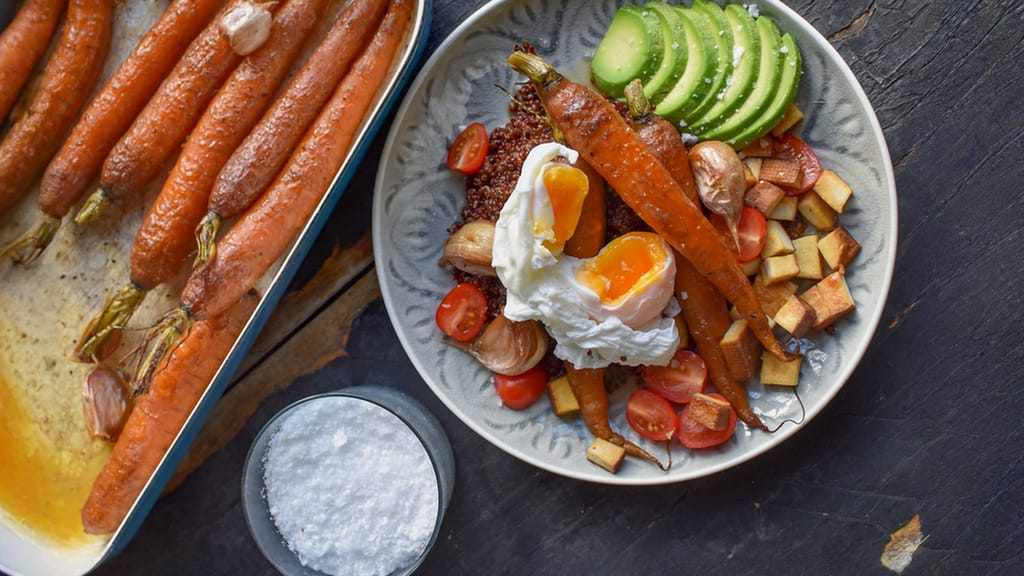
Roasted carrots with a fried egg, tofu and avocado
Roasted carrots with a fried egg, tofu and avocado — a hearty brunch with pan-fried tofu
You can eat tofu raw straight from the package, because the soy milk is cooked during production. Just drain it, rinse it and pat it dry if needed. Silken tofu is commonly used raw in desserts and dressings, and smoked tofu on sandwiches. Packaged tofu is a finished product, so you cook it mainly for flavor and texture. Keep opened tofu in the fridge and use it within a few days.
Tofu is curdled soy milk, while tempeh is whole fermented soybeans pressed into a block. That makes tofu smooth, neutral and watery, while tempeh is coarse, nutty with a slight bitterness, and holds its shape on its own. Tempeh has more protein and fiber because nothing is removed from the beans, but you can't mask its strong flavor with a marinade as easily as with tofu.
Plain tofu contains no gluten. It is made only from soybeans, water and a coagulant. Watch out for flavored and marinated versions, though: they often contain soy sauce, which is traditionally made with wheat. On a gluten-free diet, buy unflavored tofu and season it with tamari labeled gluten-free. If you have celiac disease, look for a "gluten-free" label on the package.
The closest substitute for firm tofu is tempeh (if you're staying with soy) or seitan (a similar texture without soy). With a soy allergy, reach for seitan, roasted chickpeas or halloumi, if dairy isn't a problem. In desserts and sauces, you can replace silken tofu with blended soaked cashews or thick plain yogurt.
Yes, tofu gets crispy in an air fryer in 12–15 minutes at 200°C (400°F). Toss pressed cubes in a tablespoon of starch and a teaspoon of oil, spread them in a single layer in the basket and shake the basket halfway through. Add the sauce only after cooking, otherwise the crust turns soft.
Yes, you can make homemade tofu from soy milk and a coagulant such as nigari or lemon juice. Heat unsweetened soy milk to about 75–80°C (167–176°F), stir in the dissolved coagulant, leave it to curdle for 10–15 minutes, then press the curds in cheesecloth for 15–30 minutes. Store-bought soy milk must have no additives and be thick enough, otherwise it won't curdle.
One recipe worth heating the oven for, one tip, and one deal from the shop. Nothing else.