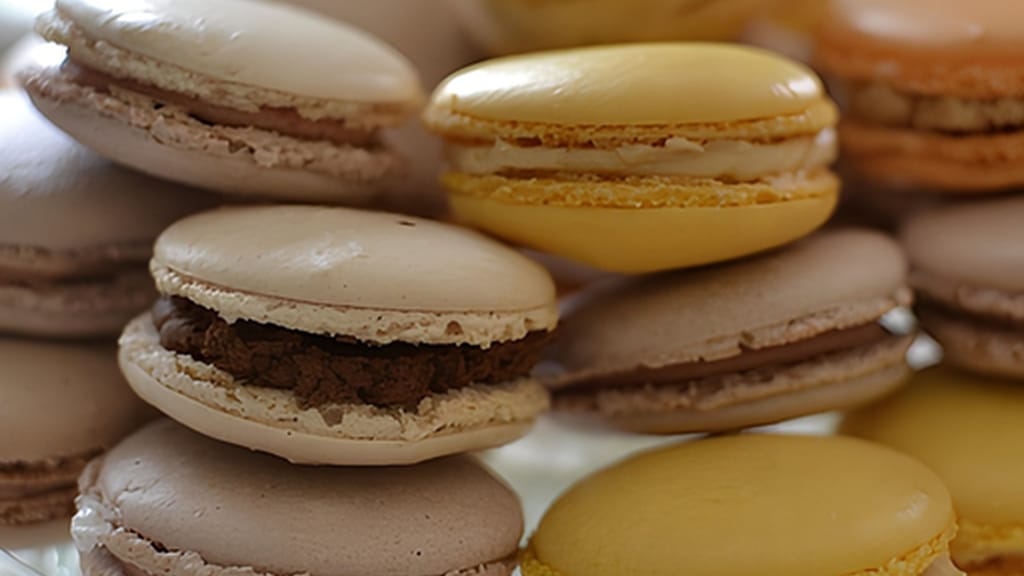
White chocolate and coffee cream - great in macarons and beyond
Whipped White Chocolate Ganache: Ratio, Chilling Time and Why It Splits
Updated Oct 17, 2026
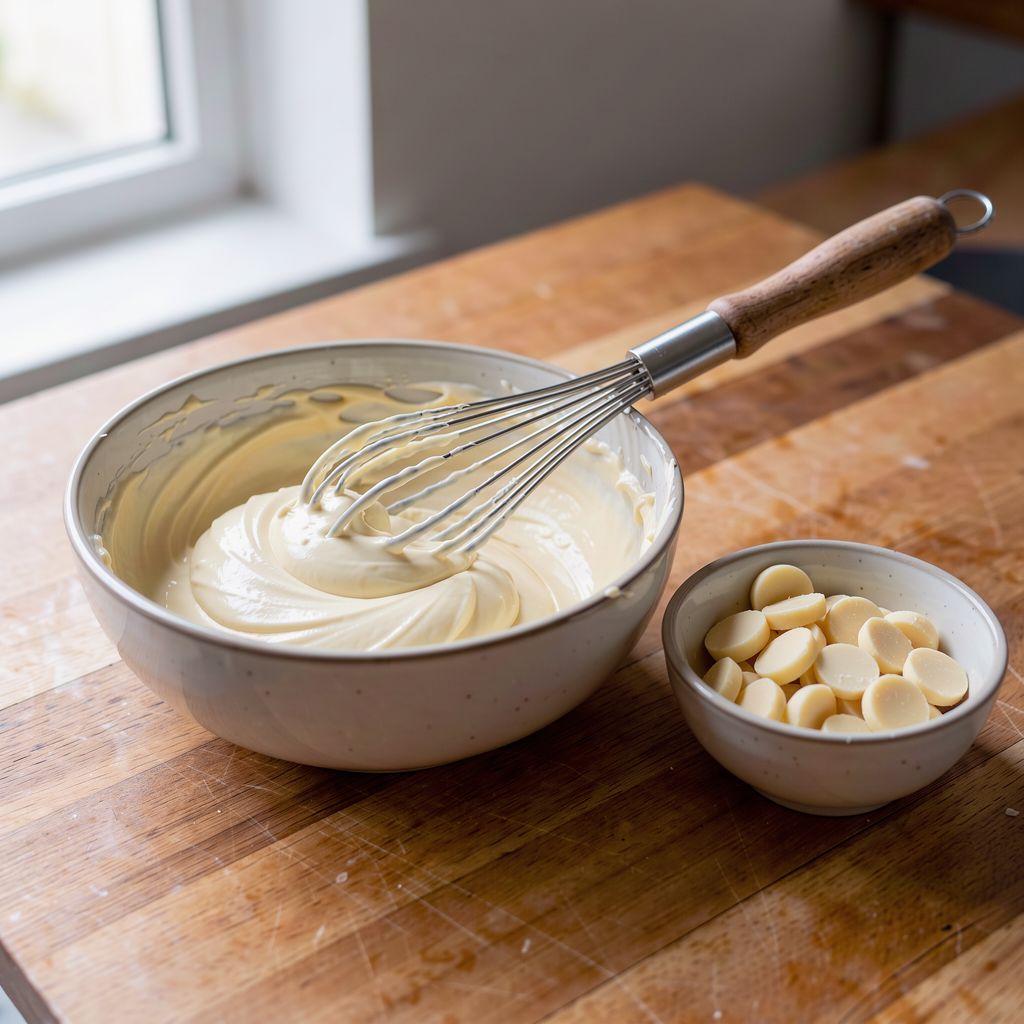
Whipped white chocolate ganache is made from chocolate and cream in a ratio of roughly 1 : 2.2. You chill the mixture in the fridge overnight, then whip it briefly into a thick, fluffy cream. It's lighter than buttercream, holds its shape on a cake and in a piping bag, and tastes like white chocolate ice cream. It can let you down in two ways, though: if you don't chill it long enough, it stays runny, and if you whip it just a few seconds too long, it turns grainy. Here you'll find ratios for white, ruby, milk and dark chocolate, the full method, cues for when to stop whipping, and what to do when the cream goes wrong.
Whipped ganache is a ganache with more cream than the classic kind, which you whip into a cream after chilling. Classic ganache for coating cakes or filling pralines contains the same amount of chocolate as cream or more, and sets into a firm mass. Whipped ganache has roughly 1.6 to 3 times more cream than chocolate. That makes it light, paler and a bit like whipped cream, only more stable and more chocolatey.
Classic ganache: a chocolate-to-cream ratio of 1 : 1 to 2 : 1, thick, for coating, drips and truffles. The ratios are covered in the article Chocolate Ganache: Ratios, Method and Uses.
Whipped ganache (French *ganache montée*): a ratio of 1 : 1.6 to 1 : 3, fluffy, for cakes, cupcakes, macarons and dessert cups.
The method differs too. You work classic ganache warm or lukewarm. Whipped ganache has to be chilled so that the cocoa butter in it crystallises. Only then can it hold the air you whip into it.
How much cream a chocolate can carry depends on how firmly the ganache sets once chilled: the firmer it sets, the more cream it can take. Dark chocolate has plenty of cocoa butter and firm cocoa solids and little sugar, so it sets the firmest and can take up to three times its weight in cream. White, milk and ruby chocolate contain a lot of sugar and milk powder, and the milk fat softens the cocoa butter. They set more softly and get less cream. Ratios are by weight (chocolate : cream with 33–35% fat):
Dark chocolate 55–70%: 1 : 2.7 to 1 : 3, for example 150 g chocolate and 450 g cream.
White chocolate: 1 : 2 to 1 : 2.5. The ideal is 1 : 2.2, for example 200 g chocolate and 440 g cream.
Milk chocolate: 1 : 2 to 1 : 2.3, for example 200 g chocolate and 440 g cream.
Ruby chocolate: 1 : 1.6 to 1 : 2. The ideal is 1 : 1.8, for example 200 g chocolate and 360 g cream. In practice it's recommended to give ruby a little less cream than white.
Add 4–5% glucose syrup or invert sugar of the total weight of the cream, which is about 25–30 g per 640 g of mixture. They make the cream smoother and more supple.
If you need a firmer cream, say for the sides of a cake or a tall, multi-tier cake, go toward the lower end of the range (white 1 : 2). For a dessert cup, where the cream should be airy like a mousse, go toward the higher end (white 1 : 2.5). In practice, the difference between "holds a decoration" and "melts on the spoon" plays out between these values.
You need real white chocolate with a high share of cocoa butter and cream with 33–35% fat. Cocoa butter firms the cream up as it chills. Without it, ganache won't set, even if you leave it in the fridge for two days.
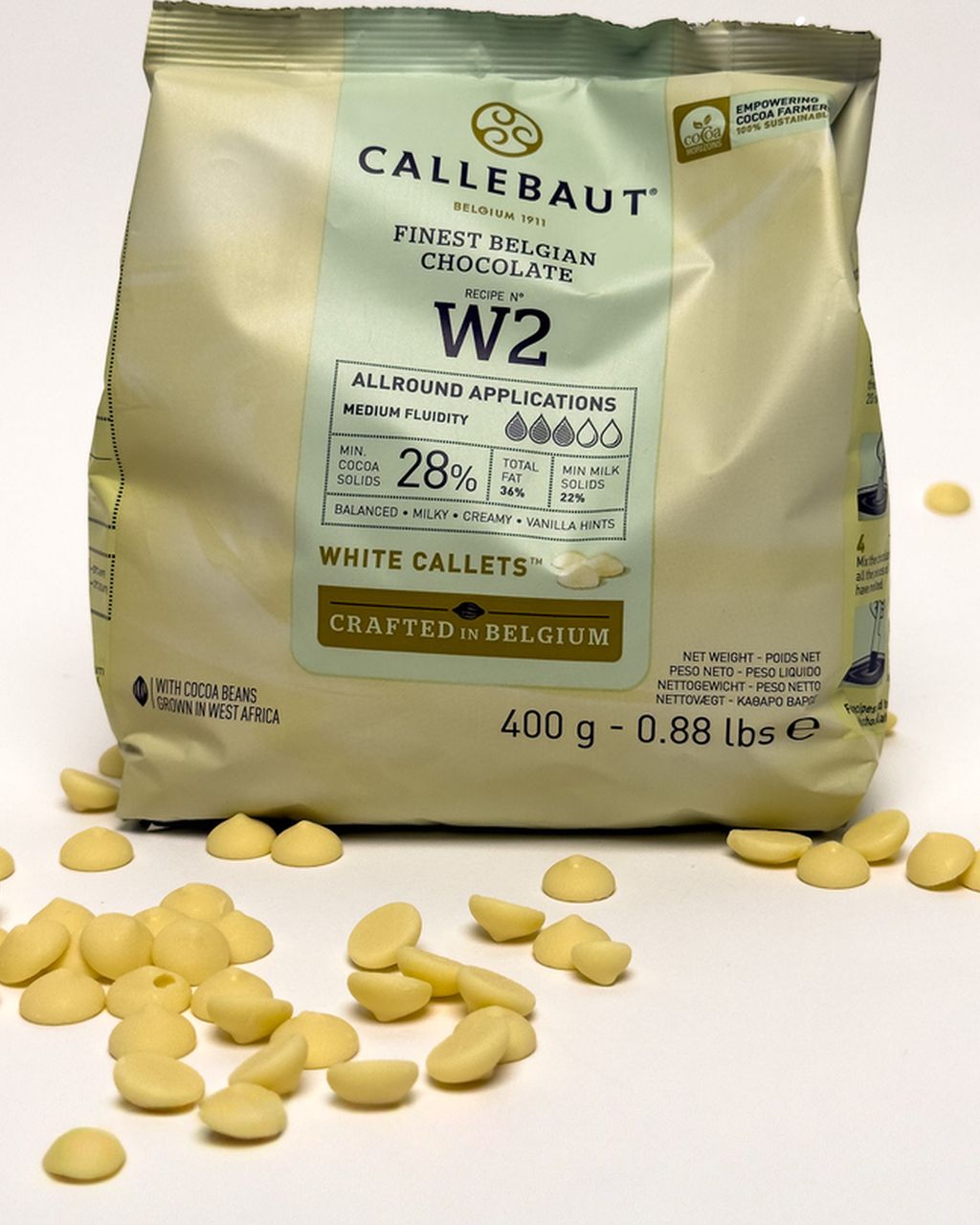
Pastry white chocolate in callets (e.g. Callebaut W2): according to the manufacturer it contains 35.8% fat, of which 29.5% is cocoa butter. It sets reliably and tastes milky, not overly sweet. The callets also melt evenly, so there's no need to chop them.
Supermarket bar white chocolate: works if cocoa butter is in the ingredients and there's no other vegetable fat. It tends to be sweeter and sets a little less firmly, so lean toward the 1 : 2 ratio.
White coating (compound or confectionery coating): don't use it. Instead of cocoa butter it usually contains hardened vegetable fat, which crystallises differently, so the cream either won't whip or turns greasy. You can spot it from the ingredients: instead of cocoa butter, the main fat is vegetable (e.g. palm). Be careful, though: even real chocolate may contain up to 5% of a few permitted vegetable fats (e.g. palm or shea). The label then says "contains vegetable fats in addition to cocoa butter". For ganache, choose chocolate without this label.
You can find a selection of white chocolates for bakers on the page white chocolate for cooking and baking.
Cream: use whipping cream with 33–35% fat. Cooking cream with 12% fat won't hold up and the cream stays runny. Boxed vegetable whipping cream (a whipped cream substitute) contains stabilisers and sugar, and you won't get a good ganache out of it.
The method has seven steps: split the cream, heat the hot portion, combine it with the chocolate, blend, add the cold cream, chill ideally for 12 hours, then whip. The full method for 200 g white chocolate and 440 g cream:
Split the cream. Put about a third (150 g) in a saucepan and keep the rest (290 g) in the fridge.
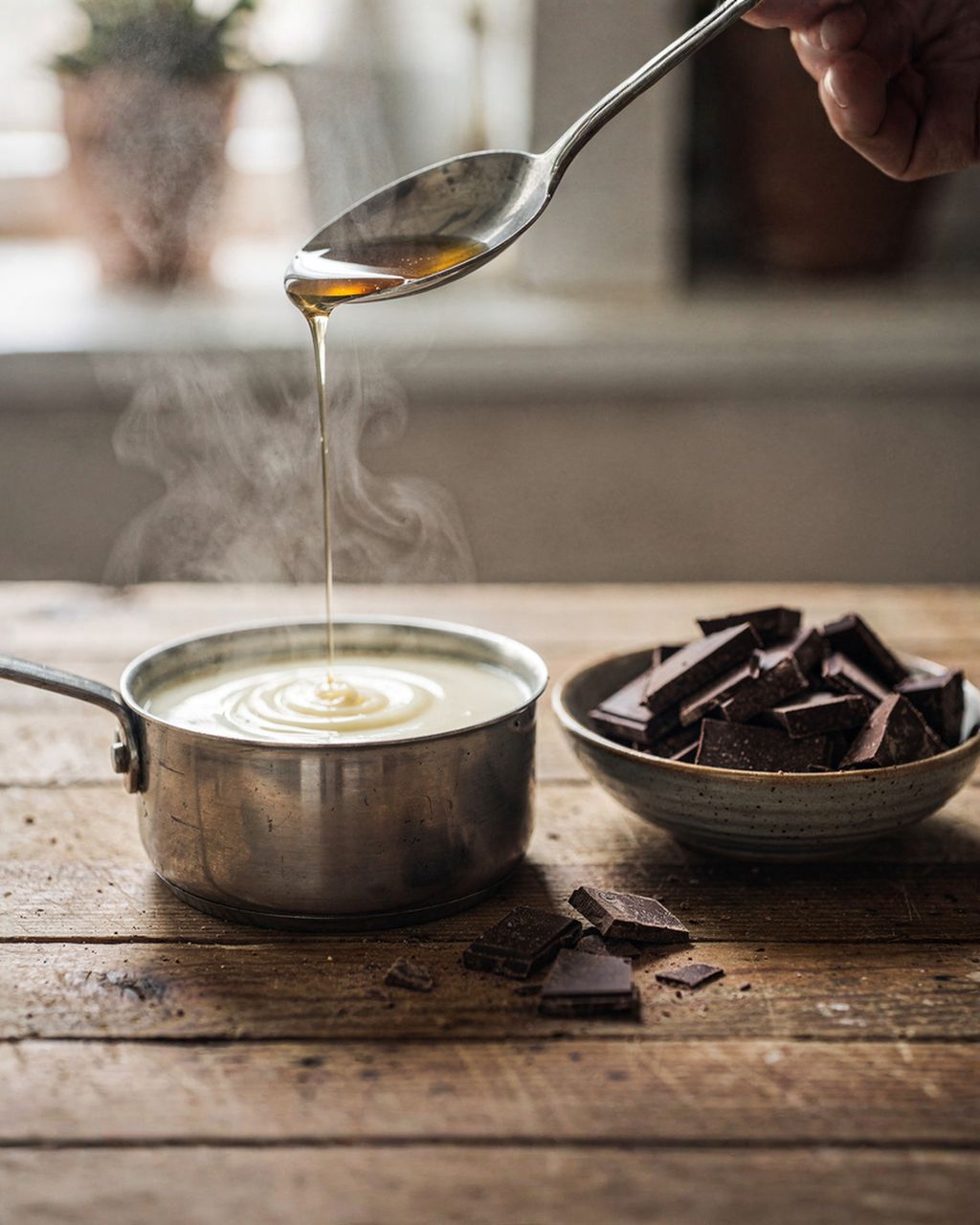
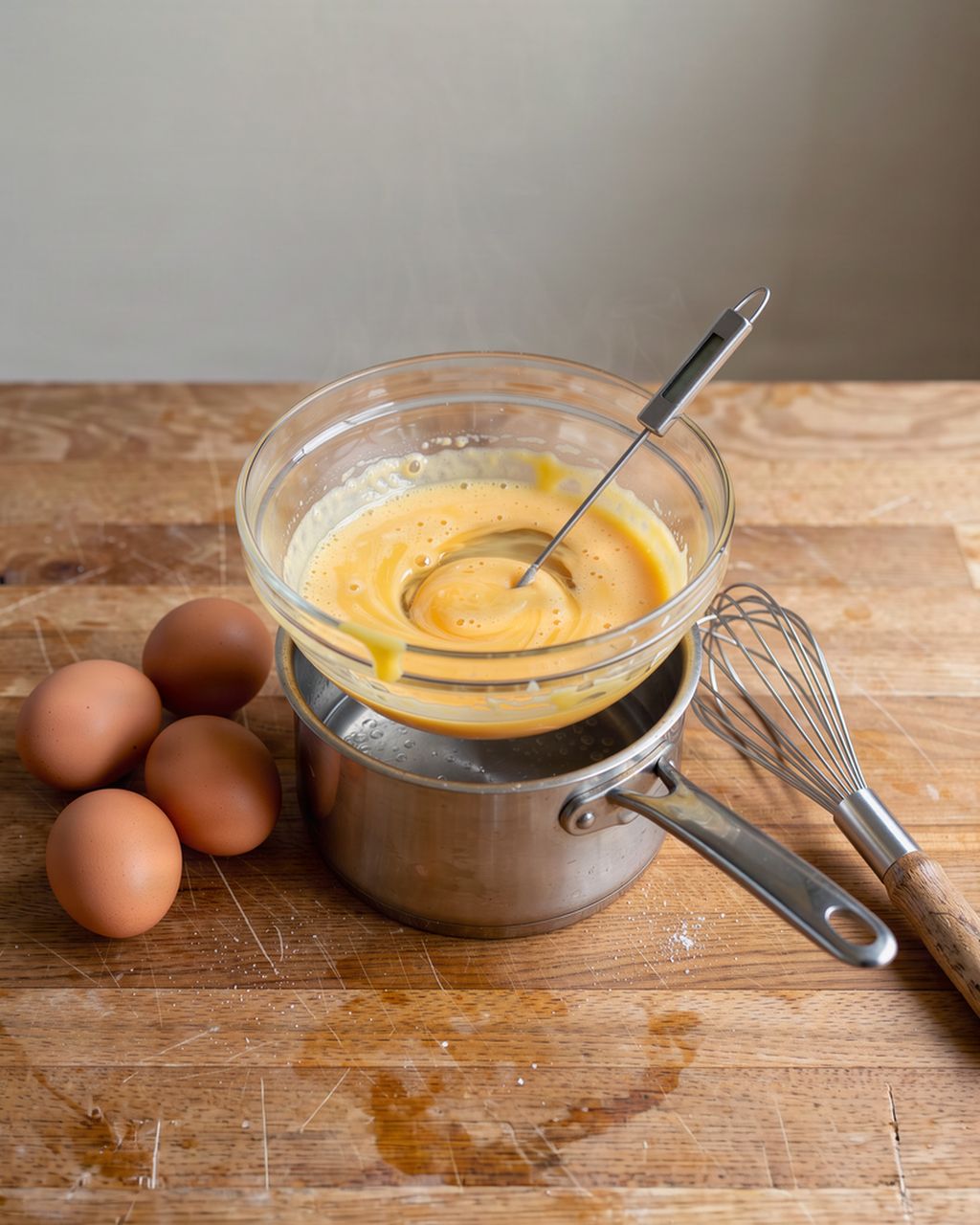
Heat the hot portion. Add 25 g glucose syrup or invert sugar and heat to 80–85 °C (176–185 °F). The first small bubbles appear at the edge, but it isn't boiling yet.
Combine with the chocolate. Put the chocolate in a tall container and pour the hot cream over it in three batches. After each batch, stir with a spatula from the centre outward until you get a glossy, smooth mass.
Blend. Use a stick blender for 30–60 seconds with the head submerged to the bottom so no air gets into the mixture. This creates a firm emulsion.
Add the cold cream. When the base is at 35–40 °C (95–104 °F), pour in the rest of the cold cream and blend briefly again. The cold cream cools the mixture quickly and doesn't overheat the chocolate.
Cover and chill. Lay cling film directly on the surface to stop a skin forming, and leave the container in the fridge at 4–5 °C (39–41 °F), ideally for 12 hours and at least 6–8 hours (for white and ruby, preferably overnight).
Whip. Whip the ganache straight from the fridge on medium speed, and only until the whisk marks are visible (see below).
If you want to vary the flavour, try white chocolate and coffee cream for macarons. For a lighter, spoonable version without whipping the ganache, white chocolate mousse is a good fit.
White chocolate and coffee cream - great in macarons and beyond
White chocolate and coffee cream for macarons and cakes
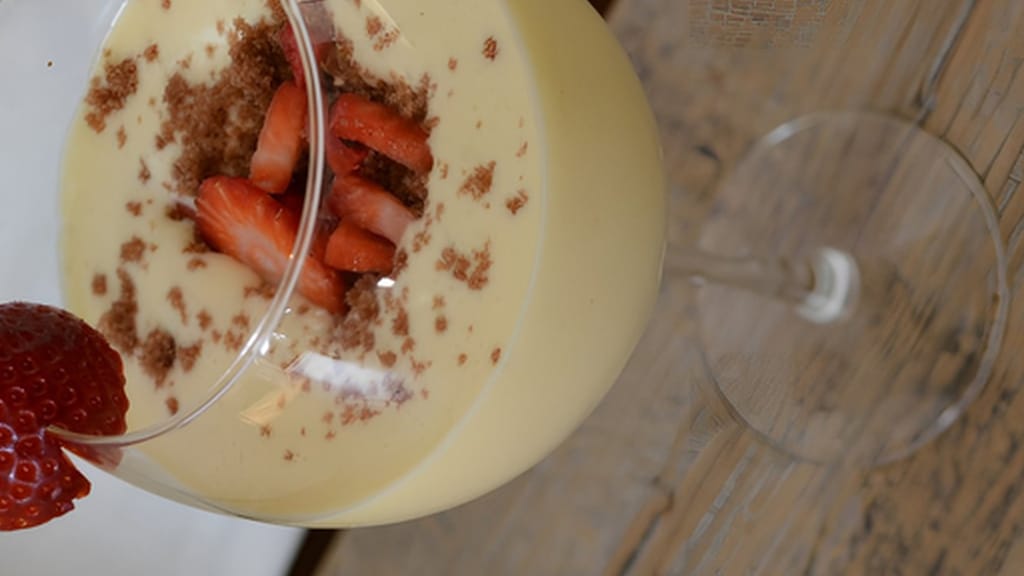
White chocolate mousse – light and fluffy
White chocolate mousse: a delicate dessert cup
Cocoa butter needs roughly 12 hours in the cold to set into crystals. Only then can the ganache hold the air you whip in. After an hour in the fridge it feels cold, but the fat in it is still liquid or only half set. If you whip it this early, it either won't rise at all or collapses straight away and starts to release cream.
Minimum: 6–8 hours. That's enough for dark ganache, but for white and ruby it's a risk.
Ideal: 12–24 hours at 4–5 °C (39–41 °F). Make the ganache in the evening and whip it in the morning.
Maximum: the unwhipped base keeps in the fridge for 3–4 days.
You can't speed it up with the freezer. Ganache that's chilled too fast is cold only at the edge, stays soft in the middle, and the crystals don't form evenly. You have to chill it overnight, even if it's inconvenient. If you need a cream today, make Swiss meringue buttercream instead.
Whip for 1–3 minutes on medium speed and stop as soon as the whisk marks hold on the cream and the peak on the whisk bends just slightly. With white chocolate there are only about 10–20 seconds between "still runny" and "already grainy". So don't whip on top speed, and don't walk away.
How to tell:
Too early: the cream runs and the whisk marks vanish immediately.
Just right: the cream still has a satin sheen, is thick, the whisk marks hold and the peak bends like whipped cream for cake decorating.
Too late: the cream turns dull and grainy, stiff as butter, and droplets of liquid appear on the sides of the bowl.
A pastry chef's tip: stop a bit sooner than seems necessary. Ganache keeps thickening as you spread it with a spatula or squeeze it in a piping bag. Warm hands and movement will finish whipping it.
Keep the base to be whipped in the fridge until the last moment.
The method is similar to whipping cream. If you're wondering why cream sometimes refuses to whip, see the article why cream won't whip: 6 causes.
Both work equally well: they make the cream smoother, the emulsion more stable and the ganache stays supple longer. They're liquid sugars that bind water and stop the sugar from the chocolate from crystallising again. The amount is the same for both: 4–5% of the cream's weight, which is about 25–30 g per 600–650 g of mixture.
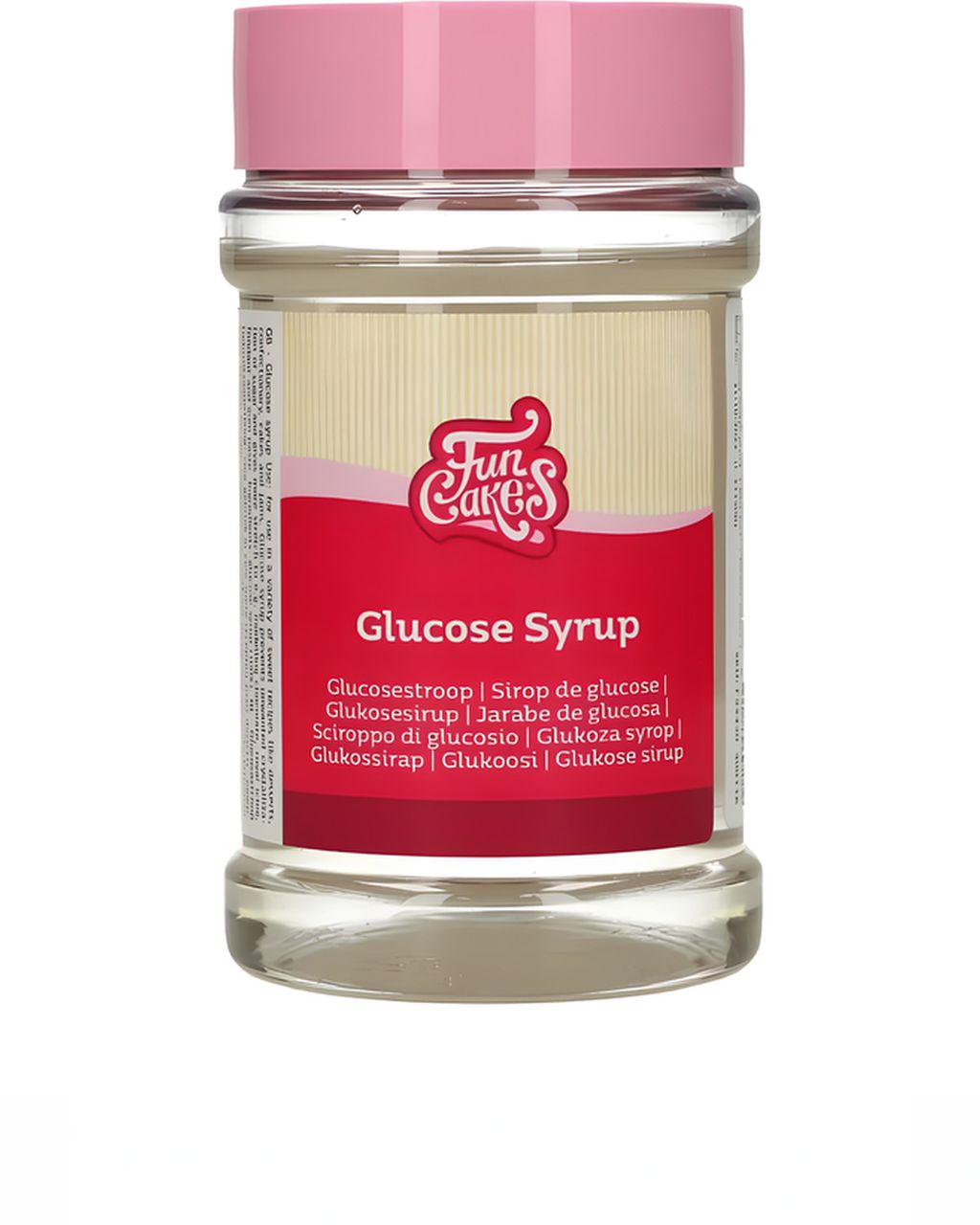
**FunCakes glucose syrup:** it's less sweet than sugar. With white chocolate, which is quite sweet on its own, that's an advantage. It's thick, so weigh it out with a wet spoon.
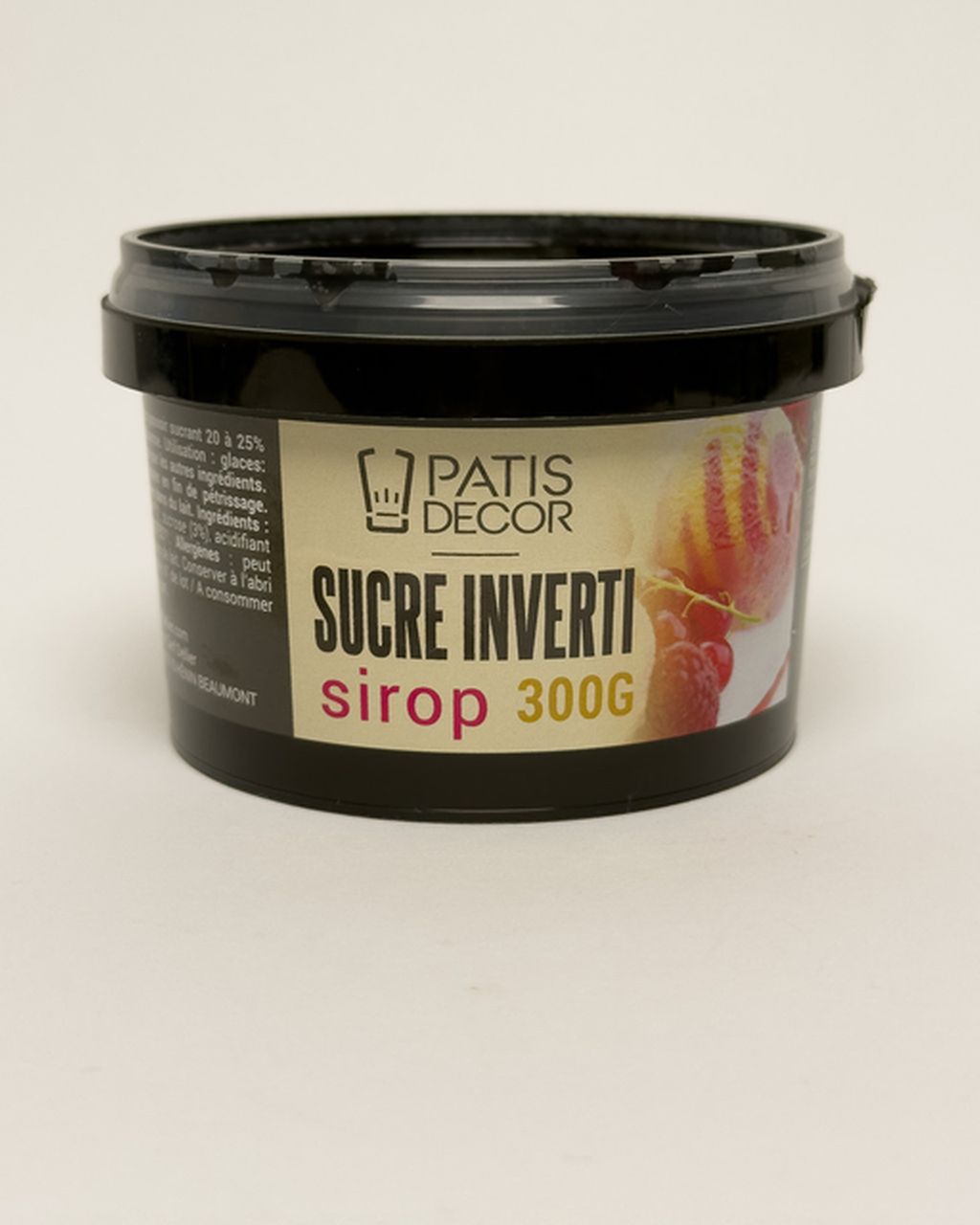
**Liquid invert sugar:** it's sweeter and holds moisture better, so the cream doesn't dry out in the fridge. Add it if you want to make the ganache a day ahead or freeze the cake.
Honey: it can replace either, because it's a natural invert sugar. It won't hide its own flavour, though. It suits dark ganache, but it tends to overpower white.
Without liquid sugar: whipped ganache works that way too. It's just a little more prone to graininess and firms up faster.
The article Glucose in Ganache: Why Add It and When to Reach for Invert Sugar compares the two sugars in detail. How syrup differs from powder is explained in the article glucose syrup vs. dextrose.
In practice, ruby chocolate gets a little less cream than white, roughly 1 : 1.8, and its pink colour easily fades in cream.
After heating, let the cream for ruby cool briefly to 70–75 °C (158–167 °F).
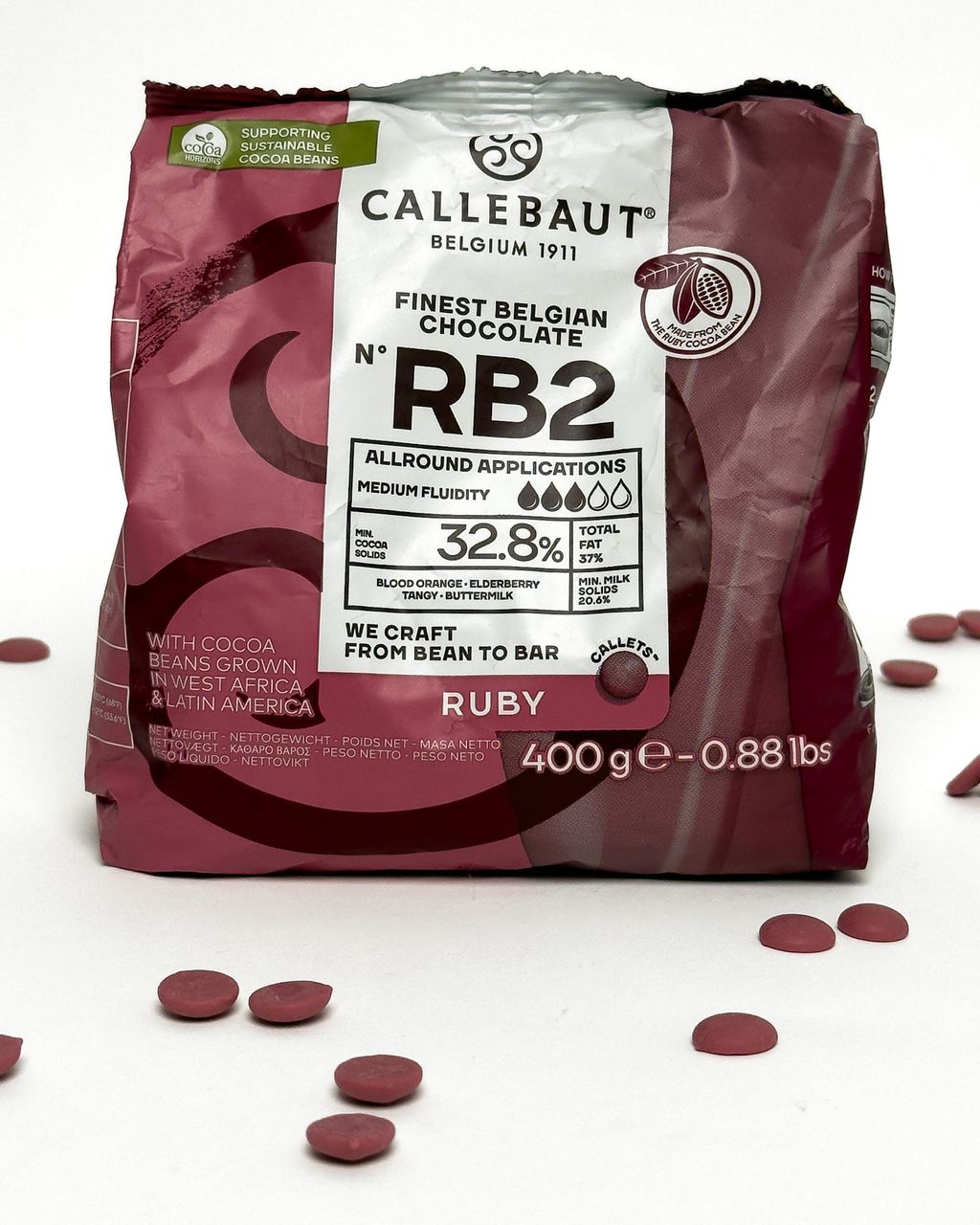
Ruby RB2 callets contain 36.8% fat according to the manufacturer and taste fruity and tart. That's why a cream made from it won't be overly sweet.
The colour of ruby chocolate depends mainly on acidity. The milk component of the cream shifts it, and the pink fades. A little acid helps keep it: fruit purée, a drop of lemon juice or citric acid. If you want a deeper shade, add a drop of red or pink gel colour.
Read more about what ruby chocolate is and how to work with it in the article Ruby Chocolate: What It Is and How to Work With It.
Add gel colour to the warm ganache while blending, not to the finished cream. If you colour the cream after whipping, you have to mix it for longer and will almost certainly overwhip it.
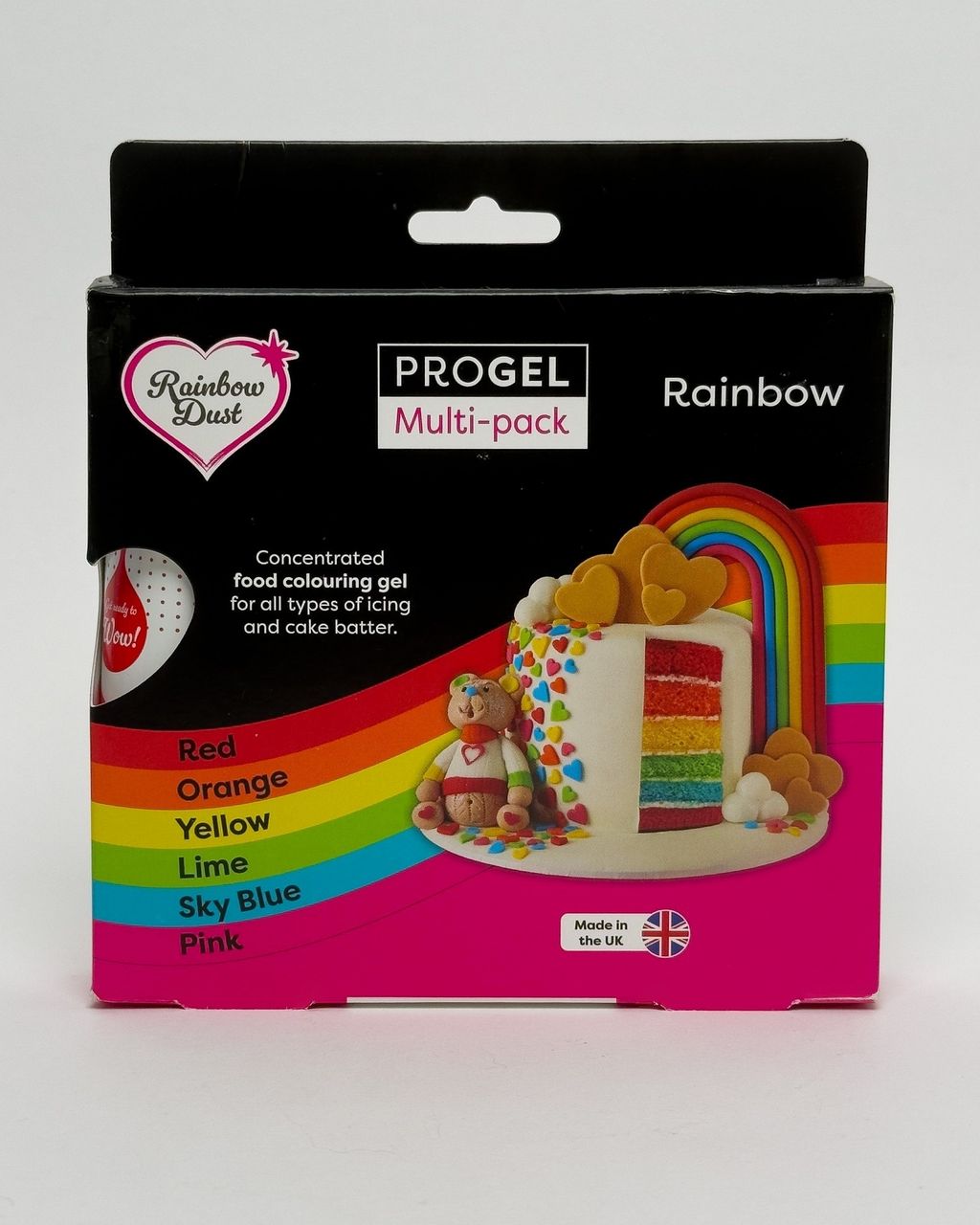
Gel colour, not powder or liquid from a dropper. Gel colour is concentrated, so a few drops are enough and you won't thin the cream. You'll find six basic shades in the ProGel Rainbow Set of 6. You can mix pastel and muted tones from them too.
Add the colour a little at a time on the tip of a toothpick. Overnight in the fridge the colour deepens, and after whipping it lightens again thanks to the air.
White chocolate is a yellowish ivory. Blue turns green in it, and pink shifts toward salmon. If you want a pure white cream, counter the yellow tint with a tiny amount of violet gel colour. The rainbow set doesn't include violet, so buy it separately or mix it from a drop of pink and blue.
You need oil-based colours for chocolate when you're colouring the chocolate itself. Ganache contains water from the cream, so gel colour mixes into it without a problem.
The most common cause of grainy whipped ganache is overwhipping: the fat separates from the water and you get a mass similar to butter. Possible causes:
Overwhipping: you whip for longer than needed, or on top speed.
A base that's too warm: the ganache wasn't chilled enough, or the bowl or your hands warmed it in a hot kitchen.
Overheated chocolate: the cream boiled when combined, or the chocolate was melted directly on the hob. White chocolate then clumps before you even start whipping.
A broken emulsion: the hot cream went onto the chocolate all at once and the mixture was only stirred with a spoon instead of blended with a stick blender.
You rescue grainy whipped ganache with warmth or cold cream, never with more whipping. What to choose depends on how badly the cream has split:
Only slightly grainy: add 2–3 tablespoons of cold liquid cream and gently fold it in with a spatula. Don't whip it again.
Very grainy but still holding together: take about a quarter of the cream, warm it in a bain-marie or the microwave to 35–40 °C (95–104 °F) until liquid, then fold it back into the rest with a spatula.
Completely split and releasing liquid: warm the whole ganache to 35–40 °C (95–104 °F), blend it smooth with a stick blender and chill it overnight again. It's a nuisance, but you won't have to throw the cream away.
For general advice on rescuing ganache that split while still warm, see the article Why Ganache Splits and How to Fix It.
If whipped ganache won't thicken, it's almost always under-chilled or doesn't have enough chocolate. This approach will help:
Has the base chilled for less than 8 hours? Stop whipping, put it back in the fridge and try again the next day. The cream isn't ruined, it just isn't ready yet.
Still runny after a night in the fridge? Then it doesn't have enough chocolate. Warm it to 40 °C (104 °F), mix in melted chocolate equal to 10–15% of the original chocolate weight (for 200 g, that's 20–30 g), blend it and chill it again overnight.
Which cream do you have? You can't whip a stable cream from cooking cream. With 30% whipping cream the result tends to be softer and less stable; next time use 33–35%.
Is your kitchen over 24 °C (75 °F)? Put the bowl and whisks in the fridge for 15 minutes and whip in the coolest spot you have.
For a tall cake or for summer, you can firm up whipped ganache with gelatine. Soak about 2 g of gelatine per 200 g of chocolate in water, then dissolve it in the hot cream. The cream will then hold sharp edges and keep longer out of the fridge.
Whipped ganache suits cakes as both a filling and a coating cream, as well as cupcakes, macarons and dessert cups. It doesn't suit use under fondant or for drips, because it's too soft for that. What to put under fondant is covered in the article Fondant Cakes: Which Cream to Use Underneath.
Cake: use it as a filling between layers and for a thin coat. Take a cake that's already filled and chilled out of the fridge about 15 minutes before you coat or decorate it. The cream inside softens a little in that time, so the next layer spreads more easily and doesn't crack. How to get straight sides and sharp edges is described in the article how to coat a cake with cream or ganache.
Cupcakes and piped decorations: the cream holds its shape well from a piping tip. Leave it slightly under-whipped, though, because it firms up further in the bag.
Macarons: at a 1 : 2 ratio the cream is firm enough to support the macaron shells. You'll find more fillings in the article Macaron Fillings.
Chocolate cake: whipped ganache made with dark chocolate is a lighter alternative to a dense cream. More ideas are in the article decorating a chocolate cake.
Use the whipped ganache, and any cake made with it, within 2–3 days. Store the cake covered in the fridge so the cream doesn't absorb other smells.
Yes, whipped ganache can be frozen for up to a month, either as an unwhipped base or as a finished cake. Thaw it slowly in the fridge overnight. Thawing it quickly in a warm place would split the cream. Once thawed, simply stir the unwhipped base and, if needed, blitz it briefly with a stick blender before whipping.
At a room temperature of 20–22 °C (68–72 °F), whipped ganache holds up fine for about 1–2 hours. After that it starts to soften and lose its shape. If the cake needs to sit out longer or in a warm room, stabilise the cream with gelatine or choose a different cream. You'll find an overview in the article [Cake Fillings and Frostings That Hold Up Outside the Fridge](/cs/articles/krem-do-dortu-mimo-lednici).
You can whip ganache with a hand whisk, a hand mixer or a stand mixer. With a hand whisk, a batch made with 200 g of chocolate takes 3–5 minutes and the cream is hard to overwhip, so it's the safest route for a first attempt. A hand mixer on medium speed is the most comfortable option. In a stand mixer the large whisk works fast, so stop it and check the cream every 15–20 seconds.
Yes. Purée can replace up to 20–25% of the cream, and you can add 1–2 tablespoons of liqueur per 200 g of chocolate (about 640 g of base). Purée contains less fat than cream, so with a larger amount the ganache is harder to whip. That's why you should mix the purée into the warm emulsion together with the cold cream, not into the whipped cream.
One recipe worth heating the oven for, one tip, and one deal from the shop. Nothing else.