Want tips like this every Thursday?
One recipe worth heating the oven for, one tip, and one deal from the shop. Nothing else.
Dextrose (Grape Sugar): How It Differs from Glucose Syrup and When to Use It in Baking
Updated Oct 17, 2026
Grape sugar is pure glucose in powder form, and in stores you'll usually find it sold as dextrose. It's about a quarter less sweet than regular sugar, it browns sooner in the oven, and it lowers the freezing point of ice cream more. That's why pastry chefs add it when they want less sweetness and a softer, smoother texture. In this guide you'll learn how dextrose differs from glucose syrup and invert sugar, how much to use in ice cream and ganache, and when one of the syrups will serve you better.
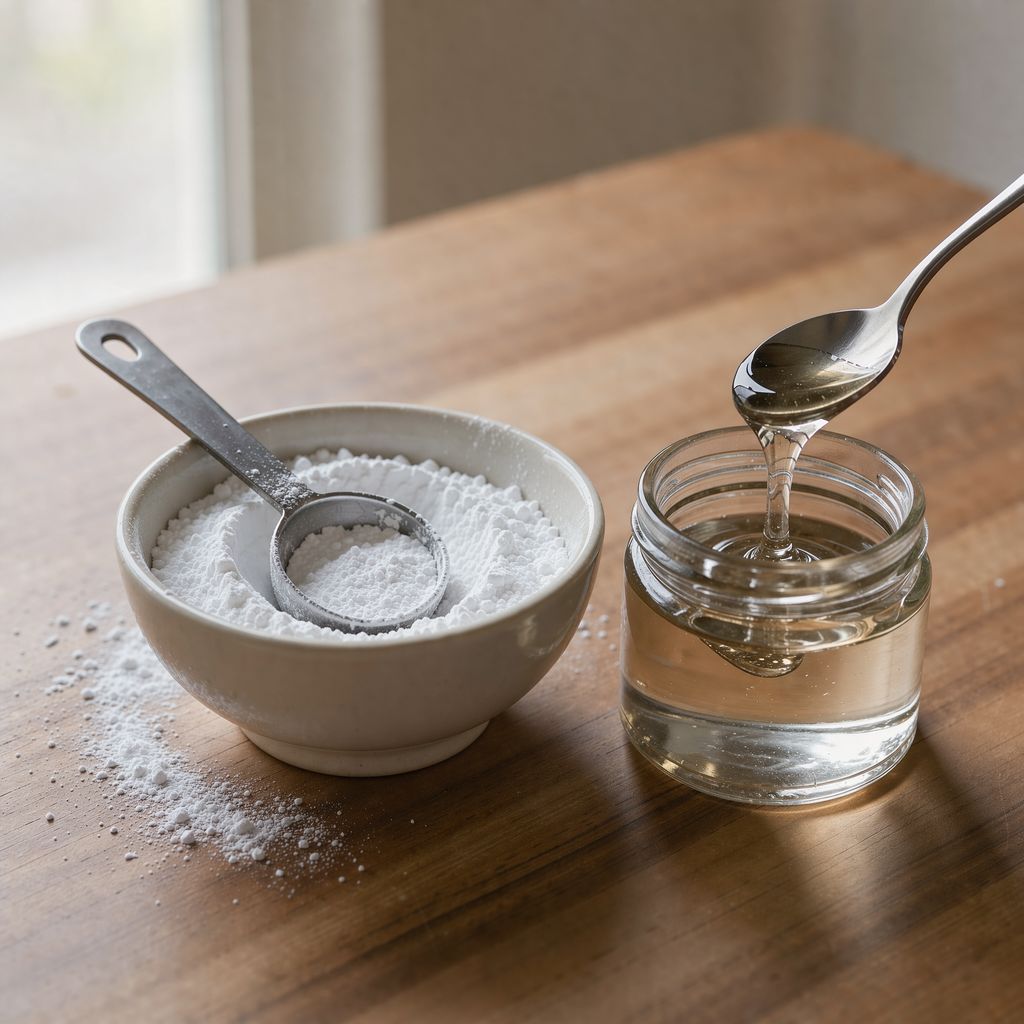
Grape sugar is glucose, the simplest sugar, in the form of a fine white powder. The names grape sugar, dextrose and glucose all refer to the same substance. They differ only in who is doing the naming: the pharmacy and sports nutrition world say dextrose, a chemist says glucose, and your grandmother says grape sugar.
What it's made from: starch, most often from corn or wheat. Enzymes break it down all the way to single glucose molecules, which are then crystallized and dried.
What you're buying: usually dextrose monohydrate. It contains about 9% bound water, so 100 g of powder equals roughly 91 g of pure glucose.
Why "grape": glucose was first isolated in the 18th century from raisins and grapes. It hasn't been made from grapes for a long time, though.
Ordinary beet sugar (sucrose) is glucose and fructose joined together. Dextrose is therefore "half" of regular sugar, which is exactly why it behaves differently in dough, cream and the freezer.
All three are largely glucose, but each comes in a different form: dextrose is a dry powder, glucose syrup is a thick syrup made from broken-down starch, and invert sugar is a liquid mixture of glucose and fructose. That determines how sweet they are, how much water they bring and what they do to crystals.
Sweetness and PAC (the ability to lower the freezing point of ice cream) are given relative to regular sugar = 100:
Dextrose (grape sugar): a powder with only about 9% bound water (monohydrate); pure glucose; sweetness about 70–75; PAC about 190, so it lowers the freezing point almost twice as much. Best for ice cream and sorbets, where you want softness without over-sweetening, and for yeast doughs.
Glucose syrup: a thick, clear syrup with about 20% water; glucose, maltose and longer starch chains; sweetness about 40–50; PAC about 80–90. Best for caramel, fondant, glazes and modeling chocolate, anywhere you want no crystals and do want shine and elasticity.
Invert sugar: liquid to paste-like, about 18–20% water; glucose + fructose (split sucrose); sweetness about 120–130; PAC about 190. Best for ganache, pralines and gingerbread, anywhere a dessert should stay tender for as long as possible.
On the label, look for it as invert sugar syrup; a product labeled liquid invert sugar may be only partly inverted, and it will be less sweet and soften less.
We cover liquid glucose in detail in Glucose Syrup: What It Is and What to Use It For. Here the question is when the powder is enough and when a syrup is the better choice.
Dextrose is about 70–75% as sweet as regular sugar. Depending on the source, the range given is 60–80%. So if you replace 100 g of sugar with 100 g of dextrose, the dessert will taste noticeably less sweet but will have the same "bulk" in dry solids.
That's its main magic: you add sugar mass (texture, softness, volume) without over-sweetening. Typically it replaces 20–30% of the sugar in a recipe, not the whole amount.
Two things you'll notice on your tongue:
It feels cool. Dextrose absorbs heat as it dissolves, which is why dextrose tablets have that fresh, cooling feel. You'll notice it in a dry filling or topping.
The sweetness hits fast and fades fast. The flavor is "cleaner" and shorter than with beet sugar. That's why in fruit sorbets it comes across more as a boost to the fruit than as sweetness.
Dextrose is what's known as a reducing sugar. It reacts with proteins (the Maillard reaction) at a lower temperature and sooner than sucrose, so baked goods made with it turn golden faster and darker. Regular sugar first has to break down into glucose and fructose, through heat or acid, before it fully joins in the browning.
What this means in practice:
Want a richer crust on brioche, Easter bread (mazanec) or other yeast-dough bakes? A few percent dextrose in place of regular sugar (for example 10–20 g per 500 g of flour) will deepen it.
Don't want dark edges on a pale sponge cake or cookies? With dextrose, lower the oven by 10 °C (about 18 °F) or keep an eye on the last five minutes.
Yeast loves it. It ferments glucose right away, with no intermediate step. The dough gets going a hair faster, but with an ordinary vánočka (Czech Christmas braided bread) or sweet buns the difference is small. Don't expect miracle rises from it.
Dextrose lowers the freezing point of ice cream almost twice as much as regular sugar while being less sweet. Ice cream made with it stays softer and smoother straight from the freezer without being overly sweet. That's why it's a favorite trick of home and professional ice cream makers alike.
How to do it:
Replace 20–30% of the sugar in the recipe with the same weight of dextrose. So for 150 g of sugar, use 110 g sugar + 40 g dextrose.
Dissolve it in the warm base together with the rest of the sugar. In cold milk it dissolves more slowly than beet sugar.
Don't overdo it. Above roughly 40% replacement, the ice cream gets too soft, melts quickly and tastes flat.
It works the same way in fruit sorbets, helping keep fruit purée from turning into a block of ice. It's a good fit for a homemade plum sorbet with cardamom or a salted caramel ice cream, where the caramel already supplies the sweetness.
Don't have dextrose? Invert sugar has almost the same PAC, so it lowers the freezing point similarly, but it's sweeter. The ice cream will be soft, just sweeter, so cut back on regular sugar too. Glucose syrup does almost the opposite: it gives ice cream body, chewiness and slower melting, but it's less help against hardening. For overall ratios and the method, see Homemade Ice Cream with an Ice Cream Maker.
In ganache, dextrose binds water, smooths the texture and extends the shelf life of the filling. Glucose syrup and invert sugar do the same thing more conveniently, though, because they're liquid and stir in right away. That's why praline recipes mostly call for them.
Why sugar belongs there at all: ganache is an emulsion of chocolate and cream, and the water from the cream is what spoils it and what lets it dry out. Sugars bind that water. The filling then lasts longer and doesn't dry out.
How much: usually 5–10% of the weight of the cream. For 200 g of cream, that's 10–20 g.
Dextrose: dissolve it in the hot cream (around 80 °C / 176 °F) before pouring it over the chocolate. Undissolved crystals would be gritty in the filling.
Invert sugar: binds the most water of the three. If you want pralines that last for weeks, it's the best choice. Dosage is covered in detail in Invert Sugar Instead of Sugar.
Glucose syrup: adds shine and elasticity, and is the least sweet. Ideal for ganache used to coat a cake.
For ratios for specific fillings, see Praline Fillings: Ganache, Caramel and Fruit Pastes.
Dextrose prevents crystallization only partly: in small amounts it gets in the way of sucrose crystals, but at high concentration it crystallizes itself, which is why glucose syrup is the better fit for fondant and caramel. Honey crystallizes for the same reason: it contains around 30% glucose, which dissolves in water less readily than fructose.
What's happening in the pot: when you boil a sugar solution, the sucrose molecules want to line up into crystals again. Another sugar between them prevents that, because it doesn't fit into the crystal lattice. Dextrose can do this, but it dissolves in water less readily than sucrose, and in a thick syrup it forms crystals of its own as it cools.
Glucose syrup contains, besides glucose, long chains that can't crystallize at all. That's why it's the classic choice for:
caramel and caramel sauce: about 10–20% glucose syrup relative to the weight of the sugar, so the caramel doesn't turn grainy and sugary
poured fondant: the syrup keeps the crystals tiny, so the fondant stays smooth and glossy
modeling chocolate: chocolate and glucose make a pliable mass. Dextrose doesn't work here, because the mass needs a liquid syrup.
For substitutes in case you don't have glucose at home, see What to Use Instead of Glucose Syrup.
Choose dextrose when you want less sweetness and softer ice cream. Choose glucose syrup to prevent crystallization and add shine. Choose invert sugar when a dessert should stay tender for as long as possible. Specifically:
soft ice cream, less sweet: dextrose
soft ice cream, sweetness is fine: invert sugar
sorbet from tart fruit: dextrose, possibly combined with invert sugar
caramel, poured fondant, glossy glaze: glucose syrup
ganache and pralines with a longer shelf life: invert sugar, or glucose syrup
gingerbread and soft gingerbread cookies that should stay tender: invert sugar (or honey)
richer crust on yeast-dough bakes: dextrose
When swapping a powder for a syrup, account for the water. Both glucose syrup and invert sugar contain about 20% water. For 100 g of dextrose (about 91 g of pure glucose), use about 115 g of glucose syrup or about 115 g of invert sugar, and cut the liquid in the recipe by as much extra water as the syrup brings (about 15 g: the syrup carries about 23 g of water, the powder itself about 9 g). Treat this as a rounded rule of thumb. In ganache or ice cream you won't notice a small difference; in fondant and caramel you will.
You'll find all the sugars and syrups we offer for baking together in the baking sugars and syrups category.
Usually not. Dextrose works best as a replacement for part of the sugar, typically 20–30%. Swap it in completely and the dessert would be noticeably less sweet, brown faster in the oven, and an ice cream would turn too soft and melt quickly. Keep regular sugar as the base and use dextrose to fine-tune the texture.
You can find it in pharmacies, sports nutrition shops and homebrewing supply stores. Look for it under the name dextrose or dextrose monohydrate. We don't sell it. If what you're after is a softer ice cream or a more tender dessert, invert sugar or glucose syrup will do the job.
Dextrose is glucose, while fruit sugar is fructose: a different simple sugar with the same energy but different properties. Fructose is much sweeter than regular sugar, browns even faster in the oven, and dissolves in water far more easily, so it's reluctant to crystallize on its own. Glucose and fructose mixed together make invert sugar; joined in a single molecule, they make regular sugar.
Store dextrose in a tightly closed container in a dry place at room temperature. Kept dry, it lasts for years. It draws moisture from humid air and cakes into lumps. Lumps are no problem: just crush or sift them. Don't put it in the fridge, though.
In homebrewing, dextrose is mostly used for priming (carbonating) the beer in bottles, because yeast ferments it quickly and completely and it leaves no off-flavor in the beer. It's added just before bottling, roughly 5–7 g per liter depending on how fizzy you want the beer. Don't add more: too much sugar creates dangerous pressure in the bottle.
One recipe worth heating the oven for, one tip, and one deal from the shop. Nothing else.



