Chocolate peanut butter truffles
Why Ganache Splits and How to Fix It
Updated Oct 4, 2026
Why does ganache split? There are five common culprits: it overheated past about 45°C/113°F (or 40°C/104°F for white and milk chocolate), there wasn't enough liquid for the amount of chocolate, it got a temperature shock, it was mixed at the wrong temperature, or a cold ingredient got stirred in. Ganache is an emulsion of fat and water, and once that delicate balance breaks down, oil rises to the surface and the rest turns grainy. The good news: split ganache can almost always be rescued — with the right temperature, a stick blender, and a spoonful of warm liquid if needed. Below you'll find how to spot what went wrong, how to fix it step by step, and how to stop it happening next time.
Split ganache is a broken emulsion: the fat from the chocolate and cream has separated from the water, and the emulsifiers can no longer hold it together. A properly made ganache is tiny droplets of fat (cocoa butter, milk fat) dispersed in the water from the cream, held in place by emulsifiers — lecithin from the chocolate and milk proteins from the cream. That's what gives it its glossy, smooth, creamy look.
When the emulsion breaks, you'll spot it right away:
Oily ganache – droplets or a whole yellowish layer of oil glistens on top, and fat runs down the sides of the bowl.
Grainy ganache – dull and sandy-looking, more like fine curds on a spoon than a smooth cream.
Half-set and lumpy – it firms up into lumps around the edges while the centre stays warm and runny, so you can't smooth it out.
Which version you've got matters. Oily ganache usually means it overheated or there isn't enough liquid; grainy usually points to cold mixing or a temperature shock; half-set means different parts of the bowl are at different temperatures. The fix depends on which one you're dealing with.
Ganache splits for five main reasons: overheating, too little liquid for the amount of chocolate, temperature shock, incorrect mixing, and cold ingredients. Usually just one of these is enough to do it.
Overheating. Above roughly 45°C/113°F (above 40°C/104°F for white and milk chocolate), the emulsion starts to break down and the cocoa butter separates out. This typically happens when you pour boiling cream over already-melted chocolate, or heat ganache in the microwave on full power.
Too little liquid for the chocolate. Dark chocolate above 70% cocoa has a lot of cocoa solids, which "drink up" the water in the cream. A ratio that works fine with 55% chocolate won't give the fat enough water to disperse into.
Temperature shock. Chocolate straight from the fridge, lukewarm cream, or ganache put straight into the freezer — any sudden temperature jump breaks the emulsion before it's had a chance to form.
Incorrect mixing. A whisk beats air into the ganache, and over-stirring warm ganache squeezes the fat out of it. On the other hand, stirring ganache that's already cooling and setting leads to graininess.
Cold ingredients. Butter straight from the fridge, or chilled liqueur or fruit purée added to warm ganache, cools it down in just one spot and the emulsion breaks there.
Safe temperatures depend on the method:
Classic method: bring the cream to a boil and pour it over chopped, unmelted chocolate. The hot cream is cooled by the chocolate, so the mixture never overheats.
Equal-temperature method: melt the chocolate separately first, then combine the two once both are at 40–45°C/104–113°F (around 40°C/104°F for white and milk chocolate) — warm to the touch.
Once made, ganache holds its emulsion best somewhere between about 32 and 40°C (90–104°F).
White and milk chocolate ganache splits more easily because white and milk chocolate contain more sugar and milk solids and less cocoa solids, which are what hold the structure together. White chocolate has no cocoa solids at all besides cocoa butter, and milk chocolate has very little. So never melt white or milk chocolate above about 40°C/104°F, or it will start to seize — cream that's perfectly harmless to dark chocolate can easily damage these.
If you're pouring cream over chopped white chocolate, take it off the heat, let it cool slightly to around 70–80°C/158–176°F, and add it in thirds. If you melt the white chocolate first (no higher than 40°C/104°F), combine it with the cream once both are around 40°C/104°F.
Plan on using more chocolate for the same amount of cream. Where dark chocolate for a glaze needs roughly a 1:1 ratio, milk chocolate typically needs around 2:1, and white chocolate around 3:1 (chocolate : cream); for a firm truffle ganache, you can go up to 4:1.
You can rescue split ganache in five steps: check the temperature, bring it into the 32–40°C/90–104°F range, blend with a stick blender, add a spoonful of warm liquid if needed, and only then let it set. Here's the method for 200–300g of ganache:
Check the temperature. A probe thermometer will tell you whether the ganache is too hot (above 40°C/104°F) or too cold (below 30°C/86°F).
Adjust the temperature. If it's too hot, let it cool while stirring occasionally with a spatula; if it's too cold or has set, warm it gently over a water bath or in the microwave in 10-second bursts on low power. Aim for 32–40°C/90–104°F.
Add warm liquid if needed. If the ganache is oily, or won't come together even after adjusting the temperature, add 1 tablespoon (15ml) of cream or whole milk warmed to 35–40°C/95–104°F. If that's not enough, add a second tablespoon. The liquid supplies the extra water the emulsion needs to coat the fat again.
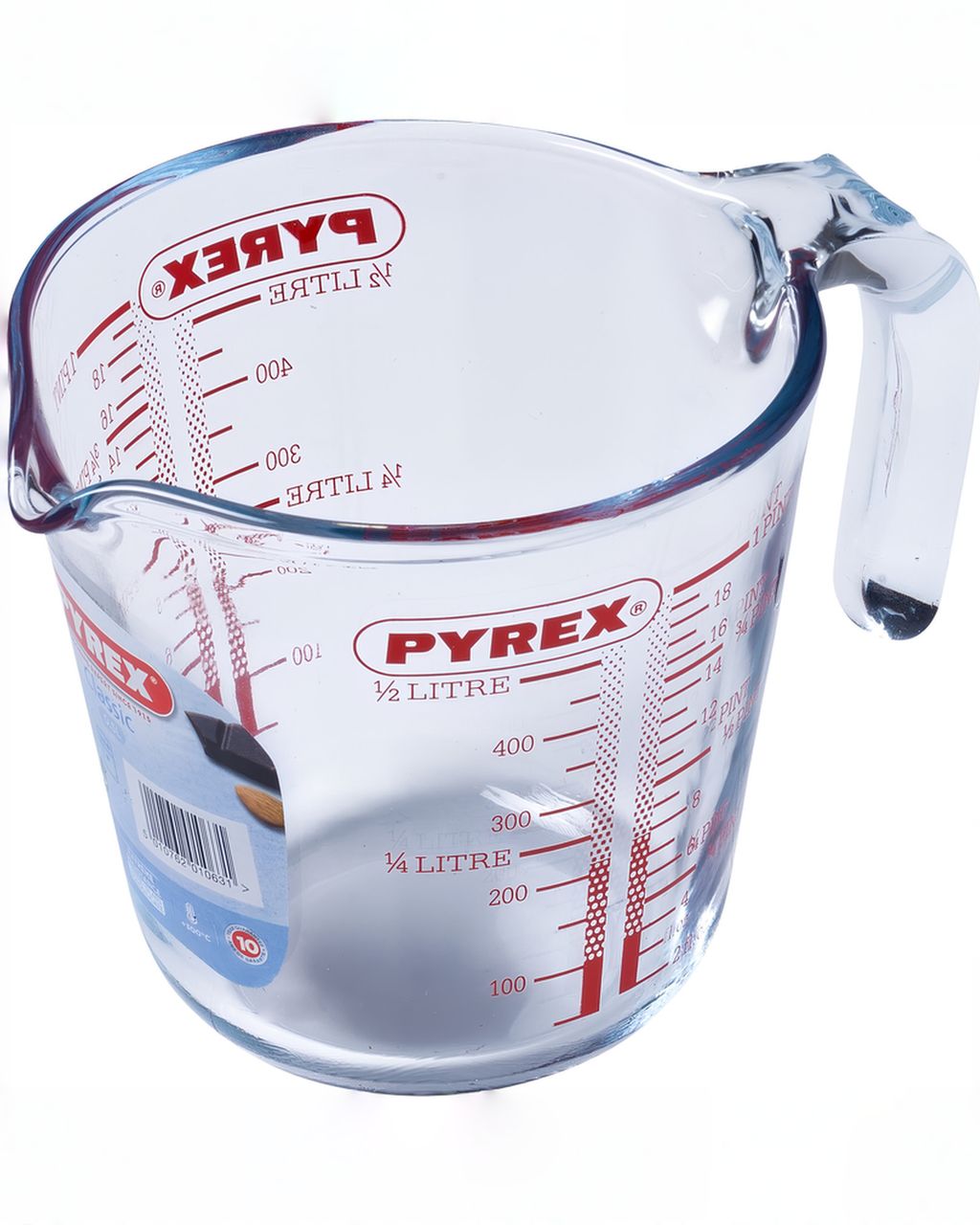
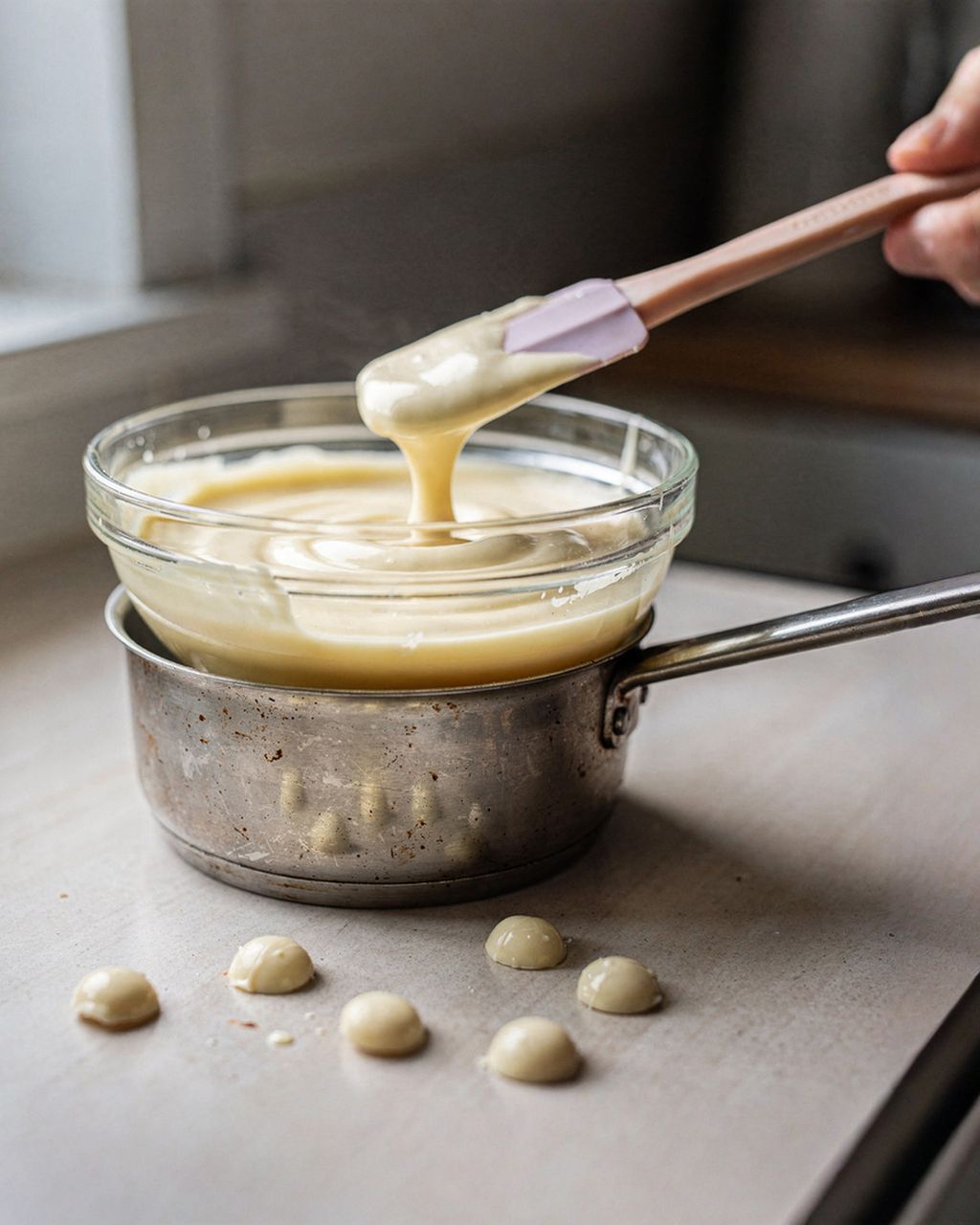
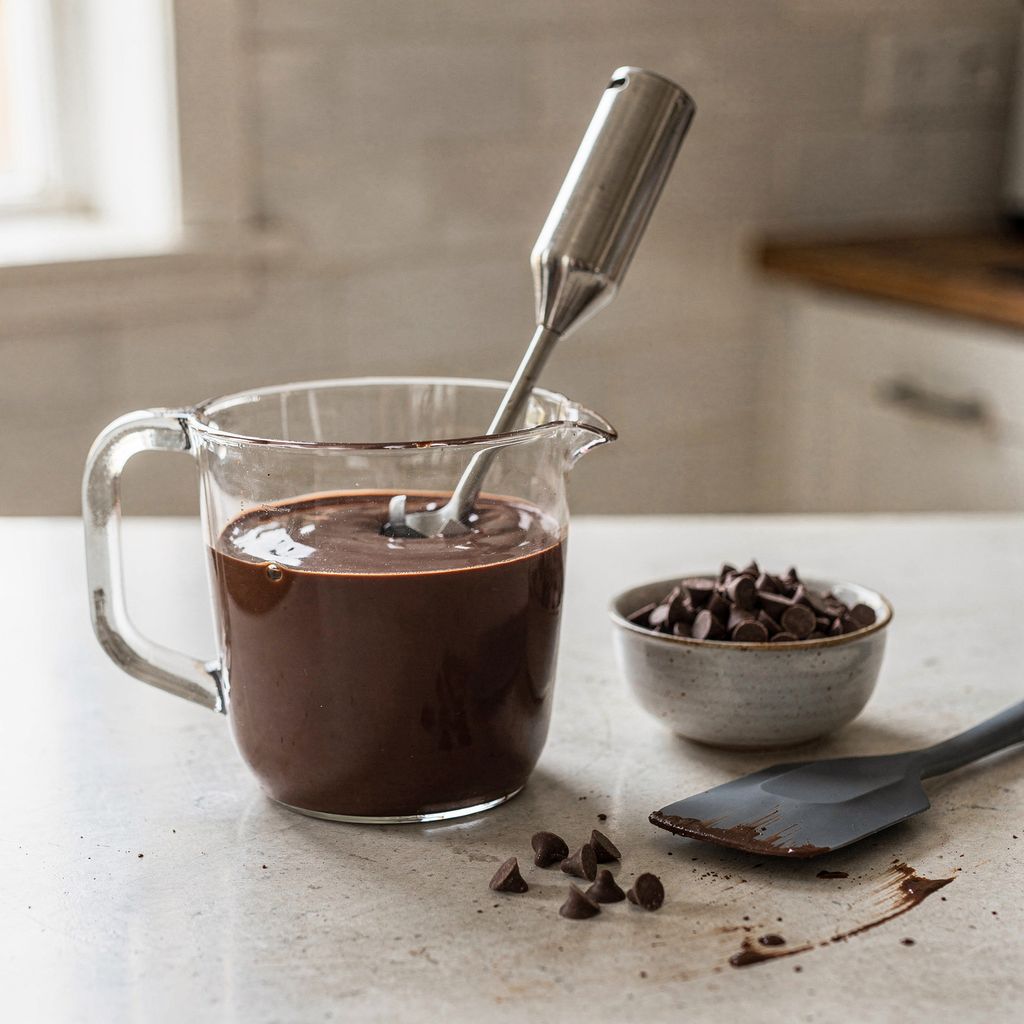
Blend with a stick blender. Pour the ganache into a tall, narrow container (like a measuring jug), submerge the blender head fully at the bottom, tilt it slightly so it doesn't suck in air, and blend without lifting it out. Within seconds you'll see the mixture come together and turn glossy.
Let it set undisturbed. Cover with plastic wrap pressed directly onto the surface and leave it at room temperature. Don't put it straight in the fridge — a sudden chill could split it all over again.
Don't have a stick blender? Put a tablespoon of warm cream in a clean bowl and pour the split ganache in gradually, stirring with a spatula in small circles right in the centre. The emulsion will form in the middle first and gradually spread outward.
Rescue oily ganache mainly with liquid, grainy ganache mainly with temperature, and half-set ganache by evening out the temperature across the whole bowl.
Oily (oil on the surface): there's too much fat relative to water, or it's overheated. Let it drop below 40°C/104°F and add warm cream or milk a tablespoon at a time until it comes together. Don't add butter — that's more fat, and it will only make things worse.
Grainy (sandy, dull): the emulsion broke from cold or from stirring while it was setting. Gently warm it to 32–35°C/90–95°F and blend. Only add liquid if warming alone doesn't fix it.
Half-set and lumpy (firm around the edges, still warm and runny in the middle): different parts are at different temperatures. Remove the set portion, warm it gently, and blend it back into the rest with a stick blender. Once the temperatures even out, the emulsion will take hold.
Ganache won't split if you use chocolate with a known cocoa percentage, just bring the cream to a boil, pour it in thirds, stir with a spatula instead of a whisk, keep ingredients at room temperature, add extra liquid for dark chocolate above 70%, and consider glucose syrup.
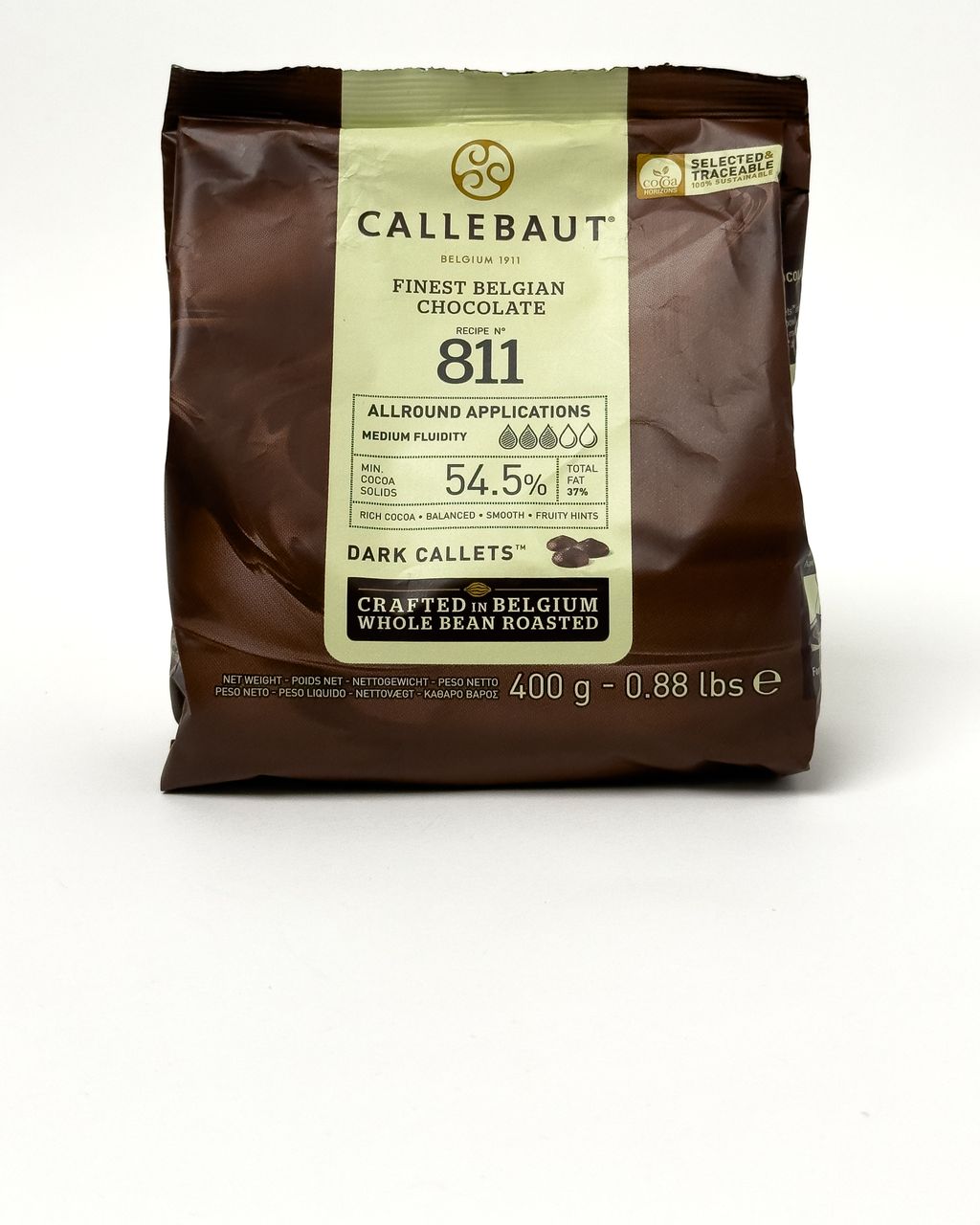
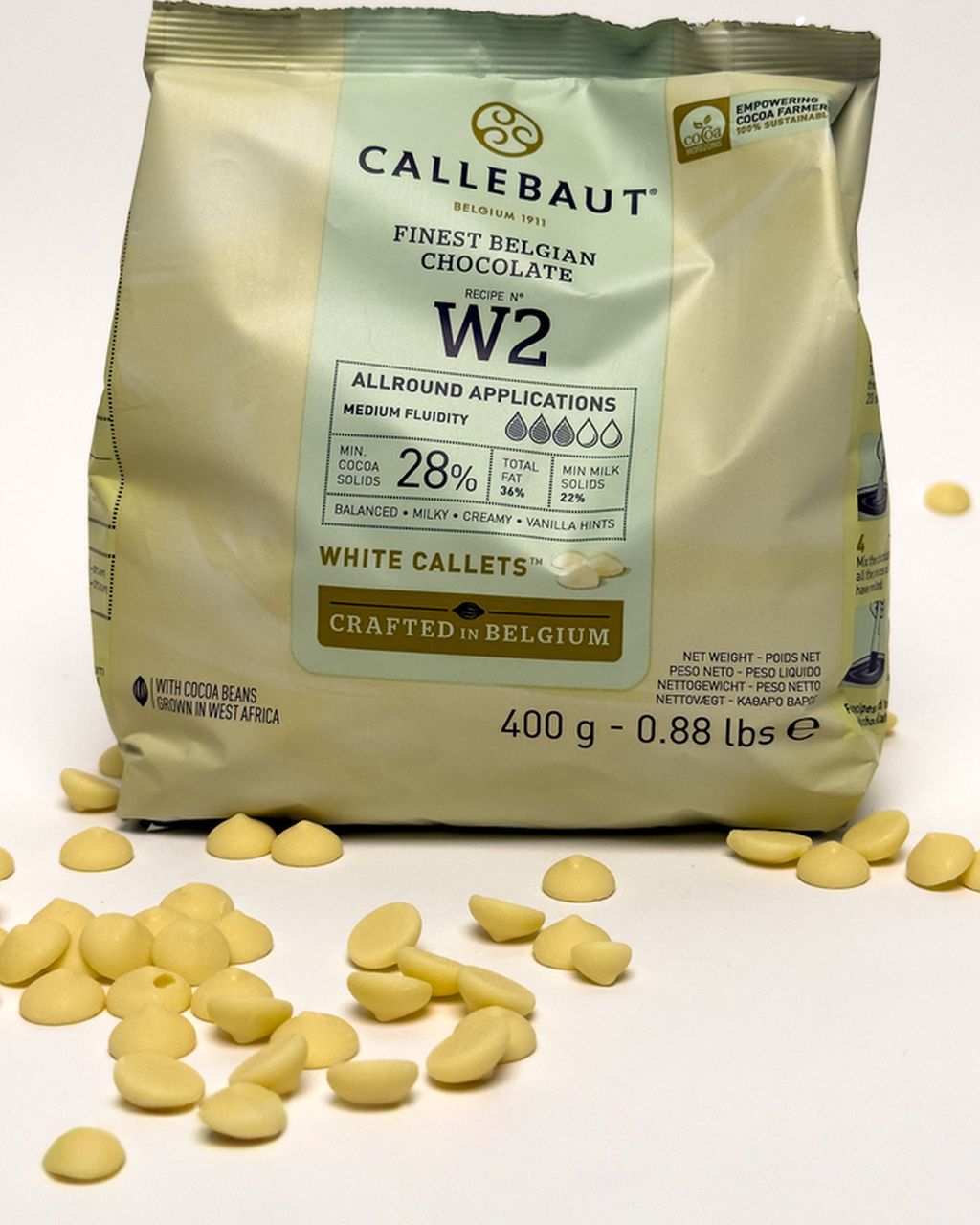
Choose chocolate with a known cocoa percentage. Good-quality baking and cooking chocolate lists the percentage on the pack, so you know exactly what you're working with. Chocolate callets melt evenly; if using a bar, chop it finely.
Just bring the cream to a boil and pour it over chopped chocolate. Take it off the heat as soon as small bubbles appear around the edges. Don't pour cream this hot over already-melted chocolate — in that case, combine the two once both are at 40–45°C/104–113°F (around 40°C/104°F for white and milk chocolate).
Pour it in thirds. Stir each third in with a spatula, working from the centre outward, before adding the next. The emulsion forms gradually this way.
Stir with a spatula or stick blender, not a whisk. A whisk beats air into the mixture, leaving bubbles in the glaze.
Bring ingredients to room temperature. Cut butter into small cubes and add it at 35–40°C/95–104°F; let liqueur or purée come to room temperature and stir it in gradually into ganache that's been warmed to 30–35°C/86–95°F.
Add extra liquid for very dark chocolate. Above 70% cocoa, add 10–20% more cream than a recipe written for 55% chocolate would call for.
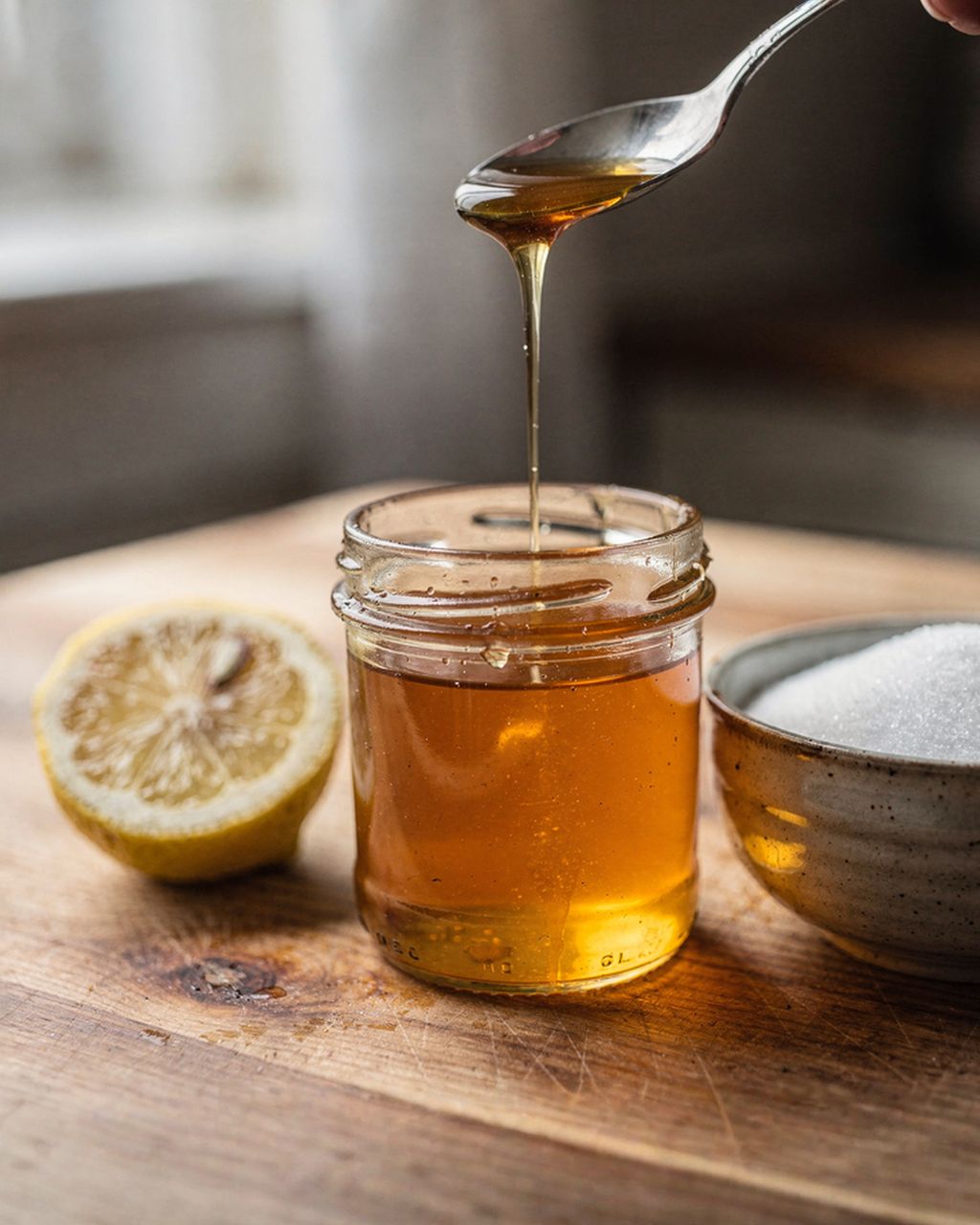
Consider glucose syrup or invert sugar. Even a small amount will make the ganache more supple and help it hold a smooth texture for longer.
You'll find the basic ratios and uses for ganache — from glaze to filling — in our article Chocolate Ganache: Ratios, Method and Uses in Desserts. Then try out a thick 2:1 ganache in these peanut butter chocolate truffles.
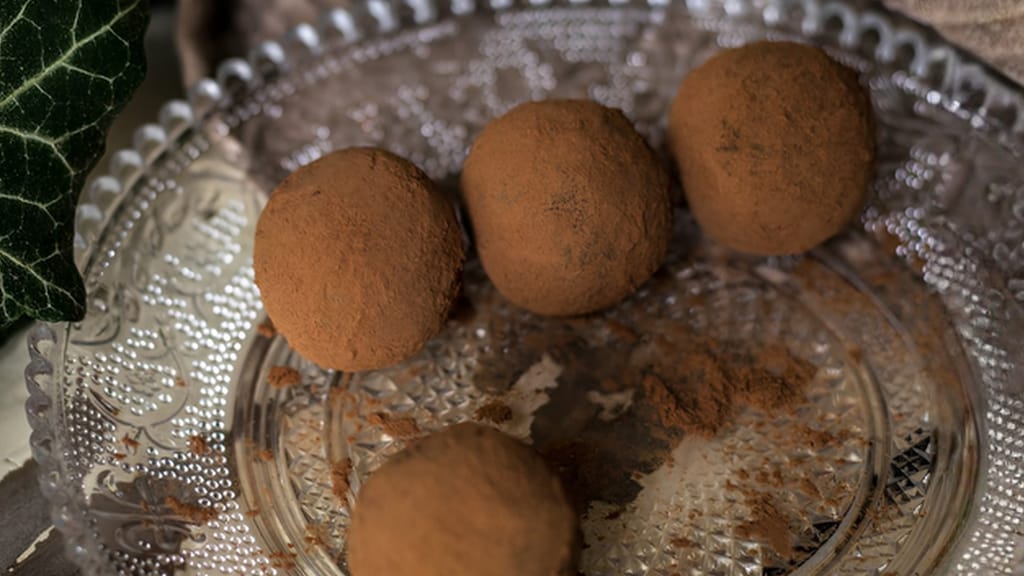
Chocolate peanut butter truffles
Peanut butter chocolate truffles – a firm ganache recipe that won't split
No, butter will usually make split ganache worse, since you'd be adding even more fat to a mixture that already has too much. Rescue it instead with a spoonful of warm cream or milk (35–40°C/95–104°F) and a stick blender; only add butter once the ganache is finished and stable, at 35–40°C/95–104°F.
Whipped ganache splits when you whip it too long or when it hasn't chilled enough beforehand. Only whip it after it's rested in the fridge (ideally overnight), and stop as soon as it holds soft peaks — overbeaten ganache turns grainy and releases its fat. If whipped ganache is only slightly grainy, you can often fix it by folding in 2–3 tablespoons of unwhipped, lightly warmed ganache.
Cream-based ganache keeps in a sealed container in the fridge for roughly 5–7 days (white chocolate ganache tends to keep for a shorter time), and about 3 months in the freezer. Thaw it slowly overnight in the fridge, then warm it to 34–38°C/93–100°F and blend briefly before using, so the emulsion comes back together after the temperature swing.
Yes, you can make ganache with a plant-based cream alternative, but it's more prone to splitting and has a different texture than ganache made with dairy cream. Plant-based whipping cream or full-fat coconut milk work best; plant-based cooking creams often contain thickeners that change the texture. With a lower-fat alternative, use a bit more chocolate and heat it more gently.
Warm both alcohol and fruit purée to at least room temperature first — never straight from the fridge — then stir them into ganache that's been warmed to around 30–35°C/86–95°F, adding a little at a time and stirring with a spatula from the centre outward. Purée is mostly water, so cut back on the cream to match, otherwise the ganache will turn too thin; for alcohol, roughly 5–10% of the ganache's weight is enough. It's safer to stir acidic purées (raspberry, citrus) into the finished ganache rather than cook them with the cream, where they could cause it to split.
One recipe worth heating the oven for, one tip, and one deal from the shop. Nothing else.