Quark Cake Filling That Holds Its Shape: Gelatin, Mascarpone or Whipped Cream
Why Your Cream Won't Whip: 6 Causes and How to Rescue and Firm It Up
Updated Oct 17, 2026
Cream that won't whip almost always comes down to one of six things: it has under 30% fat, it's warm (the cream or the bowl), it's long-life UHT cream, it's lactose-free, it's a plant-based substitute with its own rules, or you added sugar or liquid too early. The good news is that runny whipped cream can usually be saved. Chill it and whip again, or give it a hand with a stabilizer. If it has to hold up on a cake, gelatin is the most reliable choice.
Cream won't whip because of too little fat, warmth, long-life (UHT) cream, lactose-free cream, a plant-based substitute, or sugar and liquid added too early.
Too little fat. Below 30%, cream won't whip.
Warmth. Ideally you whip cream straight from the fridge (4–7 °C / 39–45 °F). The warmer it is, the harder it is to thicken and the faster it sags.
Long-life (UHT) cream. It whips more slowly and holds less well.
Lactose-free cream. It whips, but it tends to be softer and loosens sooner.
Plant-based whipping alternative. It behaves differently from dairy cream, and plant-based cooking cream won't whip at all.
Sugar or liquid too early. A lot of sugar, rum or fruit purée at the start of whipping slows things down and softens the foam.
Why these six? Cream only firms up when the fat globules partly stick together during whipping and form a network that traps air bubbles. That takes enough fat, and the fat has to be cold and partly solid. Each of the six causes undermines one of those conditions.
Note that this is the opposite problem from overwhipped cream that curdles into butter. Here the cream refuses to thicken at all.
Below 30% fat, cream won't whip no matter how long you beat it. There isn't enough fat for the globules to form a supporting network. Cream with 30–33% fat whips reliably, and high-fat cream with 35–40% is better still.
Whipping cream (legally at least 30% fat, usually 30–33% in shops) is the right one. Look on the label for "whipping cream" or "heavy cream" (at least 35% fat).
Cooking cream (10–12%) and coffee cream won't whip at all.
20% cream is deceptive: it thickens for a while but never forms stiff peaks.
Check the label before you start whipping. The most common mistake is simply grabbing the wrong carton off the shelf.
Ideally you whip cream straight from the fridge (4–7 °C / 39–45 °F). The warmer it is, the harder it is to thicken and the faster it sags. Milk fat softens in the warmth, the globules can't stick together, and the air escapes. You end up with a thin foam that soon runs.
Keep the cream in the fridge for at least 12 hours. If you bring it home from the shop and whip it right away, it's still warm inside.
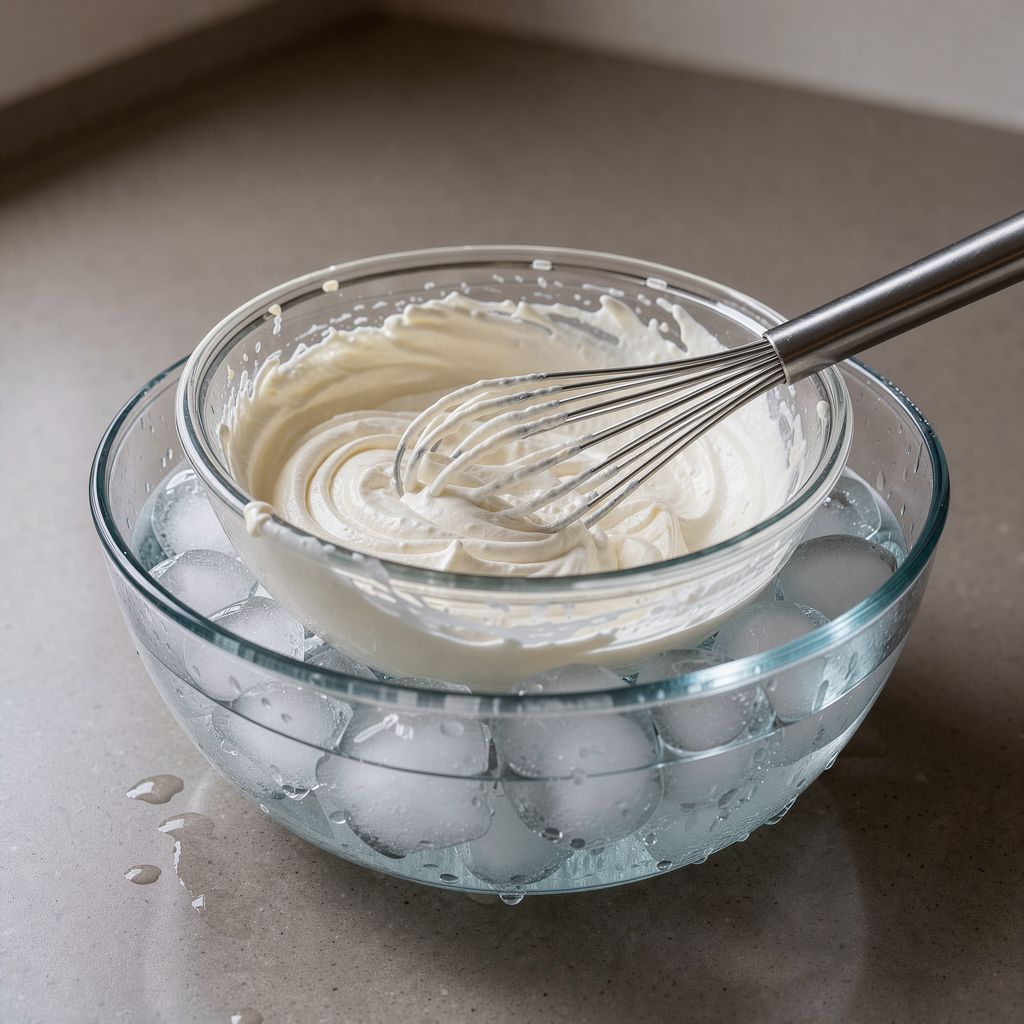
Put the bowl and whisks in the freezer for 10–15 minutes. A metal or glass bowl holds the cold better than a plastic one.
In summer or a warm kitchen, set the bowl inside a larger bowl of ice and cold water.
Whip on medium speed, not straight on maximum. The big bubbles from aggressive whipping are unstable, and the cream collapses quickly.
Whip at least 200 ml at a time. A small amount at the bottom of a large bowl just gets splashed around by the whisks, which barely catch it.
Long-life cream does whip, but it takes longer and the result is softer and less voluminous. To stop it separating in the carton, manufacturers homogenize it, which breaks the fat globules into smaller ones. Tiny globules link up into a network less readily, so homogenized cream takes longer to whip, gains less volume, and the foam holds for a shorter time.
What to do:
Chill long-life cream in the fridge overnight at least. Straight from the pantry at room temperature, it won't whip at all.
Expect significantly longer whipping.
If it needs to hold on a cake, stabilize it (see below). On its own it lasts a few hours at best.
If you have a choice, go for fresh (refrigerated) whipping cream with 33% fat or more.
Lactose-free cream with 30% fat or more can be whipped. Lactose (milk sugar) has no effect on foam formation; fat is what matters. But lactose-free whipping creams in shops are almost always long-life (UHT), so they take longer to whip and the foam loosens sooner. Everything from the previous section applies to them.
The method is the same: chill it thoroughly, whip on medium speed, and stabilize it for a cake. Gelatin works best here, and it contains no lactose. Don't add mascarpone or white chocolate to lactose-free whipped cream, because both contain lactose (white chocolate because of the milk powder), unless you find an explicitly lactose-free version.
A plant-based whipping alternative whips differently from dairy cream, and plant-based cooking cream won't whip at all. In the shops you'll find two completely different kinds of product:
Plant-based whipping alternatives (based on palm or coconut fat with emulsifiers) whip easily and gain even more volume than dairy cream. They're often already sweetened, so don't add sugar until you've tasted it. They also need to be well chilled and must not be overwhipped, or they turn grainy.
Oat, soy or rice cooking cream alternatives have around 15% fat and are meant for sauces. You can't whip them.
Coconut milk only whips if it's full-fat, and only the solidified top layer. Leave the can in the fridge overnight, scoop off the thick solid layer from the top, and set the liquid from the bottom aside.
Add sugar and liquid ingredients only once the cream starts to thicken, and go easy. A large dose of sugar at the start of whipping slows the foam and softens it. Rum, liqueur, vanilla extract or fruit purée dilute the cream, so there's relatively less fat in it.
For 250 ml of cream, 10–20 g of powdered sugar is enough. Granulated sugar dissolves poorly in cold cream, and the whipped cream ends up crunchy.
Sprinkle in the sugar only when the whisks leave trails (soft peaks).
Add liquids right at the end, no more than 1 tablespoon per 250 ml. It's better to fold fruit purée into cream that has already been stabilized.
Count vanilla sugar toward your total amount of sugar.
You can rescue runny cream once you find the cause: chill it if it's warm, thicken it with higher-fat cream if it's too lean, and firm it up if it's soft. Whipping on and on won't help. If you keep beating warm cream, it's more likely to suddenly curdle into butter than to firm up.
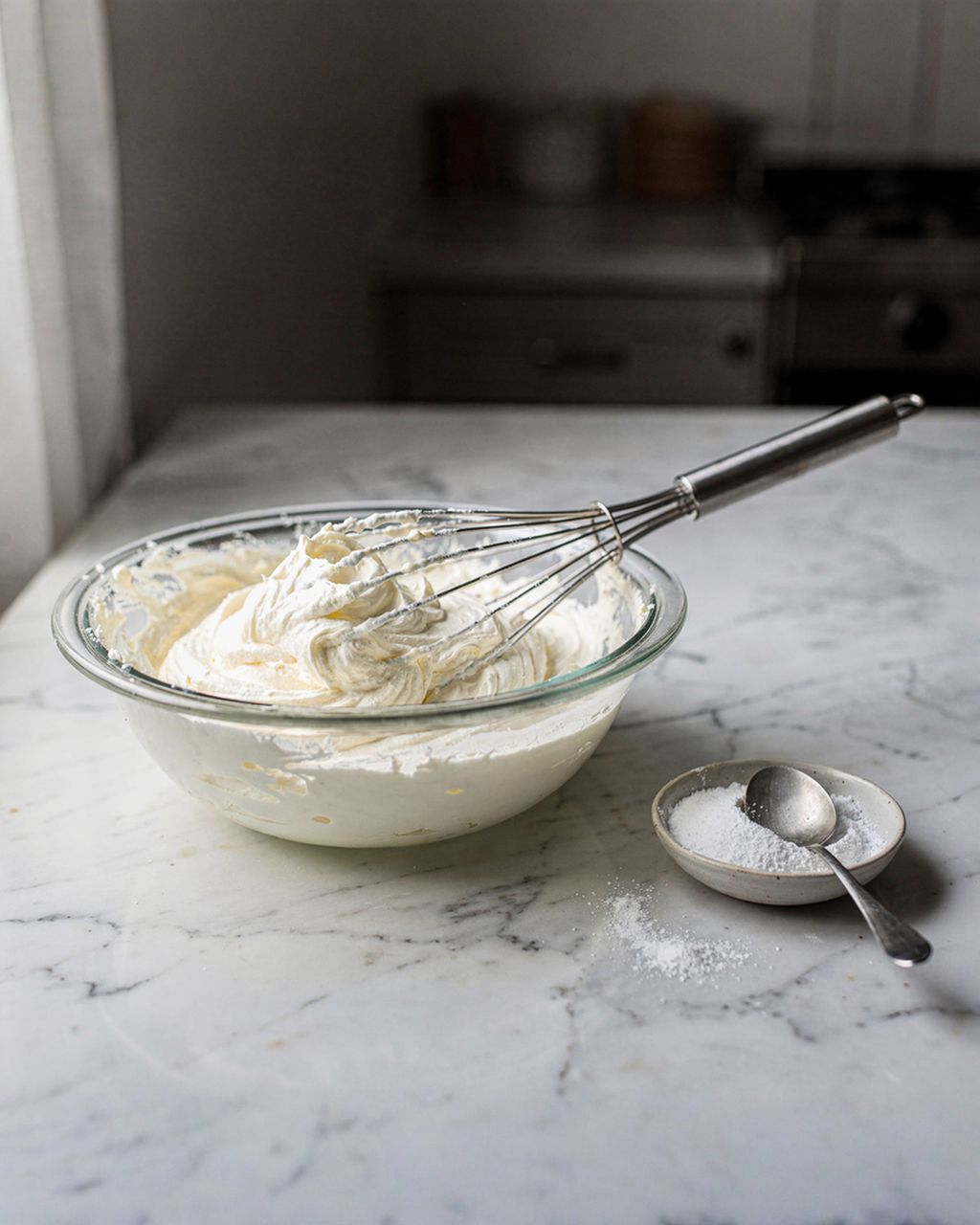
Is it warm? Put the bowl of cream and the whisks in the fridge for 20–30 minutes, or in the freezer for 10 minutes, then whip again. This is the fix that works most often.
Too little fat? Add cold higher-fat cream: at least 300 ml of 35% cream to every 100 ml of 20% cream (which comes out at roughly 31% fat), or 1 part mascarpone to 3–4 parts cream. This won't save cooking cream (10–12%), as you'd have to pour in roughly four times as much high-fat cream.
Too sweet? Pour in more cold unsweetened whipping cream and whip again.
Only half firms up (long-life, lactose-free)? Whip it to soft peaks and firm it up with gelatin following the method below.
For a dessert that's eaten right away, soft whipped cream is perfectly fine. A chocolate fondant with fruit and whipped cream, for example, doesn't need stiff peaks. Only worry about firming it up when the cream has to last.
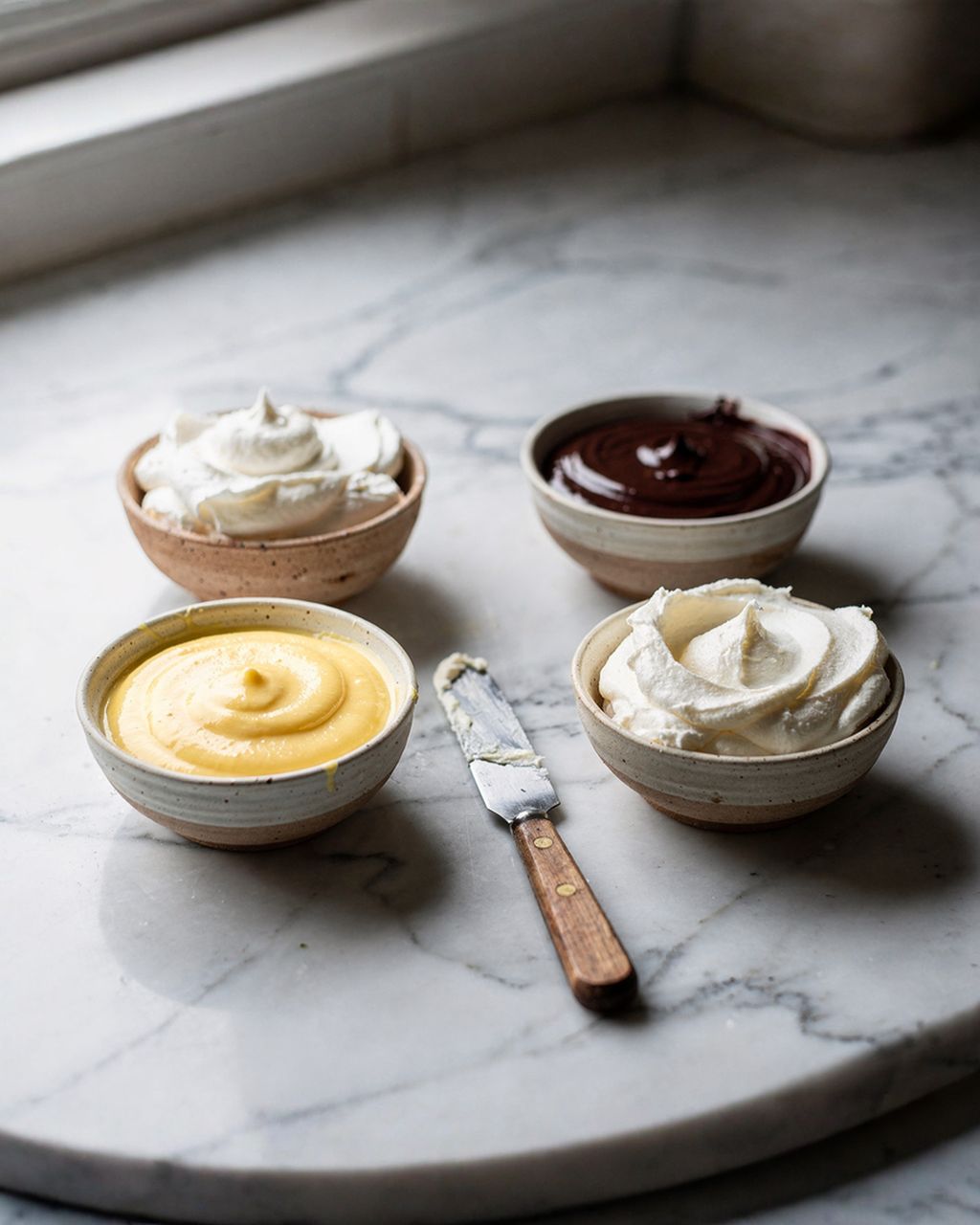
For whipped cream to hold on a cake for a day or two, it needs a stabilizer. Gelatin is the firmest and has the most neutral flavor. Unsweetened, unstabilized whipped cream starts to weep and sag in the fridge after a few hours. Here are the options, compared honestly:
Gelatin lasts the longest (2–3 days in the fridge), doesn't change the flavor, and can handle a layer between cake tiers. It isn't vegetarian, though, and it has to be dissolved and folded in at the right temperature.
Mascarpone (1 part to 3–4 parts cream) is the simplest. The cream is thicker and creamier but heavier. You'll find the ratios in the article on mascarpone and white chocolate cake cream.
Supermarket whipped cream stabilizer (modified starch and sugar) is simply sprinkled in, but it firms only slightly and isn't enough for decorating tall cakes. When you need it and when you don't is covered in the article whipped cream stabilizer: why it's used.
White chocolate as a whipped ganache holds beautifully, but it's sweeter and has to be made the day before.
Agar is a poor fit for whipped cream. It has to be boiled and sets at around 40 °C (104 °F), so in cold cream it easily forms hard bits.
For an overview of the other binders and gelling agents we have at Yumsto, see the gelling agents and binders category.
For 250 ml of whipping cream, use 2–3 g of powdered gelatin for decorating and 4–5 g for a filling between cake layers. This applies to medium- to high-strength gelatin of around 200 bloom, such as our powdered beef gelatin, 200 bloom. Bloom is the number that shows how strong a gelatin is. If yours is different, adjust the amount using the article what the bloom number on gelatin means.
Let it bloom. Sprinkle the gelatin into 5–6 times its weight in cold water (about 15–18 ml for 3 g) and leave it for 10 minutes.
Dissolve it. Warm it gently to 40–50 °C (105–120 °F), in the microwave in 5-second bursts or in a water bath, until clear. Don't boil it.
Whip the cream to soft peaks and add the sugar.
Even out the temperatures. Stir 2–3 tablespoons of whipped cream into the warm gelatin. This cools and loosens it a little, so it won't form rubbery strings in the cream.
Pour it in a thin stream into the whipped cream while whisking on low speed, then briefly whip to stiff peaks.
Use it right away. It starts to set within 10–15 minutes. Fill the cake, piping bag or mold immediately and refrigerate for at least 2 hours.
Whipped cream stabilized with gelatin holds its shape in the fridge for 2–3 days. For the complete cake cream step by step, see the article firm whipped cream filling for cakes with gelatin.
Plain whipped cream keeps in a covered container in the fridge for about 12–24 hours, but after just a few hours it starts to sag and weep liquid. Cream stabilized with gelatin holds its shape for 2–3 days. So whip cream for serving as late as you can, and stabilize it for a cake.
Yes. Unstabilized whipped cream that has sagged can be whipped briefly again, as long as it's cold. Whip for just a few seconds, because it's already close to overwhipped and curdles easily. Pour off any liquid that has collected at the bottom first.
You can freeze whipped cream, ideally piped or spooned into dollops on a baking sheet and then transferred to a bag. Once thawed, it works well in hot chocolate, coffee or desserts. It won't hold its shape for decorating a cake as well as fresh whipped cream. Don't freeze liquid whipping cream, as it whips poorly after thawing.
250 ml of whipping cream makes roughly 450–500 ml of whipped cream, since it about doubles in volume when whipped. To frost and decorate a 20 cm (8 in) cake, plan on 500–750 ml of cream.
Yes, you can whip cream with a hand whisk. It just takes 5–10 minutes, and you need a well-chilled bowl and cream. Whisk with quick side-to-side strokes rather than in circles, and set the bowl over ice. An immersion blender with its blade attachment isn't suitable for whipping cream, but the whisk attachment is.
One recipe worth heating the oven for, one tip, and one deal from the shop. Nothing else.