ProGel Gel Food Colouring Rainbow Set of 6
Fondant for Cakes: What to Put Under It, How to Roll It, and How to Cover a Cake Without Cracks
Updated Oct 17, 2026
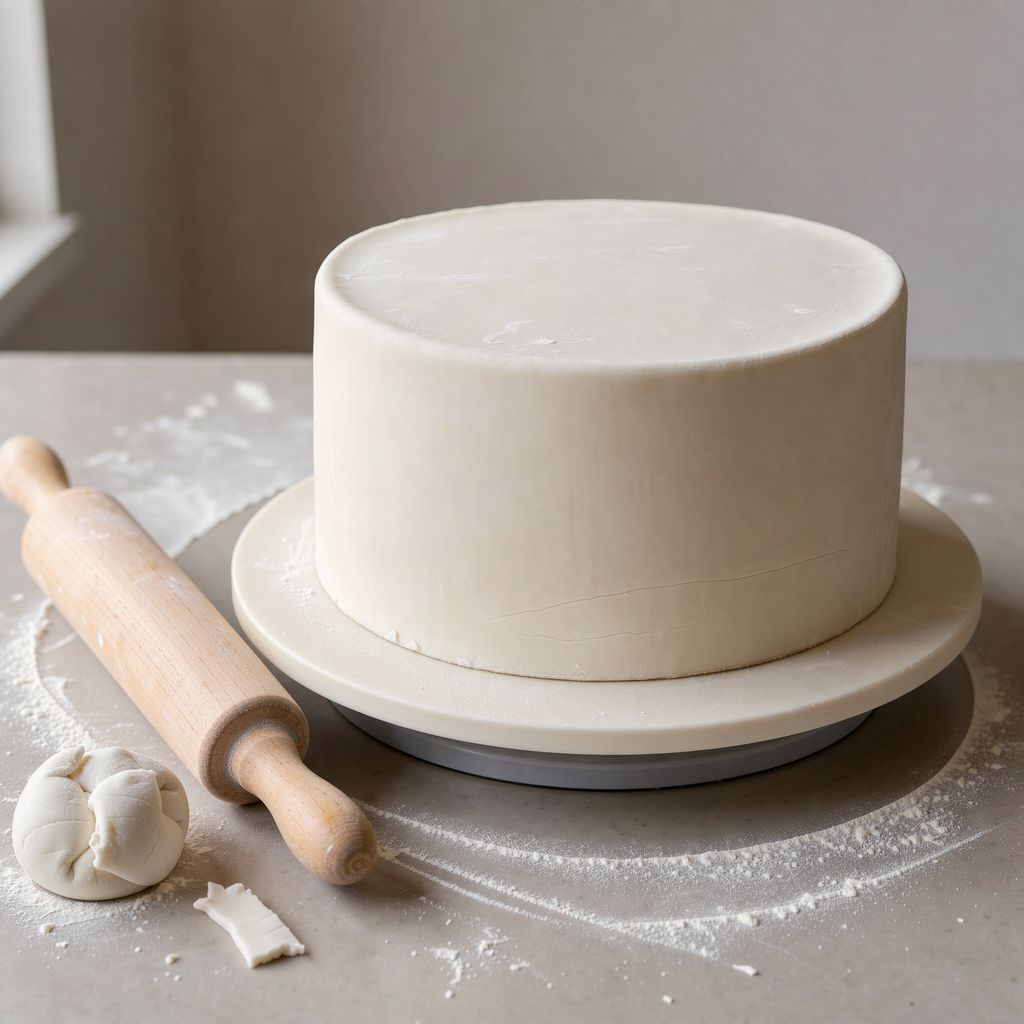
Fondant only stays smooth on a firm base: use ganache at a 2:1 ratio or a firm buttercream underneath, roll it to 3–4 mm (about 1/8 inch), and cover the cake within a few minutes, before the surface dries out. Stick to that and your fondant won't crack at the edges, wrinkle, or slide off. Below you'll find why whipped cream doesn't belong under fondant, how much you need for each cake size, how to color it with gel so it doesn't turn sticky, and how to store the cake so the fondant doesn't start to "sweat."
Under fondant you want a filling or coating that sets firm when chilled and doesn't release moisture: ideally chocolate ganache, or alternatively a firm buttercream. Fondant is essentially sugar, and anything damp dissolves it from underneath: the surface goes soft and sticky, and the cake "sweats."
What works and what doesn't:
Dark chocolate ganache at 2:1 (2 parts chocolate to 1 part 33% cream) is the surest choice. Once chilled it's as firm as butter, holds sharp edges, and copes with room temperature. For why this particular ratio holds up, see our article on firm Parisian ganache for cakes.
Milk chocolate ganache at 2.5:1 and white chocolate ganache at 3:1. White and milk chocolate contain more sugar and milk solids and less cocoa solids (white has only cocoa butter), so they need more chocolate or they stay soft.
Buttercream, ideally Swiss meringue. It works if you chill it well, but it's softer than ganache and gives way in the warmth. For a comparison of chocolate cream options, see chocolate cake filling: Parisian ganache, buttercream, or mascarpone.
Whipped cream, cream cheese, mascarpone, or fruit cream on the outside: no. They're soft and wet, so fondant slides off them and melts. They're fine as a filling inside the cake, but a ganache shell has to seal them in completely.
The layer under the fondant should be about 5 mm (1/5 inch), 1 cm (1/2 inch) at most. Thinner won't hide the unevenness of the sponge; thicker will start to bulge under the weight of the fondant.
A cake going under fondant must be perfectly level, firm, and chilled. Fondant copies every flaw beneath it and hides nothing.
Choose a sturdier sponge (butter, chocolate, or nut cake). A light, airy sponge gets squashed under the weight of fondant and tiers.
Level the cake and coat it in ganache twice: a thin first layer to catch the crumbs, then a second, final layer once the first has set. For straight sides and sharp edges, follow the guide on how to coat a cake with buttercream or ganache.
Chill the cake for at least 1–2 hours, with ganache ideally overnight, until it feels firm to the touch.
Just before covering, lightly moisten the surface with a brush dipped in a little water or boiled sugar syrup, or with a thin film of melted frosting. The fondant will then stick and won't trap air bubbles. Go light: a shiny puddle on the surface is too much.
Roll fondant for a cake to 3–4 mm (about 1/8 inch). Thinner than 3 mm tears at the edges and lets the filling show through; thicker than 5 mm is heavy, drags downward, and cuts like rubber.
How much fondant you need: the diameter of the rolled circle = cake diameter + 2 × height + about 5 cm (2 inches) extra. For a cake 20 cm (8 inches) across and 10 cm (4 inches) tall, that's a circle of about 45 cm (18 inches), which is roughly 700–900 g fondant (allowing for trimming). For a cake 15 cm (6 inches) across and 10 cm (4 inches) tall, plan on a circle of about 40 cm (16 inches) and around 600–750 g.
How to roll it so it doesn't stick:
First knead the fondant until soft and smooth (2–3 minutes), so it's pliable with no cracks around the edges.
Dust the work surface lightly with powdered sugar or cornstarch, or use a mat lightly greased with shortening. Too much powder dries the fondant out.
Lift the fondant regularly and give it a quarter turn every few strokes of the rolling pin. That's how you know it hasn't stuck anywhere.
For an even thickness, use spacer rings for your rolling pin or two guide strips under its ends. They're worth buying and will save you a lot of stress.
You'll cover a cake without cracks if you work quickly (within 5 minutes of rolling), carry the fondant over your rolling pin, and smooth the sides downward without ever pulling.
Transfer the fondant over the rolling pin. Roll it loosely around the pin, or drape it over your forearm. Never lift it by the edge, or it will tear under its own weight.
Lay it on the cake so the overhang is even all the way around.
Top and edges first. Smooth the top from the center outward with your palm and press the top edge in straight away. This is where fondant cracks most often.
Sides, section by section. With one hand, gently lift the overhang away and fan it outward like a skirt, then press it against the side with the other hand and smooth from top to bottom. Never push a fold flat; fan it out instead.
Smooth and trim. Run a fondant smoother (or your palm) over the top and sides, then cut off the excess at the bottom with a sharp knife or pizza wheel.
Air bubble? Prick it at an angle with a pin and press the air out with your finger.
What goes wrong most often, and why:
Elephant skin (a wrinkled, cracked surface like an elephant's hide): the fondant has dried out. It sat rolled out too long, was dusted with too much sugar or starch, or wasn't kneaded enough. Working a dab of vegetable shortening into it and working faster will help.
Cracks on the top edge: the fondant is too thin or dry, or the edge of the coating is too sharp and cold. Smooth the edge with your palm right after laying the fondant on; the warmth of your hand softens it.
Folds and a "skirt" at the bottom: the fondant was pushed against the side instead of being fanned outward first.
Fondant that sticks and tears: it's too warm or too damp (typically after liquid food coloring). Let it rest for a while and dust it lightly with cornstarch.
Color fondant with gel coloring, not liquid. Gel is concentrated, so a few drops are enough, and it adds no water, so the fondant doesn't soften or turn sticky. Liquid supermarket colors barely give a pastel shade and turn the fondant mushy. You'll find the full range in our food colors and colorings for decorating category.
Method:
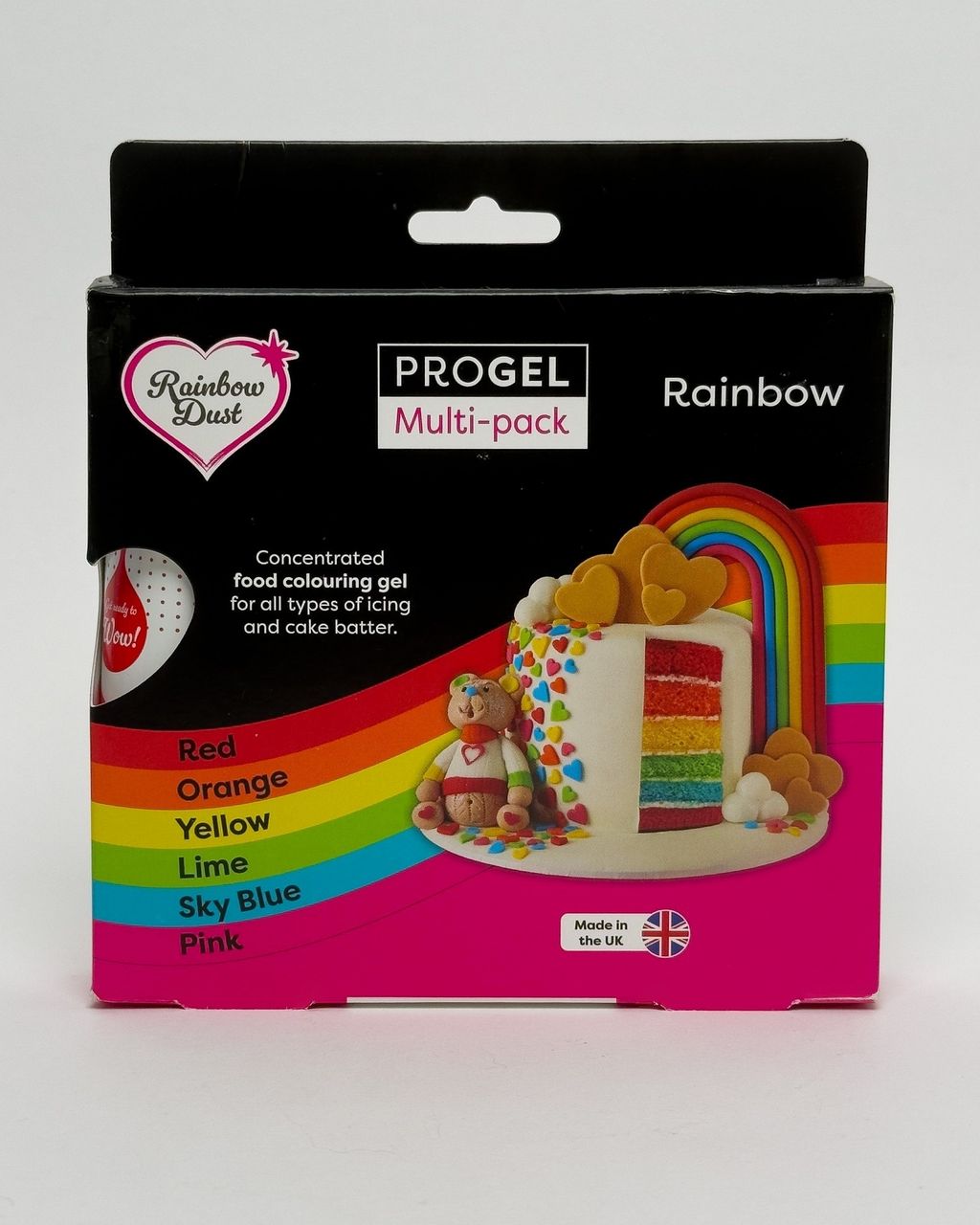
Apply the gel with a toothpick or the tip of a knife into a dent in the fondant, fold it over, and knead. With gels such as the ProGel Rainbow Set, you add it drop by drop straight from the tube, and the six basic colors can also be mixed into further shades.
Knead until the color is even, with no streaks. You can wear gloves to protect your hands.
Let the fondant rest wrapped in plastic wrap. The shade deepens by a tone over a few hours, so color it a little lighter than the result you want.
For deep black, dark red, and navy blue, it's better to buy fondant that's already colored. Doing it at home would take so much coloring that the fondant would turn soft and bitter.
A brilliant white cake: white fondant is actually slightly creamy to yellowish, especially next to a snow-white plate. If you want a pure white, buy fondant labeled extra white, and check the ingredients of any whitening colors: titanium dioxide (E171) has not been authorized as a food additive in the EU since 7 August 2022, so reach only for a version without it.
Two forms of gold suit fondant, and each does something different: shimmering powder for surfaces and painting, real gold leaf for accents.
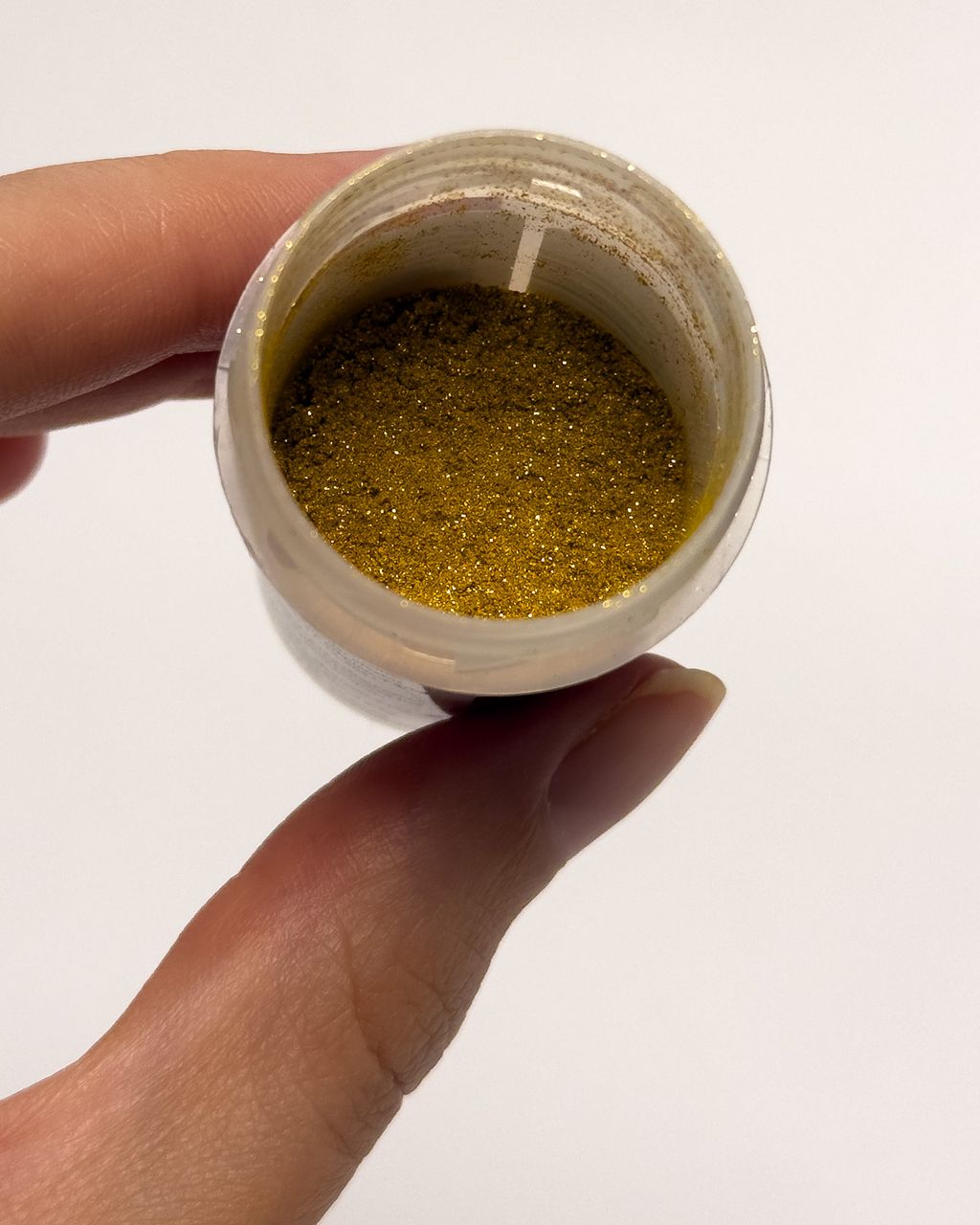
Gold powder for painting: mix Shimmering Edible Powder – Gold with a few drops of alcohol (vodka or lemon extract) to a paint-like consistency and apply with a brush. The alcohol evaporates, whereas water would dissolve the fondant. You can also dust the powder on dry with a brush over embossed patterns and lace, where it catches the light only on the raised areas.
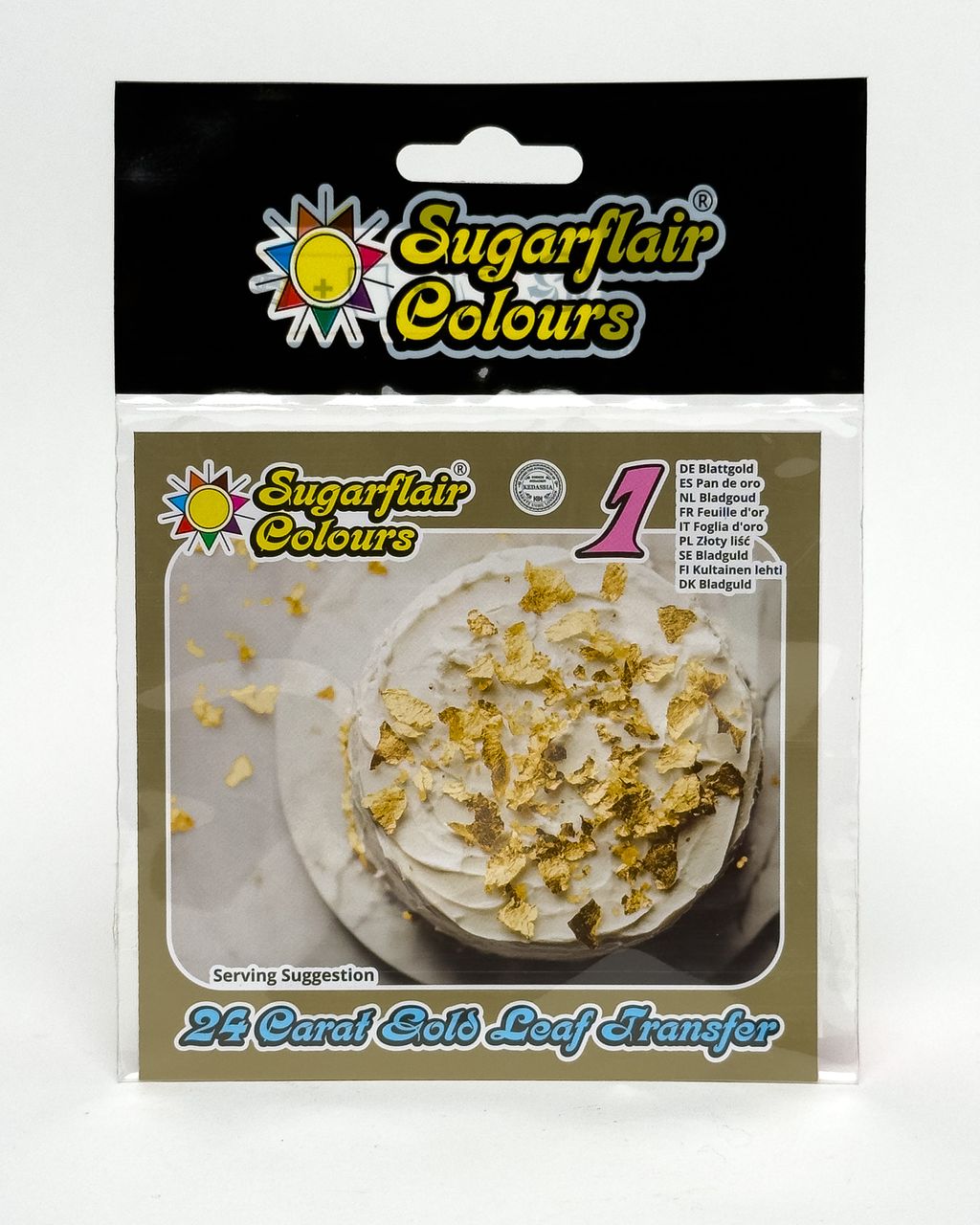
Real gold leaf: Real Edible 24-Karat Gold – Leaf gives a metallic shine that powder never has. Just barely dampen the spot on the fondant with a brush, pick the leaf up with a dry brush or tweezers, and press it on. Avoid your fingers: it sticks to them and tears.
Add gold only once the cake is covered and finished, ideally on the day of serving, so the powder doesn't smudge while you handle the cake.
Store a fondant cake in a closed box in a cool room (about 16–20 °C / 61–68 °F), out of direct sun, as long as the filling allows. Fondant doesn't like the fridge: once it comes out, moisture condenses on it and the surface turns sticky and shiny.
A cake with ganache and buttercream keeps fine in a cool room for 1–2 days.
If there's whipped cream, cream cheese, mascarpone, or fruit inside, the cake has to go in the fridge. Put it in there in a box, and before serving let it warm up for 2–3 hours in the closed box. The droplets will then form on the box, not on the cake. Don't wipe dewy fondant; let it dry on its own.
Fondant figures and decorations shouldn't go in the fridge at all. Keep them separately in a box at room temperature and place them on the cake just before serving.
Opened fondant: wrap it tightly in plastic wrap, then put it in an airtight bag and store at room temperature. Left in the air, it dries out in minutes.
If you're building several tiers, also read the guide on how to assemble a tiered cake so it doesn't sink.
For covering a cake, fondant is the easiest: it's pliable, rolls out well, and holds white or any color. The alternatives have their place:
Marzipan has a stronger flavor (almond), is heavier, and is harder to roll for a large cake. It suits a middle layer or smaller cakes.
Modeling chocolate tastes best but softens in the warmth and is demanding on the sides of a large cake. It's better for decorations.
Pouring fondant glazes for doughnuts and pastries are a different product altogether: a liquid sugar glaze, not a dough for rolling out.
No. Without a layer of cream or coating, fondant picks up every bump and crumb of the sponge and has nothing to grip. Always put at least a thin layer of ganache or firm buttercream underneath, and chill the cake before covering it.
A cake coated in ganache or buttercream can be covered in fondant 1–2 days before the celebration and kept in a box in a cool room. Fondant decorations can be made up to a week ahead so they have time to dry and hold their shape. Store them dry in a box at room temperature, not in the fridge (see the storage section).
Hard fondant softens with a short burst in the microwave (5–10 seconds) and some kneading with a dab of vegetable shortening. If it has dried out completely, it's no longer suitable for covering a cake, so use it for small decorations instead.
Leftover fondant on its own can be frozen, but you don't need to: well wrapped, it keeps for weeks at room temperature. Don't freeze a whole fondant-covered cake. As it thaws, condensation forms on the surface, and the fondant turns sticky, melts, and discolors.
One recipe worth heating the oven for, one tip, and one deal from the shop. Nothing else.