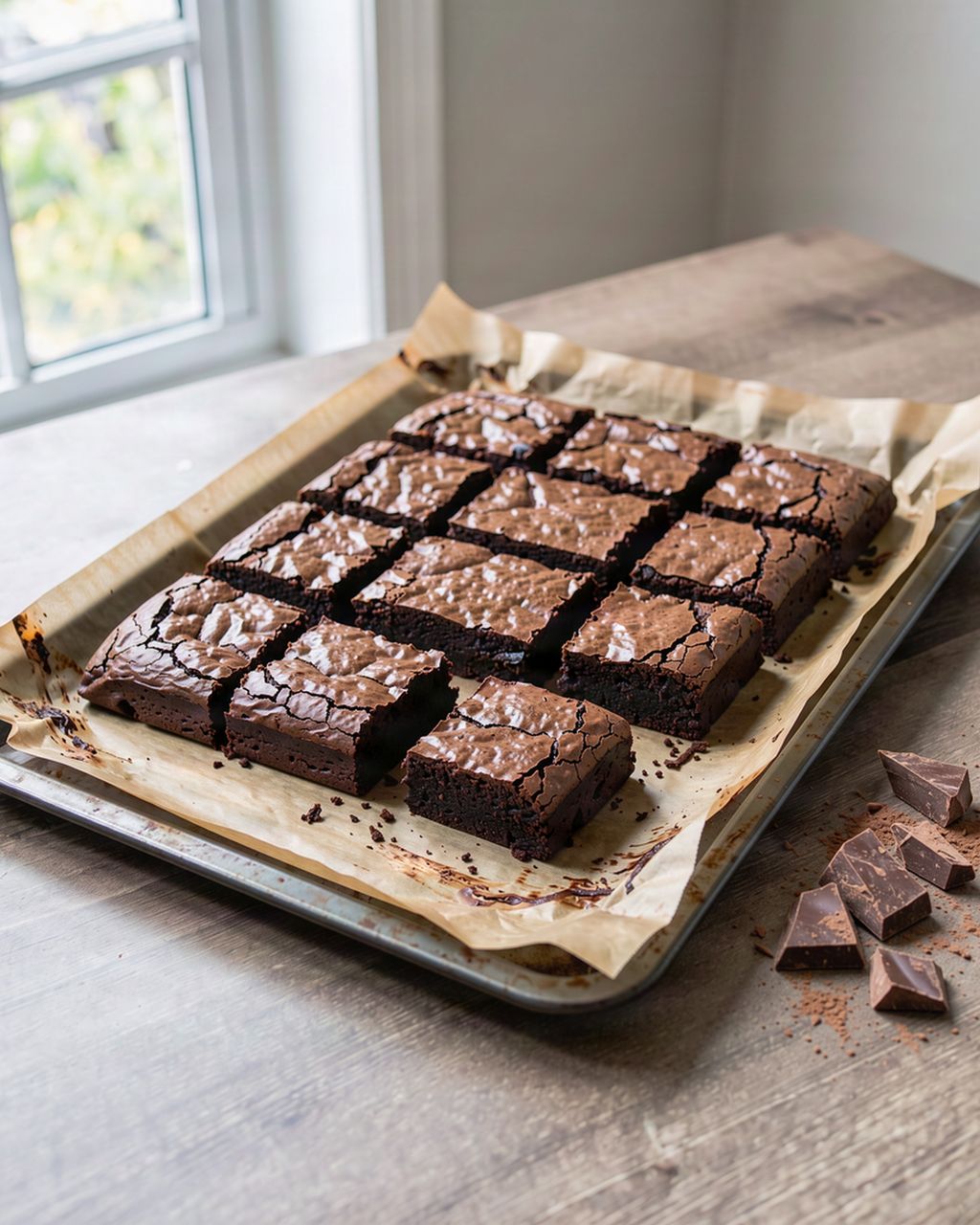
Martha stewart's chocolate cookies
Homemade Cookies: Chocolate, Almond, Cantuccini and Cookies for Kids
Updated Nov 20, 2026
You can bake homemade cookies from butter, sugar, flour and an egg in half an hour. What separates a crisp almond cookie from a soft, chewy chocolate cookie is the fat and sugar you use and how long the dough rests in the fridge. Here you'll find chocolate cookies, almond cookies, cantuccini, cut-out cookies and cookies for kids, all with real recipes from Yumsto.
The surest first homemade cookies are chocolate cookies: one bowl, a spoon, a baking sheet, and half an hour later they're on the cooling rack. When you want something different, choose by the kind of cookie you like and how much time you have:
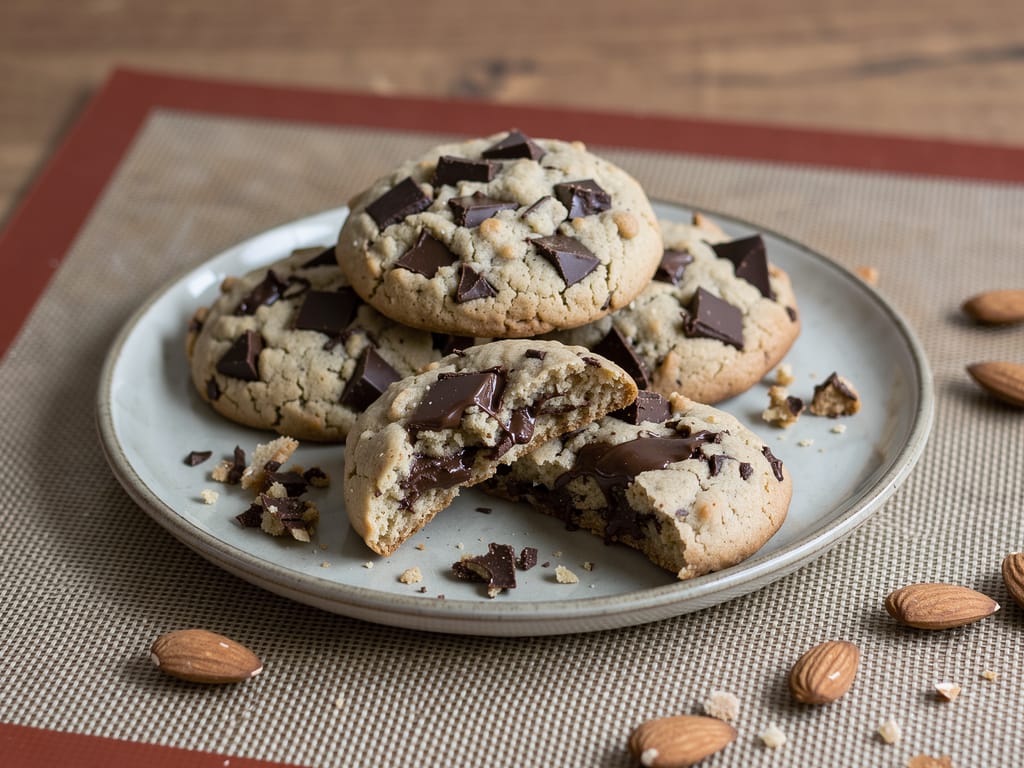
Soft cookies with chocolate chunks: the dough is dropped by the spoonful and bakes in 10–15 minutes. Ideal for a first attempt.
Chocolate cookies from a chilled log: you make the dough a day ahead and just slice off rounds.
Almond cookies: delicate, cut-out, with ground almonds in the dough.
Cantuccini: Italian almond cookies that are baked twice and keep the longest.
Cut-out cookies: for shapes, stamps and baking with kids.
Cookies for kids: mainly ones where kids get to make something themselves, plus one quick no-bake cream.
They all share the same base: fat, sugar, flour and usually an egg. Depending on the ratio you combine them in and how long the dough rests in the fridge, you get a cookie as crisp as a wafer or as soft as a brownie. Below you'll find a real Yumsto recipe for each type, and why it works.
What you'll need almost every time:
A kitchen scale. Cookies are about the ratio of fat, sugar and flour; cups and spoons throw it off more than you'd think.
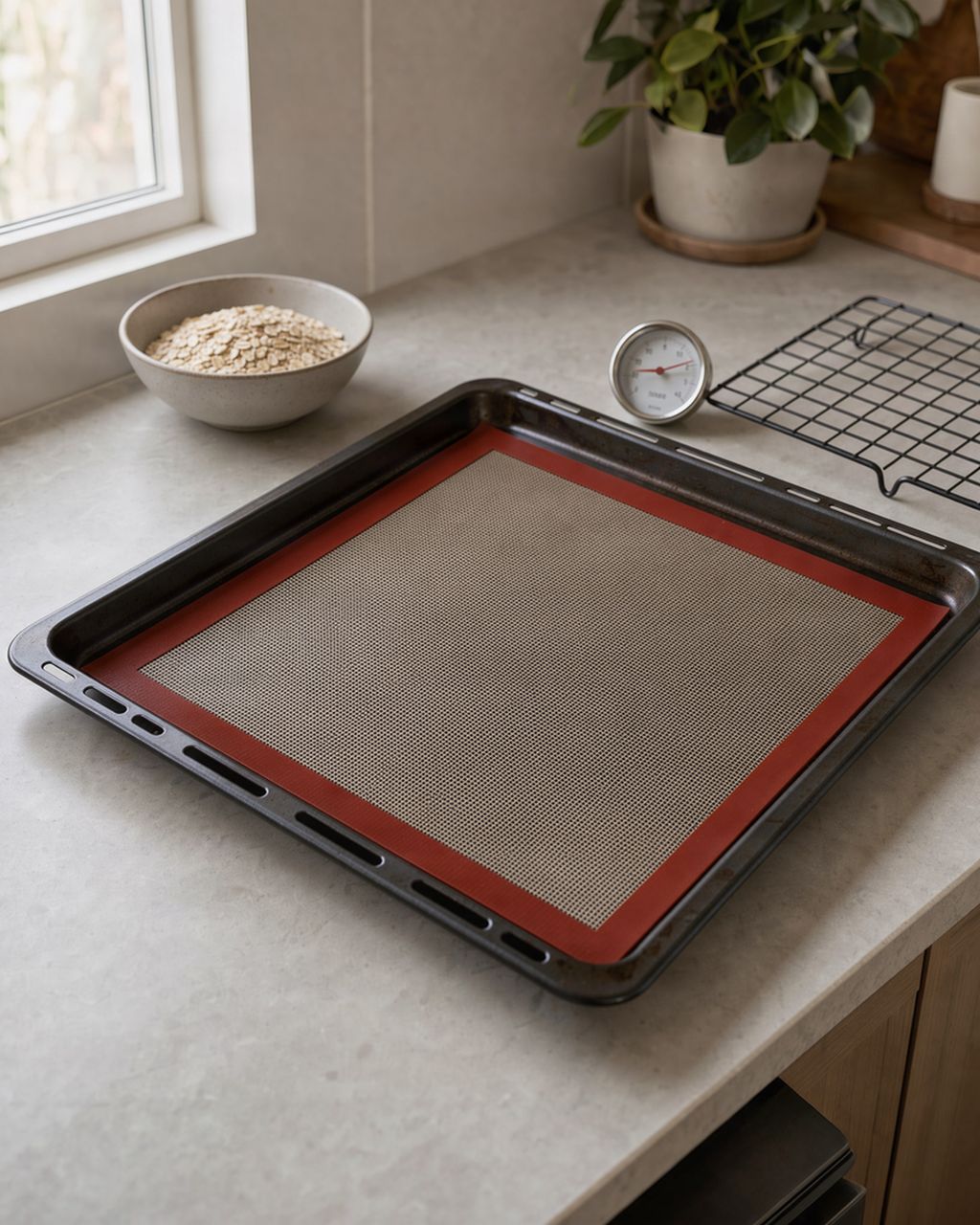
A baking sheet lined with parchment paper or a silicone mat. On an unlined sheet the bottoms scorch and the cookies stick.
A cooling rack. On a hot baking sheet cookies keep baking from underneath; on a rack they firm up evenly.
Room in the fridge. Chilling the dough is the most important step in most recipes, and the one you can't see.
One more tip up front: bake one sheet at a time, in the middle of the oven. Two sheets stacked bake unevenly, and the cookies on the lower one often get darker bottoms.
Four things decide crispness and softness: fat, sugar, flour and the temperature of the dough when it goes into the oven. Oven temperature and baking time are a topic of their own, covered in our article what temperature to bake cookies at.
Fat. Unsalted butter gives the best flavor and melts faster in the oven than solid vegetable shortening. A cookie made with butter is therefore flatter and crisper at the edges. Butter-flavored solid vegetable shortening, which several recipes below call for, holds its shape better, and cut-out shapes made with it have sharper edges. Melted butter gives a denser, chewier dough, while softened butter creamed with sugar gives a lighter one.
Sugar. Brown cane sugar contains molasses, which binds moisture, so the cookie stays soft inside and picks up a caramel note. Granulated sugar gives a crisper, drier result. Powdered sugar dissolves almost instantly, which is why you'll find it in fine cut-out doughs where you want a smooth, velvety snap.
Flour. All-purpose (plain) flour gives a fine texture; semi-coarse flour (Czech polohrubá, slightly grittier than all-purpose) gives a slightly sturdier, more delicate one. Almond flour or ground almonds add fat and flavor, and the cookie crumbles more. Don't add flour "by eye": an extra handful is the most common reason homemade cookies turn hard.
Dough temperature. Dough from the fridge spreads more slowly in the oven. The edges set before the fat melts out, and the cookie keeps its shape and height. That's why almost every recipe below sends the dough to the fridge for at least an hour. An hour is the minimum; overnight, the flavors have time to come together even more.
If your cookies melt into one big sheet on the baking sheet, it's almost always down to the warmth of the dough, the fat or the sheet. We've written up all the causes and fixes in why cookies spread on the baking sheet.
Cookies are American cookies with a crisp edge and a soft, almost sticky center. Unlike a classic Czech cookie, you don't roll out or cut the dough: it's dropped by the spoonful or sliced from a log, and it finds its own shape in the oven. At Yumsto we have two tried-and-tested routes.
Dark chocolate cookies are almost pure chocolate: 600 g of 60% dark chocolate gets just 55 g of butter and 60 g of flour. The key trick is to melt the chocolate using only the residual heat of the melted butter, and to whisk the eggs with the sugar until pale and thick. They bake at 180°C (350°F) for 12–15 minutes, and the whole thing takes 30 minutes.
Pepík's cookies are the second type: a log dough made with solid vegetable shortening, 70% dark chocolate and walnuts. You chill the log for an hour, then slice off rounds, press them flat by hand and bake at 180°C (350°F) for 10–12 minutes. The solid fat holds the rounds together, and the nuts add crunch.
How do you know cookies are done? The edges are golden and firm, while the center still looks soft and glossy. They finish setting on the baking sheet. If you waited until the center firmed up too, the cookie would be hard once cooled.
Martha stewart's chocolate cookies
Dark chocolate cookies: homemade cookies from 600 g of dark chocolate in 30 minutes
For homemade chocolate cookies, reach for dark chocolate with 60–85% cocoa. 70% dark chocolate is the golden middle: bold enough to come through the sugar and butter, yet not so bitter that kids protest. Milk chocolate scorches more easily in the oven and makes the cookie too sweet. Chop it coarsely and unevenly: the small bits melt into the dough, while the bigger ones stay as little islands of chocolate.
Extra chocolate cookies with chili are almost black thanks to the dark chocolate and Dutch-process cocoa, and the half teaspoon of chili in them doesn't burn, it just warms in the background. The dough needs at least two hours in the fridge, then you press it into rounds half a centimeter thick and bake at 180°C (350°F) for about 10–12 minutes. Dark dough barely changes color, so watch the time, not the color.
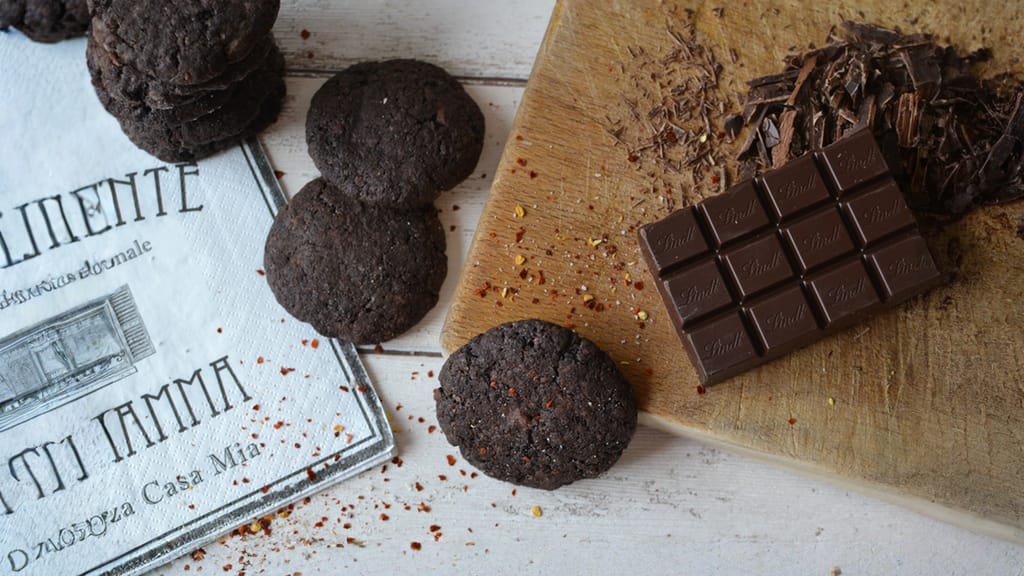
Extra chocolate chilli cookies
Extra chocolate cookies with chili: dark homemade cookies with dark chocolate and cocoa
Chocolate cookies with fleur de sel are egg-free: butter and sugar hold the dough together, and you slice them from logs about 3 cm in diameter, chilled for two hours. Bake rounds about 1 cm thick at 170°C (340°F) for 12 minutes. The salt in the dough makes the flavor of 85% dark chocolate even more pronounced; this is a cookie for grown-ups.
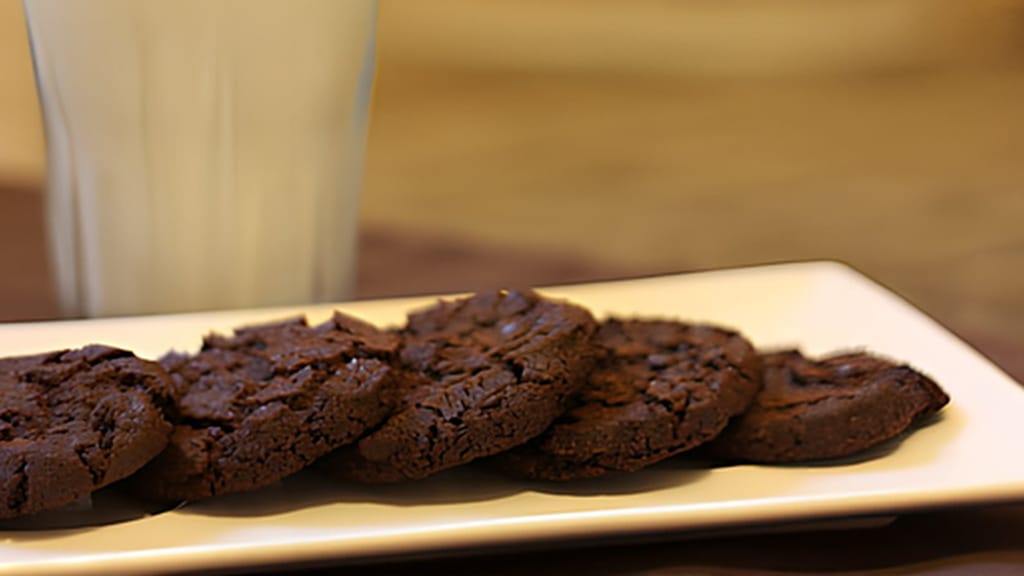
Chocolate chip cookies with fleur de sel
Chocolate cookies with fleur de sel: egg-free homemade cookies from a chilled log
Almond-chocolate peanut butter cookies are the quickest of the bunch, ready in 31 minutes. You chop sliced almonds with chocolate in a few pulses in a chopper, and the peanut butter makes the dough dense and nutty with no chilling. Bake small mounds at 180°C (350°F) for 10–12 minutes, until the edges turn golden.
If you like chocolate even more than cookies, check out the roundup of what to bake with chocolate, from brownies to fondant.
Almond cookies are more delicate and fragrant than all-flour ones, because almonds bring their own fat and nutty sweetness to the dough. It's enough to replace part of the flour with ground almonds: even 50–100 g per batch makes a difference in flavor. But almonds with their fat also weaken the gluten, so the dough crumbles more and is harder to roll. That's why you should never skip chilling with almond cookies.
Homemade almond cookies are the simplest version: 250 g of semi-coarse flour (Czech polohrubá, slightly grittier than all-purpose) gets 100 g of ground almonds and solid vegetable shortening. After an hour in the fridge, roll the dough out to about 4 mm and bake at 170°C (340°F) with the fan on for 15–20 minutes until golden. Straight out of the oven they're soft; they only turn delicate and crisp once cooled on the rack.
Delicate almond cookies go even further: the flour is half almond and half whole-grain spelt, the dough is held together only by an egg yolk and butter, and it does best with a night in the fridge. They bake at 160°C (320°F) for just 5–8 minutes; take them out as soon as the edges start to turn golden, and the center firms up as it cools.
Why so short and so low? Almond dough is rich in both fat and sugar, so it browns faster than all-flour dough. One minute too long and the cookie tastes of burnt nuts.
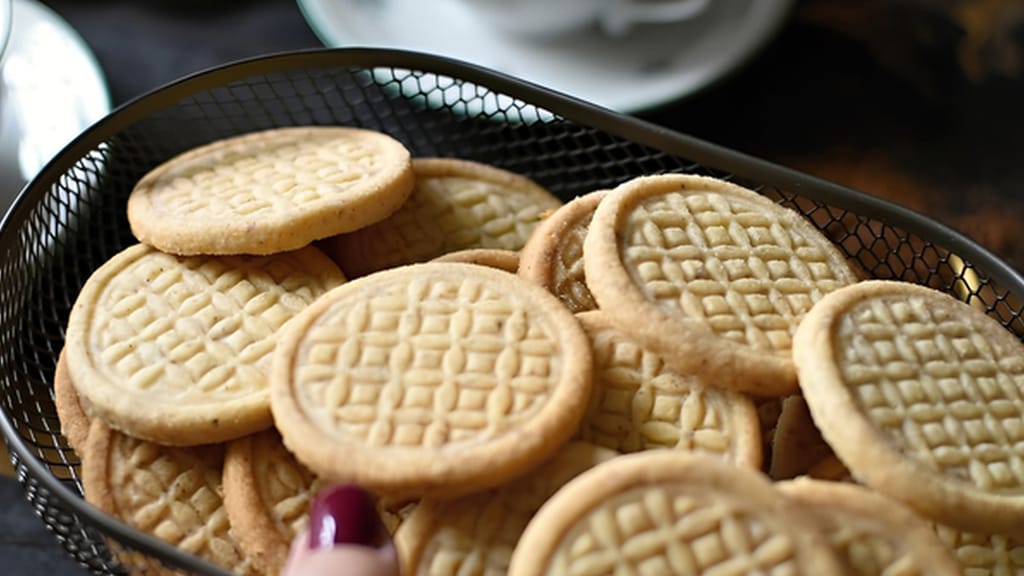
Homemade almond cookies
Homemade almond cookies with ground almonds, cut out or pressed with a stamp
Cantuccini are Tuscan almond cookies that are baked twice: first as a whole log, then sliced. The second bake dries them out, so they're hard and crisp and keep longer in the tin than any other cookie in this article. Traditionally they're dunked in coffee or dessert wine.
For cantuccini, whisk sugar with eggs into a pale, thick foam and add whole almonds chopped coarsely; the bigger pieces look lovely in the cut. Flatten logs about 3 cm in diameter with your palm and bake at 180°C (350°F) for 25–30 minutes, until the surface turns golden. Then comes the key moment: slice the logs while still hot, with a sharp knife, into slices about 2 cm wide. Once cooled they would crumble. Lay the slices cut side up and return them to the oven to dry out at a lower temperature, usually around 150–160°C (300–320°F) for roughly 8–10 minutes per side. You'll find the exact temperature for the second bake in the recipe.
What most often goes wrong:
The logs spread: the dough was too loose or the logs too thin. Keep the diameter around 3 cm and leave space between them.
The slices break: you're cutting them cooled, or with a dull knife. Cut them hot, in a single stroke.
They're rubbery inside: the second bake was too short. At 150–160°C (300–320°F), allow at least 8–10 minutes per side; when done they're dry even in the cut.
You can toast the almonds in a dry skillet beforehand, and the flavor will be deeper. And if you want a variation, toss a handful of chopped dark chocolate in with the almonds. The dough can handle both.
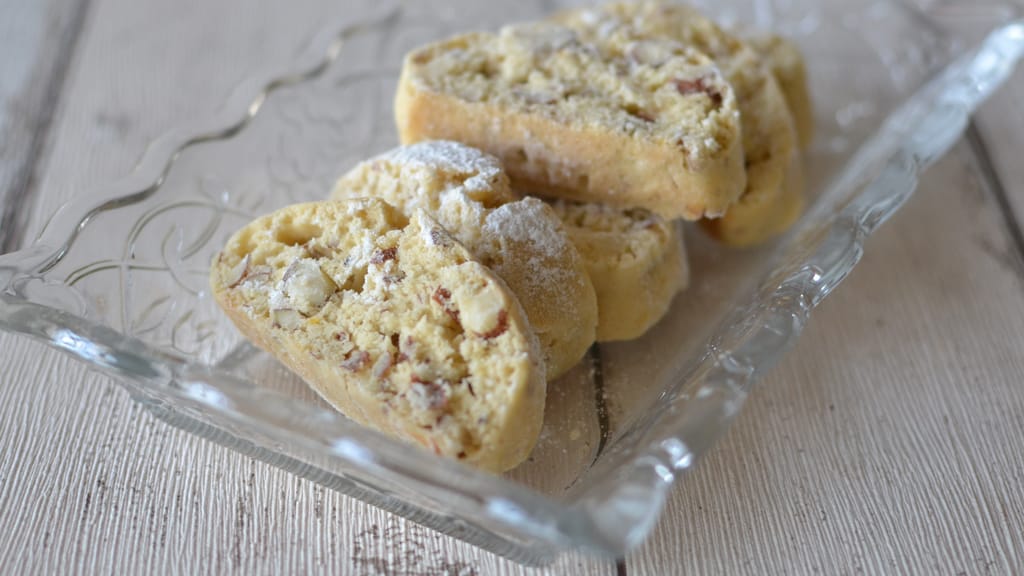
Cantuccini – italian almond biscuits
Cantuccini: Italian almond cookies that stay crisp in the tin
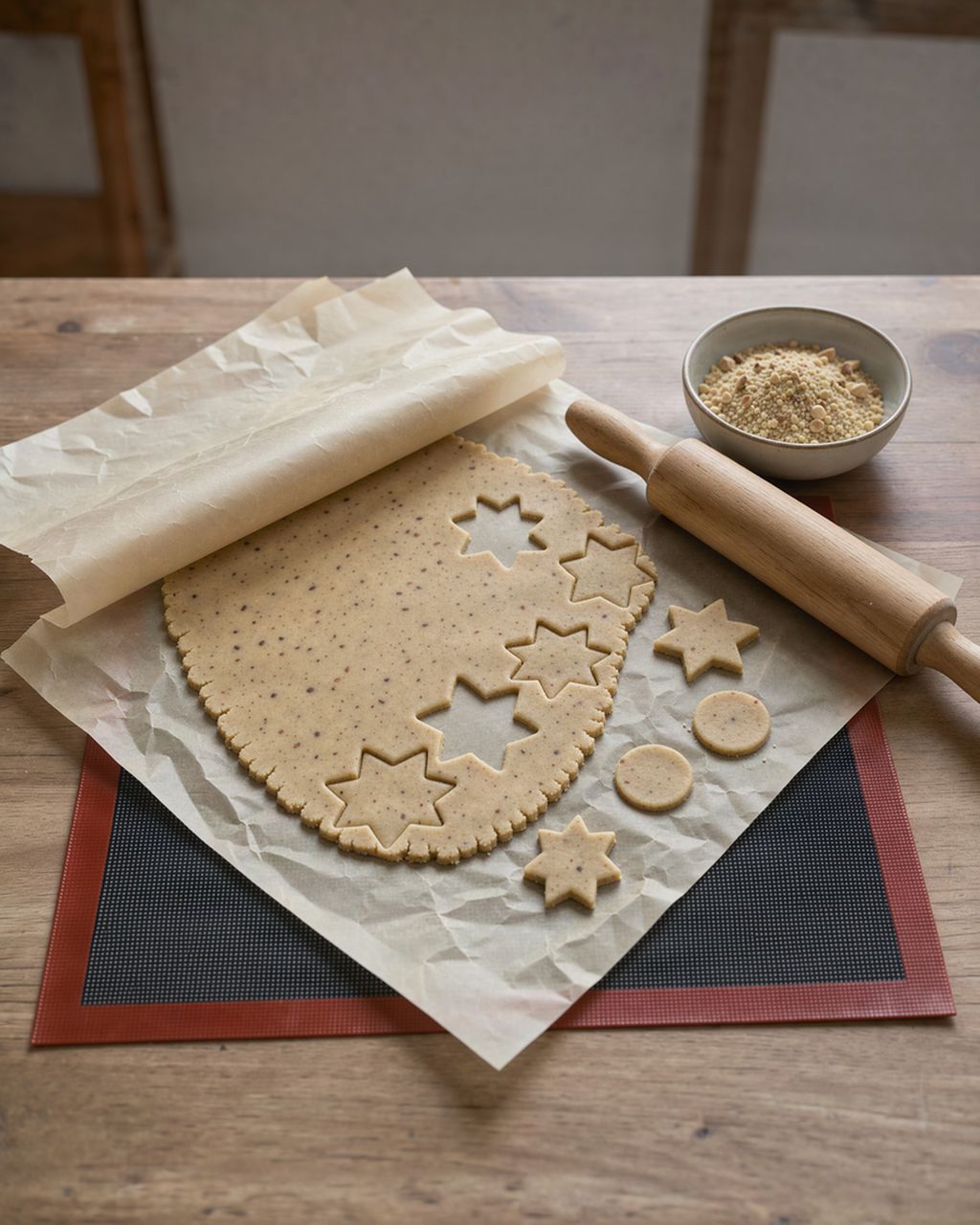
Cut-out cookies keep sharp shapes when the dough is firm, cold and rolled to an even thickness, most often 4–5 mm. A thinner sheet scorches at the edges, a thicker one stays raw inside. Here's a method that works for every cut-out dough:
Chill the dough for at least an hour. The fat firms up, the dough stops sticking and you don't have to keep dusting it with flour.
Roll it out between two sheets of parchment paper, or on a lightly floured board. Every extra handful of flour makes the cookie harder.
Dip the cutter in flour before each cut and press it straight down, without twisting.
Put the cut shapes back in the fridge for 10 minutes if they've gone soft in the warmth of the kitchen. The edges won't round off in the oven.
Gather the scraps, chill and roll them out again, but at most twice, or the dough will turn tough.
A good practice run for all of this is the recipe for homemade almond cookies. The recipe explicitly warns: if the dough sticks, don't reach straight for more flour, as the cookies would turn hard. After an hour in the fridge, roll it to 0.5 cm and bake at 190°C (375°F) for 10–11 minutes until golden.
If cutting out shapes appeals to you mainly for Christmas, traditional kinds such as Linzer cookies (linecké, Czech Linzer-style jam cookies), vanilla crescents or gingerbread cookies are in a separate roundup, types of Christmas cookies. Here we're sticking to cookies for the whole year.
The best homemade cookies for kids are the ones where they have a job to do, not just the tasting: cutting shapes, rolling balls, pressing rounds flat and decorating. If you hand out tasks by age, even a three-year-old can manage the baking:
From age 3: cutting shapes from rolled-out dough with cutters, laying the shapes on the baking sheet, sprinkling.
From age 5: rolling balls from cookie dough and pressing them into rounds, stamp impressions.
From age 8: weighing ingredients, mixing the dough, rolling the sheet to an even thickness. The oven and the hot baking sheet stay with an adult.
For little bakers, the cut-out almond cookies from the earlier sections and the log cookies, where the child just slices and presses, work best. Keep the chili cookies and the 85% dark chocolate for yourself.
If you don't want to bake at all, cookies with quark chocolate spread take 32 minutes. You whisk a cream of melted dark chocolate, low-fat quark (tvaroh, a Czech fresh curd cheese) and hazelnut spread until the white lumps disappear, let it thicken in the fridge and spread it on plain store-bought cookies. The recipe uses store-bought ones, but you can just as well spread it on your own cut-out cookies and sandwich them in pairs.
With kids, it always comes to licking the spoon. With cookie dough it's worth stopping, and it's not just about the eggs. See the warning below.
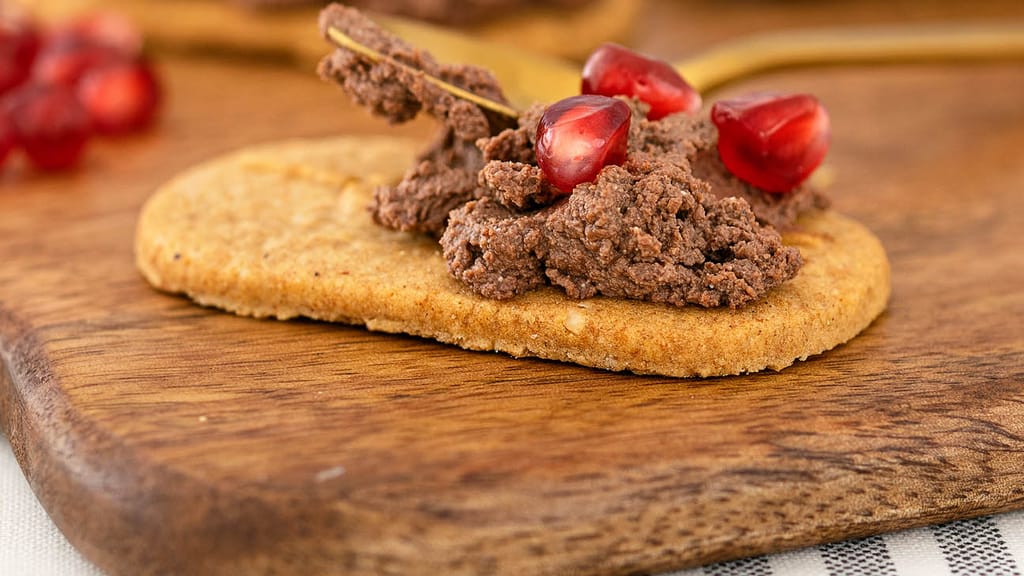
Cookies with quark "nutella"
Cookies with quark chocolate spread: a quick chocolate cream for kids' cookies in 32 minutes
Oatmeal cookies are chewier and denser than all-flour ones, because the oats in the dough soak up liquid and stay springy when baked. We don't have our own oatmeal cookie recipe on Yumsto yet, so here is just the principle by which you can recognize a good recipe:
Fine oats give a compact cookie, coarse ones give a distinct texture and more chew. For your first attempt, take fine.
Let the dough rest for 15–30 minutes before you start dropping it onto the baking sheet. The oats soak up liquid and the cookies spread less.
You can toast the oats dry in a skillet or in the oven beforehand, and they take on a nutty flavor.
Brown sugar and butter are typical for oatmeal cookies, along with a handful of raisins, chopped chocolate or seeds.
The closest thing we have to oatmeal cookies is oat bars with dried fruit. They're not classic cookies, but a slab of oats, spelt flour and yogurt that you bake in a baking pan at 180°C (350°F) for about 35 minutes and then cut up. Ready in 40 minutes, with the sweetness coming from the dried fruit.
You'll find the baking temperature and time for oatmeal and other cookies in the article what temperature to bake homemade cookies at.
Esíčka are traditional Czech butter cookies in the shape of the letter S, most often pressed through a meat grinder with a cookie attachment (the Czech strojek) and often dipped at one end in chocolate. The dough has to be soft enough to pass through the strojek, yet firm enough to hold the ridged pattern. That's why it's made from butter and powdered sugar, often with egg yolks, and worked at room temperature, not chilled like cut-out dough.
We don't have a recipe for esíčka on Yumsto yet. What a dough should look like so that it passes through the strojek and keeps its pattern is written up in the article cookie dough for the strojek. There you'll also find what to do if the dough tears or, the opposite, runs.
For dipping, use dark chocolate melted in a double boiler and leave the esíčka to set on parchment paper. Without tempering, the chocolate will be duller, but it will taste the same.
A dog shouldn't eat cookies baked for people: they contain sugar and often ingredients that are poisonous to dogs. The US ASPCA, an animal welfare organization, lists the following, among others, in its overview of foods not to give to animals:
Chocolate and cocoa: the darker the chocolate and the higher its cocoa content, the higher the risk of poisoning. According to the ASPCA, baking chocolate and cocoa powder have the highest concentration of the problem compounds.
Xylitol: a sweetener found in candy, chewing gum and some baked goods. It can cause a dangerous drop in blood sugar and, depending on the amount, liver damage.
Grapes and raisins: they can damage the kidneys. According to the ASPCA, tartaric acid is probably to blame for their toxicity, but this isn't certain yet.
Macadamia nuts: in dogs they cause weakness, loss of coordination, lethargy, vomiting, tremors and raised temperature.
Homemade dog cookies are therefore baked from an entirely different dough, without sugar, chocolate and raisins. We don't have a dog recipe on Yumsto; we're a cookbook for people. Before you start baking for your dog regularly, ask your vet what suits their diet. And keep the cookies from all the recipes above out of reach of your dog's nose, especially the chocolate ones.
Recipe of the week, one tip that saves you time and one deal from the shop. Unsubscribe in one click.
The next issue goes out on Thursday, November 26.
Store homemade cookies in a tightly sealed tin at room temperature, each kind separately. Soft cookies release moisture, and crisp cookies next to them go soft.
Cantuccini are dry thanks to the second bake and keep the longest of all in a sealed tin.
Crisp cut-out cookies (almond ones, for example) go in their own tin, away from the soft ones.
Soft chocolate cookies, according to the chili cookie recipe, keep in a sealed tin at room temperature for up to a week.
Cookies with cream, for example sandwiched with quark chocolate spread, belong in the fridge and are best eaten by the next day.
Only completely cooled cookies go in the tin. A warm cookie in a closed container steams and goes soft.
If crisp cookies go soft, put them back in an oven heated to 150°C (300°F) for 5–8 minutes and let them cool on a rack, and they'll crisp up again. Soft cookies that have dried out can be revived for a day by a piece of bread or apple added to the tin. The cookies draw moisture from it.
Yes. In cookies the egg mainly binds the dough, and when there's enough fat and sugar you can do without it. On Yumsto there are egg-free chocolate cookies with fleur de sel, where butter and sugar hold the dough together and the cookies are sliced from a chilled log. Without eggs a cookie tends to be more delicate and crumbles more, so don't skip chilling the dough.
Yes. The dough freezes best shaped into a log and wrapped tightly in plastic wrap. Before baking, let it soften in the fridge a little, slice it into rounds and bake as the recipe says, just allow a minute or two longer. It works especially well for slice-and-bake cookies and the chocolate cookies with fleur de sel.
The most common substitute is butter-flavored solid vegetable shortening, which several Yumsto recipes call for, for example the homemade almond cookies or Pepík's cookies. It holds its shape better than butter, but the flavor is less pronounced. You can't swap butter for oil 1:1 in a recipe written for butter, as the cookies would turn greasy and spread too much; but some recipes are built around oil from the start.
Most often they're overbaked or there's too much flour in the dough. Most cookies are still soft when they come out of the oven and firm up as they cool, so take them out as soon as the edges turn golden. Don't add flour to a sticky dough; chill it instead.
It's possible, but you need a recipe built on gluten-free flour, such as almond flour. None of the recipes in this article is completely gluten-free: even the delicate almond cookies combine almond flour with spelt flour, and spelt contains gluten. Gluten can also hide in other ingredients, such as baking powder or chocolate, so read the label. This is cooking information, not medical advice: if you're baking for someone with celiac disease, follow the advice of a doctor or a dietitian.
One recipe worth heating the oven for, one tip, and one deal from the shop. Nothing else.