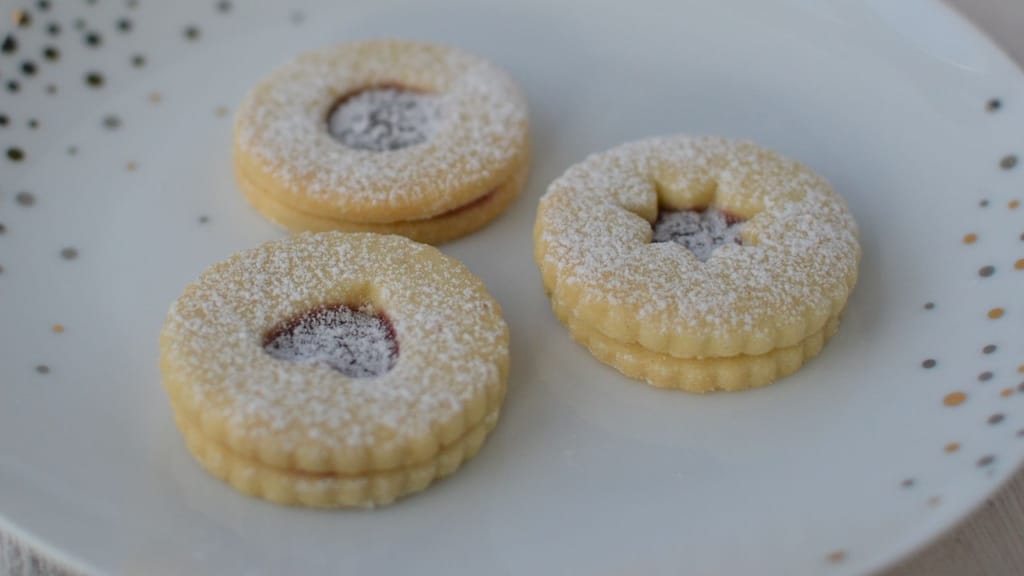
Classic christmas cookies: delicate linzer cookies
Edible Flower Cookies: How to Press Flowers On So They Don't Burn or Fall Off
Updated Oct 15, 2026
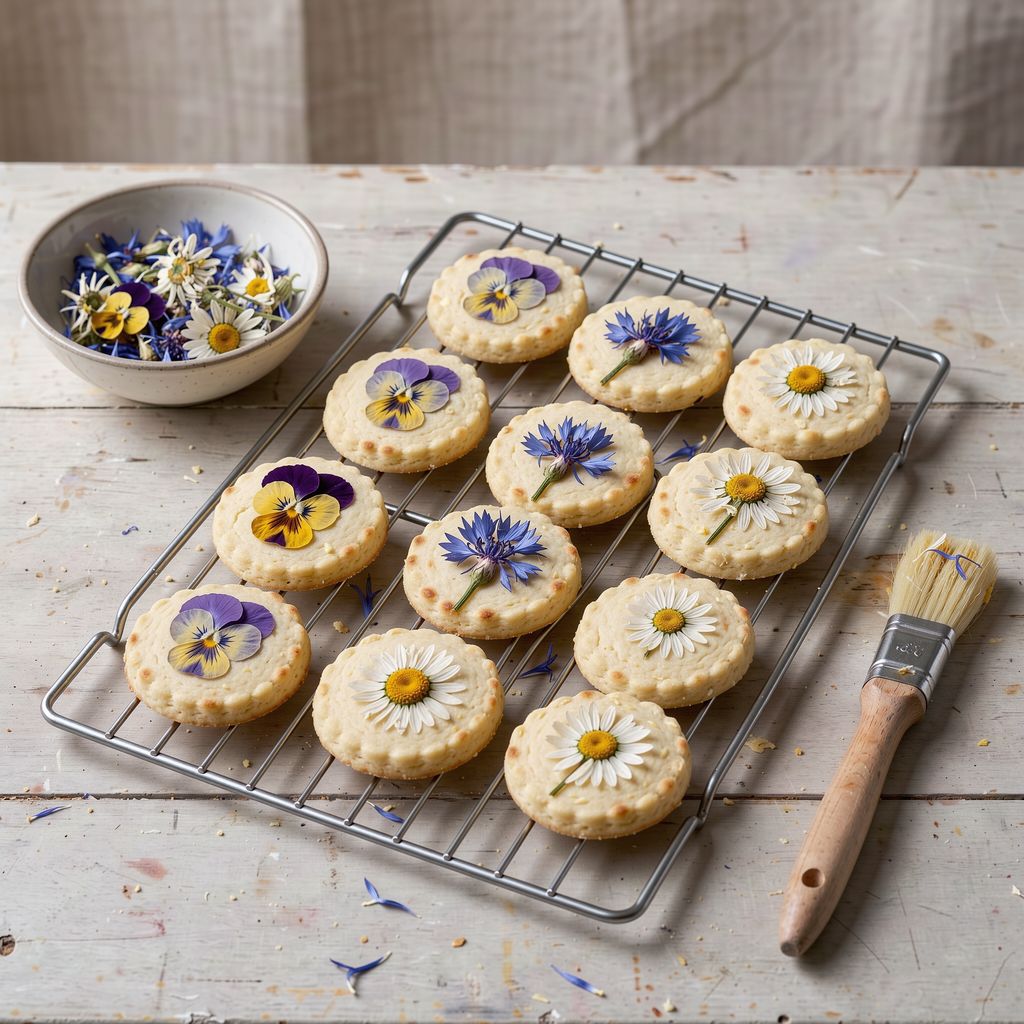
Edible flower cookies work best when you press the flowers onto cold or half-baked dough, brush them with a thin layer of egg white, and bake low, at around 160°C (320°F). The egg white glues the flower down and protects it at the same time. The low heat gives the cookie time to bake through before the delicate petals brown. Below you'll find three methods depending on the flowers you have, why petals burn and fall off, and which flowers to choose for cookies.
There are three ways to get edible flowers onto cookies, and each suits different flowers:
Into raw dough before baking. The quickest method. It works for pressed flowers, because they lie completely flat and cling well to the dough, and for flat fresh flowers.
Onto a half-baked cookie. The most reliable method for dried flowers, because they spend only a few minutes in the oven.
Onto a fully baked cookie. For bulky, delicate flowers, such as rosebuds, that would brown in the oven.
Into raw dough: Put the cut-out cookies on a baking tray and chill them in the fridge for 15 minutes. Brush the surface with a thin layer of beaten egg white, lay the flower on top, and press it down with your fingertip from the centre out to the edges. Then brush over the flower once more with the rest of the egg white. Bake at 160°C (320°F; fan 150°C/300°F) for 10–14 minutes, until the edges of the cookies just start to turn pale golden.
Onto a half-baked cookie: Bake the cookies without flowers for about two thirds of the time, that is 7–9 minutes at 160°C (320°F). Take the tray out and press the flowers, brushed with egg white, onto the still-soft surface. Brush lightly over the top with egg white and return the tray to the oven for 2–4 minutes so the egg white sets. On the warm surface the dough gives slightly around the flower, and the petals sink into it.
Onto a baked cookie: Put a small drop of thin sugar icing (icing sugar and a few drops of water or lemon juice) on a cooled cookie. Lay the flower in it and leave it to dry at room temperature for 1–2 hours. Don't put the cookies back in the oven. Because nothing is baked here, don't glue the flowers with raw egg white. If you want to use egg white, use pasteurised egg white (sold in cartons); otherwise stick with sugar icing.
Seasonal baking plans, tested recipes and kitchen tricks that save you time. Unsubscribe in one click.
Flowers burn because they are much thinner and drier than the dough underneath. A delicate petal heats through in seconds, and its sugars start to brown before the cookie is baked. Dried flowers contain almost no water to keep them cool, so they brown fastest.
What to do about it:
Bake low. Use 160°C (320°F) with top and bottom heat instead of the usual 180°C (350°F). The cookies take a few minutes longer to bake through, but they stay pale.
Shorten the time the flower is in the oven. Add dried flowers only to a half-baked cookie. They need just 2–4 minutes.
Brush them with egg white. A thin film of egg white seals the flower, so it dries out more slowly. It sets into a clear, glossy layer.
Watch for petals that stick up. The edge that lifts away from the dough is exactly what burns. Press down every petal, not just the centre of the flower.
Bake in the middle of the oven, one tray at a time. If the flowers start to darken before the cookies are done, loosely lay a sheet of baking parchment or foil over the tray.
Choose your colours carefully. Blue cornflowers and yellow and orange petals hold their colour best in the oven. Purple and pink flowers, such as pansies, may fade a little or turn greyish. So put them on a baked cookie, or add them only for the last few minutes of baking.
Also check that your oven actually heats to the temperature it shows. Home ovens commonly differ from the set temperature by 10–30°C (18–54°F), and some by more, and with flowers that difference decides the result. You can check it with an oven thermometer.
A flower stays put when it is stuck down with egg white or icing, lies with its whole surface against the dough, and the dough is still soft when you press. The most common reasons a flower falls off after baking:
No glue. Without egg white, the flower simply rests on the surface. After baking, the firm dough doesn't hold it, and a touch is enough to knock it off.
The dried flower is stiff and curled. Brush it with egg white and let it rest for a minute. The petals soften a little and you can straighten them.
You're pressing on set dough. Decorate the cookie as soon as it comes out of the oven. After a minute, the surface firms up.
The flower is too big or bulky. A cookie 5–6 cm (2–2½ in) across has room for one pansy or 3–5 small blossoms. You can't press down a rosebud, so pull off the petals and lay them flat.
Once the cookie is baked, leave it to cool on the tray for 10 minutes and only then move it to a wire rack. Warm egg white is still soft and the flower could shift.
The best dough for edible flower cookies is a smooth, buttery shortbread-style dough with no baking powder. It doesn't spread or puff up, so the flower stays where you put it and the surface doesn't crack underneath. Try a classic shortbread Linzer-style dough or almond shortbread cookies.
Icing sugar instead of granulated sugar. The surface stays smooth and the flower sits flat against it.
Roll to 4–5 mm (about ¼ in). A thinner cookie bakes before the flower has time to brown. A thicker one needs longer, and the flower can burn.
Chill the dough. Put the cut-out cookies in the fridge for 15 minutes before decorating. Cold dough doesn't distort under your finger and keeps sharp edges.
Pale dough makes the flowers stand out. On cocoa or gingerbread dough, purple and blue get lost. If you want to tint the dough lightly, read about how to colour dough with natural colourings.
Classic christmas cookies: delicate linzer cookies
Classic shortbread Linzer-style dough as a base for edible flower cookies
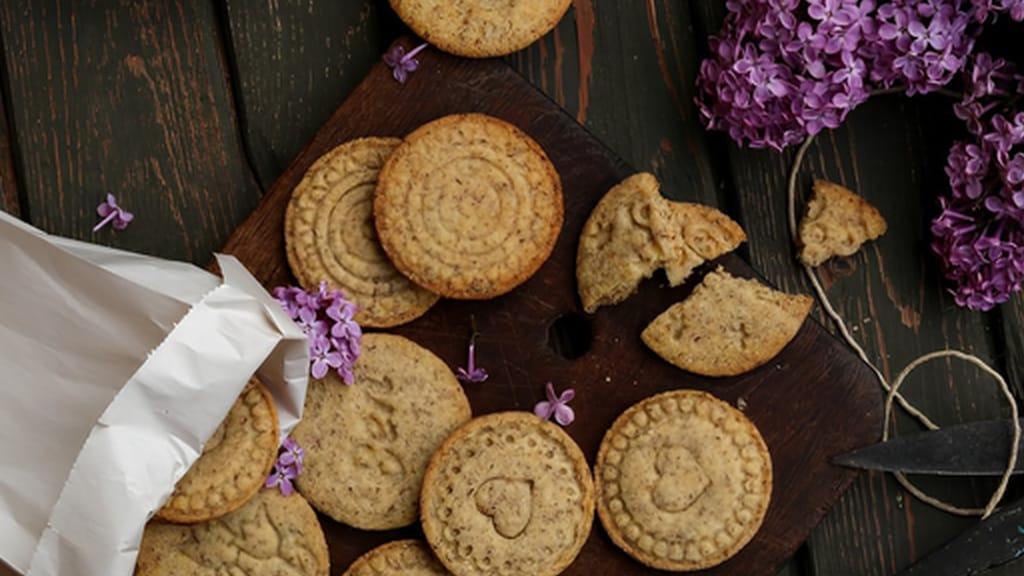
Delicate almond shortbread cookies
Almond shortbread cookies you can press edible flowers onto
Flat flowers with thin petals work best on cookies: pansies, daisies, cornflowers, chamomile-type daisies and rose petals. But it depends on the form you have them in.
Pressed flowers are the easiest, because they are completely flat. You can press them even into raw dough. We don't sell them. You can find them in shops that stock edible decorations, or press them yourself at home: put fresh edible flowers between two sheets of baking parchment in a heavy book and leave them to press for 1–2 weeks.
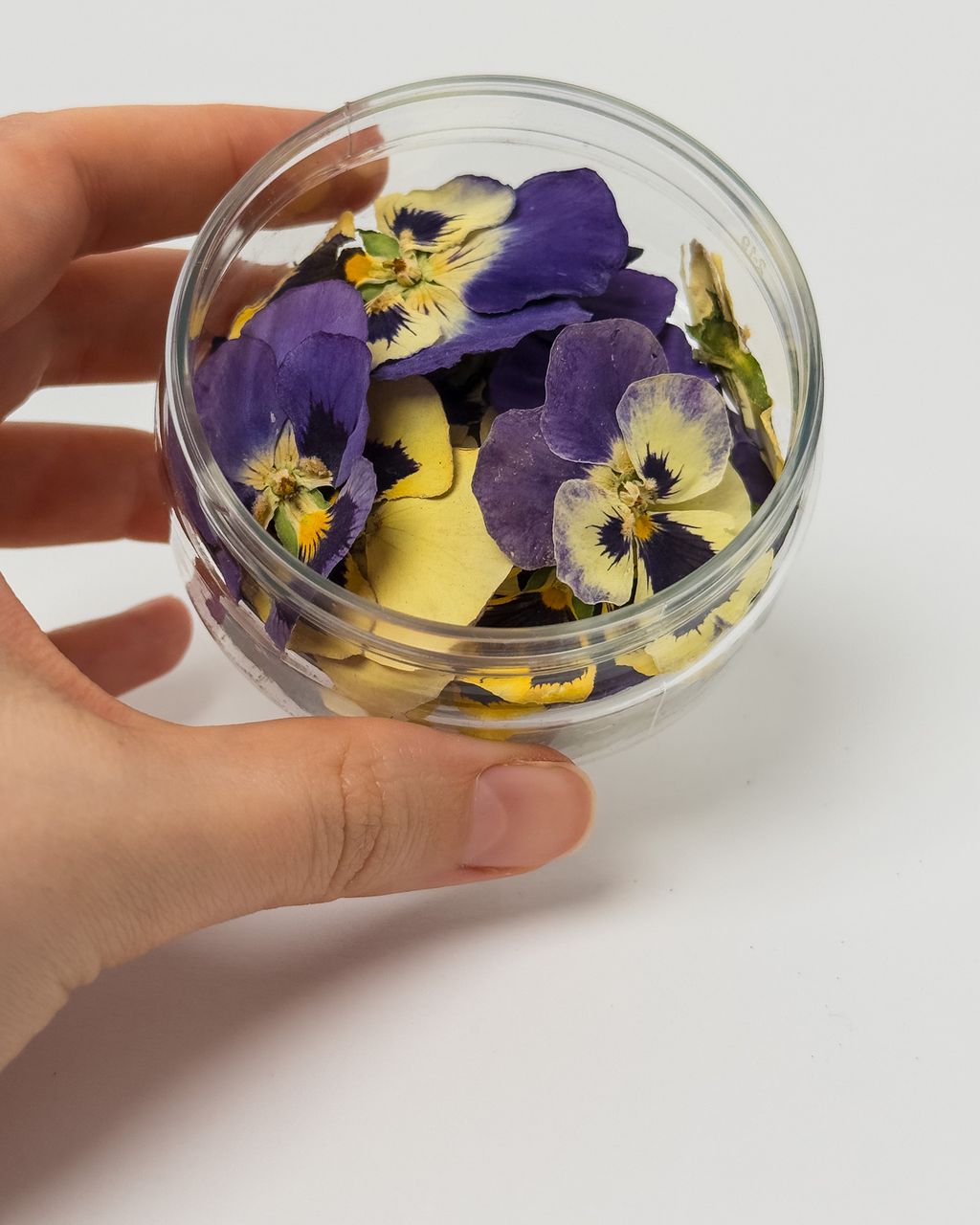
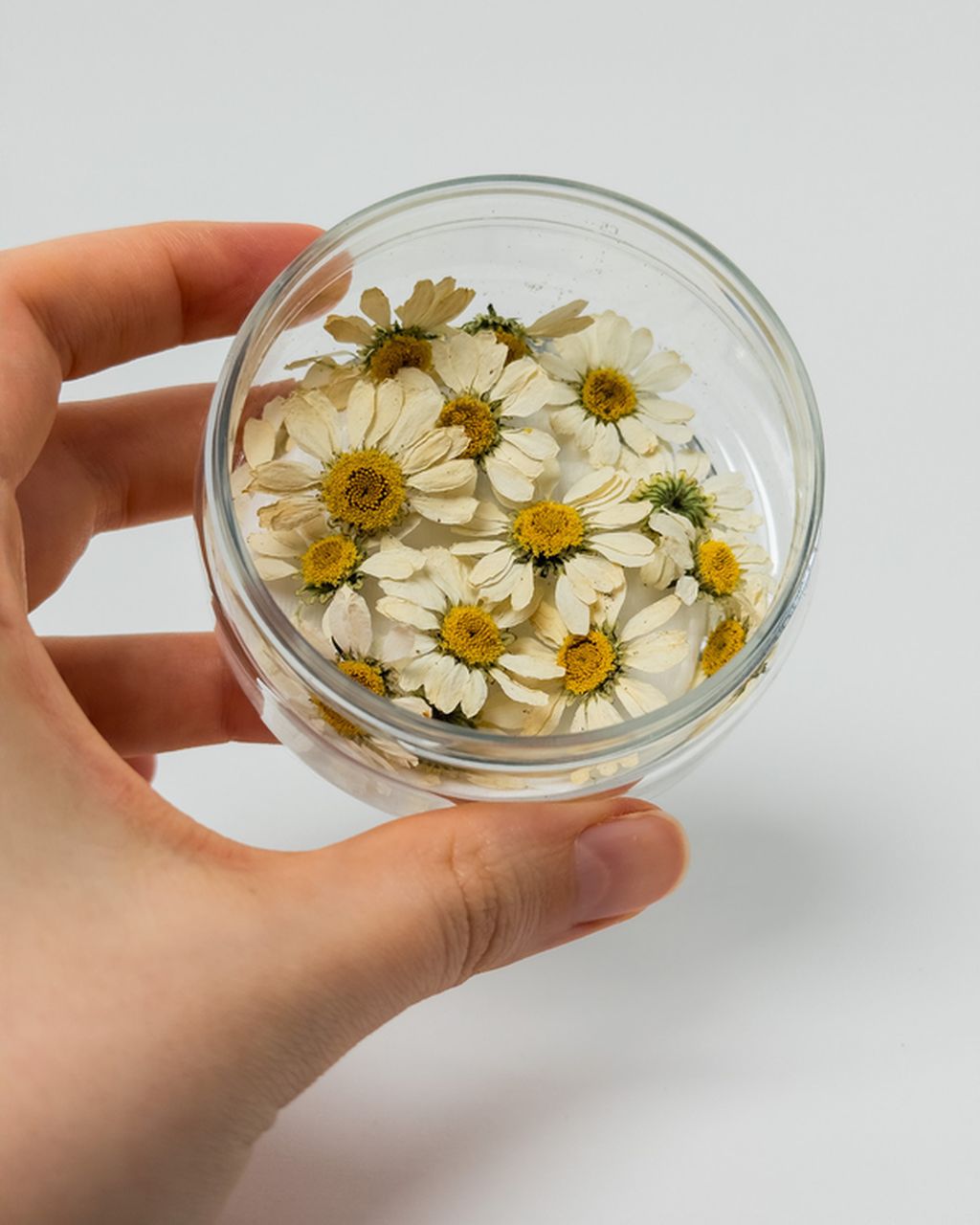
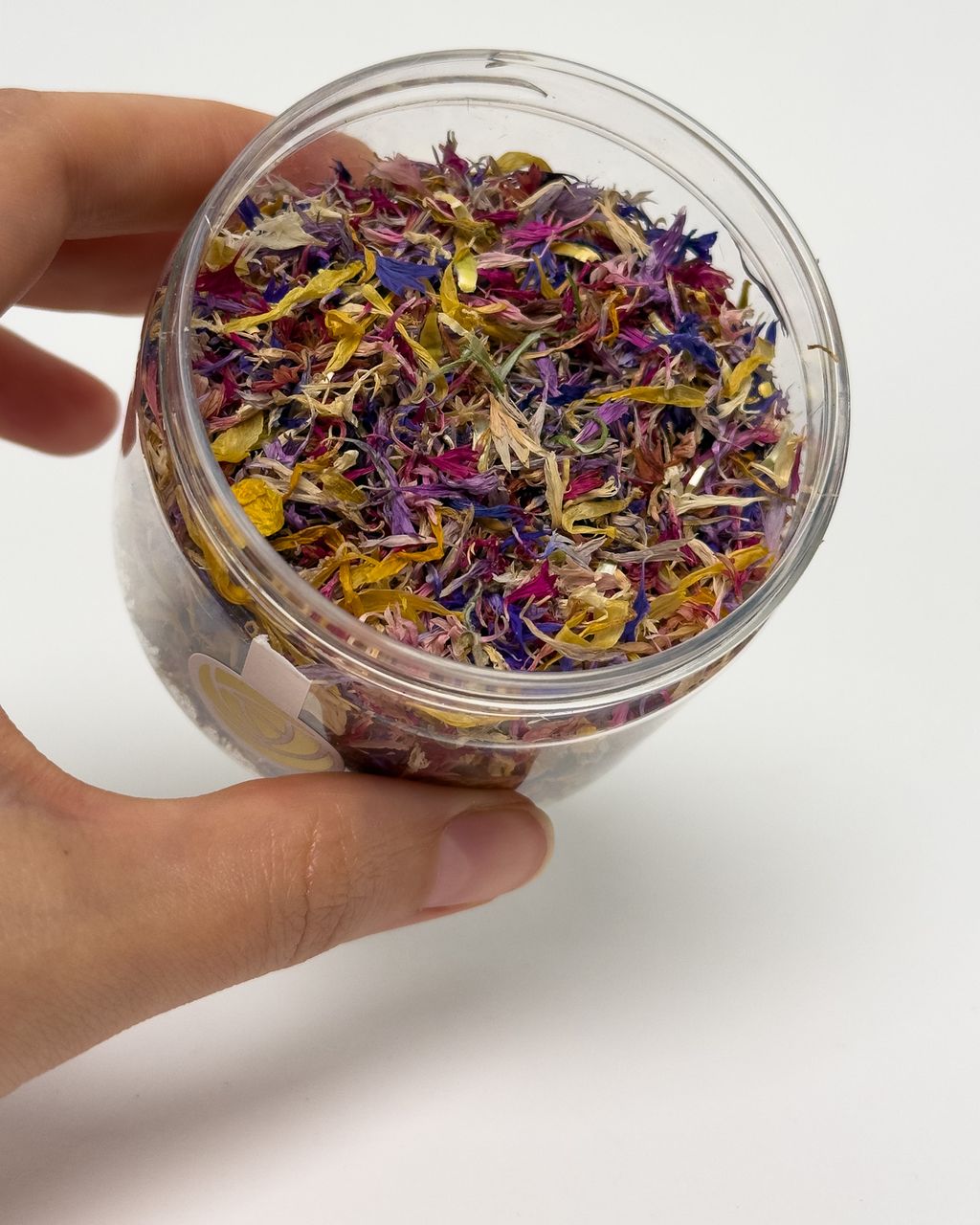
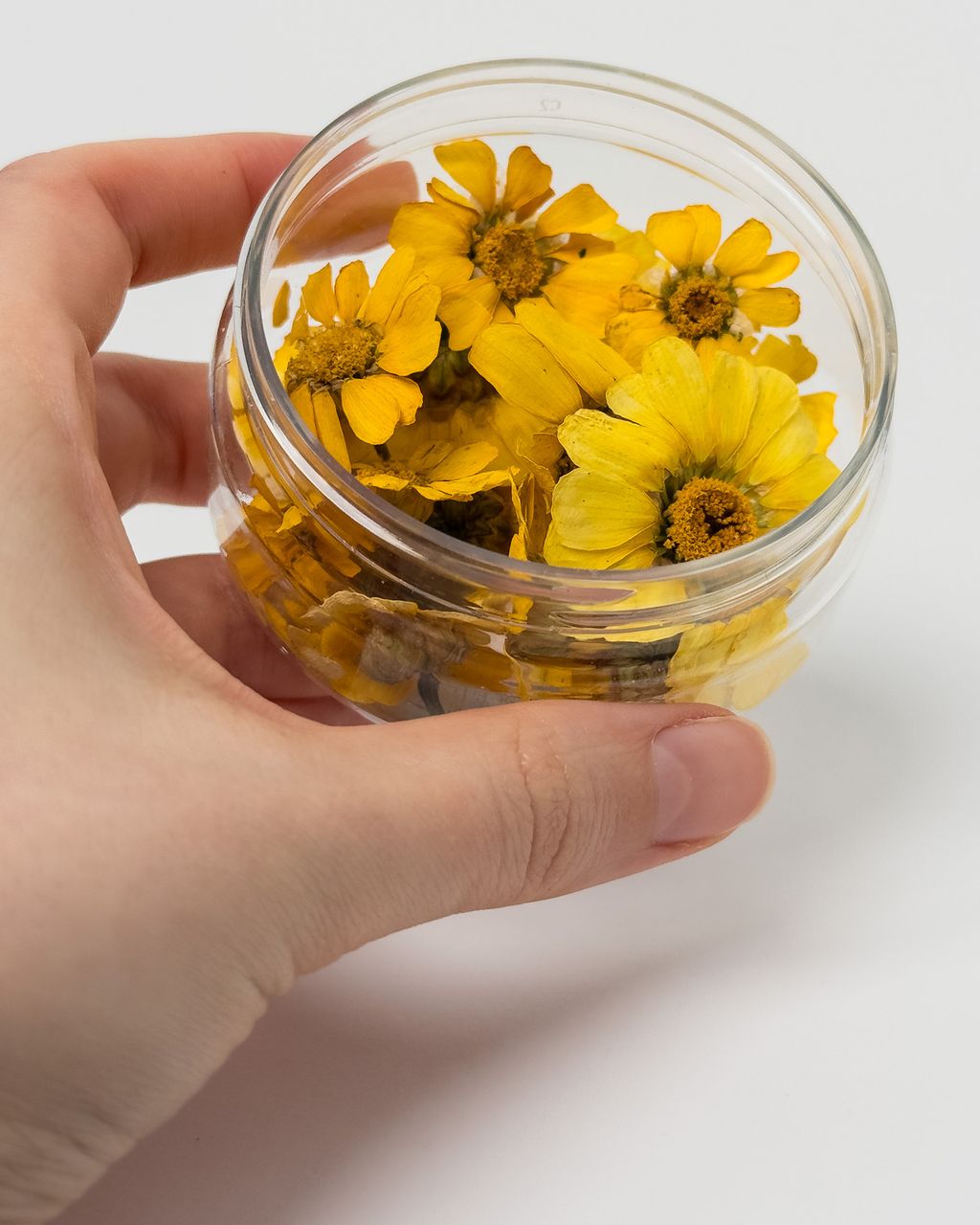
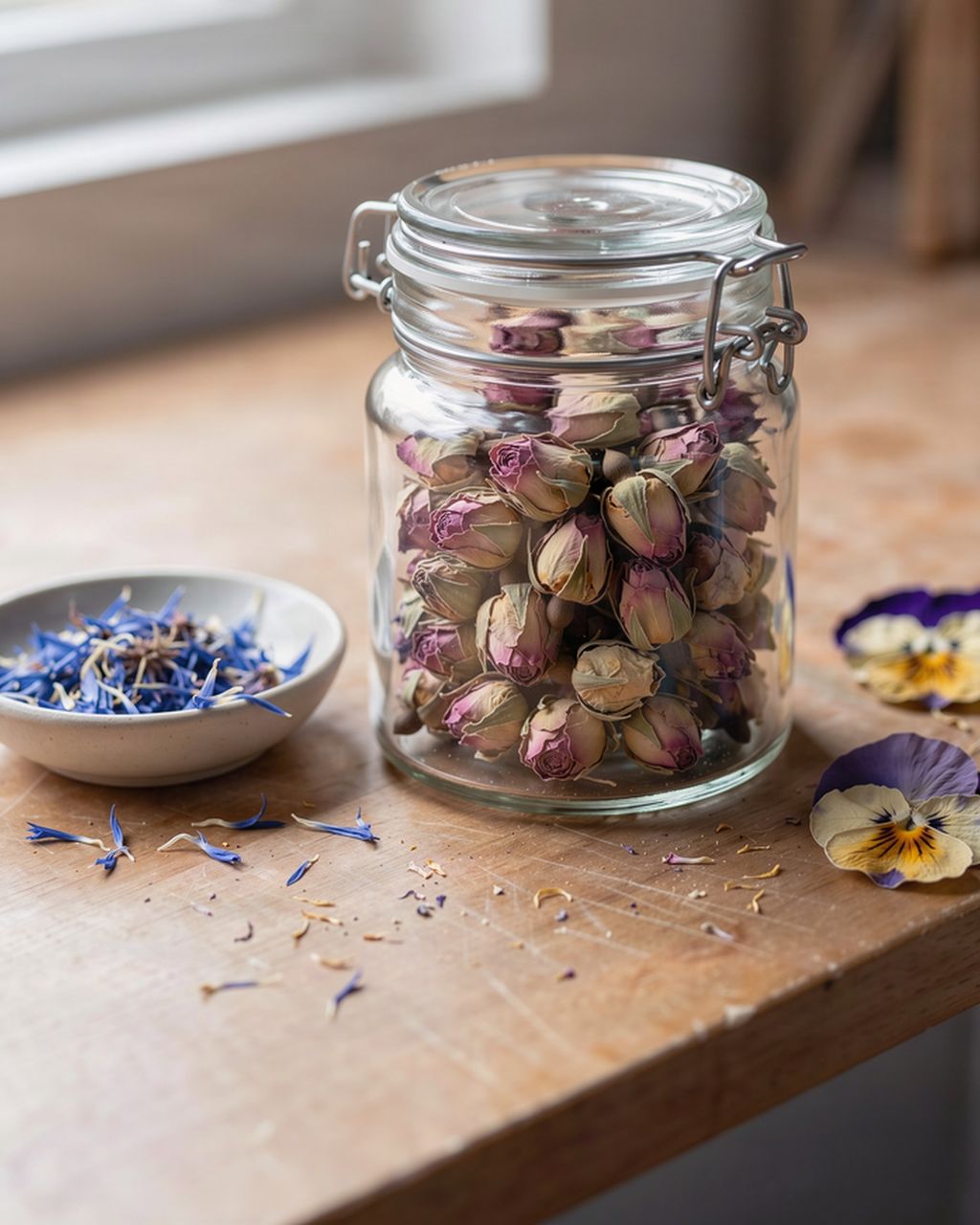
Dried flowers keep for months, so you always have them to hand. But they aren't completely flat, and they brown fastest in the oven. So add them to a half-baked cookie. From the Yumsto range, dried pansies and daisies suit whole-flower decoration, while yellow daisies and cornflower are good as loose petals. Blue cornflower holds its colour in the oven very well.
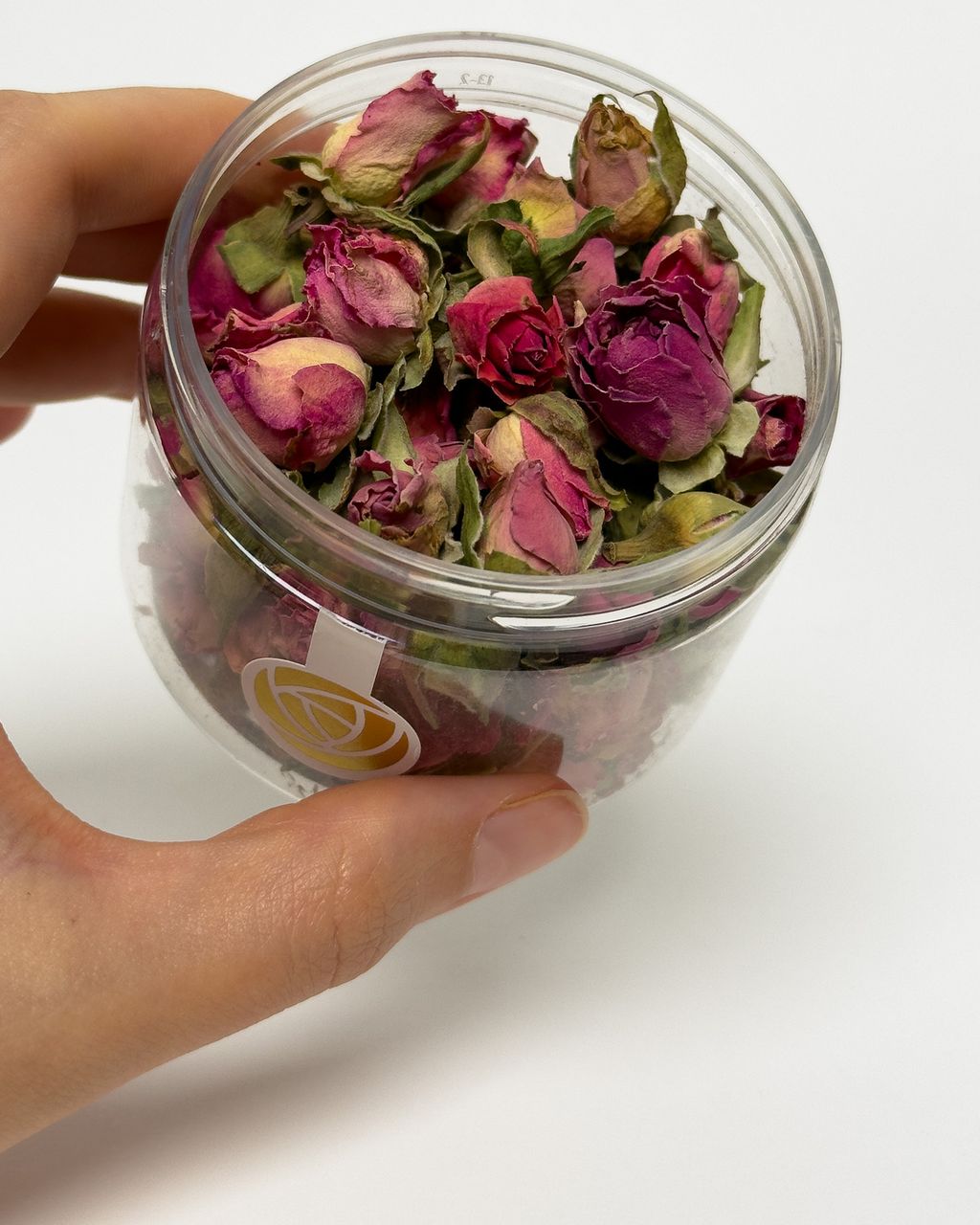
Rosebuds are round and you can't press them into the dough. Stick them whole onto a baked cookie with icing, or pull off the petals and press them down flat. You'll find more about working with them in the article Dried edible flowers and rosebuds.
Fresh flowers from the garden have the most vivid colours. But they are bulky and contain water, so they often curl up on the cookie. Mainly flat ones work well: pansies, violets, borage and marigold petals. To find out which fresh flowers are truly edible, see the article Edible flowers: which are truly edible and which are best avoided.
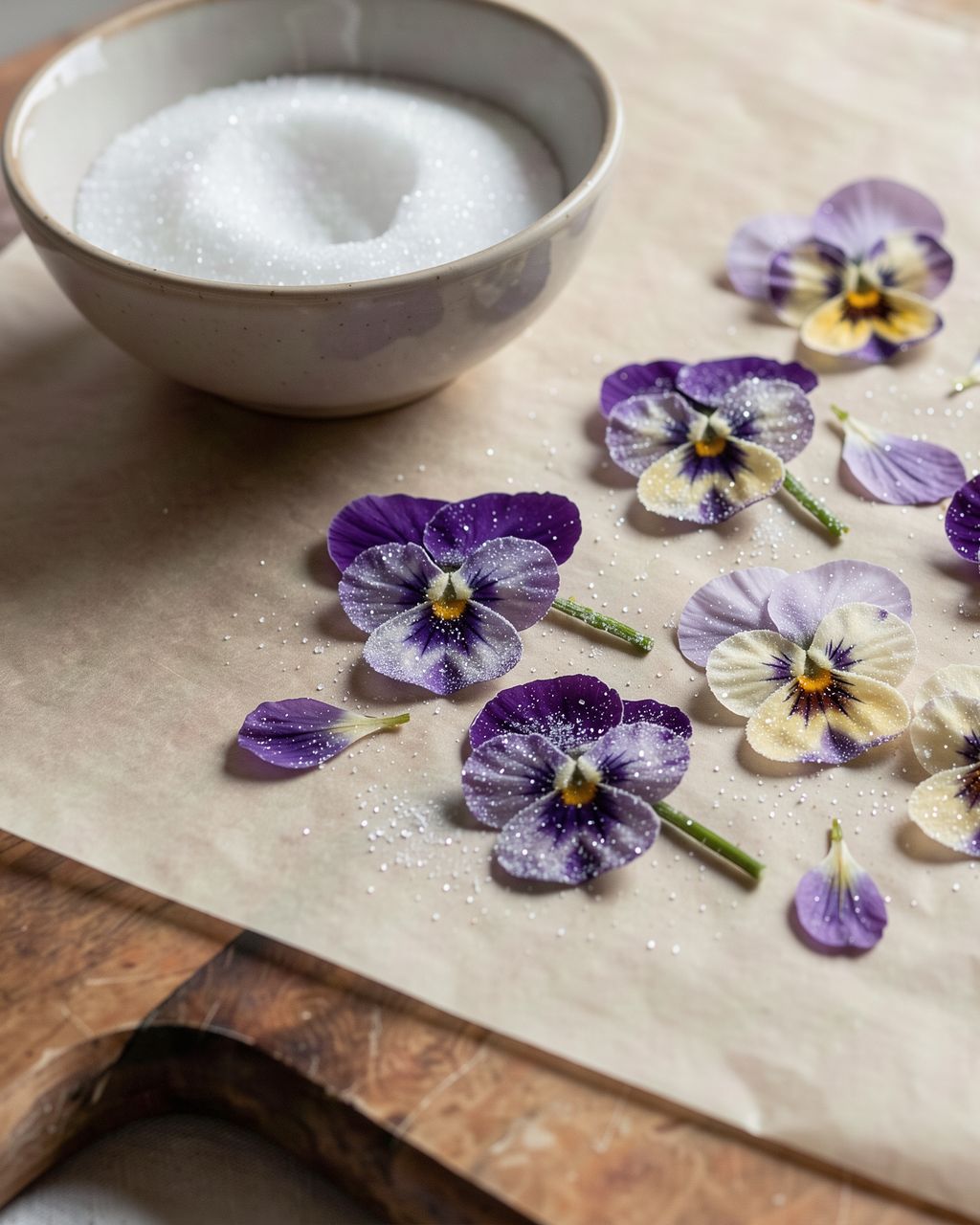
You'll find our full selection of dried flowers and buds in our range of edible flowers. If you want rich, glossy flowers on your cookies without baking them, first coat them in pasteurised egg white and granulated sugar, leave them to dry overnight, and stick them with icing onto a cooled cookie. Don't use raw egg white for this, because nothing is baked.
Edible flower cookies keep for 1–2 weeks in a tin or airtight container at room temperature. Store them somewhere dark and dry. Light fades the colour of the flowers, and moisture softens the petals so they start to peel off the cookie. Layer the cookies between sheets of baking parchment so the flowers don't rub against each other.
Use aquafaba, the liquid from a can of chickpeas, instead of egg white. It sticks and sets in a similar way. A thick sugar syrup made with sugar and water in a 2:1 ratio (two parts sugar to one part water) also works, and it stays glossy after baking. Brush the syrup on thinly, or the surface of the cookie will turn sticky.
Yes, you can put edible flowers on iced or chocolate-topped cookies, and it's the gentlest method because the flowers never go in the oven. Timing is what matters: on tempered chocolate, place the flowers straight after spreading it, while it's still glossy and liquid, because once it starts to set the flower won't sink in. With fondant, also place the flower right away, before the surface dries and forms a crust. Dark, milk and white chocolate all work. Yellow daisies and cornflowers stand out on dark chocolate, while purple pansies and pink rose petals look best on white.
For one cookie 5–6 cm (2–2½ in) across, one pansy, 3–5 small daisies, or a pinch of cornflower or daisy petals is enough. For a tray of 20–25 cookies, count on the same number of large flowers, or a few tablespoons of loose petals. Keep a few extra flowers on hand, because dried petals break easily when you handle them.
One recipe worth heating the oven for, one tip, and one deal from the shop. Nothing else.