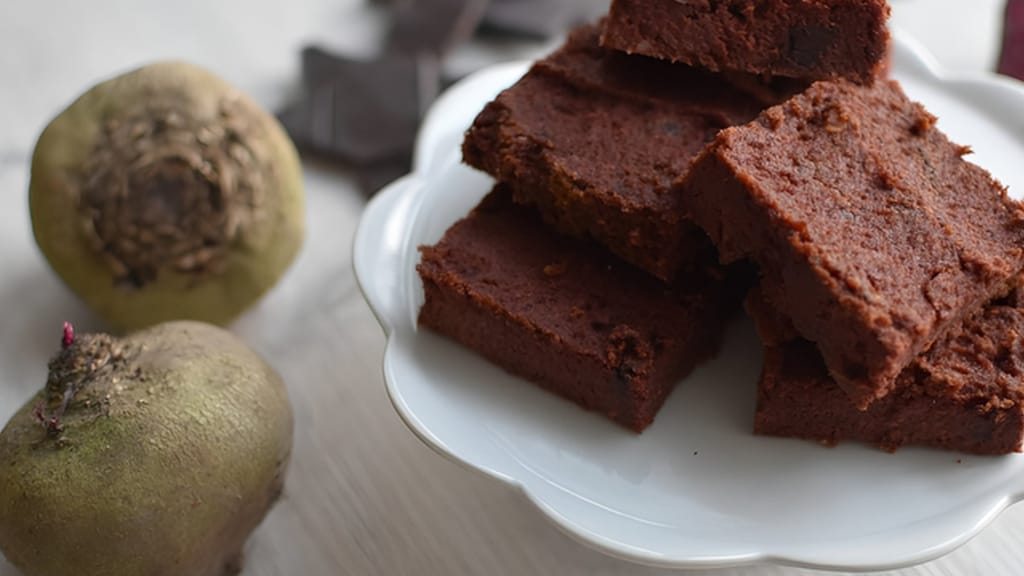
Gluten-free beetroot and walnut brownies
What to Bake with Chocolate: Brownies, Cake, Cookies, Fondants and Dark and White Chocolate Desserts for Valentine's Day
Updated Nov 20, 2026
What can you bake with chocolate? The surest bets are brownies, chocolate cake, cookies, a fondant with a molten center and chocolate mousse – and from white chocolate, ganache, creams and tarts. What matters most is which chocolate you buy and how you melt it: with a bar of 70% dark chocolate, butter and eggs you can bake almost everything you'll find here. Every dessert comes with a temperature, a time and how to tell when it's done. The Valentine's Day section has a plan for spreading it all across the week before Valentine's Day, which in 2027 falls on Sunday, February 14.
For baking, choose dark chocolate with 60–70% cocoa. It's the safest choice for brownies, fondant, cake layers and ganache: bitter enough not to get lost in the dessert, and not so dry that it makes batter dense. 70% dark chocolate is the all-rounder that most recipes in this article work with.
What the percentages on the wrapper mean in practice:
50–60% – sweeter and milder. Good for mousse, for mascarpone creams and wherever you don't want to sweeten the dessert further.
70% – the sweet spot for brownies, fondant and glazes. Pronounced flavor, predictable behavior.
80–85% – intense and less sweet, with more non-fat cocoa solids. Ganache made with it sets firmer, so it needs more cream for the same amount of chocolate. If you swap 70% for 85%, expect a more bitter, drier dessert.
The percentage is the total cocoa solids – cocoa butter plus non-fat cocoa solids – not a "bitterness rating." Two 70% chocolates can behave differently depending on how much cocoa butter they contain. We go into detail in chocolate percentages: what they mean and how to recognize good chocolate.
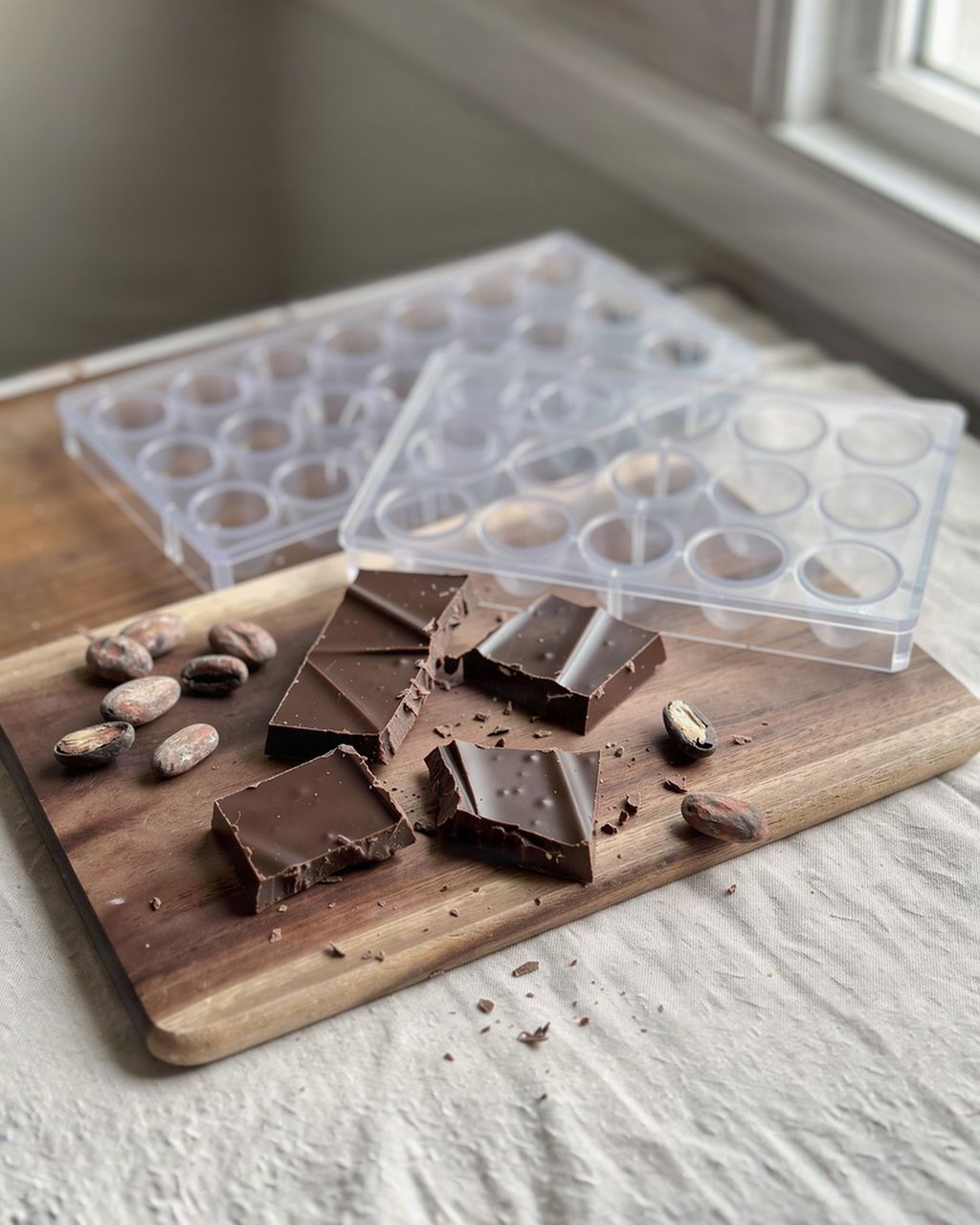
Couverture pays off for coatings, pralines and molding, where you can see the chocolate; for brownies, cake layers, fondant and cookies, a good 70% bar is enough. Couverture (labeled "čokoládová poleva," or chocolate coating, in Czech stores) is chocolate with a higher share of cocoa butter – under the European chocolate directive (2000/36/EC) it has at least 35% total cocoa solids, of which at least 31% is cocoa butter and at least 2.5% non-fat cocoa solids. That lets it melt into a fluid, glossy mass, be tempered, and snap once set. It's usually sold as small discs (pistoles), which melt evenly and don't need chopping.
When couverture is worth it: coatings, pralines, molding (for example a chocolate heart), glossy ganache and anywhere the chocolate is visible.
When a bar is enough: brownies, cake layers, fondant and cookies. Here the chocolate is blended with butter, eggs and flour, and the difference in cocoa butter disappears. A good 70% bar is perfectly fine.
What to watch out for: "cooking chocolate" is an inconsistent name. Sometimes it's a decent dark chocolate, other times a cheap blend with less cocoa. Also mind the difference between coatings: "čokoládová poleva" (chocolate coating) is quality chocolate for coating, while "tuková" or "kakaová poleva" (fat-based or cocoa-flavored coating) is a compound coating with vegetable fat instead of cocoa butter – leave it on the shelf when baking. Always read the ingredients: cocoa or cocoa mass should come first, not sugar.
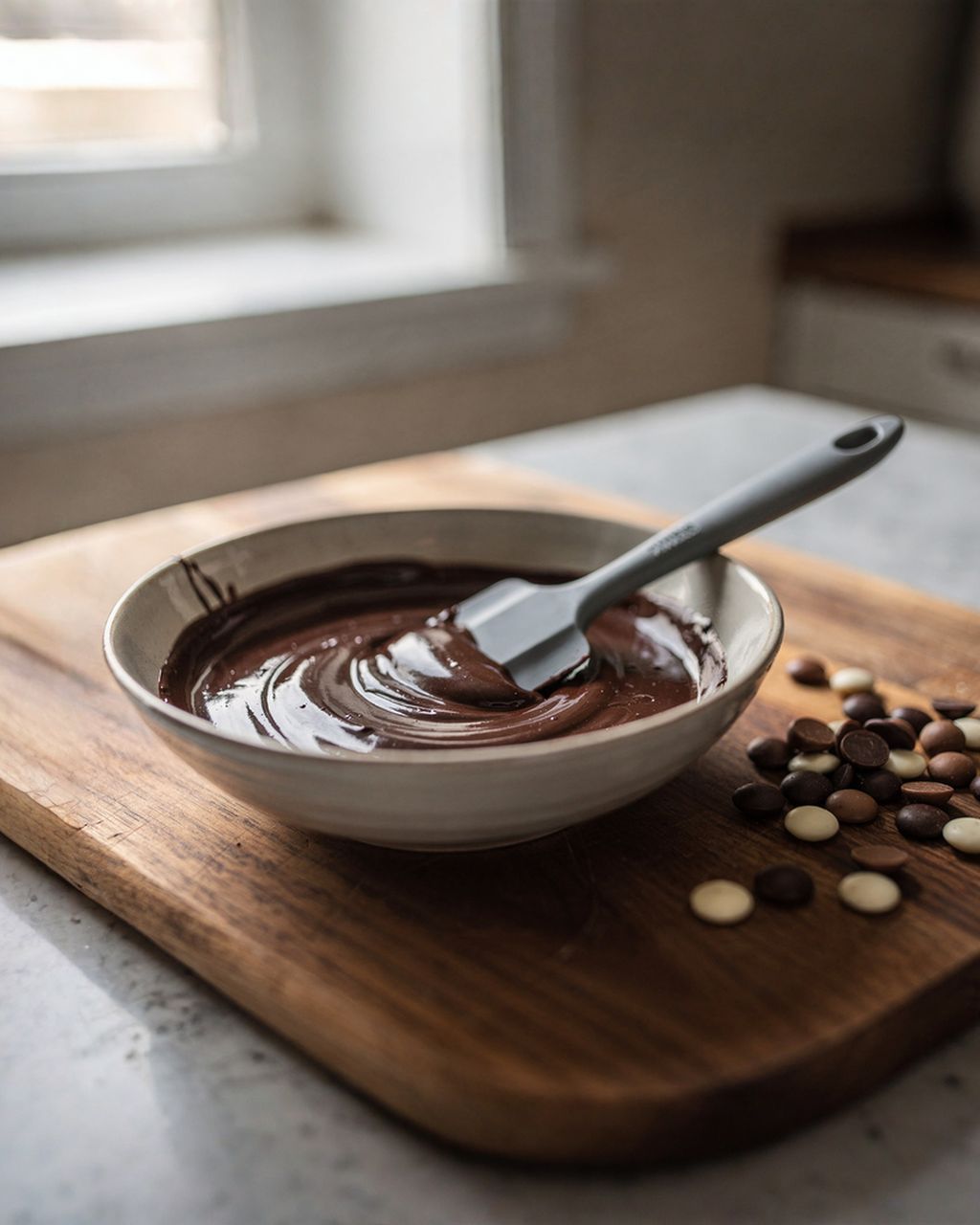
Melt chocolate slowly and over gentle heat – over a water bath (double boiler) or in the microwave in short bursts. Both work if you follow three rules:
Water bath: set a bowl of broken-up chocolate over a pot of gently simmering water. The bottom of the bowl must not touch the water, or the chocolate will overheat from underneath.
Microwave: heat in 20–30 second bursts at medium power, stirring every time. Chocolate holds its shape even when it's already liquid inside, so you can't judge by eye.
Not a drop of water: steam from the pot or a wet spatula is enough for the chocolate to seize into a stiff, grainy mass. Fat (butter, cream) is no problem – feel free to add it right away.
Dark chocolate tolerates more heat; milk and white chocolate less, because they contain milk solids, which scorch. Melt white chocolate most carefully of all. All the tricks, temperatures and how to rescue overheated chocolate are in our guide how to melt milk chocolate without scorching or clumping – it applies to dark chocolate too.
We send seasonal cooking and baking plans and recipes made from everyday ingredients. Unsubscribe in one click.
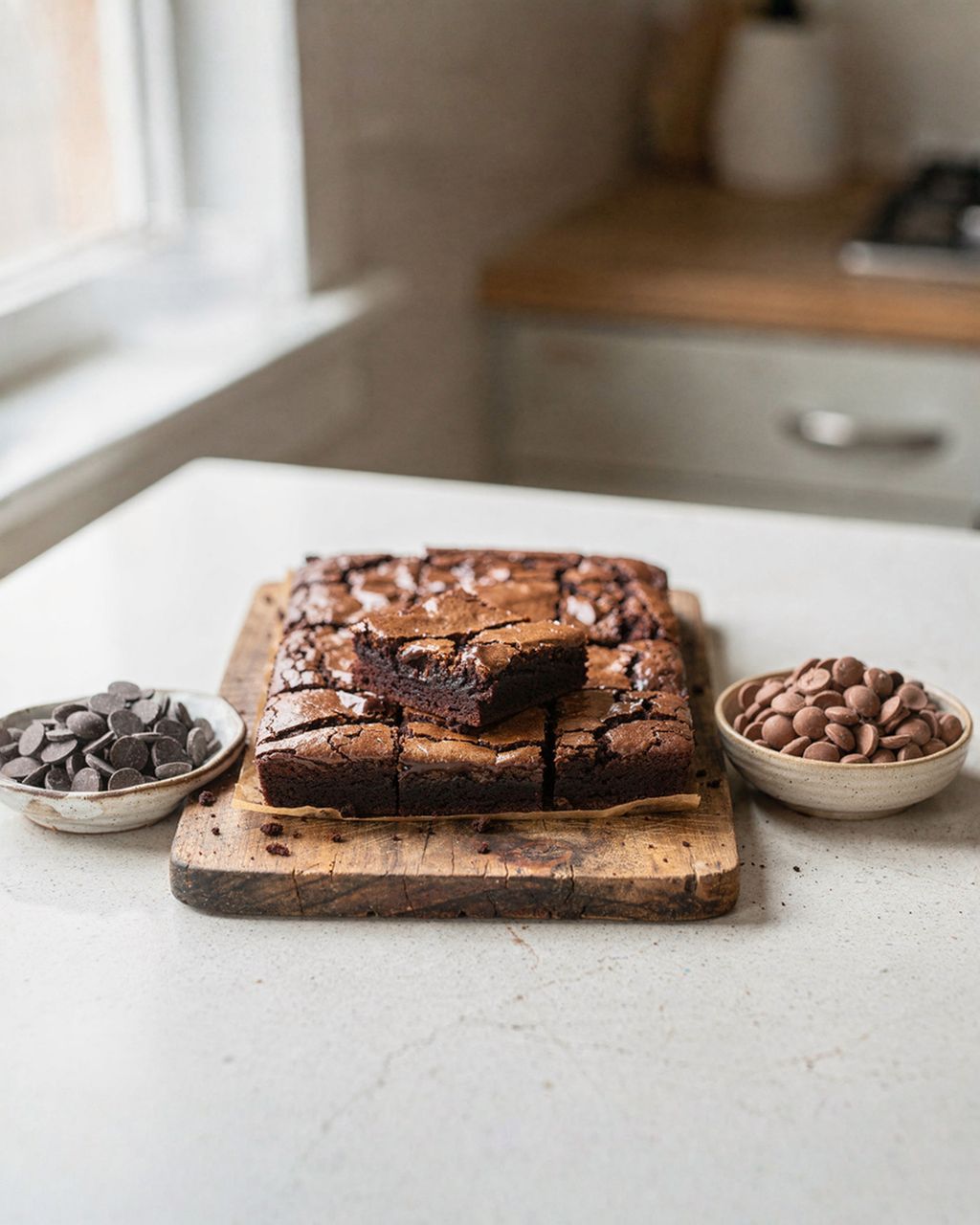
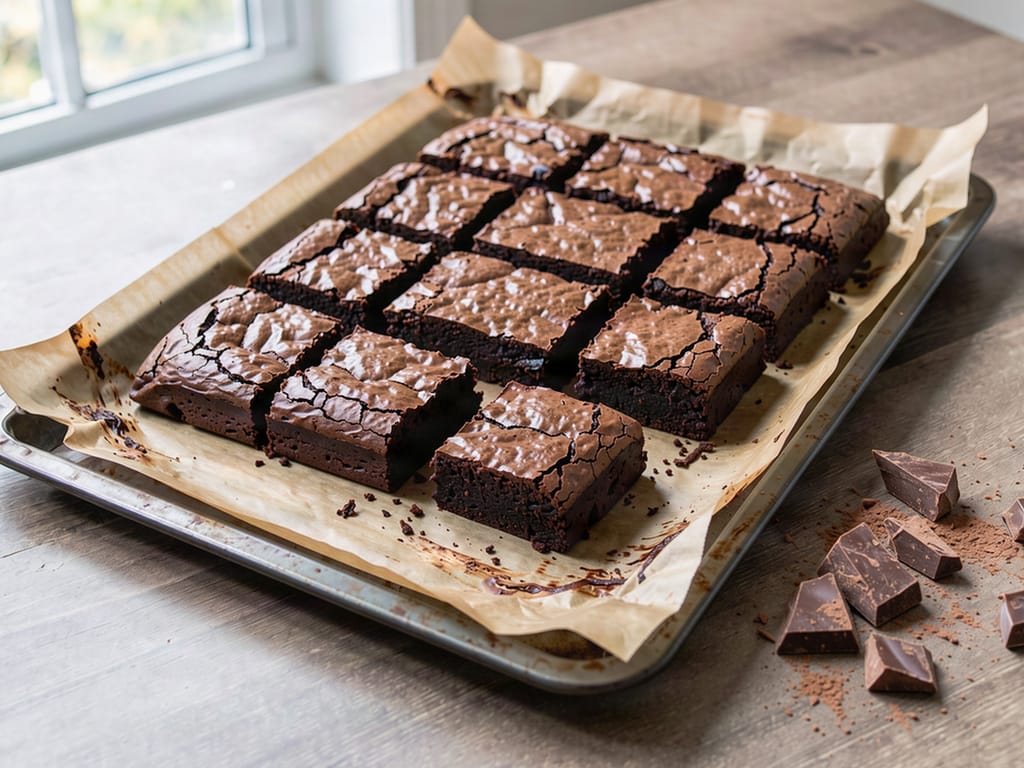
Fudgy brownies rely on lots of chocolate and butter, little flour and a short bake: roughly 175°C (350°F), 20–25 minutes in a 20 × 20 cm (8 × 8 in) pan, taking them out while they're still moist in the middle. They finish cooking in the pan and set in the fridge.
The secret to the fudgy texture is a ratio of chocolate to butter to flour of roughly 2.5 : 2 : 1 – flour is the smallest of the three. Which chocolate to choose and what to substitute is covered in which chocolate to use in brownies and chocolate cake.
When they're done: the edges are firm and pull away from the pan, and the surface is matte with fine cracks. A skewer from the center shouldn't come out clean – moist crumbs should cling to it, not liquid batter. A clean skewer means you've got more of a chocolate cake.
Why this works: eggs whisked with sugar into a pale foam form a thin, shiny crust on top. Little flour and a short bake keep the center dense. Let the brownies cool completely before slicing, ideally an hour in the fridge. Warm ones tear and stick to the knife.
Variations: before baking, scatter chopped milk or white chocolate, nuts, raspberries or spoonfuls of salted caramel over the top.
Without wheat flour, there are beet and walnut brownies: the moisture comes from puréed beet and banana, and they bake at 180°C (350°F) for 35 minutes. Leftover baked brownie can also be turned into chocolate brownie monster pops, which kids love to help with.
Gluten-free beetroot and walnut brownies
Beet and walnut brownies without wheat flour
A chocolate cake comes down to two decisions: which cake layer and which filling. The most reliable combination is a cocoa sponge or a moist cake layer with a ganache-mascarpone cream. The cream is simple: pour hot cream over chocolate, let it stand five minutes, stir smooth, and whip the cooled mixture with mascarpone.
Cocoa sponge – the rule that never fails: weigh the eggs in their shells and use the same weight of sugar. Flour and cocoa together should also weigh the same as the eggs. Cocoa is dry and bitter, so don't add it on top – subtract it from the flour. Bake at 175°C (350°F; 160°C/320°F fan) and don't open the oven for the first 30 minutes, or the sponge will collapse. It's done when a skewer from the center comes out clean and dry. Slice it only once completely cool, ideally the next day.
Moist cake layers with no whisking: the Easter chocolate cake has a thin cocoa batter loosened with hot water, bakes at 170°C (340°F) for about 90 minutes and is cut into four or five layers. With a different decoration it works any time of year.
If you don't want to slice layers: the simple chocolate cake has a cookie base and a filling of ricotta, mascarpone and chocolate – the result resembles a chocolate cheesecake.
Cake layers most often fail because of these mistakes:
opening the oven in the first 30 minutes – the sponge collapses,
overbeating the batter after adding the flour – the bubbles from the whipped eggs break down and the cake is low and tough,
slicing a warm cake – it crumbles and tears,
folding ganache into mascarpone while still warm – the cream splits or runs. It should be lukewarm to cold.
Two rules apply to chocolate cookies: cold dough and a short bake. Dough chilled in the fridge spreads less in the oven, and you should take the cookies out while they're still soft in the middle. They finish on the baking sheet.
American chocolate chunk cookies (we're still preparing the recipe on Yumsto): let dough made with brown and white sugar and coarsely chopped dark chocolate rest in the fridge for at least an hour, ideally overnight, then bake scoops at 180°C (350°F) for 10–12 minutes. Brown sugar makes cookies soft, white sugar makes them crisp – the ratio lets you set the texture.
Cocoa cookies with a salty touch: chocolate cookies with fleur de sel are egg-free, made with 85% chocolate and sliced from a chilled log. The salt tempers the bitterness, so the chocolate tastes fuller and sweeter.
A Christmas classic in a chocolate version: cocoa linecké (Czech Linzer-style jam cookies) with apricot jam and chocolate are dipped in tempered milk chocolate. It's good tempering practice before you try molding. With dark dough you can't see it turn golden, so go by the timer.
From nut flour: lakronky – hazelnut macarons with a chocolate filling are shells of egg whites and ground hazelnuts sandwiched with ganache made from 85% chocolate. They contain no wheat flour – but they're full of nuts, see the note below.
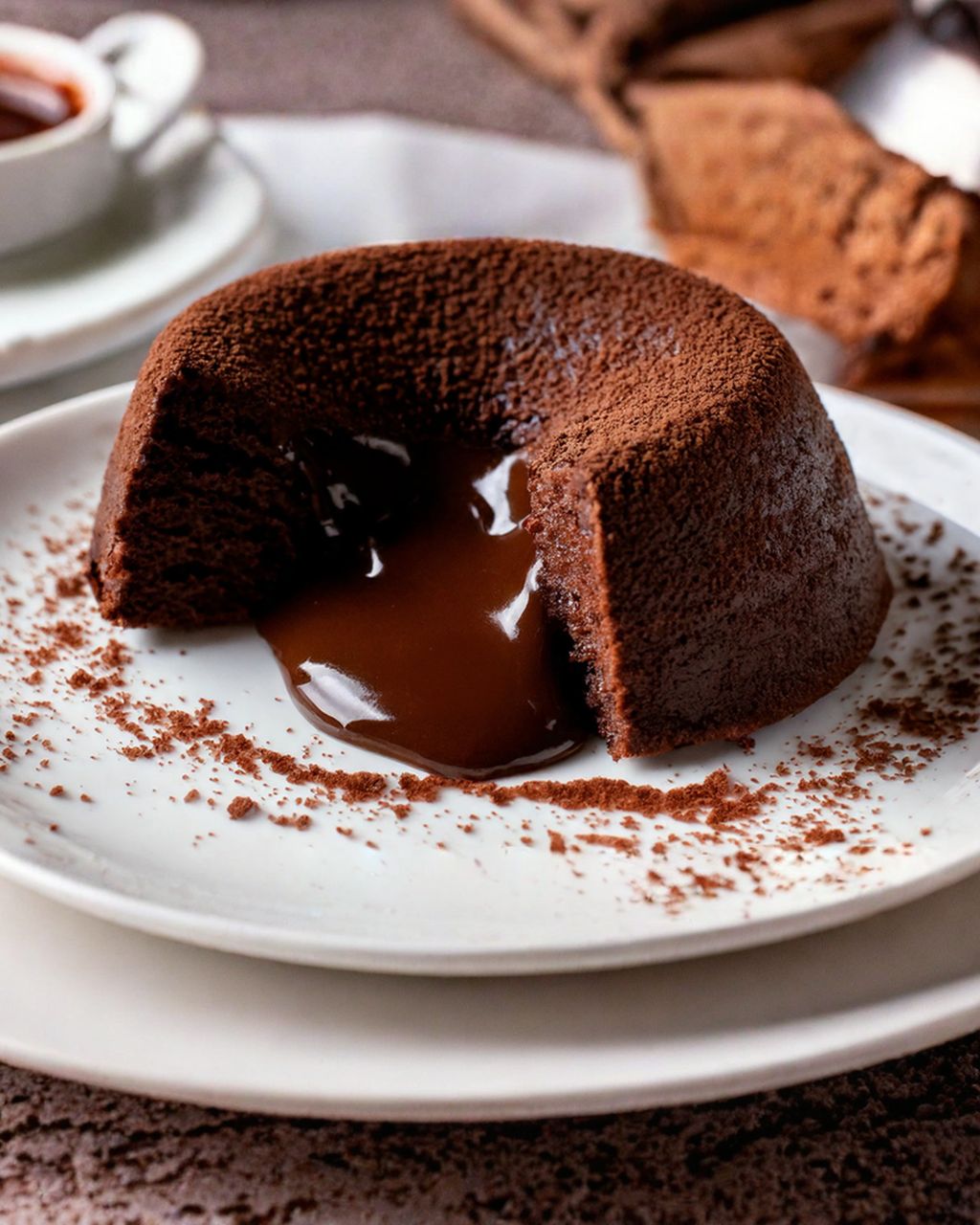
Fondant is a small chocolate cake baked so briefly that the center stays liquid. The batter is simple – melted chocolate with butter, eggs whisked with sugar and a little flour – and all the magic is in the time and oven temperature: it's done when the edges set and the center still jiggles when you nudge the ramekin.
Below is a fondant for four made with 85% chocolate, ready in 30 minutes. For two, there's a chocolate fondant with fruit and whipped cream that bakes at 200°C (400°F) for just 8–10 minutes.
Why a fondant fails, how to prepare it ahead and turn it out whole are all spelled out in chocolate fondant with a molten center: method, grams and baking times.
The molten center is a lightly cooked egg – who should avoid it is in the note below.
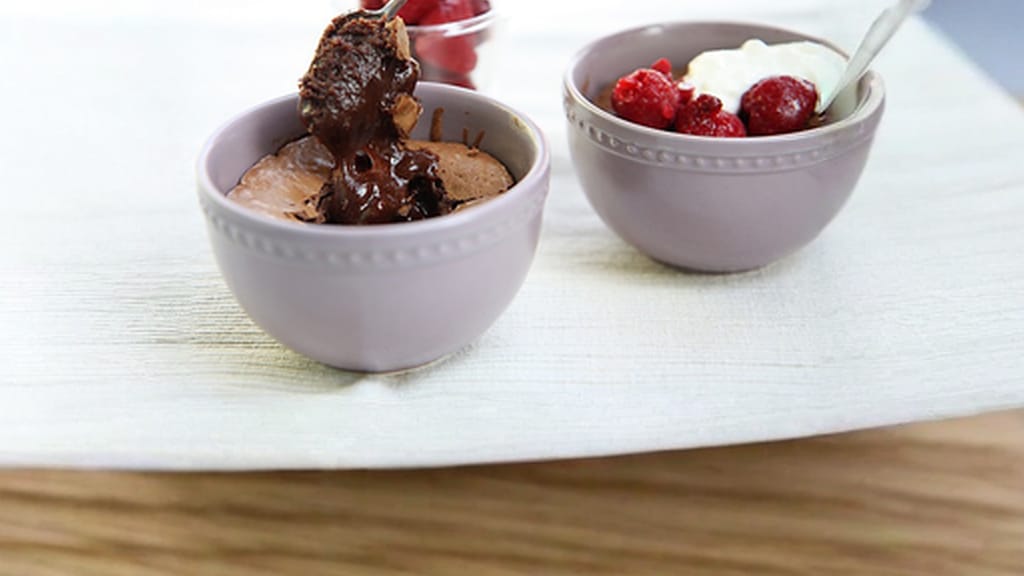
Chocolate fondant with a molten center
Chocolate fondant with a molten center, for four
Chocolate mousse can be made two ways. The traditional French mousse au chocolat relies on raw eggs – whipped egg whites and yolks folded into melted chocolate. The simpler, safer version is just chocolate and whipped cream.
Mousse from just cream and chocolate: the recipe below has only two ingredients, 60% dark chocolate and whipping cream, and most of the roughly 2 hours 20 minutes total is chilling. It contains no eggs, so it's the right choice when you don't know who'll be at the table.
Temperature matters: if you fold whipped cream into chocolate warmer than about 50°C (120°F), the cream collapses and the mousse thins. If the chocolate is too cold, it sets into tiny bits and the mousse is grainy. The ideal is chocolate at around 40–45°C (105–115°F), warm to the touch, not hot.
Classic mousse with raw eggs (recipe coming soon): yolks are stirred into chocolate melted with butter, then stiffly whipped egg whites are carefully folded in, and the mousse goes into the fridge for at least 3 hours. It isn't heat-treated at all, so the note below applies to it.
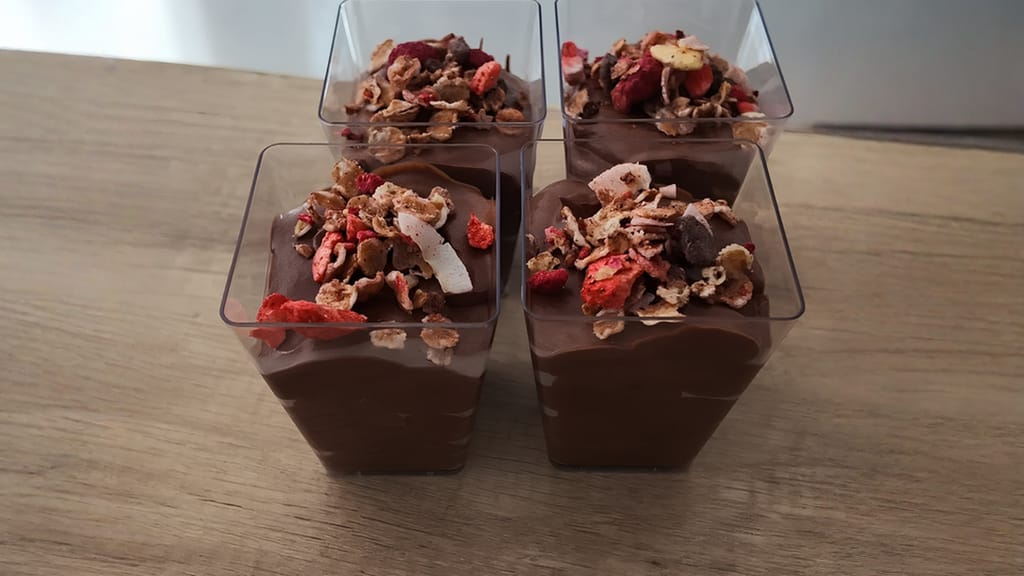
Chocolate mousse
Chocolate mousse made only from dark chocolate and cream, with no eggs
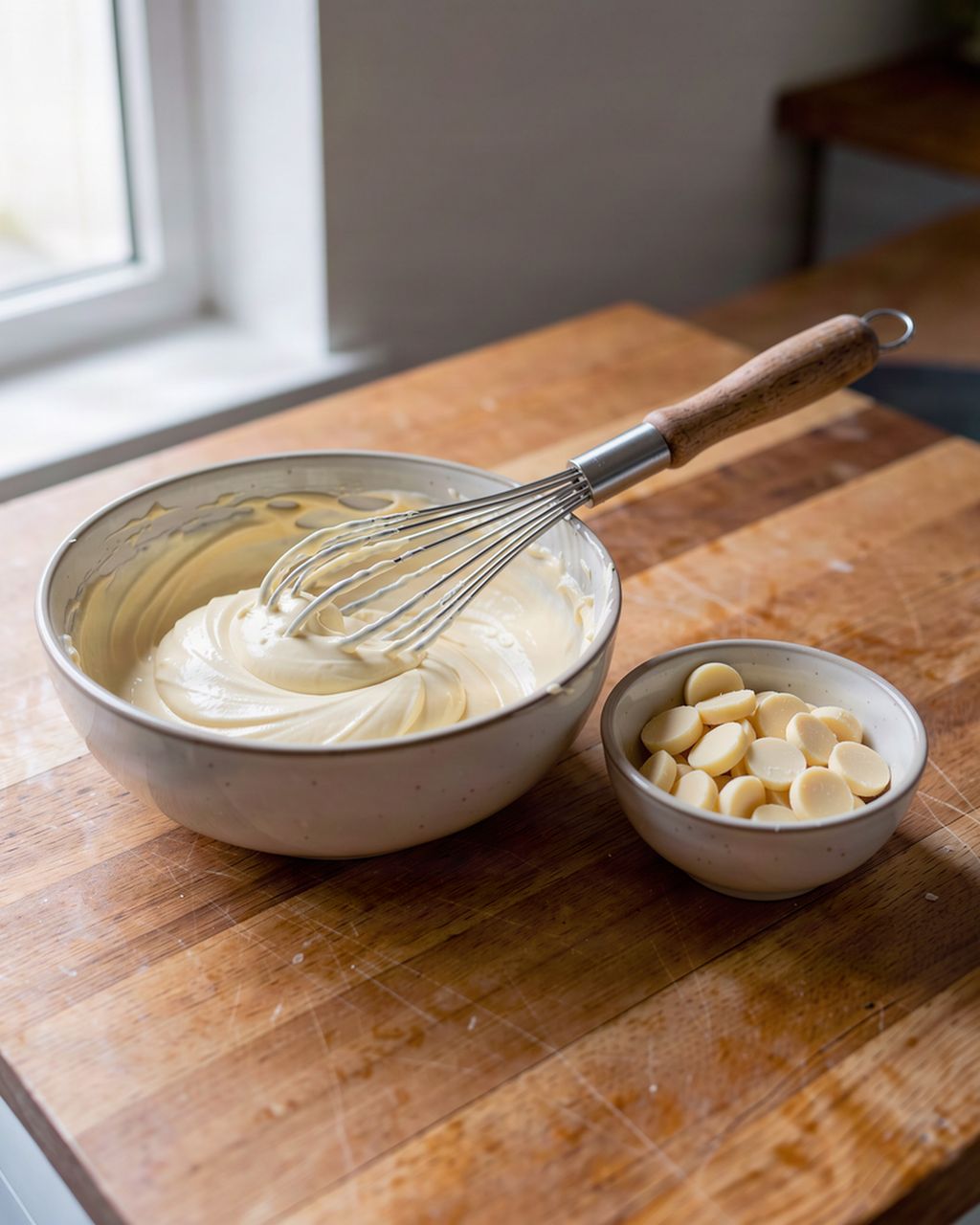
White chocolate works best in creams, ganache and fillings – where its milky, vanilla sweetness shines and you don't have to expose it to high heat. White chocolate has no non-fat cocoa solids, just cocoa butter, sugar and milk, so it doesn't make batter dense or bitter the way dark chocolate does, but it scorches easily. Melt it more gently than any other kind, and in ganache recipes use a different ratio: for the same firmness it needs less cream than dark chocolate. How to whip it without it splitting is in whipped white chocolate ganache.
A tart made the day before: the strawberry cake below is actually a tart with shortcrust pastry, almond filling, strawberry purée and whipped white chocolate ganache, which has to chill overnight – so start a day ahead. It contains gelatin and almonds.
Cream for macarons and cakes: white chocolate and coffee cream has just four ingredients, and the espresso nicely cuts the sweetness of the white chocolate.
Fluffy mousse: white chocolate mousse – delicate and fluffy is served in glasses on crushed cookies with strawberries. It contains raw eggs – the note above applies.
No-bake: Baileys balls with white chocolate and ladyfingers just need mixing and setting in the fridge. They contain alcohol, so they're not for children.
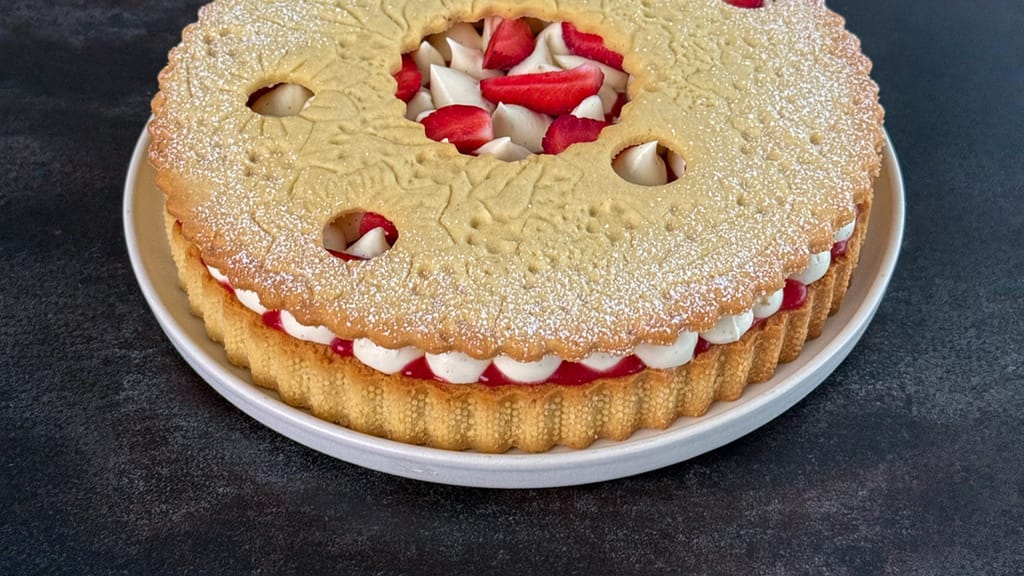
Strawberry tart with white chocolate and almonds
Strawberry cake with white chocolate and almonds
Milk chocolate works best in ganache, tart fillings and glazes, not brownies or fondant. It's sweeter and softer than dark chocolate and scorches sooner, so as the main chocolate in a batter it gives an oversweet dessert that holds its shape less well.
It shines most in the chocolate tart with salted caramel: the filling is a ganache of 35% milk chocolate, topped with three creams. It's a two-day project, but worth it for a celebration.
Don't bake Kinder bars and similar milk-filled bars inside batter – the filling melts and scorches in the oven. Use them as decoration instead: chopped over cooled brownies, onto the set glaze of a cake or into a cream at the last step.
For Valentine's Day, the best desserts are the ones you make a day or two ahead, plus one you finish at the last minute. Valentine's Day in 2027 falls on Sunday, February 14, so you have the whole weekend to prepare.
A cake for the whole evening: the chocolate cake for lovers below has a cocoa sponge, a ganache-mascarpone cream and a glossy dark chocolate glaze. Bake the sponge on Friday, assemble the cake on Saturday and leave it in the fridge overnight – on Sunday it slices beautifully.
A bundt cake that keeps: the Valentine's chocolate bundt cake with pomegranate is ready in 76 minutes, and a glaze of cream and chocolate keeps it moist.
For the last minute: the fondant for two from the previous section. Make the batter in the afternoon, put the ramekins in the fridge and bake once you've finished the main course – 8–10 minutes at 200°C (400°F).
Small gifts: chocolate peanut butter truffles and dark chocolate fudge set overnight, so you can have them ready a few days before Valentine's Day.
And if you want a gift that looks like it came from a pastry shop, mold a chocolate heart without a mold for Valentine's Day – the article shows how to cast, fill and wrap it.
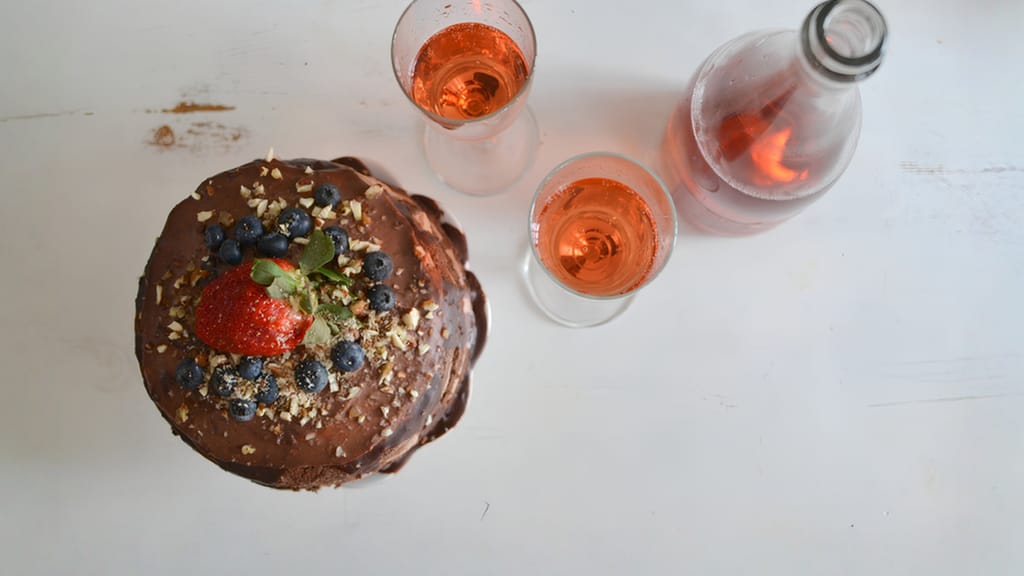
Chocolate cake for sweethearts
Chocolate cake for lovers with ganache and mascarpone
Start on Wednesday with the gifts that need to set, bake on Friday, assemble on Saturday and on Sunday bake only the fondant:
Wednesday–Thursday: truffles or fudge, the chocolate heart,
Friday: the sponge for the cake, or the bundt cake,
Saturday: assemble the cake, prepare the fondant batter,
Sunday: bake the fondant at the last minute.
Store chocolate in a cool, dry, dark place, ideally between 15 and 18°C (59–64°F) – the range most chocolatiers recommend. The fridge isn't a good choice: it's humid, and when you take the chocolate out, condensation forms and dissolves sugar on the surface. Once it dries, a grayish film remains, known as sugar bloom. A similar film appears with temperature swings, when cocoa butter rises to the surface – that's fat bloom. Both are cosmetic flaws, not spoilage – feel free to melt such chocolate into brownies or cake layers, just don't use it for a glaze that's meant to be glossy.
Chocolate also readily absorbs odors, so keep it in a closed box away from spices, coffee and onions.
Store finished desserts like this:
brownies and cookies – in a closed box at room temperature; brownies stay fudgy for a few days, cookies longer,
cakes with mascarpone or cream filling, tarts with ganache, mousses – always in the fridge, covered, and eat within a few days,
mousse made with raw eggs – in the fridge and eat as soon as possible, ideally the same day or the next,
fondant – best straight from the oven; the batter in ramekins can be kept ready in the fridge and baked just before serving,
truffles and fudge – cream ganache truffles in a closed container in the fridge, fudge in a container in a cool place, layers separated with parchment paper.
Left with chocolate after baking, or odd pieces from different bars? Ideas for using them are in what to do with leftover chocolate.
Callebaut
Callebaut White Chocolate Callets (W2) 400gValrhona
Valrhona Equatorial Milk Chocolate 35% (1kg)Patisse
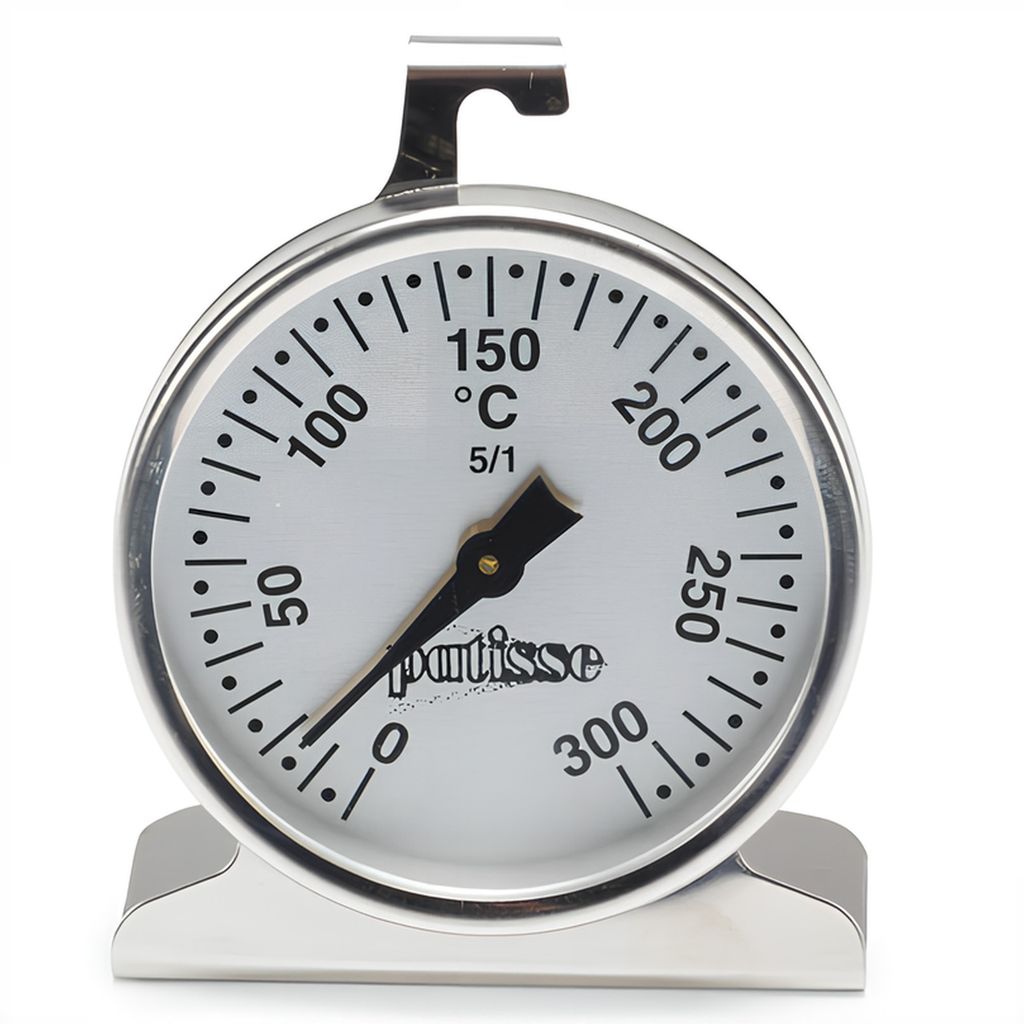
Patisse Oven ThermometerFor every 30 g of dark (about 70%) chocolate, use roughly 2 tablespoons (about 10 g) of unsweetened cocoa, 2 teaspoons of butter and 2 teaspoons of sugar. This works in brownies, cake layers and cookies, where the chocolate is mixed with fat and flour anyway. For ganache, mousse and glazes, cocoa can't replace chocolate – it contains only a fraction of the cocoa butter and lacks what gives chocolate its smooth, setting structure.
Chocolate seizes when a drop of water or steam gets into it while melting, or when it overheats. Chocolate seized by water can be rescued with a little hot cream or butter and thorough stirring – it will turn smooth, but use it in ganache, a filling or batter, not as a coating. Overheated, scorched chocolate with a bitter aftertaste can't be saved.
Yes. Under the European chocolate directive (2000/36/EC), white chocolate is chocolate; it just has no non-fat cocoa solids. It must contain at least 20% cocoa butter and 14% milk solids. A product in which the cocoa butter is replaced with another fat can't be called white chocolate – and it isn't suitable for baking.
Yes, chocolate brownies freeze well – completely cooled, cut and wrapped individually, they keep in the freezer for roughly 2–3 months. Thaw them overnight in the fridge or for an hour at room temperature, and their fudgy texture returns. Add decorations of fresh fruit or cream only after thawing.
Without wheat flour, Yumsto has beet brownies, chocolate mousse made only from cream, chocolate fudge and hazelnut lakronky. For all of them, check the ingredients of the chocolate and everything else, because even chocolate can carry a warning about traces of gluten. For someone with celiac disease, bake in a clean kitchen with certified gluten-free ingredients.
One recipe worth heating the oven for, one tip, and one deal from the shop. Nothing else.