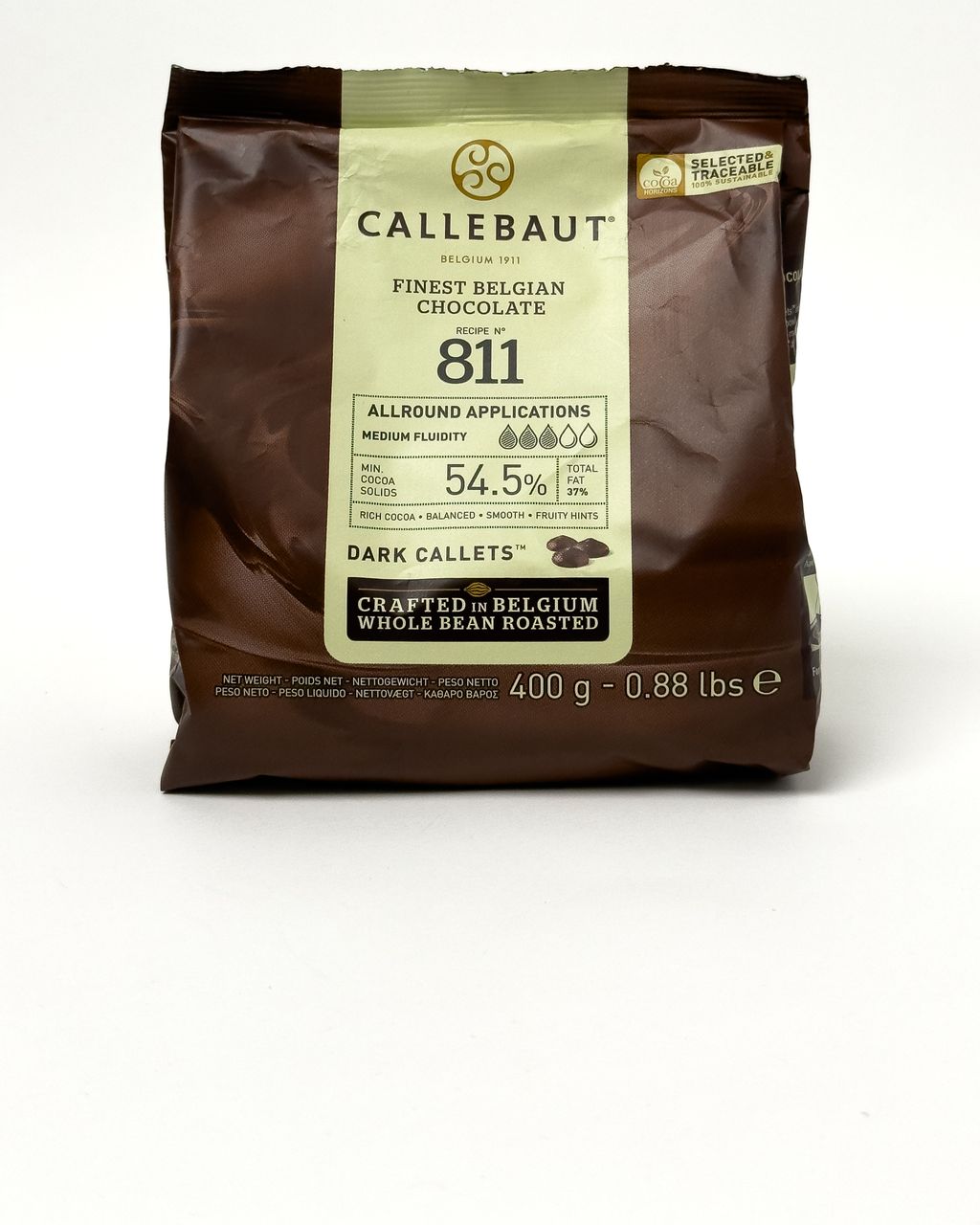
Callebaut Dark Chocolate Callets (811) 400g
Spritz Cookie Dough for a Cookie Press: The Right Consistency to Press Cleanly and Hold the Pattern
Updated Oct 24, 2026
Dough for a cookie press or cookie-maker attachment should feel like soft modeling clay: you can press a fingertip into it, it doesn't stick to your hands, and it doesn't crack. Three things decide it: butter at around 18–20 °C (64–68 °F), no chilling the dough before pressing, and, if you're using a cookie press, a bare, cool baking sheet with no parchment. Below you'll find how to recognize the right consistency, how to rescue dough that's too stiff or too soft, and how to dip and decorate the finished cookies so they look bakery-perfect.
The right dough is soft, pliable and cohesive, like modeling clay that's been sitting somewhere warm for a while. If you roll a small ball and squeeze it between your thumb and forefinger, it keeps a clean imprint, the edges don't crack, and nothing sticks to your fingers.
A quick test before you fill the press:
Fingertip imprint: smooth, with no cracks → the dough is good.
Edges crack or crumble → the dough is too stiff (cold butter or too much flour).
Sticks to your fingers and looks shiny → the dough is too soft (warm butter or too little flour).
Ball on the counter: after a minute it shouldn't spread into a flat disc.
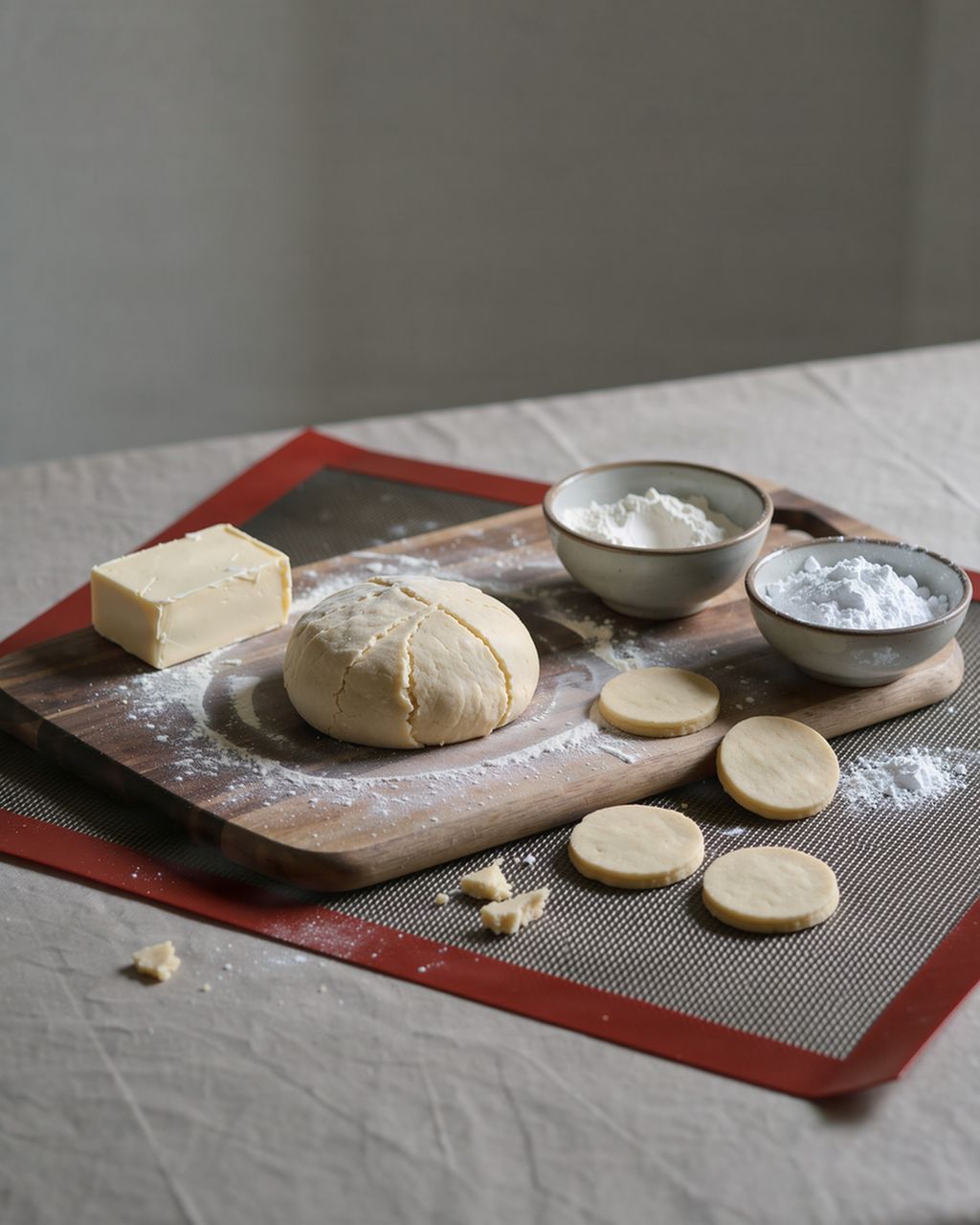
Most tried-and-true butter spritz recipes use roughly 1 part butter to 1.3–1.5 parts plain (all-purpose) flour (for example, 250 g butter to 330–375 g flour), plus 100–125 g powdered sugar and one egg or egg yolk. The more flour, the stiffer the dough and the sharper the pattern, but the harder it is to press.
A meat grinder with a cookie attachment can handle a stiffer, flourier dough, while a cookie press needs a softer dough and a bare baking sheet. In Czech kitchens both are called a "strojek," but they push the dough out in different ways:
Meat grinder with a cookie attachment (the classic Czech cookie machine): the auger forces the dough through, so it can take a stiffer dough with a little more flour. You press out long ribbons, cut them and transfer them, so baking on parchment is fine here.
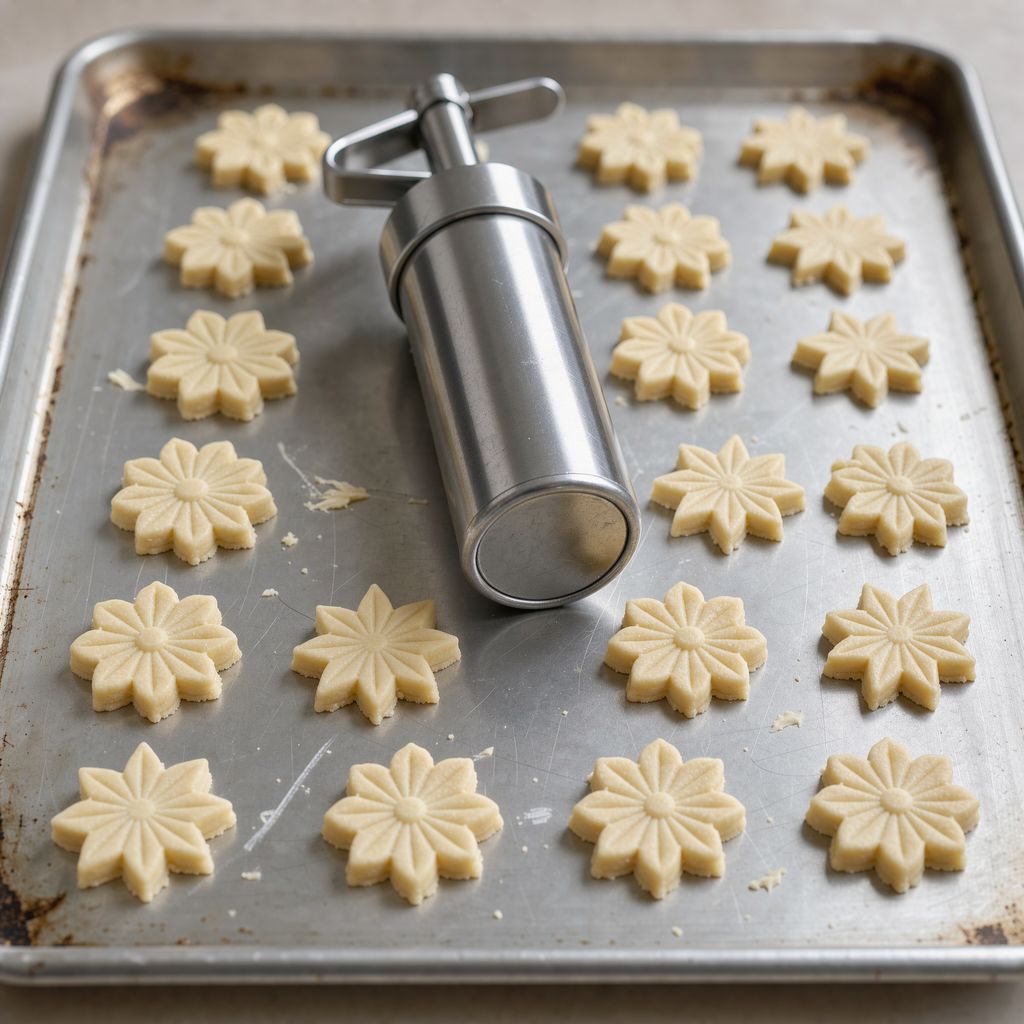
Cookie press (the gun with disc plates): you squeeze the lever and press one cookie after another straight onto the baking sheet. The dough has to be softer and the sheet bare, or the cookie won't release from the disc.
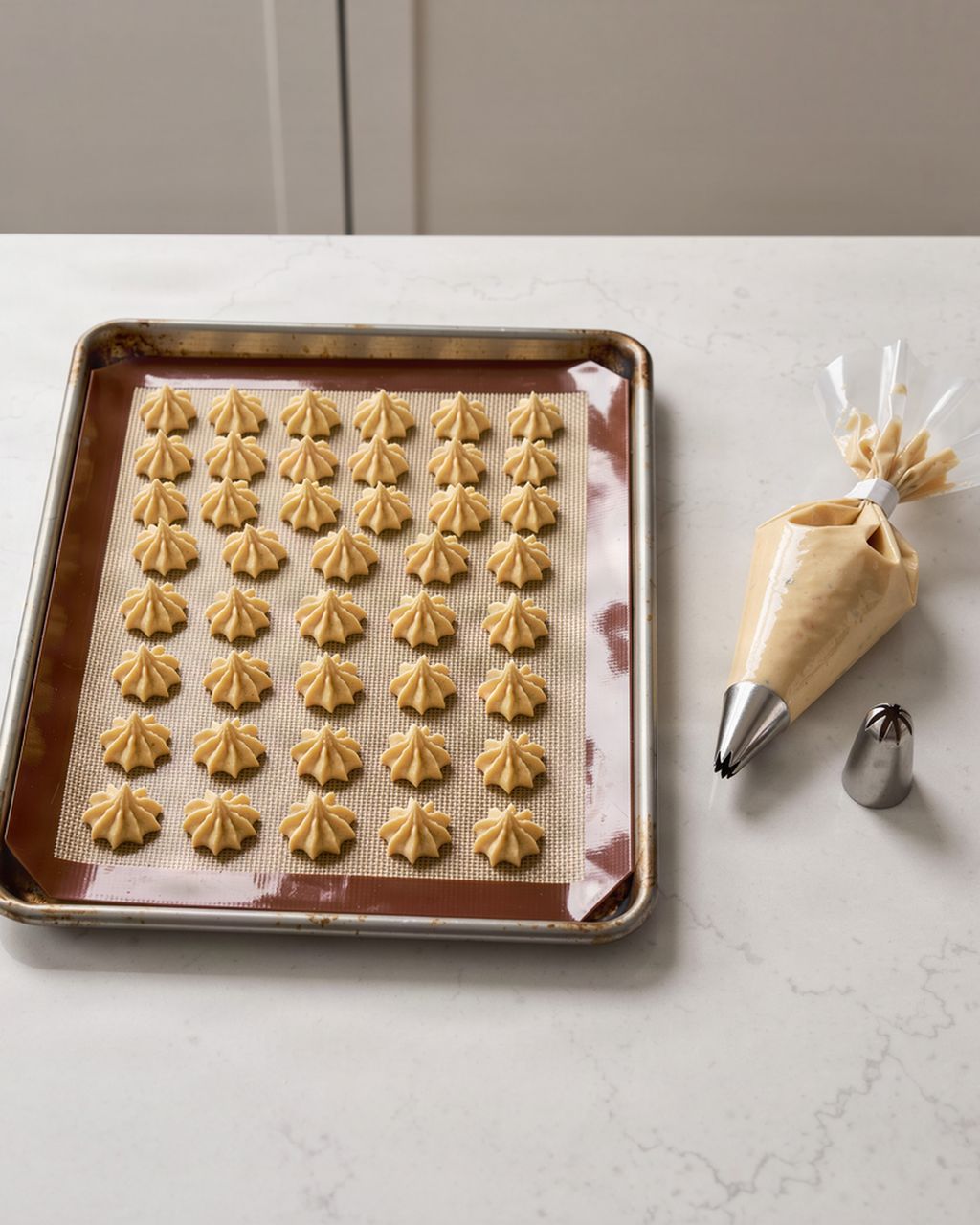
Everything below about the bare baking sheet applies to the cookie press. The advice on butter temperature and on rescuing dough that's too stiff or too soft applies to both. Don't have a press at home? Then read how to pipe spritz-style cookies with a piping bag so they hold their pattern, where the dough is thinned differently.
The butter should be 18–20 °C (64–68 °F): soft enough that a finger leaves a dent, but still matte and firm, not shiny and greasy. That means taking it out of the fridge about 45–60 minutes ahead (less in a warm kitchen).
What happens if you miss the mark:
Butter too cold → the dough is lumpy, tears in the press, and the pattern has ragged edges.
Butter too warm or melted → the dough turns smeary, sticks to the disc, and spreads in the oven, so the pattern disappears.
Never soften butter in the microwave. A few extra seconds and the center melts. It's better to cut it into cubes, which soften in 20–30 minutes.
One more thing that goes against most cookie advice: don't chill spritz dough before pressing. Unlike Linzer dough, which rolls best straight from the fridge, chilled dough stiffens in the press and won't come out. Use it right after mixing.
A cookie only separates from the press disc if it sticks to the baking sheet more firmly than to the press. On parchment, a silicone mat or a greased sheet there's nothing for it to grip, and when you lift the press, the dough comes up with it.
What works:
A bare sheet: ungreased, with no parchment and no cooking spray. The dough has plenty of butter and won't stick for good.
A cool sheet: never one fresh from the oven. Warm butter on a warm sheet slides around. Alternate between two sheets, or rinse the used one under cold water and dry it thoroughly.
Matte aluminum or steel: on smooth nonstick sheets the dough sometimes slides. Putting the sheet in the fridge for 10 minutes helps.
Press straight down with the whole base flat on the sheet: squeeze, count to one, and lift straight up.
The first two or three cookies almost never turn out, because the pressure inside the press is still evening out. Just toss them back into the dough.
You loosen stiff dough with warmth and a little liquid, since you can't take the flour back out. Work from the gentlest fix up:
Let it sit at room temperature for 15–20 minutes and knead it briefly in your hands. If it was stiff only because the butter was cold, this is enough.
Add liquid a little at a time: for roughly 500 g of dough, 1 tablespoon of milk or cream, or alternatively one egg yolk. Work it in, test with a fingertip imprint, and repeat if needed.
Don't warm it in the oven or microwave. The butter melts unevenly, and your stiff dough instantly turns greasy.
For next time: stay at the lower end of the flour range and use powdered sugar instead of granulated. Granulated sugar doesn't dissolve in the dough, so it turns grainy, and the crystals clog the fine patterns of the discs.
You can firm up soft dough with a short chill or with flour, depending on why it's soft.
Is it warm and shiny? Put it in the fridge for 10–15 minutes, no longer, or you'll overshoot into stiff. The same goes for a filled press if your hands are warming it.
Is it cold but still smeary? It needs flour. Add it 1 tablespoon at a time, work it in and test. 2–3 tablespoons is usually enough.
Does it stick only to the disc, not to your hands? The problem is more likely the baking sheet. Check that it's bare and cool.
Watch the egg, too. A whole large egg adds more water than a yolk, so if your recipe regularly gives you runny dough, replace the whole egg with two yolks. The same principle explains why Linzer dough uses only the yolk.
Spritz cookies lose their pattern for four reasons: baking powder in the dough, butter warmer than 20 °C (68 °F), an oven that isn't properly preheated, and a baking sheet that wasn't chilled before baking. In more detail:
Baking powder: it doesn't belong in spritz dough. It puffs up the pattern and blurs it.
Warm butter: it was already above 20 °C in the dough.
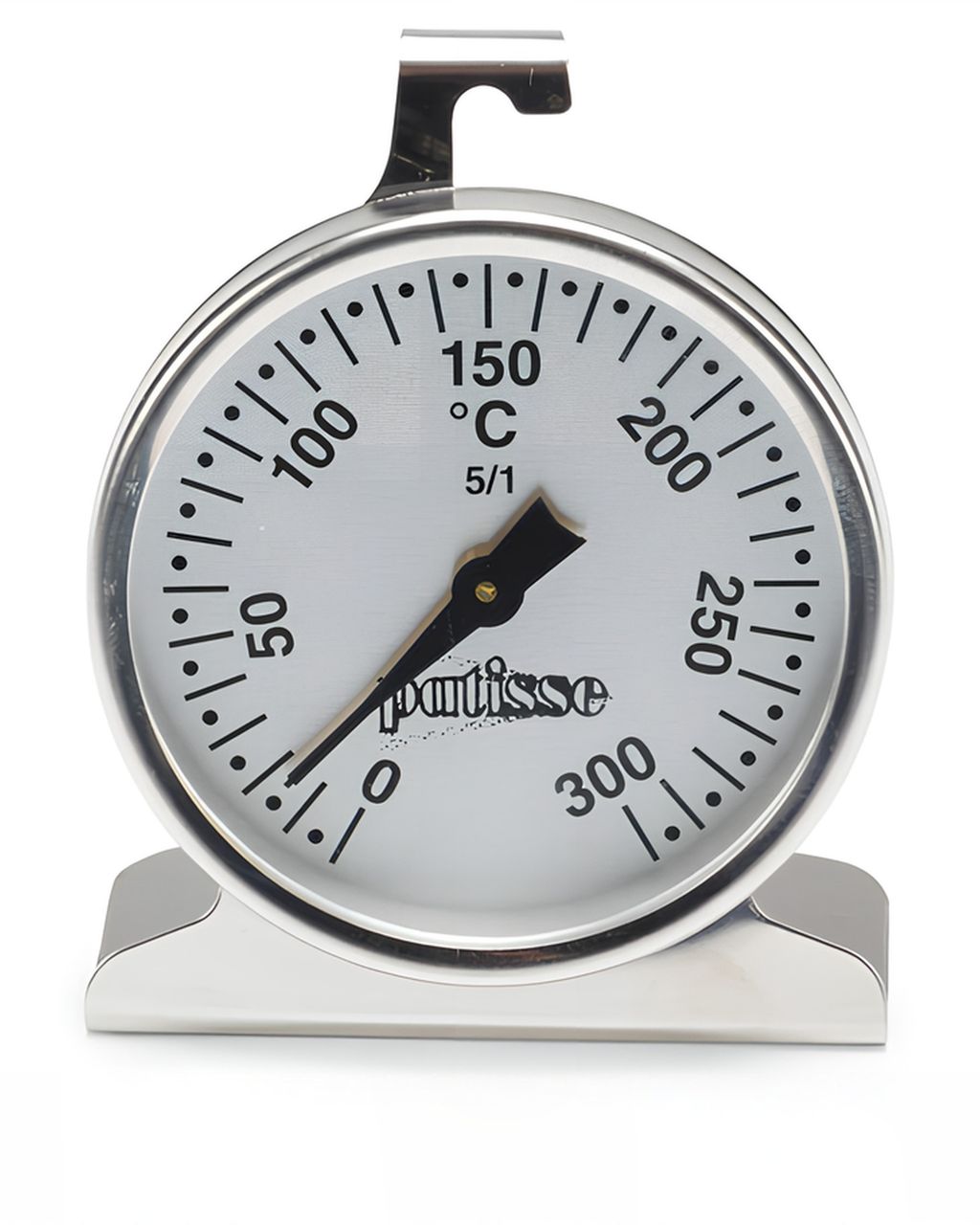
Cold oven: the cookies must go into an oven preheated to 170–180 °C (340–355 °F) (160 °C / 320 °F with fan) and bake for 8–12 minutes, until the edges turn lightly golden. Many ovens run 10–20 °C off from what the dial says, and an oven thermometer will reveal it.
A slow trip to the oven: if you have a full sheet, put it in the fridge for 10 minutes. A chilled pattern sets in the oven before the butter softens.
The ratio of butter to flour decides the outcome in every butter cookie. Take a look at what Linzer dough 3:2:1 means and how to adjust the ratio.
For glossy, snappy chocolate you need real chocolate (couverture) and you need to temper it. Untempered chocolate turns gray after it sets and smears. Here are the options, side by side and honestly:
Couverture, such as Callebaut 811 dark chocolate callets (54.5% cocoa): the best flavor, shine and snap. The callets melt quickly and evenly and suit the seeding method. It needs tempering.
Good-quality baking chocolate bars: these work too, though they tend to be thicker, so a heavier layer clings to the cookie. You have to temper them as well.
Confectionery coating (fat-based): you don't temper it and it never turns gray, but it tastes waxy and sweet. It's handy when you're in a hurry or decorating with kids.
To temper Callebaut 811, melt two-thirds of the chocolate to 45–50 °C (113–122 °F), then stir in the remaining third of the callets to cool it to 31–32 °C (88–90 °F).
Melt two-thirds of the chocolate to 45–50 °C (in a double boiler, or in the microwave in 20-second bursts, stirring each time).
Stir in the remaining third of the callets and keep stirring until the chocolate drops to 31–32 °C, the working temperature given by the manufacturer.
Test: dab some chocolate on a knife. At room temperature it should set within 5 minutes, glossy and without streaks.
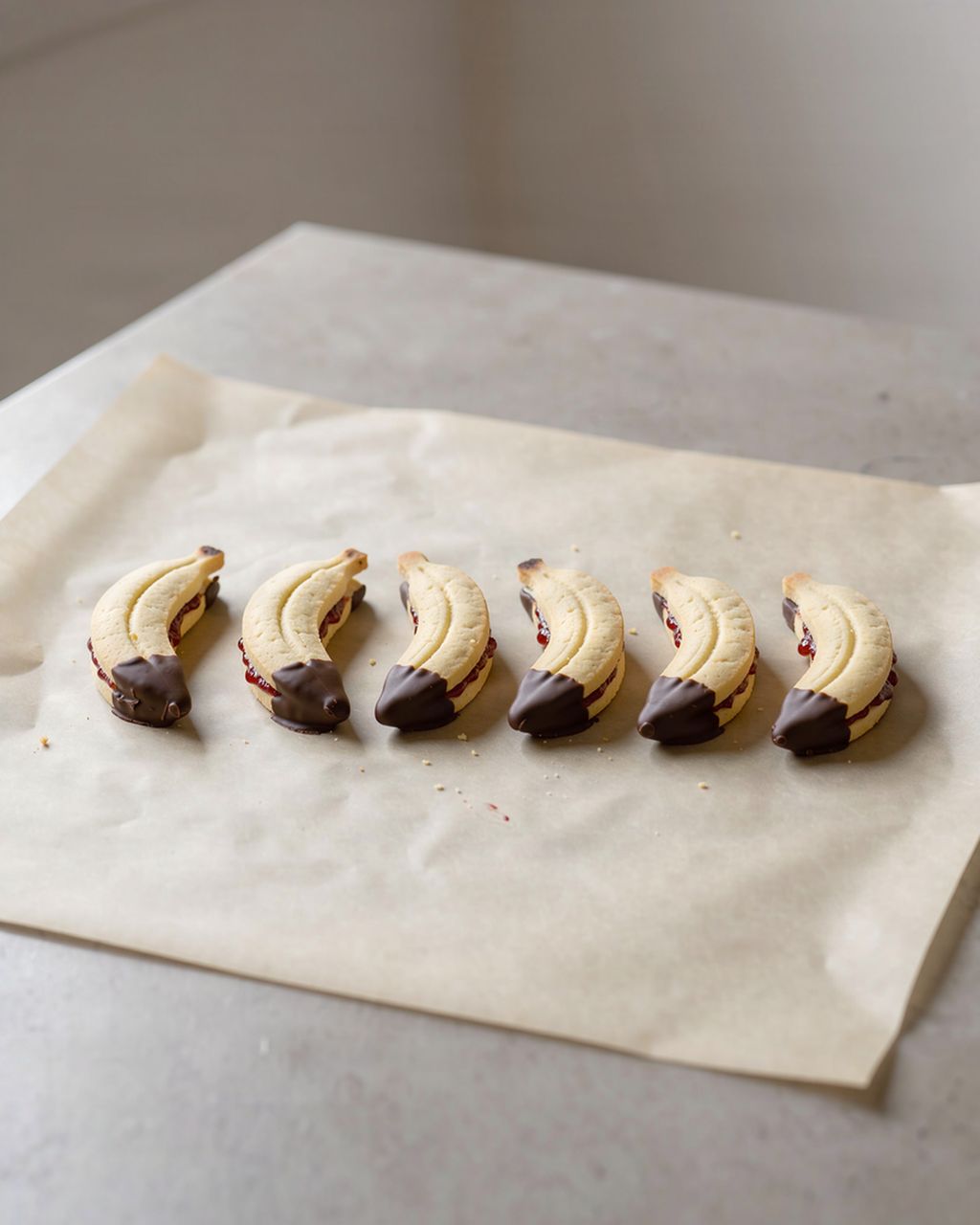
Dip only completely cooled cookies, ideally just one end or the bottom. Wipe off the excess on the edge of the bowl and set the cookies on parchment. Here, finally, parchment is fine.
Sprinkles hold best on chocolate that's still wet: decorate each cookie within a minute of dipping, before the chocolate starts to set. Work in batches of 4–5, not the whole sheet at once.
Before baking: colorful sugar sticks often melt at 170–180 °C (340–355 °F) or bleed color into the dough. If you want to sprinkle before baking, choose coarse crystal sugar or pearl sugar, which can take the heat.
On chocolate after baking: this is where fine sprinkles shine, such as Rainbow Sprinkle Sticks. The thin sticks sink into the chocolate and don't slide off.
Without chocolate: brush a thin layer of royal icing, or egg white mixed with powdered sugar, onto the cooled cookie and press the sprinkles on.
Looking for what else to bake and decorate for the holidays? Check out our Christmas cookie recipes.
Wrapped well, the dough keeps in the fridge for 2–3 days. Before pressing, let it come up to room temperature for about an hour. Then knead it briefly in your hands until it's pliable again and do the fingertip test. If it's still stiff, add a spoonful of milk.
Yes, replace the egg with 2–3 tablespoons of milk or cream. The dough will hold the pattern just as well; the baked cookies will simply be a bit more delicate and crumbly. Add the liquid a spoonful at a time until the dough feels like soft modeling clay.
For about 300 g of flour, swap 20–30 g of the flour for cocoa powder. Cocoa absorbs more liquid than flour, so the dough tends to be stiffer and usually needs an extra spoonful of milk. Keep a close eye on chocolate cookies in the oven, because it's hard to see when the edges turn golden.
Stored in a tin in a cool place, they stay crisp for 2–3 weeks. Layer chocolate-dipped cookies between sheets of paper so the chocolate doesn't get scuffed. Undipped cookies can be frozen for up to 3 months.
Most often there's too much flour in the dough, or the cookies are overbaked. If you're rescuing soft dough with flour, add as little as possible, a spoonful at a time. Take the cookies out as soon as the edges turn lightly golden, since they keep cooking on the hot baking sheet.
One recipe worth heating the oven for, one tip, and one deal from the shop. Nothing else.