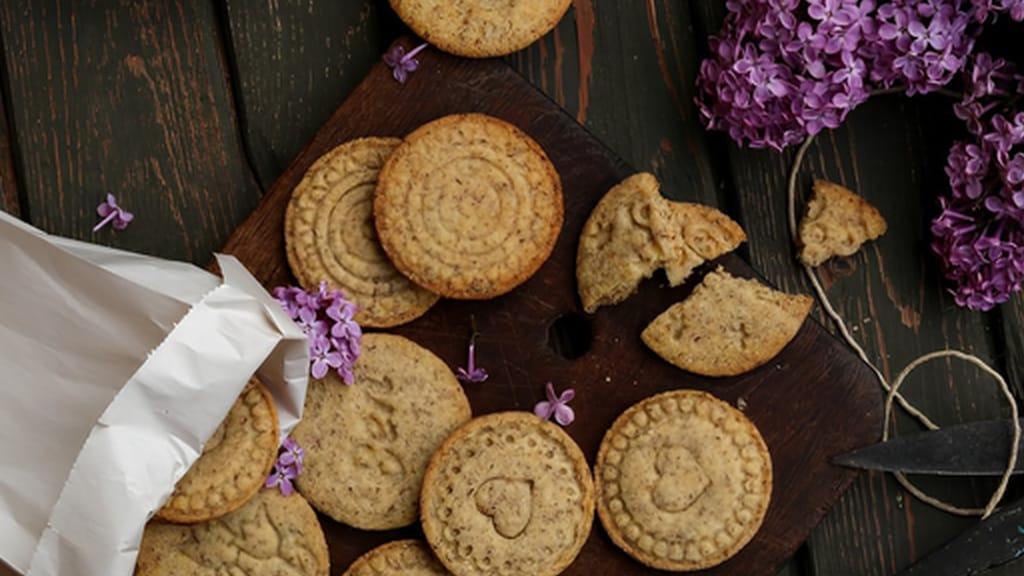
Delicate almond shortbread cookies
Portuguese Biscoitos: The Traditional Recipe and How to Bake Them at Home

Updated Jul 19, 2026
Portuguese biscoitos are crisp, buttery cookie rings from the Azores, made with six ingredients you probably already have in your kitchen and practically built for dunking into coffee or tea. In this article I'll show you where they come from, how they differ from pastéis de nata and broas castelares, and above all, how to bake a batch at home that stays crisp for a whole week. No fuss — just butter, sugar, a touch of lemon zest, and an oven set to 180°C (350°F).
Biscoitos are traditional Portuguese butter cookies that originated in the Azores — most notably on the island of São Miguel — recognisable by their crisp, dry texture and their shape, either a ring or a flat disc. Originally, they were a long-lasting bake meant to keep for weeks, perfect for dipping into coffee or tea.
For centuries, Portugal was a major maritime power, and trade with its colonies brought cinnamon, vanilla, and cane sugar from the New World into local kitchens. According to culinary historians, this newfound access to once-rare ingredients transformed home baking — cookies went from being a holiday treat to an everyday pleasure enjoyed across all walks of life.
Every region keeps its own version alive:
Azores: biscoitos — the crisp, buttery cookie rings that this whole article is about.
Alentejo: filhós — fried anise-spiced dough, especially popular at Christmas.
Porto: bolachas de água e sal — light, savoury crackers served at breakfast or with wine.
Madeira: broas de mel — dense honey cookies spiced and sweetened with local honey.
When people talk about Portuguese sweets, three names usually come up: biscoitos (crisp buttery cookie rings from the Azores), pastéis de nata (flaky pastry cups filled with egg custard from Lisbon), and broas castelares (soft cookies made with sweet potato, almonds, and honey, traditionally baked for All Souls' Day). Each has its own origin story and occasion — here's a quick rundown before we get baking.
Pastéis de nata are the iconic flaky pastry cups filled with egg custard, baked at high heat until the tops develop those signature scorched spots. They first appeared before 1820 at the Jerónimos Monastery in Lisbon's Belém district — legend has it the monks used egg whites to starch their habits and turned the leftover yolks into custard. After the monasteries were dissolved in 1834, the monks sold off the recipe, and since 1837 the pastries have been baked as Pastéis de Belém.
We'll walk through the full method separately — check out our authentic pastel de nata, step by step.
Broas castelares are soft cookies made from sweet potato, ground corn, and almonds, sweetened with honey and lemon zest — traditionally baked around All Souls' Day and Christmas, when sweet potatoes are in season. One common mix-up to avoid: they're made with sweet potato, not pumpkin. They're named after the Castelar brothers, who first sold them at Lisbon's Confeitaria Francesa around 1860. If you're a fan of almonds in your baking, our Portuguese almond cake follows a similar spirit.
Biscoitos are the simplest of the three — dry, crisp butter cookies you can bake from what's already in your pantry, perfect for dunking in coffee or tea. They show up at family celebrations and just as easily at a quiet afternoon get-together. These are what we'll focus on now.
You can bake traditional biscoitos with just six ingredients in under an hour: cream the butter and sugar, work in the egg and flour, shape into rings or discs, and bake for 12–15 minutes at 180°C (350°F). Below you'll find exact quantities, a method with sensory cues to guide you, and the most common mistake to avoid.
250g all-purpose flour
100g granulated sugar
100g softened butter
2 eggs (medium)
1 teaspoon vanilla extract
a pinch of salt
zest of ½ lemon (optional, but highly recommended)
Cream the butter and sugar for 2–3 minutes until light and fluffy. The air you work in now is what gives the cookies their delicate texture.
Add the eggs one at a time, then stir in the vanilla and lemon zest. Adding them gradually keeps the mixture from splitting.
Add the flour and salt and mix just until combined. The moment the last streaks of dry flour disappear, stop — overworked dough means tough cookies.
Wrap the dough and chill it for 30 minutes. Chilled dough holds its shape better and won't spread while baking.
Shape into walnut-sized balls and flatten gently into discs (or roll the dough into thin ropes and join the ends into rings, the traditional Azorean way). Arrange on a parchment-lined baking sheet, leaving space between each one.
Bake for 12–15 minutes at 180°C (350°F), until the edges turn golden. Let them rest on the tray for 5 minutes before moving to a wire rack — they'll be soft straight out of the oven and only turn properly crisp once fully cooled.
Biscoitos take well to all kinds of twists. Add a teaspoon of cinnamon or a tablespoon of cocoa to the base recipe, swap the lemon zest for orange, or fold in a handful of ground almonds or chopped dark chocolate. If the almond version sounds appealing, head straight to the sister recipe below; chocolate lovers will want to check out the crisp chocolate variation.
Delicate almond shortbread cookies
Delicate almond cookies — a close cousin of biscoitos for an almond version
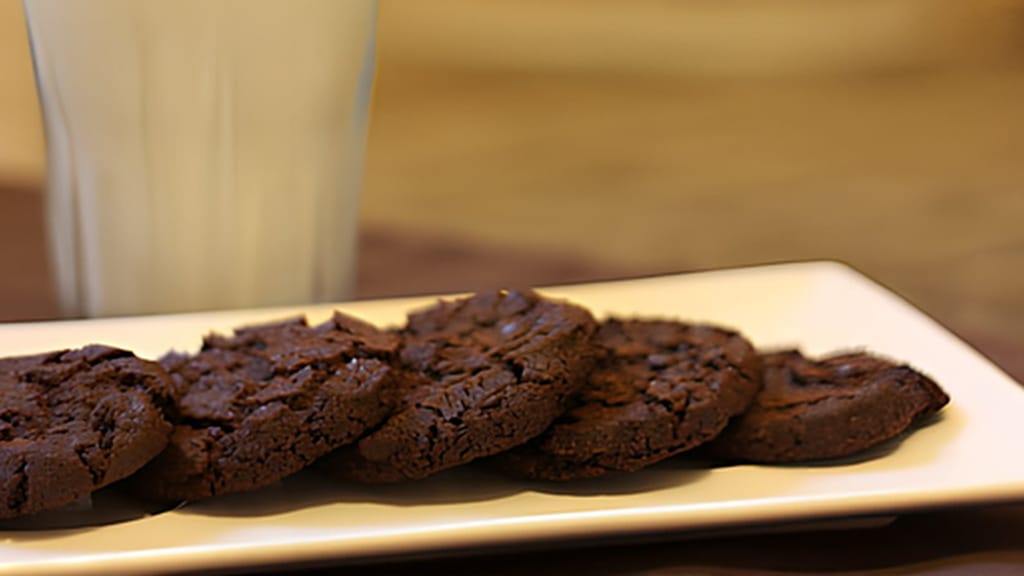
Chocolate chip cookies with fleur de sel
Chocolate cookies with fleur de sel for a chocolate twist on biscoitos
Perfectly crisp biscoitos come down to four things: good-quality butter, brief mixing, precise oven temperature, and proper cooling. Get these right and everything else falls into place.
Use butter, not margarine — real butter gives richer flavour and better structure. Let it soften at room temperature, but don't let it melt.
Choose your sugar for texture — granulated white sugar gives crispness, while a pinch of brown sugar adds a caramel note and a chewier centre.
Mix briefly — once the flour goes in, mix just until combined so the gluten doesn't develop.
Watch your oven — 180°C (350°F) is the sweet spot. Too low and the cookies stay pale and soft; too high and the edges burn before the centre bakes through. Home ovens are commonly off by 10–20°C, so an oven thermometer is worth having.
Cool in two stages — 5 minutes on the tray, then onto a wire rack, so the bottoms don't turn soggy from trapped steam.
Store airtight — kept in a sealed container in a dry spot, they'll stay crisp for 7–10 days; baked cookies also freeze well for up to 3 months.
Biscoitos make a wonderful edible gift — they keep well, travel without breaking, and look instantly festive packed in a nice tin. Bake two or three flavours (classic, almond, chocolate) for a varied box that will win over even picky food lovers.
For packaging, a glass jar with an airtight lid or a tin box is your best bet — it keeps the cookies fresh and looks great too. Add a ribbon, a sheet of parchment paper between layers, and a small card with a few words about where biscoitos come from — that story turns it into a proper gift. If you're putting together a full holiday cookie box, throw in something homemade as well.
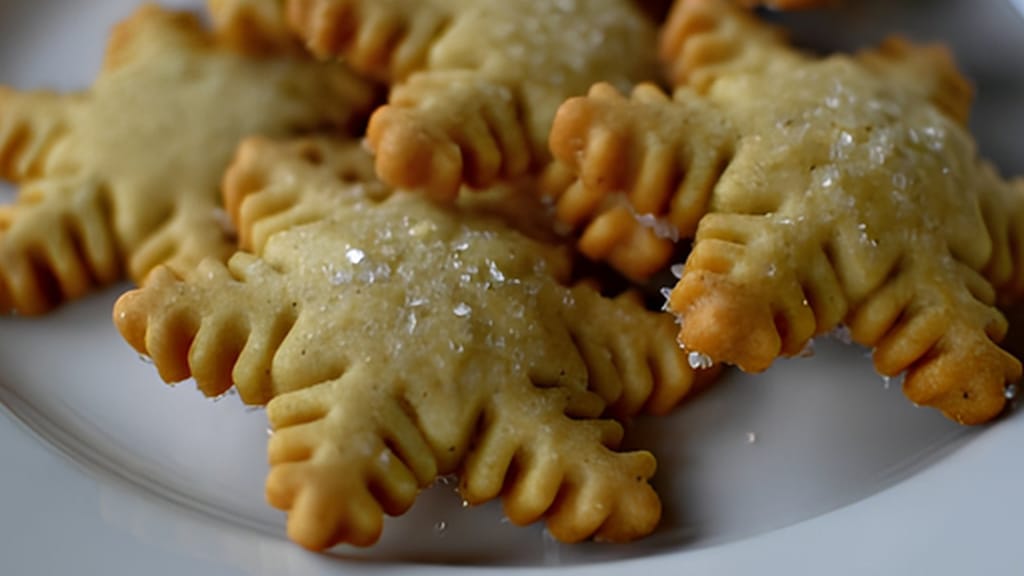
Sugar christmas cookies - delicate and crisp
Sugar Christmas cookies — delicate and light, perfect alongside biscoitos in a gift box
Biscoitos are buttery cookies baked just once, which makes them more delicate, while Italian biscotti are baked twice and come out harder and drier. Both are great for dunking in coffee, though. Biscoitos typically carry notes of lemon and vanilla, while biscotti lean more toward anise and almonds.
You can swap the two eggs in this recipe for 120g of unsweetened applesauce or two "flax eggs" (2 tablespoons ground flaxseed + 6 tablespoons water, left to thicken for 10 minutes). The cookies will be slightly less crisp and a bit chewier, so let the dough chill longer before baking — an extra tablespoon of flour helps too.
The most common cause is butter that's too warm or dough that hasn't chilled enough. Chill the dough for at least 30 minutes, use only softened (not melted) butter, and bake on a cool baking sheet. If the dough still spreads too much, work in an extra tablespoon or two of flour.
Yes — wrapped well, the dough keeps in the fridge for 2–3 days, and you can freeze it for up to 3 months. Thaw frozen dough overnight in the fridge, then shape and bake as usual. Dough that's been chilled ahead of time actually holds its shape even better during baking.
Yes, just swap the all-purpose flour for a 1:1 gluten-free baking blend that includes xanthan gum. The dough tends to be a bit more crumbly, so let it chill longer before shaping and press the balls gently so they hold together. The flavour and crunch aren't noticeably affected.
One recipe worth heating the oven for, one tip, and one deal from the shop. Nothing else.