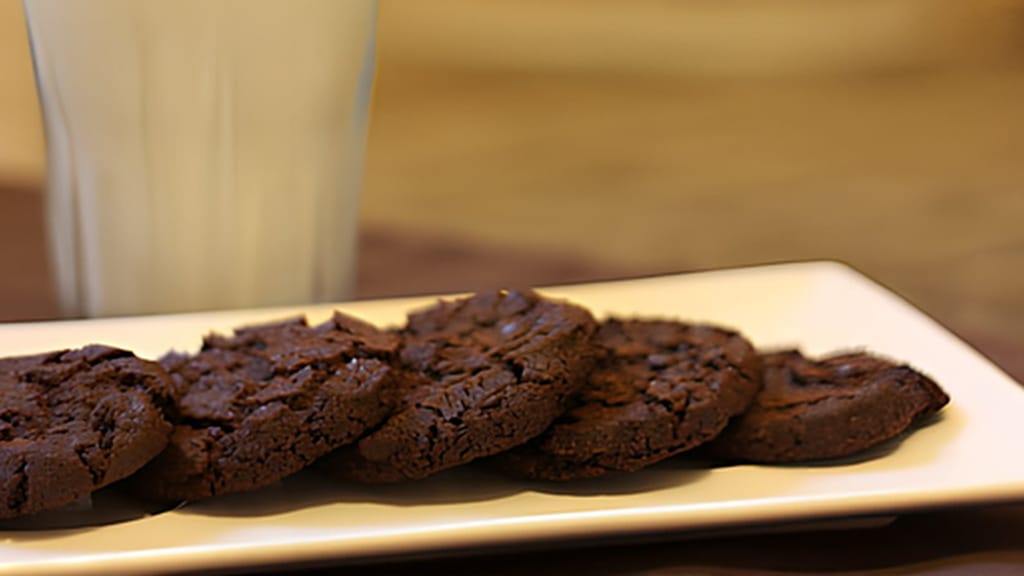
Chocolate chip cookies with fleur de sel
Cookie Mix in a Jar: An Edible Gift the Recipient Bakes Themselves
Updated Oct 15, 2026
A cookie mix in a jar is the dry ingredients of a single recipe (flour, sugars, leavening, salt and chocolate) layered into a jar in stripes. The recipient only adds butter and eggs as the tag says, and half an hour later they have fresh cookies out of the oven. It's a gift that looks pretty on a shelf, keeps for up to 3 months (less with nuts or dried fruit) and doesn't need a fridge. Below you'll find what belongs in the jar and what doesn't, how to layer it so the stripes don't blend together, how long the mix keeps according to reliable sources, and what to write on the tag.
The jar should hold only dry ingredients that keep at room temperature: flour, white and brown sugar, cocoa, leavening, salt, chocolate, and optionally rolled oats and nuts. Everything wet or refrigerated (butter, eggs, milk, vanilla extract) is left for the recipient to add, and you list it on the tag.
The easiest approach is to take a cookie recipe you know and have already tested, and split it into two piles: dry ingredients go in the jar, wet ones go on the tag. Our chocolate cookies with fleur de sel are a great fit. Don't invent a recipe from scratch straight into the jar. If it doesn't work out, the recipient will think they did something wrong. The jar should contain:
all-purpose flour mixed with leavening (baking soda or baking powder) and salt,
granulated and brown sugar,
cocoa,
chocolate chips or chopped chocolate,
rolled oats and chopped nuts (they shorten the shelf life, see below).
What not to put in:
butter, eggs, milk, liquid flavorings and fresh fruit,
dried fruit and marshmallows, unless you're happy to cut the shelf life to a month,
sprinkles poured straight in between the layers. They belong in a separate bag on top.
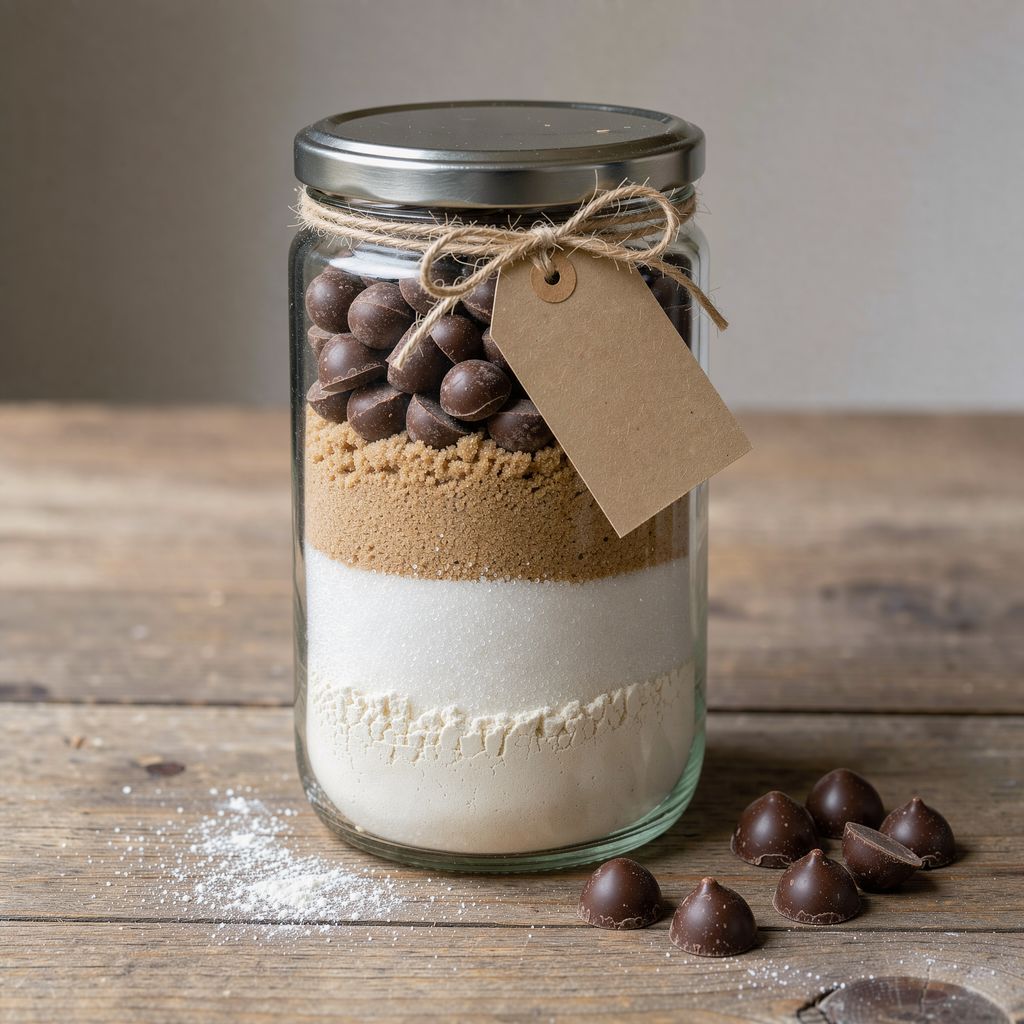
The stripes hold when the finest ingredients go on the bottom, the coarsest on top, and every layer is packed down. If the flour were on top, it would sift down through the gaps between the chocolate chips and you'd end up with a gray muddle.
Wash the jar and let it dry completely. A single drop of water is enough to make flour clump against the glass.
Whisk the flour with the leavening and salt in a bowl first. That way the leavening is evenly distributed and there's no white stripe of it in the jar that the recipient would only half mix in.
Pour through a funnel or a cone of parchment paper so the glass doesn't get dusty. After the flour, wipe the inside of the glass with a dry paper towel wrapped around a long wooden spoon.
Pack down each layer with the bottom of a small glass or with a spoon. Press the brown sugar down firmly. It's moist, holds its shape and makes the sharpest stripe.
Order from the bottom: flour with leavening and salt, cocoa (if the recipe has it), granulated sugar, brown sugar, oats or nuts, and finally chocolate.
Fill right up to the rim. In a half-empty jar the layers shift on the way. If you have room left over, add more chocolate. If everything doesn't fit, use a bigger jar. Never cut back on the flour, or the recipe won't work.
Close the lid right away so the mix doesn't pull in moisture from the air.
The best choice for cookies in a jar is chocolate callets made from real couverture. They hold their shape in the jar without smearing, melt in the oven into glossy pools, and taste like chocolate rather than candy. Here are all three options, side by side and honestly:
Chocolate callets (couverture). Small discs of the same chocolate that pastry chefs temper. In a cookie they melt into soft pools, and in the jar they make a lovely dark layer. The downside is a higher price than supermarket chips.
Supermarket baking chips. They're made to hold their shape in the oven, so they stay as dots in the cookie. They usually taste sweeter and flatter. If you want that "cookie from a commercial" look, they'll deliver it.
A chopped bar. It tastes good and gives shards and streaks in the cookie. In a jar, though, it looks messy, and the chocolate dust from chopping dirties the glass and the layer below. Sift it before you add it.
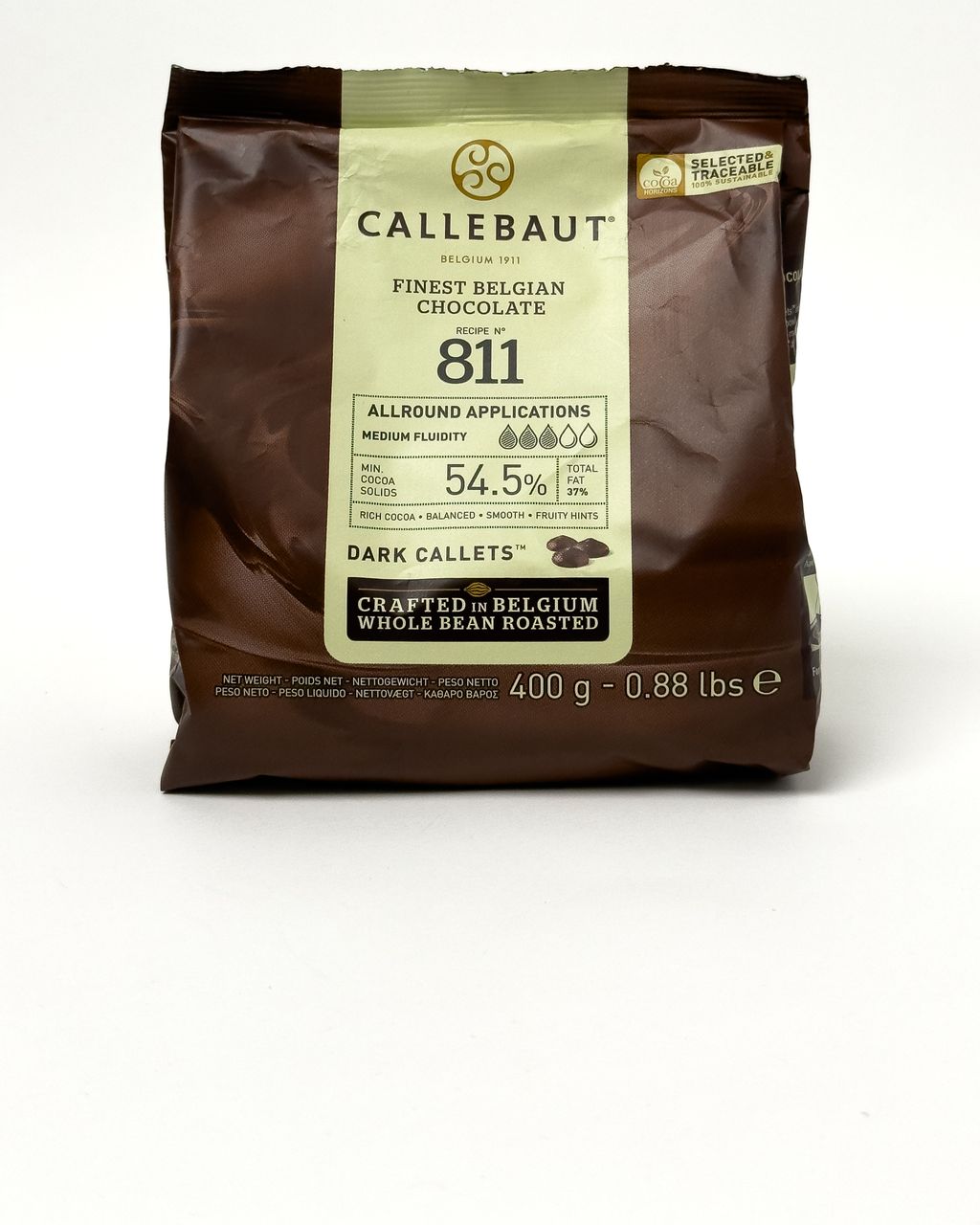
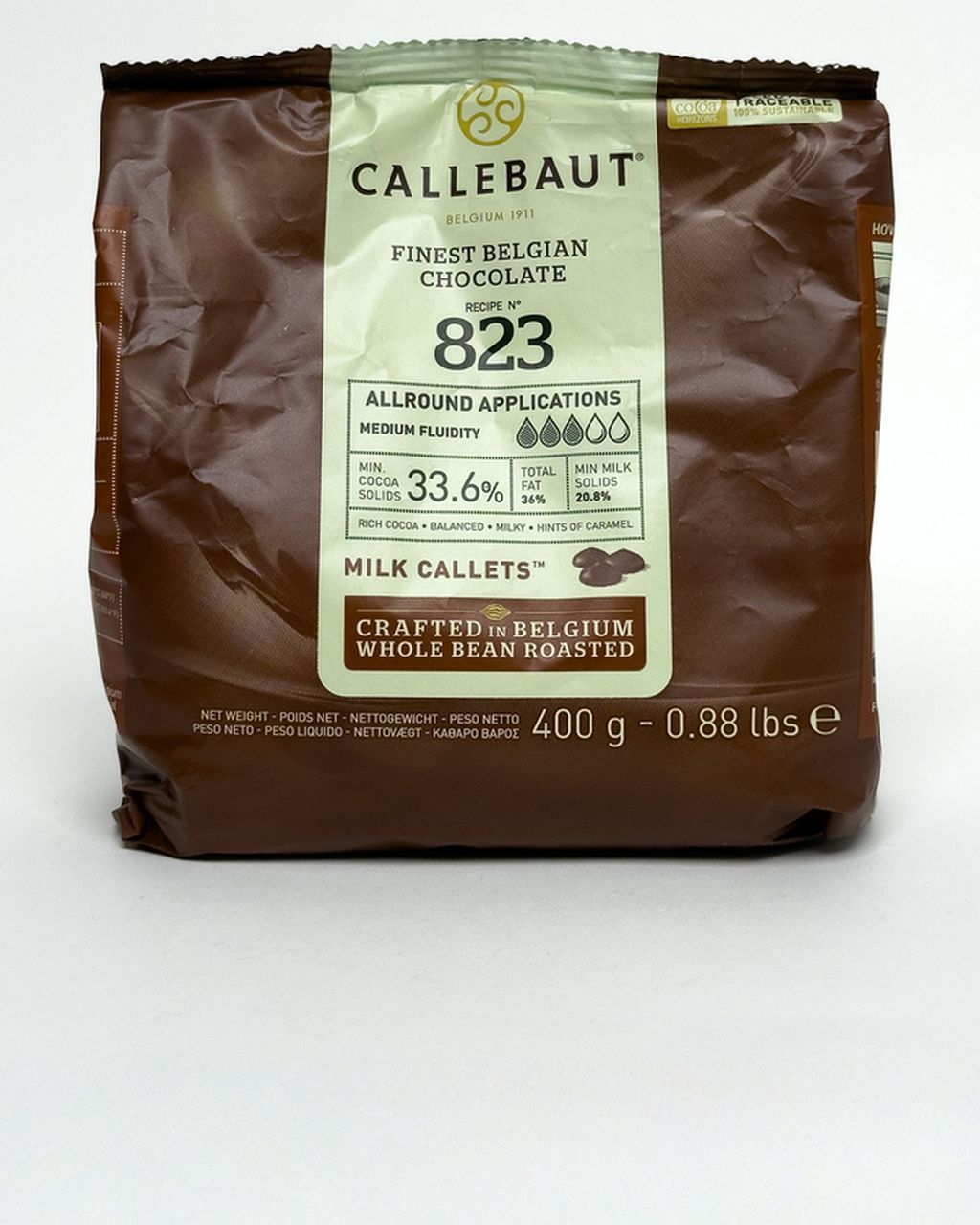
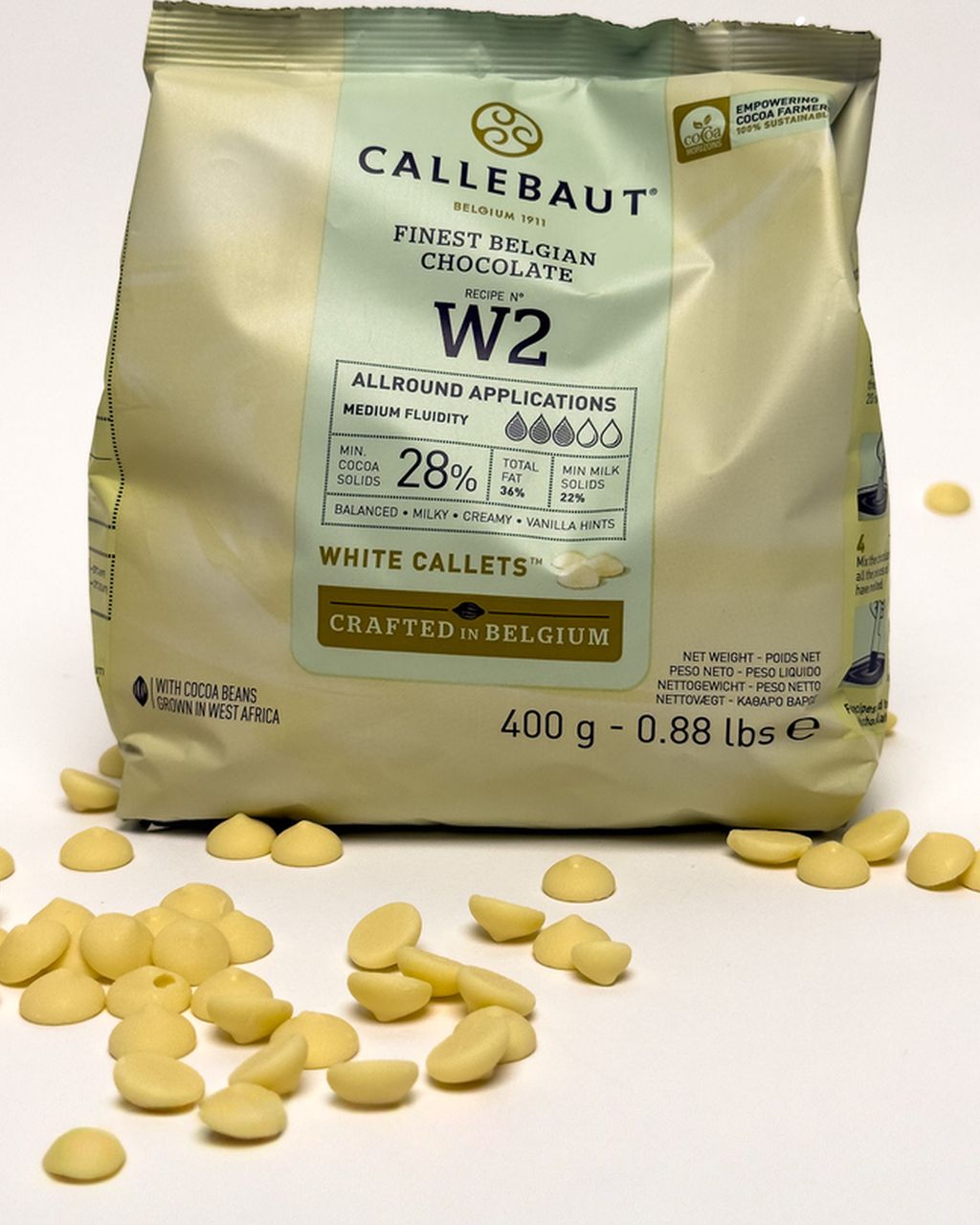
Of the callets we carry, three suit cookies. Callebaut 811 is a dark chocolate with 54.5% cocoa, the most versatile choice to go with brown sugar. Callebaut 823 is milk chocolate, milder and sweeter, for kids and for anyone who doesn't like dark. Callebaut W2 is white and makes the most striking light stripe in the jar. It suits a cocoa dough, where the contrast stands out. Feel free to combine them: a dark and a white layer on top of each other looks great through the glass.
If you're curious how cocoa percentages show up in baking in general, we cover it in the article Which Chocolate for Brownies and Chocolate Cake.
Put the sprinkles in a small bag on top, under the lid, not between the layers. Mixed into the batter, they'd get lost in the dough and the colors could bleed. This way the recipient scatters them over the balls of dough just before baking, where they're visible and add some fun.
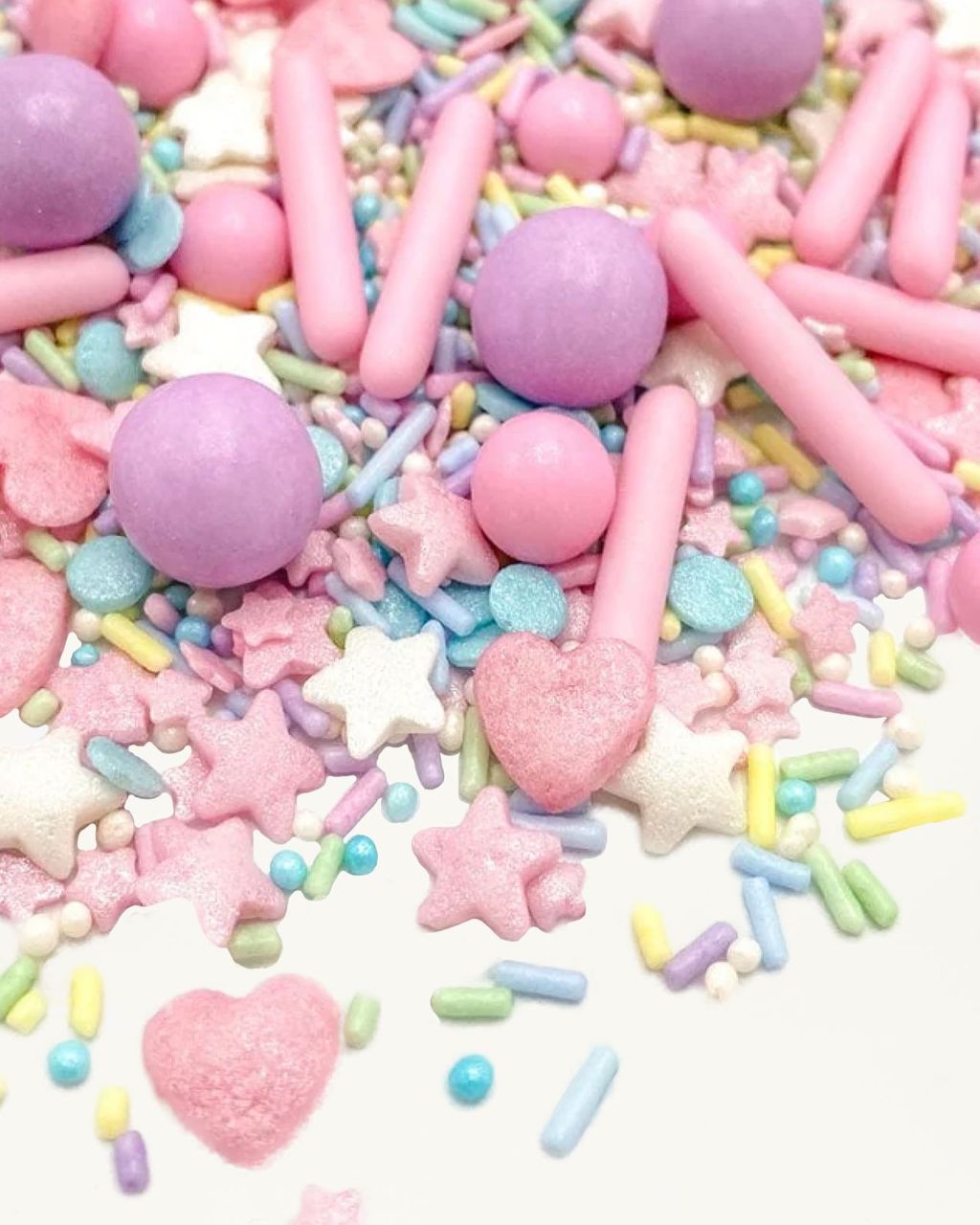
The colorful Happy Sprinkles Pastel Party sprinkles turn plain chocolate cookies into a kids' or party version with no extra work. On the tag, add: "Press the sprinkles onto the dough balls before baking." You'll find more colorful and festive baking decorations in our Christmas range.
Want sprinkles in your very own colors? You can dye sugar yourself, and the method is in the article Colored Sugar for Decorating. That also goes in a bag, not in the jar.
The mix keeps only as long as its shortest-lived ingredient, and that is counted from when the package was opened, not from when you fill the jar. Stored dry at room temperature, we recommend baking it within 3 months based on the data below. With nuts, within 2 months; with dried fruit or marshmallows, within 1 month.
Shelf life of opened ingredients at room temperature (in the pantry) according to FoodKeeper (the data behind the app of the same name from the US USDA/FSIS):
all-purpose white flour: 6–8 months,
baking powder: 3–6 months,
baking soda: 6 months,
rolled oats: 6–12 months,
nuts: 2–9 months (4–6 months in the fridge),
dried fruit: 1 month (6 months in the fridge),
marshmallows: 1 month,
unsweetened and semisweet chocolate (solid): 1 year,
white and brown sugar: they don't spoil. Brown sugar does dry out and harden over time, though.
The time limits above are derived from this. Without nuts and dried fruit, the baking powder sets the limit (we go with the lower end, 3 months). Dried fruit and marshmallows shorten it to 1 month, and nuts (because of rancidity) to roughly 2 months. This is about quality: older leavening raises less and nuts turn rancid. That's why you should fill the jar with freshly opened packages.
Chocolate is the most durable thing in the jar. For its 811 callets, Callebaut states a shelf life of 24 months from production when stored dry at 12–20 °C (54–68 °F). So don't put the jar on a windowsill above a radiator or in the sun. The chocolate would absorb moisture, turn gray and, in the worst case, clump together with the sugar into one lump.
On the tag for a cookie mix, write what to add (butter, eggs), short instructions with the baking temperature and time, a "bake by" date, allergens and a raw dough warning. Without a tag, the recipient can't bake the cookies. In detail:
What to add: the exact amount of butter (in grams, and whether softened or melted), the number of eggs, and vanilla if needed. Copy it exactly from the recipe you filled the jar from.
Instructions in a few steps: empty the whole jar into a bowl and mix, add the butter and eggs, shape into balls, bake. Copy the oven temperature and time from the recipe.
"Bake by" date: 3 months from filling, 2 months with nuts, or 1 month with dried fruit or marshmallows (see above), plus a note: "store at room temperature in a dry place".
Ingredients and allergens: gluten (flour), milk and soy (often in chocolate, check the packaging), nuts. The recipient will thank you for it, especially if they'll be baking with kids.
Warning: "Don't taste the raw dough."
We covered how to word a tag so it fits and stays readable in preserves as a gift. The principles are the same.
Chocolate chip cookies with fleur de sel
Chocolate cookies with fleur de sel: a recipe whose dry ingredients you can pour into a jar
If you want to pack something else with the jar, choose a gift with a similar shelf life. Hot chocolate bombs, chocolate lollipops or homemade chocolate bars with nuts all work well. And if the recipient enjoys baking even without a jar, you'll find inspiration in the article A Gift for Someone Who Loves to Bake.
For a cookie mix that makes one baking sheet, a 0.75–1 l (about 3–4 cup) jar usually works, filled with the dry ingredients right up to the rim. The surest way is to pour them into a measuring cup first and check the volume. In a half-empty jar the layers shift and mix together when the jar is carried around.
Yes, but only if you first tip the whole jar into a bowl and mix it thoroughly. Only then weigh out half and add half the butter and eggs. If you scoop out just the top layers, you'll end up with all chocolate and sugar and no flour or leavening.
Yes, as long as you use a recipe designed specifically for gluten-free flour. Don't swap a gluten-free blend 1:1 for the wheat flour in an ordinary recipe, because it behaves differently and the cookies may crumble. For the chocolate and sprinkles, check the packaging to see whether they contain gluten or traces of it.
It doesn't change the flavor or the safety. According to FoodKeeper, sugar doesn't spoil. Just break up the lumps with a fork, or beat them into the butter, where they soften. To prevent hardening, pack the brown sugar down well and close the jar tightly as soon as it's filled.
You can, if the jar is filled right up to the lid and well wrapped, so the layers don't shake and the glass doesn't break. For a longer journey, a sturdy plastic container is safer than glass. Tape the lid shut and keep the sprinkles in a bag under the lid so they don't spill.
One recipe worth heating the oven for, one tip, and one deal from the shop. Nothing else.