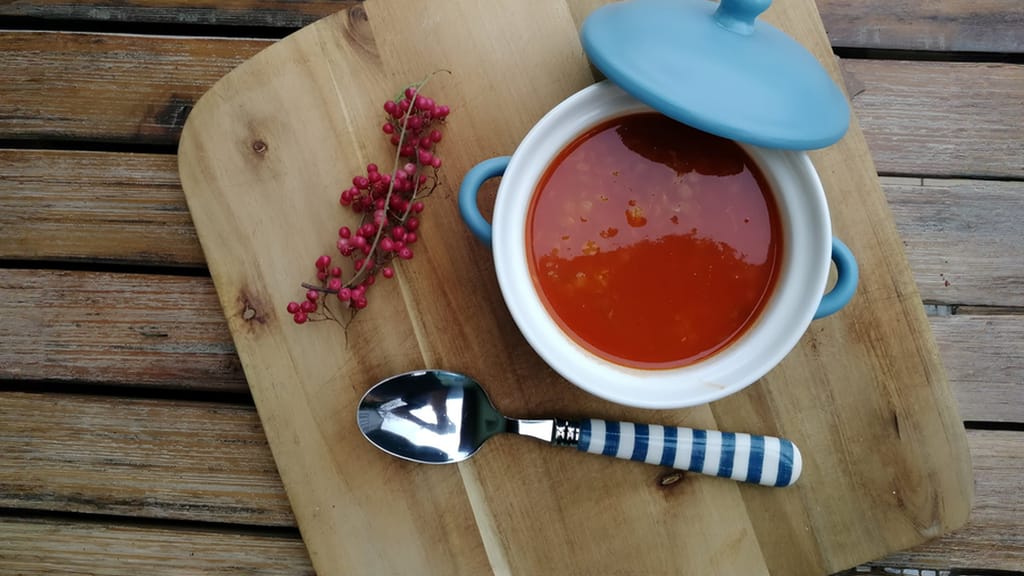
Easy tomato soup with red lentils
Soups: Types, Grandma's Recipes, Quick Soups, Soups for Kids, and How to Thicken and Freeze Them
Updated Nov 20, 2026
Soup is the most rewarding food in Czech cooking: with potatoes, vegetables or legumes and a good broth, you can make lunch for the whole family for just a few crowns. Here you'll find the types of soup, eight of grandma's classics, quick soups ready in 35 minutes, soups for babies (when to start, between 4 and 6 months) and for children from 1 year, plus a guide to thickening, safely storing and freezing soup.
Soups fall into five main types, depending on what gives them flavor and body:
Broths – clear soups made from meat, bones or vegetables, served with noodles, liver dumplings or vegetables.
Vegetable soups – vegetables cooked in broth or water, not blended, with chunks.
Legume soups – made from lentils, peas, beans or chickpeas; a thick soup you can happily serve as a main course.
Cream soups – cooked vegetables blended smooth, often softened with cream.
Roux-thickened soups – a classic of Czech cooking, where the body comes from flour toasted in fat.
The boundaries aren't sharp. Bramboračka with mushrooms (a Czech potato soup) is a vegetable soup, but you can thicken it with a roux if you like; kulajda (a Czech creamy dill and mushroom soup) relies on cream whisked with flour. One question is enough to decide: do you want a light starter or a soup that replaces lunch?
Broths are the foundation for everything else, and we cover them separately below. Vegetable soup is the fastest way to use up what's left in the fridge: sauté the root vegetables, add broth and cook only until tender so the vegetables keep their color and shape. The full method is in our article vegetable soup: how to make it step by step.
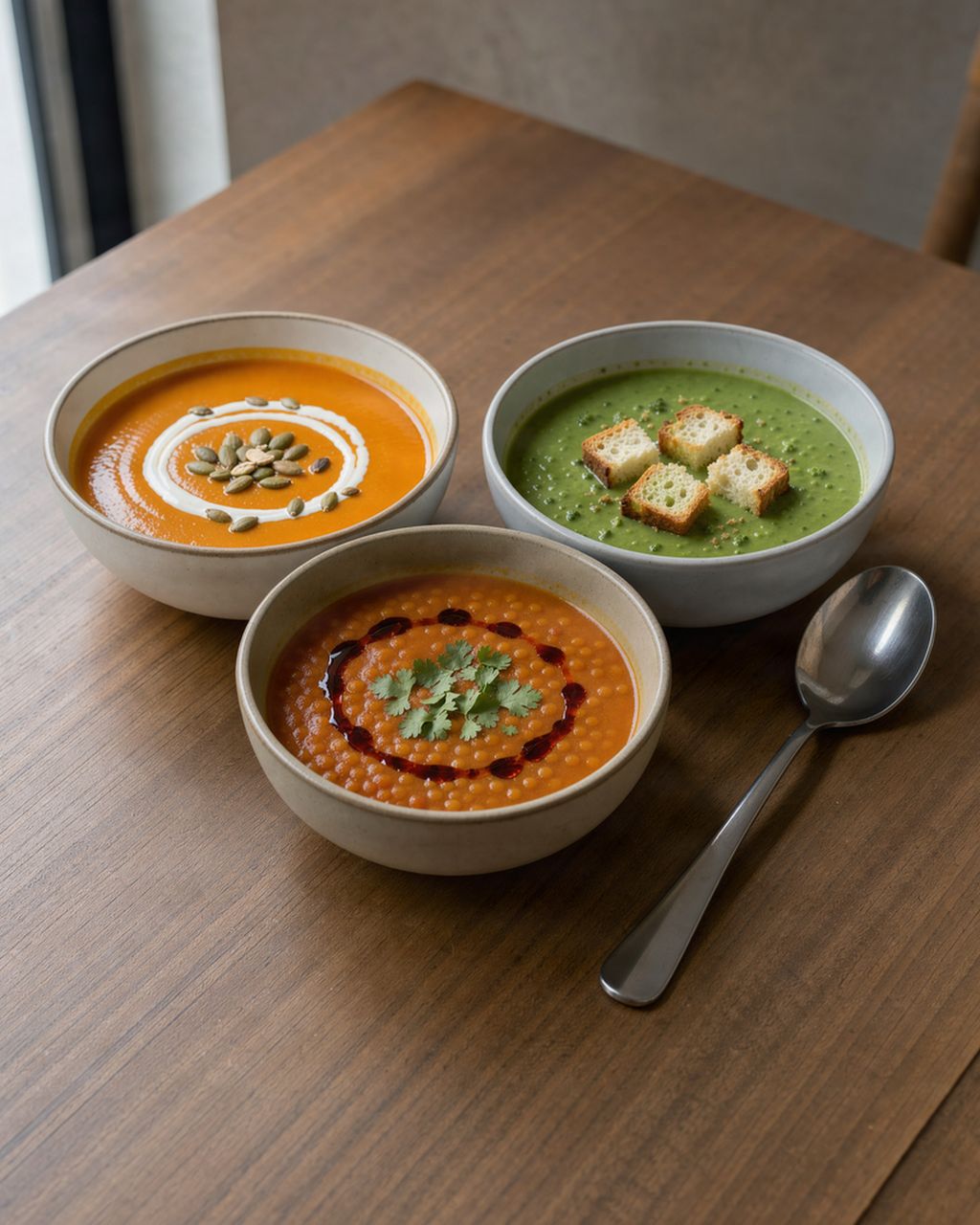
Legume soups are among the cheapest soups there are, which is why they also appear among budget meals for the whole family. Red lentils are the quickest: they break down on their own and thicken the soup without flour. The easy tomato soup with red lentils is ready in 35 minutes and is vegan and gluten-free. For something more exotic, try the red lentil soup with coconut milk and chili, spiced with curry. Brown lentils need more time: for the hrstková lentil soup you soak them overnight. For more ideas with lentils, see what to cook with lentils.
Cream soups are a discipline of their own. Cook the vegetables until soft, blend them, and only then soften with cream so it doesn't curdle in the heat. How to get a velvety texture with pumpkin, cauliflower or broccoli is covered in our separate article on cream soups.
Roux-thickened soups are what most of us picture when we say "grandma's soup." You'll find the roux technique below in the section on thickening.
Easy tomato soup with red lentils
Tomato soup with red lentils – vegan legume soup in 35 minutes
Seasonal baking plans, tested recipes and kitchen tricks that save you time. Unsubscribe in one click.
Grandma's soups rest on three things: a proper base of onion sautéed in lard or butter, the seasoning (caraway, marjoram, allspice, bay leaf) and patience while cooking. Here are eight soups every home cook should know: bramboračka, česnečka, goulash soup, kulajda, zelňačka, pea soup, koprovka and mushroom soup. For each, you'll find what it depends on and, where available, a link to the full recipe.
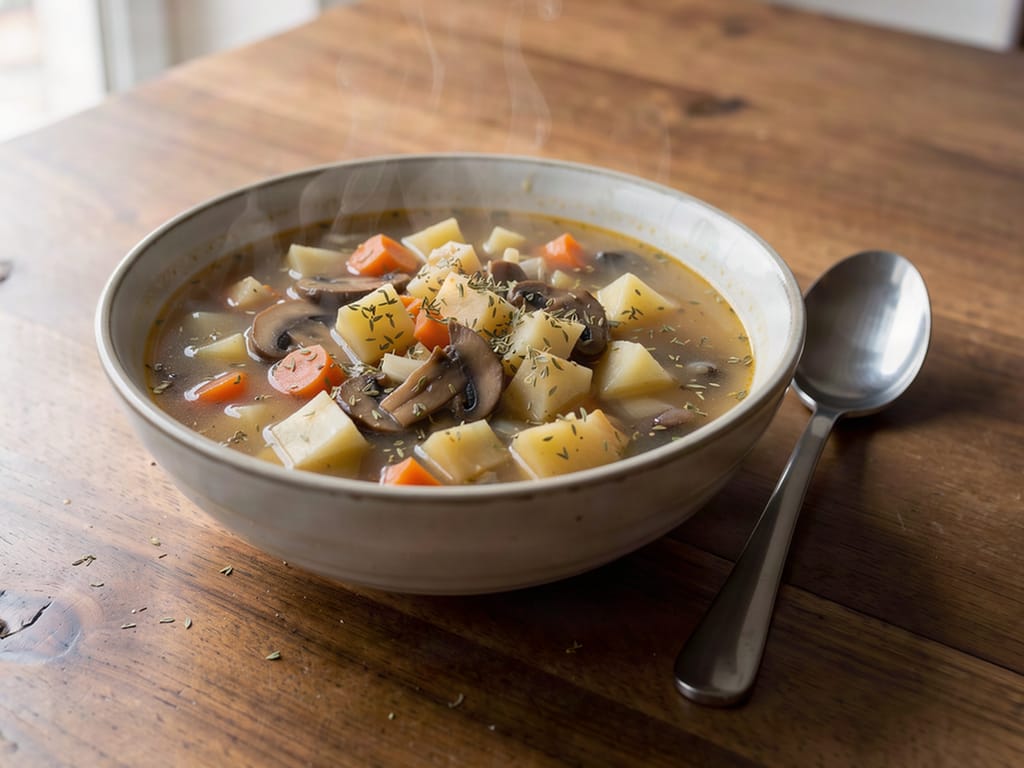
Bramboračka is a thick soup of potatoes, root vegetables and mushrooms, seasoned with marjoram. The base is onion sautéed in lard until golden, which gives the soup sweetness and color; add the marjoram only at the end and rub it between your palms so it releases its aroma.
A gentler, white version is the milk and potato soup thickened with a roux. To find out how to improve bramboračka with dried mushrooms or smoked meat, read potato soup: classic bramboračka and how to improve it.
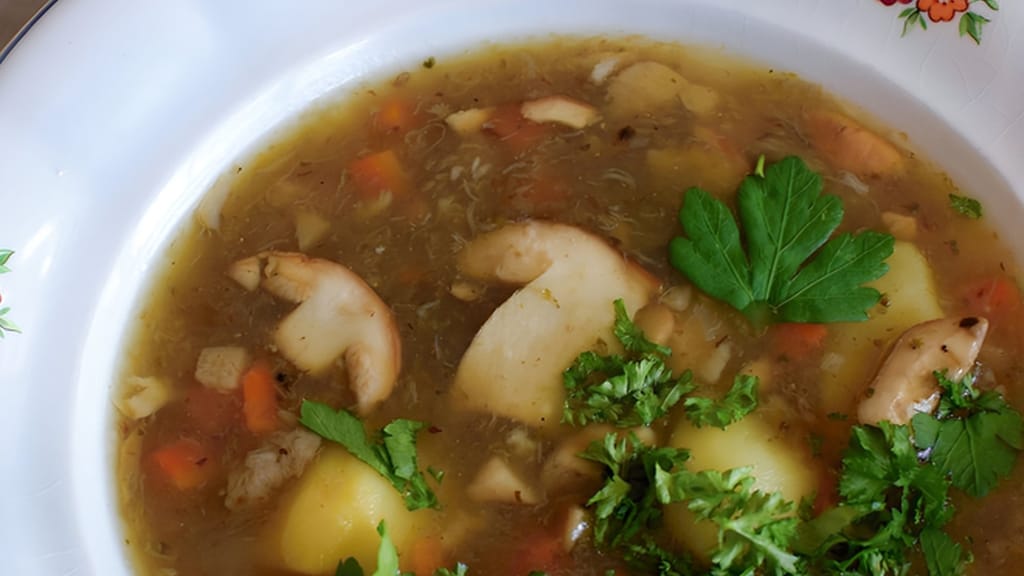
Potato soup with mushrooms
Grandma's bramboračka with mushrooms – 43 minutes
Česnečka (Czech garlic soup) is a quick soup of broth or water, potatoes and lots of garlic, served with croutons and cheese. Add the pressed garlic at the very end, off the heat, so it doesn't turn bitter and stays sharp. Variations and the most common mistakes are covered in garlic soup: česnečka recipe, variations and common mistakes.
The silky version is cream of garlic soup: slowly sauté onion and garlic in butter, add chicken broth, and blend with cream once cooked.
Goulash soup is the thinner relative of goulash: diced beef, lots of onion, sweet paprika, caraway and potatoes. Stir the paprika into the sautéed onion and meat only briefly and add liquid right away, because scorched paprika turns bitter. For the meat, choose beef shoulder or shin, which turn tender with long cooking; lean round stays dry. Goulash soup tastes best the next day, once the flavors have come together.
Kulajda is a South Bohemian cream soup with mushrooms, potatoes, dill and vinegar, traditionally served with an egg. Pour in the cream whisked with a little flour while stirring constantly, season with vinegar, and stir in the dill only at the end, off the heat, so it doesn't darken. The recipe below serves kulajda with a poached egg and a runny yolk; for small children and pregnant women, hard-boil the egg so the yolk sets completely.
A version with no cream or flour is kulajda thickened with potatoes: you blend half of the soup with the potatoes, and they thicken it.
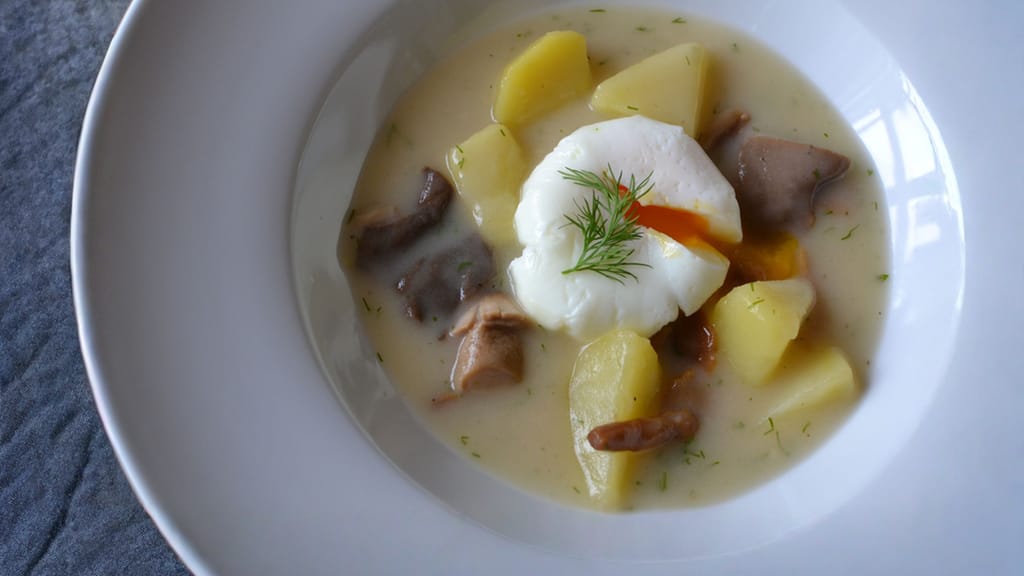
Kulajda with mushrooms, dill and poached egg
Kulajda with mushrooms, dill and a poached egg
Zelňačka is a sour soup of sauerkraut, potatoes and smoked meat or sausage, softened with cream. Control the sourness with the sauerkraut brine: add it gradually and taste as you go, and salt carefully, since both the smoked meat and the sauerkraut are salty on their own.
A related recipe from our collection is the winter red soup made with red sauerkraut, beets and smoked ribs.
Pea soup is made with yellow split peas, which thicken on their own and need no flour. Cook the soaked peas in fresh water with a bay leaf until completely broken down (an hour or longer, depending on the type), whisk smooth, and season with marjoram and garlic. Add salt only after they've broken down so you can season precisely – pea soup keeps thickening as it cooks, and the salt becomes concentrated. And watch the bottom of the pot: thick pea soup scorches easily, so stir it and cook over low heat.
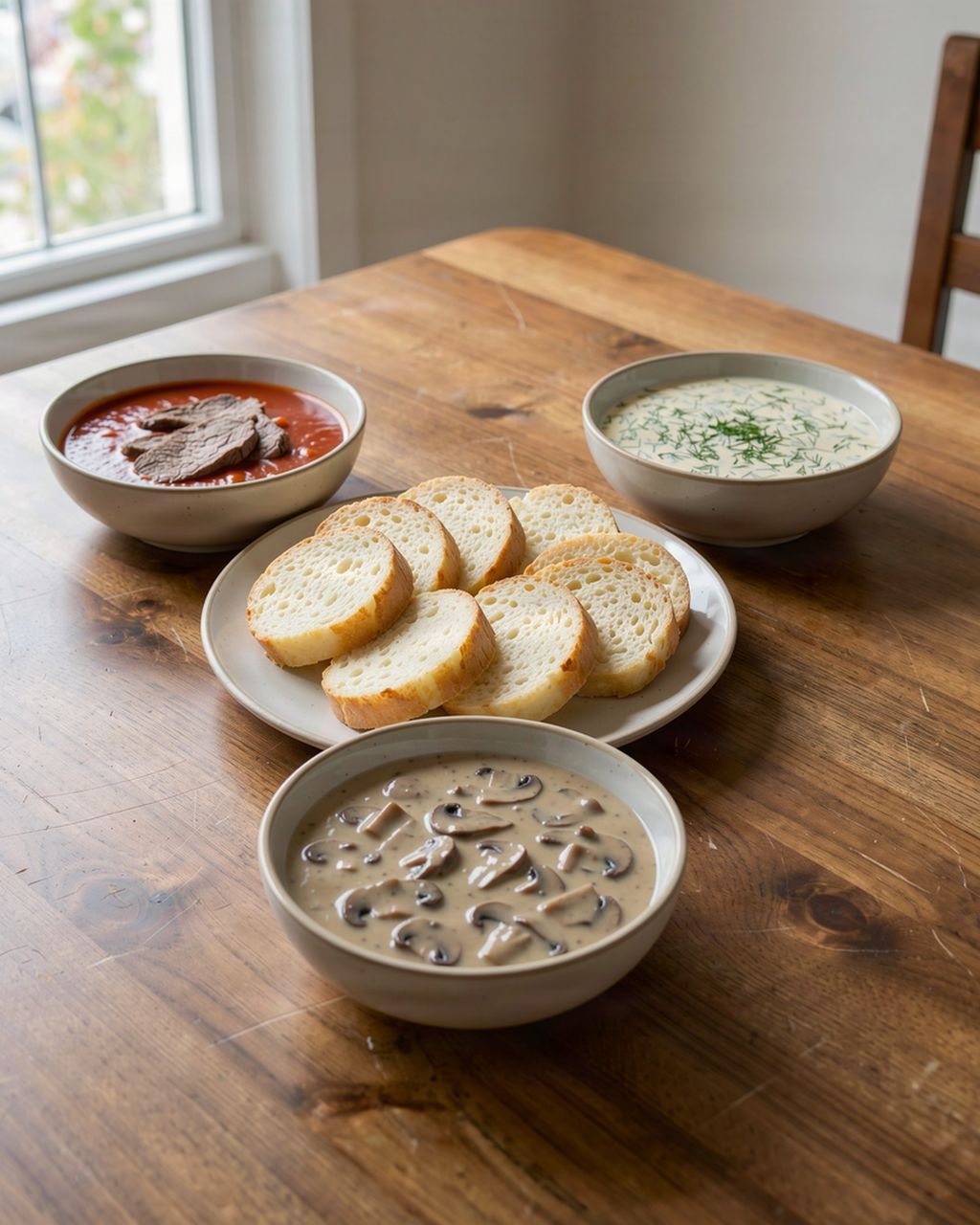
Koprovka (Czech dill soup) is a cream soup thickened with a roux stirred in, with dill, potatoes and a hard-boiled egg; mushroom soup relies on dried porcini, potatoes and cream. For the dill soup, you sprinkle flour over onion sautéed in butter and only then add the cream and broth.
You thicken the mushroom soup by pulsing it a few times with an immersion blender at the end; it's served with toasted cubes of bread roll. You'll find more mushroom variations in mushroom soup: recipes, technique and mistakes.
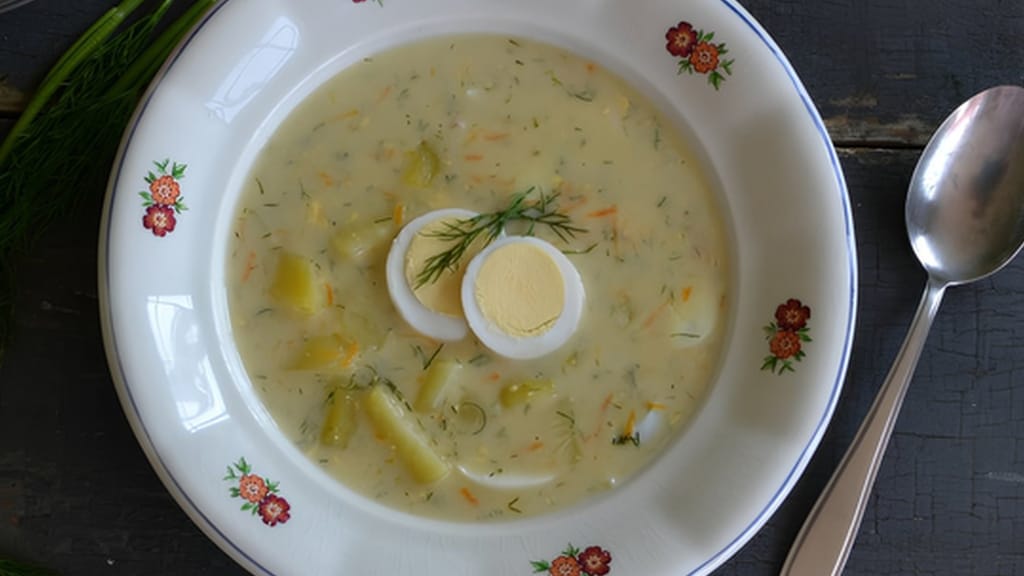
Dill soup
Dill soup with potatoes and egg
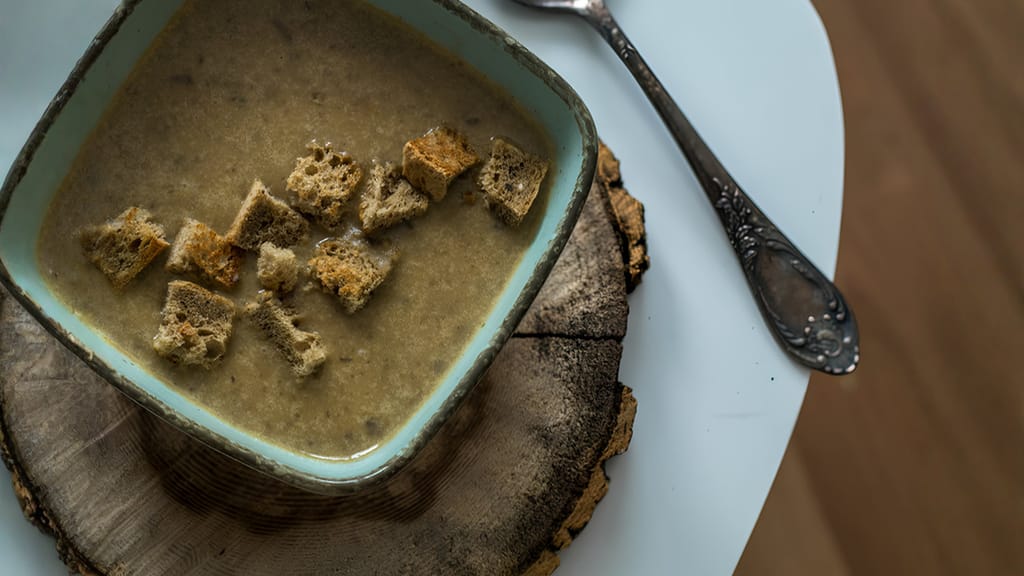
Mushroom soup
Mushroom soup with dried porcini – 47 minutes
You can make a quick soup in 35 minutes or less if you use vegetables that soften fast (zucchini, peas, cauliflower, new potatoes) and ready-made broth. These five recipes fit within 35 minutes: zucchini (26 min), pea (24 min), garlic with potatoes (25 min), cauliflower with cheese (28 min) and oat flake soup with vegetables (31 min).
Zucchini – unpeeled zucchini with onion and garlic, covered with broth and cream and blended smooth, with croutons.
Pea – cook frozen peas for just 10 minutes from the moment the pot boils so they keep their color, and serve with sour cream.
Garlic with potatoes – potatoes in chicken broth, blended with cream; set a few of the diced potatoes aside as a garnish.
Cauliflower with cheese – briefly sear the cauliflower with curry powder and stir in grated Gouda once the soup is done; don't boil it.
Oat flake – rolled oats and grated root vegetables; at the end, you whisk in eggs, which set into fine threads.
Quick soups are mostly creamy, because blending cuts the waiting time and the soup is thick without a roux. A trick for speed: cut the vegetables into small dice or grate them, and they soften in a few minutes. And if you have almost nothing at home, we'll show you what to cook from nothing – soup from frozen vegetables and broth is always within reach.
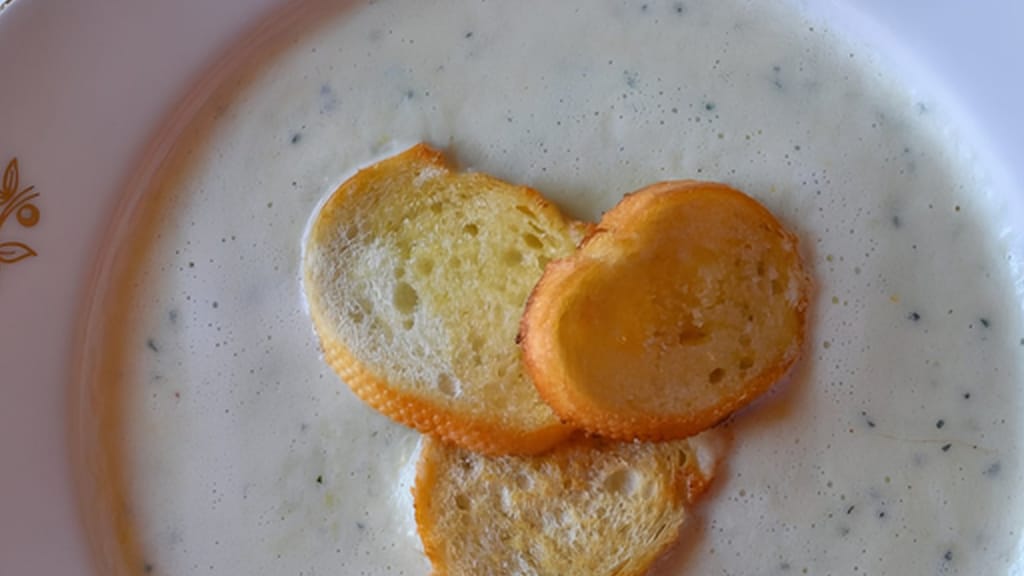
Creamy zucchini soup with crunchy croutons
Cream of zucchini soup with croutons – 26 minutes
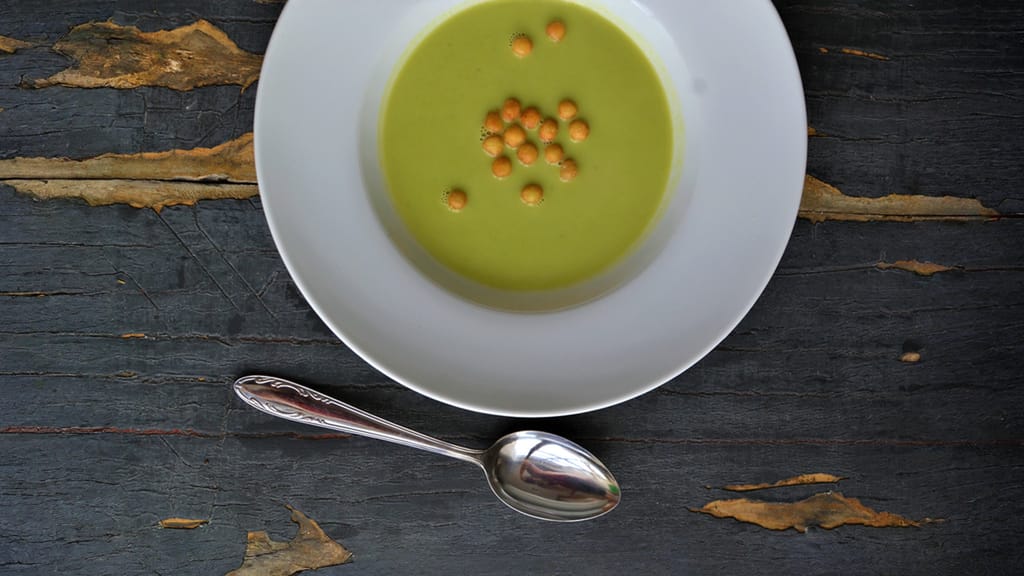
Fresh pea soup with sour cream
Pea soup with sour cream – 24 minutes
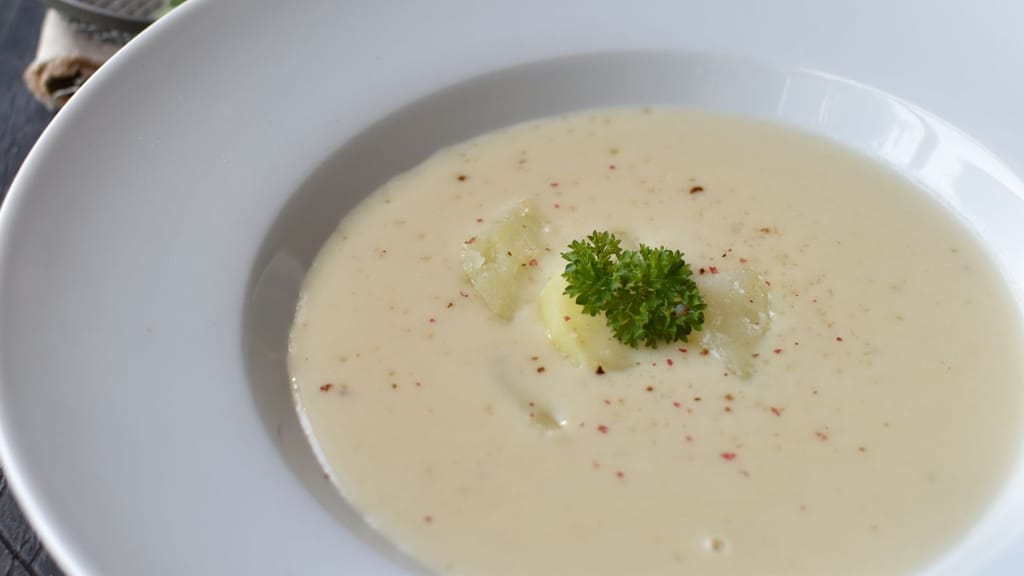
Creamy autumn garlic and potato soup
Cream of garlic soup with potatoes – 25 minutes
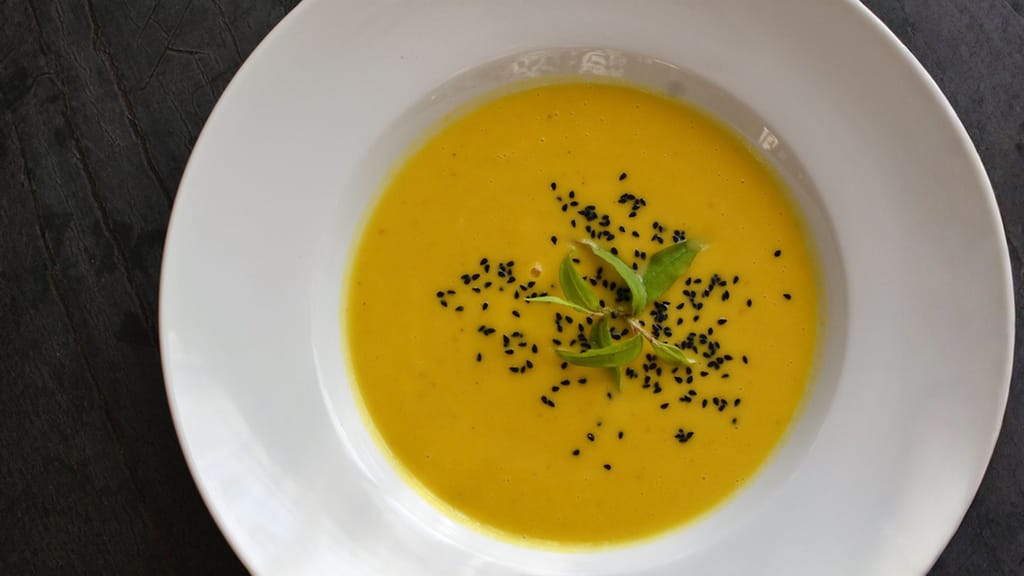
Creamy cauliflower and cheese soup
Cream of cauliflower soup with cheese – 28 minutes
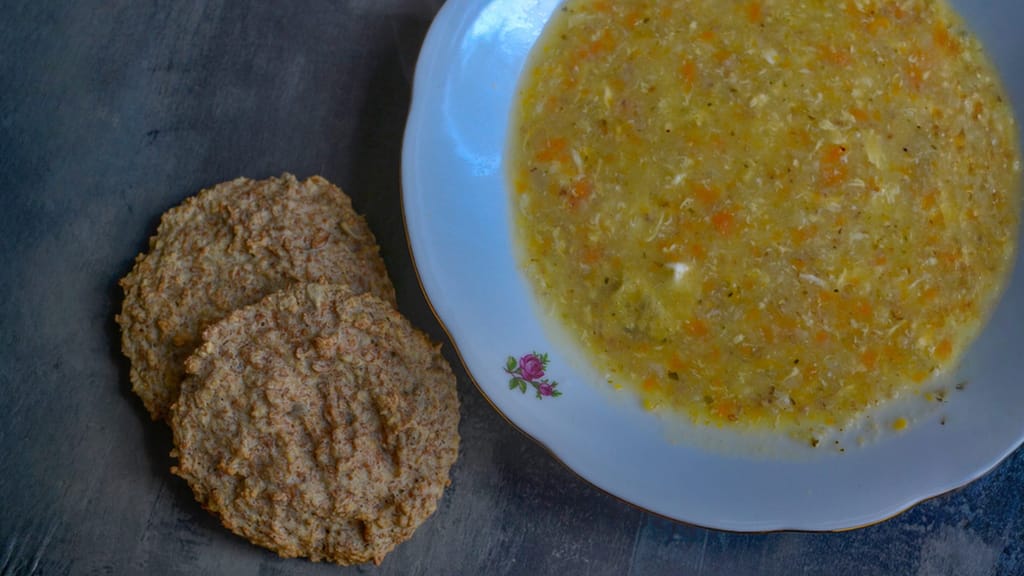
Quick oat and vegetable soup
Quick oat flake soup with vegetables – 31 minutes
Broth is a liquid in which meat, bones and root vegetables have been slowly simmered, and its strength determines the flavor of the whole soup. Grandma's soups taste different mainly because they got real broth instead of water or bouillon.
Beef broth is made from meat and bones (marrow and joint bones) covered with cold water. Cold water draws out more flavor; you skim the gray foam at the start, and then the broth just barely bubbles for several hours – a hard boil clouds it. Add the vegetables (carrot, celery root, parsley root, and an onion halved and charred on the cut side) later so they don't overcook. How to get a clear, strong broth is explained in detail in how to make beef broth that is clear and strong.
Chicken broth is quicker: from a whole chicken or carcasses it's ready in about two hours, and it has a milder flavor that won't overpower vegetables or herbs. That's why it's the base for cream of garlic soup and garlic soup with potatoes. You can also turn it into a full meal: the thickened chicken broth with meat and mushrooms is thickened with a roux stirred in, and the noodles go in just before serving.
Vegetable broth takes under an hour with carrot, celery root, parsley root, leek and onion, plus a few peppercorns, allspice and a bay leaf. You can roast the vegetables first in a pan or the oven for a darker, more pronounced broth. It suits dishes where a meat broth would overpower the delicate flavor of zucchini or peas.
It's worth making broth in a big pot and storing the rest. Freeze some in ice cube trays, and add a cube or two to a sauce or risotto. How long it keeps is covered in broth in the fridge: how long it lasts and how to store it.
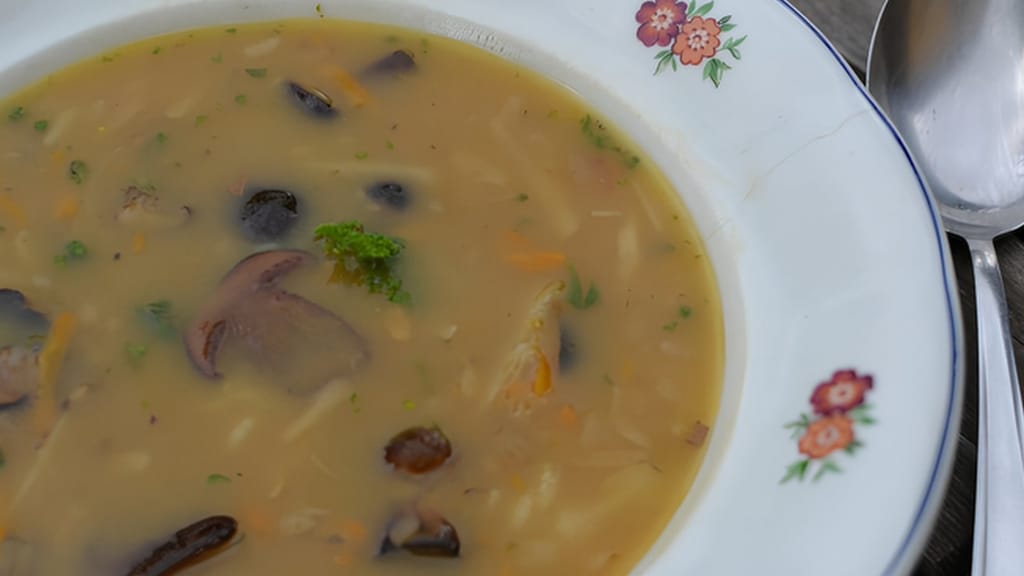
Thickened chicken broth with meat and mushrooms
Thickened chicken broth with meat and mushrooms
Soups for kids are the ideal first vegetable on a spoon: soft, easy to blend, and made from what the whole family eats, just without salt. What matters is the child's age, how much salt the soup has and what consistency it is.
According to the 2013 recommendation of the Czech Ministry of Health, complementary foods, including the first vegetable soups, should be introduced no earlier than the end of the 4th month and no later than the end of the 6th month of the child's age. The same 2013 recommendation says that foods containing gluten should be introduced no later than the end of the 7th month, ideally while the child is still being breastfed. Gluten is found in wheat flour, semolina, pearl barley and regular rolled oats. More recent professional texts are more flexible: for example, the journal Pediatrie pro praxi states that gluten can be introduced at any point between the 4th and 12th completed month. Talk to your pediatrician about how to proceed with your child.
In practice, start with a smooth soup of one or two vegetables, such as carrot, pumpkin or potato, cooked in water and blended smooth. Gradually add other vegetables and later meat, making the soup thicker and the texture coarser as your child learns to handle chewing.
No salt. The UK's National Health Service (NHS) advises not adding salt to a baby's food or to the water it's cooked in, and not using bouillon or instant sauces, because they tend to be very salty. The website of the Czech National Institute of Public Health also publishes a lecture by Dr. Tláskal that repeats the familiar recommendation not to salt food for children under one year. Soups made with bouillon, smoked meat or sauerkraut therefore don't belong among complementary foods.
From one year, a child can gradually eat with the family, but should still have little salt: the NHS gives a maximum of 2 g of salt a day for children aged 1 to 3 years. So salt the family soup sparingly and add the rest at the table.
Children usually like mild cream soups made with sweeter vegetables. The pumpkin cream soup with garlic toasts is made from hokkaido pumpkin and potatoes blended smooth; the recipe salts and peppers the soup, so set aside the child's portion first, and give the toasts with garlic and Parmesan only to older children. The pea soup and cream of zucchini soup from the quick soups section also work well; for both, use unsalted broth, or set aside the child's portion before you season the soup.
With toddlers, watch the chunks: cut potatoes and vegetables into small dice and cook them until soft enough to squash between tongue and palate. Give children eggs in soup (kulajda, koprovka, oat flake soup) hard-boiled or fully set. And leave hot spices, lots of garlic and smoked meat for the adults.

Pumpkin cream soup with garlic toasts
Hokkaido pumpkin cream soup with garlic toasts
You can thicken soup with flour (as a roux, stirred in with the onion, or whisked into cream), with starch, by blending part of the soup, or with an ingredient that brings its own body, such as potatoes, oat flakes or red lentils. Each method does something different:
Roux – melt fat (butter, lard), stir in all-purpose flour and toast it, stirring constantly. A light roux stays mild, while a dark one adds a nutty flavor and color but thickens less. As a guide, use 20–40 g of flour per liter of soup. Whisk the hot roux first with a ladleful of soup, pour it into the pot and let it simmer for at least 10 minutes, otherwise the soup tastes floury.
Stirred-in flour – sprinkle the flour straight onto onion sautéed in fat, stir briefly, and only then add the liquid. This is how koprovka and the thickened chicken broth are thickened.
Cream with flour – whisk the cream with a little flour until smooth and pour it into the soup while stirring constantly, as for kulajda. The flour also protects the cream from curdling in the heat.
Starch – mix cornstarch or potato starch with cold water and pour it into boiling soup. It thickens within a few minutes and is gluten-free, but don't boil the soup for long, because the starch then thins out.
Blending part of the soup – fish out some of the potatoes or vegetables, blend the rest and return the pieces. Kulajda thickened with potatoes works similarly; for mushroom soup, a few short pulses are enough.
Thickening ingredients – corn semolina (bramboračka), oat flakes (oat flake soup), pearl barley and red lentils (lentil soups), or a beaten egg poured into the simmering soup.
Lumps form when you add cold flour straight into hot liquid. So always disperse the flour first in fat, in cream or in cold water. If lumps do form, whisk the soup or blend it briefly. Fish soup is a special case, which we cover in how to thicken fish soup and why it isn't clear.
Cool cooked soup quickly, refrigerate it within two hours, and bring it to a boil before eating. That's the advice of the US food safety agency USDA FSIS:
Refrigerate within 2 hours of cooking; if the room is above 32 °C (90°F), within one hour.
Divide it into smaller, shallow containers. A big pot takes hours to cool in the fridge and stays warm at the center for a long time.
Reheat soups and sauces to a boil, and other leftovers to at least 74 °C (165°F).
Use within 3–4 days in the fridge; frozen soup is best within 2–3 months. After that it's still safe, but loses flavor and texture.
To cool it faster, you can set the pot in a sink of cold water and ice and stir the soup now and then. Don't cover the containers until they've cooled.
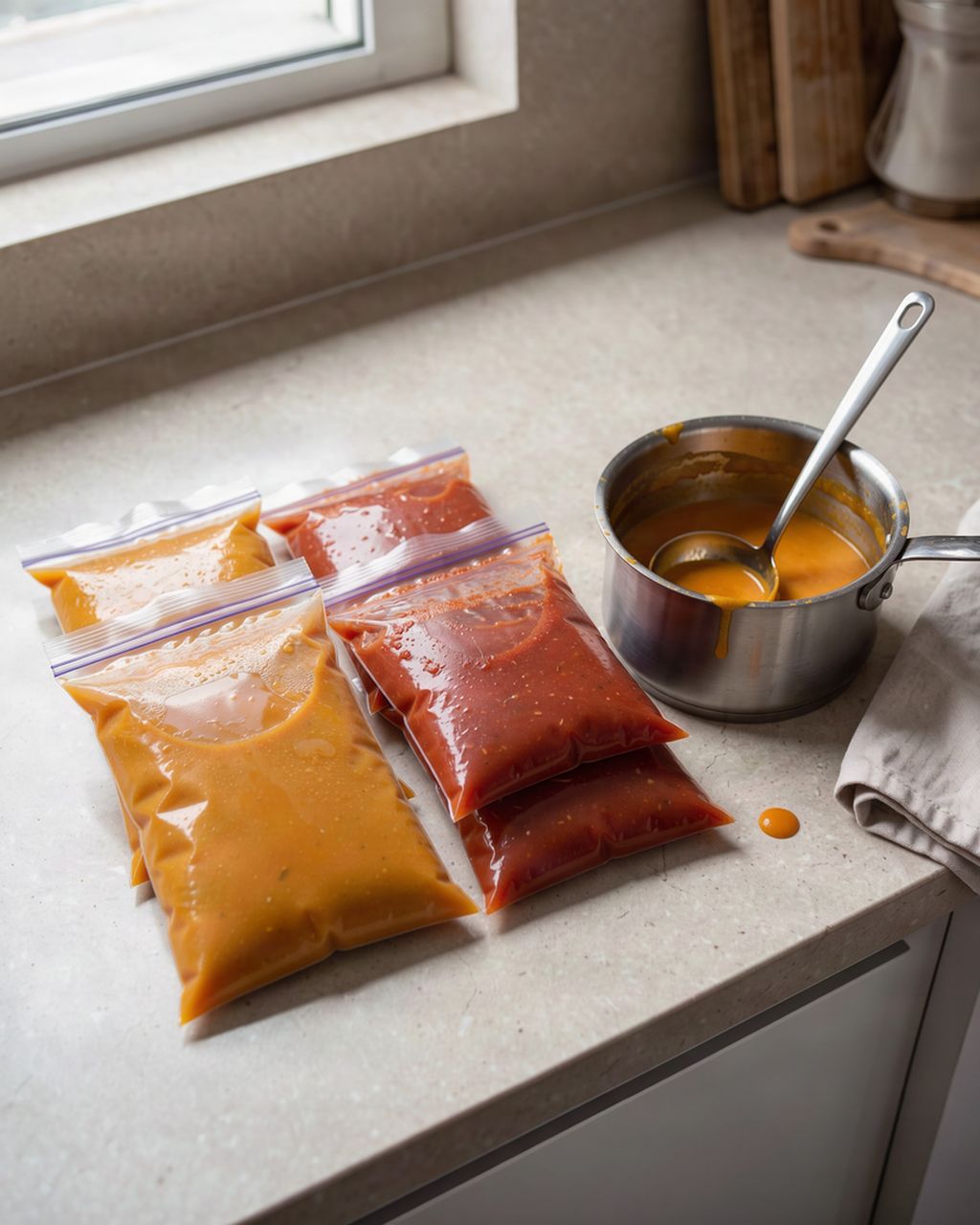
Broths, legume soups and smooth vegetable purées without cream freeze best. Potatoes turn soft and mealy after thawing, and cream and eggs can curdle, so add them after thawing, while reheating. Freeze pasta and noodles separately, or cook them fresh. Freeze soup flat in bags; it thaws faster and takes up less space in the freezer. Which soups and sauces stand up to freezing and which curdle is covered in how to freeze soup and sauce.
Cream curdles when you pour it cold into boiling soup, when the soup is very acidic (vinegar, sauerkraut), or when it's boiled for a long time after the cream goes in. Temper the cream first by stirring in a ladleful of hot soup, whisk it with a spoonful of flour, and only heat the soup through after adding it. Whipping cream, which has a higher fat content than cooking cream, holds up better.
The only reliable fix for an oversalted soup is dilution: add water or unsalted broth, plus more vegetables, potatoes or legumes so the soup doesn't turn watery. A raw potato dropped into the pot will soak up a little salty liquid, but it won't pull the salt out of the soup. Next time, salt at the end, especially when you're cooking with bouillon, smoked meat or bacon.
Yes, you can make soup with bouillon, but it will taste flatter and saltier. Dissolve the bouillon more weakly than the instructions say, and salt only after tasting. Ready-made clear broth or frozen homemade broth gives a better flavor; for babies, don't use bouillon at all.
You can reheat soup more than once, but it's safer to reheat only the portion you'll eat and bring it to a boil each time. Every cooling and reheating cycle means more time in the temperature range where bacteria multiply, and the soup also loses flavor and color. Keep the rest in the fridge, and don't pour anything left on the plate back into the pot.
Allow about 250 ml of soup per person as a starter and 400–500 ml when the soup is replacing the main course. For thick legume and goulash soups, go toward the lower end; with clear broth and noodles, people usually come back for more.
One recipe worth heating the oven for, one tip, and one deal from the shop. Nothing else.