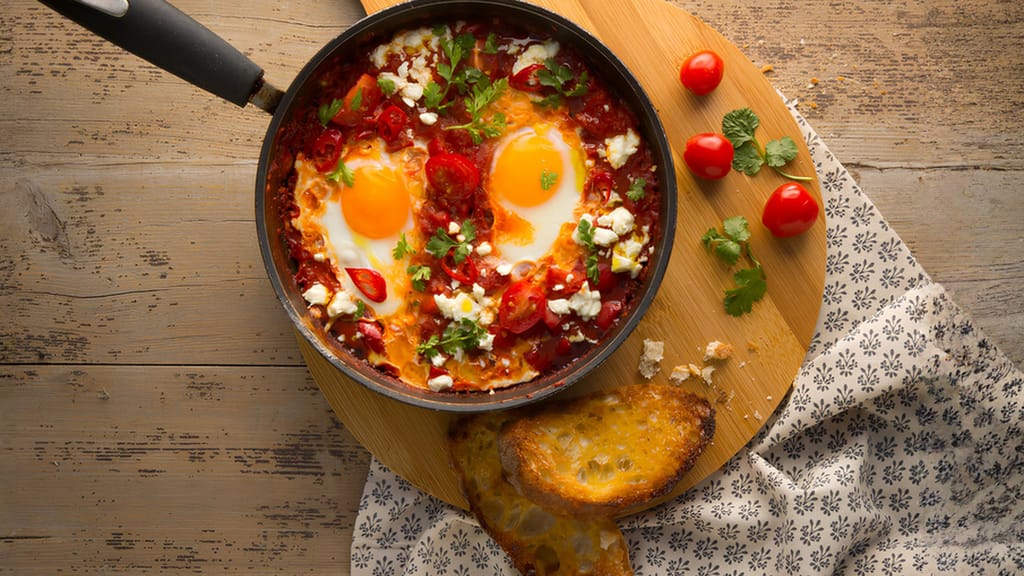
Royal shakshuka breakfast
What to Cook With Eggs: Breakfast, Lunch and Dinner Ideas, Hard-Boiled Eggs and What to Do With a Lot of Eggs
Updated Nov 18, 2026
What can you cook with eggs? Shakshuka or scrambled eggs in the morning, sweet-and-sour lentils with a fried egg or carbonara at lunch, a frittata from leftover vegetables in the evening, and a spread or salad from hard-boiled eggs. Eggs are the fastest protein you have at home. You get a meal in five minutes with almost no dishes, and they bind together whatever is left in the fridge. Here you'll find ideas sorted by time of day and by the state your eggs are in: raw, hard-boiled, or a whole tray you need to use up. Plus exact boiling times and how long eggs keep.
With eggs and tomatoes you can make shakshuka, with leftover vegetables a frittata, with pasta carbonara, and with hard-boiled eggs a spread. Here is a quick guide based on what you have in the fridge besides chicken eggs. Each dish is covered further down with instructions:
Eggs + tomatoes (canned work too) → shakshuka for breakfast or dinner
Eggs + leftover vegetables and cheese → frittata or omelet
Eggs + pasta + bacon → carbonara for lunch
Eggs + lentils or other legumes → sweet-and-sour lentils (čočka nakyselo) with a fried egg
Eggs + cooked rice → egg fried rice
Eggs + sandwich bread + ham + cheese → croque madame
Hard-boiled eggs + butter or mayonnaise → egg spread
Hard-boiled eggs + potatoes or salad greens → egg salad
Eggs + potatoes → potato salad, baked potatoes with egg, creamy roux-thickened vegetables with egg
A lot of eggs at once → quiche, sheet-pan frittata, crepes, Bundt cake, yolk-based creams
We send seasonal cooking and baking plans and recipes made from everyday ingredients. Unsubscribe in one click.
A size M egg (53–63 g) put straight from the fridge into boiling water needs 5–6 minutes for soft-boiled, 7–8 minutes for jammy and 10 minutes for hard-boiled. Count the time from the moment you lower the egg into boiling water, not cold water. That's why this method is so precise: the water stays at the same temperature, and as long as there's enough water to cover the egg, the amount in the pot makes almost no difference. In a small amount of water the temperature drops more after the cold eggs go in, and the time gets longer.
5 minutes: the white is almost set, the yolk completely runny. For dipping toast strips.
6 minutes: white set, yolk runny and warm. The classic soft-boiled egg in an egg cup.
7 minutes: creamy yolk, starting to set at the edges. Ideal for ramen and buddha bowls.
8 minutes: yolk like jam, holds its shape but isn't dry. For salads and on bread.
10 minutes: hard-boiled, yolk firm and bright yellow. For spreads, potato salad and stuffing.
12 minutes or more: the yolk turns crumbly and gray at the edge. That's overcooking, not a safer egg.
A size L egg (63–73 g) needs a minute more, and S a minute less. If you put in eggs warmed to room temperature, take off about a minute.
Three tricks that make the difference:
Lower the eggs into the water on a spoon so they don't hit the bottom and crack. Salt or vinegar in the water won't stop cracking, but they help a little if an egg does crack and the white starts to leak out.
Put the eggs straight into ice-cold water for at least 2 minutes after taking them out. This stops the cooking so the eggs don't keep setting, and they peel more easily.
Older eggs peel more easily. In very fresh eggs the membrane under the shell clings to the white. Eggs that have been in your fridge for a week are better for hard-boiling.
The gray-green ring around the yolk is iron sulfide. It forms with long boiling and slow cooling. It isn't dangerous, but it's a sign that a shorter cook and ice water would have been enough.
For breakfast, eggs work best scrambled, fried, in shakshuka or poached on toast. You can have any of them on the table within 15 minutes.
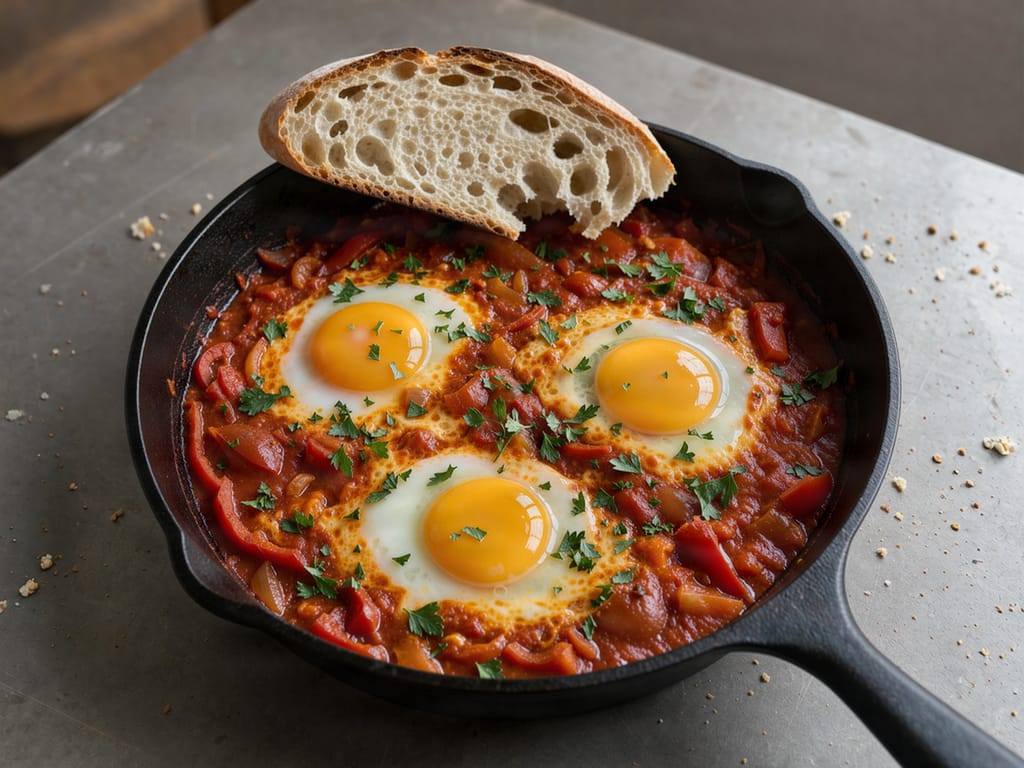
Shakshuka. Sauté onion, bell pepper and garlic in olive oil, add caraway and sweet paprika, and pour in canned tomatoes. Let the sauce thicken for 10 minutes, make wells in it with a spoon, crack an egg into each and cover with a lid. When the white turns opaque and the yolk is still glossy, it's done (about 5–7 minutes). Try our royal shakshuka breakfast.
Scrambled eggs. The secret is low heat and patience. Slowly stir beaten eggs with a teaspoon of butter using a spatula, and take them off the heat while they're still a little soft. They finish cooking from the residual heat. You can safely salt them ahead of time. They won't turn watery, and will come out slightly more tender. Wrapped in a tortilla with ham, they become a scrambled egg breakfast tortilla.
Omelet. Pour 2–3 beaten eggs into a hot pan with butter. Push the edges toward the center with a spatula so the raw egg runs to the bottom. When the surface is still glossy, add the filling, fold in half and serve right away. A heartier version is the chorizo omelet or the omelet with dried beef and tomatoes.
Eggs Benedict. A poached egg on a toasted English muffin or toast with ham, topped with hollandaise sauce. The poached egg is the hardest part, and we've written it out step by step in how to cook a poached egg. You'll find a weekend version as eggs Benedict with spicy hollandaise and pastrami.
Egg bao buns. Fluffy steamed buns filled with egg and sauce make a weekend breakfast for when you have time. The dough can be made the day before, and in the morning you just steam the buns and fry the egg. Recipe: breakfast bao buns with egg and orange mayonnaise.
Royal shakshuka breakfast
Shakshuka: eggs poached in tomato sauce for breakfast
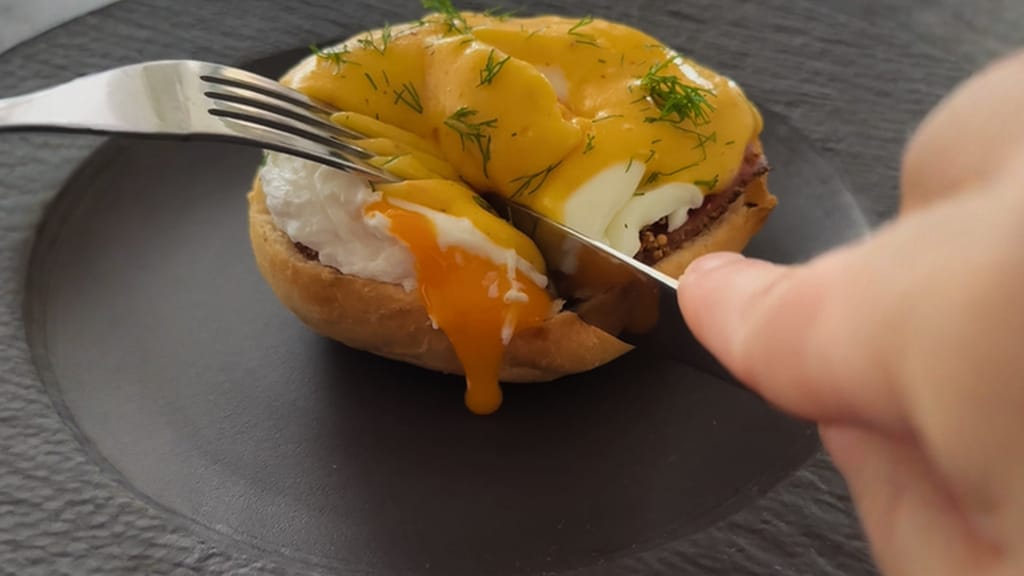
Eggs benedict with spicy hollandaise and pastrami
Eggs Benedict with hollandaise and pastrami for a weekend breakfast
At lunch, eggs work as the main protein alongside legumes, pasta and vegetables: a fried egg on lentils, carbonara, creamy roux-thickened vegetables with a boiled egg, quiche, or soup with egg garnish.
Sweet-and-sour lentils with a fried egg (čočka nakyselo). A classic of Czech canteens that tastes better at home. You thicken cooked lentils with a roux, sharpen them with vinegar and sweeten slightly, then top with a fried egg with a runny yolk. The yolk works as a sauce. Recipe: sweet-and-sour lentils with a fried egg.
Carbonara. Real carbonara has no cream. The creaminess comes from the yolks with pecorino and the starchy pasta water. Take the pan with the bacon (ideally guanciale) off the heat, stir in the hot pasta and only then the yolk mixture, otherwise the eggs turn into scrambled eggs. Take a look at spaghetti carbonara or linguine carbonara.
Creamy kohlrabi with potatoes and egg. You simmer the kohlrabi until tender, thicken it with a light roux and soften it with milk or cream. Serve with boiled potatoes and halves of hard-boiled egg. A cheap and filling meatless lunch. Recipe: creamy kohlrabi with potatoes and a boiled egg.
Soup with egg svítek. Svítek is a thin egg pancake made from eggs, milk and a little flour. You bake it on a baking sheet, cut it into cubes and add it to clear broth just before serving. Two eggs give you garnish for four. Recipe: hearty spring soup with egg svítek.
Dill soup with egg. You can poach an egg in finished dill soup, or top it with halves of hard-boiled egg. The egg turns the soup into a full lunch. The base: dill soup.
Quiche. Fill a crisp crust with a custard of eggs and cream (about 3 eggs to 250 ml of cream) and add vegetables, ham or cheese. Bake at 170–180°C (340–355°F) until the custard in the middle just barely wobbles. The leftovers taste good cold the next day. Recipe: whole-grain quiche with broccoli and smoked ham.
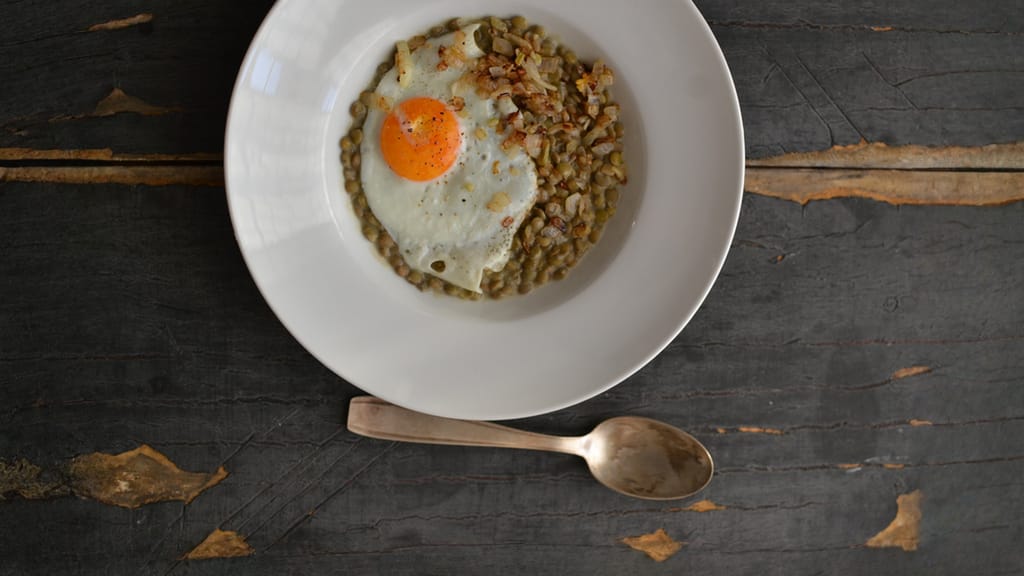
Sour lentils with a fried egg
Sweet-and-sour lentils with a fried egg: a cheap lunch of eggs and legumes
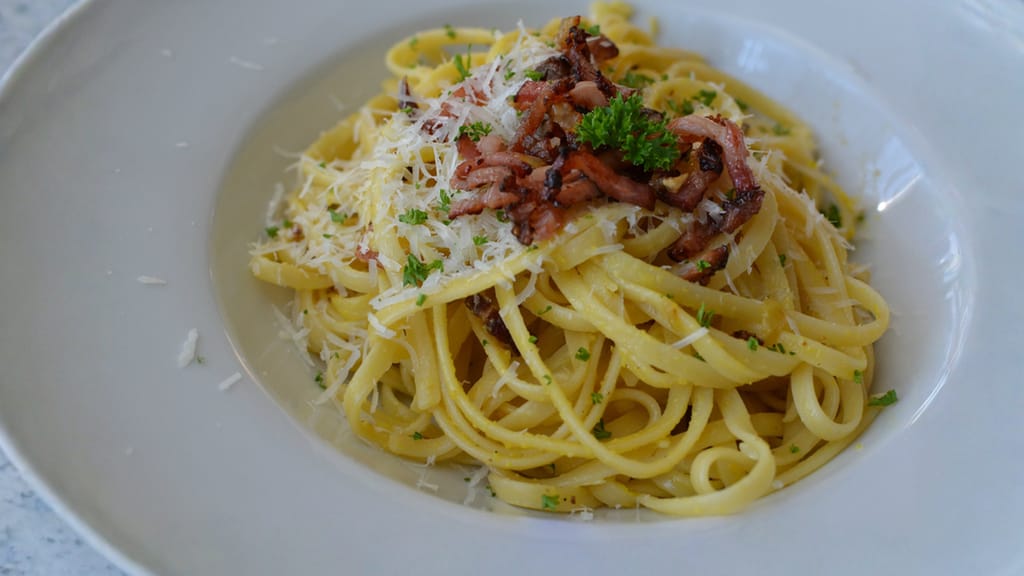
Spaghetti carbonara
Spaghetti carbonara with yolks and pecorino, no cream
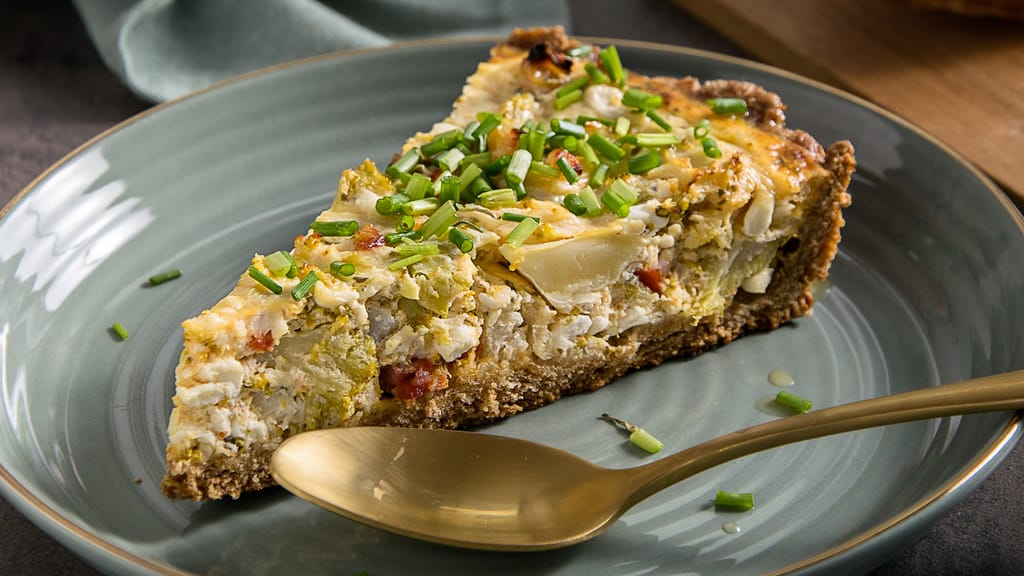
Whole-wheat quiche with broccoli and smoked ham
Whole-grain quiche with broccoli: an egg custard that uses up more eggs
For an egg dinner, the best dishes are one-pan meals: frittata, egg fried rice, baked toast with egg, or a bowl of vegetables with a jammy egg.
Frittata. An Italian omelet finished in the oven, so you don't have to flip it. Sauté vegetables in a pan (spinach, zucchini, onion, leftover potatoes), pour over 6–8 beaten eggs with cheese and leave on the stovetop for 3 minutes. Then put the pan in an oven preheated to 180°C (350°F) for 8–10 minutes. Recipe: egg frittata with baby spinach and fresh cheese.
Egg fried rice. It's best made with yesterday's cooked rice, because chilled rice is drier and doesn't stick in the pan. In a hot pan or wok, quickly scramble the egg, push it aside, add the rice and vegetables and season with soy sauce. You'll find a version with meat as spicy fried rice with meat and vegetables; to make it meatless, just leave out the meat.
Croque madame. Toast with ham and cheese topped with béchamel and baked, with a fried egg on top. It's a classic of French bistros that you can make in 20 minutes, an ideal dinner after a long day. Recipe: croque madame.
Buddha bowl with egg. Into a bowl go a grain (quinoa, rice, bulgur), a legume, raw and roasted vegetables, and an egg boiled for 7–8 minutes, halved. The creamy yolk works as a dressing. Recipe: quinoa buddha bowl with egg, chickpeas and vegetables.
Asian stir-fry with quail eggs. Boil the small eggs for 2–3 minutes, peel them and fry briefly until golden so they get a crisp skin. Then toss them in with the meat and vegetables from the wok. Recipe: Asian stir-fry with meat and crispy quail eggs.
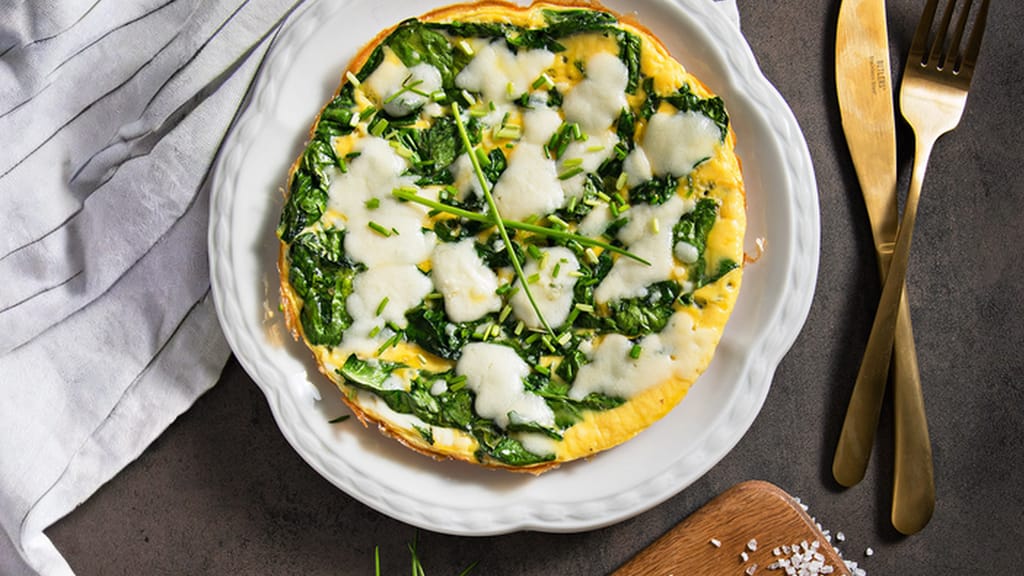
Egg frittata with baby spinach and fresh cheese
Egg frittata with spinach and fresh cheese for a quick dinner
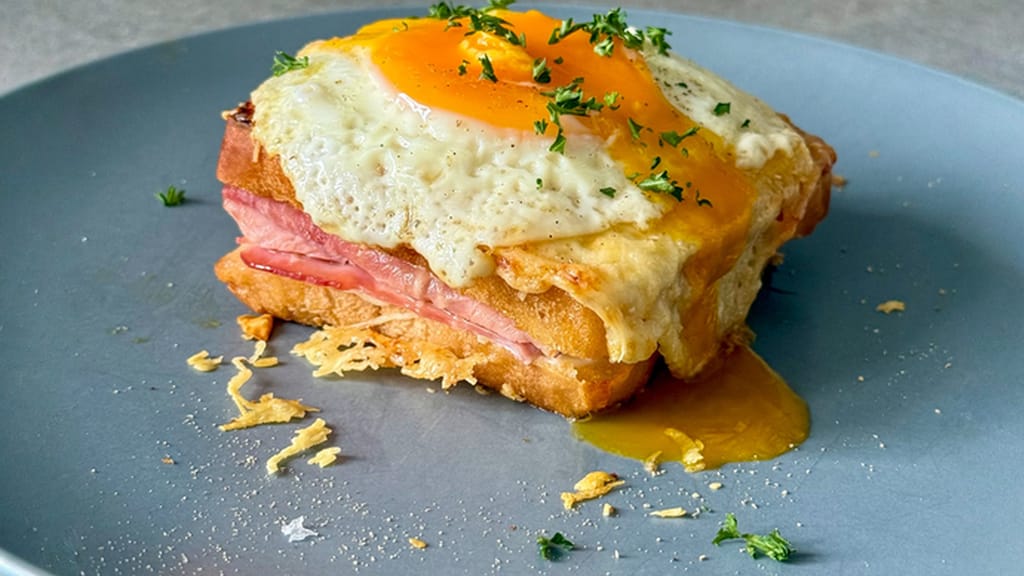
Croque madame: toasted ham and cheese sandwich with a fried egg
Croque madame: baked toast with ham, cheese and a fried egg
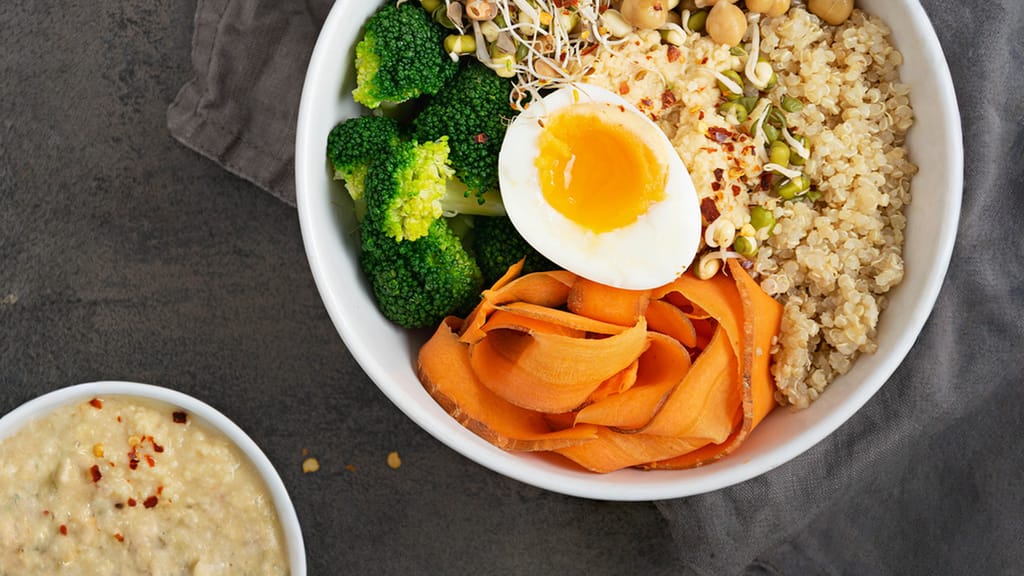
Quinoa buddha bowl with egg, chickpeas and vegetables
Quinoa buddha bowl with a jammy egg and chickpeas
With hard-boiled eggs (say, after Easter) the quickest options are a spread, a salad or an addition to a sauce. Other possibilities are stuffed eggs and eggs seared in a pan. Hard-boiled eggs are ready-made protein that you only need to slice.
Egg spread. Grate the eggs on the coarse side of a grater or mash with a fork, and mix with soft butter or a little mayonnaise, mustard, salt and chives. Spring onion or a pickle adds juiciness to the spread. A proven recipe: egg spread – easy and incredibly good.
Egg salad. Quarter hard-boiled or jammy eggs and put them on salad greens with fish, legumes or roasted vegetables. This turns a side into a full meal. Sliced eggs also belong in potato salad. Inspiration: salad greens with salmon and eggs or potato salad with green beans and smoked mackerel, where you add a few eggs.
Pan-seared hard-boiled eggs. Halve peeled eggs and place them cut side down in a hot pan with butter or oil. After 2–3 minutes they have a golden crust. Sprinkle with chili flakes or sesame and serve with yogurt, on bread or in a rice bowl. Cold eggs from the fridge get a new lease on life this way.
Stuffed eggs. Scoop out the yolks, mash them with mayonnaise, mustard and a pinch of paprika and put them back into the whites, ideally with a piping bag made from a bag with the corner snipped off. For a festive platter or as a cold appetizer.
Eggs in sauce. Hard-boiled eggs go with dill sauce, creamy roux-thickened vegetables or horseradish sauce. These are simple meatless dishes where the egg takes the place of meat. See creamy kohlrabi with egg.
Baked potatoes with egg. Hard-boiled eggs suit French-style potatoes best: layers of boiled potatoes, eggs, smoked meat and cream. Slice the potatoes, slice the eggs into rounds, sprinkle with cheese and bake for 25–30 minutes at 190°C (375°F). The basis: classic potato bake.
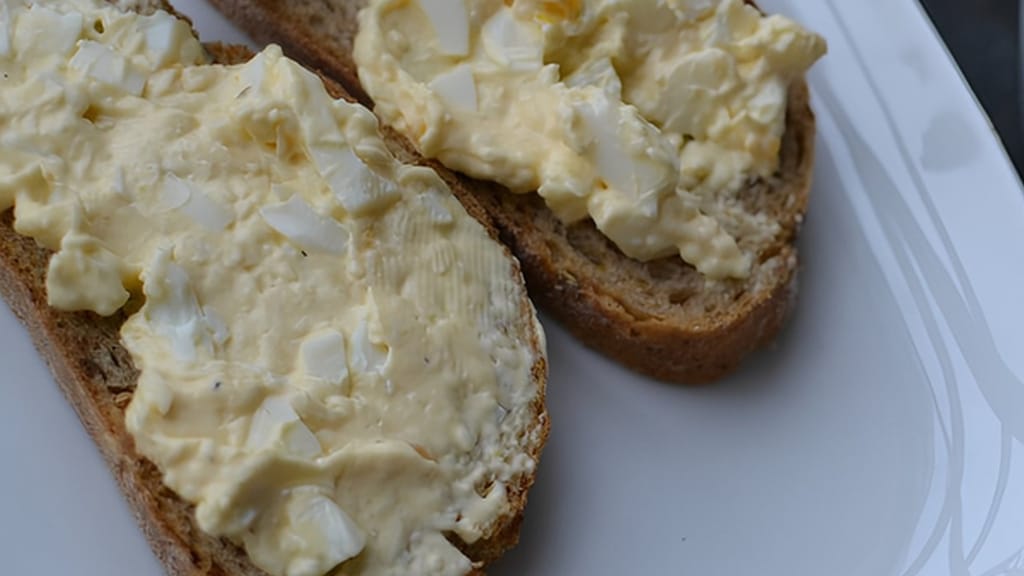
Egg spread – easy and unbelievably good
Egg spread made from hard-boiled eggs with chives
When you have a lot of eggs, reach for dishes that use many at once: sheet-pan frittata (10–12 eggs), quiche (4–6), crepes (2–3 per batch), Bundt cake (4–5), creams and eggnog (yolks), and meringues or an egg white loaf (whites).
Sheet-pan frittata. Spread sautéed vegetables on a deep baking sheet, pour over 10–12 beaten eggs with a little milk and cheese, and bake for 20–25 minutes at 180°C (350°F). Cut it into squares and you have breakfasts for three days; cold, it also works in a lunchbox.
Crepes and Dutch baby. Classic crepes use 2–3 eggs for half a liter of milk. A Dutch baby is a pancake baked in the oven in a hot pan that puffs up into tall edges. For four people it uses about 4 eggs. Recipe: fluffy oven-baked Dutch baby pancake.
Bundt cake. One Bundt cake takes 4–5 eggs and keeps for several days. Tip: take the eggs out of the fridge half an hour ahead, because room-temperature eggs combine better with butter and the batter won't curdle. Try the orange Bundt cake with almonds.
Leftover yolks. Use them in carbonara, in hollandaise, in soft buchtičky with šodó, where a warm wine cream is whisked from them, in crema catalana or in homemade vanilla custard cooked from milk, yolks and sugar.
Leftover whites. They can be frozen for up to several months, and you can whip thawed whites into meringue. Use them right away in an egg white loaf with nuts, in lavender meringues with lemon cream or in an egg white omelet with vegetables.
Eggnog. Homemade eggnog (Czech vaječný koňak, a thick egg liqueur similar to advocaat) made from yolks, sugar, milk and alcohol is a Christmas classic. It can easily use 6 yolks per batch. Recipe: eggnog. Note that if it isn't heated, it contains raw yolks (see the warning below).
Eggs are the simplest way to make a filling meatless meal. Meatless options include shakshuka, vegetable frittata, lentils with a fried egg, creamy vegetables with a hard-boiled egg, vegetable quiche, buddha bowls and egg spread.
What a meatless egg dish rests on: egg + legume or grain + vegetable. The egg supplies protein and fat, the legume or grain the base of the meal, and the vegetables the volume. A good example is pea oat "risotto" with a poached egg: creamy peas, rolled oats instead of rice, and a yolk that runs through the whole bowl.
If you're cooking a meatless dish for a vegetarian, watch out for Parmesan (traditionally made with animal rennet) and for broth in soups.
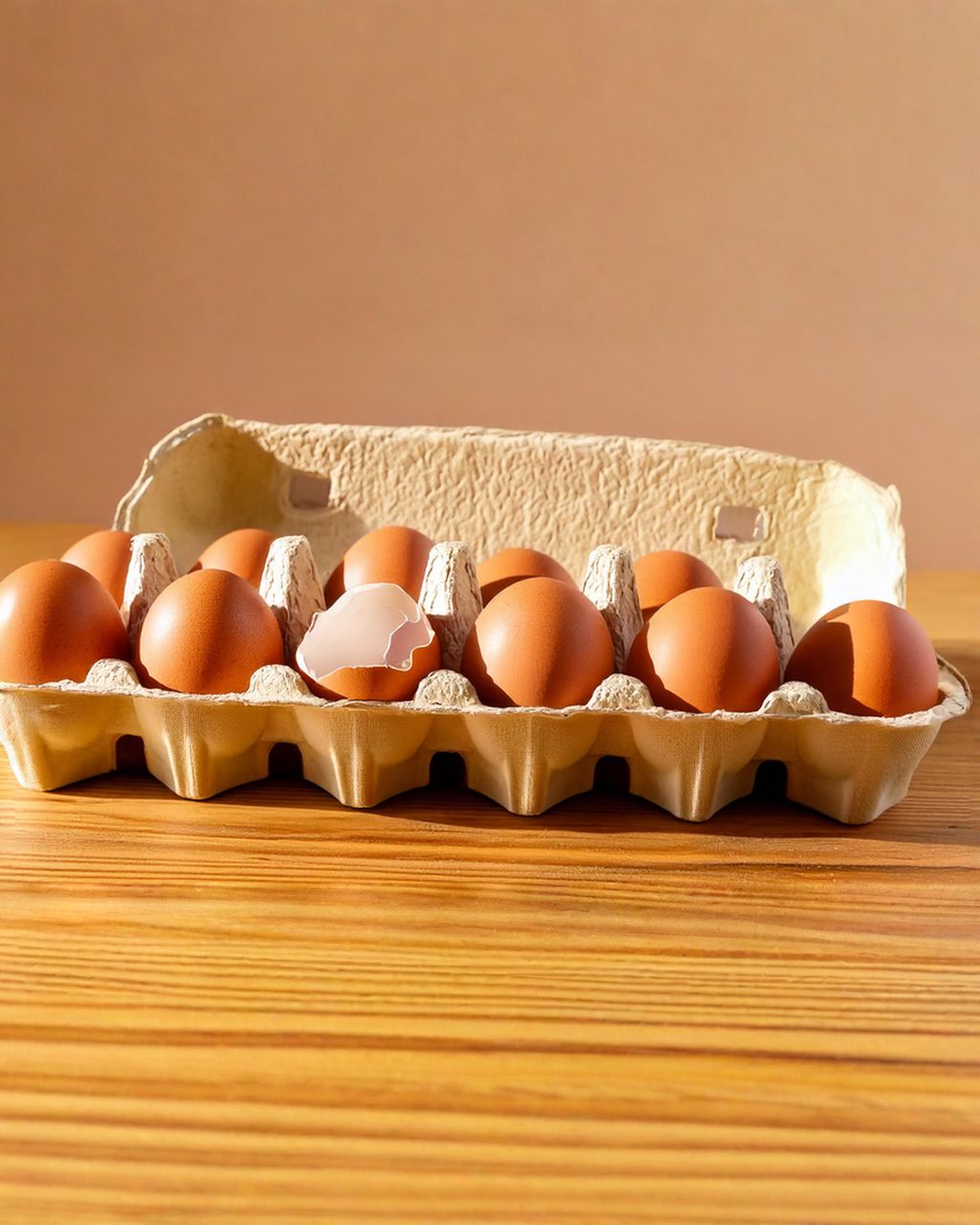
From a tray of ten eggs you can cook three full meals for two: shakshuka (4 eggs), lentils with a fried egg (2 eggs) and a leftover frittata (4 eggs). You only need to add canned tomatoes, lentils and whatever vegetables you have at home.
Day 1: Shakshuka (4 eggs). A can of tomatoes, onion, bell pepper and bread. Save the leftover sauce.
Day 2: Sweet-and-sour lentils with a fried egg (2 eggs). One bag of lentils will stretch to another meal too.
Day 3: Leftover frittata (4 eggs). Everything that's left goes into the pan: a piece of bell pepper, leftover potatoes, cheese, ham or the leftover tomato sauce from the shakshuka.
You can add boiled potatoes to both the frittata and the shakshuka. That stretches the dish cheaply and makes it more filling.
Hard-boiled eggs keep in the fridge for up to 1 week, provided you refrigerate them right after they cool, within 2 hours of cooking at the latest. That is what the US food safety agency USDA/FSIS states. It applies the same whether they're in the shell or peeled. Keep peeled ones in a sealed container, though, because they dry out faster and absorb odors.
Raw eggs in the shell: in the fridge, ideally in the original carton, not in the fridge door where the temperature fluctuates. According to USDA/FSIS about 3–5 weeks from purchase, but that applies to American eggs, which are washed and refrigerated right from laying. In the EU, Class A eggs aren't washed, so go by the best-before date on the package.
Cooked eggs with a runny yolk (soft-boiled): eat right away, don't store them.
Raw yolks and whites separately: in a sealed container in the fridge, use within about 2–4 days. You can freeze the whites.
Egg dishes (frittata, quiche, spread): according to USDA/FSIS, 3–4 days in the fridge.
Easter eggs that sat at room temperature for more than 2 hours: are no longer meant to be eaten.
Cooking washes the protective coating off the shell, which is why hard-boiled eggs keep for a shorter time than raw ones. We cover in detail how to store eggs and how to tell a fresh egg in the article egg shelf life: how long they keep in the fridge.
Hard-boiled eggs peel best if you cool them in ice water right after cooking and start peeling from the blunt end, where the air pocket is. First tap the whole shell to crack it all over, then peel under running water. Eggs about a week old peel more easily, because in very fresh eggs the membrane clings tightly to the white.
Don't freeze whole hard-boiled eggs, because the white turns rubbery and weeps water after thawing. You can freeze cooked yolks on their own, for example to grate over a salad. Raw egg whites freeze very well, and raw yolks only with a little salt or sugar, otherwise they thicken.
The easiest way is the water test: a fresh egg sinks and lies flat on the bottom of a glass of water, an older one stands on its tip, and an egg that floats is very old. Crack it into a separate bowl, and if it smells off, throw it out. A fresh egg has a tall, domed yolk and a thick white that holds together.
Don't put eggs in their shell in the microwave: steam builds up inside and can burst them, even after you take them out. A cracked egg in a mug with the yolk pierced, or scrambled eggs, are no problem in the microwave. For poached eggs in the microwave, see our article on poached eggs: how to cook them in a pot and in the microwave.
It depends on what the egg does in the dish: in meatloaf and meat patties, breadcrumbs soaked in milk or a grated potato will bind it, and in baking you can use mashed banana, applesauce, or a tablespoon of ground flaxseed with three tablespoons of water. We give the ratios in our articles on replacing eggs in meatloaf and on vegan Bundt cake.
For an omelet, count 2–3 eggs per person, and for a vegetable frittata about 2 eggs per person. If you add potatoes or a lot of vegetables, you can get by with fewer eggs, because they only bind the vegetables together.
One recipe worth heating the oven for, one tip, and one deal from the shop. Nothing else.