Oven-Roasted Potatoes: What Temperature for American-Style Wedges, New Potatoes and Jackets
What to Cook With Potatoes: Raw, Boiled, in Their Skins or Mashed
Updated Nov 18, 2026
What to cook with potatoes depends mostly on what state they're in. Raw potatoes become potato pancakes, gratin, roasted potatoes or soup. Leftover boiled ones turn into pan-fried potatoes, potato salad, potato cakes or gnocchi. Mashed potatoes become croquettes and baked mash. The second thing that matters is the cooking type: firm type A holds its shape in a salad, while floury type C makes fluffy mash and tender dough. Below is a guide based on what you happen to have in the fridge or cellar, with a short method for each dish, the right cooking type and a meatless option. At the end you'll find three meals from one bag and the rules for storing cooked potatoes safely.
The quick answer: raw potatoes → potato pancakes, gratin, roasted potatoes, fries, soups; leftover boiled → pan-fried potatoes, salad, potato cakes, gnocchi, tortilla; boiled in their skins → with quark, smashed and roasted, salad; mashed → croquettes, potato cakes, baked mash; potato dough → dumplings, šišky, gnocchi, lokše. Here is the whole matrix: what you have, what you can make from it, which cooking type suits best and whether the dish is meatless:
Raw potatoes: potato pancakes (type C or B, meatless), gratin (B, or A for firm slices, meatless), oven-roasted potatoes (B or C, meatless), fries (C or B, meatless), bramboračka, Czech potato soup (B, meatless), creamy potato soup (C or B, meatless), potato goulash (B, meatless).
Leftover boiled, peeled potatoes: pan-fried potatoes with onion (A or B, meatless), potato salad (A, meatless or with fish), potato cakes (B or C, meatless), gnocchi (C, meatless), potato tortilla with eggs (A or B, meatless).
Potatoes boiled in their skins: potatoes with quark (tvaroh, a Czech fresh curd cheese) and chives (A or B, meatless), smashed roasted potatoes (A or B, meatless), raclette (A, meatless), salad (A), a base for potato dough (C).
Mashed potatoes: croquettes (C, meatless), mash cakes (C or B, meatless), baked mash with meat or lentils (C or B, meatless option), thickening for soup.
Potato dough: fruit dumplings (C, meatless), šišky with poppy seeds (C, meatless), gnocchi (C, meatless), lokše (C, meatless).
Most potato dishes are meatless from the start, since meat is more of an extra than a necessity with potatoes. I go through every dish in the matrix below, each with a short method.
We send seasonal cooking and baking plans and recipes made from everyday ingredients. Unsubscribe in one click.
The cooking type tells you how much starch a potato has, and so whether it holds together or falls apart when cooked. In Czech shops there are three kitchen types (and a fourth, D, for industry):
Type A – salad potatoes, firm. The least starch. They stay firm and smooth after cooking and don't fall apart. They belong in salads, for pan-frying, boiling in their skins and in gratin where you want clean slices. They aren't suited to mash or potato pancakes. You'll find more on the page type A potatoes – salad potatoes.
Type B – side-dish potatoes, semi-firm. Medium starch; the surface breaks up slightly when boiled. This is the most versatile type: boiled as a side, roasted, in soups, for potato pancakes and in gratin. Details on the page type B potatoes – side-dish potatoes.
Type C – floury. The most starch; they cook down easily and are crumbly. They give the fluffiest mash, the driest potato dough, the crispiest fries and the thickest creamy soup.
In shops you'll often see in-between labels such as A–B or B–C, because the boundary between types isn't sharp. Type C is often harder to find in ordinary shops. If you can't get it, B works for almost everything, and in dough you just add a little more flour. Bear in mind too that A takes the longest to cook and C the shortest: keep an eye on floury potatoes and take them off a little early so they don't turn to mush.
From raw potatoes you can make five dishes: potato pancakes, gratin, oven-roasted potatoes, fries and potato goulash. The crisp ones are fried or roasted, while in gratin and goulash the potatoes cook right in the sauce. Methods:
Potato pancakes (type C or B). Grate the potatoes finely, squeeze the liquid into a bowl and let it stand for five minutes. Return the starch that settles at the bottom to the batter, as it binds better than extra flour. Add pressed garlic, marjoram, salt, an egg and just enough all-purpose (plain) flour for the batter to hold together. Fry thin pancakes in hot lard or oil for 3–4 minutes per side, until the edges are deep golden. Try our traditional crispy, fragrant potato pancakes.
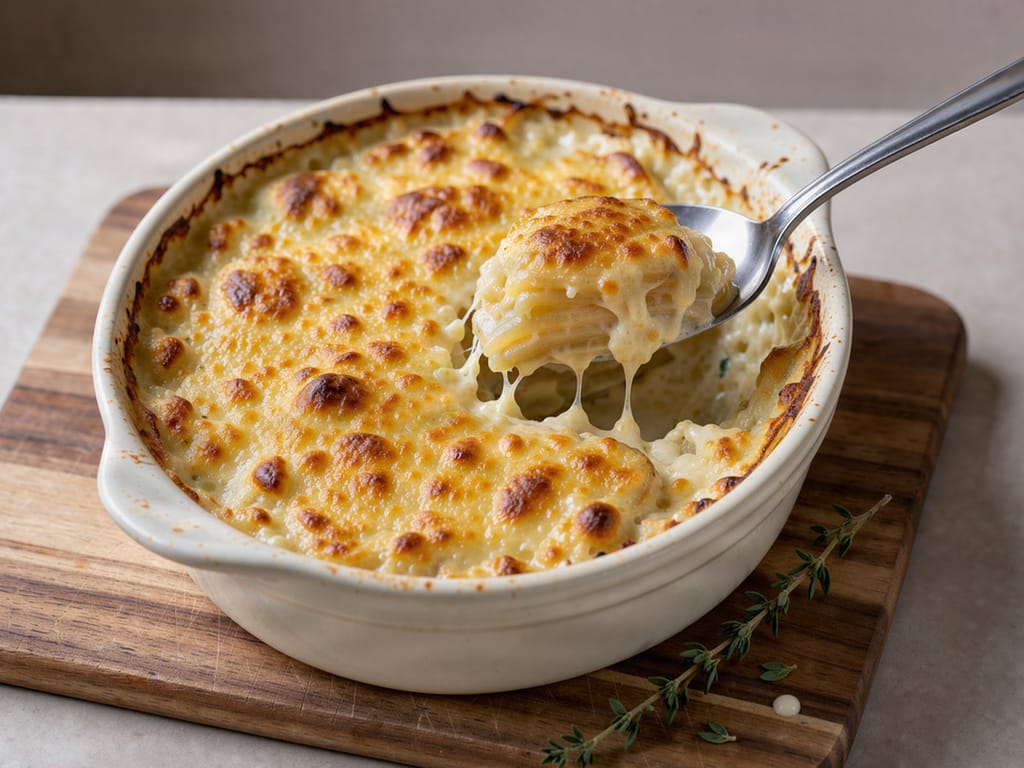
Gratin (type B, or A for firm slices). Slice the potatoes 2–3 mm thick and don't rinse them, because the surface starch thickens the cream. Layer them in a greased dish, salt each layer and pour over a mixture of cream and milk with garlic and nutmeg. Bake at 160–180°C (320–355°F) for about 60–75 minutes, until a knife slides in with no resistance and the top turns golden. You'll find it step by step in the recipe for heavenly potato gratin; a richer version with eggs is offered by classic baked potatoes.
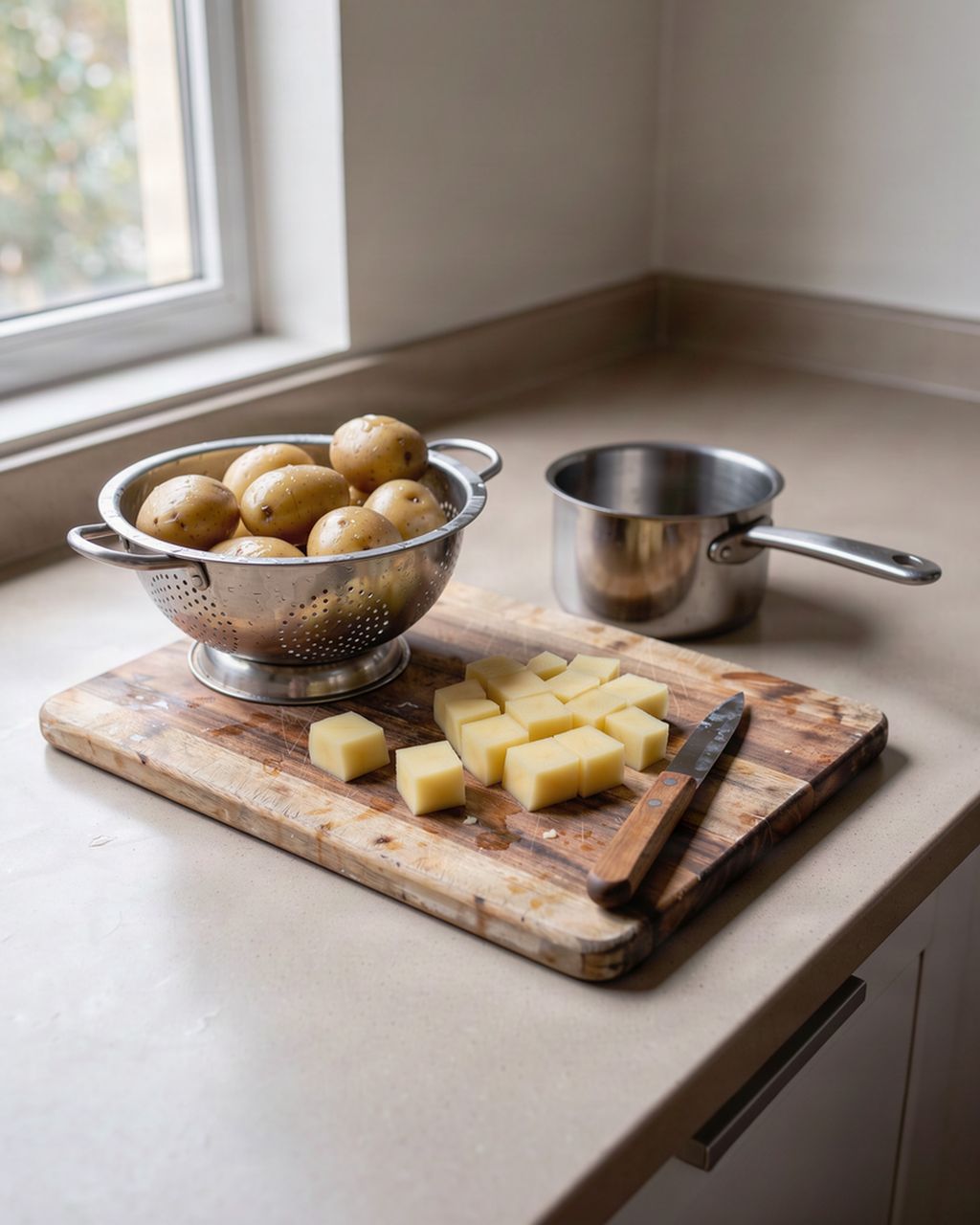
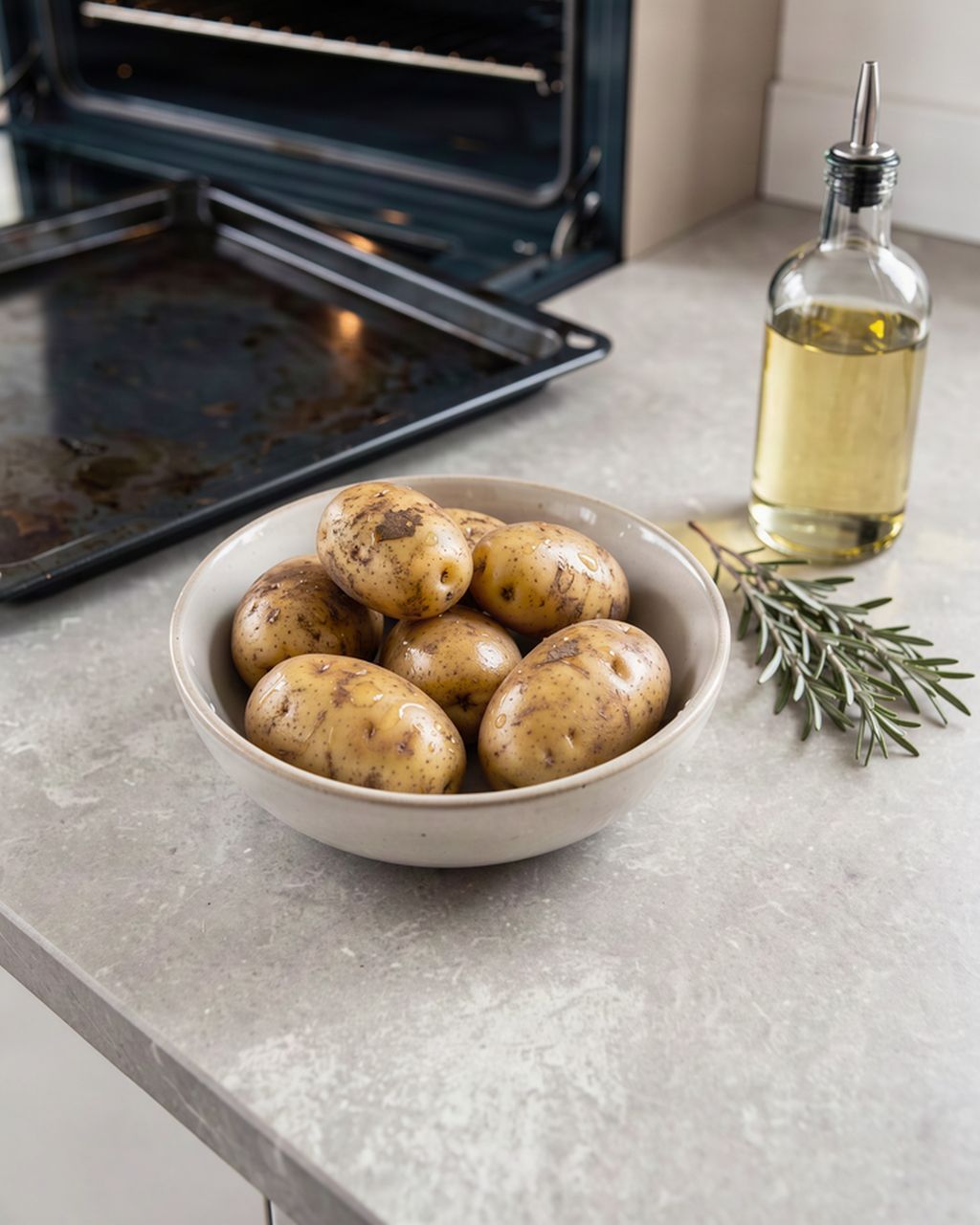
Oven-roasted potatoes (type B or C). Parboil cubes or wedges for 8–10 minutes in salted water, drain and shake them in the pot to roughen the surface. Toss with oil, salt and rosemary, spread in one layer on a baking sheet and bake at 200–220°C (400–430°F) for 35–45 minutes, turning halfway. The roughened surface is why they come out crisp like in a restaurant. Temperatures and times for russet, new and unpeeled potatoes are covered in the article oven-roasted potatoes.
Fries (type C or B). Cut the potatoes into fries about 1 cm thick and soak them in cold water for 30 minutes to wash off excess starch. Dry them thoroughly with a towel, toss with oil and bake at 220°C (430°F) for 30–35 minutes, turning twice. Deep-fried fries are done in two stages: first at 150°C (300°F) until tender, then briefly at 180°C (355°F) until golden. You'll find air fryer times in the article air fryer: temperatures and times.
Potato goulash (type B, meatless). Fry plenty of onion in lard or oil until golden, sprinkle in sweet paprika, caraway and marjoram and immediately add water so the paprika doesn't turn bitter. Add diced potatoes and cook for 20–25 minutes, until the edges start to break down and the goulash thickens by itself. Smoked paprika or a piece of smoked cheese at the end adds the flavor you'd otherwise expect from sausage.
You can make four soups from potatoes: a thick bramboračka (Czech potato soup) with pieces of vegetables, a smooth creamy potato soup, kulajda and garlic soup. Methods:
Bramboračka (type B). Fry onion in butter, add diced carrot, celeriac and parsley root, then the potatoes, and cover with water or stock. Add a handful of soaked dried mushrooms and caraway and simmer for about 20 minutes. Thicken it either with a light roux or simply by mashing some of the potatoes right in the pot, and finish with garlic and marjoram. The traditional method and improvements are in the article potato soup: traditional bramboračka and how to improve it, and a quick version in the recipe for quick potato soup.
Creamy potato soup (type C or B). Sweat leek or onion in butter, add diced potatoes and pour in stock so they are just covered. After 15–20 minutes, when they fall apart under the spoon, blend the soup and soften it with cream or milk. Blend briefly, because long blending releases starch and the soup turns sticky as wallpaper paste. A mild milk-based version is in the recipe for milk potato soup.
Kulajda (type A or B). Here the potatoes hold their shape in a sour cream soup with mushrooms and dill, so reach for a firmer type. At the end add a poached egg, and if you make it with water or vegetable stock, the whole dish is meatless. The method is in the recipe kulajda – the best soup with mushrooms.
Garlic soup (type B). Simmer the potatoes in stock with caraway, and only when they're soft add lots of pressed garlic, since cooked garlic loses its sharpness. It is served with toasted croutons and cheese. The recipe hearty garlic soup with potatoes and bacon gives you a robust version; without the bacon and with vegetable stock or water, it's a meatless dish.
From potatoes boiled in their skins you can make three dishes: potatoes with quark and chives, smashed roasted potatoes and raclette. The skin protects them while they cook, so they don't soak up water, hold their shape and taste stronger. Boil them whole in salted water for roughly 20–25 minutes depending on size, until a knife slides in with no resistance. Methods:
Potatoes with quark and chives (type A or B). Cut the warm potatoes open, drizzle with butter and add quark whipped with a little milk, salt, and chives or spring onion. With caraway and a handful of radishes it's a whole meatless dinner in 25 minutes. A baked version is in the recipe for baked potato with whipped herb quark.
Smashed roasted potatoes (type A or B). Spread the boiled potatoes in their skins on a baking sheet and gently press each into a flat patty with the bottom of a mug so they crack. Drizzle with oil, salt, sprinkle with garlic and herbs and bake at 220°C (430°F) for about 25 minutes. The broken edges crisp up and the inside stays creamy. For inspiration, see the recipe for smashed potatoes on a skewer.
Raclette (type A). Small potatoes in their skins are the ideal base for pouring melted cheese over. How much cheese per person and what to serve with it is covered in the article raclette at home.
Potatoes boiled in their skins the day before are also the best ingredient for potato dough and salad – more in the sections below.
From leftover boiled potatoes you can make five dishes: pan-fried potatoes with onion, potato salad, potato cakes, gnocchi and a potato tortilla with eggs. They're a better ingredient for these than fresh ones: in the fridge they firm up, so they can be cut into neat slices, fried until golden and pressed into a dough that needs less flour. Methods:
Pan-fried potatoes with onion (type A or B). Slice or cube the cooled potatoes and put them in a single layer in a well-heated pan with a little lard or oil. Leave them alone for the first 5 minutes so a crust forms, then turn, add onion and caraway and fry another 5–7 minutes. A crowded pan steams the potatoes instead of frying them, and add salt only at the end, because it draws out water. Add a fried egg and a pickle and you have a classic cheap dinner.
Potato salad (type A). Peel and cut firm potatoes, ideally boiled in their skins the day before, while they're cold, because warm ones mash. Sprinkle them with a little stock or pickle brine so they soak up flavor before you add the mayonnaise or dressing. How to choose potatoes and cook them so they don't fall apart is covered in the article which potatoes for potato salad. More variations are in the recipes for potato salad with green beans and smoked mackerel and fresh potato salad.
Potato cakes (type B or C). Press or finely grate the potatoes, add an egg, a spoonful or two of flour, salt and whatever is left over – grated cheese, spinach, grated zucchini, herbs. Shape into cakes 1 cm thick and fry them in a pan until golden on both sides, or bake in the oven at 200°C (400°F) for about 20 minutes. A baked version with vegetables is in the recipe for baked potato patties with vegetables and cottage cheese.
Gnocchi (type C). From cold pressed potatoes you make gnocchi from the same potato dough as dumplings and šišky – the flour ratio and the full method are below in the potato dough section. They're best fried in butter, for example with kale as in the recipe Brussels sprouts with red onion and potato gnocchi.
Potato tortilla with eggs (type A or B). Fry onion in a pan, add slices of boiled potato and pour over beaten eggs (5–6 eggs for 500 g of potatoes). Cook covered over low heat until the eggs set, then flip it using a plate or finish it under the broiler. More ideas for eggs are in the article what to cook with eggs.
Leftover potatoes also suit a filled flatbread: Mexican quesadilla with chorizo and potatoes is proof that cubes of boiled potato work outside Czech cooking too.
Leftover mashed potato is ready-made dough: add an egg and a little flour and you have croquettes or potato cakes, or spread it over a filling and bake it. Methods:
Potato croquettes (type C). Into cooled, rather thick mash, stir an egg yolk and 1–2 tablespoons of flour so it can be shaped. Form into logs, coat in flour, egg and breadcrumbs, and fry in oil heated to 170–180°C (340–355°F) for about 3 minutes until golden. If the mash is loose, first cook off some moisture in a pan, otherwise the croquettes fall apart in the oil.
Mash cakes (type C or B). Mix the mash with an egg, a handful of grated cheese and a spoonful of flour, shape into cakes and fry in butter until they have a golden crust. Sauerkraut or sour cream with chives goes well with them. It's the fastest way to turn a side dish into a meatless main.
Baked mash (type C or B). Put a layer of braised meat, ground meat ragù or, for a meatless version, braised lentils with carrot and mushrooms on the bottom of a dish, spread mash on top and make ridges with a fork. Sprinkle with cheese and bake at 200°C (400°F) for 20–25 minutes, until the ridges turn golden. Ideas for a ground meat filling are in the article what to cook with ground meat.
Thickening soup. A few spoonfuls of mash stirred into bramboračka, goulash or vegetable soup thicken it just like a roux, only without flour.
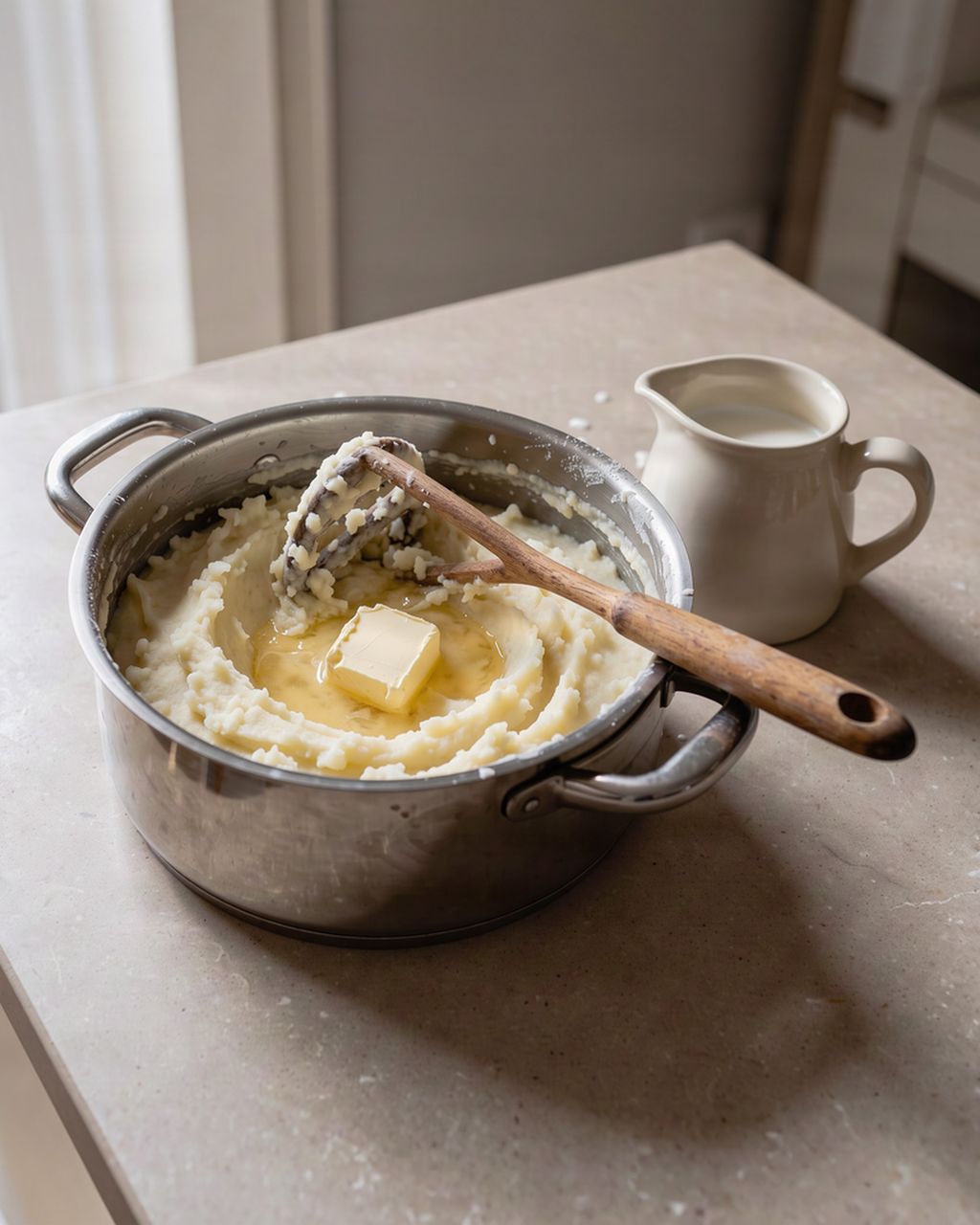
How to reheat mash so it doesn't turn gummy, and how to rescue it when it's runny, is in the article mashed potatoes: how to thicken, season and reheat them the next day. The basic method is in the recipe for smooth creamy mashed potatoes.
From potato dough you can make fruit dumplings, šišky (Czech potato dumplings) with poppy seeds, gnocchi and lokše (Czech potato flatbreads). Dumplings, šišky and gnocchi share the same dough and differ only in shape; lokše have their own dough with all-purpose flour and are cooked on a griddle instead of boiled. The basics of the shared dough:
Boil type C potatoes (or B–C) in their skins the day before, peel them and leave to cool in the fridge, which evaporates moisture and means the dough needs less flour. If you can't manage that, press the peeled potatoes onto a baking sheet right after boiling and let them cool and steam off thoroughly.
Press or finely grate them, add salt, an egg and coarse or semi-coarse flour (Czech hrubá or polohrubá, slightly grittier than all-purpose) – roughly 250–300 g of flour per 1 kg of potatoes.
Work the dough right away. It gets looser as it stands, because the potatoes release water, and then it asks for more flour, which makes the dumplings hard.
What to make from it:
Fruit dumplings. Roll the dough out to 5 mm, cut into squares, wrap a plum, apricot or strawberry in each and seal well. Boil in salted water for about 6–8 minutes after they float up, and serve with melted butter, quark and sugar. The method is in the recipe for plum dumplings from potato dough.
Šišky with poppy seeds. Roll the dough into logs as thick as a finger and cut into pieces 4–5 cm long with pointed ends. Boil until they float, then 2 more minutes, drain and toss in melted butter and ground poppy seeds with powdered sugar. It's a sweet lunch that costs just a few crowns.
Gnocchi. The same dough, just rolled into thinner logs and cut into 2 cm pieces; you can press ridges in with a fork to hold the sauce. Boil in salted water until they float to the surface, plus a minute, then fry in butter with sage, with spinach and cheese, or with kale. Finished gnocchi can be frozen raw on a tray and cooked straight from frozen.
And lokše on their own:
Lokše. For lokše make a different dough: use all-purpose flour instead of coarse flour, usually in a larger amount. Divide the dough into balls, roll each into a thin flatbread and cook on a dry, hot griddle or pan for about a minute per side, until brown spots appear. Brush the warm flatbreads with lard or butter and serve with roast goose or duck and cabbage, or sweet with plum butter and poppy seeds. The method is in the recipe for lokše – savory potato flatbreads, and a festive combination in the recipe goose breast on apples with potato lokše.
Potatoes without meat can feed a whole family: potato pancakes, gratin, creamy soup, potatoes with quark, gnocchi, mash cakes, potato goulash, tortilla and šišky with poppy seeds are all filling main dishes. So that it isn't just a side dish on a plate, three tricks help:
Add something protein-rich. A fried egg on pan-fried potatoes, quark with potatoes in their skins, cheese in the cakes and gratin, lentils under baked mash.
Add acidity. Sauerkraut with potato pancakes, a pickle with pan-fried potatoes, lemon or vinegar in a salad. Sour balances starch, so the dish doesn't feel heavy.
Add a smoky flavor without meat. Smoked paprika, smoked cheese or dried mushrooms give bramboračka and goulash the depth you'd otherwise look for in sausage or bacon.
One hearty meatless recipe is baked potatoes with cottage cheese and vegetables: potatoes, vegetables and cheese baked in one dish. More meatless ideas, not only with potatoes, are in the article what to cook for dinner.
From one 5 kg bag of type B potatoes you can cook three dinners for four people: potatoes in their skins with quark, pan-fried potatoes with egg and bramboračka. You just boil some of the potatoes ahead and leave the rest raw. Like this:
Day 1 – potatoes in their skins with quark. Boil 3 kg of potatoes in their skins. Serve half right away with quark, chives and butter, and leave the other half unpeeled to cool, then put it in the fridge within two hours.
Day 2 – pan-fried potatoes with egg. Peel and slice yesterday's cooled potatoes and fry them in a pan with onion and caraway. Top with fried eggs, and serve with a pickle or cabbage salad. Done in 15 minutes, because the cooking is already behind you.
Day 3 – bramboračka. Cook a thick bramboračka from the remaining 2 kg of raw potatoes, carrots, onion and a handful of dried mushrooms. With bread it makes a filling dinner, and there's often enough left for lunch the next day.
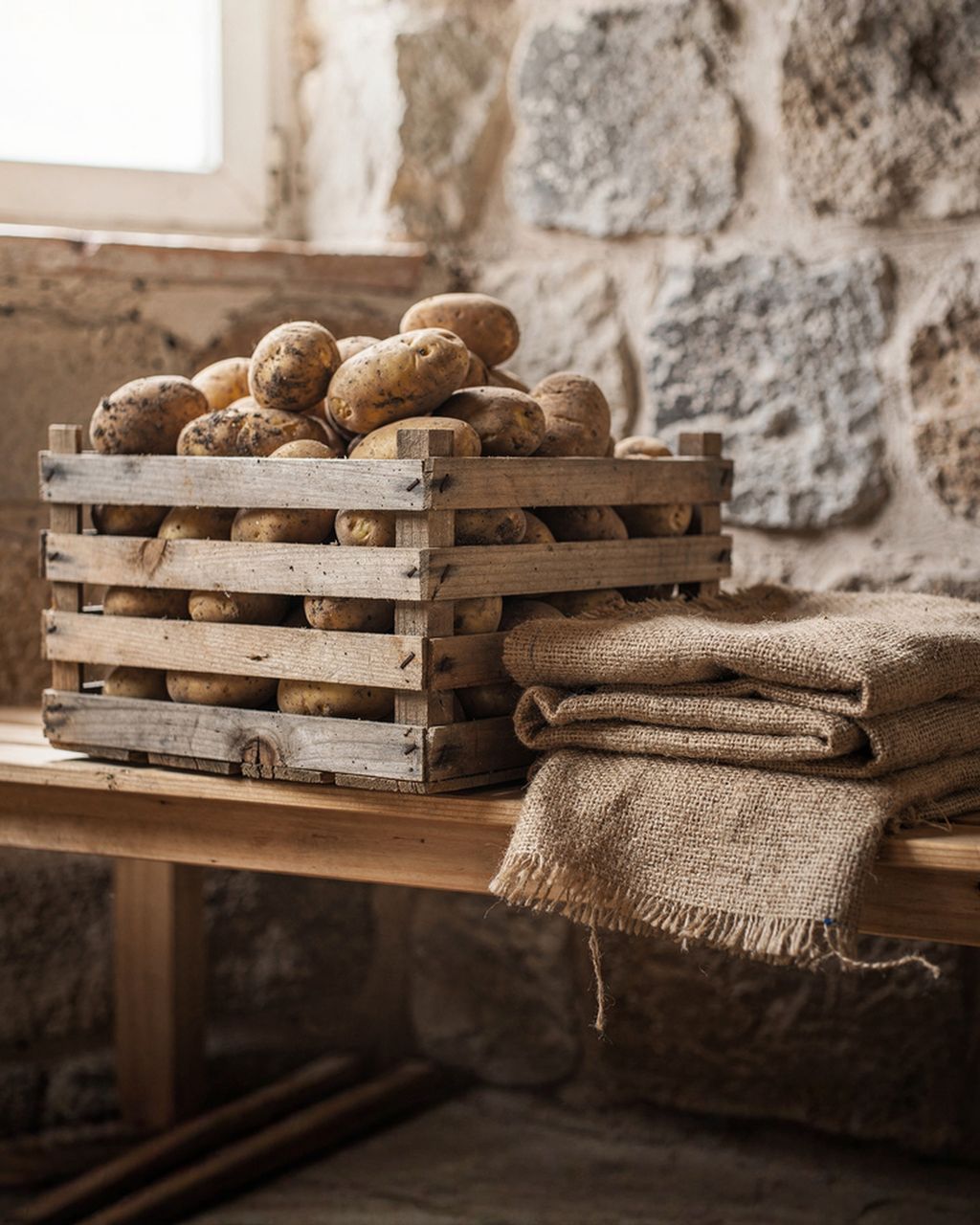
The whole three-day plan depends on not letting the potatoes spoil: store raw ones cool, in the dark and away from onions, as the article how to store potatoes so they last until spring advises, and chill cooked ones right away.
Cooked potatoes belong in the fridge within two hours of cooking and keep there for 3–4 days; don't leave them standing warm in the pot or on the stove. Food safety authorities (for example the US USDA) give these rules for cooked food:
In the fridge within two hours. Count from the moment you take them off the heat. When the kitchen is hot (above 32°C / 90°F), cut that to one hour.
Fridge at 4°C (40°F) or below. Divide a large amount into shallow containers so it cools quickly, even in the middle.
Use within 3–4 days. This applies to boiled and baked potatoes and to mash. Reheat them thoroughly so they are piping hot all the way through (at least 74°C / 165°F in the center).
Remove or loosen the foil. Unwrap potatoes baked in aluminum foil before chilling. In a closed, warm, moist environment without air, Clostridium botulinum bacteria thrive, and potatoes naturally carry its spores from the soil. While you're not yet eating potatoes in foil, keep them hot above 60°C (140°F), or unwrap them and cool them within two hours.
More on how long peeled and cooked potatoes keep and how to freeze them is in the article cooked and peeled potatoes: how long they last and whether you can freeze them.
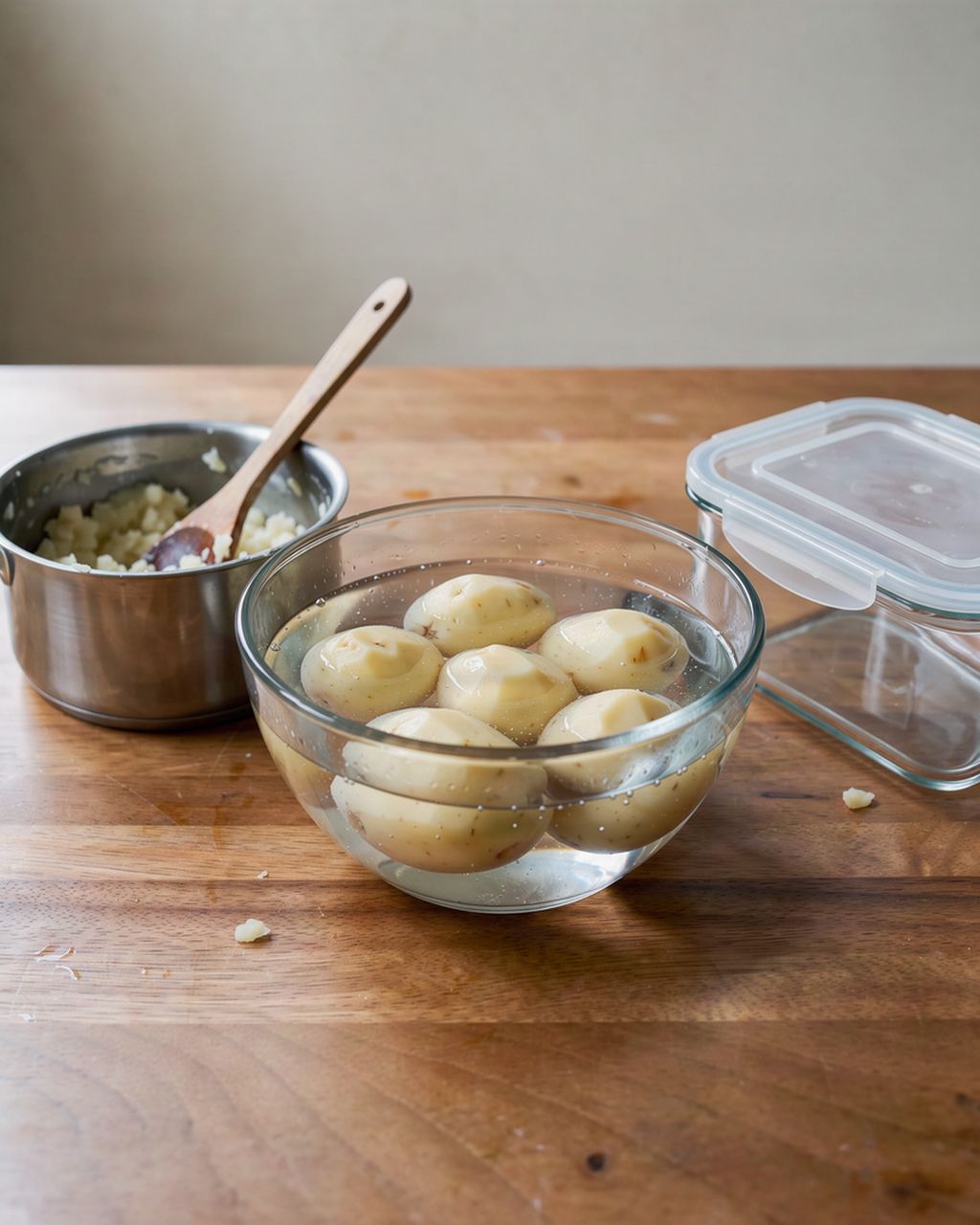
Yes. Peeled and cut potatoes keep until the next day submerged in cold water in the fridge. Left out in the air without water, they turn brown. For potato pancakes and fries, dry them thoroughly before using. The soaking water washes out some of the starch, so a potato pancake batter may need an extra spoonful of flour.
For a side dish, allow 200–250 g of raw potatoes per person, and 300–400 g for a main course built around potatoes (gratin, potato pancakes, gnocchi). Peeling removes some of the weight, more so with old potatoes that have deep eyes, so allow a little extra for those.
You don't need to peel new potatoes or potatoes for baking. Just scrub them under running water with a brush. Peel old potatoes with green spots or sprouts, and cut out the green parts and eyes deeply. Always peel potatoes for mash, dough and creamy soup, where the skin would get in the way.
Cut out the green parts and sprouts deeply and use the rest of the potato. Throw away any potato that is very green or bitter. The green color is chlorophyll, but it forms in light at the same time as solanine, so greening is a warning sign. Solanine is heat-stable and is not reliably removed by boiling, baking or frying. That's why you should store potatoes in the dark.
Diced potatoes boil in 10–15 minutes, and whole unpeeled medium potatoes in 20–25 minutes from the moment the water starts to boil. Start them in cold salted water so they heat evenly and don't fall apart on the outside before they're soft inside. Keep an eye on floury type C, which is done sooner than type A.
Don't freeze raw whole potatoes. After thawing they are watery, sweet and turn dark. You can freeze mash, raw gnocchi and šišky (potato dumplings), croquettes, and briefly parboiled fries or cubes for roasting, which go straight from the freezer into the oven.
One recipe worth heating the oven for, one tip, and one deal from the shop. Nothing else.