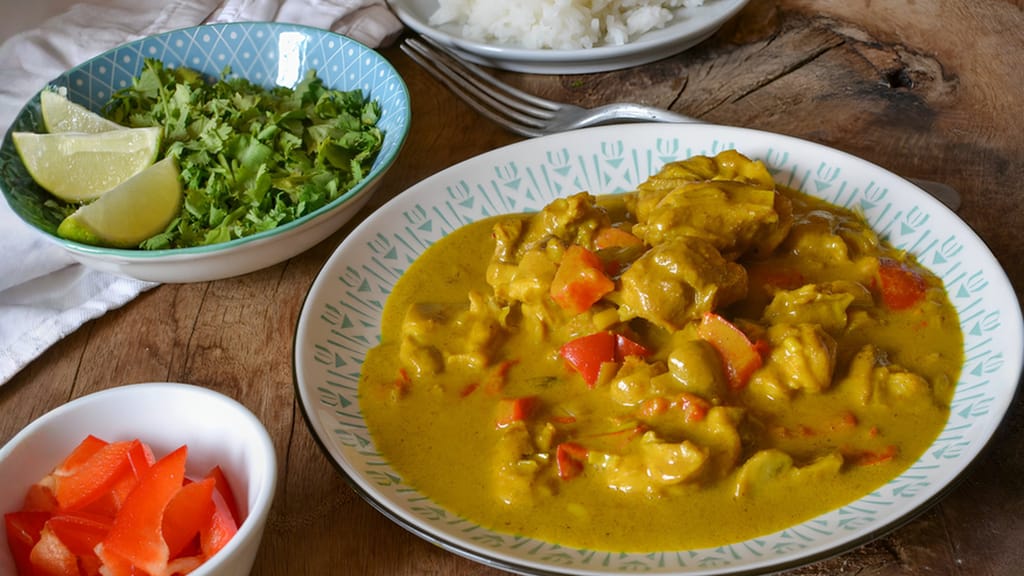
Chicken curry with coconut milk
What to Cook With Rice: With Chicken, Ground Meat, No Meat, or Leftover Cooked Rice
Updated Nov 18, 2026
What can you cook with rice? Almost anything. With chicken, try curry or baked risotto; with ground meat, meatballs or stuffed peppers; with no meat, vegetable curry or risotto with tofu; and with leftover cooked rice, fried rice, fritters, a baked rice pudding or soup. Two things decide how it turns out: which rice you pick (long-grain stays fluffy and separate, short-grain turns creamy) and whether you're cooking with fresh rice or yesterday's. One rule for leftover rice you should never skip: get it into the fridge within an hour of cooking, eat it within 24 hours and reheat it only once, until it's steaming hot.
For side dishes and fried rice, choose long-grain or basmati; for risotto, arborio; for rice pudding, short-grain; and for bowls and salads, jasmine or black rice. The difference is starch: grains with more amylose stay separate and fluffy after cooking, while grains rich in amylopectin release starch into the liquid and make the dish creamy. That's why basmati will never give you a proper risotto, and arborio will never give you a fluffy side.
Rice-to-water ratio (by volume) and cooking time for the most common types:
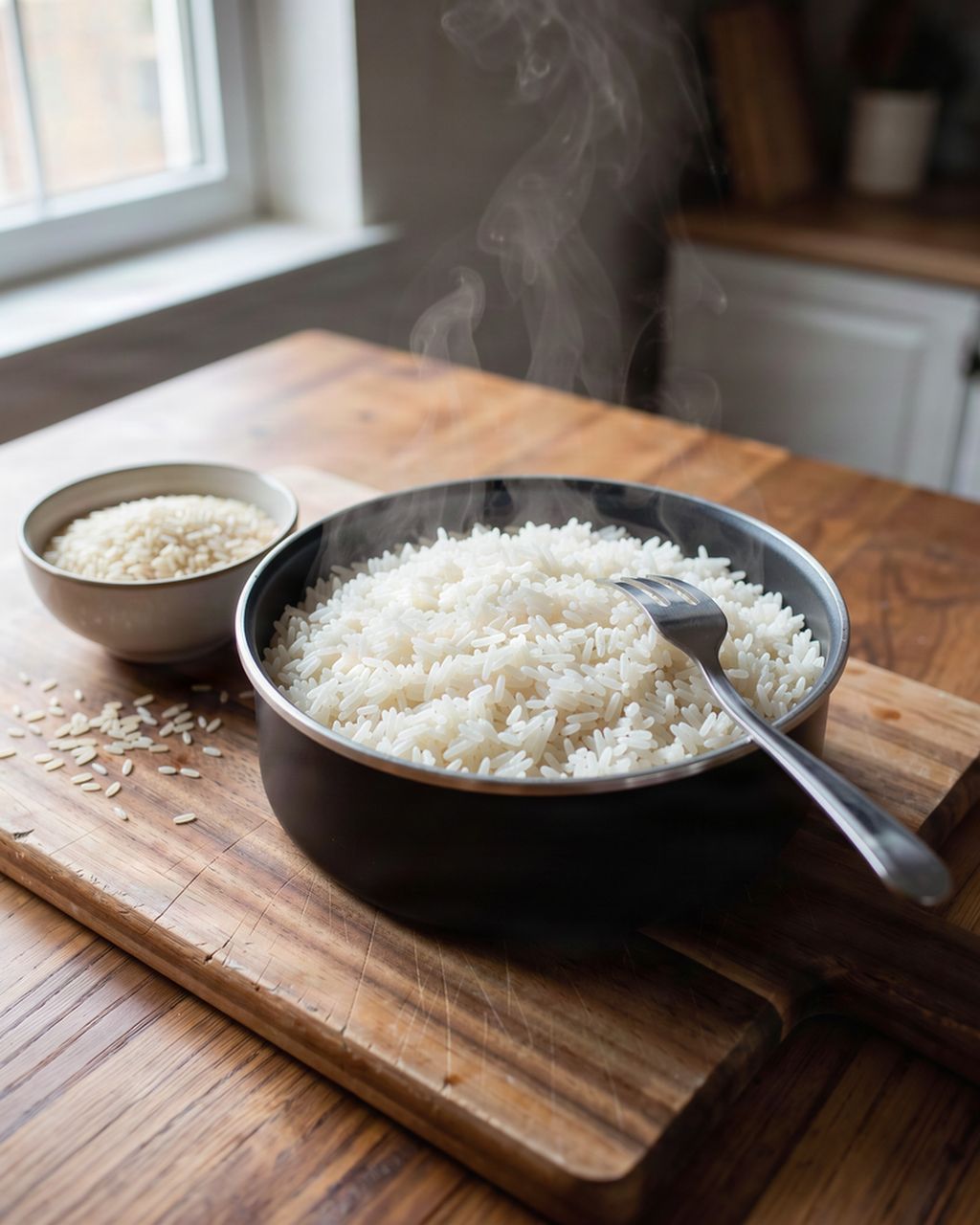
Long-grain rice: 1 : 1.5 to 1 : 2, cook 15–18 min, then rest 10 min covered. A fluffy all-rounder for serving with sauces, for fried rice and for fillings.
Basmati rice: rinse before cooking, 1 : 1.5, cook 10–12 min + 10 min rest. Long, fragrant grains for curry, butter chicken and pilaf.
Jasmine rice: 1 : 1.25, cook 12–15 min. Slightly sticky and fragrant, ideal for Asian dishes and bowls.
Arborio / carnaroli (risotto rice): roughly 1 : 3 hot stock, added gradually, 18–20 min. Releases starch and makes a creamy risotto.
Short-grain rice: 1 : 3 milk, 25–30 min over low heat. For rice pudding and rice porridge.
Brown rice: 1 : 2 to 1 : 2.5, cook 35–45 min. Firmer and nutty, and it stands up well to reheating in a pan.
Parboiled rice: 1 : 2, cook 15–20 min. It almost never overcooks, so it suits cooking in advance.
Black rice: 1 : 2, cook 30–40 min (shorter after soaking for a few hours). Holds its shape, good in salads and sweet porridges.
Times on packages vary by a few minutes depending on the variety, so treat them as a starting point. For a detailed method in a pot, in the oven and in a rice cooker, see how to cook rice: water ratio, basmati and jasmine.
Freshly cooked rice is best where you want it soft and fluffy; chilled leftover rice is best where you want it crisp and holding its shape. Cooled grains lose surface moisture and some of their starch sets (scientists call this retrogradation), so they don't stick or fall apart in the pan.
From fresh rice: a side for curry and sauces, risotto (always made from raw rice), filling for peppers and burritos, rice porridge.
From leftover rice: fried rice, rice fritters and patties, baked rice pudding, an addition to soup, cold rice salads.
If you want fried rice and have no leftovers, cook the rice in the morning, spread it on a baking sheet and leave it uncovered in the fridge for an hour. The surface dries almost as much as overnight.
We send seasonal cooking and baking plans and recipes made from everyday ingredients. Unsubscribe in one click.
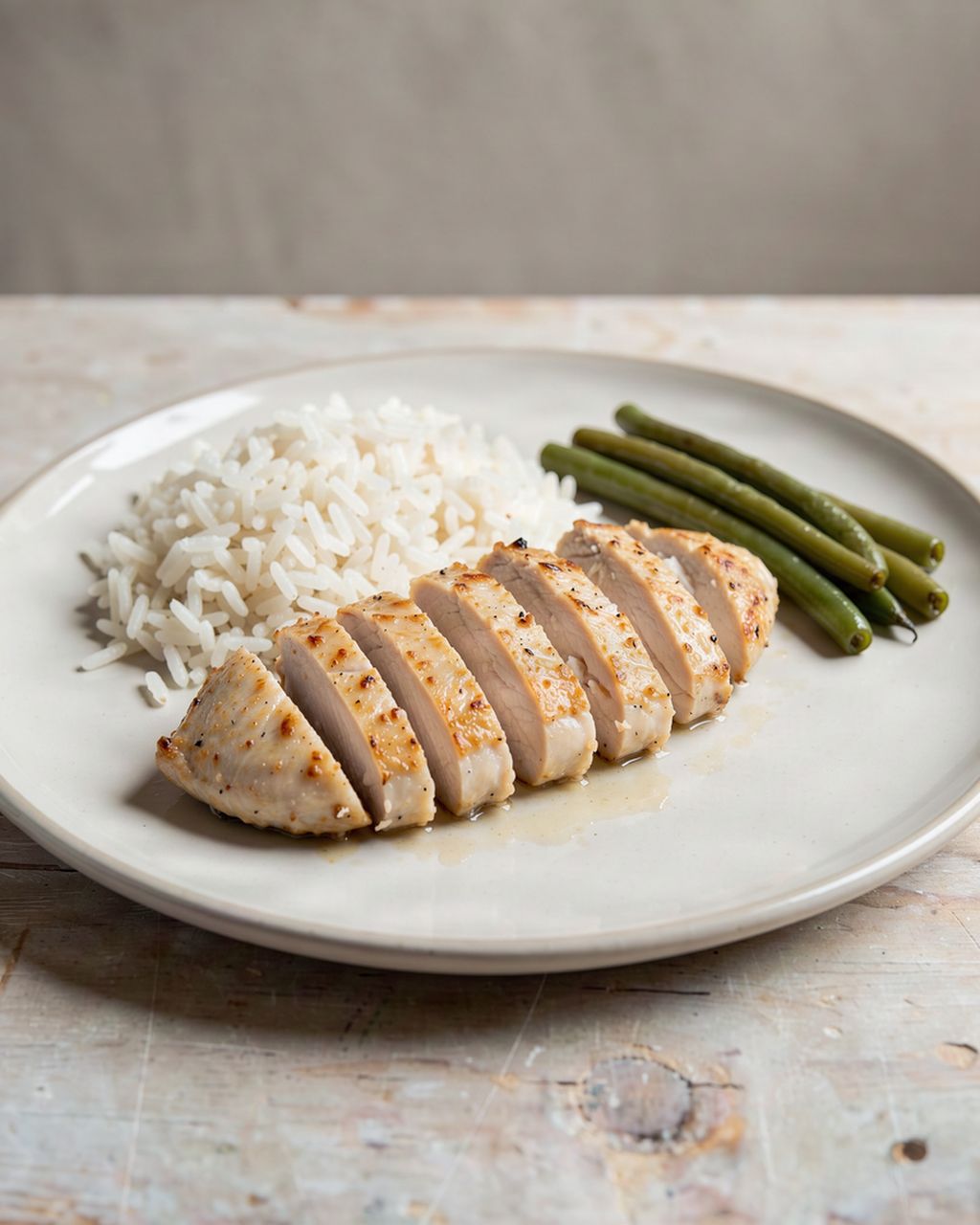
Three dishes are the easiest to make with rice and chicken: chicken curry with coconut milk, butter chicken, and baked risotto with chicken and vegetables. All three are one-pot or one-dish meals, and the rice isn't just filler. In curry and butter chicken it soaks up the sauce, and in risotto it cooks right in it.
Chicken curry with coconut milk. Sauté onion, garlic and ginger in oil, add curry paste or spices and let them bloom for a minute so the flavors open up in the fat. Add diced chicken, pour in coconut milk and simmer 15–20 minutes (chicken breast cubes only need the last 6–8 minutes) until the meat is tender. Serve with basmati: its dry, separate grains soak up the sauce without turning mushy.
Restaurant-style butter chicken. Marinate the chicken first in yogurt with garam masala. The acid in the yogurt tenderizes the meat so it doesn't dry out in the sauce. Brown the chicken until golden, then simmer it in a sauce of tomatoes, butter and cream until thickened. Serve with basmati and, ideally, naan for mopping up.
Baked risotto with chicken and vegetables. Risotto without standing at the stove: briefly sauté risotto rice with onion until the grains turn glassy, add the chicken and vegetables and pour in hot stock at roughly 1 : 3. Cover the baking dish and bake at 180–200°C (350–400°F) for 30–40 minutes, until the rice has absorbed the liquid. At the end, stir in butter and grated cheese to make the risotto creamy.
If you want something quick for a bowl, try chicken satay with peanut sauce over jasmine rice. Grilled skewers, a thick peanut sauce and cucumber on the side. For more ideas on cooking chicken so it doesn't turn out dry, see what to cook with chicken breast and what to cook with chicken thighs. Thighs are more forgiving in rice dishes with long simmering, because they don't dry out.
Chicken curry with coconut milk
Chicken curry with coconut milk and basmati rice
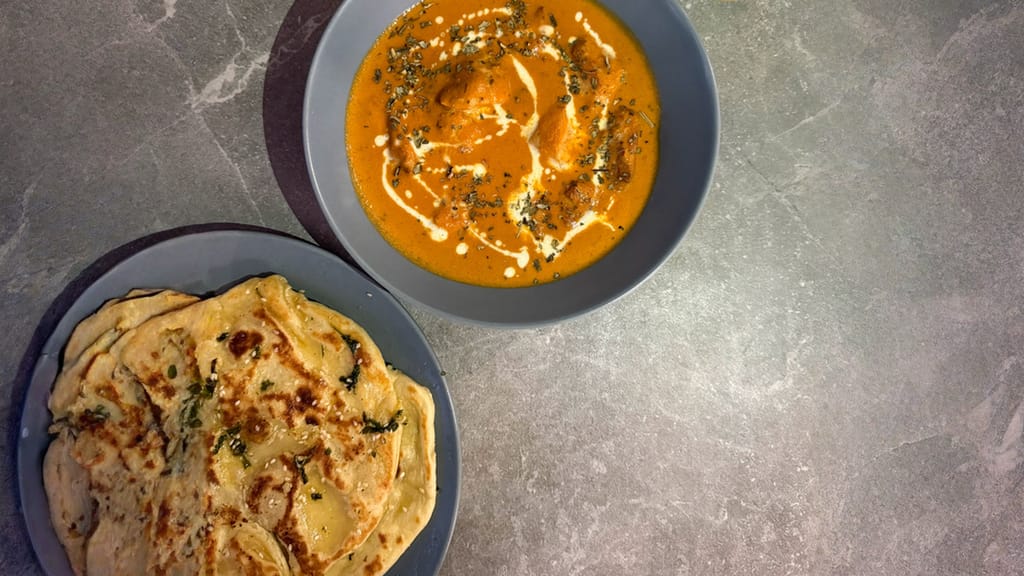
Restaurant-style butter chicken (murgh makhani)
Butter chicken with basmati rice
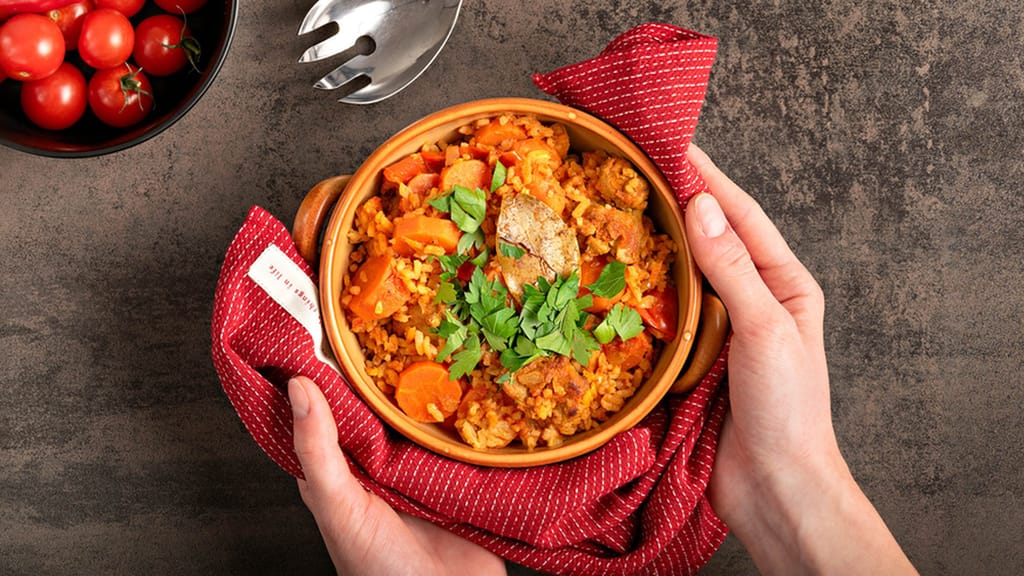
Baked risotto with chicken and vegetables
Oven-baked risotto with chicken and vegetables
With rice and ground meat you can mainly make meatballs in sauce with rice, stuffed peppers (or zucchini) with rice in the filling, and burritos with rice and beans. In the first dish the rice is a side; in the other two it's right in the filling, where it acts as a binder: it soaks up the meat juices so the filling stays juicy and holds together.
Meatballs in vegetable sauce. Mix egg, onion and seasoning into the ground meat, shape into balls and brown them briefly on all sides to set them. Then simmer them in a tomato sauce with vegetables until cooked through. Serve with long-grain rice, which keeps its shape in the sauce.
Stuffed peppers with rice. Mix ground meat with a cup (about 150–200 g) of half-cooked long-grain rice, which will finish cooking in the peppers, along with onion, salt and paprika. Fill hollowed-out peppers and simmer them in tomato sauce for 40–50 minutes. The rice in the filling keeps the meat from tightening into a hard ball. You can put the same filling in zucchini following the recipe for zucchini stuffed with ground meat; just mix a handful of cooked rice into the filling.
Mexican burrito with beans and ground meat. Sauté ground meat with cumin, paprika and chili, add beans and let the liquid reduce so the tortilla doesn't go soggy. Layer rice in the tortilla (yesterday's is fine, reheated until steaming), then the meat, cheese and salsa, and wrap tightly. The rice adds bulk and absorbs excess juices.
For more combinations of ground meat with rice, potatoes and pasta, see what to cook with ground meat.
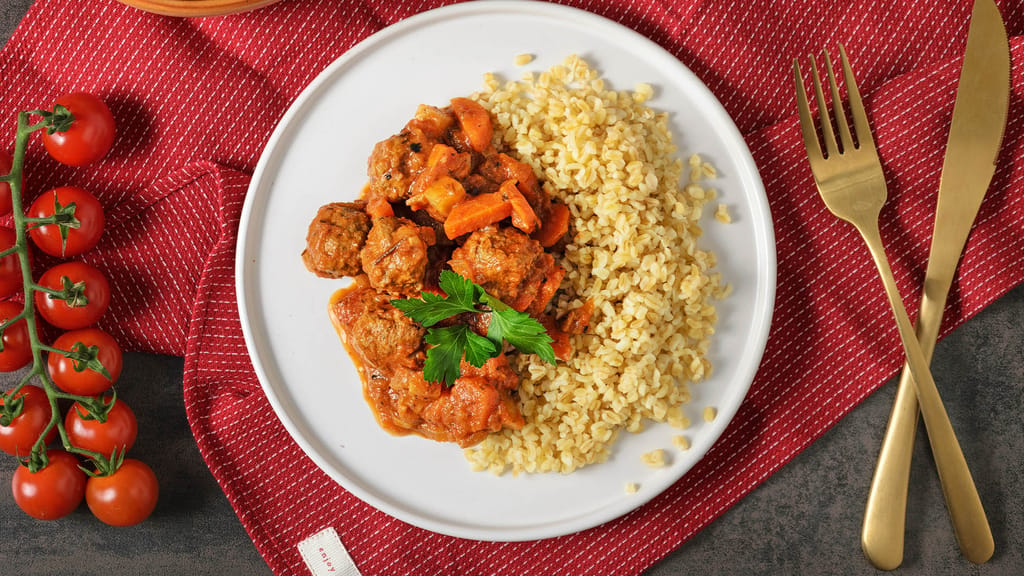
Meatballs in vegetable sauce
Meatballs in vegetable sauce with rice
Without meat, you can quickly cook risotto with tofu and peas, vegetable or chickpea curry, and sesame rice with a fresh salad. Tofu, chickpeas and legumes provide the protein, and rice brings them together on one plate.
Risotto with tofu, peas and zucchini. Sauté arborio with a little onion, deglaze with wine, then add hot vegetable stock gradually, each time only once the rice has absorbed the previous addition. Stirring releases starch, which creates the creaminess, so you don't need cream. Fry the tofu separately until crisp, and add the zucchini and peas for the last five minutes so they stay green.
Vegetable curry with cashews or chickpea curry with coconut cream. The base is the same as for chicken curry: bloom the spices in fat, add vegetables or chickpeas and simmer in coconut milk. Add vegetables according to cooking time, firm ones (potatoes, sweet potatoes) first, soft ones (spinach, peas) at the end. Cashews thicken the sauce and give it a buttery flavor.
Sesame rice with pomelo salad. Flavor jasmine rice with sesame oil and toasted sesame seeds, and serve with a crisp salad of pomelo, herbs and lime. The contrast of warm, fragrant rice and cold, tart fruit turns a simple bowl into a proper dinner. It also works with yesterday's rice, reheated in a pan with sesame oil.
For cold days, try tomato soup with rice. For more quick meatless ideas, see what to cook for dinner.
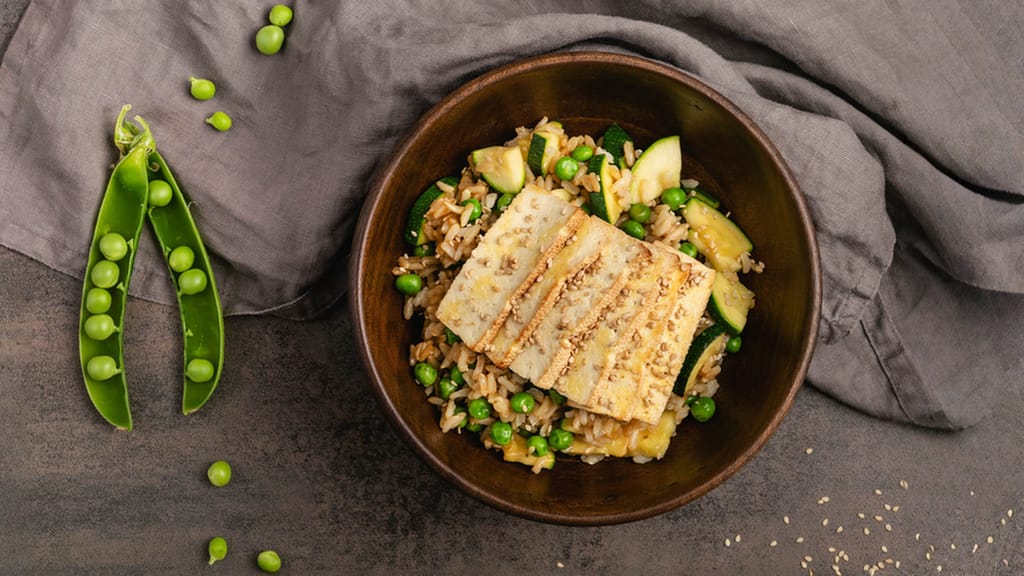
Tofu risotto with peas and zucchini
Meatless risotto with tofu, peas and zucchini
With leftover cooked rice you can make four reliable dishes: fried rice, rice fritters, baked rice pudding and soup. Chilled rice is actually better for them than fresh, because it's drier and holds its shape. Just watch one thing: the rice must be chilled within an hour of cooking and no more than 24 hours old (you'll find the explanation below in the safety section). Each of these dishes is also the one reheating the rice is allowed.
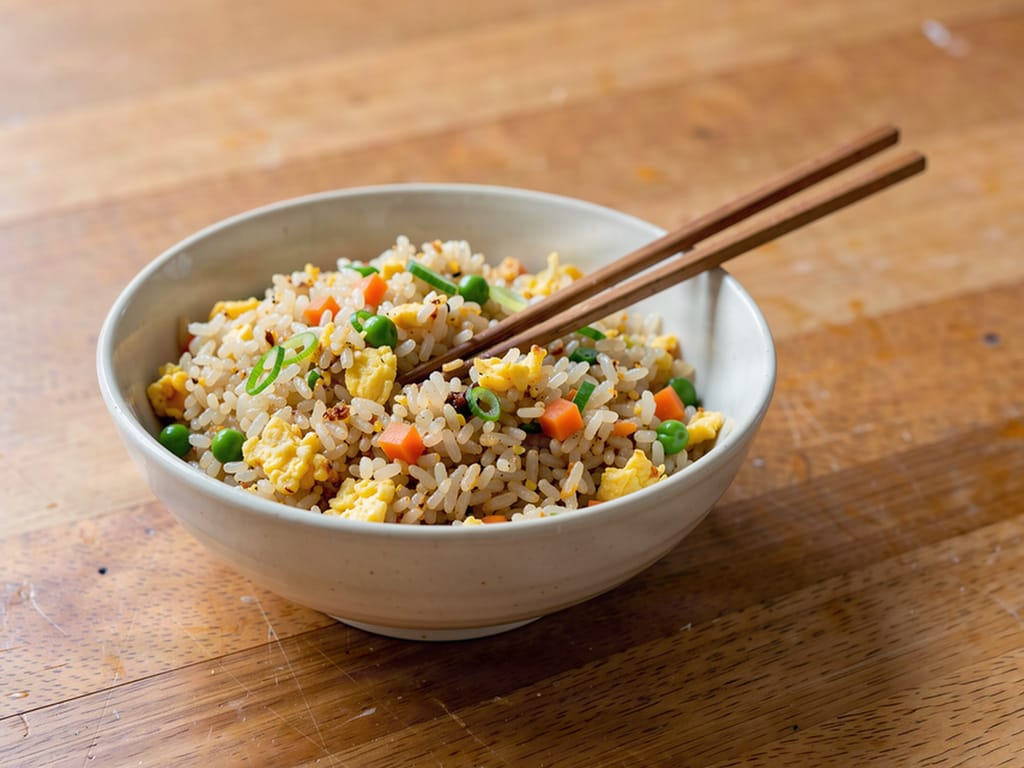
You can make fried rice from cold rice from the day before in a hot pan in 10 minutes: egg, vegetables, rice, soy sauce. Get the pan or wok really hot, scramble the egg in a little oil and set it aside. Then stir-fry the vegetables (carrot, peas, scallions) and add the cold rice, breaking it up with your hands first so there are no clumps. Fry it in a thin layer so the grains brown rather than steam, then at the end return the egg, add the soy sauce and heat everything until the rice is steaming hot throughout. For inspiration, see the recipe for spicy fried rice with meat and vegetables, or serve it as a side following the recipe for mildly spicy wings and perfect fried rice.
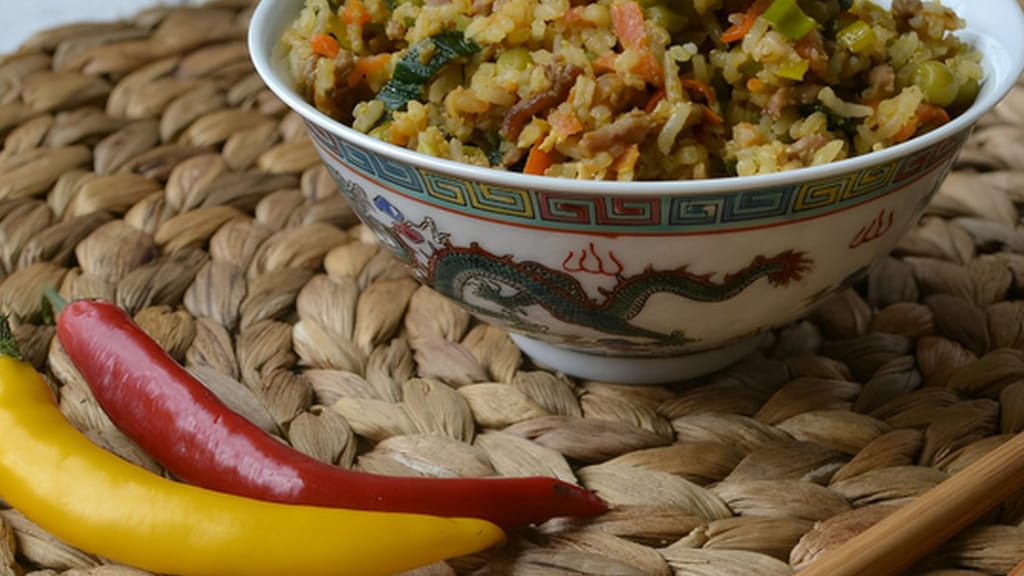
Spicy fried rice with meat and vegetables
Spicy fried rice with meat and vegetables from leftover rice
Rice fritters from leftover rice are cold rice bound with egg and flour (about 300 g cooked rice to 1 egg and 2–3 tablespoons flour), flavored with cheese and herbs and pan-fried until golden. The cheese forms a crisp crust on the surface while the fritters stay soft inside. With a yogurt dip or a fried egg, they make a quick dinner from rice that would otherwise end up in the trash.
Baked rice pudding from leftover rice is sweet rice baked with eggs, vanilla and apples or quark (tvaroh, a Czech fresh curd cheese), at 180°C (350°F) for 30–40 minutes. It's best with short-grain rice, but leftover long-grain works too; just simmer it briefly in milk first so it softens and turns creamy. Whipped egg whites make it light and fluffy. For a sweet version with an exotic touch, see cardamom rice with coconut cream and mango.
Add leftover cooked rice to soup only for the last 2–3 minutes, about 50–60 g per bowl, and let the soup come back to a simmer. That way the rice heats through without cooking down to mush. It goes best in tomato soup, as in the recipe for tomato soup with rice, or in chicken broth, such as thickened chicken broth with meat and mushrooms. More rice thickens the soup, because the grains release starch. Don't reheat leftover soup with rice again, so cook only as much as you'll eat.
Leftover rice is safe when you cool it and get it into the fridge within an hour of cooking, eat it within 24 hours and reheat it only once, until it's steaming hot throughout. That's the advice of the UK food safety authorities (the FSA and Food Standards Scotland); Food Standards Scotland advises cooling rice ideally within an hour.
The reason is the bacterium Bacillus cereus. According to Food Standards Scotland, its spores survive cooking. If cooked rice is left at room temperature, the spores germinate, the bacteria multiply and produce toxins. The longer rice sits in the warmth, the greater the chance, according to the same authority, that it will develop a toxin that makes it unsafe to eat. That's why the most important thing is how quickly you cool it after cooking.
Step by step:
Cool within an hour. Don't leave the rice to cool in the pot or rice cooker, where it stays warm for a long time. Spread it in a thin layer on a baking sheet or large plate, or divide it among smaller shallow containers.
Cover and refrigerate. Once it stops steaming, transfer it to a sealed container and put it in the fridge (ideally at 5°C / 41°F or below).
Eat within 24 hours. The UK authorities recommend using cooked rice within one day. If you know you won't eat it by the next day, freeze it right away.
Reheat only once, until steaming hot. The rice has to be hot all the way through, even in the center. In the microwave, stir it halfway through. Throw away whatever is left after reheating.
Take extra care with restaurant and takeout rice. You don't know how quickly it was cooled, so eat it as soon as possible and don't keep leftovers for long. For details on storing, freezing and how to tell rice has gone off, see how long cooked rice lasts in the fridge.
Black rice suits salads, bowls and sweet coconut porridges, because it holds its shape after cooking and has a nutty flavor. Cauliflower rice is a rice substitute made from grated cauliflower, for a quick vegetable side. Neither replaces white rice everywhere, but each has its own dishes.
With black rice you can make a salad, a bowl or a sweet coconut porridge; it holds its shape and has a nutty flavor. First rinse it and ideally soak it for 2–4 hours, which shortens the cooking. Cook it at a ratio of 1 : 2 for about 30–40 minutes, or in plenty of water like pasta and then drain. Its deep purple color comes from anthocyanins, pigments from the same group as in blueberries. They bleed color while cooking, so cook it separately and don't mix it with white rice.
Black rice salad: mix chilled rice with mango or roasted pumpkin, avocado, cilantro and a lime dressing. The firm grains don't turn mushy even the next day (in the fridge, within 24 hours).
Bowl: black rice as the base, topped with roasted vegetables, tofu or salmon and a sesame sauce.
Sweet porridge: simmer it with coconut milk and a little sugar until thick, and serve with mango. It works much like sticky rice with mango and salted cashews, only the grain has more bite and takes longer to cook.
You can make cauliflower rice in ten minutes: grate cauliflower florets on the coarse side of a grater, or pulse them briefly in a blender or food processor into pieces the size of grains of rice. They shouldn't turn into a purée. Then sauté them in a pan with a spoonful of oil for 5–7 minutes without a lid so the water evaporates. Under a lid, the cauliflower would steam into mush. Season with salt and flavorings at the end.
Serve it instead of rice with curry or meatballs, or turn it into "fried rice" with egg, peas and soy sauce, using the same method as with real rice. It has a milder, fresh flavor, but doesn't soak up as much sauce. It isn't suitable for risotto, rice pudding or stuffed peppers, because it lacks the starch that holds those dishes together.
In these further guides you'll find how to cook rice well every time, how to make sushi rice and which meat to cook with rice. The basic method in a pot, in the oven and in a rice cooker is in the guide to cooking rice. If you're mainly figuring out the meat to serve with it, continue with what to cook with chicken breast or what to cook with ground meat. And for sushi rice there's a separate guide: sushi rice: how to cook and season it.
As a side dish, allow 70–80 g (about 2.5–2.8 oz) of dry rice per person, and 90–100 g for a main course such as risotto or fried rice. Rice roughly 2.5–3× its weight when cooked, so 80 g dry gives you about 200–240 g cooked. If you want leftovers for fried rice, simply cook an extra portion.
Rinse basmati, jasmine and long-grain rice until the water runs almost clear. This washes off surface starch so the grains stay separate. Never rinse risotto rice, though: that starch is what makes risotto creamy.
Yes, you can eat cold rice if you cooled it within an hour of cooking, kept it in the fridge and eat it within 24 hours. You don't need to reheat it then. The risk doesn't come from the fridge, but from rice that cools slowly or sits at room temperature.
Fried rice turns mushy when the rice is fresh and moist, when the pan isn't hot enough, or when you put too much in the pan at once. Use chilled rice from the day before, get the pan very hot and fry in smaller batches. Add the soy sauce at the end so it doesn't make the rice soggy.
Carnaroli or vialone nano, two other Italian risotto varieties, are the best substitutes for arborio. In a pinch, ordinary short-grain rice will do, though the risotto will be a bit softer. Basmati and long-grain rice aren't suitable: they don't release enough starch to make a creamy risotto.
Yes, rice is naturally gluten-free, including black, brown and sticky rice, even though the latter is called "glutinous." Watch out for ready-made rice mixes, flavored rice and the soy sauce in fried rice, though, as these can contain gluten. If you have celiac disease, always check the ingredients on the label.
One recipe worth heating the oven for, one tip, and one deal from the shop. Nothing else.