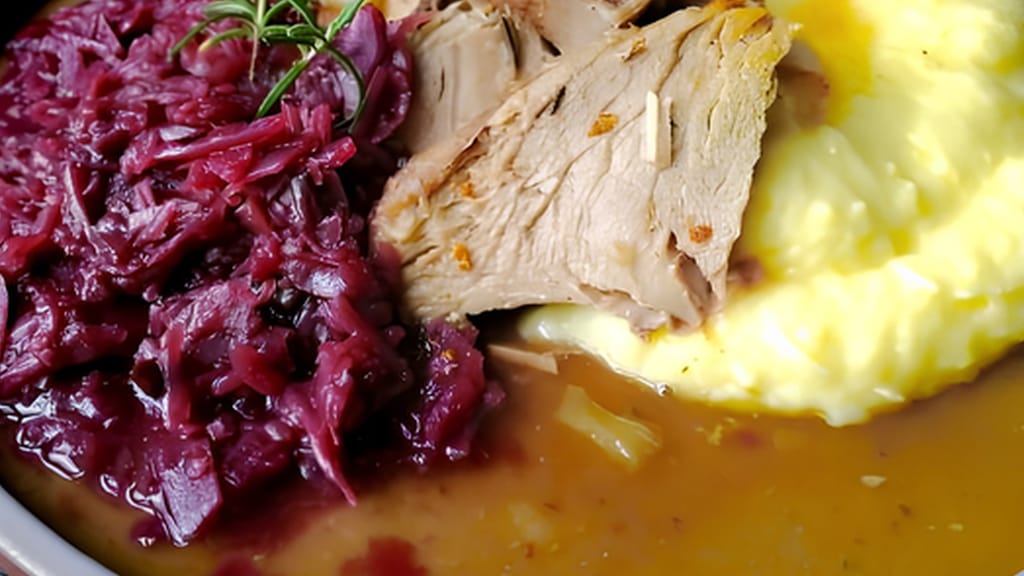
Slow-roasted pork with red cabbage
Vepřo knedlo zelo: Czech Roast Pork with Sauerkraut and Dumplings Like Grandma Made It, Sliced in the Oven or Whole
Updated Nov 20, 2026
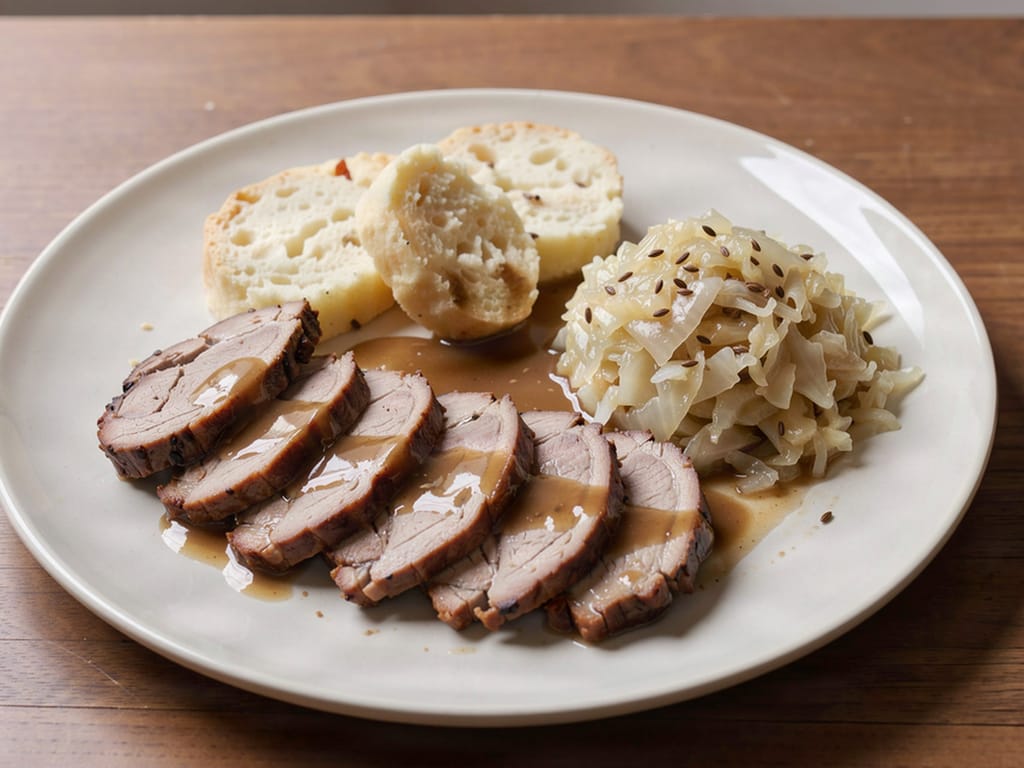
Vepřo knedlo zelo (Czech roast pork, cabbage and dumplings) is roast pork with caraway and garlic, braised cabbage, and a bread or potato dumpling, all topped with the pan gravy. To get that grandma flavor, you need three things: well-marbled meat (ideally pork shoulder), slow roasting under a lid at 160–170°C (320–340°F) with regular basting, and a gravy made from the pan drippings, not from a powder. Below you'll find how to roast it whole or as slices in the oven, the gravy step by step, cabbage from sauerkraut or fresh, both dumplings, and a timeline so everything is ready at the same moment.
Here's how to make classic vepřo knedlo zelo: salt the shoulder, season it with caraway and rub it with garlic, roast it on onions under a lid at 160°C (320°F), then uncover it and finish it at 190°C (375°F) until golden. Meanwhile, braise the cabbage and cook the dumplings. The meat is safe at 63°C (145°F) inside after 3 minutes of rest, but it only turns grandma-tender at around 80–85°C (176–185°F).
The whole dish rests on simple seasoning and patience:
Meat: 1.2–1.5 kg pork shoulder in one piece for 4–6 people; count on 200–250 g of raw meat per serving.
Salt: 15–18 g per kilo of meat, roughly 1.5% of its weight. A roast needs salt inside, not just on the surface.
Caraway: 1–2 teaspoons of whole seeds; feel free to crush them lightly in a mortar to release the aroma.
Garlic: 4–6 cloves, pressed or grated.
Onions: 2–3, cut into wedges, for the bottom of the roasting pan. They are the bed, the seasoning and the base of the gravy.
Water: 200–300 ml for basting, no more. A roast should roast, not boil.
Fat: a spoonful of lard, or nothing. Shoulder has plenty of fat on its own.
Grandmas never weighed any of this, but they did it the same way: salt and caraway "by eye" a day ahead, a covered roasting pan, the oven at roughly three-quarters power, and basting every half hour. That rhythm matters more than an exact recipe.
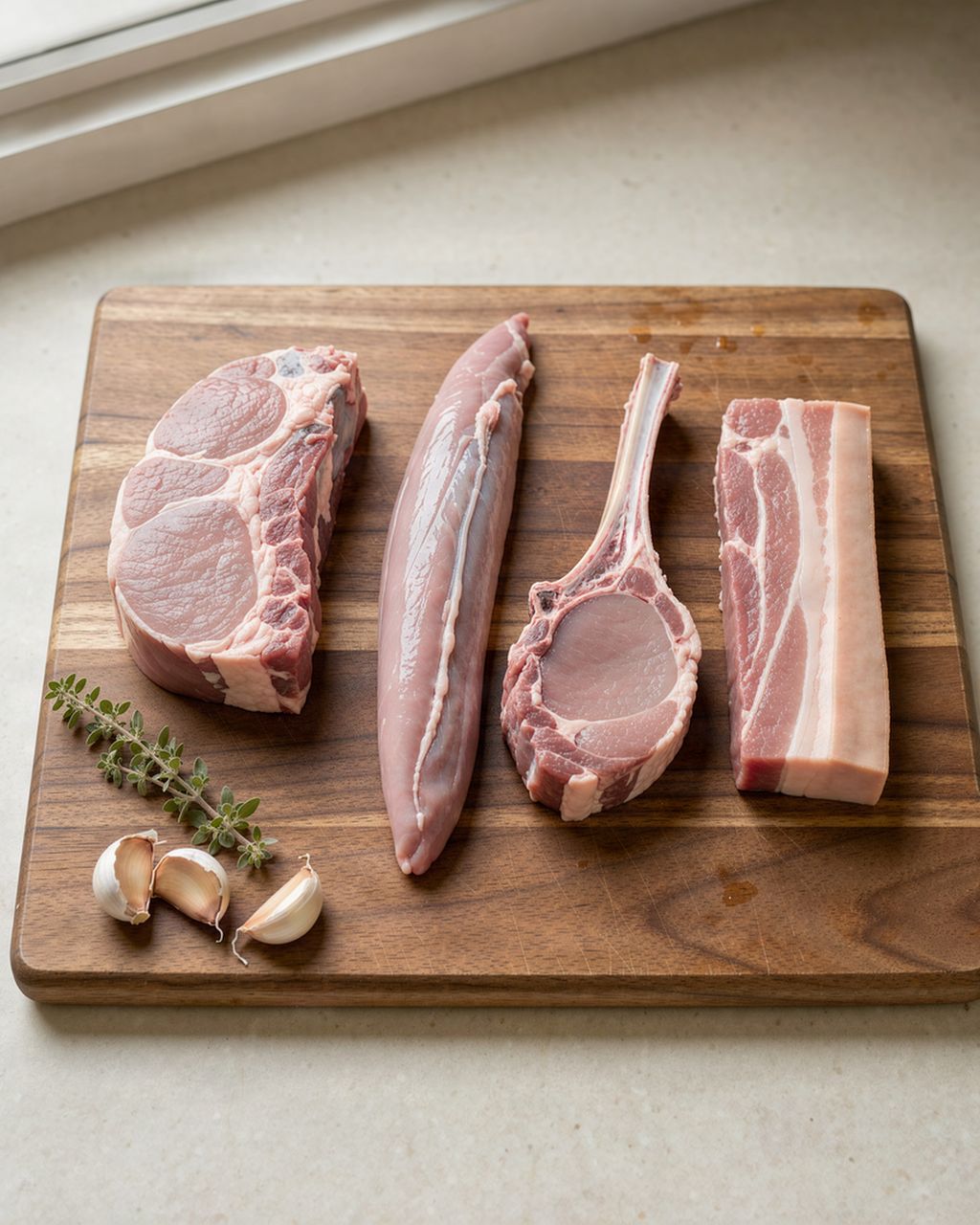
For classic roast pork, shoulder is best: it has enough collagen and intramuscular fat to stay juicy during slow roasting, yet it still slices into nice pieces. Neck (collar) is even fattier and more forgiving, while belly is the juiciest and the heaviest.
Shoulder – the classic for vepřo knedlo zelo. Tender and juicy at 80–85°C (176–185°F) inside, and it slices into neat pieces. Roast it whole, 1.2–1.5 kg.
Neck (collar) – marbled with fat, so it's almost impossible to dry out. Excellent as slices in the oven; whole, you can take it out as early as 70–75°C (158–167°F).
Belly – layers of meat and fat, with crackling skin. There's more gravy and it's richer, but it goes perfectly with cabbage. For how to get the crackling, see crispy roast pork belly with homemade gnocchi and spinach.
Leg (ham) – lean, and the least rewarding for roasting. It dries out easily, so watch it with a thermometer and take it out earlier.
If you get lost among the cuts, you'll find them explained in detail in the article types of pork and what to cook from shoulder, leg and neck.
Roast pork at 160–170°C (320–340°F), top and bottom heat, for roughly 60–75 minutes per kilo of meat under a lid, then 25–35 minutes uncovered at 180–190°C (350–375°F) to brown the surface. But doneness is decided by the temperature inside the meat, not by time.
According to the US food safety agency USDA/FSIS, a whole cut of pork is safe at 63°C (145°F) at the thickest point after 3 minutes of rest. That's the safety minimum, not the target for a roast. At 63°C shoulder is still firm and rubbery, because collagen only starts to melt significantly above 70°C (158°F). So:
63°C (145°F) + 3 minutes – safe, but tough for shoulder. Better suited to tenderloin or chops.
70–75°C (158–167°F) – neck is juicy and sliceable.
80–85°C (176–185°F) – shoulder is tender, grandma-style, and still holds in slices.
90°C (194°F) and up – the meat falls apart into strands, lovely for pulled pork, less so for slices.
You'll find temperatures for other cuts (tenderloin, leg, neck) in pork in the oven: what temperature to roast at. If your oven bakes differently than the dial says, check it with an oven thermometer; home ovens can easily be off by a few dozen degrees.
Baste the roast with the pan drippings every 20–30 minutes. The juices darken on the surface of the meat, caramelize and form that typical glossy crust. Basting won't make the meat juicier inside, but the surface won't dry out or start to crack.
Scoop up the juices from the bottom with a spoon and slowly pour them over the whole piece.
When the juices evaporate and the onions start to blacken, add 50–100 ml of hot water. Cold water would needlessly cool the pan and the meat.
In the second half of roasting, turn the meat once so it browns evenly.
Seasonal baking plans, tested recipes and kitchen tricks that save you time. Unsubscribe in one click.
A whole roast is the juiciest version: salted a day ahead, roasted slowly under a lid and finished uncovered until golden. For 1.5 kg of shoulder, allow 2–2.5 hours in the oven and 15 minutes of resting.
Salt it the day before. Pat the meat dry with a paper towel, salt it all over (22–27 g of salt for 1.5 kg, that is 15–18 g per kilo) and sprinkle with caraway. Put it on a rack over a plate or bowl on the bottom shelf of the fridge. That way nothing from the raw meat can get onto other food below it, and air circulates all around, so the surface dries and browns better in the oven. Leave it there 12–24 hours. The salt penetrates inside in that time and the meat holds more juice.
Take it out an hour before roasting. It warms up a little and roasts more evenly. Don't leave it out of the fridge for more than two hours.
Rub it with garlic. Mix pressed garlic with a spoonful of lard or oil and spread it over the meat. Add the garlic only now; overnight it would turn bitter.
Prepare the roasting pan. Put onion wedges on the bottom, the meat on top fat side up. Add 200–250 ml of hot water.
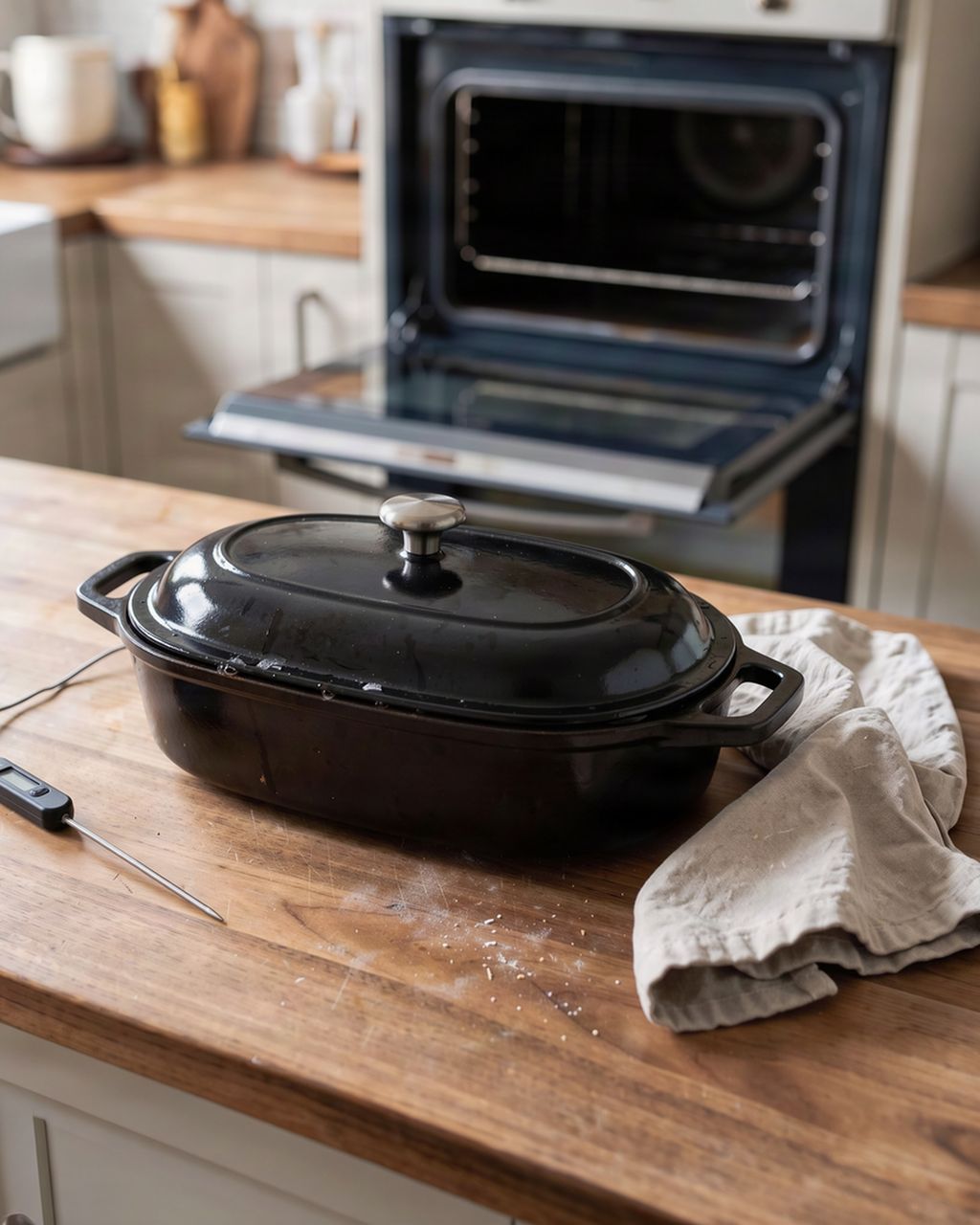
Roast covered. In an oven preheated to 160°C (320°F), top and bottom heat, for 1.5–2 hours. Baste with the drippings every 20–30 minutes and make sure there's always at least a centimeter of liquid in the bottom.
Uncover and raise the heat. Take off the lid, raise to 190°C (375°F) and roast another 25–35 minutes. The surface now browns. Baste every 10 minutes.
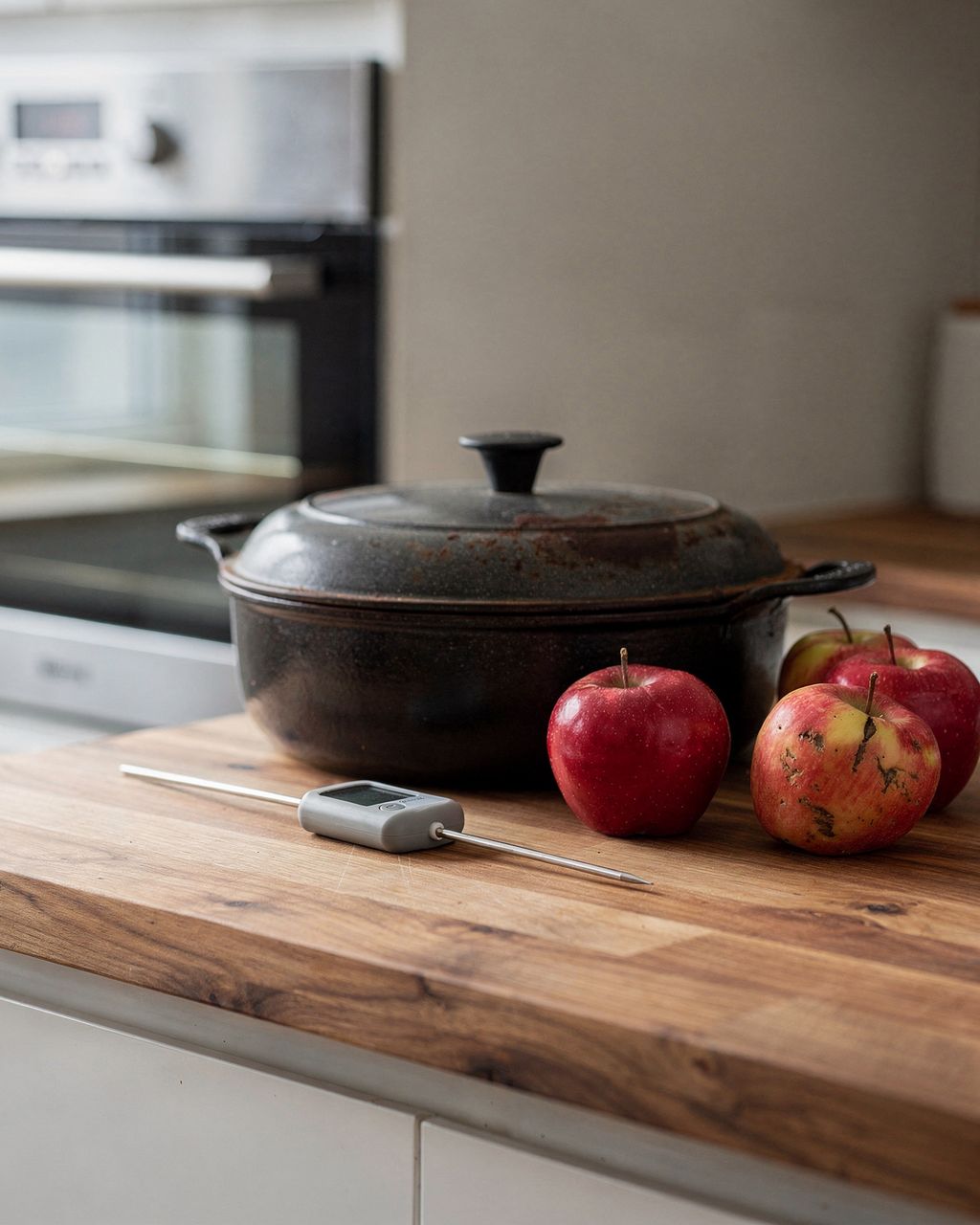
Check the temperature. Insert a thermometer into the thickest part, away from the bone: you want shoulder at 80–85°C (176–185°F). Without a thermometer, a fork should slide in easily, but only a thermometer gives certainty.
Let the meat rest. Move it to a cutting board, cover loosely with aluminum foil and let it stand for 15 minutes. The temperature inside rises a few more degrees and the juices settle, so they don't run out onto the board when you slice. Meanwhile, make the gravy.
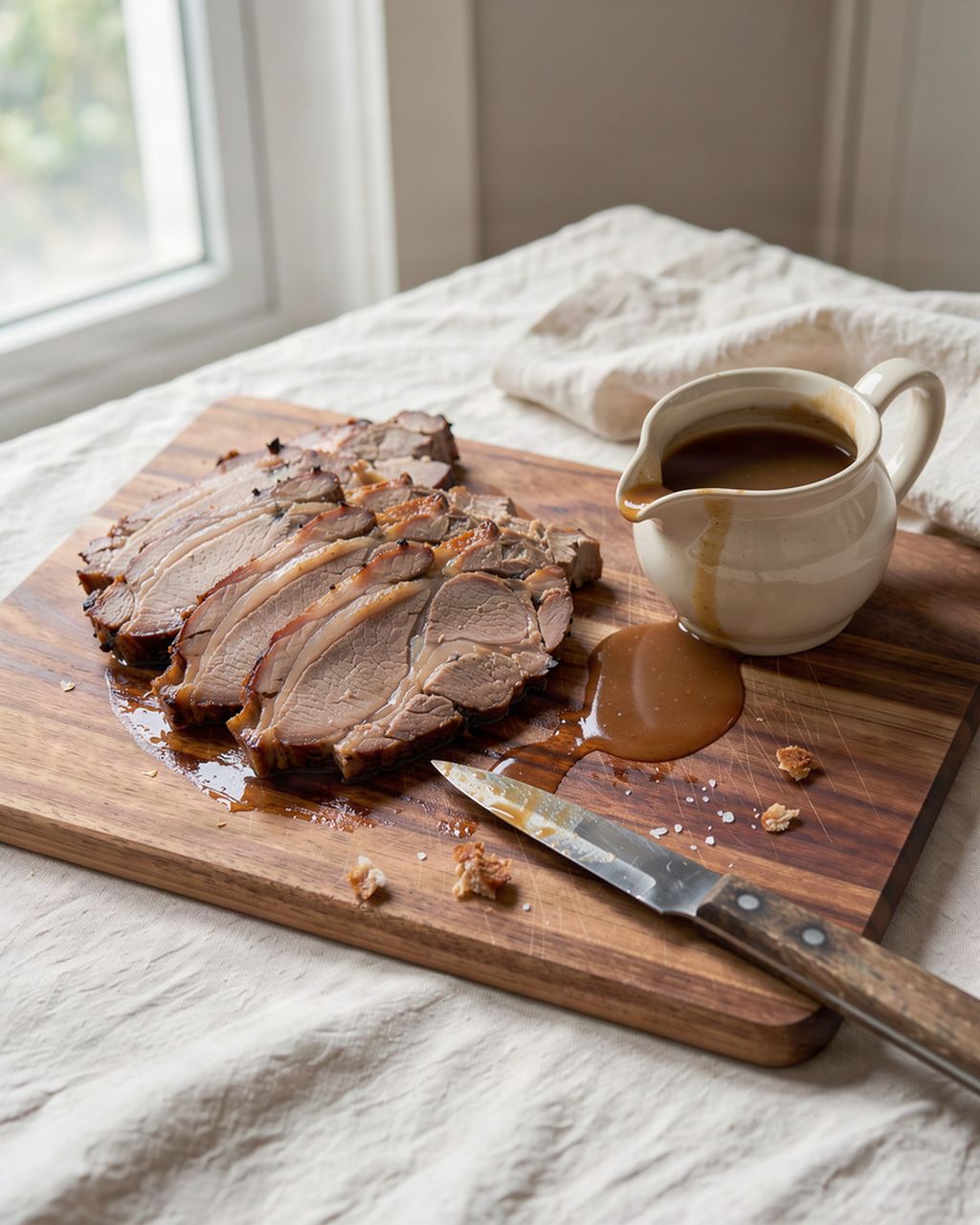
Slice across the grain into slices about 1 cm thick. Cut along the grain, even well-roasted slices would be chewy.
For bone-in shoulder, add about 20% to the time. The bone conducts heat more slowly and the meat next to it is the last to finish.
If you like your roast completely falling apart and you have time, you can go the opposite way, very low and very long: try slow-roasted pork with red cabbage.
Slow-roasted pork with red cabbage
Slow-roasted pork with red cabbage: shoulder marinated overnight, eight hours at 90°C (195°F)
Sliced roast pork is a faster route to the same result: slices of shoulder or neck 1.5–2 cm thick roast on onions under a lid at 170°C (340°F) in roughly 60–75 minutes, then finish uncovered for 10–15 minutes at 200°C (400°F). It's handy when you don't have the whole afternoon, and slices are easier to portion.
Slice the meat. Cut shoulder or neck into slices 1.5–2 cm thick. Thinner ones dry out quickly, thicker ones cook almost like a whole piece. You don't need to pound the slices; just flatten them lightly with the back of your hand.
Season. Salt (about 1.5% of the weight of the meat), sprinkle with caraway and rub with garlic mixed with a spoonful of lard. If you have time, leave them salted in the fridge for 1–12 hours, just like the whole piece: in one layer on a rack over a plate, on the bottom shelf.
Layer in the pan. Cover the bottom with onion wedges and lay the slices on top side by side; they can overlap slightly. Add 150–200 ml of hot water.
Roast covered. 60–75 minutes at 170°C (340°F). Halfway through, turn the slices and baste with the drippings. Neck is often done earlier, shoulder more toward the end of the range.
Uncover. Raise to 200°C (400°F) and roast another 10–15 minutes, until the slices brown at the edges. Watch the juices; at high heat they evaporate quickly.
Check doneness. The slices should pierce easily with a fork. On a thermometer you want at least 75–80°C (167–176°F) for shoulder, 70–75°C (158–167°F) for neck.
You can also roast slices without a lid, but then you need more water and more frequent basting. The advantage of the lid is that in the first phase the meat steams rather than roasts, and you don't worry about the edges drying out.
For more ideas on what to cook from shoulder, neck, leg or belly when you don't feel like a roast, see the article what to cook with pork.
You make roast gravy from the drippings in the pan: remove the excess fat, dissolve the browned bits in water or stock, simmer briefly and thicken to taste. It all takes 10 minutes, while the meat rests.
Take out the meat. Put the roast on a board to rest under foil. Leave the pan as it is, onions and all.
Remove the fat. Tilt the pan and spoon off the fat that sits on the surface. Leave 1–2 tablespoons in the pan; they carry flavor. Don't pour away the rest of the fat; it sets into excellent lard for spreading on bread.
Put the pan on the stovetop (if your pan can take it, otherwise pour the drippings into a saucepan) and heat it over medium heat.
Add liquid and scrape. Pour in 300–400 ml of hot water or stock and scrape all the browned bits from the bottom with a wooden spoon. That's where most of the flavor and color is.
Simmer. Let the gravy bubble for 5 minutes so it reduces a little and the onions cook down completely.
Decide about the onions. Either strain the gravy and press the onions through the sieve, or blend them right in the gravy with an immersion blender. Blended onion naturally thickens the gravy.
Thicken if you like. Stir a teaspoon of potato starch or all-purpose flour into 3 tablespoons of cold water and pour it into the boiling gravy, stirring constantly. For 400 ml, 1–2 teaspoons is enough. Simmer for 2 minutes so the starch cooks through and the floury taste disappears.
Season. Taste and add salt, perhaps a pinch of caraway. Add any liquid that ran out of the resting meat to the gravy too.
Grandma's gravy is thin and glossy, almost like a strong broth, not a thick sauce. If yours turns out too weak, next time add less liquid when roasting and let the drippings brown more.
Classic vepřo knedlo zelo calls for braised white cabbage, either from sauerkraut, which is more assertive and sourer, or from fresh cabbage from the head, which is milder and sweeter and gets its sourness from vinegar. Both versions are traditional; it depends on the region and on what you have in the fridge.
Sauerkraut is ready in 30–40 minutes and has the strongest flavor. Use white cabbage fermented in brine, from a jar or a bag.
Taste it. If it's too sour, rinse it briefly under cold water and squeeze it out. Keep the brine, though; it's handy for adjusting the seasoning.
In a spoonful of lard, sauté 1 chopped onion until golden (5–7 minutes), and add a teaspoon of caraway.
Add 500 g of sauerkraut, pour in 150–200 ml of water and braise under a lid over low heat for 25–35 minutes, until tender.
Season with 1–2 tablespoons of sugar and salt. Finally, thicken it: either grate a small raw potato into the cabbage and let it cook down for 10 minutes, or stir in a spoonful of flour browned in a spoonful of lard.
Cabbage from a fresh head is milder and braises for 35–45 minutes. You can set the sourness and sweetness yourself.
From a 1 kg head, remove the outer leaves and the core, slice it into thin strips and toss with a teaspoon of salt. Let it stand 10–15 minutes; the cabbage releases water and softens.
In a spoonful of lard, sauté the onion, add the caraway, then the cabbage along with the water it released. Add 200 ml of water.
Braise under a lid for 35–45 minutes, stirring occasionally.
Season with 2–3 tablespoons of vinegar and 1–2 tablespoons of sugar. Taste by the spoonful; vinegar needs time to work its way into the cabbage. Thicken the same way as the sauerkraut.
Cabbage is always better the second day, when the flavors come together. Feel free to make it the evening before. For the detailed method from a jar, a bag or a head, plus freezing, see braised cabbage: how to cook it, and for everything else you can cook with cabbage, the overview what to cook with cabbage.
If you prefer the red version, reach for sweet-and-sour braised red cabbage.
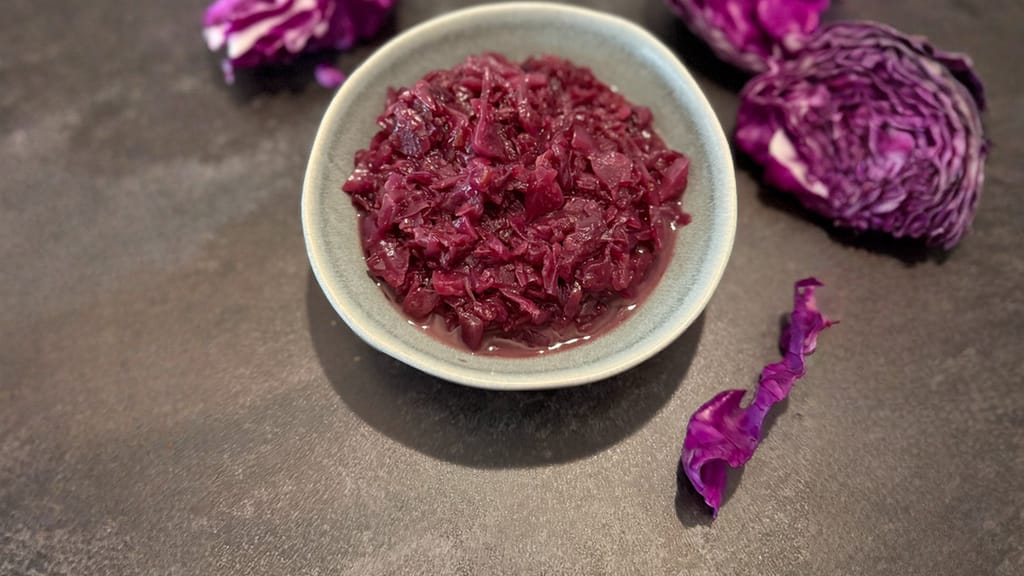
Sweet and sour braised red cabbage
Sweet-and-sour braised red cabbage for roast pork: with bay leaf, wine and vinegar
Vepřo knedlo zelo is traditionally served with a bread dumpling (houskový knedlík), but a potato dumpling is just as legitimate and wins in many families. The bread dumpling is fluffy and soaks up gravy, while the potato one is denser, softer and sweeter. The best solution is to make both and put two slices of each on the plate.
Bread dumpling (houskový knedlík) is a yeast dough made from coarse flour (Czech hrubá) with cubes of bread, which you steam for about 25 minutes or boil in water for 20–22 minutes. Including rising, count on about two and a half hours.
You'll find a proven method in the recipe for steamed bread dumpling. The dough is made from 500 g of coarse flour, dried yeast, 300 ml of lukewarm milk, an egg and 70 g of roll (rohlík) cubes. It's kneaded for about ten minutes, rises for an hour, then two loaves about 6 cm wide are shaped, left to rise another 30 minutes and steamed over strong steam for exactly 25 minutes.
If you don't have a steamer, cook the loaves in a large pot of salted water. Add them to boiling water, reduce to a gentle simmer, turn them after 10 minutes and cook another 10–12 minutes. Prick the finished dumpling in several places with a skewer straight away so the steam escapes and it doesn't collapse.
Slice it with thread or a sharp serrated knife; a smooth-bladed knife squashes it. If you're in a hurry, reach for a ready-made bread dumpling. Reheat the slices in steam in 5–10 minutes and it tastes almost like fresh.
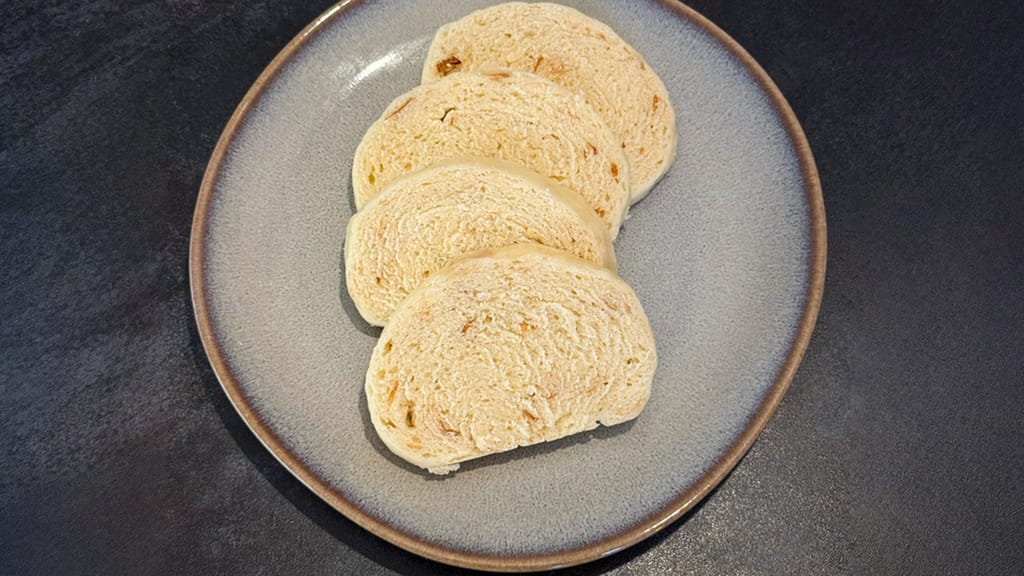
Steamed czech bread dumplings (houskové knedlíky)
Steamed bread dumpling for vepřo knedlo zelo: yeast dough with rolls, 25 minutes in the steamer
Potato dumpling is made from potatoes boiled in their skins the day before, an egg, coarse flour and semolina. You simmer the loaves in salted water for 20–25 minutes.
Boil the potatoes the day before. Boil 1 kg of starchy potatoes (type C) in their skins until tender, about 25–30 minutes. Let them cool and put them in the fridge within two hours of cooking. Cooked potatoes left out overnight on the counter are risky, and cold potatoes from the fridge are also easier to grate and the dough sticks less.
Grate them. Peel them and grate finely or put them through a ricer.
Make the dough. Add 1 egg, a teaspoon of salt, 2 tablespoons of semolina and gradually 200–250 g of coarse flour. Work quickly and briefly, only until the dough comes together. The longer you knead it, the thinner it gets and the more flour it wants, and then the dumpling turns hard.
Shape the loaves. On a floured surface, roll 2–3 rolls about 5 cm in diameter. Don't leave them for long; the dough would soften.
Cook. Put them into a large pot of boiling salted water, stir from the bottom so they don't stick, and simmer for 20–25 minutes. Turn them after 10 minutes.
Take out and slice at once. Slice potato dumpling with thread right after lifting it out, otherwise it sticks together.
If you know potato dough from sweet cooking, you'll recognize it in plum dumplings made with potato dough: there too the potatoes are boiled in their skins the day before and you work briskly, because the dough thins as it stands.
You can manage vepřo knedlo zelo for 4–6 people in one morning if you salt the meat and boil the potatoes the day before. On the day, count on roughly three and a quarter hours from switching on the oven to serving. The plan below is for lunch at 12:30 and a whole roast.
The day before (evening):
Salt the meat, season with caraway and put it on a rack over a plate on the bottom shelf of the fridge.
If you want potato dumpling, boil the potatoes in their skins and put them in the fridge within 2 hours.
You can make the cabbage right away; it will be better the next day.
On the day:
8:30 – take the meat out of the fridge. If you're making bread dumpling, mix the dough and leave it to rise.
9:15 – preheat the oven to 160°C (320°F), rub the meat with garlic and prepare the pan with onions.
9:30 – meat into the oven under the lid. Set an alarm for basting every 30 minutes.
10:15 – shape the bread dumpling loaves and let them finish rising.
10:45 – put on the water or steamer. Cook the bread dumplings (25 minutes), slice them and keep them covered with a tea towel.
11:15 – cabbage: either start braising it, or just reheat yesterday's.
11:30 – uncover the meat and raise to 190°C (375°F). Mix the potato dumpling dough.
11:50 – potato loaves into boiling water (20–25 minutes).
12:00 – check the meat temperature. Is it at 80–85°C (176–185°F)? Take it out to rest under foil.
12:05 – make the gravy. Reheat the bread dumplings in steam for 5 minutes.
12:20 – slice the meat, lift out the potato dumplings and slice them.
12:30 – on the plate: 2–3 slices of meat, two slices of each dumpling, a spoonful of cabbage, gravy over the meat and dumplings.
Oven slices shorten the plan by roughly an hour: put them in to roast at 10:45 and uncover them at 11:50.
Put leftover vepřo knedlo zelo in the fridge no later than 2 hours after serving, use it up within 3–4 days and reheat the meat until it reaches at least 74°C (165°F) inside. Those are the USDA/FSIS recommendations for cooked leftovers. Vepřo knedlo zelo is also a two-day dish, so it's worth doing right.
Storing:
Put the meat, sliced or whole, in an airtight container and cover it with gravy. It doesn't dry out in the gravy and reheats better.
Store the cabbage separately; in a sealed container it keeps just as long.
Wrap the dumplings in plastic wrap or put them in a sealed container; in the air they dry out and harden.
A big pot of hot cabbage or a pan of meat cools slowly in the fridge. Divide them into smaller, shallower containers so they cool quickly.
How long raw and cooked meat keeps in the fridge is covered in detail in the article pork in the fridge: how long does it keep.
Reheating:
Meat in the oven: arrange the slices in a baking dish, cover with gravy, cover with a lid or aluminum foil and reheat at 150°C (300°F) for 20–25 minutes. It's done when a thermometer in the thickest slice shows 74°C (165°F).
Meat in a pot: put the slices in a saucepan with gravy, cover and heat over low heat for 8–12 minutes, turning halfway. Again: 74°C (165°F) inside.
Cabbage: in a saucepan with a spoonful of water, stirring, until it bubbles.
Bread dumpling: steam for 5–10 minutes, or slice and fry in a pan in lard with an egg, which is a dish in itself.
Potato dumpling: steam for 5–10 minutes, or fry in a pan.
Freezing: the meat in gravy, the cabbage and the dumplings can all be frozen. For frozen leftovers, USDA gives best quality within 3–4 months. Freeze the dumplings sliced; you take out as many slices as you need and put them straight from the freezer into the steamer for 10–15 minutes. Thaw in the fridge, not on the counter.
If you want to divide leftover roast across the work week, the article lunch boxes: meal prep tips and storage will help.
Yes, pork can stay slightly pink even when it is safely cooked. According to USDA/FSIS, temperature matters, not color: a whole cut is safe at 63°C (145°F) inside after 3 minutes of rest. You won't see pink in a shoulder roast, though, because for tenderness you roast it to 80–85°C (176–185°F). Ground pork must always reach at least 71°C (160°F).
Tough roast pork is usually either undercooked or from too lean a cut. At 65–70°C (149–158°F) shoulder hasn't yet melted its collagen, so it is rubbery; roast it to 80–85°C (176–185°F). Leg (ham) or meat roasted without a lid and without added liquid tends to dry out. Shoulder or neck, salting a day ahead, a lid for the first stage and slicing across the grain all help.
You can leave the caraway out, or replace it with marjoram, fennel seeds or pepper. Fennel has a similar anise-like sweetness, and marjoram gives the roast a flavor close to jitrnice (Czech offal sausages). Whole caraway seeds bother children most; if you crush them in a mortar, the flavor stays but there are no seeds stuck in the teeth.
Yes, a roast made a day ahead is even easier to slice. Let the whole piece cool, put it in the fridge within 2 hours, then the next day slice it cold into neat slices, cover with gravy and reheat under a lid at 150°C (300°F) until it reaches 74°C (165°F) inside. Cabbage is also better the day after cooking.
Yes, the meat in a slow cooker turns tender, it just won't have a browned crust. Put the shoulder on top of the onion, add 100–150 ml of water and cook 7–8 hours on low or 4–5 hours on high. For a crust, then put it in an oven heated to 220°C (425°F) for 15 minutes. Make the gravy from the liquid in the pot just as you would from pan drippings.
Count on 200–250 g of raw boneless meat per serving, or 300 g with the bone. Roasting makes meat lose roughly a quarter to a third of its weight. For 4 people, buy 1–1.2 kg of shoulder, for 6 people 1.5 kg; add half a kilo if you want leftovers for the next day.
One recipe worth heating the oven for, one tip, and one deal from the shop. Nothing else.