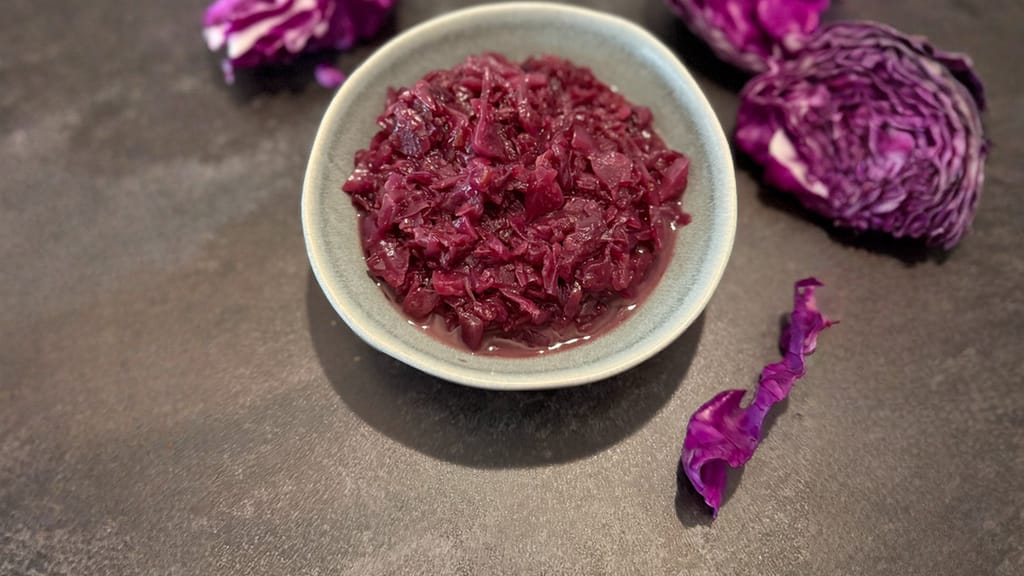
Sweet and sour braised red cabbage
What to Cook with Cabbage: White, Red, Sauerkraut, Jarred and Leftovers
Updated Nov 18, 2026
What can you cook with cabbage? From raw white or red cabbage you can make a salad, coleslaw or cabbage pancakes in 20 minutes. A whole head gives you braised cabbage, cabbage soup and stuffed cabbage rolls (holubky). Sauerkraut makes zelňačka (Czech sauerkraut soup) and vepřo knedlo zelo (roast pork with dumplings and cabbage). Jarred cabbage becomes a quick side dish in ten minutes, and leftovers turn into šunkofleky (Czech baked pasta with ham) or baked potatoes. What matters most is which cabbage you have at home. Below you'll find specific dishes for each type, with method, timing, temperature and what to serve them with.
Each type of cabbage suits something different: white cabbage is the all-rounder, red is sweeter and goes with roast meat, sauerkraut brings sourness to a dish, and jarred cabbage is a ready-made side. A quick overview:
White cabbage – salads, coleslaw, cabbage pancakes, braised cabbage, cabbage soup, stuffed cabbage rolls (holubky), meatloaf. The head should be heavy and firm, with smooth leaves and no brown edges.
Red cabbage – braised to go with goose, duck and pork, or raw in salads with apple. It's denser and needs 15–20 minutes longer braising than white.
Sauerkraut – zelňačka, vepřo knedlo zelo, bigos, strudel, raw salad. It's already sour, so you usually don't add vinegar.
Jarred cabbage (sterilized) – a quick side dish, for bakes and toasties. It's precooked and slightly sweet, so you only need to heat it through and season it.
Savoy cabbage – not the same as cabbage, but with softer, crinkled leaves that wrap more easily into cabbage rolls.
The main difference in the kitchen is toughness and acidity. Young summer cabbage is tender and ideal for salads, while late-autumn heads are firmer and better for braising and soup. Sauerkraut and jarred cabbage are already sour straight from the jar, so season them carefully and taste at the end.
We send seasonal cooking and baking plans and recipes made from everyday ingredients. Unsubscribe in one click.
Raw cabbage is mainly good for three things: a classic vinegar cabbage salad, creamy coleslaw and cabbage pancakes. The same rule applies to all of them: shred the cabbage as finely as you can (with a cabbage grater, mandoline or sharp knife), salt it and let it stand for a while. The salt draws out water, the leaves soften, and the salad won't turn watery or "woody."
Cabbage salad with vinegar and caraway is a Czech classic: shredded white cabbage in a sweet-and-sour dressing, ready in an hour including resting time. Salt is the key: salt the cabbage (about a teaspoon per 500 g / 1 lb), knead it with your hands until it releases juice, let it stand for 20–30 minutes and squeeze it out lightly. The dressing is built on a 1:1 ratio of vinegar to water, sweetened with sugar and flavored with caraway and a drop of oil. It's best after an hour in the fridge, once the dressing has soaked in.
It goes well with schnitzel, grilled sausage or duck breast with crispy cabbage and bacon salad. There the cabbage picks up the bacon and duck fat, and its sourness balances the rich meat nicely.
Coleslaw is a creamy salad of Dutch origin that became famous in the USA, made from white (often also red) cabbage and carrots in a mayonnaise dressing. To keep it from turning watery, salt the cabbage, let it stand for 15 minutes and squeeze it out, otherwise the water will thin the dressing. For a lighter version, replace half the mayonnaise with plain yogurt and season with vinegar or lemon and mustard. Let it rest in the fridge for at least 30 minutes before serving.
It belongs with barbecue meat, burgers and roast ribs, such as roasted pork ribs with apple cider and BBQ sauce. You make a raw red cabbage salad the same way, just slice the cabbage even more thinly because it's tougher. It pairs well with grated tart apple and a few walnuts.
Cabbage pancakes are a quick dinner of grated white cabbage, eggs and a little flour, ready in half an hour. One step matters most: let the salted cabbage stand for 10 minutes, then squeeze it out thoroughly in a kitchen towel, because wet cabbage makes the pancakes fall apart. Season the batter with garlic, marjoram and caraway, and fry the pancakes, about 1 cm (½ in) thick, in hot oil for 3–4 minutes per side until golden.
Serve them with sour cream or garlic yogurt. If you add grated potato to the batter, you get something between a potato pancake (bramborák) and a cabbage pancake. With scallions and soy sauce, you're getting close to Japanese okonomiyaki.
Braised cabbage is cabbage slowly softened in fat with onion and seasoned sweet-and-sour. White cabbage braises for 30–40 minutes, red for 45–60 minutes. For detailed methods from a jar, a bag or a fresh head, plus freezing instructions, see the article Braised Cabbage: How to Cook It from a Jar, a Bag or a Fresh Head.
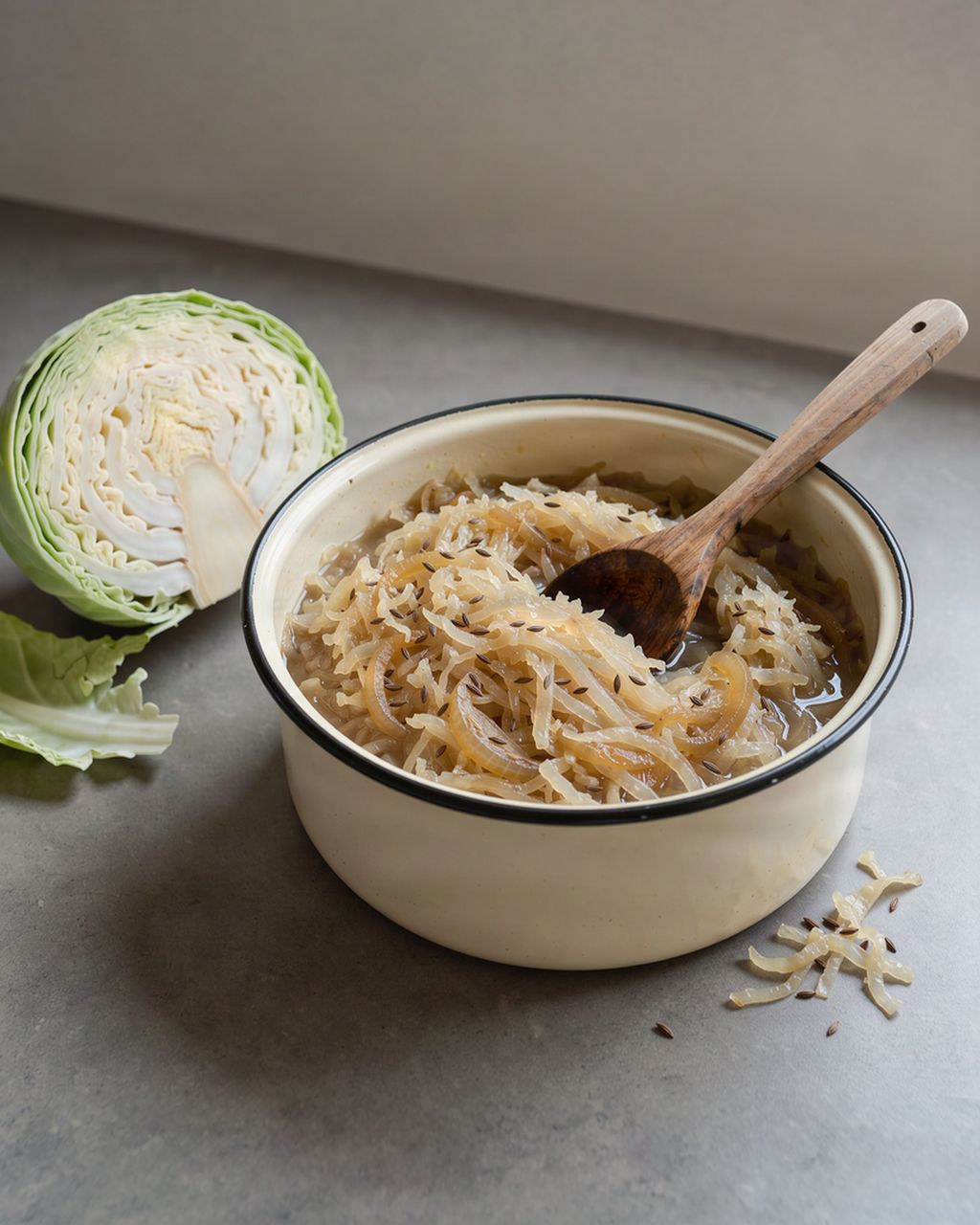
Braised white cabbage is a Czech side dish of shredded cabbage simmered with onion and caraway for 30–40 minutes, until soft but not falling apart. Add just a little water, so the cabbage braises rather than boils. Add the sweet-and-sour seasoning at the end with vinegar and sugar, a spoonful at a time, tasting as you go. You can thicken it with a light roux, flour mixed into water, or grated raw potato, which thickens the cabbage in 10 minutes.
Serve it with steamed bread dumplings and roast pork, with grilled sausage, or as a base for the baked dishes later in this article.
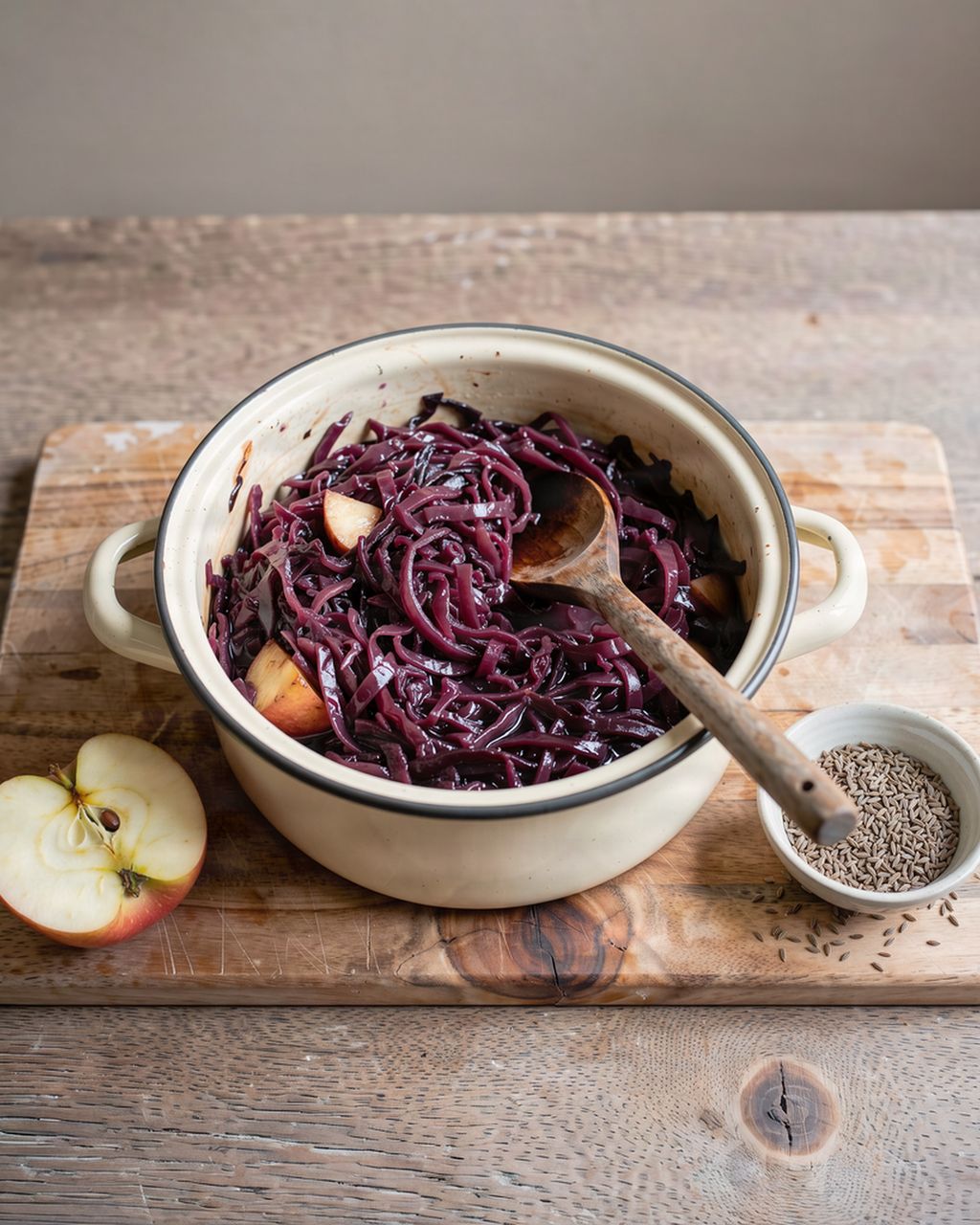
Braised red cabbage needs 45–60 minutes and acid right from the start. The pigments, anthocyanins, are red in an acidic environment and turn blue to greenish in an alkaline one (such as hard water), which school experiments with cabbage as a pH indicator also show. So add vinegar, wine or grated tart apple to the raw cabbage straight away. It's traditionally braised in butter or goose fat with onion and seasoned with sugar, cloves and cinnamon or star anise.
It goes with goose, duck and pork. Try sweet-and-sour braised red cabbage or go for a whole meal: slow-roasted pork with red cabbage. The article Red Cabbage: How to Prepare and Season It covers how to prepare red cabbage, fresh or from a jar, and how to flavor it. For a St. Martin's table, see the St. Martin's menu.
Sweet and sour braised red cabbage
Sweet-and-sour braised red cabbage for goose or pork
Cabbage soup is made from fresh white cabbage and is a vegetable soup. Zelňačka is made from sauerkraut, usually with potatoes, smoked meat and cream, and is hearty enough to be a main course. Both are ready within 50 minutes.
Cabbage soup is a vegetable soup of fresh white cabbage, carrots, celery and potatoes, ready in 40 minutes. For a quarter of a head, allow about 1.5 liters (6 cups) of broth and simmer for 25–30 minutes. Caraway, sweet paprika and a spoonful of tomato paste give it flavor. Finish with a dash of vinegar, because the sourness wakes the soup up. With a slice of rye bread and a spoonful of sour cream, it can easily be a whole dinner. For a meatier version, cook a piece of smoked meat in it from the start.
Zelňačka is a thick sauerkraut soup with potatoes and smoked meat, ready in roughly 45–50 minutes. The base is sautéed onion with sausage or smoked meat, dusted with sweet paprika. Pour in water or broth right away so the paprika doesn't turn bitter. Add the sauerkraut with its juice (if you don't like it too sour, drain off some) and simmer for 30–40 minutes with potatoes, caraway and a bay leaf until the cabbage is tender. It is thickened with flour stirred into cream and seasoned with marjoram and garlic.
Without meat and cream, but with dried mushrooms, it becomes a Lenten kyselice (sour soup). Zelňačka is even better the next day, so feel free to cook a double batch.
Cabbage with ground meat gives you three classics: holubky (cabbage leaves stuffed with meat and rice), baked cabbage with meat and potatoes, and meatloaf with cabbage. All of them bake at 180°C (350°F) for roughly 35–75 minutes depending on the dish. Which cuts of pork go best with cabbage is covered in the article Types of Pork: What to Cook from Shoulder, Leg, Neck, Tenderloin and Top Round.
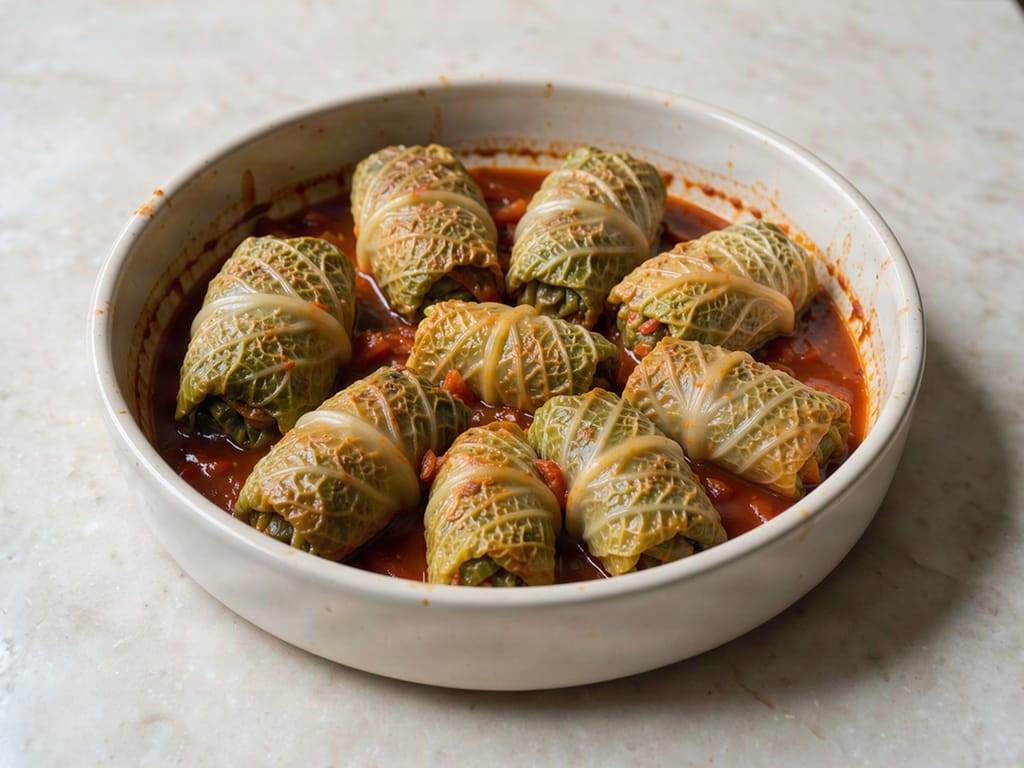
Holubky are cabbage leaves stuffed with ground meat and rice, baked at 180°C (350°F) for 60–75 minutes. To prepare the leaves, cut the core out of the head, submerge the whole head in boiling salted water for 3–5 minutes and peel off the softened outer leaves one by one. Shave the thick central rib of each leaf flat with a knife, otherwise the leaf can't be rolled. The filling is ground pork (or half pork, half beef) with half-cooked rice, egg, onion and marjoram.
Place the rolls seam side down in a baking dish on a layer of sauerkraut or in tomato sauce, pour in broth to half their height and bake covered, removing the lid for the last 15 minutes. Serve with boiled potatoes or bread and a spoonful of sour cream. If you don't want to boil the whole head, you can freeze it a day ahead and let it thaw: the leaves soften on their own.
Baked cabbage is a lazy, layered version of holubky: potatoes, browned ground meat and braised cabbage, baked at 180°C (350°F) for 35–45 minutes. White cabbage, sauerkraut and jarred cabbage all work. Brown the meat with onion, garlic and caraway and sprinkle with sweet paprika. Parboil the potatoes halfway, otherwise they won't soften in the oven. Pour over cream beaten with an egg and top with cheese for a golden crust. Let the dish rest for 10 minutes before slicing so the layers hold together.
Meatloaf with cabbage is a classic meatloaf with cabbage added either inside or around it, baked at 180°C (350°F) for 50–60 minutes. For cabbage inside, chop it finely, simmer it for 5 minutes with onion and let it cool before mixing it into the meat (roughly 200 g cabbage per 700 g meat). The cabbage makes the meatloaf more tender and adds a sweet flavor. The other option is to wrap the meatloaf in blanched cabbage leaves like one big cabbage roll. The center should reach at least 72°C (162°F).
Serve with mashed potatoes and braised red cabbage. In spring, also try spring meatloaf with wild garlic; the method for the meat is the same.
From sauerkraut you can make zelňačka (method above), vepřo knedlo zelo, Polish bigos, cabbage strudel or a raw salad. Sauerkraut is fermented white cabbage, so it already has both sourness and depth of flavor. All it needs is fat, onion and time. How to ferment it at home, why you pound it and how long it keeps is covered in the article Homemade Sauerkraut: Pounding, Fermenting, Storing.
Braised sauerkraut for vepřo knedlo zelo. Braise sauerkraut with onion in lard and caraway for 30–40 minutes. Season with sugar to soften the sourness and thicken with grated potato or a roux. It goes with roast pork and bread or potato dumplings.
Bigos. A Polish "hunter's" stew of sauerkraut and fresh cabbage, smoked meat, sausage, dried mushrooms and prunes. Simmer it slowly for 2–3 hours, even in two sessions, with a rest in the fridge in between, because it's meant to "mature." Serve with bread.
Sauerkraut strudel. Wrap braised cabbage with bacon and onion in puff pastry or strudel dough and bake at 200°C (400°F) for about 25–30 minutes. For inspiration, see the autumn strudel with cabbage and English bacon. Sliced, it makes a great warm appetizer.
Raw sauerkraut salad. Pull the sauerkraut apart with a fork, add grated apple and carrot, finely chopped onion and a spoonful of oil. It's ready in five minutes and goes well with smoked meat, sausages and roast potatoes.
If your sauerkraut tastes too sharp, you can rinse it briefly under cold water. You'll lose some flavor too, though, so only do it when it's really too sour.
With jarred cabbage you can make a side dish in 10 minutes, a filling for bakes, a layer in a toastie or a quick zelňačka. In the jar it's already cooked and slightly sweet, so you only need to heat it through and season it. Just watch the brine: it contains vinegar and sugar, so add it gradually.
Quick side dish in 10 minutes. Heat the drained cabbage for 8–10 minutes with sautéed onion, caraway and a spoonful of brine, and thicken with a teaspoon of flour mixed into water. Serve with sausage, smoked meat or roast chicken.
Baked pasta or potatoes. Jarred cabbage works very well in baked flíčky (square Czech pasta) or potatoes with ham. Bake at 180°C (350°F) for 25–30 minutes. The cabbage juice keeps the dish nicely moist.
Toastie with cabbage and cheese. Top bread with a slice of smoked meat or ham, a spoonful of drained cabbage and Emmental, and bake for 5–7 minutes at 200°C (400°F) or toast in a sandwich press. It's a homemade take on the American Reuben sandwich.
For a quick zelňačka. If you don't have sauerkraut, jarred cabbage will do too. The soup will be sweeter and milder, so sour it up with vinegar or a splash of pickle brine.
Jarred red cabbage is brightened up by a bit of butter, grated apple and a spoonful of cranberries or red currant jam, heated for 10 minutes. It's a quick way to get a side for roast duck.
The most common things to make with leftover cabbage: from a raw quarter head, quick noodles with stir-fried cabbage, pancakes or soup; from leftover cooked cabbage, šunkofleky, baked potatoes, stuffed dumplings or toasties. So you never have to throw leftover cabbage away.
From leftover raw cabbage you can make stir-fried cabbage with noodles, strapačky, cabbage pancakes, soup or roasted cabbage steaks.
Stir-fried cabbage with noodles. Stir-fry cabbage strips for 4–5 minutes in a very hot pan or wok with garlic and ginger, so it stays crisp and lightly browned. Add cooked noodles, soy sauce and a drop of sesame oil. Dinner in 15 minutes, with an egg or leftover meat if you like.
Strapačky with cabbage. A Slovak classic: potato halušky (small dumplings) tossed with braised sauerkraut and bacon. From leftover fresh cabbage you can make a version of it: chop the cabbage finely and braise for 15 minutes with onion and bacon, then toss with the halušky. If you like brynza (sheep's cheese), you know brynza halušky with bacon; strapačky are their cabbage sibling.
Cabbage pancakes or cabbage soup. Both are earlier in this article. The pancakes use roughly 400 g (14 oz) of cabbage, the soup a quarter of a head.
Roasted cabbage "steaks." Cut the head into slices 2 cm (¾ in) thick, each with a piece of core so they hold together. Brush with oil, salt, sprinkle with caraway or smoked paprika and roast at 220°C (425°F) for 25–30 minutes, turning halfway. The edges caramelize and the cabbage turns sweet. Serve with a yogurt dip.
From leftover braised cabbage you can make šunkofleky, potato dumplings stuffed with cabbage, baked potatoes, or a filling for an omelet or toastie.
Šunkofleky with cabbage. Mix cooked flíčky (square Czech pasta) with chopped ham, braised cabbage and eggs beaten with cream, and bake at 180°C (350°F) for about 30 minutes. For a similar method with fresh cabbage, see the recipe for šunkofleky with cabbage.
Potato dumplings stuffed with cabbage. Fill rounds of potato dough with a spoonful of braised cabbage with smoked meat, seal and cook for 8–10 minutes in gently boiling water. Serve with fried onion. You can make pierogi from noodle dough the same way.
Baked potatoes with cabbage. Layer sliced boiled potatoes, cabbage and sausage, pour over cream mixed with an egg and bake for 25–30 minutes at 180°C (350°F).
Cabbage as a filling for an omelet or toastie. Two spoonfuls of warmed cabbage in a cheese omelet make a breakfast in five minutes.
Braised cabbage often tastes better the next day than freshly cooked, because the flavors come together. That's why it's worth cooking extra.
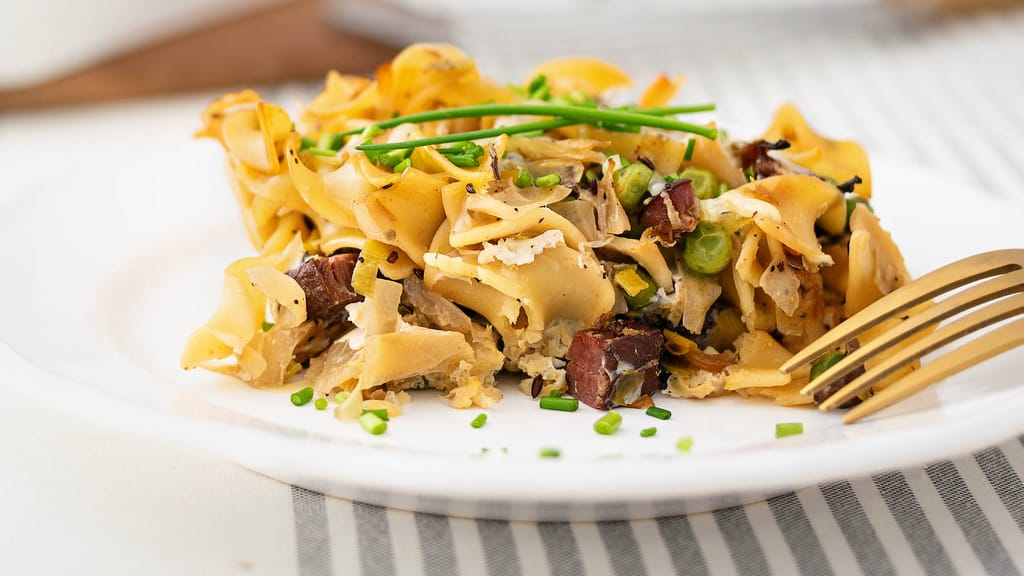
Ham and cabbage flecky pasta bake
Šunkofleky with cabbage, mushrooms and peas
Cut cabbage keeps 3–5 days wrapped in plastic wrap in the fridge's vegetable drawer, and cooked cabbage keeps 3–4 days in a sealed container. Wrap a cut head tightly in plastic wrap or a damp towel; let cooked cabbage cool, then move it to a sealed container or freeze it.
A whole head keeps in the fridge for several weeks. The outer leaves protect it, so only remove them just before cooking.
A cut head wilts and browns from the cut. Trim a thin slice off the cut before using it again and use it up within 3–5 days.
Shredded raw cabbage loses its crispness fastest. Shred it just before preparing, or keep it in a sealed container and use it within 1–2 days, ideally in pancakes or soup.
Vinegar cabbage salad keeps 3–4 days in the fridge, and the dressing preserves it. Use coleslaw with mayonnaise and yogurt within 1–2 days, before it starts to release water.
Cooked cabbage, zelňačka and holubky: the US food safety agency USDA FSIS recommends refrigerating cooked food within 2 hours, eating leftovers within 3–4 days and reheating them to at least 74°C (165°F) inside; bring soups like zelňačka to a boil. Shallow containers help with cooling.
Freezing: according to USDA FSIS, frozen food stays safe indefinitely, but flavor and texture decline over time, so use it within 3–4 months. Braised cabbage, zelňačka and holubky all freeze very well. Freeze them in portions and thaw overnight in the fridge.
Move opened jarred cabbage to the fridge and follow the manufacturer's guidance on the lid or label.
Red cabbage turns blue when there isn't enough acid. Its pigments, anthocyanins, are red in an acidic environment and blue in an alkaline one, such as hard water. Add vinegar, wine or a tart apple right at the start of braising and the ruby color comes back.
You can, but it's best to blanch it briefly first: plunge shredded white cabbage into boiling water for 1–2 minutes, cool it in cold water, dry it and freeze it in bags. Once thawed it's no longer crisp, so use it in soup, for braising or in pancakes, not in a salad.
Fennel, coriander or dill can replace caraway in cabbage. Fennel and coriander are milder, while dill suits zelňačka best. With red cabbage, cloves, cinnamon or star anise are used instead of caraway.
You can thicken braised cabbage without flour using grated raw potato: stir it in about 10 minutes before the end and let it simmer through. A spoonful of potato starch or cornstarch mixed into cold water works too, so you can skip wheat flour.
Cabbage and savoy cabbage are related, but cabbage has smooth, tightly packed leaves, while savoy has crinkled, softer, looser ones. Savoy cooks faster and is easier to wrap into cabbage rolls, while regular cabbage is crunchier and better for salads and fermenting.
For a side of braised cabbage, allow roughly 150–200 g (5–7 oz) of raw cabbage per person, and for coleslaw or cabbage salad about 100–150 g (3.5–5 oz). A 1 kg (2.2 lb) head, once the outer leaves and core are removed, serves 4–5 people as a side.
One recipe worth heating the oven for, one tip, and one deal from the shop. Nothing else.