Honey chicken drumsticks with pumpkin ragout
Chicken Thighs: What to Cook in the Oven or Skillet – Whole, Bone-In, Boneless, Cutlets and Smoked
Updated Nov 18, 2026
Chicken thighs are the most forgiving cut of the bird: they handle higher heat and longer cooking, they don't dry out, and the skin roasts up crisp. Roasted in the oven at 200°C (400°F), whole leg quarters take about 45–50 minutes, bone-in thighs 35–40 minutes and boneless thighs 20–25 minutes. Chicken is safely cooked when it reaches 74°C (165°F) inside. Below you'll find which cut to buy, temperatures and times for each, how to get crispy skin, and dishes from the skillet, from a single sheet pan, and from boneless thighs, thigh cutlets and smoked thighs. Most of them link to the full recipe.
Pick one of six cuts depending on what you're cooking: the whole leg quarter and the bone-in thigh are for roasting with crispy skin, the drumstick is for eating by hand and for kids, the boneless thigh is for quick skillet dishes, curries and skewers, the thigh cutlet is for frying and burgers, and the smoked thigh is for beans and sauerkraut. It's all the same meat, just prepared differently. That's why the time, the temperature and the best use differ from cut to cut.
Whole leg quarter – thigh and drumstick in one piece, with bone and skin, usually 280–350 g. It's the cheapest and juiciest cut and the most forgiving in the oven. Its only drawback: the shape makes it harder to fit in a skillet or pot. Buy it as a bone-in, skin-on chicken leg.
Bone-in thigh – the meatier upper part without the drumstick, 150–200 g. It has the most meat per bone, a flat expanse of skin that roasts nicely, and it sits flat in a skillet. If you're not sure what to pick, pick this.
Drumstick (lower leg) – 100–130 g, with more sinew and a little less meat. Its advantage is the bone "handle," so kids can eat it with their hands. It's great for glazing with honey or BBQ sauce.
Boneless thigh – the upper thigh with the bone removed, usually skinless as well, 100–130 g. It cooks as fast as chicken breast, but it won't dry out. Look for it as a skinless, boneless chicken thigh.
Thigh cutlet – a boneless thigh opened out into a flat piece, often with the skin on. It's the same thickness all over, so it cooks evenly. For breading and burgers it beats a chicken breast cutlet. See chicken thigh cutlets.
Smoked thigh – in Czechia it's usually sold smoked and already cooked, so it only needs heating through. Check the package: if it says "cook before eating," roast it like raw chicken.
Upper thigh or drumstick? The upper thigh has more meat, less sinew and longer fibers. It's better for roasting with the skin on, for the skillet and for boning. The drumstick is cheaper and better where you eat with your hands or want a glaze to cling to the meat. For a family sheet-pan dinner, feel free to combine both and just put the drumsticks in the oven 5–10 minutes later.
We send seasonal cooking and baking plans and recipes made from everyday ingredients. Unsubscribe in one click.
Roast chicken thighs at 200°C (400°F) (conventional, top and bottom heat). Whole leg quarters are done in 45–50 minutes, bone-in thighs in 35–40 minutes, drumsticks in 30–35 minutes and boneless thighs in 20–25 minutes. According to the US food safety agency (USDA/FSIS), poultry is safe when it reaches 74°C (165°F) at the thickest point. The times below are for meat straight from the fridge and a conventional oven. With a fan oven, lower the temperature by 10–20°C or cut the time by about a fifth.
Whole leg quarter, bone-in (280–350 g): 180°C (350°F) 55–65 min · 200°C (400°F) 45–50 min · 220°C (425°F) 35–45 min
Bone-in, skin-on thigh (150–200 g): 180°C 45–50 min · 200°C 35–40 min · 220°C 30–35 min
Drumstick (100–130 g): 180°C 40–45 min · 200°C 30–35 min · 220°C 25–30 min
Boneless, skinless thigh (100–130 g): 180°C 25–30 min · 200°C 20–25 min · 220°C 15–20 min
Thigh cutlet (flat piece about 1 cm / ½ in thick): 180°C 20–25 min · 200°C 15–20 min · 220°C 12–15 min
Smoked thigh, already cooked: 180°C 20–25 min, just to heat through (74°C inside)
Target internal temperature: 74°C is the safe minimum. But thighs are at their best at 80–85°C (175–185°F), when the collagen melts and the meat comes easily off the bone.
Which temperature should you choose? At 180°C thighs cook more slowly and evenly, which suits a roasting pan with liquid or vegetables that need time. At 200°C they work best alongside potatoes on one sheet pan. At 220°C you get the crispiest skin, but sugar from a marinade or honey can burn on it. You can also combine temperatures: roast at 190°C (375°F) for most of the time and at 220°C for the last 10 minutes.
Go by the thermometer, not the clock. Insert it into the thickest part without touching the bone, or it won't show the true temperature of the meat. Without a thermometer you can't be sure: neither the color of the meat nor of the juices tells you anything about safety. If you don't have one, err on the side of a few minutes longer; it won't hurt thighs, and the meat should pull away lightly from the bone. Many home ovens run 10–20°C off from what the dial says. If the times don't work for you, check with an oven thermometer. For temperatures for a whole chicken and other cuts, see our article on what temperature to roast chicken at and for how long.
After taking them out, let the thighs rest for 5 minutes. The juices settle back into the meat instead of ending up on the cutting board.
Crispy skin needs three things: a dry surface, rendered fat and dry heat. Moisture softens it, which is why a lid, aluminum foil and basting with pan juices all spoil it. Here's a method that works every time:
Dry the skin. Pat the thighs thoroughly with a paper towel. The water on the surface has to evaporate first, and only then does the skin start to turn golden and crisp.
Salt them a day ahead. Salt the thighs (about 1 teaspoon of salt per 1 kg of meat) and leave them overnight in the fridge, uncovered, on a plate or a rack. The salt draws out moisture, which evaporates from the skin, and the meat is seasoned inside at the same time. If you're short on time, even an hour helps.
Add baking powder. Mix a teaspoon of baking powder per 1 kg of thighs with the salt and rub it into the skin. Baking powder raises the alkalinity of the surface, so the skin browns faster and forms tiny bubbles, like a crackling crust. Don't use more, or the skin turns bitter.
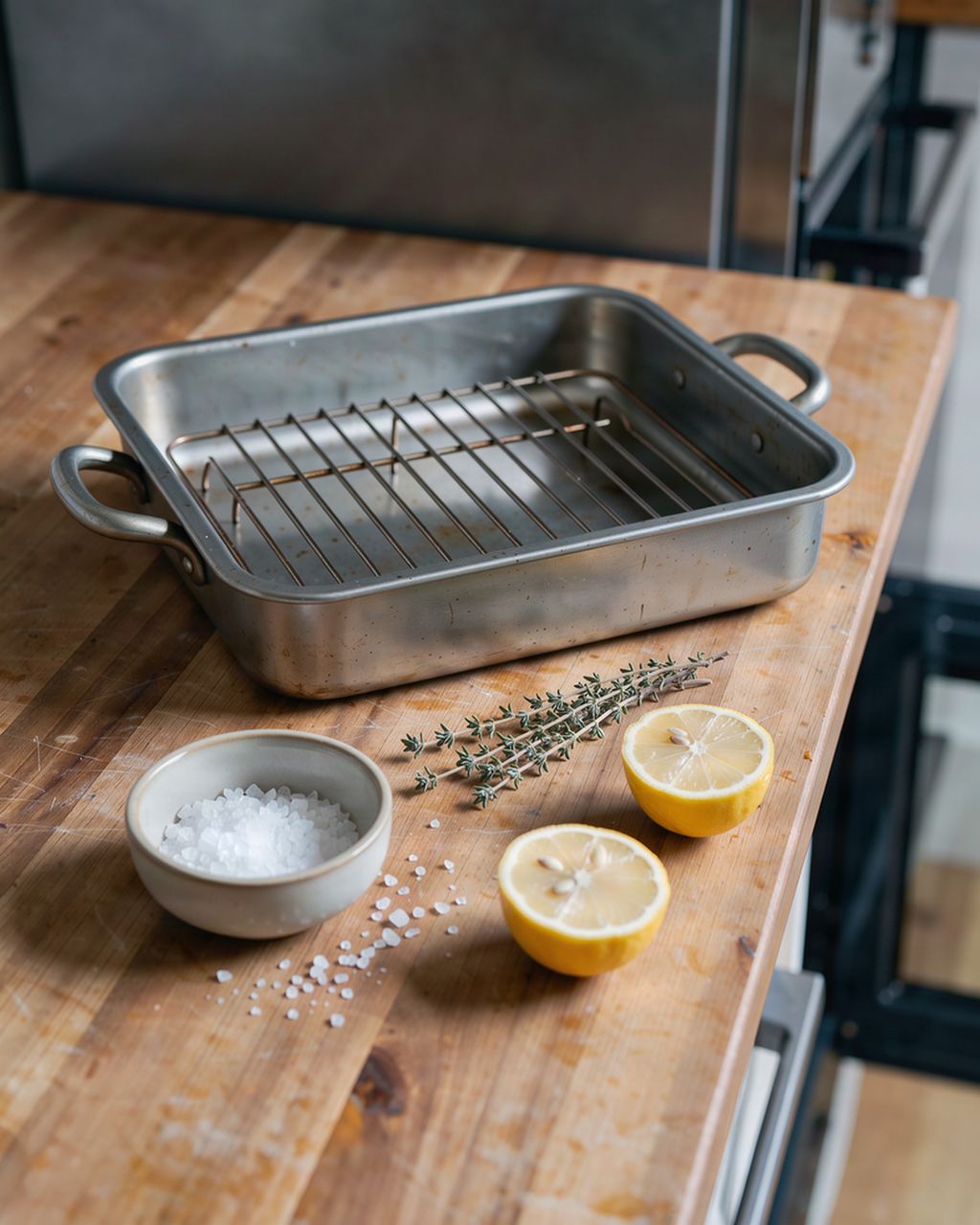
Lift the thighs off the pan. Set them on a rack or on a bed of cut vegetables so air can circulate underneath. In their own juices, the bottoms steam rather than roast.
Skin side up, uncovered, no basting. Use the pan juices on the vegetables around the chicken, not on the skin. Aluminum foil only makes sense for thighs roasted in liquid, and even then take it off for the last 15–20 minutes.
Finish with real heat. For the last 10 minutes roast at 220°C (425°F), or put the thighs under the broiler for 2–3 minutes. Keep an eye on them, because skin goes from golden to black quickly.
In a skillet, start the thighs skin side down in a cold pan. The fat renders slowly under the skin instead of the skin seizing up and staying rubbery. Set the pan over medium heat, weigh the thighs down with a smaller pot and leave them for 12–15 minutes without moving them, until the skin releases on its own and is golden. Then flip them and either finish over low heat or move them to a 200°C (400°F) oven for 10–15 minutes.
Three classics made with chicken thighs differ mainly in how they're cooked: paprikash-style thighs are browned in a skillet and simmered in a cream sauce, beer thighs roast slowly in a pan on a bed of onions, and honey thighs roast in the oven with the shiny glaze added only at the end. Thighs can take longer braising and roasting without drying out, so you won't ruin anything by leaving them ten minutes longer.
Thighs are better than breasts for paprikash: they don't dry out during the long simmer in the sauce, and collagen from the skin and bones mellows and thickens it. The best choices are bone-in thighs or whole leg quarters split at the joint, browned skin side down until golden. Stir in the ground paprika only once the pot is off the heat – on hot fat it turns bitter quickly.
Chicken thighs in beer turn out best cooked slowly in a roasting pan on a bed of onions: first covered, so the meat softens in the steam from the beer, and finally uncovered at higher heat so the skin crisps. Pour in just enough beer that the skin stays above the liquid. The pan juices with the soft onions can then simply be blended into a sauce for dumplings or bread. You'll find the full method, including amounts and times, in the recipe for slow-roasted turkey thighs in beer – chicken thighs will be done in about half the time.
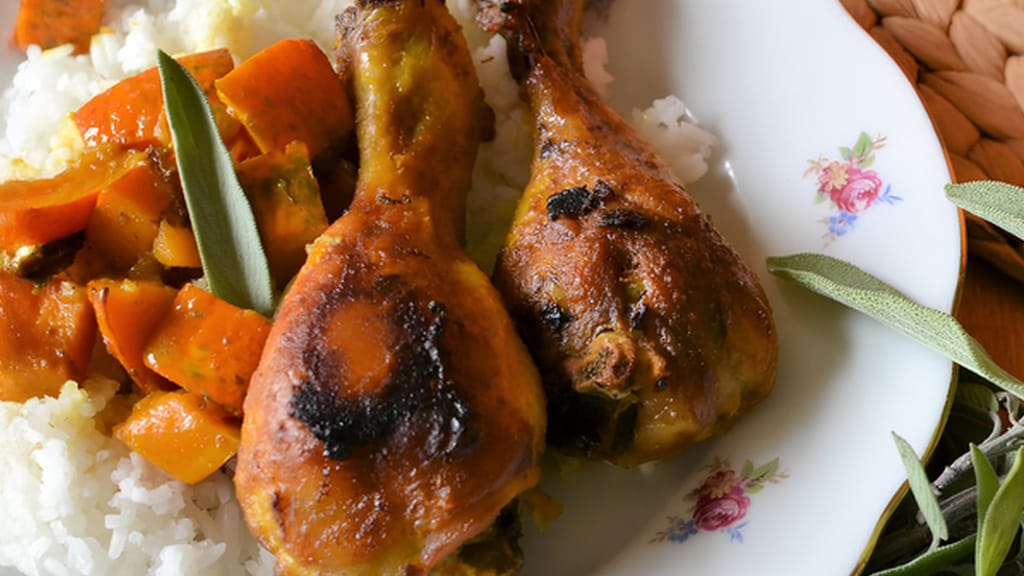
Roast honey chicken thighs without the glaze first and add the honey only for the last 15–20 minutes so it doesn't burn. Until then, salt and pepper are enough. Brush on a glaze of honey, soy sauce, mustard and garlic in two layers, and take the thighs out as soon as it starts to bubble and shine. It works best with drumsticks, which hold the glaze well. In the fall, try it as honey drumsticks with pumpkin ragout, where the pumpkin balances the sweet glaze.
Honey chicken drumsticks with pumpkin ragout
Honey chicken drumsticks with pumpkin ragout – honey chicken thighs, fall version
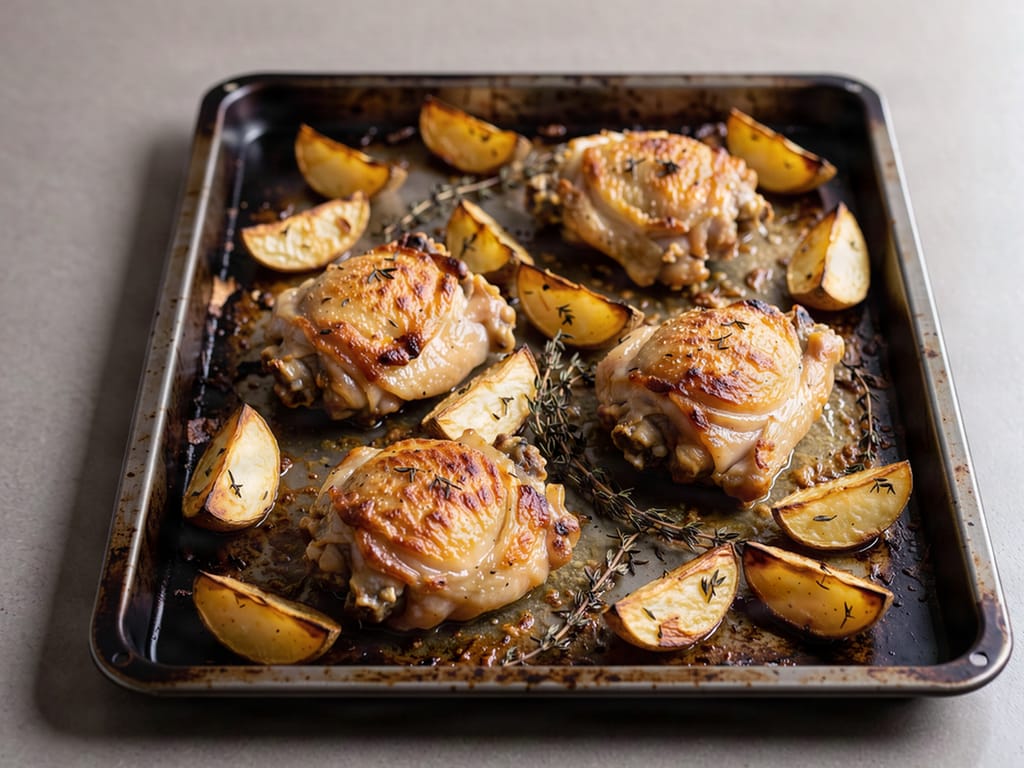
For a one-sheet-pan dinner, put potatoes cut into 2–3 cm (about 1 in) pieces and firm vegetables in a 200°C (400°F) oven. Set the chicken thighs on top, skin side up, and roast for 40–50 minutes without stirring. Fat from the thighs drips onto the potatoes as they roast, so you hardly need to oil them at all. The only condition is that everything finishes at the same time, and you control that with the size of the pieces:
Potatoes and carrots cut into 2–3 cm pieces. A whole leg quarter roasts for about 45 minutes, and potato pieces this size take just as long.
Onions, pumpkin and fennel in 3–4 cm wedges; they're softer and must not fall apart.
Zucchini, peppers and tomatoes go in only after 20–25 minutes, or they turn mushy.
Don't overcrowd the pan. Leave space between the pieces. Packed-in vegetables release water and steam. For four people, feel free to use two sheet pans.
Chicken thighs with mushrooms. In the fall, replace half the vegetables with mushrooms, which soak up the pan juices. Roast the thighs alone for 20 minutes, then add torn mushrooms, onion and thyme and roast for another 25 minutes.
Chicken on carrot logs. Thick rounds of carrot serve as a rack: the meat sits on them rather than stewing in its own juices, and the carrots underneath caramelize. Both bone-in and boneless thighs work for this.
Chicken thighs with lemon, oregano and potatoes. Coat the thighs and potatoes in olive oil, lemon juice, zest, garlic and dried oregano, add a little stock to the pan so the potatoes on the bottom soak up flavor, and roast at 200°C (400°F) until the skin on top is crisp. With thighs, the recipe below turns out juicier than with breasts; just leave them in the oven 10–15 minutes longer.
For how to roast potatoes on their own so they're golden outside and tender inside, see roasted potatoes in the oven: temperature and time.
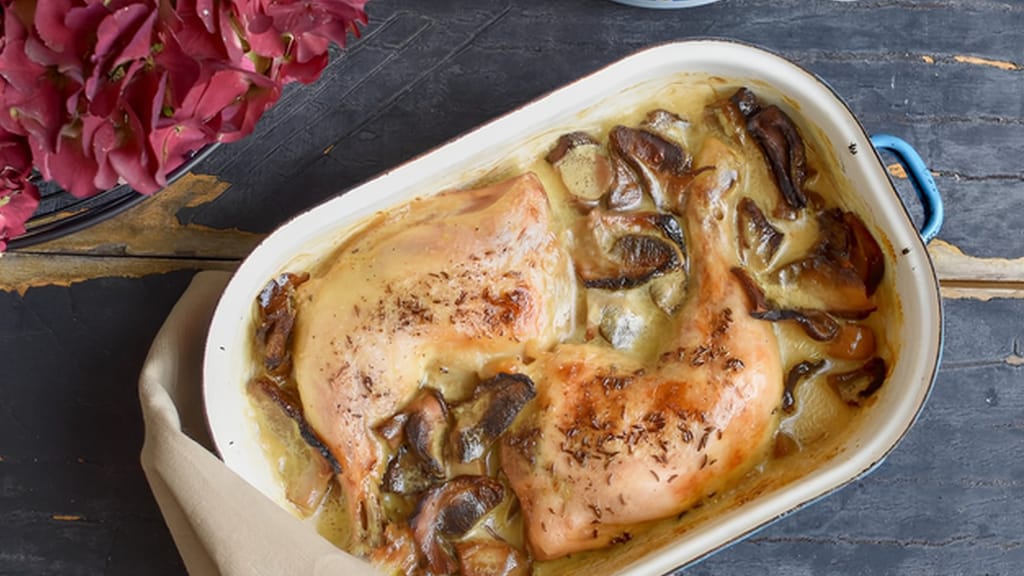
Roasted chicken thighs with fragrant wild mushrooms
Chicken thighs roasted with wild mushrooms – a fall one-pan dinner
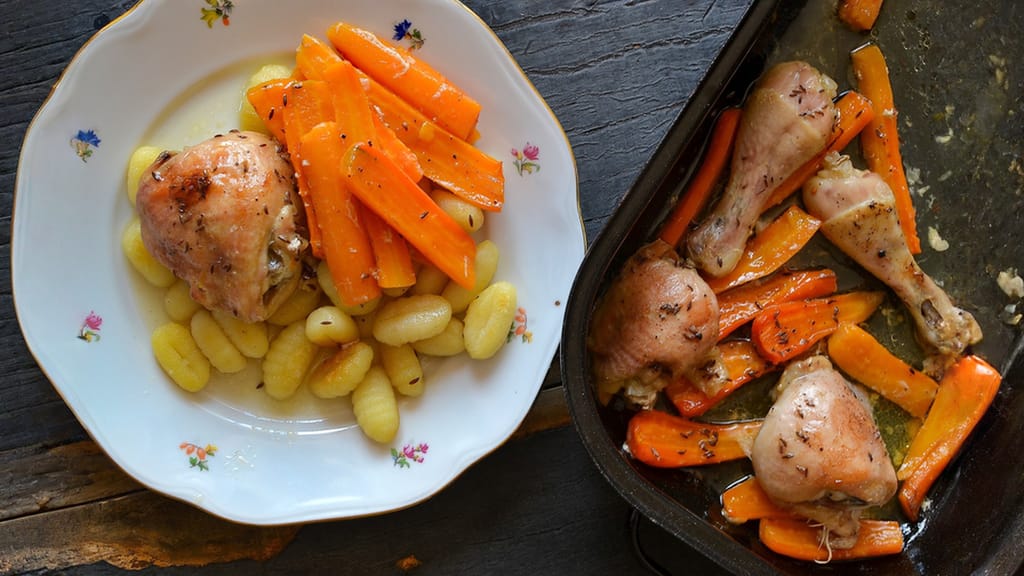
Roast chicken pieces on carrot batons
Chicken pieces roasted on carrot logs – chicken thighs in the oven without a rack
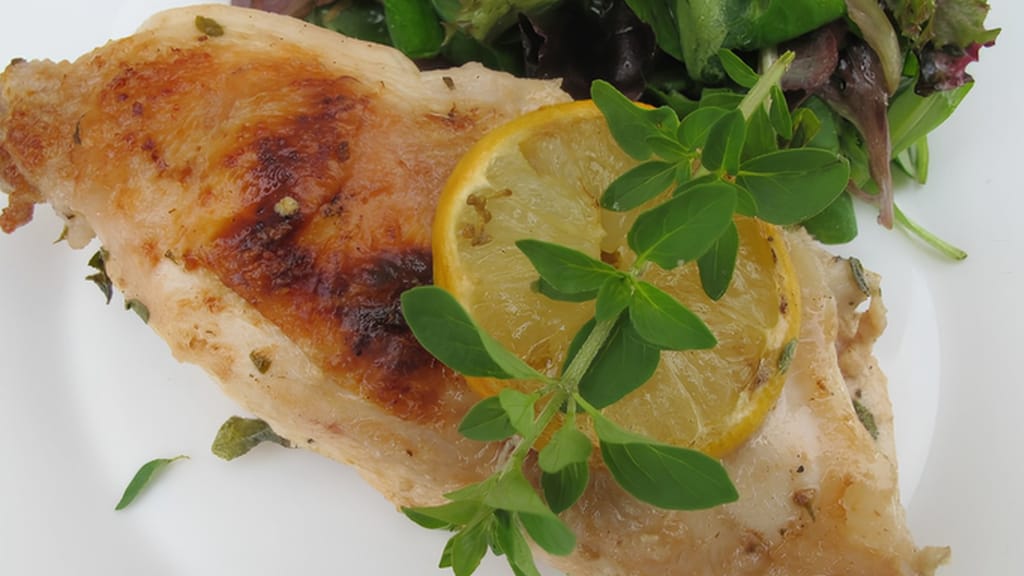
Chicken with lemon and oregano
Chicken with lemon and oregano – a recipe that turns out even juicier with thighs
Boneless thighs and thigh cutlets are great for curries, butter chicken, breaded cutlets and burgers, and skewers. You can use them in all of these in place of chicken breast, and they'll just be juicier. Boneless meat cooks in 15–25 minutes, but thanks to the fat and connective tissue it can take a little extra time in the skillet without drying out. Cut it into evenly sized pieces so they cook at the same rate.
For curry, thigh is better than breast because it simmers in the sauce for a long time without falling apart into dry strands. Brown cubes of meat until golden, sauté onion, ginger, garlic and spices in the same fat, pour in coconut milk and let it bubble until the meat is tender.
For butter chicken, first marinate the meat for at least 2 hours in yogurt with spices. The acid in the yogurt tenderizes it, and the browned pieces then finish cooking in a tomato sauce with butter and cream. Serve both with rice – for how to cook it fluffy, see our article on how to cook rice.
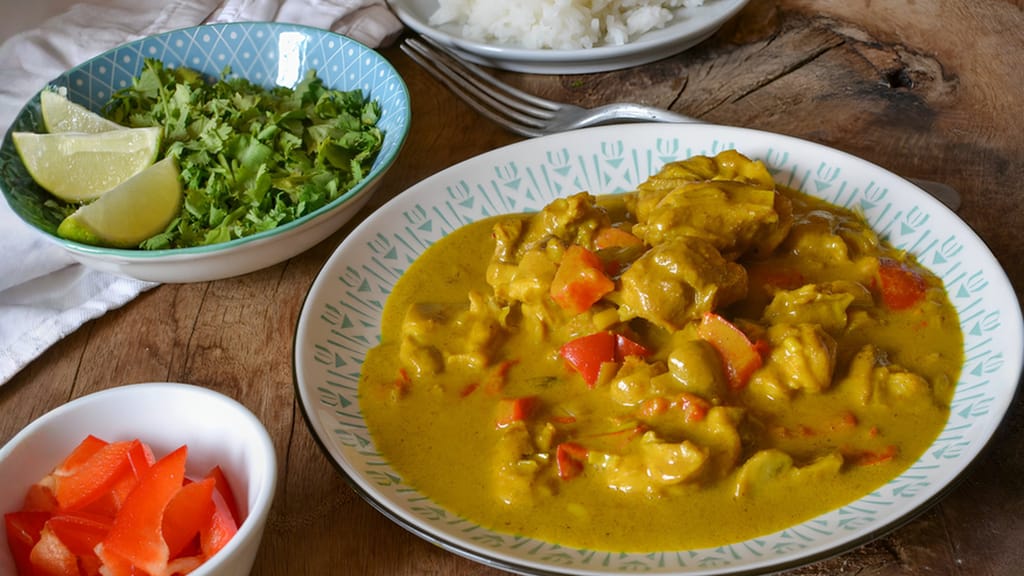
Chicken curry with coconut milk
Chicken curry with coconut milk – hot or mild, from boneless chicken thighs
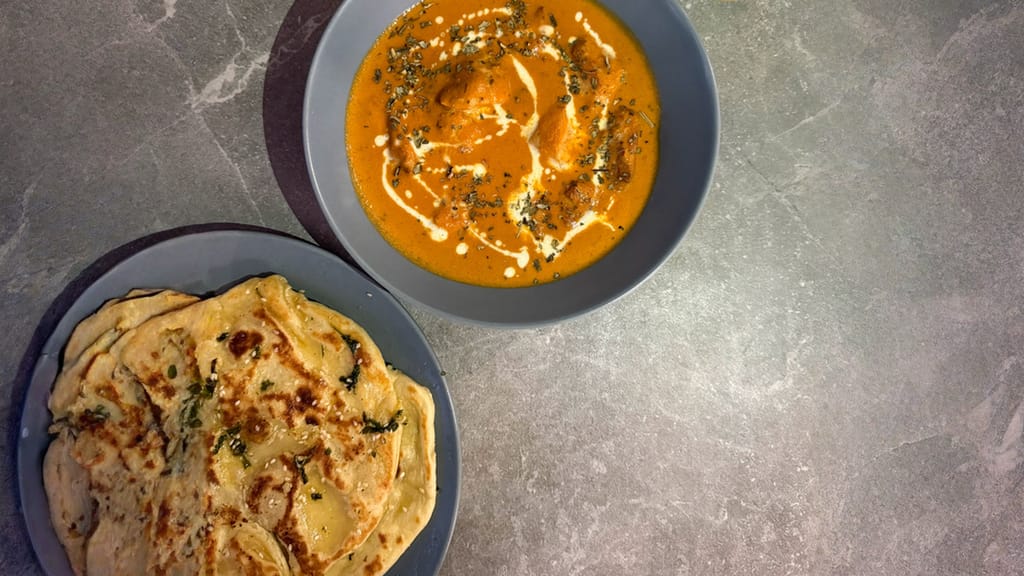
Restaurant-style butter chicken (murgh makhani)
Restaurant-style butter chicken – best made with chicken thighs
A thigh cutlet is the same thickness all over, so you don't have to pound it. Just flatten it lightly with your palm. Bread it the classic way in flour, egg and breadcrumbs and fry at 170–175°C (340–350°F) for about 3–4 minutes per side, or bake it in a cornflake-style crumb coating as oven-baked crispy cutlets in cornmeal-style crumbs. It roasts in about 20 minutes at 200°C (400°F); flip it halfway through.
A thigh cutlet is ideal for a chicken burger. It stays juicy even in a coating, and it fits a bun whole. Before breading, soak it in buttermilk with salt for an hour; the coating will hold better and the meat will stay tender.
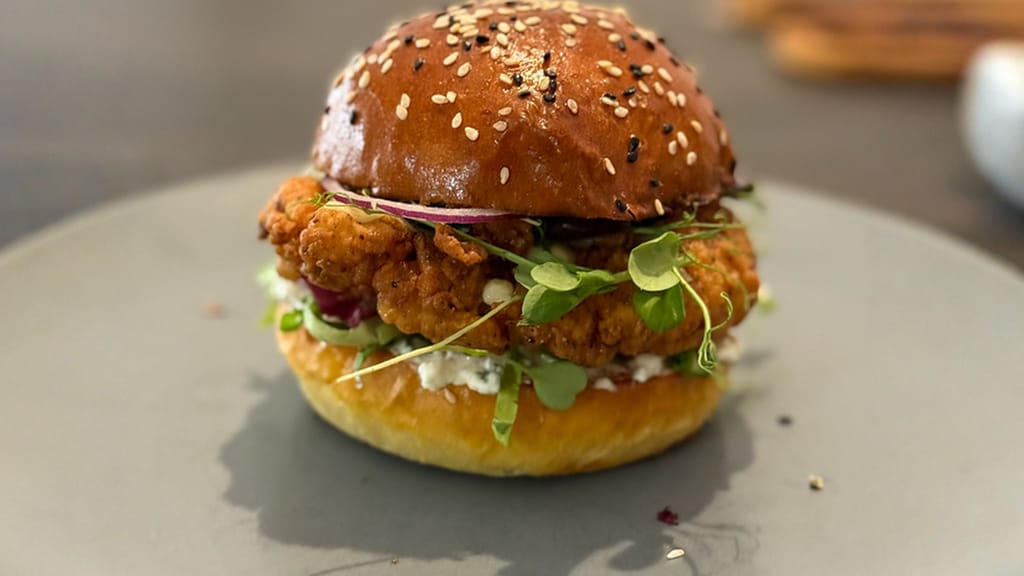
Crispy chicken burger in a homemade bun
Crispy chicken burger in a homemade bun – ideal for a thigh cutlet
Boneless thighs cut into 3–4 cm (1–1½ in) cubes are better than breast for skewers on the grill or a grill pan: they don't dry out as much and form a lovely crust. Marinate them in yogurt, lemon, garlic and oil, thread them tightly together and grill for 10–12 minutes, until they reach 74°C (165°F) inside. For inspiration, see the recipe for grilled skewers with lemon and lemon yogurt.
Smoked chicken thighs taste best in two ways: with roasted or fried potato and grain sides and in beans or sauerkraut, to which they give a smoky flavor like smoked meat. Meat from smoked thighs is usually already cooked, so it only needs heating through. Longer cooking doesn't do it much good, because it loses juice. Remove the skin, pull the meat off the bone and add it to the dish for the last 10–15 minutes. Put the bones and skin in water with an onion and a bay leaf, and within an hour you have a smoky stock for soup or beans. For how to handle other smoked meats, see smoked meat: how to cook and roast it.
Heat a smoked thigh in a 180°C (350°F) oven for about 20 minutes, or warm the pulled meat in a skillet. It goes well with patties made from millet, grated potatoes and carrots, which are crisp outside and soft inside, and the sweetness of the carrot offsets the smoky flavor of the meat. Add a spoonful of sour cream or yogurt with chives.
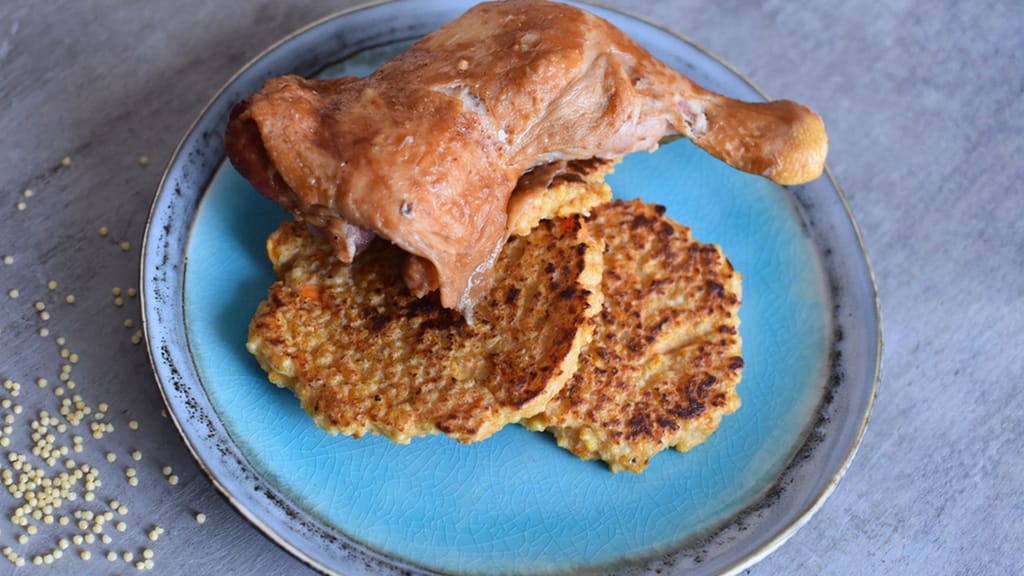
Smoked chicken and millet patties with potatoes and carrots
Smoked chicken and millet patties with potato and carrot – what to cook with smoked chicken thighs
Smoked chicken thighs give beans with tomatoes a smoky flavor, and you only need to stir the pulled meat in at the end, just to heat it through. Sauté onion and garlic in olive oil, add cooked or canned beans, chopped tomatoes and a little smoky stock, and let it bubble for 15 minutes. Then stir in the pulled smoked thigh meat and season with smoked paprika and parsley. The recipe for pulled smoked meat with beans and tomatoes works on the same principle. Use meat from smoked thighs instead of pork and shorten the cooking time. You can cook beans from dried following our article on how to cook beans until tender.
For an adult, plan on one whole leg quarter (280–350 g), two bone-in thighs (300–400 g), or 150–200 g of boneless meat:
Whole leg quarter: 1 piece (280–350 g) per person
Bone-in thigh: 2 pieces (300–400 g) per person
Drumstick: 2–3 pieces per person, 1–2 for children
Boneless thigh or thigh cutlet: 150–200 g per person, 120–150 g is enough for a curry or sauce
Smoked thigh: 1 piece per person as a main course, half for beans or soup
If you want leftovers for the next day, roast a few extra. Roasted thighs reheat well, and the pulled meat is good in a salad, a tortilla or a risotto.
Raw chicken thighs shouldn't stay in the fridge (at 4°C / 40°F or below) longer than 1–2 days. Cooked ones keep 3–4 days, and in the freezer they keep their best quality for several months. This follows USDA/FSIS guidance for all raw and cooked pieces; smoked thighs follow the package:
Raw thighs: 1–2 days in the fridge in the original packaging or a sealed container, on the bottom shelf so nothing drips onto other food
Roasted or braised thighs: 3–4 days in the fridge. Put them in to cool within 2 hours of cooking
Raw thighs in the freezer (−18°C / 0°F): up to 9 months for best quality. Freeze them flat, one by one in a bag, so you can take out single pieces
Roasted or braised thighs in the freezer: 2–6 months for best quality
Smoked thighs: go by the use-by date and the manufacturer's instructions on the package, including how long they keep once opened
Thawing: in the fridge overnight, not on the counter. According to FSIS, thawed raw meat keeps another 1–2 days in the fridge
Reheat roasted thighs to 74°C (165°F) inside, ideally in a 180°C (350°F) oven for about 15–20 minutes. In the microwave the skin goes soft. For details on raw, cooked and thawed meat, see our article on how long chicken keeps in the fridge.
Yes, you can roast frozen chicken thighs straight from the freezer. They just take about half as long again, and the skin won't be as crisp. Roast them at 180–190°C (350–375°F) so the meat cooks through before the surface burns. They're done when they reach 74°C (165°F) inside. For seasoning and crispy skin, it's better to thaw them overnight in the fridge.
A chicken thigh can stay pink near the bone even when it's fully cooked, because pigment from the bone marrow of young chickens seeps into the meat around the bone. The color says nothing about whether the meat is safe. Temperature is what counts: when a thermometer reads at least 74°C (165°F) inside, the thigh is done.
Marinate chicken thighs for 2–12 hours in the fridge. A yogurt or oil marinade can stay on overnight. Don't leave acidic marinades with a lot of lemon or vinegar on for longer than 4 hours, or the surface of the meat turns mealy. Wipe the marinade off the skin before roasting, or it won't brown as well.
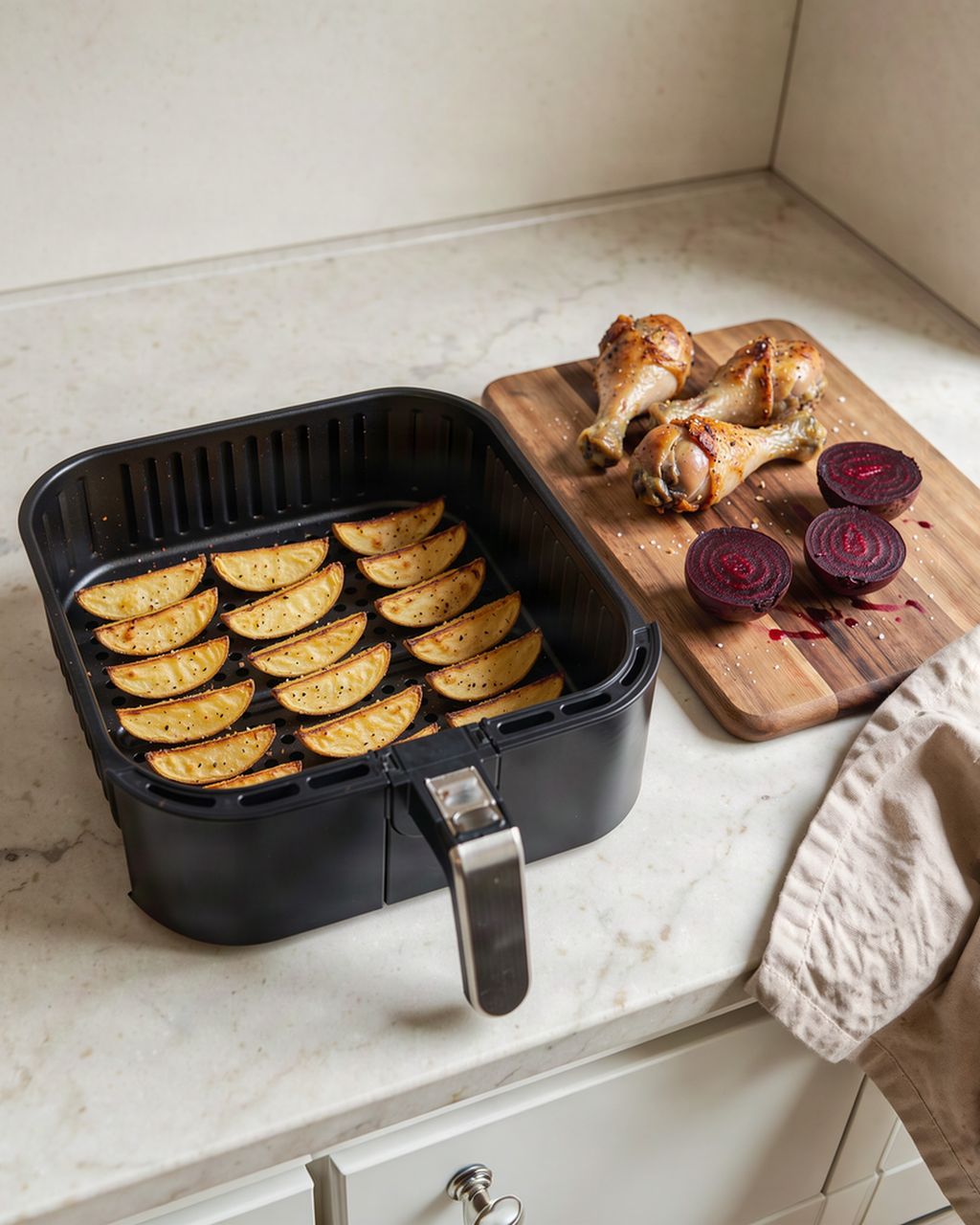
Yes, chicken thighs cook faster in an air fryer and the skin gets very crisp. Bone-in thighs need roughly 22–26 minutes at 190–200°C (375–400°F), flipped halfway through, and boneless thighs about 12–15 minutes. Times for other dishes are in our article on air fryer temperatures and times.
With a small sharp knife you can bone a chicken thigh in a minute. Lay it skin side down, cut along the bone from one end to the other, separate the meat from the bone on both sides with the knife, and cut the bone free at the joint. Save the bone and skin in the freezer for stock.
One recipe worth heating the oven for, one tip, and one deal from the shop. Nothing else.