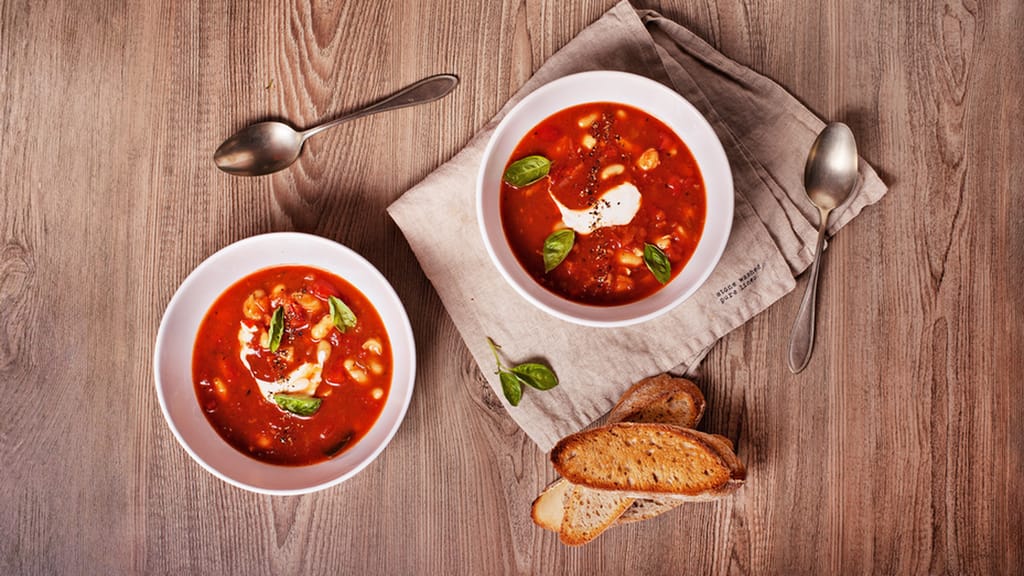
Quick tomato and bean soup
What to Cook with Beans: Canned or Dried, Soups, Salads, Chili and Meatless Meals
Updated Nov 18, 2026
What can you cook with beans? Nearly anything, from a 15-minute dinner out of a can to a chili that simmers all afternoon: soups, salads, spreads, beans in tomato sauce and hearty meatless meals. Beans are cheap and keep for months in the pantry. Below you'll find how many dried beans replace one can, which bean to pick for which dish, what makes every bean dish good, and one safety rule for raw kidney beans that applies every time, not just "roughly".
One can of beans (400 g) gives roughly 240 g of beans once drained, which equals about 100 g dried. With this conversion you can swap one for the other in any recipe:
1 can, 400 g ≈ 240 g drained beans ≈ 100 g dried
dried beans gain roughly 2.2–2.5× their weight when cooked
500 g dried ≈ 1.1–1.2 kg cooked ≈ 4–5 cans
1 cup dried (about 200 g) ≈ 2 cans
Go for canned when you're in a hurry. Canned beans, such as sterilized kidney beans in brine, are already cooked, so you only need to drain, rinse and heat them. They suit salads, spreads, quick dinners and anything where the beans are just warmed through. In a hot dish, add them for the last 5–10 minutes; if you cook them with everything else from the start, they turn to mush.
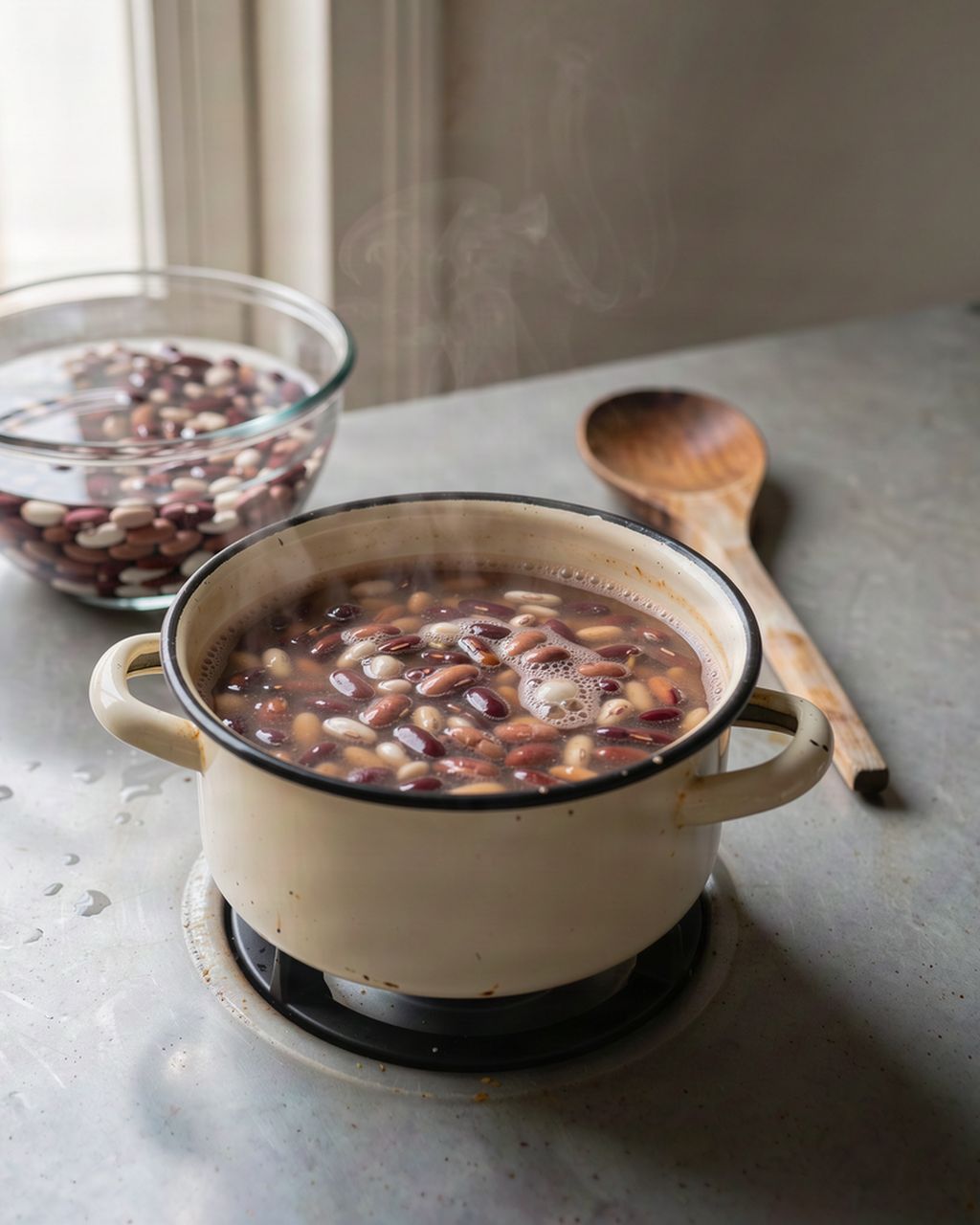
Go for dried when you want flavor and texture. Home-cooked beans are firmer, creamier inside and taste cleaner, without any canned flavor. They cost less and you control the salt. And you get a bonus a can can't give you: the bean cooking liquid, starchy and full of flavor, which thickens a soup or sauce better than flour. Soak dried beans for 8–12 hours and cook them 45–90 minutes depending on the variety; for the full method, including the pressure cooker, see how to cook beans until tender.
How to choose a can. Look for the "drained weight" on the label: it tells you how many beans are really in the can, usually 230–265 g out of 400 g. Reach for beans packed in just water and salt, with no sugar or thickeners; beans in tomato or chili sauce are a ready meal, not an ingredient, and will bring unwanted sweetness into your recipe. Jarred beans tend to have firmer skins and a cleaner flavor than canned, at a higher price.
Rinse or not? For salads and spreads, always rinse canned beans under cold water: the liquid is salty and starchy and clouds the dressing. For chili or a thick sauce, feel free to keep 2–3 tablespoons of the liquid, which thickens the sauce nicely.
We send seasonal cooking and baking plans and recipes made from everyday ingredients. Unsubscribe in one click.
For chili and goulash, use kidney beans; for soups, spreads and tomato sauce, white beans; for salads, borlotti or black beans; for quick Asian curries, mung beans; and for sweet pastes, adzuki. In more detail:
Kidney beans hold their shape even after an hour of simmering and have a full, slightly earthy flavor. They are the classic beans for chili con carne, bean goulash and Mexican dishes.
White beans are delicate, creamy and mash easily. That makes them best for creamy soups, spreads and beans in tomato sauce. Large white cannellini beans hold their shape better than small white beans.
Butter beans (lima beans) are a different type from white beans: large, flat and creamy-soft. They suit stews and spreads.
Borlotti (speckled, pink with burgundy flecks) turn brown when cooked and are creamy. They belong in Italian soups and warm salads.
Black beans have a full, almost mushroomy flavor and a firm skin. They suit burritos, quesadillas, corn salads and patties.
Mung beans are tiny green beans that need no soaking and cook in 30–40 minutes. They're used in Indian dal and soups, and they're the beans sprouts are grown from.
Adzuki are small red beans with a naturally sweet flavor. In Japanese and Korean cooking they're made into a sweet paste for dumplings and pastries; they're also good in rice or soup. After soaking, they cook in about 45–60 minutes. A handful of cooked adzuki stirred into rice for the last five minutes turns it pink and gives it a nutty flavor.
With dried beans, age matters too: beans that sat in the pantry for two years can take twice as long to cook, and some never soften. So buy smaller packs and use them within a year.
If you don't have the right variety, swap within a group: firm ones (kidney, black, borlotti) with each other, delicate ones (white, cannellini, butter) with each other. A chili made with white beans will taste good, just mushier.
Beans make three basic soups: a thick Czech bean soup with smoked meat, a creamy white bean soup and a quick tomato soup with canned beans. All three work as a main course. One universal trick for each: if the soup is thin, scoop out a ladleful of beans, mash them with a fork and stir them back in. The starch from the mashed beans thickens the soup without flour or a roux, and if you're cooking from dried, add the bean cooking liquid instead of water.
Classic Czech bean soup is thick, with smoked meat and potatoes, scented with marjoram and garlic, and woken up at the end with a splash of vinegar. Its flavor comes from sweet paprika briefly sizzled in lard, and its thickness from the starch in the beans, not from a roux.
Creamy white bean soup doesn't need cream: once blended, the starch from the beans makes it silky, garlic and rosemary slowly sizzled in olive oil give it flavor, and a squeeze of lemon at the end adds freshness. On the plate, drizzle it with olive oil and top with croutons or crispy bacon.
When you want a soup made from what's in the pantry, cook a quick tomato soup with beans. It's built on canned tomatoes and beans that go in already cooked, so it's on the table in about 20 minutes. Serve it with toast or toasted garlic bread and grated cheese.
Quick tomato and bean soup
Quick tomato soup with canned beans
Chili con carne is slow-simmered ground beef with kidney beans, tomatoes, chili and cumin; chili sin carne is the same dish without meat. Both are even better the next day, so it pays to make a double batch.
Chili con carne rests on ground beef browned over high heat, without stirring so it forms a crust, and on a long, slow simmer that lets the flavors come together. Add the kidney beans only near the end so they don't fall apart, and a square of dark chocolate with a squeeze of lime at the finish adds depth and freshness. Serve with rice or tortillas, sour cream, cilantro and guacamole.
Control the heat gradually: start with a smaller amount of chili, taste after an hour of simmering and add more only once you know where the dish is heading, because simmering spreads the heat further. Dried chipotle or smoked paprika adds smoky depth, and lime adds freshness at the end. If someone at the table can't handle spice, leave the chili peppers out of the pot altogether and put a bowl of sliced jalapeños on the table so everyone can add their own.
With the leftovers the next day, you can wrap up a Mexican burrito with beans and ground meat: thicken the chili in a pan so it doesn't run, and roll it in a tortilla with rice and cheese.
Chili sin carne replaces the meat with finely chopped, browned mushrooms, which add umami, and sweet potato, which gives the dish body; ideally use a mix of kidney, black and white beans. A spoonful of soy sauce or miso adds the depth that meat would otherwise give, and it's also great baked with cheese or served on a baked potato.
A good bean salad needs three things: well-drained beans, a punchy, tangy dressing and something crunchy. Beans soak up dressing, so dress them at least 15–30 minutes ahead; warm beans (freshly cooked or briefly reheated) absorb it even better.
Borlotti bean salad with grilled pepper and fennel: beans (the recipe uses canned red beans, but borlotti work just as well), pan-seared bell pepper, green beans and crunchy raw fennel. It works as a lunch on its own or as a side for grilled meat or fish.
Beans with tuna and red onion: a Tuscan classic of white beans, tuna, red onion and parsley in olive oil and wine vinegar. Let the salad sit for a while so the beans soak up the dressing.
Mexican black bean and corn salad: black beans, corn, bell pepper, tomatoes and avocado in a dressing of lime, cumin and chili. It keeps in the fridge until the next day, so it's ideal for a lunchbox.
For the dressing, use roughly 2:1 oil to acid. Beans on their own taste bland, so don't be shy with salt and vinegar, and use more than you would in a green salad.
Beans in tomato sauce are white beans simmered in a thick tomato base, with bacon, smoked meat or no meat at all, and from canned beans they're on the table in 20–30 minutes. They're also the "beans in tomato" you know from the store, only at home you can make them less sweet and more flavorful.
Beans with bacon in tomato sauce: bacon is fried with onion, then the beans simmer in tomato sauce until it thickens. Serve with bread, topped with a fried egg, or as a side with baked sausages.
Pulled smoked meat with beans and tomatoes: a slower weekend version, where the smoked meat is cooked until tender and then pulled into the beans. A hearty winter dinner with bread or mashed potatoes.
Homemade breakfast baked beans: small white beans simmered in passata with mustard, vinegar and a pinch of sugar until the sauce thickens and coats them. On toast with an egg, they're English breakfast beans without the canned sweetness.
One technical note for dried beans: add tomatoes and vinegar only to cooked, tender beans. Acid slows the softening of the skins, and beans simmered in tomatoes from the start can stay hard even after two hours.
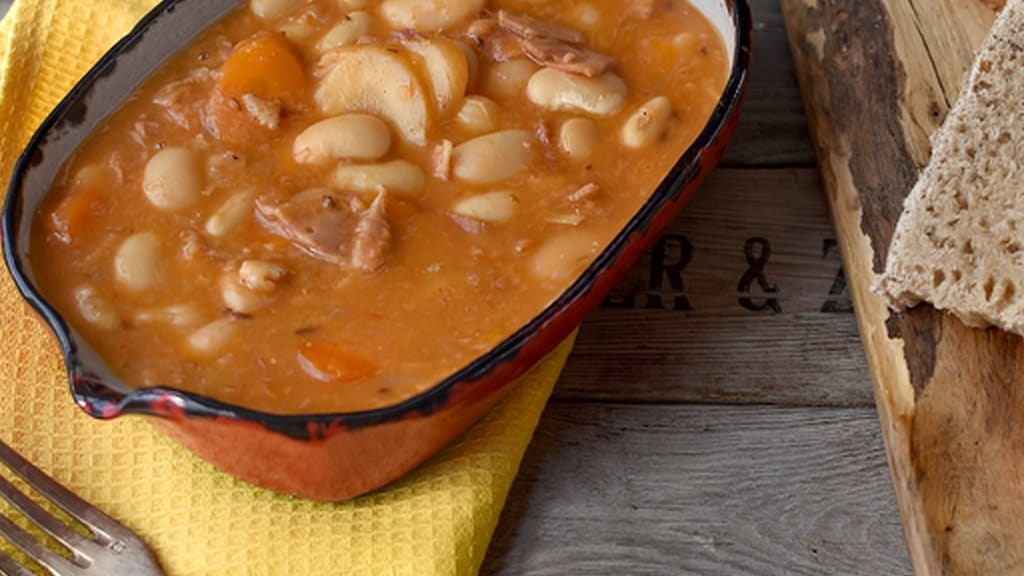
Bacon and bean stew in tomato sauce
Beans with bacon in tomato sauce
You can make a bean spread in five minutes: mash drained beans with a fork or blend them with fat, acid and seasoning. The basic ratio for 1 can (240 g drained beans) is 2–3 tablespoons of olive oil or tahini, a tablespoon of lemon juice, a clove of garlic and salt. If it's thick, stir in a spoonful of the bean liquid or water.
White bean spread with garlic, lemon and rosemary: white beans blended with olive oil, lemon and garlic, finished with oil in which rosemary has briefly sizzled. Great on toasted bread or as a dip for vegetables.
Kidney bean spread with smoked paprika: kidney beans with roasted peppers from a jar, smoked paprika and lime. Bold, lightly smoky, great in a tortilla or on crackers.
Czech bean spread with spring onion: white beans mashed with butter or lučina (a soft Czech cream cheese), spring onion or chives and a pinch of marjoram. A spread for bread at breakfast and in a lunchbox, like an egg spread, just without the eggs.
A blender gives a smooth, creamy spread like hummus; a fork gives a rustic one with chunks that holds better on bread. If you don't have tahini, a spoonful of peanut butter or a few spoonfuls of yogurt will replace it.
Bean spreads keep in a sealed container in the fridge for 3 days. The garlic in them gets stronger after a day, so go easy when making a batch ahead.
Without meat, beans work best where they provide body and a "meaty" texture: in goulash, patties, stuffed tortillas and chili sin carne. According to US USDA data, cooked kidney beans contain around 8–9 g of protein and roughly 7 g of fiber per 100 g.
Bean goulash: onion cooked until golden, plenty of sweet paprika and potatoes, whose starch thickens the sauce. Smoked paprika in place of some of the sweet gives it a flavor as if smoked meat were in there.
Bean patties (burgers): the key is to dry the beans well and mash them only coarsely, not to a paste, and to let the patties firm up in the fridge before frying so they don't fall apart in the pan. Onion and cumin give them flavor.
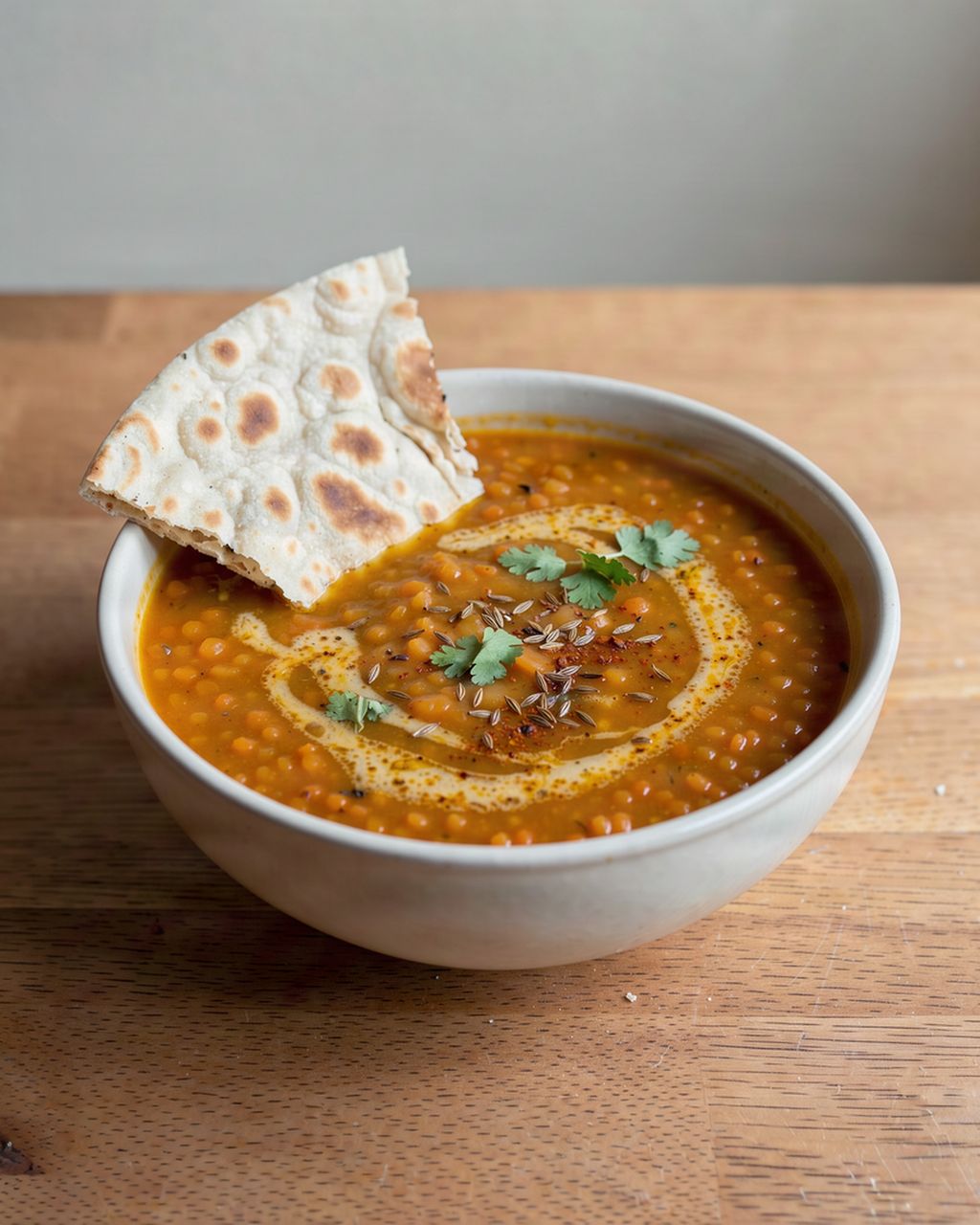
Mung beans, dal-style: mung beans cooked without soaking until they start to fall apart, and seasoned at the end with spices fried in ghee: cumin, garlic, ginger and turmeric. Served with basmati rice or flatbread.
Vegetarian burrito: you can easily make the Mexican burrito with beans without meat by leaving out the ground beef and adding a second can of beans, half of them mashed, and charred corn instead.
If you cook meatless often, it pays to alternate beans with lentils, which cook faster and need no soaking.
From one can of beans you can make four quick dinners in 15 minutes: garlicky beans with spinach and egg, a bean and cheese quesadilla, pasta with beans and beans on toast. All you need is one pan and a can of beans from the pantry.
Garlicky beans with spinach and egg: white beans and spinach warmed in olive oil with garlic and chili, with eggs cracked into the pan and finished under a lid. Serve with bread.
Bean and cheese quesadilla: kidney or black beans mashed with cumin, with cheese in a folded tortilla, toasted in a dry pan until the cheese starts to ooze out. Serve with salsa, sour cream or guacamole.
Pasta with beans (a quick pasta e fagioli): borlotti or white beans with garlic, rosemary and pasta water; mash some of the beans so the sauce thickens and coats the pasta.
Beans on toast: white beans warmed with butter, tomato paste and a splash of Worcestershire sauce until thickened, on toasted bread with grated cheddar or a fried egg.
Yes, raw and undercooked kidney beans contain the lectin phytohaemagglutinin, which can cause food poisoning with nausea, vomiting and diarrhea. Health Canada states that symptoms usually appear 1–3 hours after eating undercooked kidney beans. The toxin is destroyed only by a proper boil, not by mere heating.
Cook dried kidney beans safely by counting the ten-minute hard boil from the moment the water returns to a boil after you add the beans, not from when you turn on the burner. Kidney beans contain the most lectin, but it's worth treating all dried beans the same way (10 minutes of hard boiling). And canned beans are safe: according to Health Canada, the heat treatment during canning is sufficient, so you can eat them straight from the can.
Cooked beans keep in a sealed container in the fridge for 3–4 days and in the freezer for roughly 3–6 months. Dried beans in the pantry last almost indefinitely, but the older they are, the longer they take to cook.
Cool them quickly. Put cooked beans in the fridge within 2 hours of cooking; divide a big pot into smaller containers so they cool fast.
Store them in their own cooking liquid. Beans submerged in their cooking liquid don't dry out or split. Use that liquid later in a soup.
Freeze them "by the can." Divide cooked beans into bags of 240 g with a little of the liquid, which is exactly one can. Add them to soup or chili straight from frozen; for a salad, thaw them overnight in the fridge.
Transfer an opened can. Move leftover beans from an opened can into a sealed container and use them within 3 days.
Reheat thoroughly. Reheat leftover bean dishes until they're steaming hot all the way through and the soup or chili is bubbling.
Chili, bean soup and beans in tomato sauce all freeze very well: cook a bigger batch and freeze half for a quick dinner.
Feel free to salt beans in the soaking water or at the start of cooking: salt tends to soften the skins rather than toughen them. What makes beans hard is acid, not salt. So add tomatoes, vinegar or wine only once the beans are tender.
Most often the beans are old, you're cooking them in hard water, or you added acid too early. Beans that have sat in the pantry for over a year lose the ability to absorb water, and some never soften. It helps to buy smaller packs, cook in softer (filtered) water and add tomatoes at the very end.
The soaking water is discarded because some of the oligosaccharides (raffinose and stachyose) that cause gas leach into it. For kidney beans, Health Canada also recommends discarding it because of lectins. Then cook the beans in fresh water, and rinse canned beans before using them.
Bean liquid (aquafaba) works for thickening chili, soup or spreads, and the liquid from chickpeas and white beans can be whipped as a substitute for egg white. It is salty, though, so factor that in when seasoning. Don't put it in a salad, where it clouds the dressing.
No, mung beans don't need soaking: just rinse them and cook for 30–40 minutes, until they start to fall apart. Soaking for 2–4 hours cuts the cooking time by about a quarter. For sprouts, on the other hand, soak them overnight and then leave them to sprout for 2–3 days in a damp environment. Eat homemade sprouts cooked, until they are piping hot all the way through.
As a main course, allow 60–80 g of dried beans per person, which is roughly half to three quarters of a can. For a soup or a side salad, 30–40 g dried is enough, about a third of a can. So two people eating chili with rice need roughly one and a half cans.
One recipe worth heating the oven for, one tip, and one deal from the shop. Nothing else.