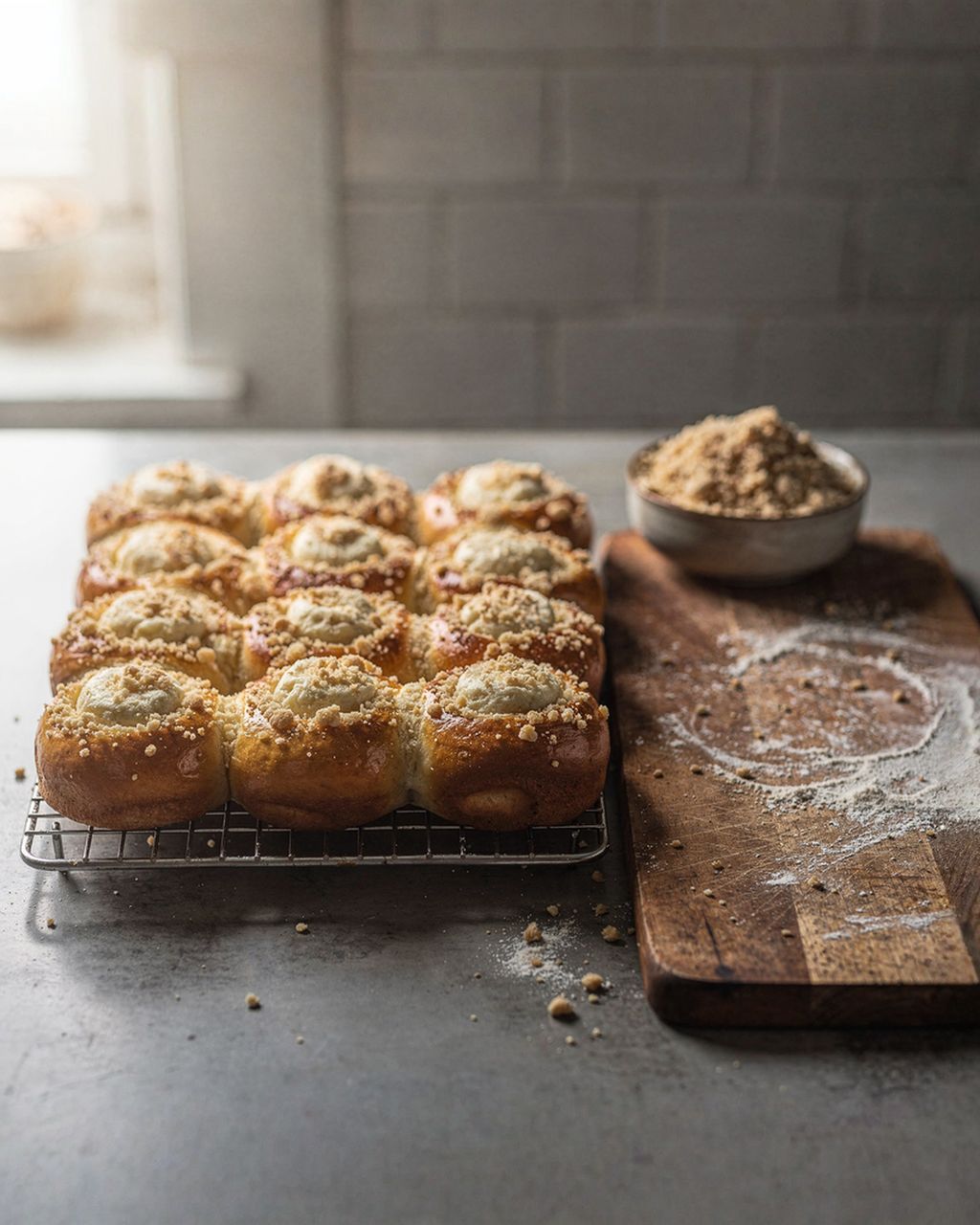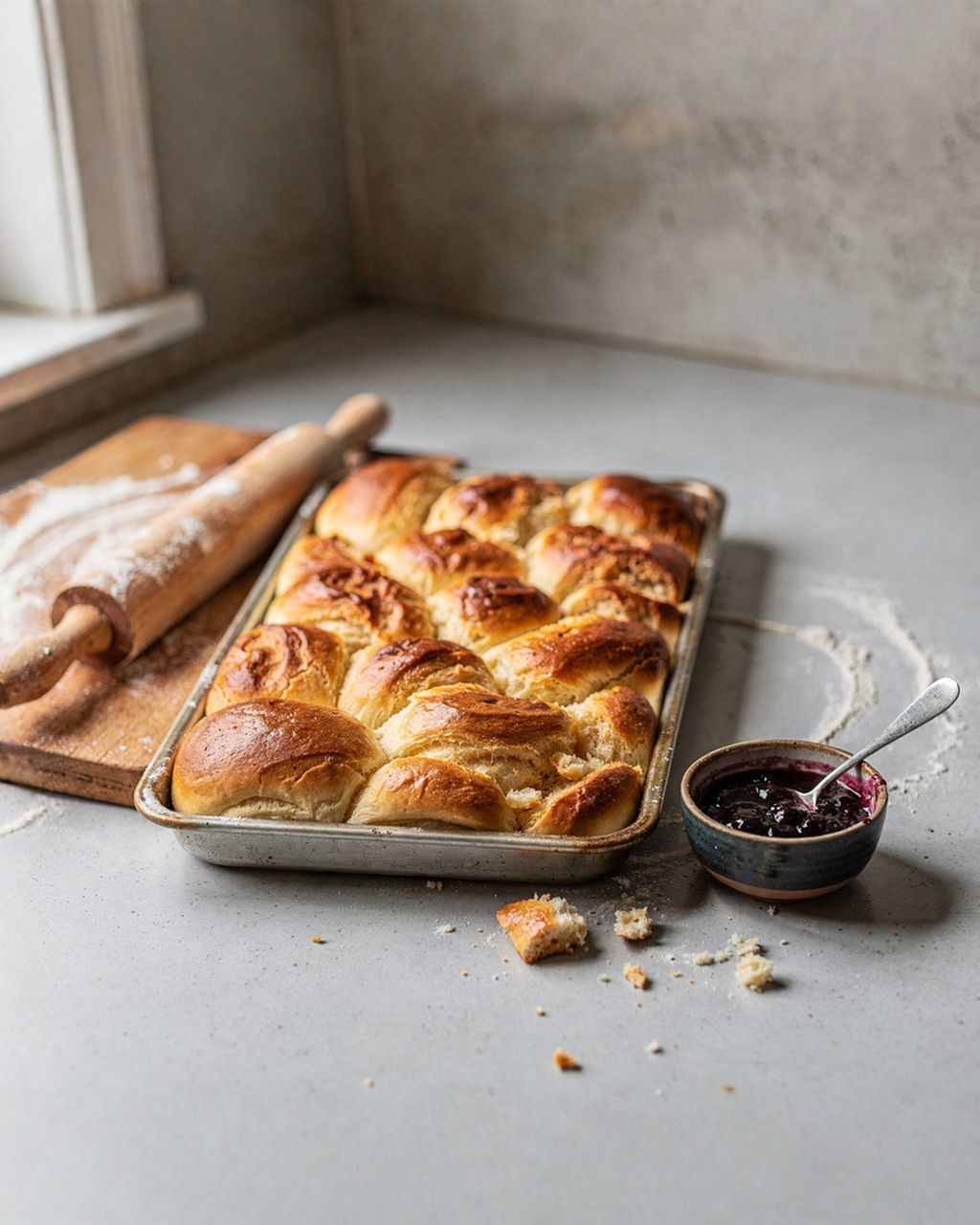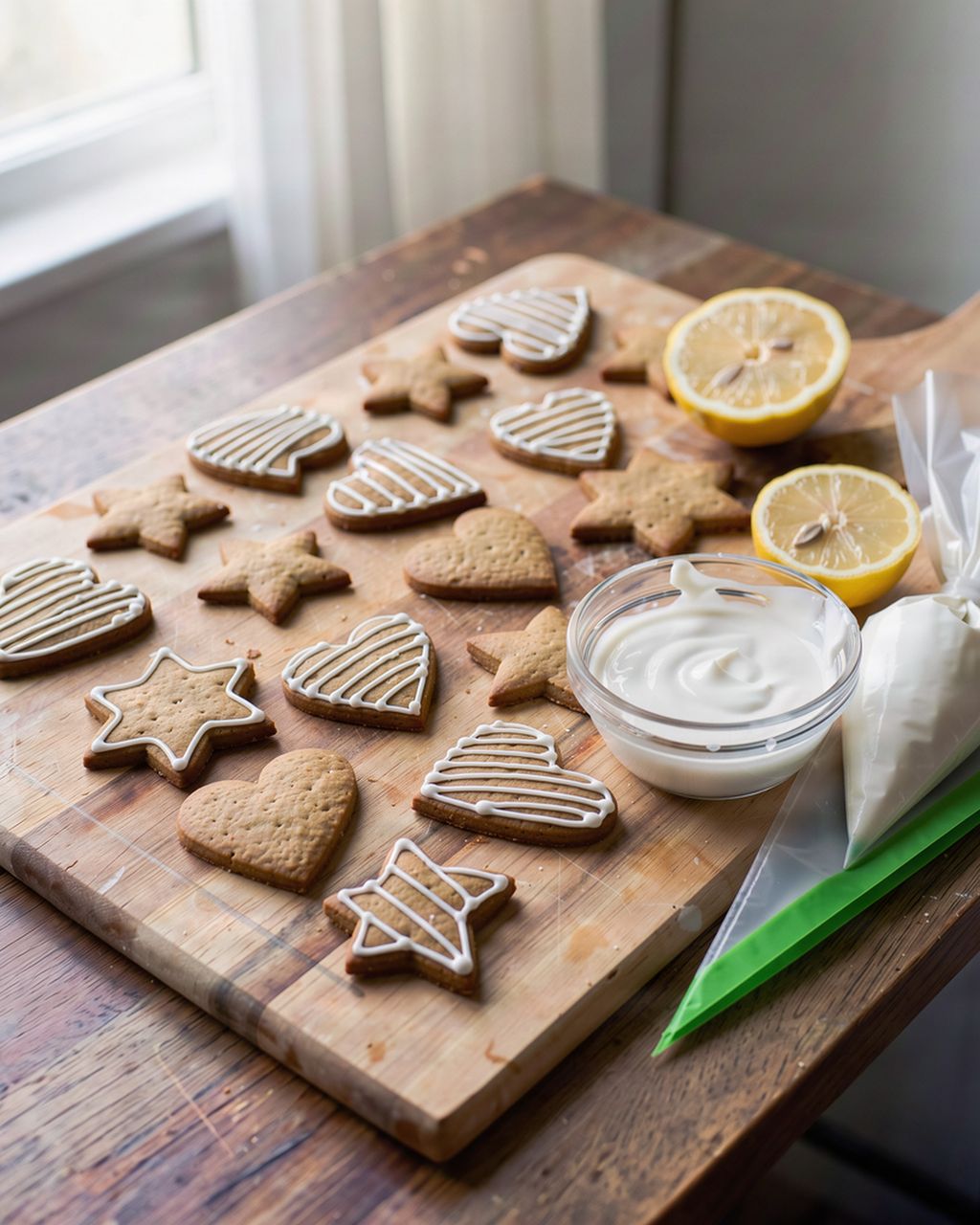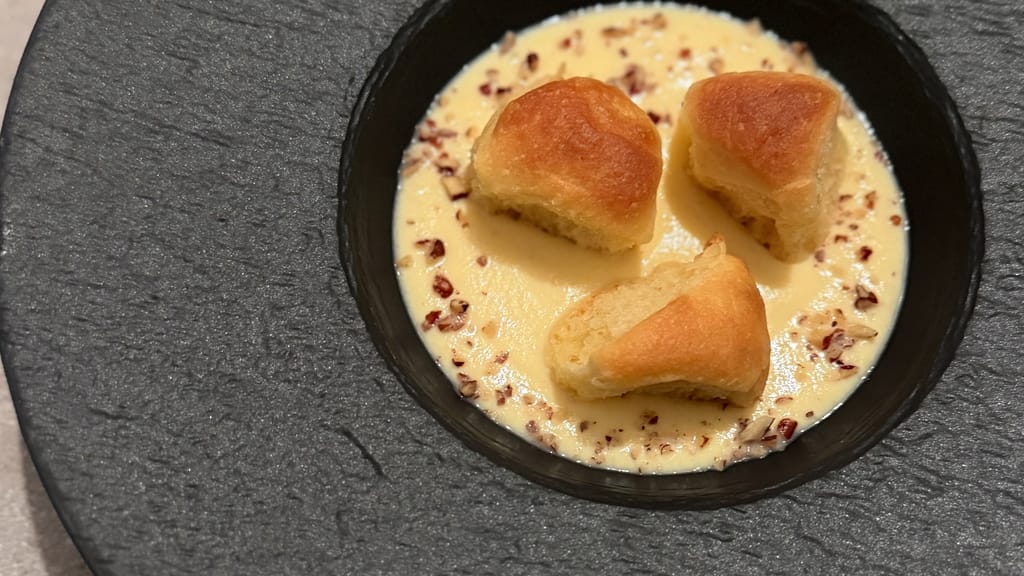
Fluffy sweet buns with chaudeau (egg custard) sauce
Yeast Dough: Basic Ratios and How to Work With It
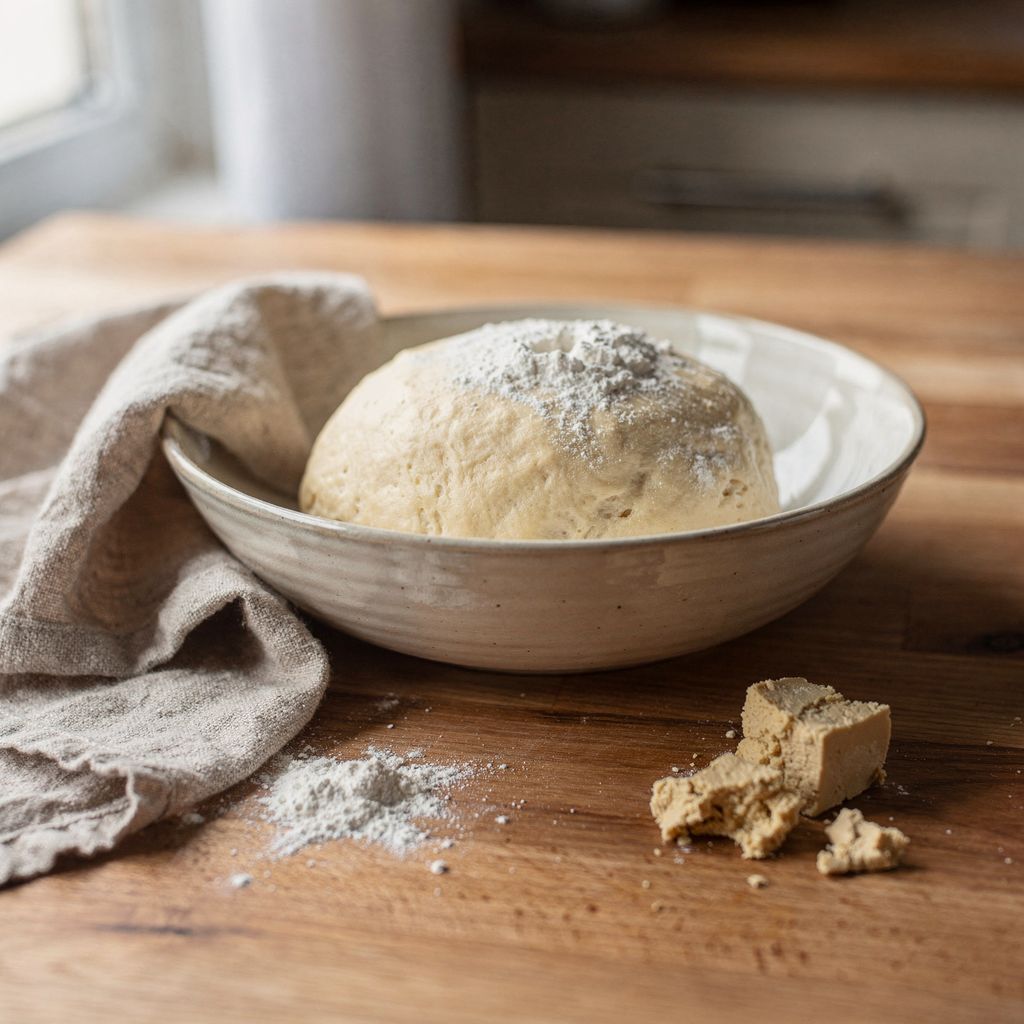
Updated Oct 17, 2026
Yeast dough rests on one ratio you only need to learn once: for 500 g of all-purpose flour, use 250 ml lukewarm milk, 80–100 g butter, 60–80 g sugar, 20 g fresh yeast and 8 g salt. It rises for 45–90 minutes at 24–26 °C (75–79 °F) and bakes at 170–180 °C (340–355 °F). Everything else — buchty, kolaches, fruit dumplings, vánočka, mazanec and pizza — is just a variation on this base. Below you'll find what each ingredient does, which yeast to use and how much, how long dough rises at each temperature, how to tell when it's kneaded and proofed, what temperature to bake at, and why it didn't work out last time.
Basic yeast dough follows a ratio of 500 : 250 : 100 : 80 : 20 : 8 — flour, milk, butter, sugar, fresh yeast, salt (in grams, with the milk in millilitres). This is the one thing worth knowing by heart.
All-purpose flour — 500 g (100%). The base that everything else is calculated from.
Milk — 250 ml (50%). Lukewarm, 30–35 °C (86–95 °F).
Butter — 80–100 g (16–20%). Softened to room temperature, not melted and hot.
Sugar — 60–80 g (12–16%). For savoury dough, only 15–20 g.
Fresh yeast — 20 g (4%), or 7 g instant dried yeast (one sachet).
Salt — 8 g (1.6%), roughly one and a third teaspoons of fine salt (a level teaspoon weighs about 6 g).
Egg — 1 whole or 2 yolks (optional; adds colour and tenderness).
This amount makes roughly 1 kg of dough. That's one 30 × 40 cm tray of kolaches, twelve 80 g buns or sixteen fruit dumplings.
Bakers calculate everything as a percentage of the flour — the flour is always 100% and the other ingredients are measured against it. The advantage is that you can scale the recipe without any recalculating: want double? Multiply absolutely everything by two, yeast and salt included. Half a batch (250 g flour) means 125 ml milk, 50 g butter, 40 g sugar, 10 g yeast and 4 g salt.
No scale at home? You'll find the same principle converted into cups in the article cup-measure yeast dough with ratios you'll actually remember.
With sweet yeast dough, you change the fat, sugar, eggs and amount of liquid depending on the bake; the flour and salt stay the same, and you increase the yeast only for the richest doughs (vánočka, mazanec, brioche). Two exceptions run on a different ratio: savoury dough (less yeast, water instead of milk and almost no sugar) and pizza (no sugar or milk, with very little yeast). Always per 500 g of flour:
Tray kolaches: 100 g butter, 80 g sugar, 1 egg, 250 ml milk. Tender, yet still easy to roll out and move to the tray, and it holds up under juicy fruit and sweet cheese filling. How to roll the dough so it doesn't shrink under the filling, and how much to put on a tray, is covered in the article yeast dough for kolaches: soft and fluffy.
Buchty and fruit dumplings: 60 g butter, 50 g sugar, 260 ml milk. Lighter and softer — so the dumpling doesn't turn rubbery in the water. Rising times, piece sizes and cooking are detailed in the article yeast dough for buchty and dumplings.
Vánočka, mazanec, brioche: 120–150 g butter, 100 g sugar, 2 yolks, 200–220 ml milk and 25 g yeast instead of 20 g. The richest dough, the slowest to rise and the hardest to knead. It has to be noticeably stiffer than dough for buchty, otherwise the braid spreads into a flat sheet in the oven. Why vánočka tends to be dry and what to add so it isn't, we explain in the softest vánočka and what to put in the dough; for a small-scale look at this kind of dough, see the recipe for buttery brioche buns from yeast dough.
Doughnuts: 60 g butter, 60 g sugar, 2 yolks, 240 ml milk. The dough must be firmer so it can be shaped and doesn't soak up fat when frying.
Exception 1 — savoury dough (bread rolls, crescent rolls, buns): only 15–20 g sugar, 40 g butter or 30 ml oil, 280 ml water (or milk, if you want a softer crumb), and 10–15 g yeast is enough instead of 20 g.
Exception 2 — pizza: no sugar and no milk — 300–325 ml water (60–65%), 10–12 g salt (2–2.5%), just 3–7 g fresh yeast and 15–20 ml olive oil. Less yeast and a longer rise, ideally 24 hours in the fridge, give a crisp edge and better flavour. Which flour to use, how much water and how long to let it rise is covered in the article pizza dough: thin and airy; for the full method, see the recipe for perfect homemade pizza from yeast dough.
One simple rule applies: the more fat and sugar, the slower the dough rises. For rich doughs with more than 20% fat, allow a third more time, or add a quarter more yeast.
Fluffy sweet buns with chaudeau (egg custard) sauce
Fluffy little buchtičky with chaudeau sauce — the best practice for basic yeast dough
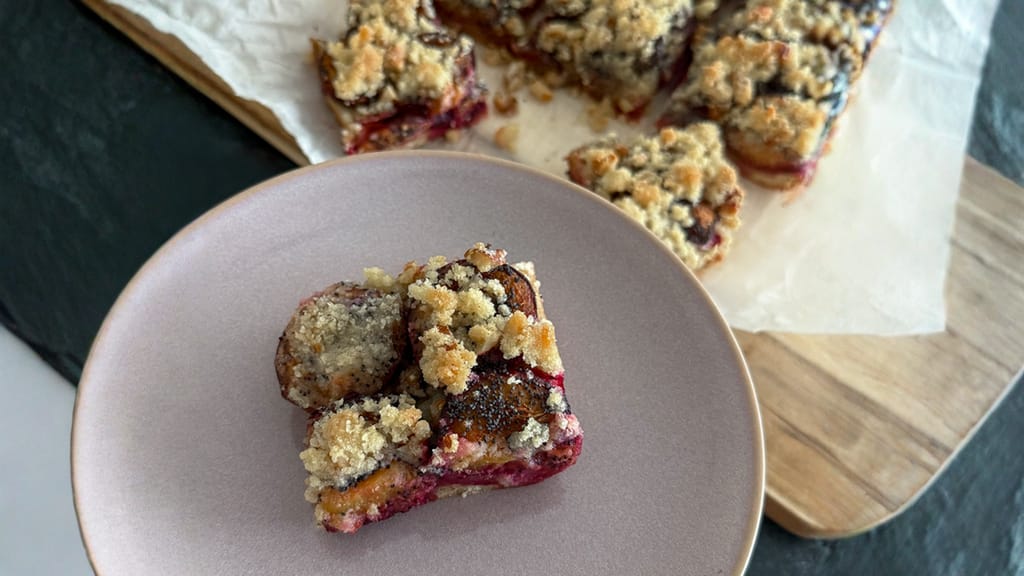
Classic yeasted plum sheet cake with crumble topping
Yeast plum tray cake with nut crumble: yeast dough on a baking tray
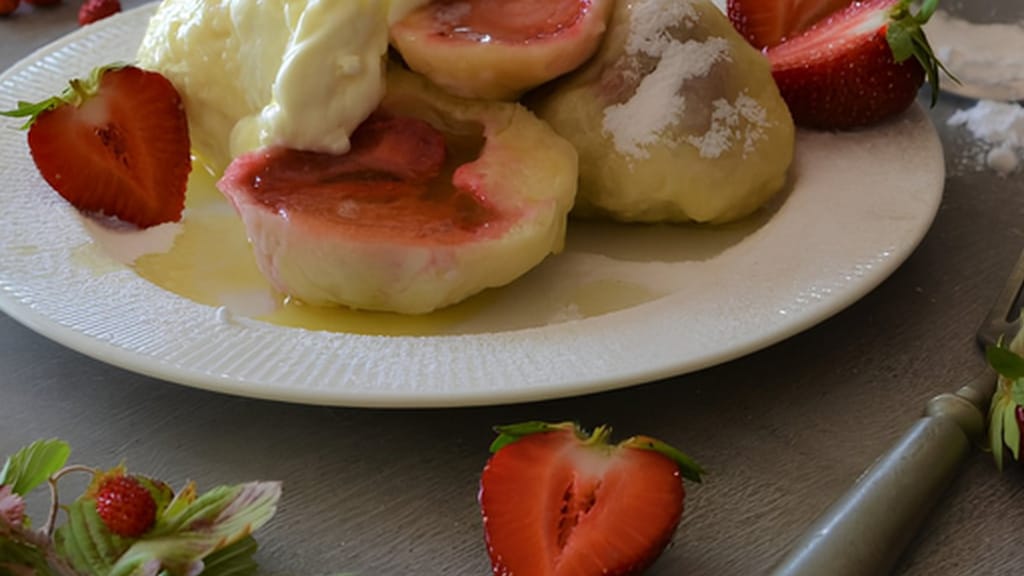
Summer craving: steamed yeast dumplings with fruit
Yeast dumplings with fruit — a lighter variation on yeast dough
In yeast dough, every ingredient has one job: flour forms gluten, yeast produces carbon dioxide, liquid hydrates, fat softens the crumb, sugar feeds the yeast, salt tightens the gluten and slows fermentation, and eggs add colour and structure.
Flour forms gluten, the network that traps the gas from the yeast. Plain wheat flour (T530) is an all-rounder for buchty, kolaches and vánočka. Semi-light plain wheat flour (T650) gives a more elastic, stretchy dough — good for rolls, crescent rolls and pizza. The type number, however, indicates ash content, not protein, so check the table on the packet: for sweet bakes the usual 10–11 g protein per 100 g is enough, while for rolls, vánočka and pizza reach for flour with 11.5–13 g. Semi-coarse flour (polohrubá) gives a more crumbly crumb, typical of grandma's buchty.
Yeast eats sugars and produces carbon dioxide, which lifts the dough, along with alcohol and aromatic compounds that give yeast bakes their smell. How much to use and how to convert fresh to dried is in the next section.
Liquid (milk, water, buttermilk) hydrates the flour and kicks off gluten formation. Milk makes a softer crumb and browns faster than water, because the yeast can't use up milk sugar (lactose), which browns during baking through the Maillard reaction together with the proteins.
Fat coats the strands of gluten, shortens them and makes the crumb tender. It also slows staling — which is why buttery dough stays soft longer.
Sugar is fuel for the yeast, but only up to about 10% of the flour's weight. Above that, it draws water away from the yeast and slows it down. Sweet yeast doughs commonly contain 12–16% sugar — which is why they rise for longer.
Salt isn't just about flavour. It tightens the gluten and slows fermentation, so the dough rises evenly and doesn't overproof. Without salt, the dough is sticky and tastes bland. Stick to 1.5–2% of the flour, up to 2.5% for pizza.
Eggs add fat, colour and protein, which firms up the structure once baked. More than two per 500 g of flour tends to dry the dough out; if you want a richer dough, add extra yolks instead.
For sweet yeast dough with 500 g of flour, use 20 g fresh yeast (a little less than half of a 42 g cube) or 7 g instant dried yeast (one sachet). Fresh and instant dried yeast convert at roughly 3 : 1.
The amount of yeast depends on how rich the dough is and how much time you have:
Pizza and savoury doughs with a long rise: 3–10 g fresh (0.5–2%)
Savoury rolls and buns: 10–15 g fresh (2–3%)
Basic sweet dough: 20 g fresh (4%)
Vánočka, mazanec, brioche: 25–30 g fresh (5–6%), because fat and sugar slow the yeast down
Overnight rise in the fridge: 12–14 g fresh for sweet dough
More yeast doesn't mean a better result. The dough shoots up faster, but it tastes yeasty to the point of bitterness and goes stale sooner.
The three kinds of yeast you'll come across in shops:
Fresh yeast — pale, moist, crumbly. Best for sweet doughs, and it gives the fullest flavour. Crumble it into lukewarm milk or straight into the flour.
Instant dried yeast — fine granules, mixed straight into the flour, no sponge needed. The most convenient and most reliable, and it keeps for months in the pantry.
Active dried yeast (coarser beads) — needs 10 minutes to dissolve in lukewarm liquid before you add it. Use slightly more than instant, roughly 8–9 g instead of 7 g.
For a detailed conversion for any amount, see the article dried vs. fresh yeast: conversion and how to proof with them. And watch out for mix-ups: nutritional yeast is deactivated flakes for flavouring, and dough made with it won't rise at all.
You make yeast dough in nine steps: sponge, mixing, a 20-minute rest, kneading, butter last, first rise of 45–90 minutes, shaping, second rise of 30–45 minutes, and baking. Below, each step has its timing and the sign that it's done.
Sponge (fresh yeast only), 10–15 minutes. Crumble the yeast into 100 ml lukewarm milk, add a teaspoon of sugar and a tablespoon of flour. Leave in a warm spot until a cap of foam appears. Instant dried yeast doesn't need a sponge — mix it straight into the flour. When a sponge really helps and when it's just habit, we discuss in the article yeast sponge: why you make it and when you can skip it.
Mixing, 2–3 minutes. In a bowl, combine the flour and salt, then add the sponge, the rest of the milk, the sugar and the egg. Mix just until combined; the dough will look rough and ugly. That's how it should be.
Rest for 20 minutes. Letting the dough sit without kneading sounds like a waste of time, but meanwhile the flour absorbs liquid on its own, and the kneading time is then cut almost in half.
Kneading, 10–12 minutes in a mixer on low speed, 15 minutes by hand. The goal is a smooth, elastic dough that pulls away from the sides of the bowl. Which mixer setting to choose and which programme to use in a bread machine is covered in the article yeast dough in a bread machine and a stand mixer.
Butter last, in pieces. For richer doughs (over 20% fat), add the softened butter only once the gluten is developed. It will fall apart and look spoiled — keep kneading, and it comes together in three minutes.
First rise, 45–90 minutes at 24–26 °C (75–79 °F). Until doubled in volume, not by the clock. Cover the bowl with cling film or a damp tea towel so the surface doesn't dry out.
Degassing and shaping. Briefly work the dough through, divide it and shape. Excess flour on the work surface is the enemy — use lightly oiled hands instead.
Second rise, 30–45 minutes. This time only to about 1.5 times its size. The oven does the rest of the puffing up.
Baking depends on size — the exact temperatures are further down.
Yeast dough is kneaded enough when you can stretch a walnut-sized piece between your fingers into a thin, almost translucent membrane that doesn't tear right away. Bakers call this the windowpane test, and it's more reliable than any time given in a recipe.
Other signs it's ready:
The surface is smooth and satiny, not lumpy and dull.
The dough pulls away from the bowl and wraps around the hook in a mixer.
It feels elastic — when you press it, it springs back slowly.
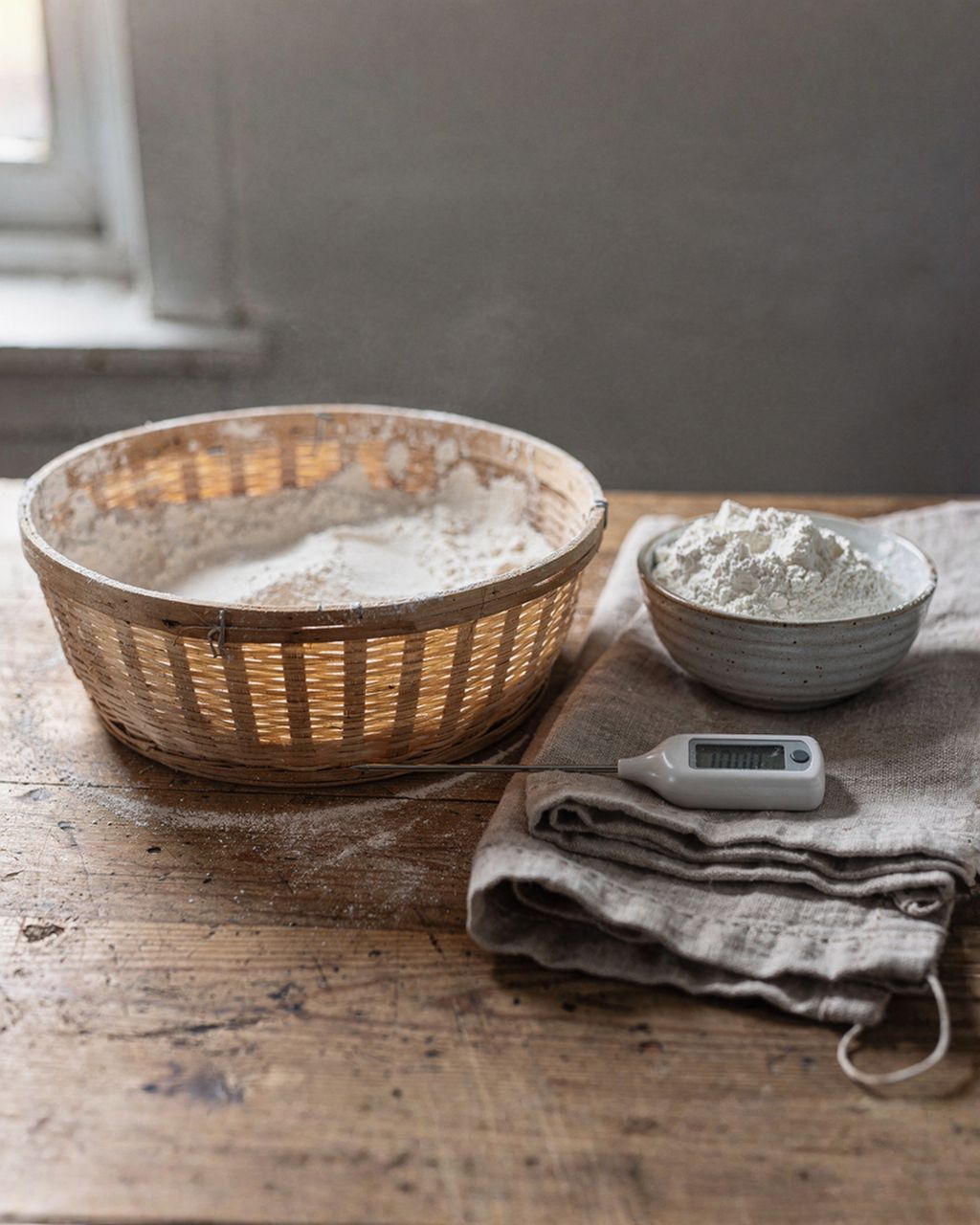
The dough's temperature is 24–26 °C (75–79 °F). A probe thermometer tells you in a few seconds.
With rich doughs, do the windowpane test only after the butter is worked in — before that, the dough usually isn't ready, and after the fat goes in, the gluten loosens for a while again.
You can overknead dough in a mixer, especially on high speed: it starts to stick, tear and turn slack, and heats up above 28 °C (82 °F). So knead on low speed, and if you know your mixer warms the dough, use milk a few degrees cooler. By hand, overkneading is practically impossible.
The first rise takes 45–90 minutes at 24–26 °C (75–79 °F), the second (once shaped) 30–45 minutes. The exact time isn't something a recipe can tell you — it depends on the dough's volume and the temperature in your kitchen.
Approximate first-rise times by temperature:
18 °C (64 °F, cool kitchen): 2–3 hours
22 °C (72 °F): 1.5–2 hours
24–26 °C (75–79 °F, ideal): 45–90 minutes
28–30 °C (82–86 °F): 30–45 minutes, but the flavour is blander and the dough overproofs easily
2–4 °C (36–39 °F, fridge): 8–12 hours
As a rough rule, dough at 28 °C rises about two to four times faster than at 18 °C — every few degrees makes more difference to the timing than you'd expect. The most reliable approach is therefore to measure the dough's temperature, not the time: after kneading it should be 24–26 °C. If it's colder, put it in the oven with the light on or next to a mug of hot water. Where to find the right warmth in your home and when to proof dough in a basket is covered in the article proofing dough: temperature, time and the proofing basket.
How to tell it's proofed: poke a finger into the dough about a centimetre deep. If the dent springs back immediately, the dough needs more time. If it comes back slowly and a shallow dent remains, it's just right. If it doesn't come back at all and the surface sags slightly, it's overproofed — work it through, reshape it and let it rise briefly a second time.
Doubling in volume is hard to judge in a round bowl. Let the dough rise in a clear container with straight sides, and mark the starting height with a rubber band or a piece of tape.
You can let yeast dough rise in the fridge at 2–4 °C (36–39 °F) for 8–12 hours (even up to 24) instead of an hour and a half on the counter. The cold slows the yeast, but the enzymes keep working — the result is a deeper, almost nutty-buttery flavour that a quick rise never gives.
How to do it:
Knead the dough as usual, put it in a bowl, cover with cling film and straight into the fridge — don't let it rise on the counter first.
Use a third less yeast (for 500 g of flour, 12–14 g fresh is enough), otherwise it will overflow by morning.
In the morning, let it come up to temperature for 45–60 minutes before shaping. Cold buttery dough is as hard as modelling clay and tears when you shape it.
Rich doughs with plenty of butter go very firm in the cold — which is actually an advantage: cinnamon rolls, crescent rolls and anything rolled are much easier to cut from cold dough.
Let the second rise after shaping happen as normal in a warm place; from cold dough, it takes closer to 60–90 minutes than 30–45.
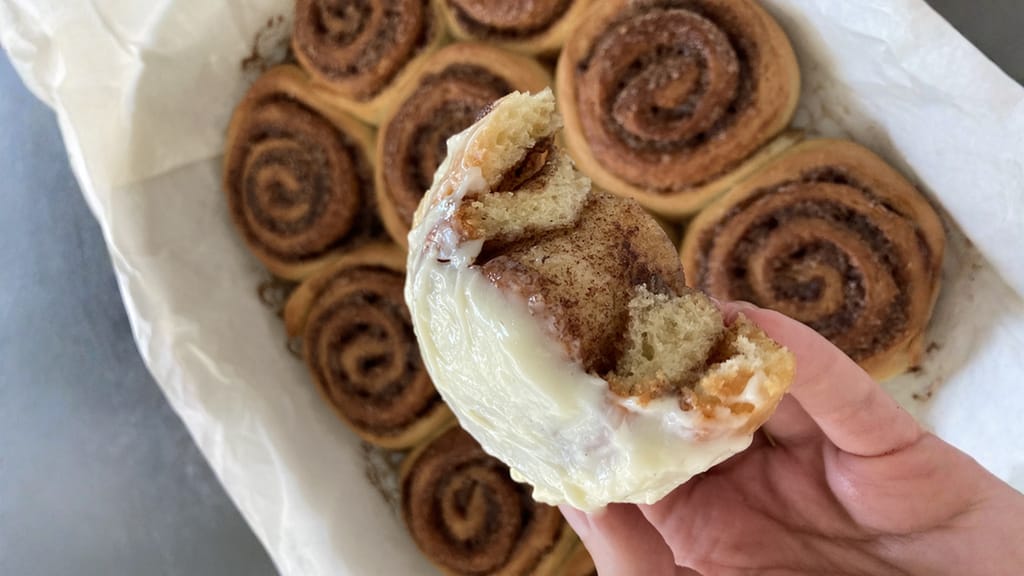
Soft cinnamon rolls made from brioche dough, with icing
Soft cinnamon rolls made from brioche dough — an ideal candidate for rising in the fridge
Yeast dough bakes at 170–180 °C (340–355 °F), and the time depends on the size of the piece. A higher temperature would form the crust before the middle bakes through. The exception is pizza, which needs the oven heated to the maximum, 250–280 °C (480–535 °F).
Buchty, rolls, cinnamon rolls: 180 °C, 15–20 minutes
Tray kolaches: 180 °C, 22–30 minutes
Vánočka, mazanec, large loaf: 170 °C, 35–45 minutes (cover with foil after the first 15 minutes so the crust doesn't darken too much)
Fruit dumplings: in gently simmering water or steam for 10–15 minutes depending on size; in vigorously bubbling water they fall apart
Doughnuts: fat heated to 170–175 °C, 1.5–2 minutes per side
Pizza: 250–280 °C, 7–10 minutes on a preheated tray or stone
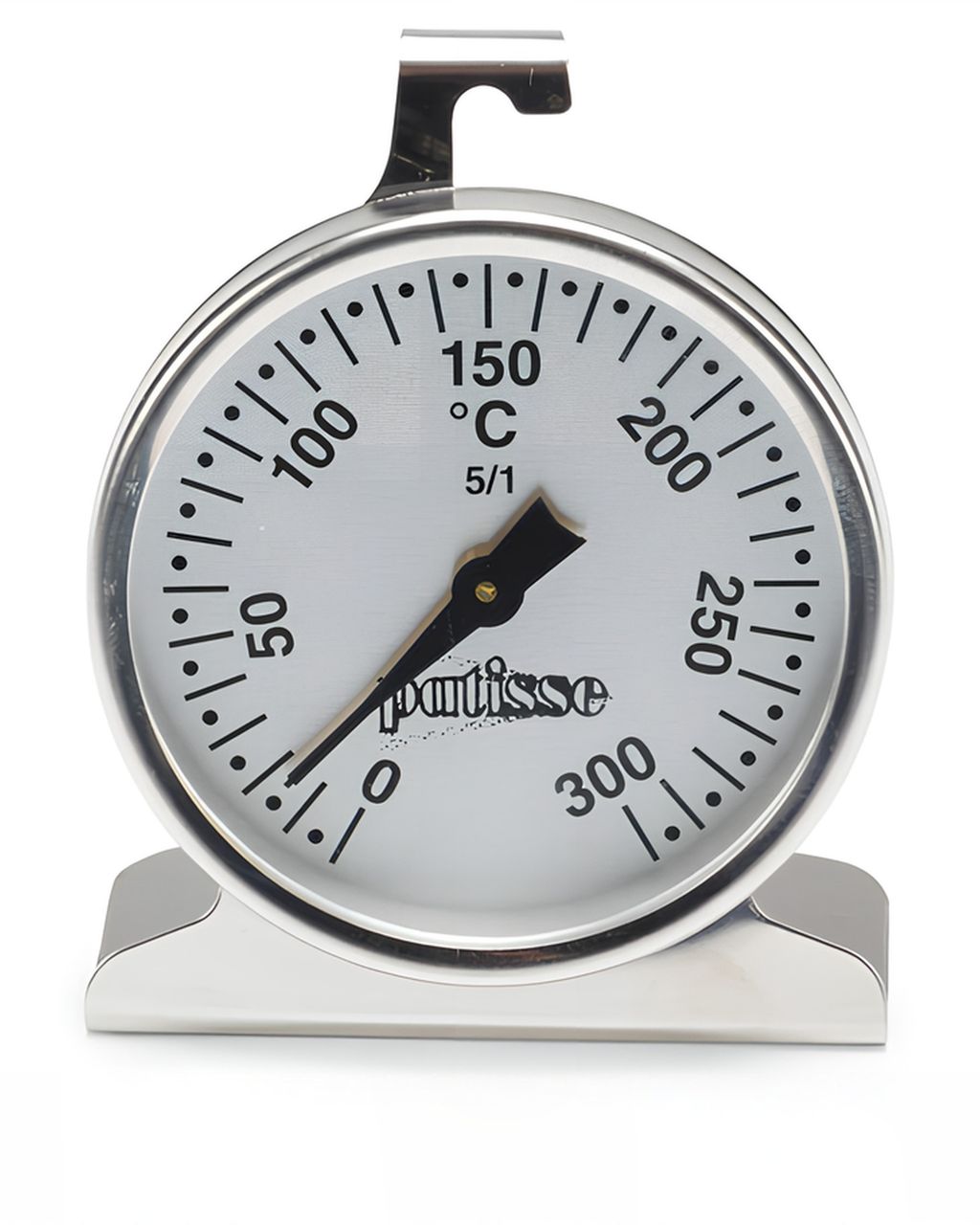
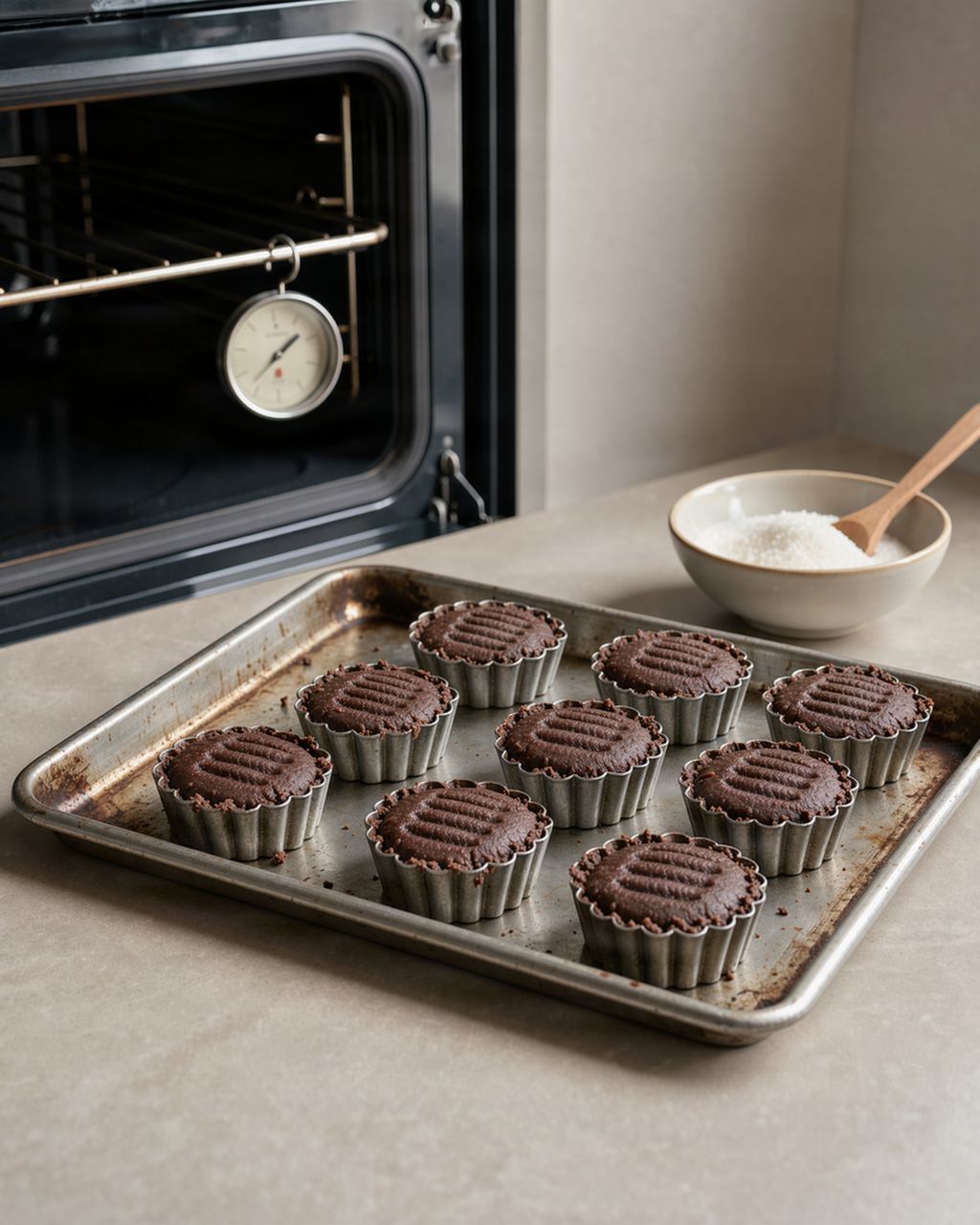
These temperatures only hold if your oven really reaches them. Home ovens commonly deviate from the set value by 10–20 °C, and that's exactly the difference between a golden vánočka and a burnt one. You can find out cheaply whether your oven is exaggerating with an oven thermometer from Patisse, which you simply leave on the rack.
Only a probe thermometer can tell you for certain that a bake is done: sweet yeast bakes are done at 88–93 °C (190–200 °F) inside, savoury rolls and buns with little fat at 93–96 °C (200–205 °F). Rich doughs seem moist inside even when they've long been baked through, so a skewer misleads you — with buttery dough, crumbs will always cling to it.
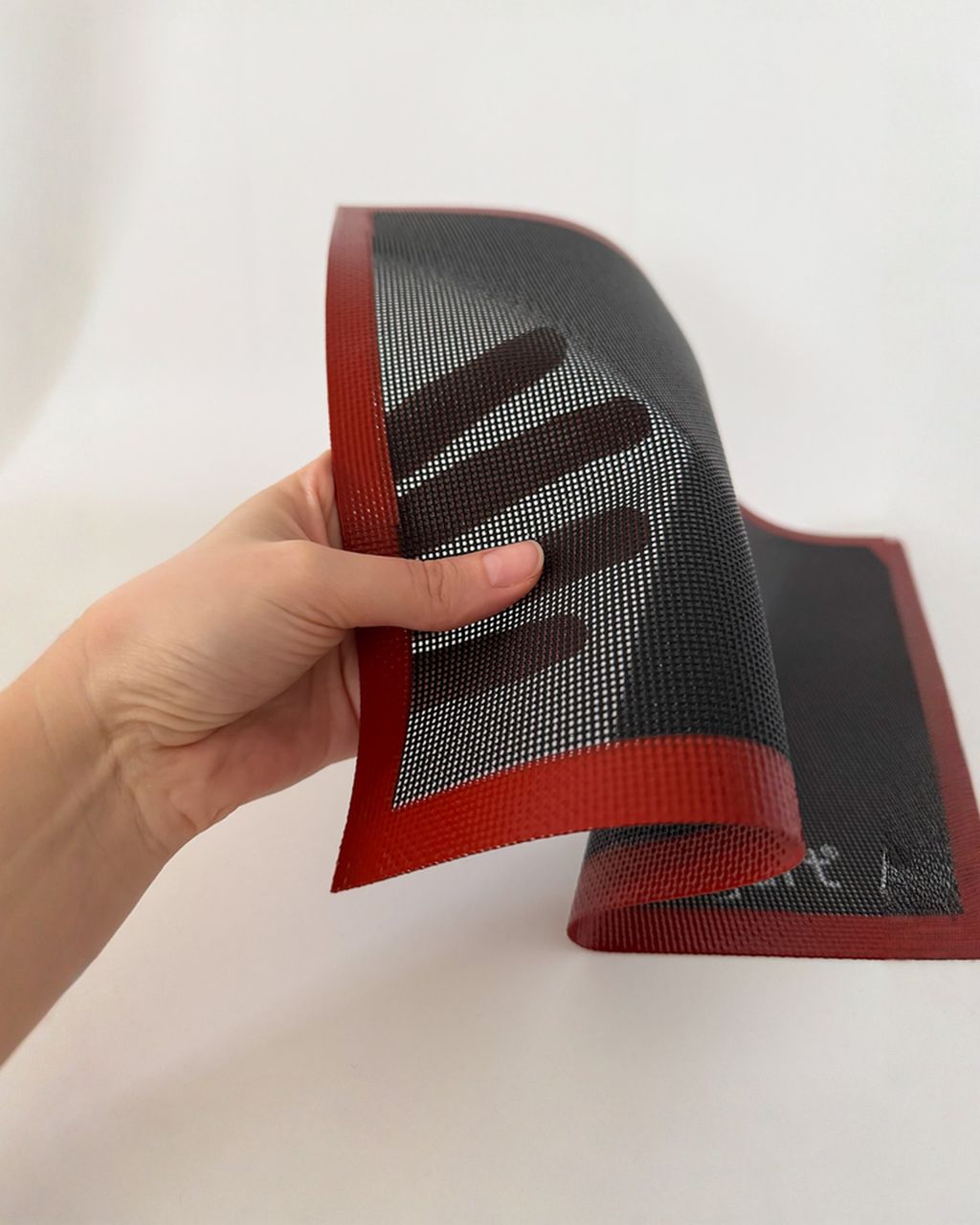
If buchty, rolls or pizza keep coming out with a pale, soft underside, a perforated Silikomart silicone mat can help: tiny holes let hot air reach the base and give the steam a way out.
For shine, brush the bake before it goes in the oven with a beaten yolk mixed with a spoonful of milk — it gives a golden, glossy crust. Egg white alone does gleam, but the crust stays pale and tough. Why and when to brush is covered in the article why yeast dough is brushed with egg.
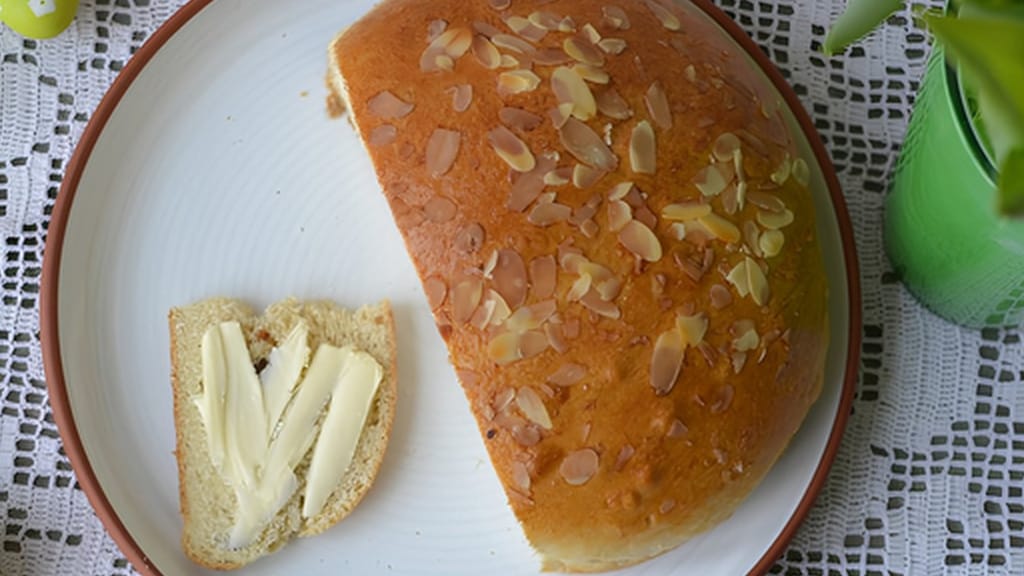
Easter classic: fragrant mazanec bread
Easter mazanec: the richest version of yeast dough

Golden fried, jam-filled donuts!
Little doughnuts filled with jam — yeast dough that's fried instead of baked
Yeast dough fails to rise for five reasons: milk that was too hot, salt in direct contact with the yeast, old yeast, a cold kitchen and under-kneaded dough — the last four can be rescued.
The milk was too hot. Above 45 °C (113 °F) you damage the yeast, around 55 °C it starts to die off, and at 60 °C it's completely dead. This is the only one you can't rescue — start again.
Salt came into direct contact with the yeast. It can slow it down. Try moving the dough somewhere warm and giving it double the time; if it doesn't budge, add a fresh sponge made with 10 g yeast and a little flour, and knead again.
The yeast was old. Fresh yeast should keep for about 2 weeks in the fridge and must be pale and crumbly, not slimy and brownish. You rescue the dough the same way as with salt: work in a fresh sponge made from 10 g fresh yeast and a little flour. Next time, test the yeast in a sponge before you mix the whole batch. How long fresh and dried yeast keep is covered in the article how long yeast lasts and how to tell it's no longer working.
The kitchen was cold. The most common and most harmless reason. The dough isn't spoiled, it's just rising more slowly — put it in a switched-off oven with the light on and allow an extra hour.
The dough was under-kneaded. The gluten can't hold the gas, so the dough rises and then collapses. Knead it for another 5–8 minutes, do the windowpane test and let it rise again.
And one apparent problem that isn't one: dough with lots of butter and sugar always rises slowly. For mazanec or vánočka, an hour and a half for the first rise is normal, not a fault. We go into more detail in the article on fluffy Easter mazanec without cracks.
Six levers keep yeast bakes soft: fat and sugar in the dough, honey or invert sugar, a scald (tangzhong), not overbaking, proper storage, and the freezer instead of the fridge.
Fat and sugar in the dough. The simplest lever. 100 g of butter instead of 60 g is the difference between "dry the next day" and "fine the next day".
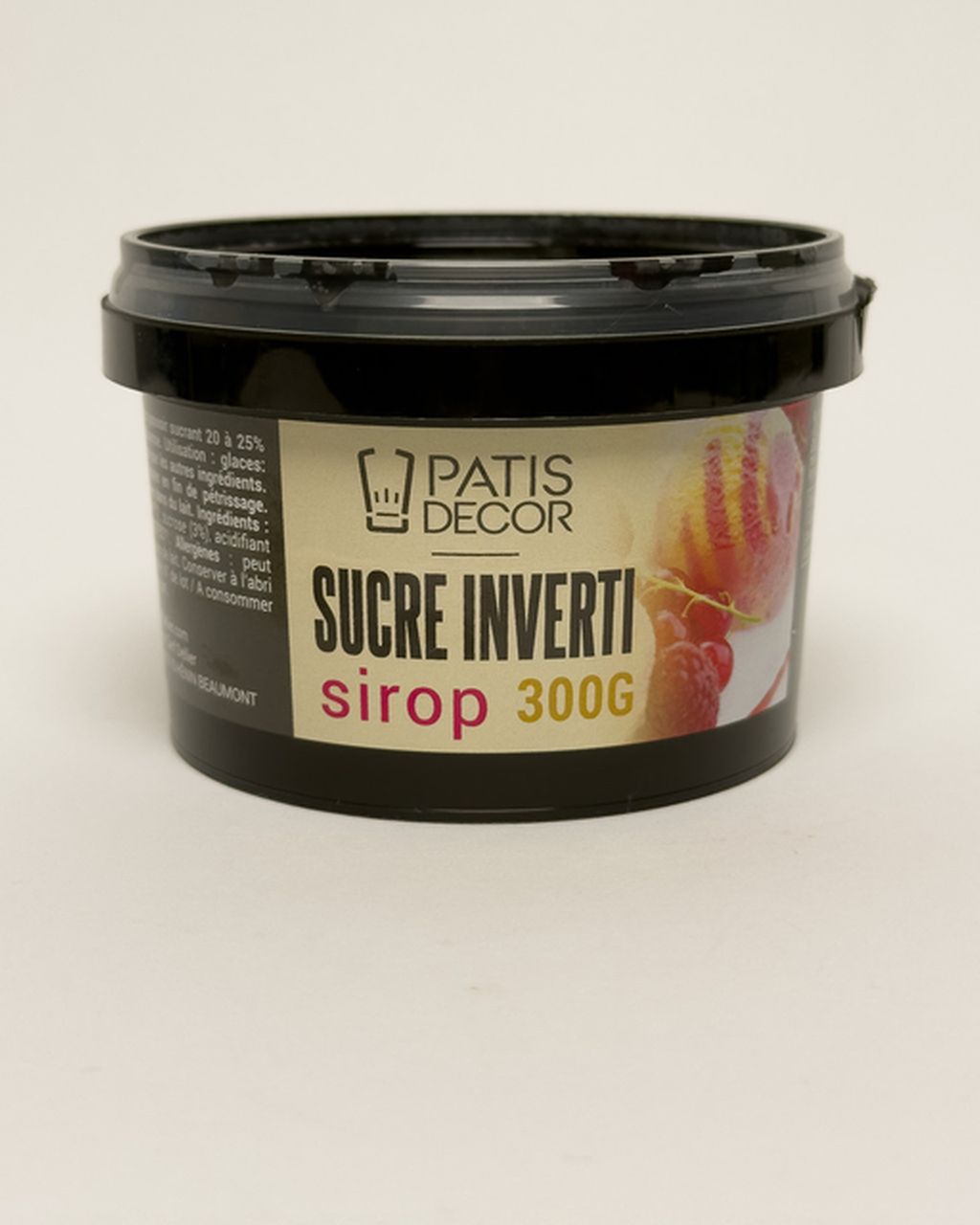
Honey or invert sugar. Replace 20 g of the sugar with a spoonful of honey or the same weight of invert sugar. It binds moisture and slows the crumb from going stale. How much to use in yeast dough without it browning too fast is covered in the article invert sugar instead of sugar and how to dose it.
Scald (tangzhong). Cook 25 g of flour with 125 ml of milk into a thick paste (around 65 °C / 149 °F), let it cool and work it into the dough (reduce the rest of the recipe by that flour and milk). The dough can take up more water and stays soft for up to three days.
Don't overbake. Every extra five minutes evaporates water you can't put back. That's why the probe thermometer — take sweet bakes out at 90 °C (194 °F) inside.
Storage. Wrap cooled bakes in a tea towel or put them in a bread bin, not in plastic — in a bag the crust turns soft and the surface gets damp. Never in the fridge, as the cold actually speeds up starch staling.
Freezer instead of fridge. Freeze baked and cooled bakes, and before serving reheat them for 5 minutes at 150 °C (300 °F). They then taste as if fresh. For the details, see the article how to freeze cookies and dough so they don't go soggy.
Yes. Replace the milk with the same volume of water or plant-based drink, swap the butter for baking margarine with about 80% fat (same weight) or for oil, and leave the eggs out altogether. Use about a fifth less oil than butter — roughly 80 g oil for every 100 g butter — because butter also contains water. The dough will be a little less tender and paler, so brush it with a plant-based drink (soy or oat) mixed with a teaspoon of maple syrup. Soy drink works best in the dough itself: it has the most protein (around 3 g per 100 ml), so the bread browns nicely. Oat drink also gives good colour thanks to its sugars, while rice drink leaves the bread palest.
After the first rise, yeast dough only needs a brief working-through, about 30 seconds — no need to knead it again. The aim isn't to build gluten again but to push out the large gas bubbles, spread the yeast to fresh sugar and even out the temperature throughout the dough. Kneading for long at this stage actually tightens the gluten so much that the dough shrinks back when you shape it.
Yes, you can make yeast dough without kneading if you give it time instead of effort. Cut the yeast to 5 g fresh per 500 g flour, stir the ingredients with a spoon just until combined, and let it rise in the fridge for 8–12 hours — the gluten develops on its own during that time. This method works very well for savoury doughs and pizza; with rich buttery doughs the result is weaker, because the fat needs to be worked in mechanically.
A gummy centre almost always means underbaked — sweet yeast bakes are only done at 88–93 °C inside, and rich buttery doughs look moist until then, even when the surface is already dark. The second most common reason is slicing while hot: the starch only finishes setting as it cools, so a hot crumb is still sticky — let the bake cool for at least 30 minutes. And if only the underside is gummy, the bake cooled on the tray; steam has nowhere to go and soaks back into the dough, so move it to a wire rack straight out of the oven.
In yeast dough you can replace all of the plain flour with semi-coarse (polohrubá) flour, but no more than a third with wholemeal. With semi-coarse flour, add an extra 20 ml of milk — the coarser grain absorbs liquid more slowly and gives the crumbly crumb typical of traditional buchty. With wholemeal, add 30–40 ml more liquid; the bran cuts through the gluten network, so a full swap gives you a dense, low loaf.
Yeast dough freezes best shaped, after the first rise and before the second. Put the pieces on a tray in the freezer, transfer them to a bag once frozen, and store for up to 3 months. Before baking, let them finish rising for 3–4 hours at room temperature, right on the baking tray. Add 25% more yeast when mixing the dough, because some of the yeast won't survive freezing.
One recipe worth heating the oven for, one tip, and one deal from the shop. Nothing else.