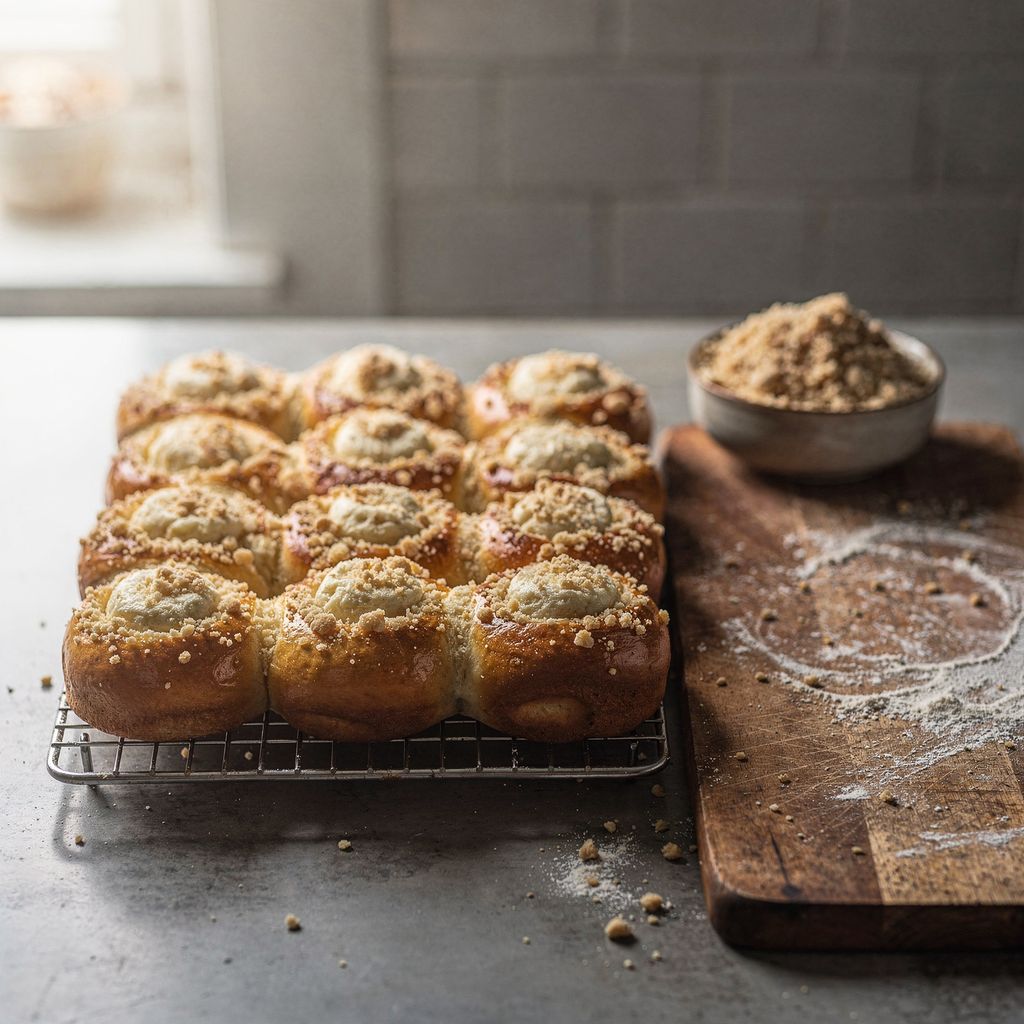
Yeasted blueberry buns with curd cheese and crumble
Soft Yeast Dough for Kolaches: Fluffy and Tender, Even the Next Day
Updated Oct 24, 2026
Soft yeast dough for kolaches comes down to one ratio: for every 500 g of plain (all-purpose) flour, use 250 ml lukewarm milk, 80–100 g softened butter, 2 egg yolks, 60–80 g sugar, 21 g fresh yeast (or 7 g dried) and 6 g salt. That makes roughly 950–1000 g of dough, or 16–19 kolaches at 50–60 g each. Fat and yolks, plenty of liquid and a short bake make them tender; time makes them fluffy, with two rises totalling 65–90 minutes. The rest of this page covers why it works, how to keep kolaches soft for several days, and where things most often go wrong.
For 500 g of plain (all-purpose) flour you need 250 ml milk, 80–100 g butter, 2 egg yolks, 60–80 g sugar, 21 g fresh yeast and 6 g salt. This batch gives you roughly 950–1000 g of dough, or 16–19 kolaches at 50–60 g each, or one big kolache on a baking tray.
Plain (all-purpose) flour — 500 g
Milk — 250 ml, lukewarm (35–40 °C / 95–105 °F)
Butter — 80–100 g, softened to a creamy consistency, not melted
Egg yolks — 2 (or 1 whole egg and 1 yolk)
Sugar — 60–80 g
Yeast — 21 g fresh, or 7 g dried
Salt — 6 g, about a teaspoon
Lemon zest, vanilla — optional, but you'll taste them in the finished kolache
As a percentage of the flour weight: liquid around 50%, fat 16–20%, sugar 12–16%. That's the range where the dough is still pleasant to work with and already noticeably tender. From about 10% sugar (relative to the flour) the yeast starts to slow down, and above 20% the effect is pronounced: dissolved sugar pulls water out of the yeast through osmotic pressure, and the rise can easily take half as long again. That's why a sweeter filling always beats a sweeter dough.
For how to scale these ratios and adapt them to other pastries, see yeast dough: basic ratios and how to handle it.
Yeast dough is tender when it has enough water, enough fat from the butter and yolks, only moderate sugar, is properly kneaded and fully risen, and isn't baked a minute longer than necessary. In detail:
Hydration around 50% of the flour weight. That's 250 ml of milk for 500 g of flour. After kneading, the dough should be soft and slightly sticky; every extra spoonful of flour (about 10 g) nudges it toward a dry kolache. Soft dough is harder to handle, but the effort pays off.
Fat at 16–20%, plus two yolks. 80–100 g of butter shortens the gluten strands, so the crumb is fine and not chewy. The yolks (about 35–40 g per 500 g of flour) add more fat and lecithin, which binds water and fat together, so the kolache doesn't dry out as quickly.
Sugar at 12–16%. Sugar holds on to water and slows down the staling of the crumb, so 60–80 g makes a more tender kolache than 40 g. Above 100 g, though, it holds back the yeast more than it adds softness.
Properly kneaded, fully risen dough. Well-developed gluten traps the gas bubbles; underproofed dough is dense, and a dense crumb tastes drier.
Don't overbake. Small kolaches take 15–20 minutes at 170–180 °C (340–355 °F), with an inner temperature of about 88–93 °C (190–200 °F). Every extra minute evaporates the water you worked so hard to get into the dough.
If you want the softness to go up another notch, with kolaches that stay tender on the third day, add a tangzhong.
A tangzhong, following the Asian method, is a small portion of the recipe's flour cooked with liquid into a thick paste. Gelatinized starch can bind far more water than raw flour and keeps it in the dough even after baking, so the kolaches stay soft for 2–3 days instead of one. (A traditional baker's scald is flour scalded with boiling water in different proportions; here we mean a milk paste at 1:5.)
Ratio and amount:
Flour : liquid = 1 : 5. For our batch, take 25 g flour and 125 ml milk straight from the recipe, which is 5% of the flour. For an even more tender result, go up to 10% (50 g flour and the full 250 ml of milk).
The total amount doesn't change. You then add only the remaining 475 g flour and 125 ml milk to the dough (with a 10% tangzhong, 450 g flour and no extra milk; in that case, proof the yeast in 2–3 tablespoons of lukewarm water, see step 1). The tangzhong doesn't add flour or milk, it just prepares part of them in advance.
Method:
In a small saucepan, whisk the flour into the milk until smooth.
Heat over low heat, stirring constantly, for 2–3 minutes, until the mixture thickens into a glossy paste that leaves trails behind the whisk. That corresponds to roughly 65 °C (150 °F).
Cover with plastic wrap pressed directly onto the surface and let it cool below 30 °C (86 °F), otherwise it will scald the yeast.
Add it to the dough together with the yolks and carry on as usual.
Dough with a tangzhong is stickier at first. Don't sprinkle in extra flour; it comes together after 10 minutes of kneading. The tangzhong keeps in the fridge for 2–3 days; let it come up to room temperature before using.
Each ingredient in yeast dough takes care of a different quality of the finished kolache: fat gives tenderness, flour gives structure, sugar gives flavor and color, and salt gives flavor and controls the pace of the rise.
Flour holds up the whole structure. Plain wheat flour gives a fine, soft crumb, which is exactly what you want in a kolache. Semi-coarse flour makes the dough stretchier and denser, and suits buchty better.
Butter coats the gluten strands and shortens them. That's why dough with butter is softer and more crumbly, and why the butter goes in last, once the gluten is already developed. If you added it right at the start, the gluten wouldn't link up properly and the dough would tear.
Yolks bring fat and lecithin, which keeps fat and water together. They make the crumb finer and keep it tender longer. Egg white, on the other hand, tends to dry the dough out, which is why the recipe uses yolks, not whole eggs.
Milk supplies water for the gluten, plus milk proteins and sugars that give the crust a nice color.
Sugar is flavor, color and food for the yeast. In larger amounts it also acts as a brake, as explained in the ratios above.
Salt tightens the gluten, adds flavor and slows the rise slightly so that it goes evenly. Without it, a kolache tastes flat despite all the sugar.
Yeast produces the carbon dioxide that lifts the dough, along with flavor compounds. The slower the rise, the more flavor.
You can replace fresh yeast with dried at a ratio of 3:1: a 42 g cube equals roughly 14 g of dried yeast, so for 500 g of flour that's 21 g fresh or 7 g dried (one standard packet).
Fresh yeast: crumble it into lukewarm milk and let it activate. It keeps in the fridge for about two weeks and loses strength quickly after that.
Active dry yeast also needs to go into liquid first.
Instant yeast can be mixed straight into the flour. You save a step, but you lose control, because you can't tell in advance whether it's alive.
For a detailed conversion and the differences in rising, see dried vs. fresh yeast: conversion and how to rise with each. If you're not sure how old your yeast is, make a yeast starter. It's a fifteen-minute insurance policy against staring at a flat bowl two hours later.
The whole process has five stages and takes roughly two hours: yeast starter 15 minutes, kneading 10 minutes, first rise 45–60 minutes, shaping and second rise 20–30 minutes, baking 15–20 minutes. With a tangzhong, add 15 minutes for cooking and cooling it.
Crumble the yeast into about half of the lukewarm milk, add a teaspoon of sugar and a spoonful of flour, stir and leave in a warm spot for 10–15 minutes.
With a 5% tangzhong, use the remaining 125 ml of milk that didn't go into the paste for the starter.
With a 10% tangzhong, you'll have no milk left, because the full 250 ml is in the paste. So proof the yeast in an extra 2–3 tablespoons (30–45 ml) of lukewarm water; dough with a tangzhong takes that bit of extra liquid in stride. Or use instant yeast and mix it straight into the flour, skipping the starter.
The temperature of the liquid is the one thing here that you can ruin for good. 35–40 °C (95–105 °F) is ideal: on your finger it should feel lukewarm, not hot. Above roughly 50 °C (120 °F) yeast cells start dying, and around 60 °C (140 °F) the yeast is reliably dead. Cold milk just means a slower start; hot milk is the end of it.
A finished starter is foamy and domes up. If nothing has moved after fifteen minutes, the yeast is old: throw it out and start again. You'll save yourself half a kilo of flour.
Mix the salt into the rest of the flour, add the sugar, yolks, remaining milk and the yeast starter, and knead for 8–10 minutes into a smooth, only slightly sticky dough. Only then work in the softened butter in portions.
After the butter goes in, the dough looks ruined at first: it falls apart and slides around. That's normal. It needs another 3–5 minutes of kneading before it comes back together into a smooth ball.
You can tell it's done with the windowpane test: pinch off a piece and stretch it between your fingers. If it can be pulled into a thin, translucent sheet without tearing, the gluten is developed. If it tears right away, keep kneading.
Knead by hand or with a mixer on low speed. The ideal temperature of the finished dough is 24–26 °C (75–79 °F), so in a warm kitchen reach for cooler milk; a mixer warms the dough by a few degrees on its own.
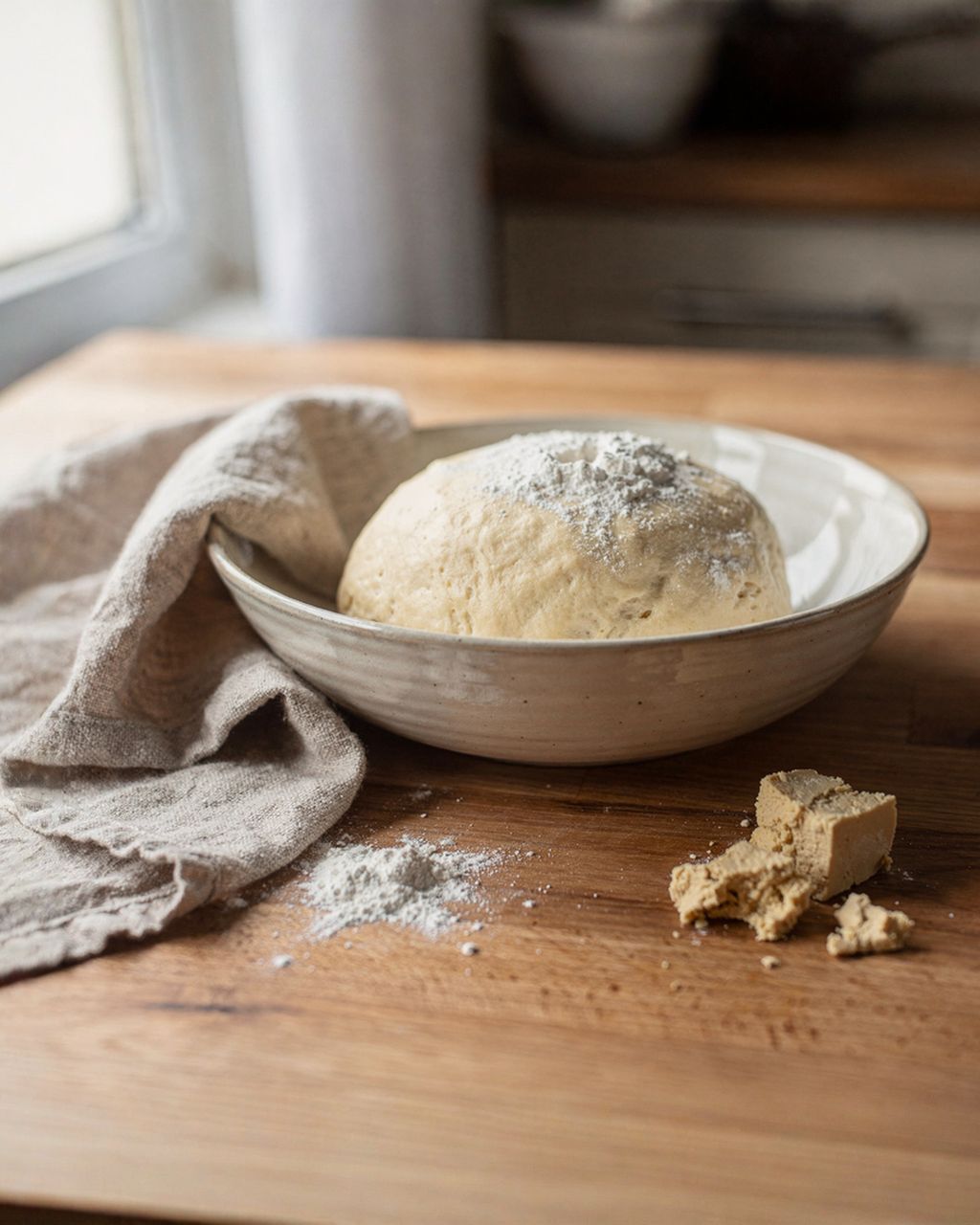
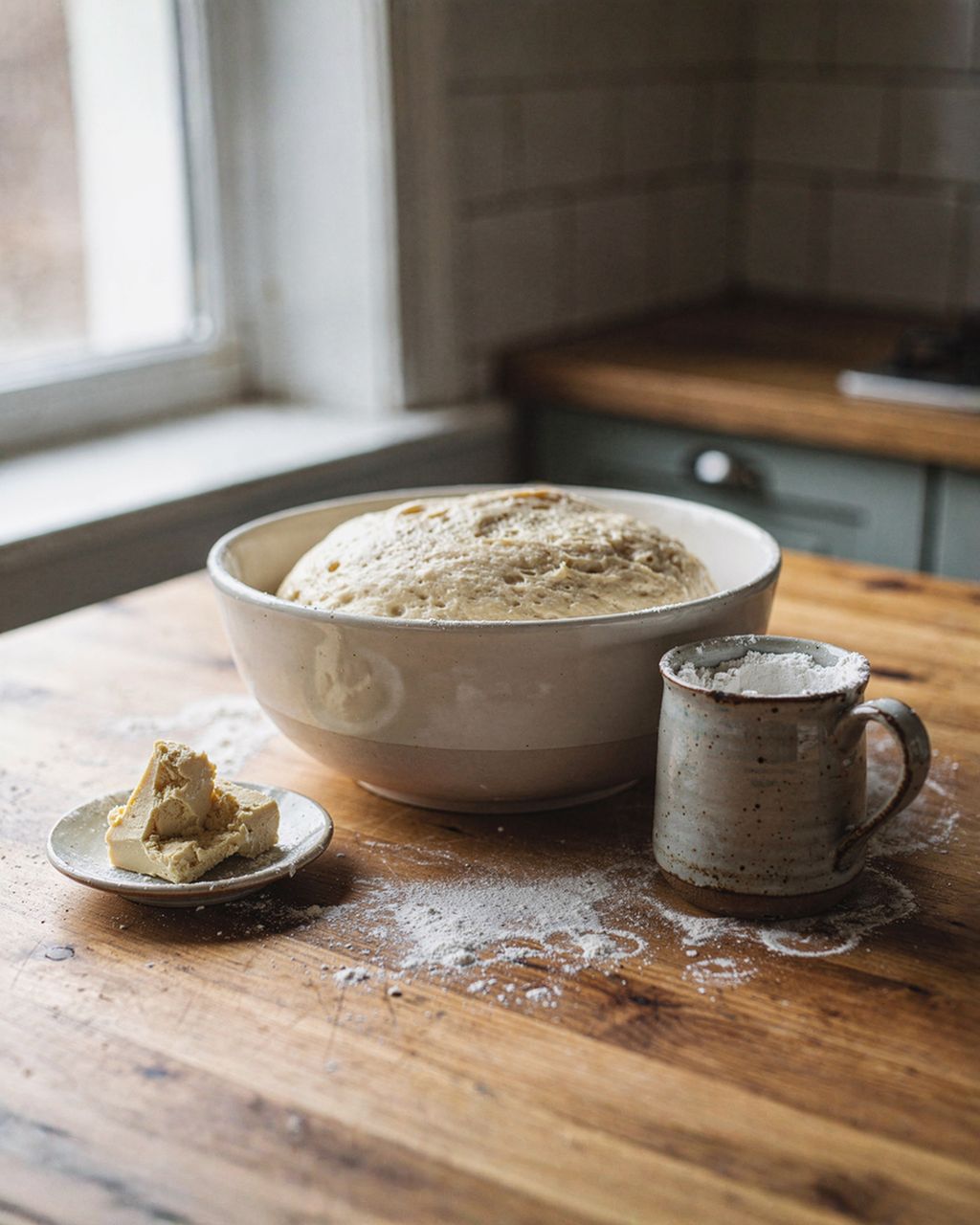
Cover the bowl with plastic wrap or a tea towel and let the dough double in volume at room temperature (22–25 °C / 72–77 °F). For this batch that takes 45–60 minutes.
The time in the recipe is only an estimate, and it depends on temperature. In a cold kitchen it can easily be 90 minutes. Go by volume, not by the clock. It helps to put the bowl in a switched-off oven with a mug of hot water, which gives you steady warmth without drafts. For how temperature changes the pace of the rise, see proofing dough: temperature, time and the banneton.
Dough with this much fat rises more slowly than bread dough, because the butter coats both the yeast and the gluten. Don't panic and don't add extra yeast; you'll get a fast rise and a yeasty aftertaste.
Knead the risen dough lightly, divide it into pieces of 50–60 g, roll them into balls and let them finish rising on the baking tray for 20–30 minutes. Only then make the wells and fill them.
Make the well with your thumb or the bottom of a glass, almost to the base. A shallow well pulls back in during baking and the filling slides out.
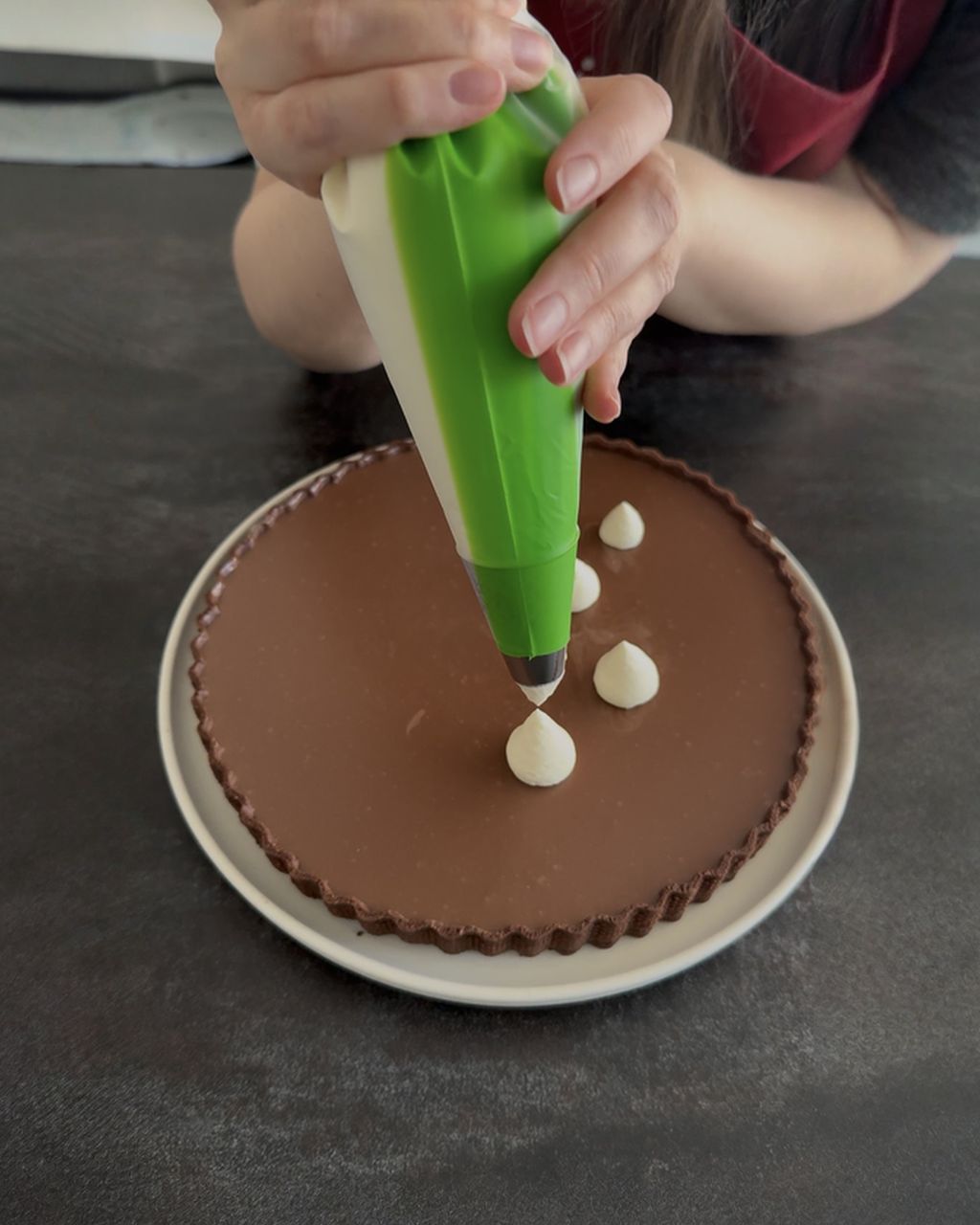
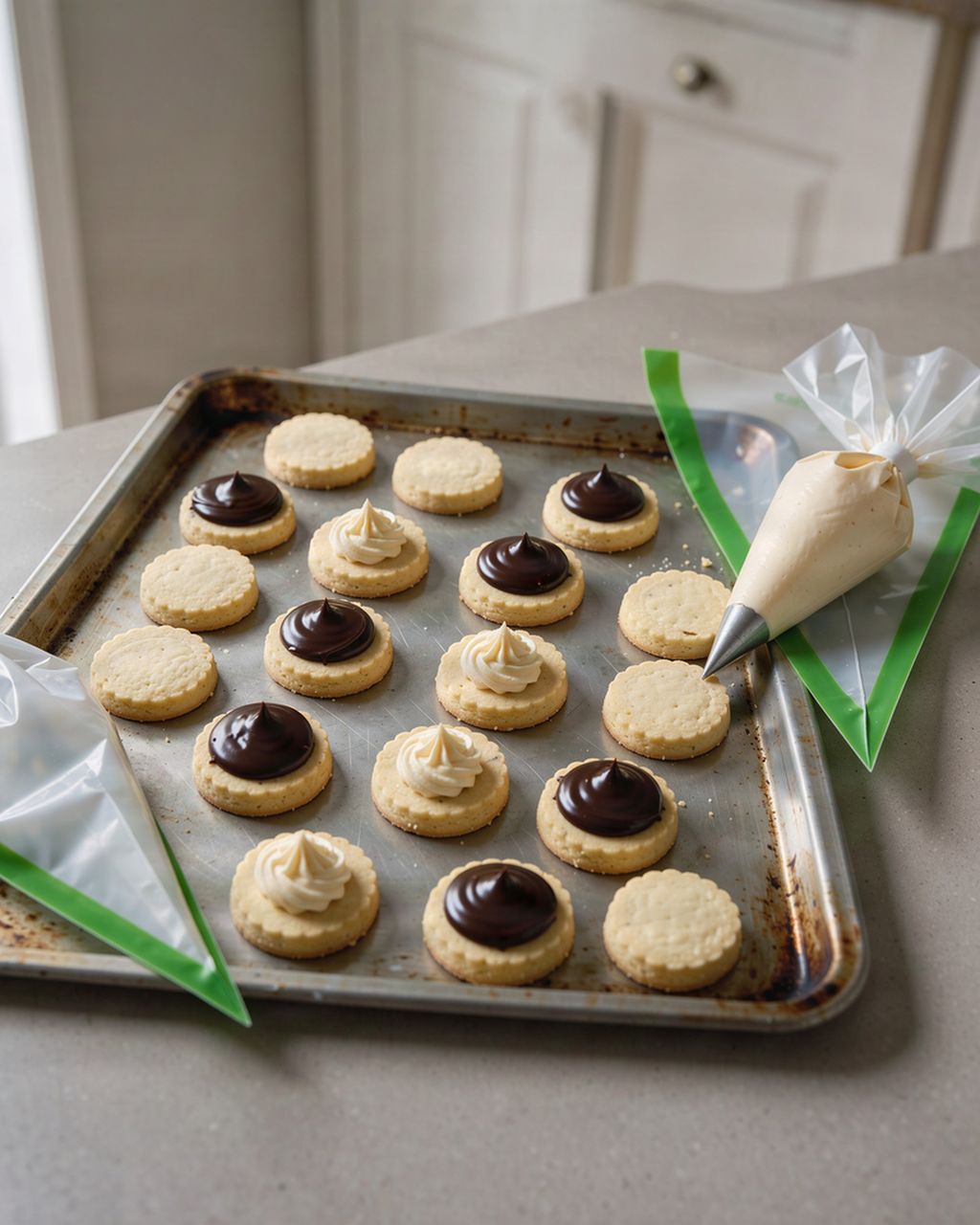
Pipe in the filling with a piping bag. You can pipe quark or plum butter exactly into the well, with no smears on the edges; 1–2 tablespoons (20–30 g) per kolache is enough. A bag with a 1–1.5 cm opening cut at the tip can handle even thicker plum butter.
Leave gaps of at least 3 cm between the kolaches. They'll grow a little more in the oven, and kolaches that touch have pale, underbaked sides.
Don't cut the second rise short. Underproofed dough cracks in the oven and turns out dense.
But don't overdo it either. Overproofed kolaches collapse in the oven. The finger test below tells you when the moment is right.
Before baking, brush the rims with a beaten yolk mixed with a spoonful of milk. Only the rims, not the filling. Why that matters and what you can use instead of yolk is explained in why yeast dough is brushed with egg.
The dough is ready when the dent from a pressed finger springs back slowly and only partly. The test takes two seconds and is more reliable than any time in a recipe:
Dip a finger in flour and press it about 1 cm deep into the side of a kolache.
The dent springs straight back: the dough is underproofed, give it another 10 minutes.
The dent returns slowly and leaves a shallow mark: perfect, bake.
The dent stays and the dough deflates around it: it's overproofed. Bake right away, and cut the rise shorter next time.
The same applies to the first rise in the bowl, except there you also watch for the doubled volume. Cold dough from the fridge reacts more slowly, so give it more time for the test than warm dough.
Bake small kolaches in a preheated oven at 170–180 °C (340–355 °F), top and bottom heat, for 15–20 minutes, and a large kolache on a tray for 25–35 minutes. They're done when the edges turn golden and the bottom lifts off the tray without resistance.
With a convection (fan) oven, lower the temperature by 15–20 °C to 150–160 °C (300–320 °F) and watch the time, because it dries kolaches out faster. The inner temperature of fully baked yeast pastry is around 88–93 °C (190–200 °F), so if you have a probe thermometer, it's the surest check.
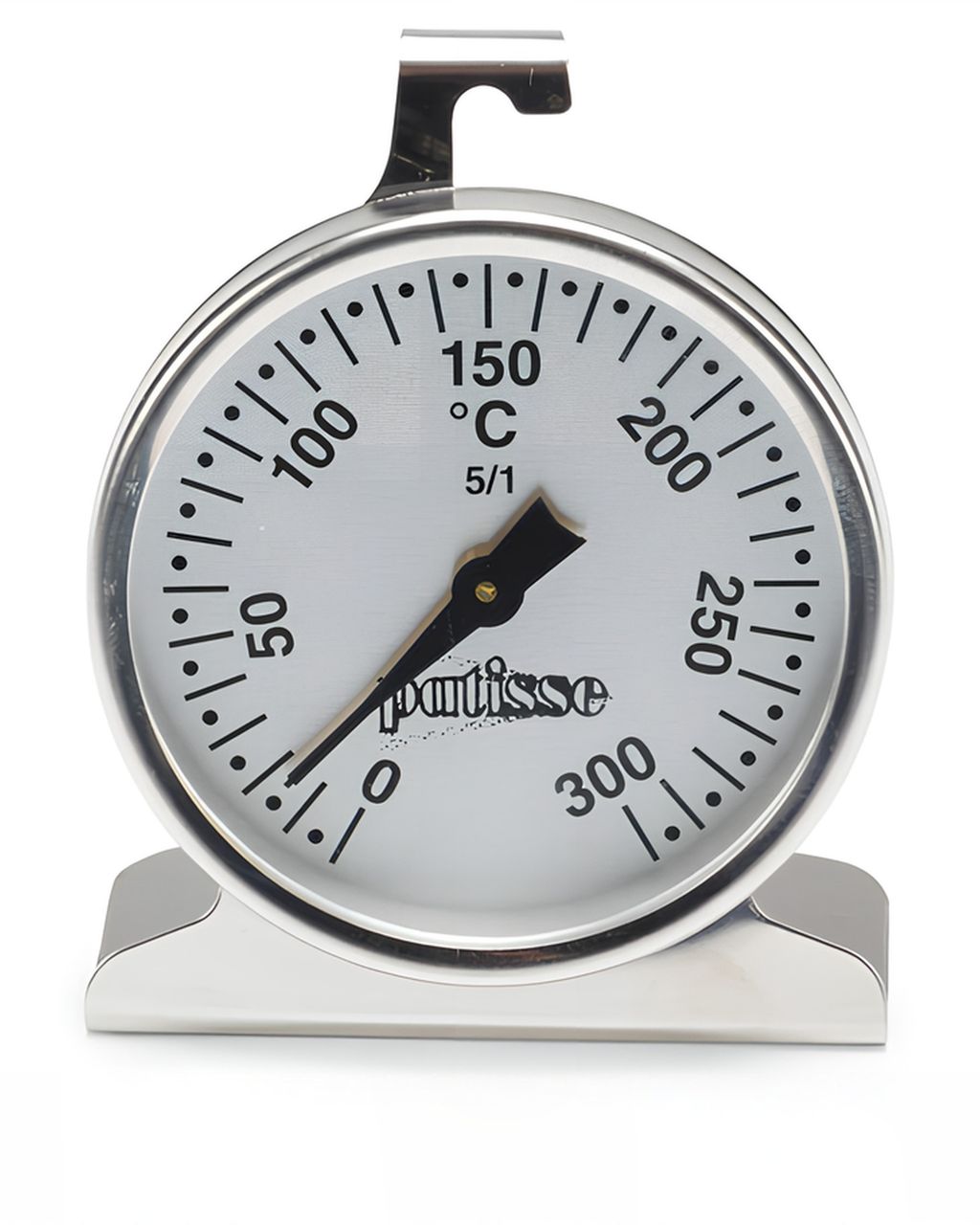
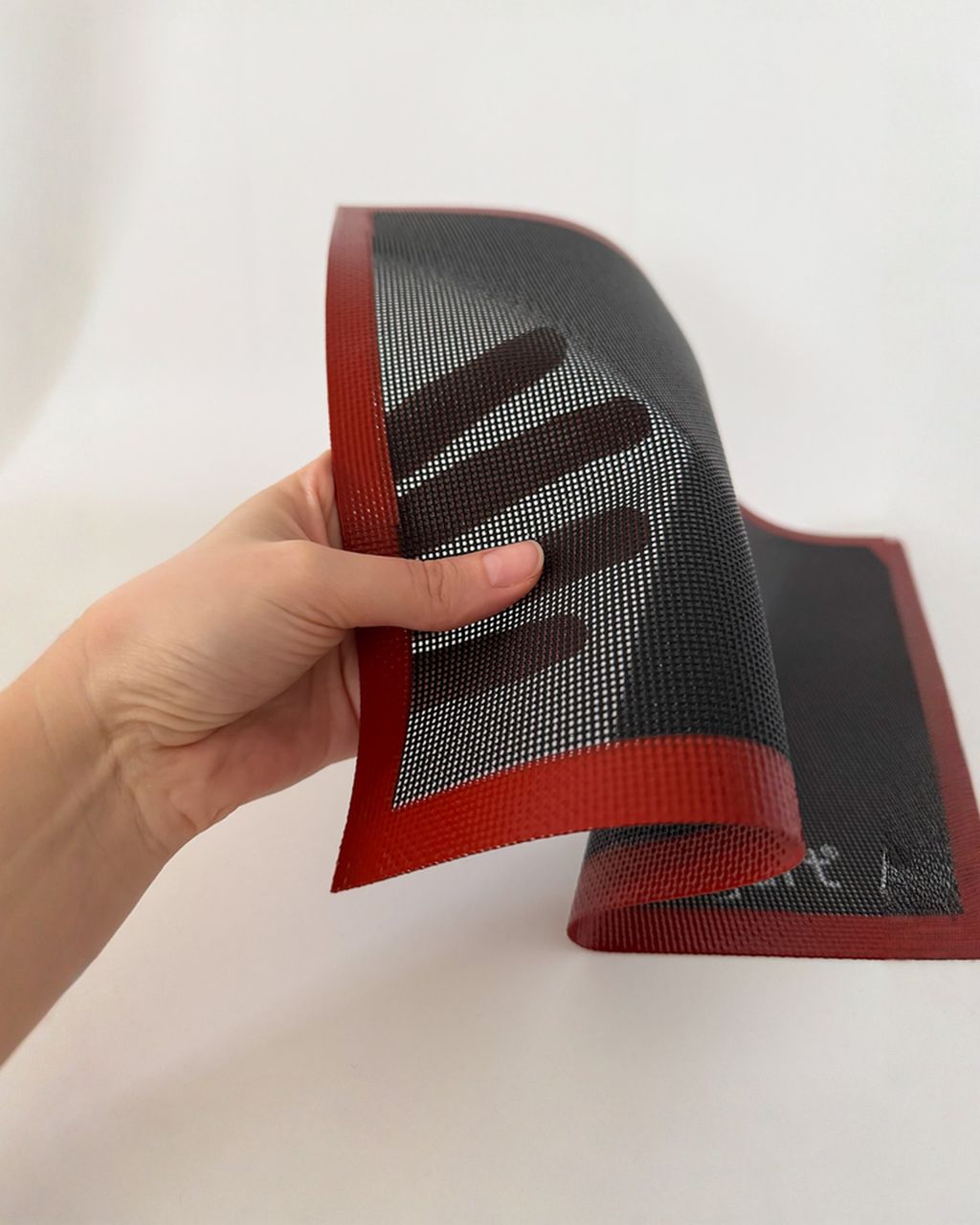
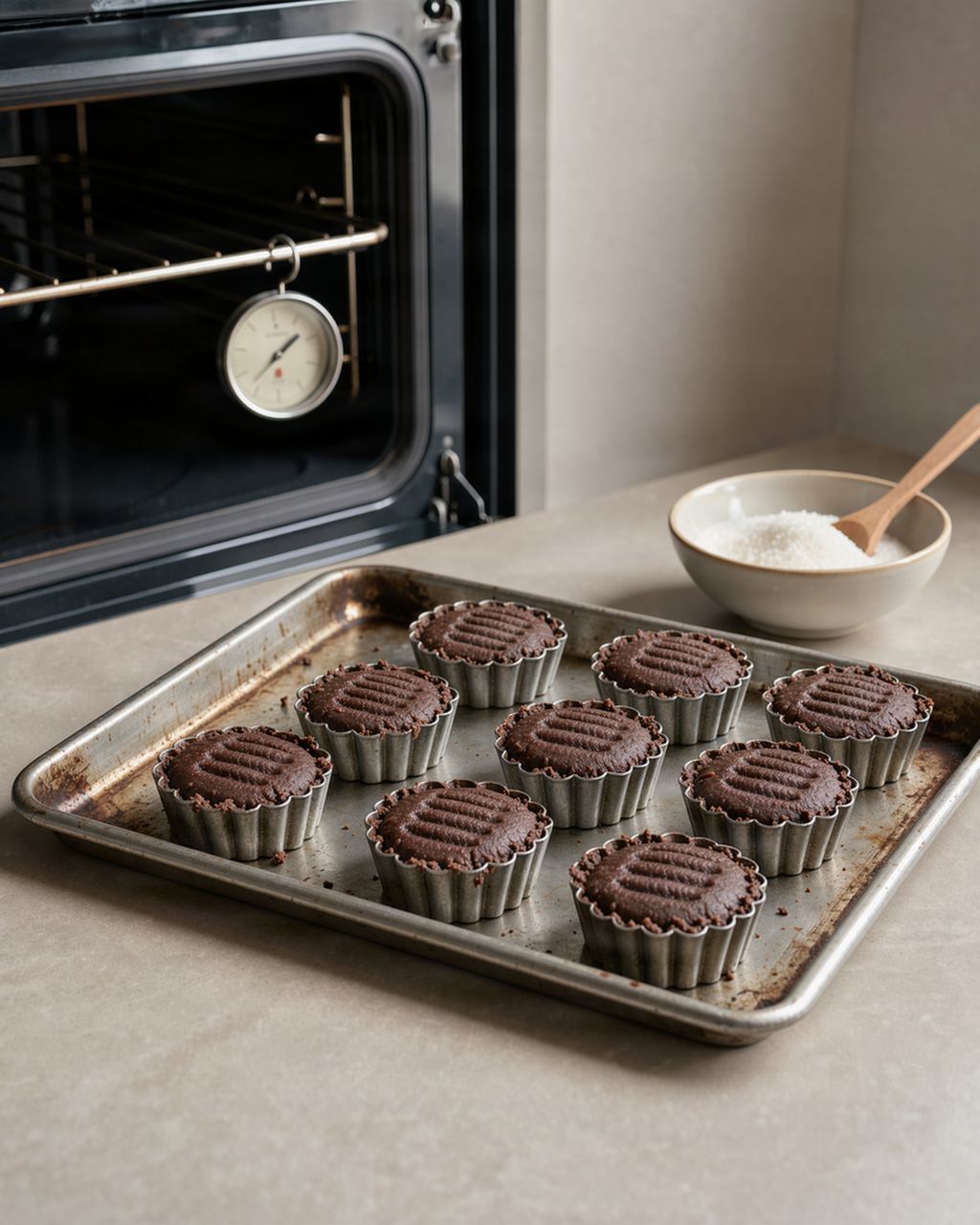
Watch out for an oven that runs hotter than it shows. Home ovens commonly differ from the set temperature by 10–20 °C. An oven running at 195 °C instead of 175 °C will dry the kolaches out in 15 minutes, and the edges darken before the center is baked through. An oven thermometer placed in the middle of the rack tells you the truth in one preheat, and you know how far to turn the dial. A perforated silicone mat also spreads the heat evenly under the kolaches, so the bottoms don't brown before the edges. More tools are among the pans and baking equipment.
Bake one tray in the middle of the oven. Two trays at once mean pale bottoms and overbaked tops, even with a fan.
When yeast dough doesn't rise, it's almost always one of five things: dead yeast, hot liquid, a cold kitchen, too much sugar and fat at once, or simply too little time.
Old yeast. The most common and the simplest. The yeast starter is a fifteen-minute test.
Milk that's too hot. Above 50 °C (120 °F) yeast cells die, and around 60 °C (140 °F) it's all over. You can't fix it afterward. The same goes for a tangzhong added while still warm.
Too little time and going by the clock. A recipe gives the time for an ideal kitchen. Volume decides: until the dough has doubled, it hasn't risen.
A cold kitchen and drafts. Below 18 °C (64 °F) the rise drags on forever. A switched-off oven with a mug of hot water solves it.
An overloaded dough. A lot of sugar and butter together slows the rise considerably. Stick to the ratios above and add time, not yeast.
Salt is deliberately not on this list. In the amount that belongs in the dough (about 1% of the flour weight) and mixed into the flour, it doesn't kill the yeast; it only slows the rise slightly, which is desirable. You mix it into the flour mainly for even distribution; that it also avoids direct contact with the yeast starter is a pleasant bonus, not a rescue.
If the dough is just rising slowly, give it another half hour in a warm place: that can be saved. If it hasn't moved at all after an hour in the warmth and the starter never foamed, the yeast is dead and only a fresh batch will fix it.
You can adapt the basic dough in four proven ways: egg-free, with quark, with sour cream, and with a cold overnight rise in the fridge. Change only one thing at a time:
Egg-free: replace the 2 yolks with 60 g sour cream or full-fat yogurt and add 10 g extra butter. Brush the rims with milk mixed with a teaspoon of sugar. The crust will be a shade paler, the softness stays.
With quark in the dough: replace 100 ml of milk with 125 g smooth quark, pressed through a sieve or whisked until smooth. The dough is more tender, mildly tangy and stays soft longer; it rises 10–15 minutes longer.
With sour cream in the dough: replace 80 ml of milk with 100 g sour cream (at least 12% fat) and you can reduce the butter to 70–80 g. The crumb is silkier and the kolaches stay soft a day longer.
Overnight in the fridge (cold rise): cut the yeast to 7–10 g fresh (2–3 g dried), which is a third to a half of the amount, and mix the dough with cold milk (around 20 °C / 68 °F). Leave the dough on the counter for 30 minutes, then covered in the fridge (4–6 °C / 39–43 °F) for 10–14 hours. In the morning let it warm up for 45–60 minutes, shape, and expect a longer second rise of 40–60 minutes. Chilled buttery dough is also great to shape, because it doesn't stick.
The variations can be combined with a tangzhong; for the quark and sour cream versions, make the tangzhong from the milk left over in the recipe.
Five things keep them soft on day two: storing them outside the fridge, letting them cool completely before closing the container, baking slightly shorter rather than longer, a moist filling, and freezing them when you have more than you can eat.
Don't put kolaches in the fridge. Cold speeds up starch staling, so they go stale faster there than on the counter. An airtight tin or a tea towel over the bowl at room temperature is better. The exception is kolaches with a quark filling in hot weather: after the first day they belong in the cold; warm them briefly before eating.
Let them cool completely before you close the container. Warm kolaches in a sealed tin turn damp and the crust goes rubbery.
Cut the baking by two minutes rather than stretching it. You can't rescue an overbaked kolache.
A moist filling keeps them tender. Quark, plum butter and fruit supply water even on day two, which is why quark kolaches last longer than dry poppy seed ones.
Freezing works brilliantly. Freeze cooled kolaches, then reheat them for 5 minutes at 150 °C (300 °F). They taste like fresh, better than after two days on the counter.
Quark, plum butter, poppy seed, and fruit with streusel are the classics, and they work on this dough every time. Bind the quark filling with an egg and a spoonful of semolina, or it will leak out while baking.
The streusel has an easy-to-remember ratio of 2 : 1 : 1 — semi-coarse flour, granulated sugar, cold butter (for example 200 g flour, 100 g sugar, 100 g butter; for one tray of kolaches half is enough, so 100 g flour, 50 g sugar, 50 g butter). The flour is the double; with twice the butter, the streusel would just melt into a flat sheet in the oven. Cold butter, fingertips, done in a minute.
Here are recipes where you can try this base, each with a different filling and season.
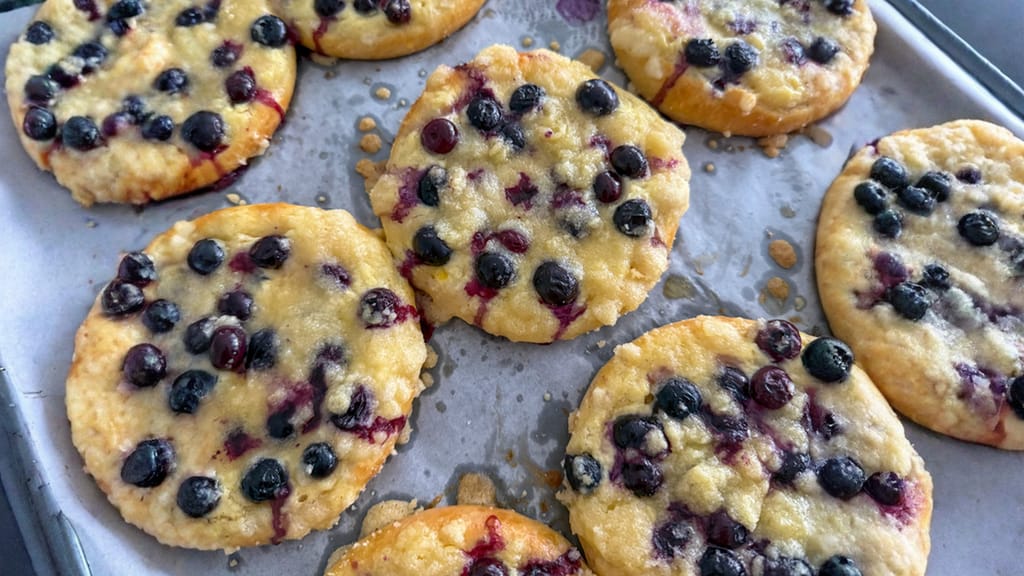
Yeasted blueberry buns with curd cheese and crumble
Yeast blueberry kolaches with quark and streusel — a summer classic on this dough
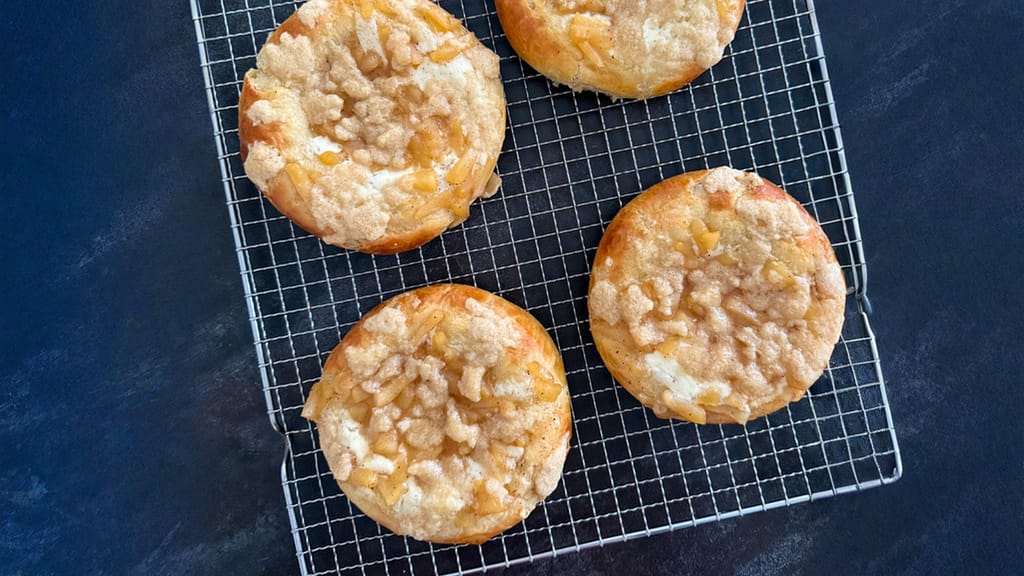
Yeasted apple buns with curd cheese and crumble topping
Yeast apple kolaches with quark and streusel for autumn
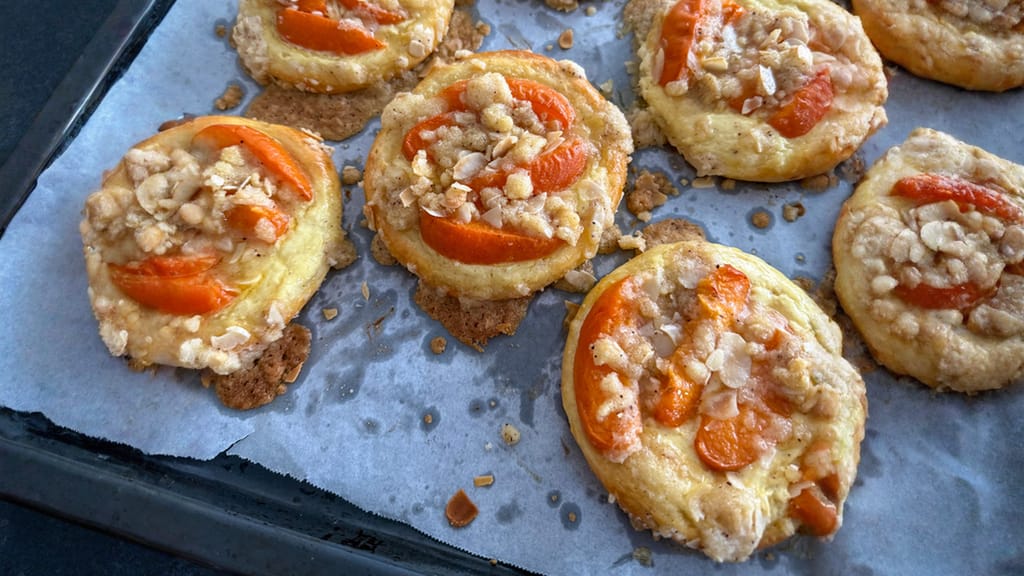
Apricot kolaches with curd cheese filling and almond crumble
Apricot kolaches with quark and almond streusel
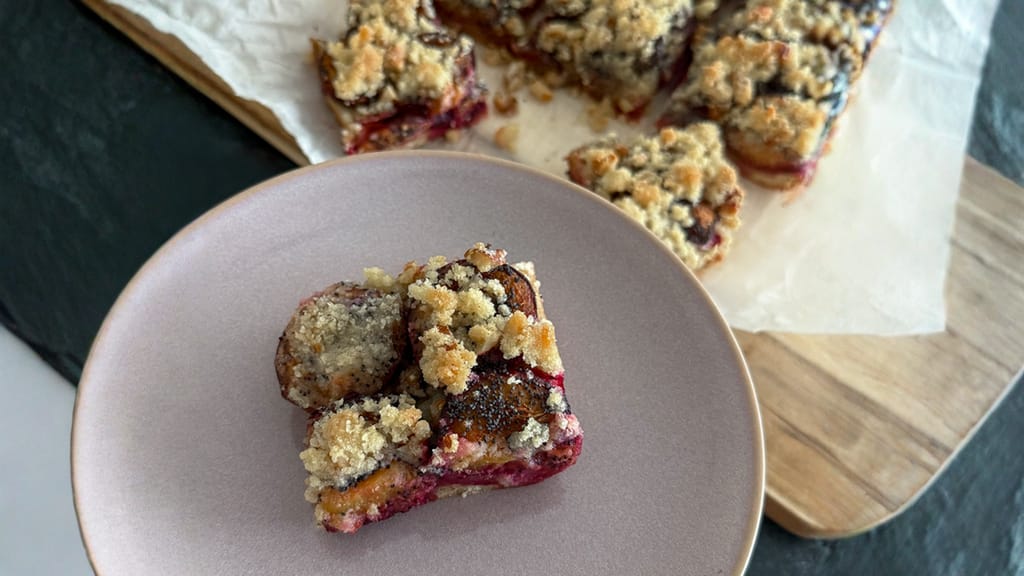
Classic yeasted plum sheet cake with crumble topping
Yeast plum kolache with walnut streusel, baked on a tray
This base also handles buchty, yeast dumplings and strudel-style rolls, with only small changes to the ratios. For buchty and dumplings, cut the sugar to 40 g and the butter to 60 g so the dough is stretchier and less sweet; replacing part of the plain flour with semi-coarse flour also works. For kolaches, on the other hand, stay with the higher fat, which gives that fine, crumbly crumb.
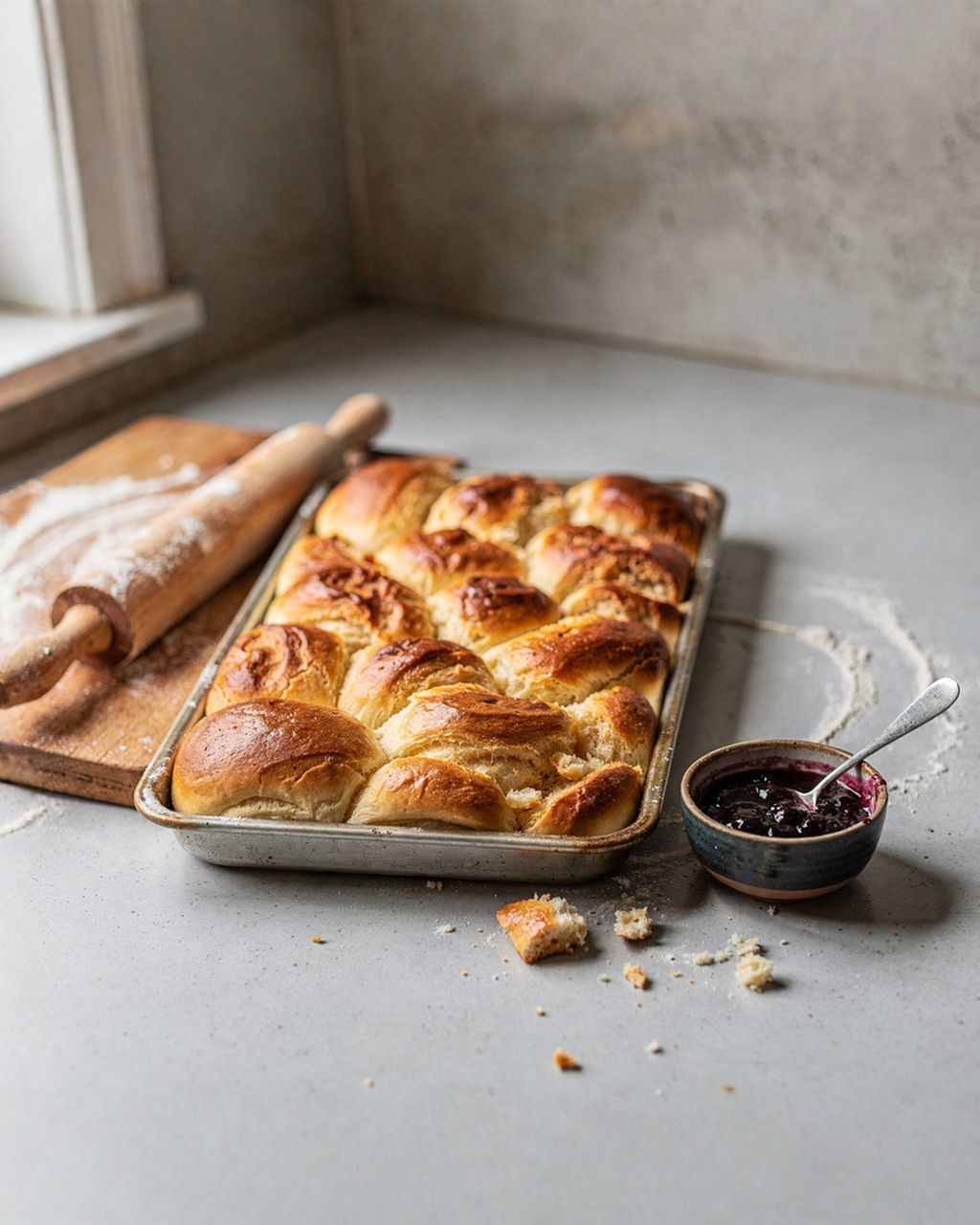
Buchty: roll out the dough, cut it into squares, fill with plum butter or quark, wrap, and arrange snugly side by side in a baking dish, so the sides stick together and stay soft. A smaller sibling of buchty is soft little buchty with vanilla custard.
Yeast dumplings: for how to work with the dough for dumplings, see the recipe for yeast dumplings with fruit. The rise is the same; they're just steamed instead of baked.
Yeast strudel roll: after the first rise, roll the dough out into a rectangle about 5 mm thick, cover with filling (apples, poppy seeds, nuts), roll up and let it finish rising for 20–30 minutes, seam side down. It bakes longer than kolaches, around 30–35 minutes.
If you're baking egg-free, replace the yolks with sour cream and a bit of extra butter; the exact amounts are in the variations above.
Use the "Dough" program: the machine kneads the dough and gives it its first rise, and you shape and bake in the oven. Add the ingredients in the order your machine's manual recommends, usually milk and yolks first, then flour with the salt and sugar, and the yeast in a small well on top so it doesn't touch the salt or the liquid too early. Add the softened butter after 5 minutes of kneading so the gluten has time to develop. When the program ends, take the dough out, divide it into kolaches and carry on with the second rise and the baking as usual.
It freezes best after the first rise, already shaped into balls of 50–60 g, and keeps for up to three months. Freeze the rounded pieces on a tray first, then move them to a bag. Before baking, thaw them overnight in the fridge, then let them finish rising in a warm spot for 60–90 minutes. Freezing kills some of the yeast, so the second rise always takes longer than with fresh dough.
Yes. Replace 80–100 g of butter with 65–80 g of neutral oil, because butter contains roughly 15–16% water (by law, butter has at least 80% milk fat). Pour the oil in with the milk right at the start, not after kneading. The kolaches will be a little more tender and stay soft longer, but you lose the buttery flavor; extra vanilla and lemon zest help make up for it.
Yes. Swap the plain wheat flour for plain (light) spelt flour 1:1, but cut the milk by about 20–30 ml and knead for a shorter time, 5–6 minutes. Spelt gluten is weaker and tears if overkneaded. The dough rises similarly, the kolaches have a mild nutty flavor and they dry out a bit faster, so tangzhong pays off twice over here.
The filling almost always leaks because it's too loose or the well is too shallow. Bind the quark with one egg and a spoonful of semolina or custard powder per 250 g, and let it rest for a while to thicken. Press the well with your thumb almost to the bottom, leaving a clear rim around it; a shallow dent closes up as the dough rises, and the filling has nowhere to go.
Sticky kolache dough is usually the right dough that just needs more kneading, not more flour. A buttery yeast dough should be soft and slightly tacky; after ten minutes of kneading it stops sticking to the sides of the bowl on its own. Adding extra flour is the quickest way to tough, dry kolaches. If you really must, add one spoonful at most, and rub a little oil on your hands instead.
One recipe worth heating the oven for, one tip, and one deal from the shop. Nothing else.