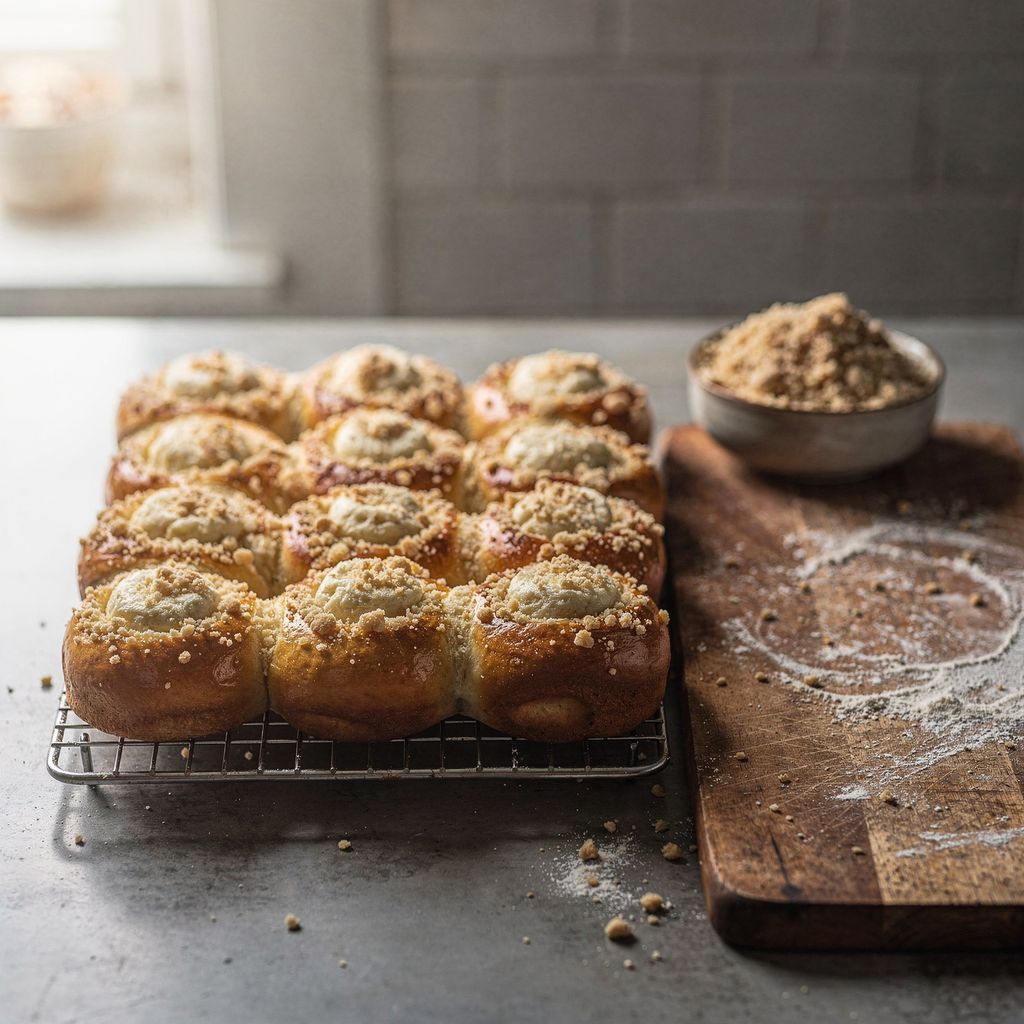
Yeasted blueberry buns with curd cheese and crumble
Updated Sep 5, 2026
Yeasted kolache dough comes down to one ratio: to 500 g plain flour, add 250 ml lukewarm milk, 80–100 g softened butter, 2 egg yolks, 60–80 g sugar, 21 g fresh yeast (or 7 g dried) and 6 g salt. That gives you roughly 950–1000 g of dough, enough for 16–19 buns at 50–60 g each. Fat and egg yolks give it softness; time gives it lightness — two rises, 65–90 minutes altogether. The rest of this page is about why it works and where it most often goes wrong.
For 500 g of plain flour you need 250 ml of milk, 80–100 g of butter, 2 egg yolks, 60–80 g of sugar, 21 g of fresh yeast and 6 g of salt. This batch gives you roughly 950–1000 g of dough, which is 16–19 buns at 50–60 g each or one large sheet cake.
Plain flour — 500 g
Milk — 250 ml, lukewarm (35–40 °C)
Butter — 80–100 g, softened to a creamy consistency, not melted
Egg yolks — 2 (or 1 whole egg and 1 yolk)
Sugar — 60–80 g
Yeast — 21 g fresh, or 7 g dried
Salt — 6 g, roughly a teaspoon
Lemon zest, vanilla — optional, but you'll notice it in the finished bun
As a percentage of flour weight: liquid around 50%, fat 16–20%, sugar 12–16%. That's the range where the dough is still easy to work with and already noticeably soft. From around 10% sugar by flour weight, the yeast starts to slow down; above 20% it's significant — dissolved sugar draws water away from the yeast through osmotic pressure, and the rise can easily take half again as long. That's why a sweeter filling should always outshine a sweeter dough.
Every ingredient in yeasted dough handles a different job in the finished bun — fat gives softness, flour gives structure, sugar gives flavour and colour, salt gives flavour and controls the pace of rising.
Flour holds the whole structure together. Plain wheat flour gives a fine, soft crumb — exactly what you want from a kolache. A coarser flour makes the dough stretchier and denser, better suited to sweet buns (buchty).
Butter coats and shortens the gluten strands. That's why buttery dough is softer and more tender — and why the butter goes in last, once the gluten has already developed. If you added it right at the start, the gluten wouldn't bond properly and the dough would tear.
Egg yolks bring fat and lecithin, which holds fat and water together. Thanks to them the crumb is finer and stays soft longer. Egg white, on the other hand, tends to dry the dough out — that's why the recipe calls for yolks, not whole eggs.
Milk supplies water for the gluten as well as milk proteins and sugars that brown the crust nicely.
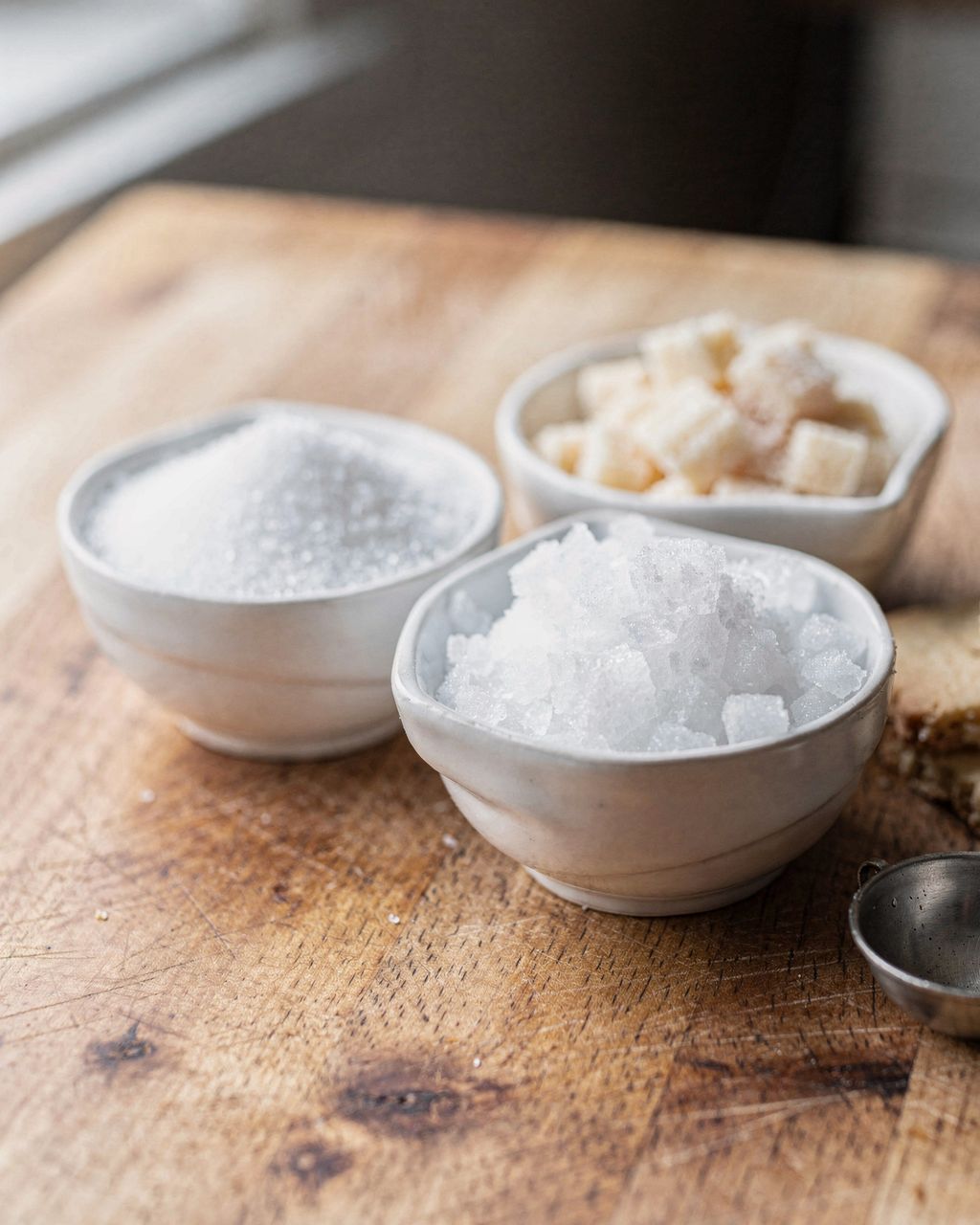
Sugar is flavour, colour, and food for the yeast. In larger amounts, though, it's also a brake — see the ratios above.
Salt tightens the gluten, builds flavour, and slows the rise slightly so it proceeds evenly. Without it, a bun tastes flat no matter how much sugar it has.
Yeast produces the carbon dioxide that lifts the dough, along with flavour compounds as it works. The slower the rise, the more flavour you get.
You can swap fresh yeast for dried at a 3:1 ratio — a 42 g cube corresponds to roughly 14 g dried, so for 500 g of flour that's 21 g fresh or 7 g dried (one standard sachet).
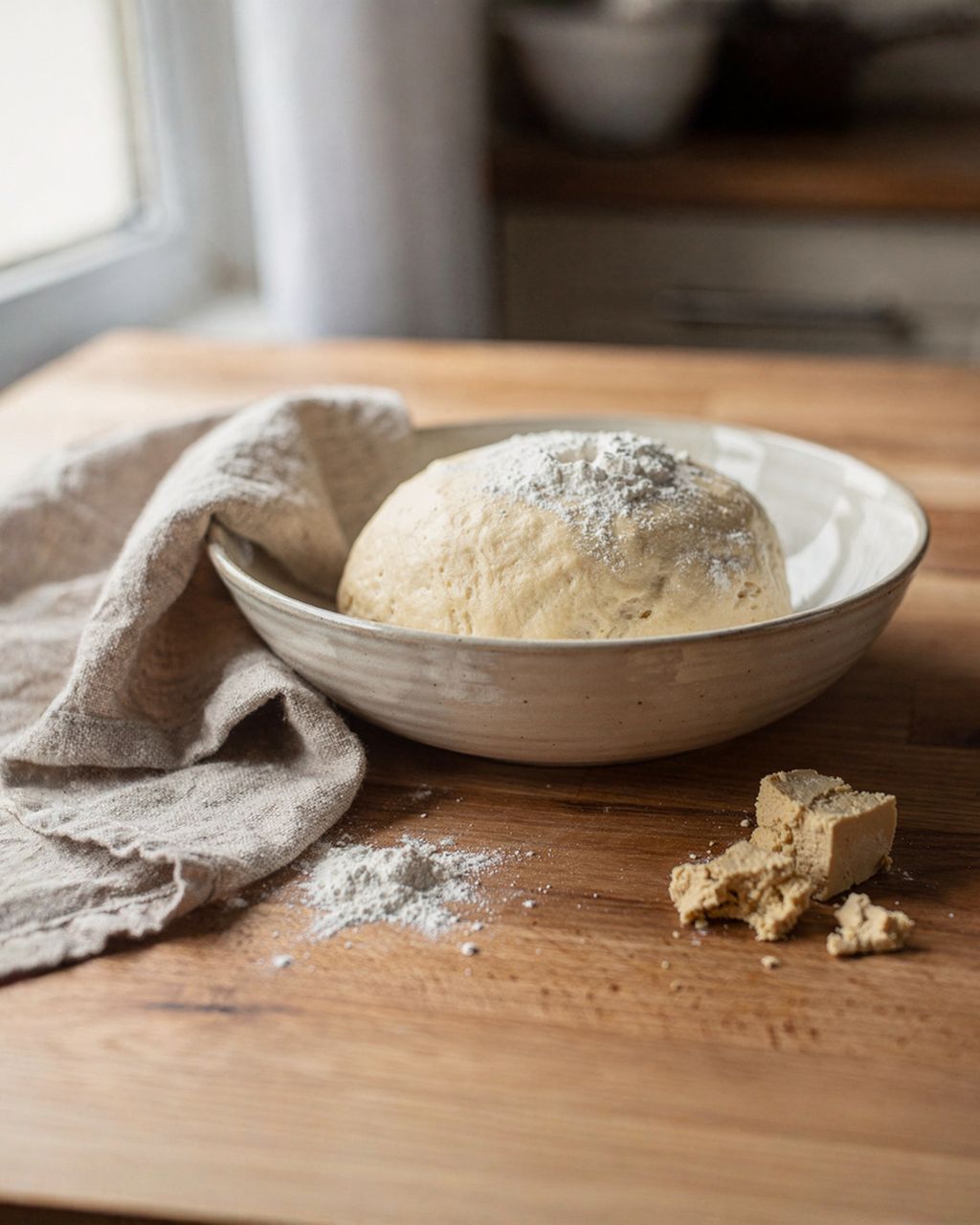
Fresh yeast should be crumbled into lukewarm milk and left to activate. It keeps for about two weeks in the fridge, after which it loses strength quickly.
Active dry yeast also needs to go into liquid first.
Instant yeast can be mixed straight into the flour. You save a step, but you lose the check — you won't know in advance whether it's still alive.
If you're not sure how fresh your yeast is, make a starter (proofing sponge). It's a fifteen-minute insurance policy against staring at a flat bowl two hours later.
The whole process has five stages and takes about two hours: sponge 15 minutes, kneading 10 minutes, first rise 45–60 minutes, shaping and second rise 20–30 minutes, baking 15–20 minutes.
Crumble the yeast into about half the lukewarm milk, add a teaspoon of sugar and a tablespoon of flour, stir, and let it stand somewhere warm for 10–15 minutes.
The milk temperature is the one thing here you can ruin beyond repair. 35–40 °C is ideal — it should feel lukewarm on your finger, not hot. Above about 55 °C the yeast starts to die, and around 60 °C it's reliably dead. Cold milk just means a slower start; hot milk means it's over.
A ready sponge is foamy and has puffed up into a little dome. If it hasn't moved after fifteen minutes, the yeast is dead — throw it out and start again. It'll save you half a kilo of flour.
Mix the salt into the rest of the flour, add the sugar, egg yolks, remaining milk and the sponge, and knead for 8–10 minutes into a smooth, only slightly sticky dough. Only then work in the softened butter, a bit at a time.
After you add the butter, the dough will first look like it's fallen apart — it'll go slack and slippery. That's normal; it needs another 3–5 minutes of kneading before it comes back together into a smooth ball.
You'll know it's ready by the windowpane test: tear off a small piece and stretch it between your fingers. If it stretches into a thin, translucent sheet without tearing, the gluten is developed. If it tears right away, keep kneading.
Knead by hand or with a stand mixer on low speed. The ideal temperature for the finished dough is 24–26 °C — so in a warm kitchen, reach for cooler milk, since a stand mixer will warm the dough up a few degrees on its own.
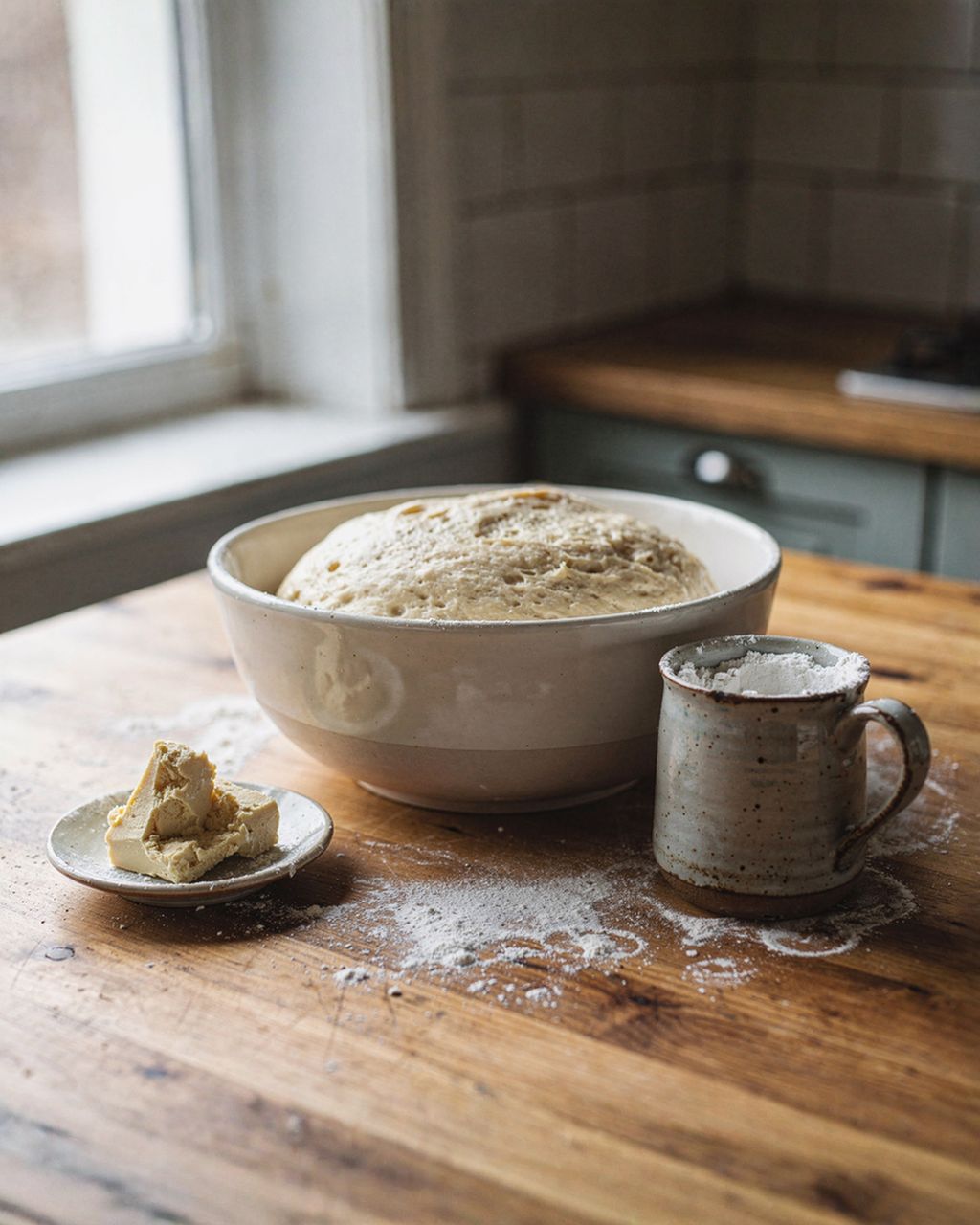
Cover the bowl with plastic wrap or a tea towel and let the dough double in size at room temperature (22–25 °C) — for this batch that takes 45–60 minutes.
The time given in a recipe is just an estimate based on an ideal kitchen; in a cold kitchen it could easily take 90 minutes. Go by volume, not the clock. It helps to place the bowl in a switched-off oven with a cup of hot water — you get steady warmth with no drafts.
Dough with this much fat rises more slowly than bread dough, because the butter coats both the yeast and the gluten. Don't panic and don't add extra yeast — you'll just get a fast rise and a yeasty aftertaste.
Gently knead the risen dough, divide it into 50–60 g pieces, roll them into balls, and let them rise on a tray for another 20–30 minutes. Only then make the indents and fill them.
Press the indent with your thumb or the bottom of a glass nearly all the way to the base. A shallow indent will close back up during baking and the filling will slide right out.
Leave at least 3 cm between the buns. They'll grow more in the oven, and buns that touch end up with pale, underbaked sides.
Don't cut the second rise short. Underproofed dough cracks in the oven and comes out dense.
But don't overdo it either. Over-proofed buns will collapse during baking. The finger test: gently press the edge — the dent should spring back slowly, not all the way. When it stays put, it's time to bake.
Before baking, brush the edges with beaten egg yolk mixed with a tablespoon of milk. Just the edges, not the filling.
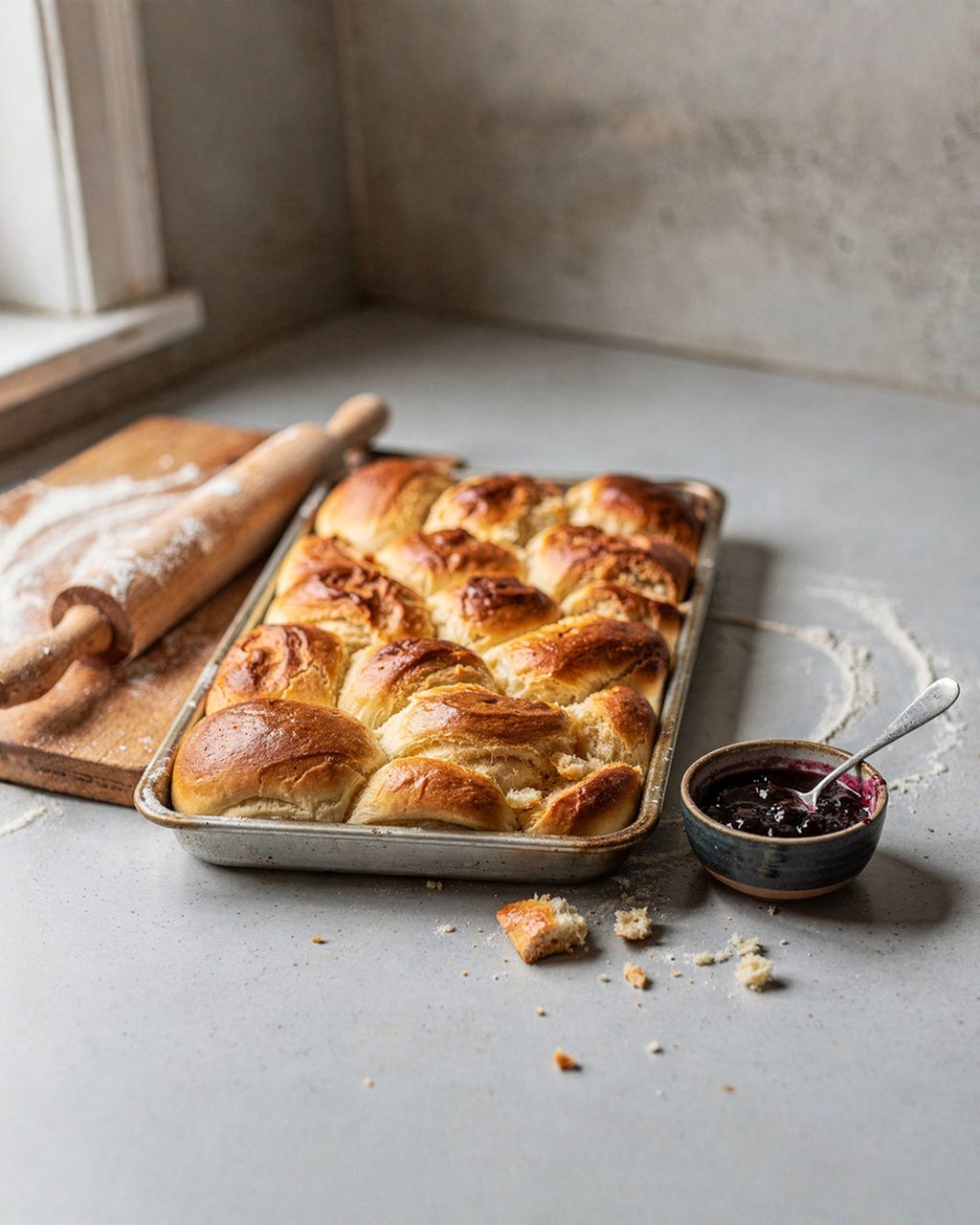
Bake small buns in a preheated oven at 170–180 °C, top and bottom heat, for 15–20 minutes; a large sheet cake takes 25–35 minutes. They're done when the edges turn golden and the bottom lifts easily without resistance.
For fan/convection ovens, lower the temperature by 15–20 °C, i.e. to 150–160 °C, and keep an eye on the time — it dries the buns out faster. The internal temperature of fully baked yeasted pastry sits around 88–93 °C, so if you have a probe thermometer, that's the most reliable way to check.
Bake one tray in the middle of the oven. Two trays at once means a pale bottom and a scorched top, even with convection.
When yeasted dough won't rise, it's almost always one of five things: dead yeast, liquid that was too hot, a cold kitchen, too much sugar and fat at once, or simply not enough time.
Old yeast. The most common and simplest culprit. The sponge test is your fifteen-minute check.
Milk that's too hot. Above 55 °C the yeast starts dying, and around 60 °C it's finished. There's no fixing it after the fact.
Not enough time, going by the clock instead of the dough.A recipe's stated time assumes an ideal kitchen. What matters is volume: until the dough has doubled, it isn't ready.
A cold kitchen or a draft. Below 18 °C the rise can drag on forever. A switched-off oven with a cup of hot water solves the problem.
Overloaded dough. Too much sugar and butter together will slow the rise significantly. Stick to the ratios above and give it more time, not more yeast.
Salt is deliberately not on this list. In the amount that belongs in the dough (about 1% of the flour weight), it won't kill the yeast — it just slows the rise slightly, which is actually desirable. Mixing it into the flour is worth doing for even distribution, not to save the yeast.
If the dough is just rising slowly, give it another half hour somewhere warm — that's easily fixed. If it hasn't moved at all after an hour in the warmth and the sponge never foamed, the yeast is dead, and only a fresh batch will save it.
Next-day softness comes down to three things: enough fat and egg yolks in the dough, not overbaking, and storing them properly in a sealed container at room temperature.
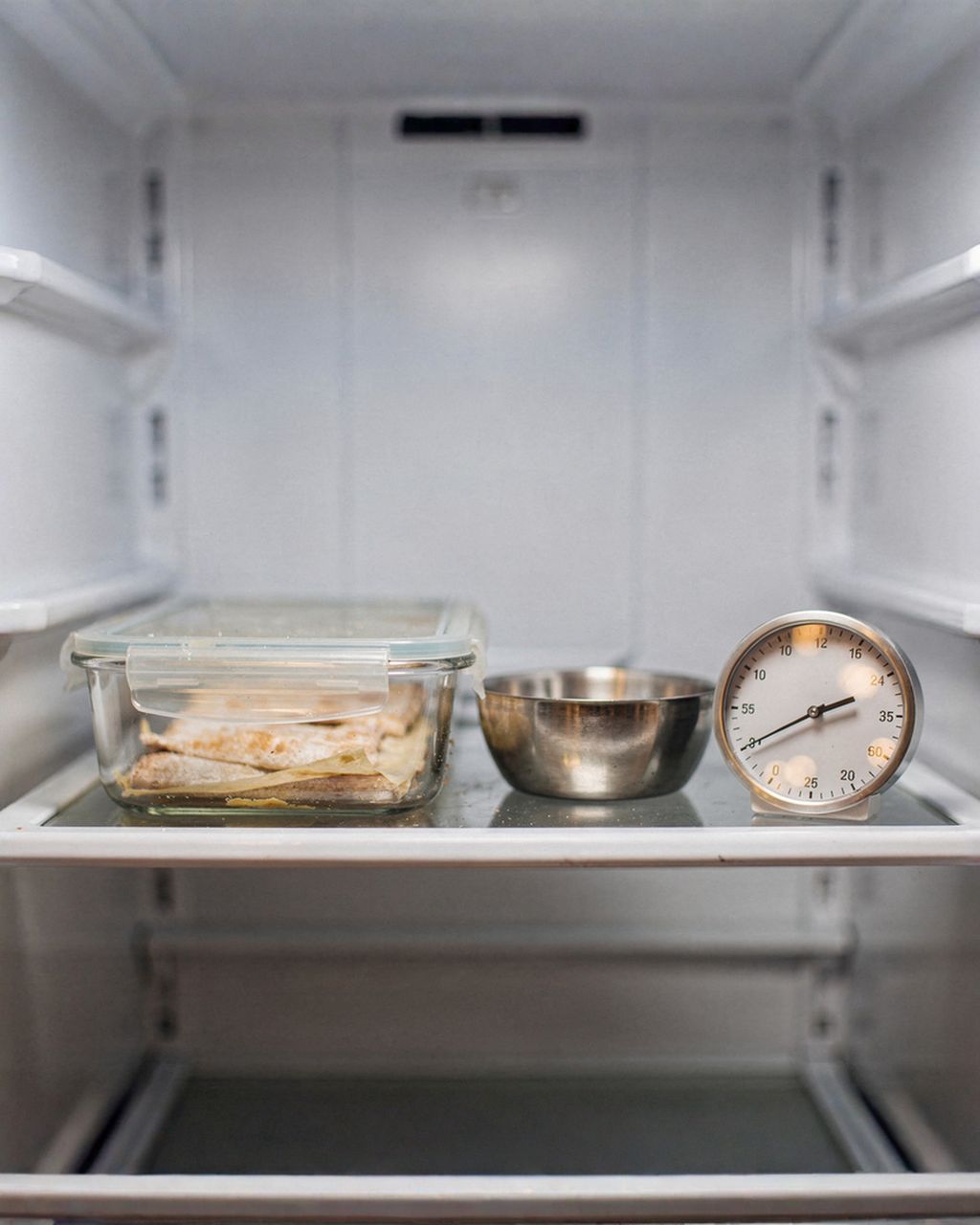
Don't put the buns in the fridge. Cold speeds up starch staling — they'll go stale faster in the fridge than on the counter. A sealed container or a bowl covered with a tea towel at room temperature works better.
Let them cool completely before sealing them up. Warm buns in a sealed container will trap moisture and the crust will turn soft and rubbery.
If in doubt, cut the baking time short by two minutes rather than extending it. There's no saving an overbaked bun.
A moist filling helps keep them soft. Curd cheese, fruit jam, and fruit all add moisture even the next day — that's why curd-filled buns stay fresher longer than dry poppy-seed ones.
Freezing works great. Freeze cooled buns, then warm them up for 5 minutes at 150 °C. They taste just like fresh — better than after two days on the counter.
Curd cheese, fruit jam (povidla), poppy seed, and fruit with crumble topping are classics that work every time with this dough. Bind the curd filling with an egg and a tablespoon of semolina — otherwise it'll leak out during baking.
The crumble topping has an easy-to-remember ratio of 2 : 1 : 1 — coarse flour, granulated sugar, cold butter (e.g. 200 g flour, 100 g sugar, 100 g butter; half that, 100 g flour, 50 g sugar, 50 g butter, is enough for one tray of buns). Flour is the double amount — with double the butter, the crumble would just melt into a puddle while baking. Cold butter, your fingers, done in a minute.
Here are recipes to try this base dough with, each with a different filling and a different season.
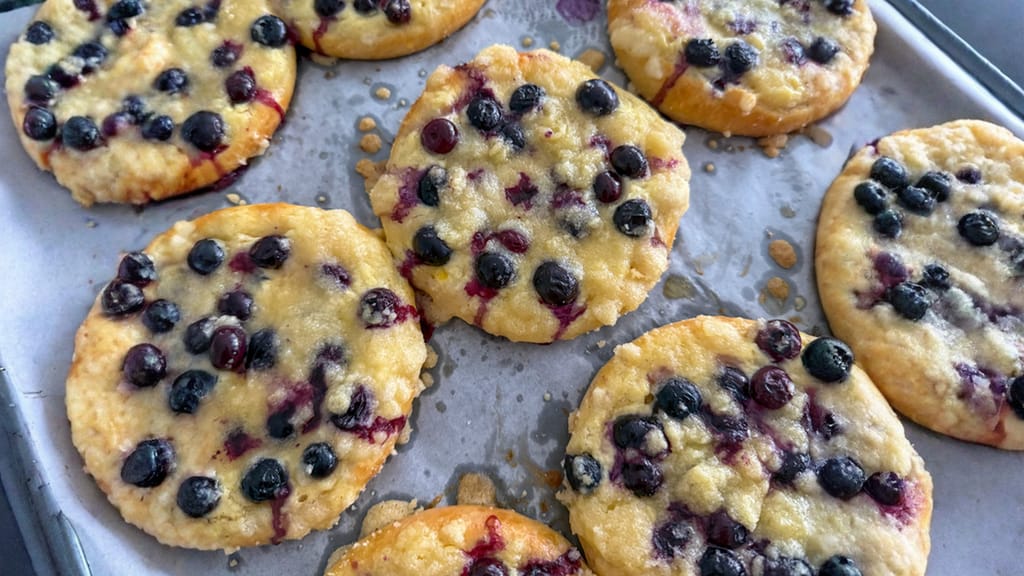
Yeasted blueberry buns with curd cheese and crumble
Yeasted blueberry kolaches with curd cheese and crumble — a summer classic on this dough
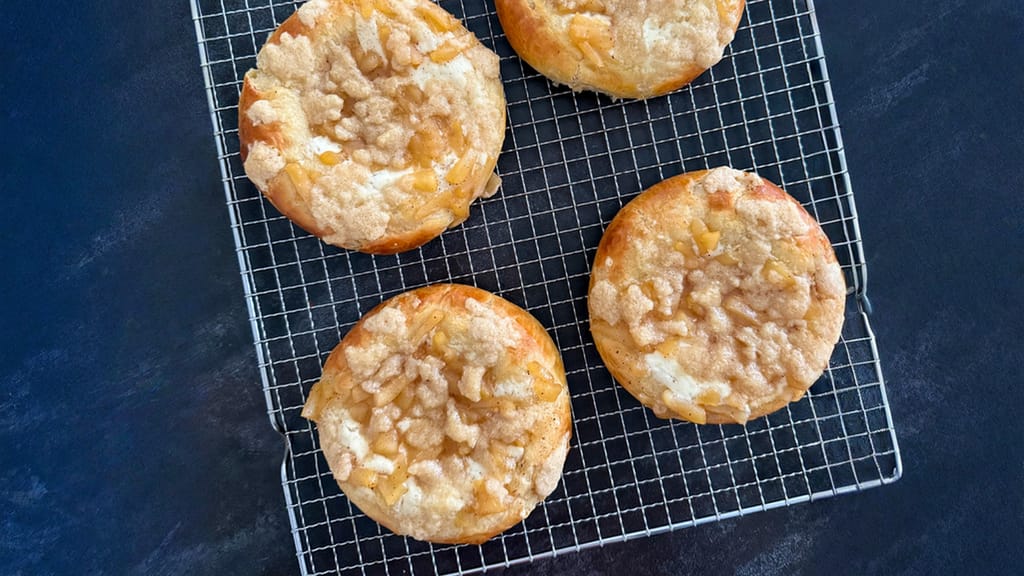
Yeasted apple buns with cottage cheese filling and crumble topping
Yeasted apple kolaches with curd cheese and crumble for autumn
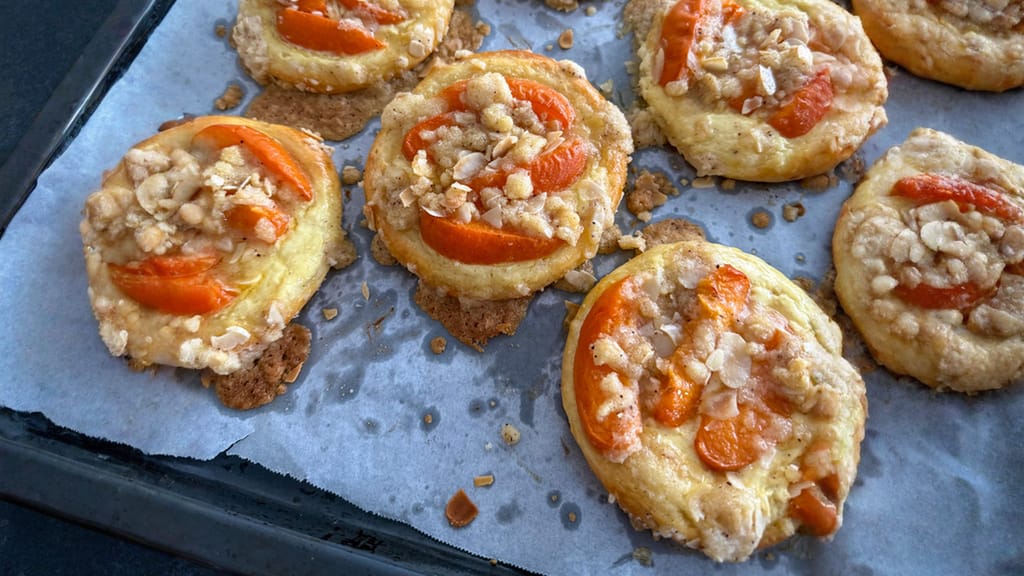
Apricot kolaches with curd cheese and almond crumble
Apricot kolaches with curd cheese and almond crumble
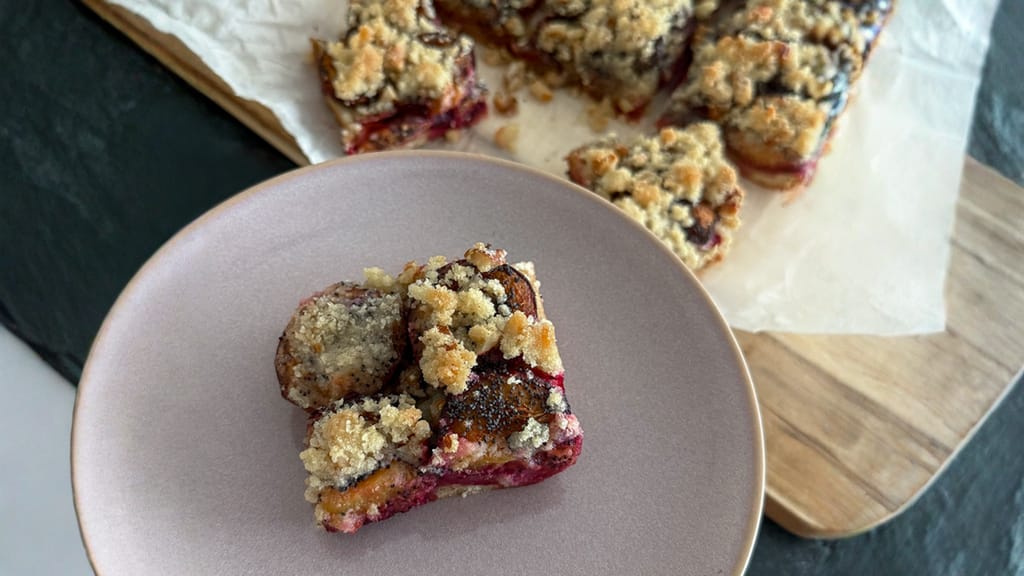
Yeasted plum cake with walnut crumble
Yeasted plum sheet cake with walnut crumble
This base dough also works for sweet buns (buchty), yeasted dumplings, and strudel — just with a small tweak to the ratios. For buchty and dumplings, cut the sugar to 40 g and the butter to 60 g so the dough is stretchier and less sweet; swapping part of the plain flour for a coarser flour helps too. For kolaches, on the other hand, stick with the higher fat content — that's what gives you the fine, tender crumb.
You'll find how to use it for yeasted fruit dumplings in that recipe — the rising process is the same, it's just steam instead of the oven from there.
If you're baking egg-free, the yolks can be left out — the fat and a bit of sour cream then need to take over most of the job of keeping it soft.
Yes, you can mix the dough in the evening and let it rise in the fridge for 8–12 hours — the slow fermentation even adds extra flavour. After a brief knead, cover the dough with plastic wrap and refrigerate it right away; the cold slows the rise but doesn't stop it. In the morning, take the dough out, let it come to room temperature for 45–60 minutes, then shape and let it rise again as usual.
The best way to freeze kolache dough is after the first rise, once it's already shaped into 50–60 g balls; it keeps for up to three months. Freeze the shaped balls on a tray first, then transfer them to a bag. Before baking, let them thaw overnight in the fridge, then let them rise for another 60–90 minutes in a warm spot. Freezing kills off some of the yeast, so the second rise always takes longer than with fresh dough.
Yes, egg yolks aren't essential for the dough to rise — they just add softness and colour. Replace two yolks with 60 g of sour cream or full-fat yogurt and add an extra 10 g of butter — the fat takes over the role the yolks played. For brushing the edges, use milk with a teaspoon of sugar instead of egg yolk; the crust will just be a bit paler.
From 500 g of flour you get roughly 950–1000 g of yeasted dough, which is about 16–19 buns at 50–60 g each. That's roughly two standard trays; as one large sheet cake, the dough is enough for a tray about 30 × 40 cm. If you want bigger 80 g buns, expect to get 12 out of it. It's worth weighing the pieces — buns shaped by eye come out different sizes and won't bake evenly in the oven.
Filling leaks out of kolaches almost always because the filling is too runny or the indent is too shallow. Bind the curd cheese with one egg and a tablespoon of semolina or custard powder per 250 g, then let it rest a bit to thicken. Press the indent with your thumb nearly to the bottom and leave a clear rim around it — a shallow dimple closes up during rising and leaves the filling nowhere to sit.
Sticky dough is usually just properly made dough that hasn't been kneaded enough — not a flour problem. Buttery yeasted dough should be soft and slightly sticky; after ten minutes of kneading it should stop sticking to the sides of the bowl on its own. Adding extra flour is the fastest route to dry, tough buns. If you really must, add no more than a tablespoon, and oil your hands instead.
One recipe worth heating the oven for, one tip, and one deal from the shop. Nothing else.