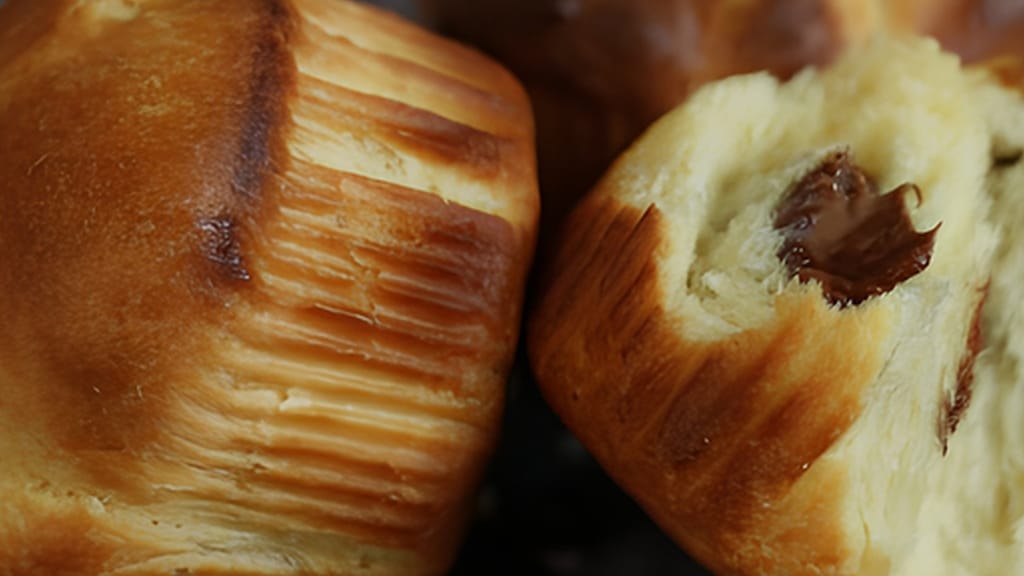
Brioche buns
Why You Brush Egg Wash on Yeasted Dough
Updated Sep 17, 2026
Yeasted dough gets an egg wash for four reasons: colour, shine, a softer crust, and so poppy seeds or almonds actually stick. Egg lays down a concentrated layer of protein and fat on the surface, which browns faster and darker in the oven than the dough alone, and it also seals the surface so the dough doesn't dry out as much. It's one of the few things in baking that costs you one egg and thirty seconds, and the payoff is visible at a glance.
Egg wash does four things at once on yeasted dough — colour, shine, a softer crust, and glue for toppings:
Colour. Proteins and amino acids from the egg kick-start browning on the surface earlier than the dough alone would brown. A brushed piece comes out of the oven noticeably darker and richer-looking than an unbrushed one.
Shine. The proteins set in the oven into a thin, continuous film that smooths out microscopic bumps on the surface and starts reflecting light. It works like a clear varnish.
A softer, more pliable crust. That same film slows down moisture loss from the surface. Sweet braided buns, koláče and brioche end up with a crust you can slice cleanly instead of one that shatters.
Glue. Poppy seeds, sesame, coarse sugar, sliced almonds — without egg, all of it slides straight off onto the baking tray once it's baked.
This isn't just cosmetic. Yeasted dough has little sugar and a lot of water on its surface, so left alone it browns slowly and pales — and by the time the inside is properly baked, the outside often still looks flat and dull.
Egg browns faster than plain yeasted dough because it brings a concentrated layer of protein and fat to the surface — exactly what the Maillard reaction needs. That reaction, between amino acids and reducing sugars, is what gives crust its colour, and baking sources note it really gets going from around 140°C (285°F). Plain yeasted dough has mostly water, starch and very few free amino acids on its surface, so it first has to dry out and heat up before browning can even start. Egg wash moves that starting point forward by a few minutes and pushes the colour further.
Shine is a second, separate process. Egg proteins set at roughly 62–70°C (144–158°F), well before browning even begins. That creates a translucent film that smooths the surface — and it's this film, not colour, that produces the characteristic shine.
Which gives you a handy rule of thumb: yolk controls colour, white controls shine. That's what decides what you brush on.
Short version: whole egg gives both golden colour and shine, yolk alone gives the darkest colour, and white alone gives shine with almost no colour.
Whole egg + 1 tablespoon liquid — the all-purpose choice and default for braided sweet breads, mazanec, koláče and rolls. Golden-brown colour, decent shine, forgiving if you're not precise.
Yolk alone + 1 tablespoon cream or milk — the darkest, richest result, almost mahogany. Use it where you want a real showpiece finish (plaited loaves, brioche), and keep an eye on the oven — it darkens fast. Don't throw away the leftover white.
White alone + 1 teaspoon water — shine with almost no colour. Ideal when you don't want a dark surface, or when all you need is to stick poppy or sesame seeds on.
Yolk and white applied separately, in two layers — the baker's trick for maximum effect: a thin layer of white first, then yolk on top. Overkill for everyday buns, but worth it on showpiece festive bakes.
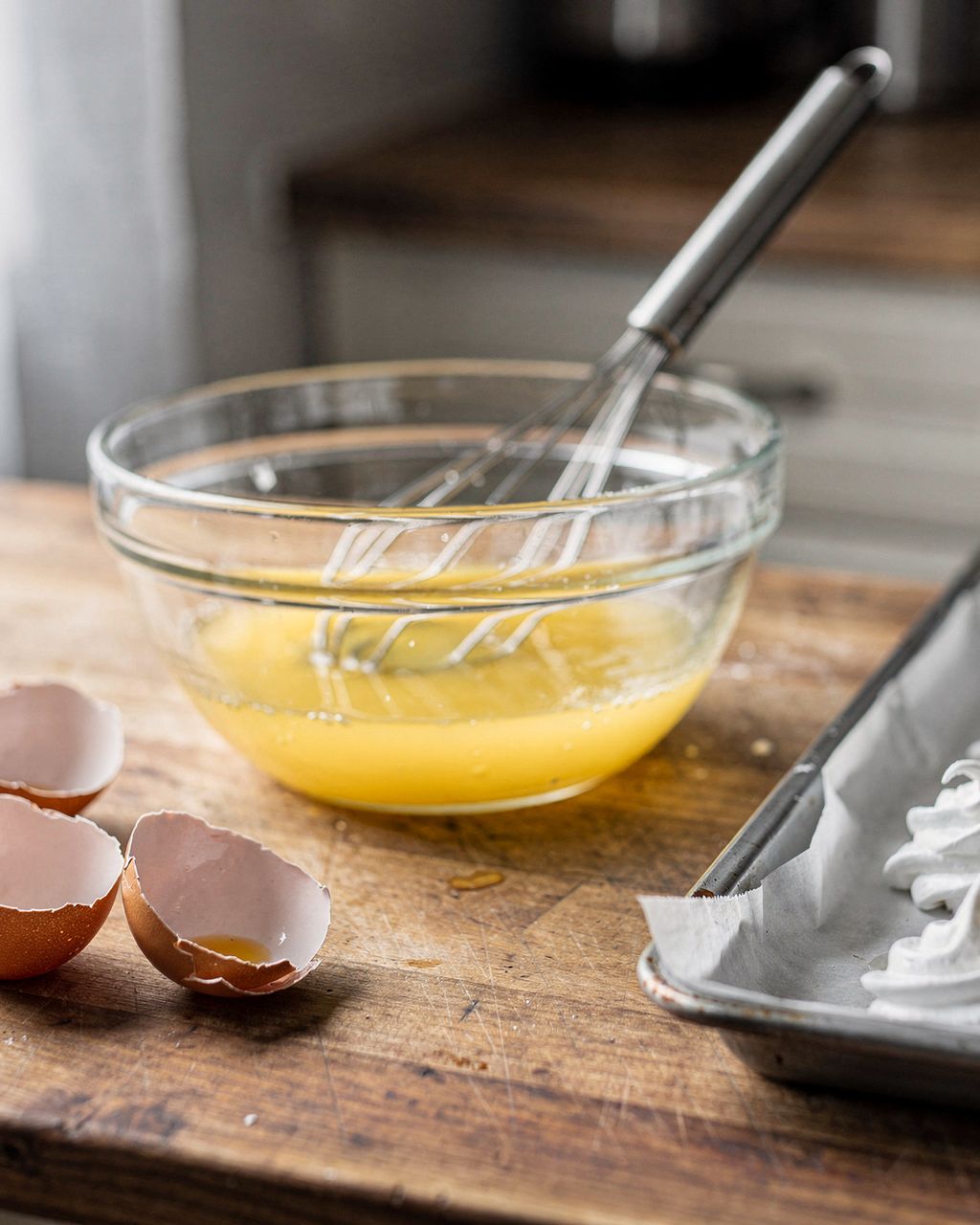
Always whisk the egg thoroughly — ideally push it through a sieve. The chalaza (that stringy bit) won't blend in and will leave a white streak on the surface.
Egg wash gets thinned with water, milk or cream — always at a ratio of 1 egg to 1 tablespoon (15 ml) of liquid. The ratio stays the same — only the result changes:
Water — the lightest golden colour, a thinner layer, and a slightly crisper crust. Spreads the most easily.
Milk — a more even, softer brown. Milk adds lactose and milk proteins, so colour develops further and the surface turns out finer. The best choice for sweet yeasted dough.
Cream — the darkest, richest result, thanks to the fat. Great for festive baking, but watch it closely so it doesn't scorch.
Nothing — just plain egg — the deepest colour, but the thick mixture spreads unevenly and leaves visible brush strokes.
A pinch of salt loosens up the proteins in the egg, thinning the mixture into a consistency that spreads more easily and evenly. Let the mixture rest about 15 minutes after mixing — only then does the salt actually change the texture. The claim that it gives 'extra shine' didn't hold up in testing, though — add salt for spreadability, not for effect. One caution: don't add salt to the layer you brush on before the final rise — there, you actually need the proteins intact.
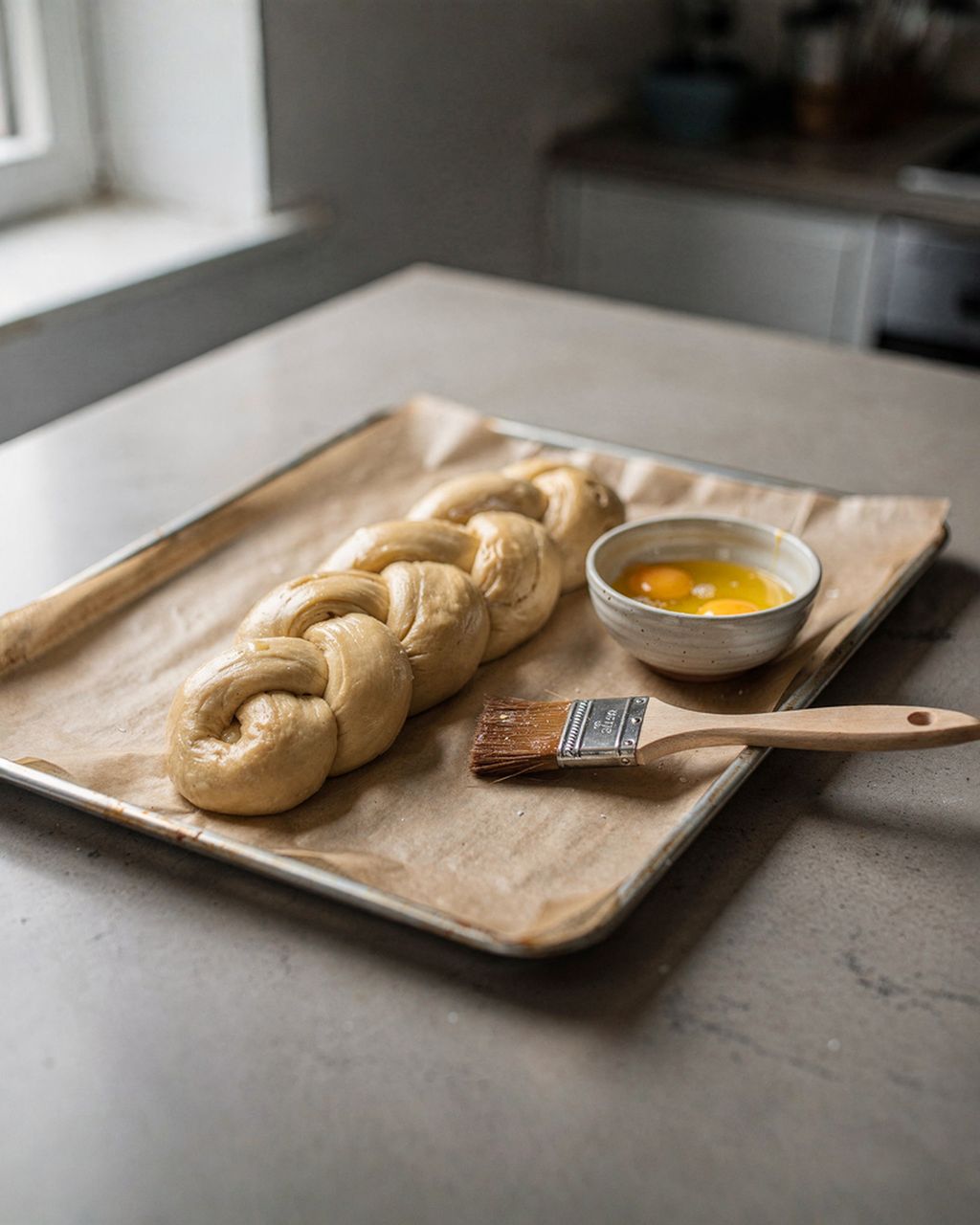
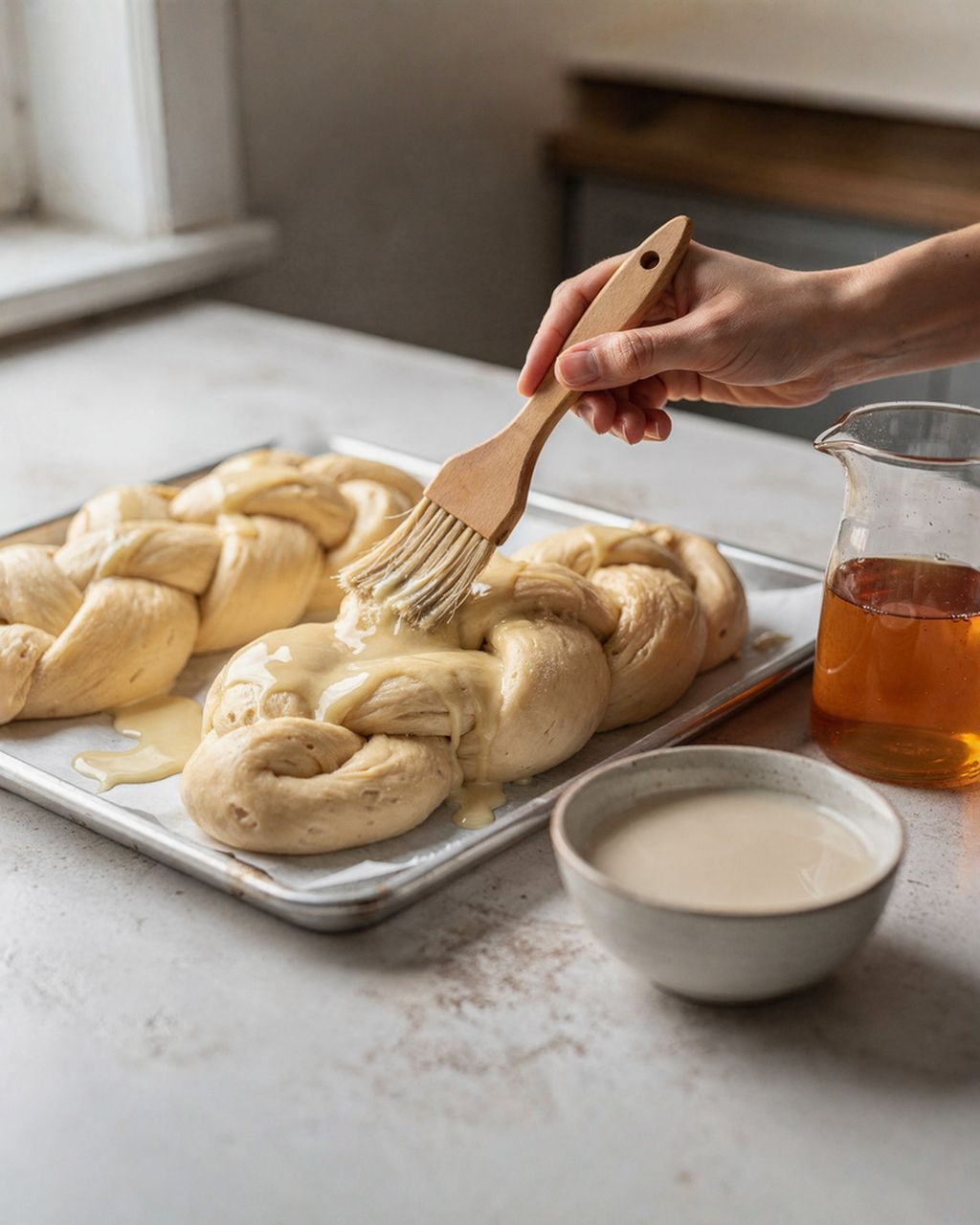
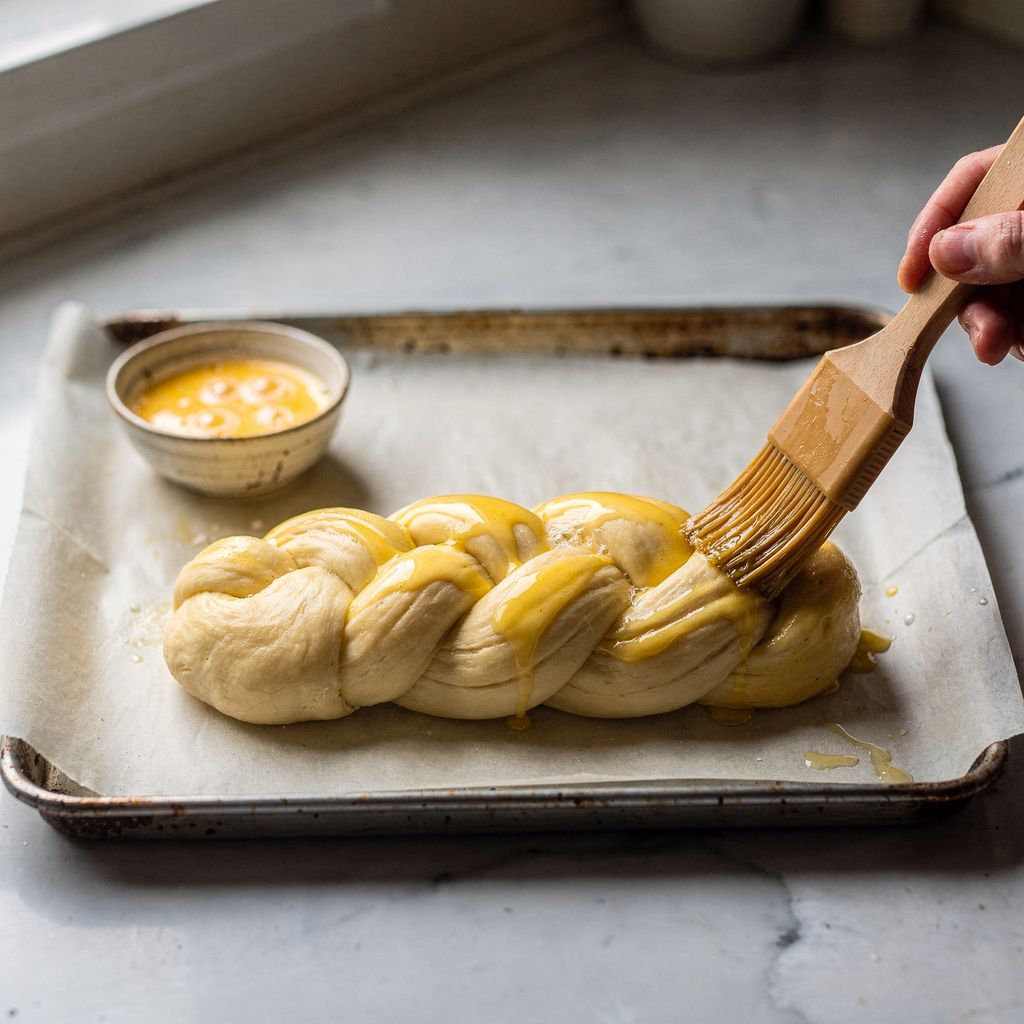
Yeasted dough gets egg-washed just before it goes into the oven; but the best results come from brushing it twice — once right after shaping, and again just before baking.
After shaping, before the final rise. A very thin layer (no salt). Besides colour, this does one more useful job: it stops a dry skin forming on the dough while it proves, which would otherwise hold it back from expanding properly in the oven.
Just before baking. A second, equally thin layer. This calls for a really light hand — risen dough is full of air bubbles, and heavier brush pressure will knock them flat.
Guide the brush with just the tip, gliding over the surface as if you're stroking it. A soft silicone or fine natural-bristle brush works better than a stiff one — stiff bristles will leave grooves in risen dough and can pop the bubbles. If you're brushing pastry that's baking in a tin, leave the edges touching the tin dry — egg there will scorch and stick, and the loaf will be harder to turn out.
Six of the most common mistakes: too thick a layer, cold egg straight from the fridge, pressing down on risen dough, egg that hasn't been beaten properly, an oven that's too hot, and egg pooling into a slashed cut. In more detail:
Too thick a layer. The egg sets in the oven into a wrinkled, rubbery film that looks like scrambled egg. Two thin coats always beat one thick one.
Egg straight from the fridge. A cold, thick mixture beads up into droplets and leaves blotches. Let it sit for 15 minutes, or thin it down.
Pressing down on risen dough. One firm stroke and a bubble collapses. You'll spot it by the dent that never puffs back up.
Egg that hasn't been beaten properly. Bits of chalaza and unmixed white leave white threads and patches on the surface.
An oven that's too hot. The egg layer browns faster than the dough underneath it. If the surface is dark but the inside isn't done, drop the temperature by 10–20°C (18–35°F) and cover with foil for the last third of baking.
Egg in the slashes. If egg runs into a scored cut, it glues it shut and the dough won't open up properly there.
A handy practical note: one egg with a tablespoon of milk comfortably covers a whole tray of buns or one large mazanec. Mixing more is a waste.
Skip the egg wash in four cases: rustic bread and steam-baked pastries, Czech buchty and koláče finished with butter, savoury pastries where you want a matte finish, and egg-free or vegan baking.
Rustic bread and steam-baked pastries. An egg film seals the surface and stops the crust from drying into that crisp, characteristically cracked finish. There, you want water, steam, and nothing else.
Czech buchty and koláče finished with butter. These are traditionally brushed with melted butter after baking and dusted with icing sugar — egg wash before baking would give them a firmer surface than you actually want.
Savoury pastries where you want a matte finish. Olive oil does a different, less glossy job, and sometimes suits the bake better.
When egg is simply off the table. For allergies or vegan baking, plant milk with a little maple syrup, aquafaba, or a starch slurry all work; the options and ratios are covered in the article on egg-wash substitutes.
And if you're unsure about the dough itself, back up a step and start with yeasted dough ratios and handling.
The difference is easiest to see on dough where colour really matters. These three recipes call for egg wash directly — and each one shows off a different part of what we've covered above.
Brioche buns
Brioche: the yeasted dough where a yolk wash shows up the most
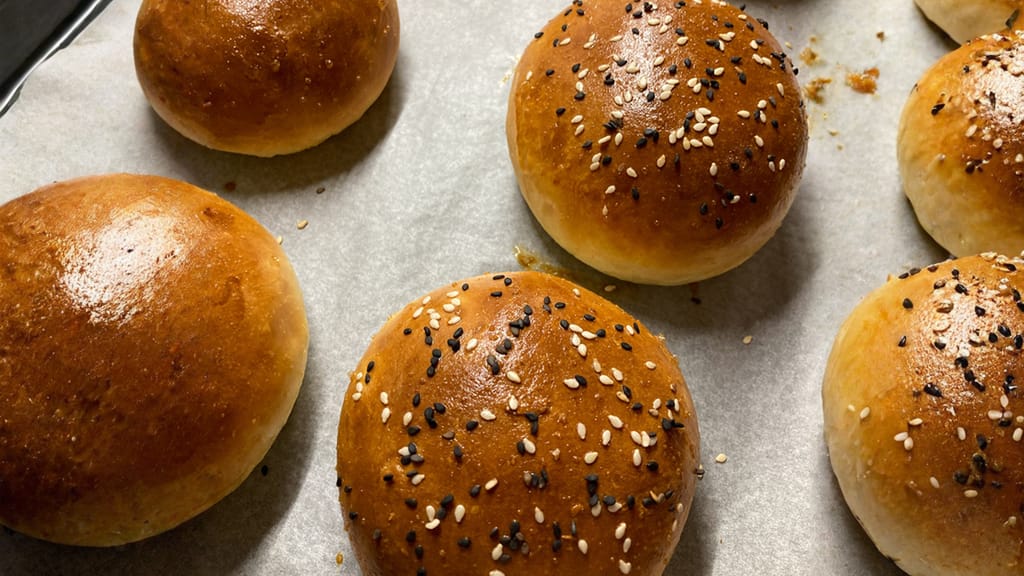
Super soft homemade burger buns
Soft homemade burger buns — egg wash is what keeps the sesame seeds in place
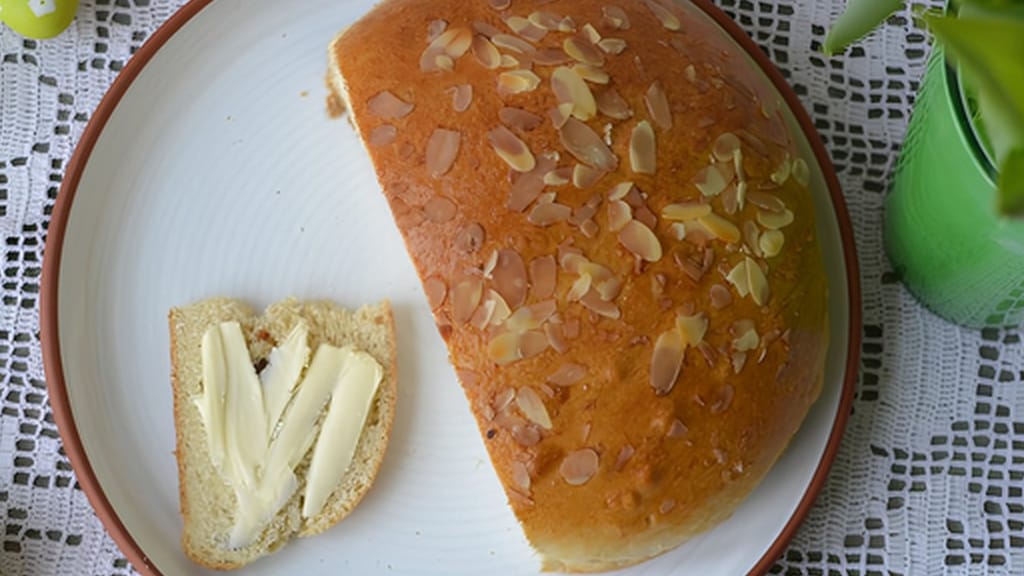
Easter classic: fragrant mazanec bread
Easter mazanec: a festive yeasted bake worth brushing twice
Egg-wash frozen yeasted dough only after it has thawed and finished proving — never while it's still frozen. On a cold, damp surface the egg beads up into droplets, and after baking you're left with a blotchy, patchy finish. Let the dough thaw and prove properly in a warm spot, gently pat away any condensation, then brush on a thin layer just before it goes into the oven. The same goes for dough that's proved overnight in the fridge — give it half an hour on the counter first so the surface isn't cold.
Unlike yeasted dough, puff pastry only gets brushed on the top surface — never on the cut edges. Egg there would glue the layers together and stop the pastry from puffing up. The ratio and technique stay the same: beaten egg with a spoonful of liquid, a thin layer, just the tip of the brush. With yeasted dough the edges matter far less, since there are no layers that need to separate and lift.
In a fan oven, a whole egg thinned with milk works fine — just know the surface will brown noticeably faster. The circulating air dries out the surface and pushes the colour along, so drop the temperature by about 20°C (35°F) compared with a recipe written for conventional heat. Save a plain egg yolk with cream for top-and-bottom heat — in a fan oven it tends to go dark before the inside is actually baked through.
Two days at most, in a sealed container in the fridge — it's raw egg, with everything that implies. Give it a fresh whisk before using it again, since it separates. Wash the brush straight away in hot water with dish soap and let it dry.
Egg-washed pastry is generally considered safe, because the egg layer bakes through together with the surface — though that's not an absolute guarantee; it comes down to the combination of temperature and time. During typical baking of yeasted dough (170–200°C / 340–390°F for 20 minutes or more), the surface heats well past 70°C (158°F) — above the 70°C for 2 minutes threshold that food-safety guidance cites for killing salmonella. Be more careful with leftover raw egg in the bowl and an unwashed brush — those belong in the fridge and the sink, not back on the counter. If you're baking for pregnant women, young children, or anyone with a weakened immune system, use pasteurised egg.
No — once it's baked, there's no more heat to set the egg, so it would just stay raw. If you want to add shine to the finished bake, brush it with hot sugar syrup (1:1 sugar and water, briefly boiled) or melted butter, applied while the surface is still hot.
One recipe worth heating the oven for, one tip, and one deal from the shop. Nothing else.