Homemade oven-baked plum butter
Updated Sep 5, 2026
Yeasted dough for buchty (baked filled buns) and sweet dumplings is essentially the same dough set up two different ways: for 500 g plain flour, use 250 ml lukewarm milk, 21 g fresh yeast, 5 g salt — then you simply add or hold back on fat, sugar and eggs depending on whether it's headed for the oven or the steamer. For buchty you want a rich dough (70 g butter, 70 g sugar, an egg yolk); for dumplings, a leaner and slightly firmer one (20 g butter, 20 g sugar), because in steam, extra fat and sugar show up as a gummy centre. Everything else comes down to temperature and timing — and both can be measured instead of guessed at.
The all-purpose base for yeasted dough is 500 g plain flour, 250 ml lukewarm milk, 21 g fresh yeast (half a cube), 5 g salt — then add fat, sugar and egg depending on what you're making. This amount makes about 12 buchty in a 20 × 30 cm baking tin, or 14–16 fruit dumplings.
Two versions of the same base:
For buchty (rich dough): 500 g plain flour, 250 ml milk, 21 g fresh yeast, 70 g sugar, 70 g softened butter, 1–2 egg yolks, 5 g salt, zest of half a lemon. The batch weighs roughly 930 g.
For yeasted dumplings (leaner dough): 500 g plain flour (or 250 g plain + 250 g coarser flour), 250 ml milk, 21 g fresh yeast, 20 g sugar, 20 g butter, 1 egg, 5 g salt. The batch weighs roughly 865 g.
A few numbers to save you the maths:
Fresh yeast to dried yeast is a 3:1 ratio. 21 g fresh = 7 g dried; a whole 42 g cube = 14 g dried.
Yeast per kilo of flour: 30–50 g fresh. The lower end for leaner dough, the higher end for rich dough — sugar and fat slow the yeast down, so you compensate with quantity.
Salt is always 1–2% of the flour's weight, so 5–10 g per 500 g. Too little and the dough tastes flat; too much and rising drags on.
Hydration around 50%, meaning 250 ml liquid per 500 g flour. Eggs add a little extra liquid; butter doesn't — it softens the dough the way fat does, not the way water does.
Use plain flour. A coarser, semolina-type flour gives dumplings a bit more bite and helps them hold their shape, but don't overdo it in buchty — above half the flour, the crumb starts turning coarse.
Dumpling dough has roughly a third of the fat and a third of the sugar of buchty dough and is a touch firmer — because it's cooked in steam or water, not the dry heat of an oven.
Here's why:
Fat. In the oven, butter in the dough acts as insurance against drying out and keeps buchty soft even the next day. In steam, where moisture is already plentiful, that same butter makes the crumb heavy and gummy.
Sugar. Above roughly 10% of the flour's weight (that's 50 g per 500 g), sugar starts osmotically pulling water away from the yeast and rising slows down noticeably. Rich buchty dough knowingly pays that price and offsets it with a longer rise and more yeast. Dumplings have no reason to pay it — sweetness comes from the filling and the topping instead.
Eggs. For buchty, favour yolks: they add colour, richness, and keep the crumb soft. Egg white dries the dough out and tightens it. For dumplings, one whole egg is enough — or none at all, if you want a lighter dough.
Firmness. Dumpling dough needs to hold a ball shape around juicy fruit, so keep it noticeably firmer — once worked through, it should be smooth, slightly tacky to the touch, but not sticking to your hands.
If you don't want to remember two separate recipes, make the whole batch as the leaner version and work an extra 25 g softened butter and 25 g sugar into the half destined for buchty.
Yeasted dough wants 25–28°C and two stages: 45–60 minutes for the first rise until doubled in size, and 20–30 minutes for the second rise after shaping. Time is only ever an estimate — go by volume and by the poke test.
Why these particular temperatures: yeast is happiest between 25 and 30°C. Below 10°C it slows down dramatically — it doesn't stop, it just takes many times longer (which you can actually use to your advantage — see fridge-proofing below). Above 40°C it starts to weaken, and around 55–60°C in moist conditions it dies off; that's why you never pour hot milk straight onto yeast, and why you measure 30–35°C for the starter instead of guessing.
Timeline for one batch:
Starter — 10–15 minutes. Crumble the yeast into 100 ml milk at 30–35°C, add a teaspoon of sugar and a tablespoon of flour. It's ready when it puffs up into a foamy cap. If nothing's happened after 15 minutes, the yeast is dead and there's no point carrying on.
Kneading — 8–10 minutes by hand, 5–6 minutes in a stand mixer. Add salt to the flour, never directly into the starter — direct contact osmotically pulls water out of the yeast. Work the butter in last, bit by bit, once the dough has already come together.
First rise — 45–60 minutes. In a bowl covered with cling film or a tea towel, somewhere warm and draft-free. Rich buchty dough can easily take 75–90 minutes, since sugar and butter slow it down.
Shaping and second rise — 20–30 minutes for buchty, 15–20 minutes for dumplings. Always shorter than the first rise. An over-proofed second rise is the most common reason buchty collapse in the oven.
Instead of watching the clock, use the poke test: press a finger about a centimetre into the dough. If the dent springs back slowly and only halfway, it's ready. If it bounces back instantly, give it more time. If the dent just stays put and the dough around it sags, it's over-proofed — you can still rescue it by briefly kneading it and letting it rise once more, but only once.
No warm spot in the kitchen? Heat the oven to 50°C, switch it off after five minutes, then put the bowl of dough inside along with a tray of hot water on the bottom. That holds the 26–28°C you're after.
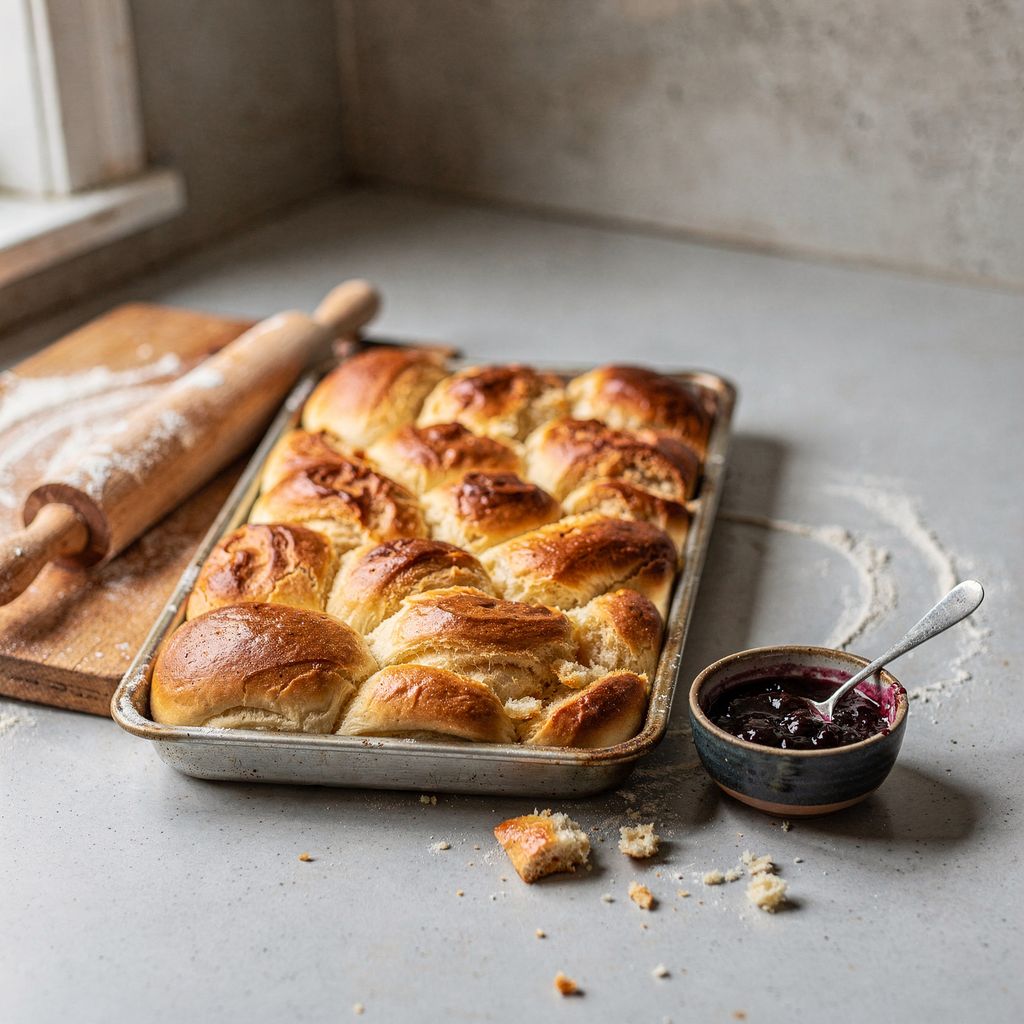
Bake buchty for 25–30 minutes — the first 5 minutes at 190°C, then turn it down to 180°C. The hotter start quickly seals the surface and traps steam inside, keeping the crumb soft; if you baked the whole time at 180°C, the buchty would dry out more.
A method that works for plum jam, poppy seed or curd cheese filling alike:
Divide and weigh. The rich batch weighs roughly 930 g — divide it into 12 portions of about 75–78 g, or 14 portions of 65 g if you want them smaller. Equal weight means equal baking time — and since buchty touch each other in the tin, this matters more here than with individual buns.
Don't overfill. Flatten a portion into a disc with your palm, place the filling in the centre (one heaped teaspoon, no more) and carefully pinch the edges together. The seam has to be sealed and facing down — otherwise it'll pop open in the oven and the filling will leak out.
Brush the sides with fat. Coat each bun on the sides with melted butter or lard and arrange them tightly in a greased baking tin, leaving about 1 cm between them. That fat between them is exactly why they pull apart cleanly after baking instead of needing to be torn.
Let them have a final rise of 20–30 minutes covered with a tea towel, until the gaps close up and the buns are touching.
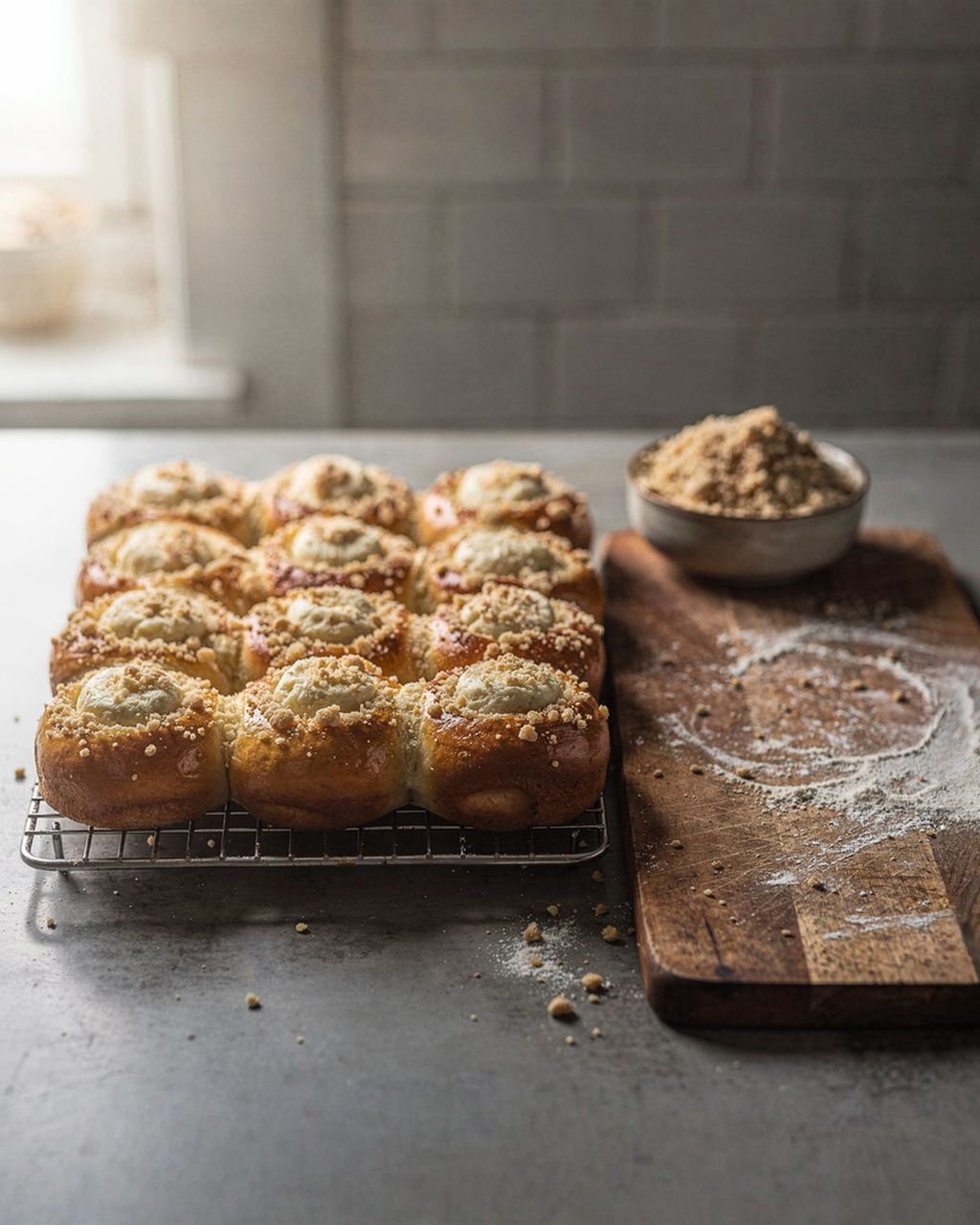
Bake for 25–30 minutes. They're done when the tops are golden and the centre bun reaches an internal temperature of 88–93°C. Don't aim higher: past 94°C, rich sweet dough is just drying out (96°C is for lean bread dough). No thermometer? A skewer poked into the centre should come out dry, and the base should sound hollow when tapped.
Brush with butter straight out of the oven (a splash of rum in it is a nice touch), then cover with a clean tea towel. The steam that gets trapped underneath softens the crust — that's exactly what turns a good bun into a soft, pillowy one.
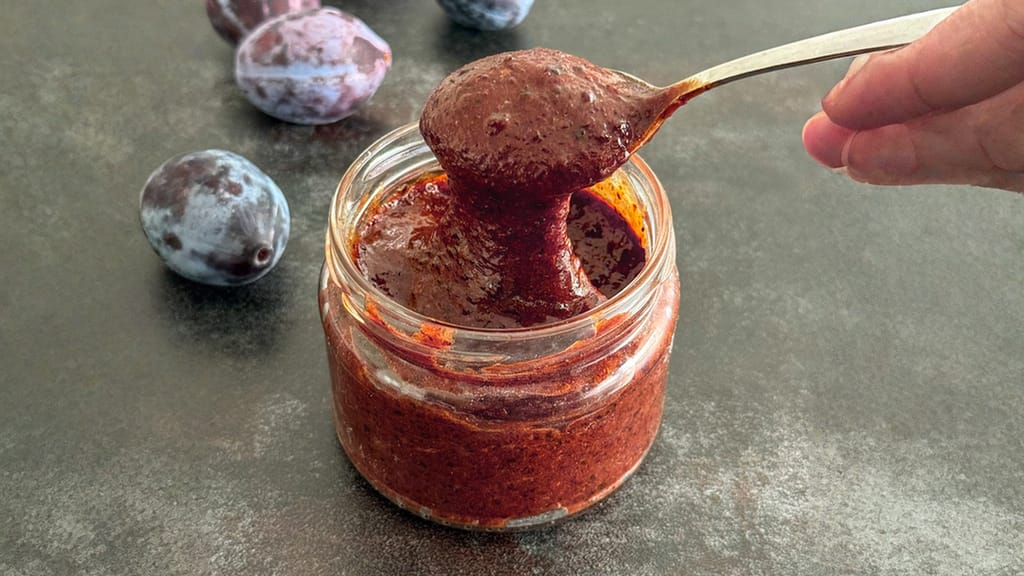
For the filling, go for a thick jam cooked down until dry, so it won't leak water in the oven. Homemade is easy enough — no stirring needed, right in the oven.
Homemade oven-baked plum butter
Homemade oven-baked plum jam — a thick filling for buchty that won't leak out
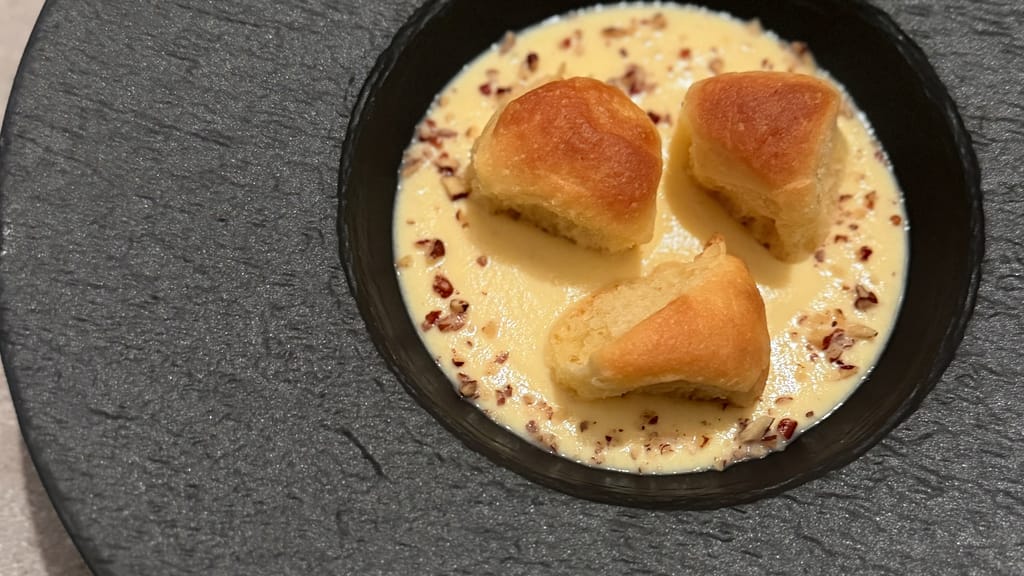
Fluffy sweet buns with chaudeau custard sauce
Soft little buchty buns with chaudeau: mini yeasted buns with a custardy sauce
Yeasted fruit dumplings cook in 8–10 minutes in a steamer, or about 10 minutes in water (5 minutes per side) and get pricked with a skewer the moment they come out, so they don't collapse. Steaming is gentler: the surface doesn't get waterlogged and the dough keeps its light, airy structure.
Whichever method you choose, the prep is the same: divide the leaner batch (about 865 g) into portions of 50–60 g — that gives you 14–16 dumplings. Flatten each portion into a disc about 5 mm thick, place a piece of fruit in the centre (apricot, plum, a handful of strawberries or blueberries) and pinch the seam tightly closed — any gap and the juice will escape, turning the dumpling to mush. Let the shaped balls have their final rise for 15–20 minutes on a floured tea towel, seam-side down and with space between them — they'll grow noticeably more once steaming.
Steam yeasted dumplings for 8–10 minutes with the lid on, and don't lift it for the first 6 minutes.
Stretch a tea towel over a pot of boiling water, or use a steamer insert or a proper steamer pot. The water must never touch the dumplings.
Arrange them with at least 2 cm between each, cover, and steam for 8–10 minutes depending on their size and how soft the fruit is.
Don't lift the lid for the first 6 minutes or so. If steam escapes too early, the dumplings will deflate and won't puff back up.
As soon as they're out, prick each one with a skewer or fork. Trapped steam inside would otherwise pull them in and shrink them as they cool.
For boiled dumplings, cook in gently simmering water for 5 minutes, flip, then finish for another 4–5 minutes.
The water should be gently simmering, never at a rolling boil — a vigorous boil will tear the dumplings apart.
Add them in batches so they have room to float freely. An overcrowded pot means dumplings stick together and the water temperature drops.
Cook 5 minutes, flip, and finish for another 4–5 minutes. A done dumpling floats and feels light and airy to the touch, not rubbery.
Lift them out with a slotted spoon and prick them right away. Serve within 5 minutes — yeasted dumplings don't hold well.
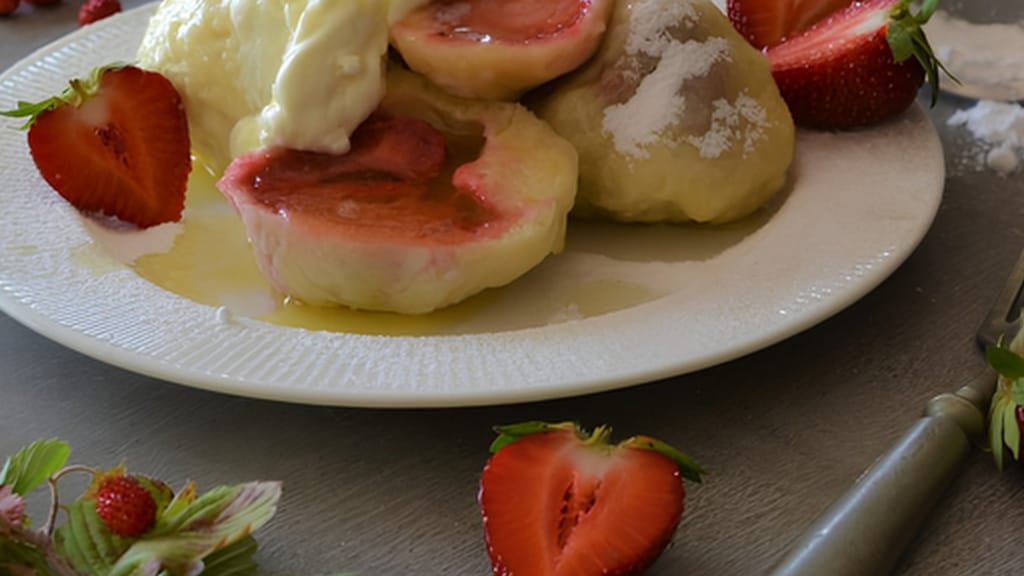
Summer fling: yeasted dumplings with fruit
Yeasted fruit dumplings: the basic summer recipe from yeasted dough
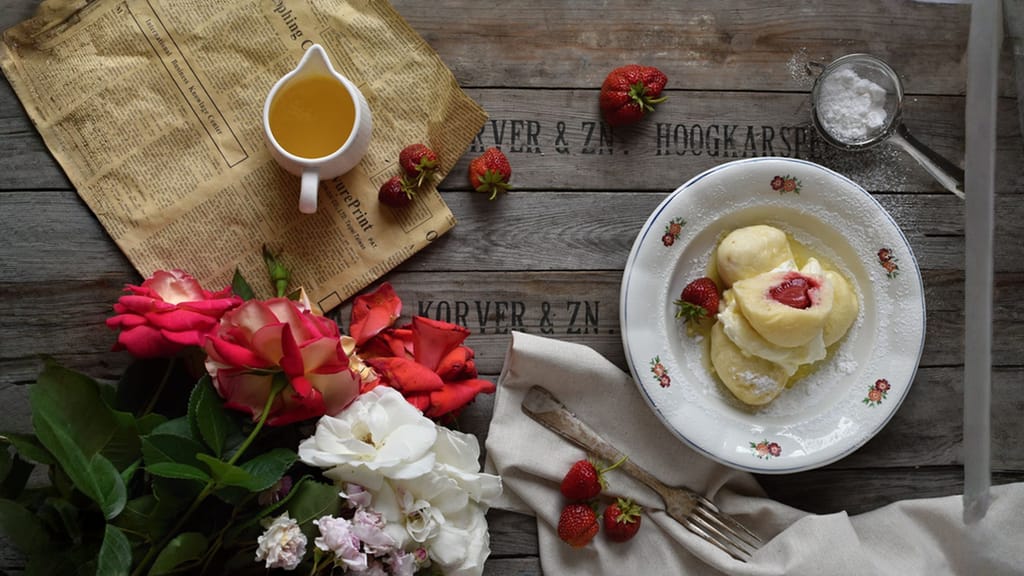
Yeast-dough strawberry dumplings in our new tescoma pots
Steamed yeasted strawberry dumplings, step by step
Besides yeasted dough, fruit dumplings are also made with curd cheese dough or potato dough — they differ in cooking time and in how well they hold onto their juice.
Yeasted dough gives you the biggest, fluffiest dumpling. But it needs two rises and gentler handling, and it's trickier to seal properly around very juicy fruit.
Curd cheese dough comes together in ten minutes with no rising needed, cooks in 5–7 minutes, and gives the thinnest casing — the best choice when you want the fruit, not the dough, to lead on flavour.
Potato dough holds its shape best and can handle even large plums, but it's the heaviest and mustn't be left to sit around before cooking.
For a detailed comparison — including why dumplings fall apart during cooking — see the article Plum Dumplings: Which Dough to Choose and Why They Fall Apart.
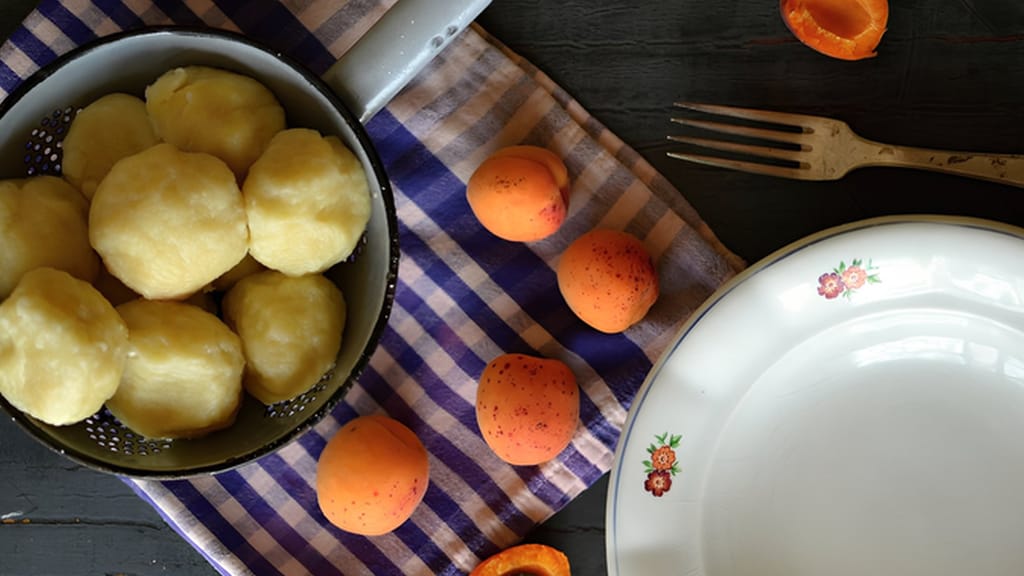
Perfect apricot dumplings with curd cheese dough
Apricot dumplings from curd cheese dough — a quick, no-rise alternative
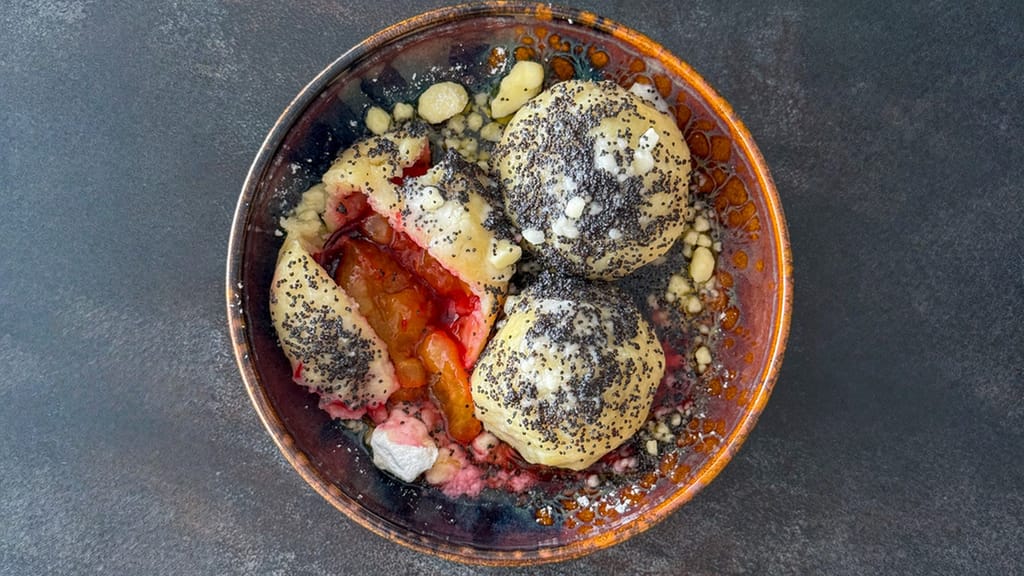
Plum dumplings with potato dough
Plum dumplings from potato dough for the juiciest fruit
If the dough hasn't moved after an hour, the cause is almost always one of five things: dead yeast, salt touching the yeast directly, a cold kitchen, too much sugar and fat, or under-kneaded dough. Four out of five can be caught before you've even mixed the whole batch.
Dead yeast. Either past its date, or killed off by hot milk. That's exactly why you make a starter separately: fifteen minutes is a cheap insurance policy. If it doesn't foam up, throw it out and start again.
Salt touching the yeast directly. Osmotic pressure pulls water out of the yeast cells and damages them. Always mix salt into the flour, never into the starter.
A cold kitchen. Below 20°C, rising doesn't stop — it just takes two to three times longer. Either give the dough more time, or create warmth for it in a switched-off oven.
Too much sugar or fat. Above 10% sugar relative to the flour's weight, yeast slows down noticeably. The fix isn't to cut the sugar, but to add more yeast — 25 g per 500 g flour (the upper end of 50 g per kilo) — and allow for a longer rise.
Under-kneaded dough. Without a properly developed gluten network, there's nothing to trap the gas, so the dough may bubble but won't actually puff up. Knead until smooth — you should be able to stretch a thin membrane from the dough that doesn't tear immediately.
And one more thing to watch for: draughts. A bowl near a slightly open window rises noticeably worse than the same bowl in a closed oven, even at the same room temperature.
Yeasted dough can be made a day ahead: after kneading, put it straight in the fridge for 8–12 hours and let the first rise happen slowly on its own at 4–6°C. Cold doesn't kill the yeast, just slows it down — and the longer fermentation actually deepens the flavour, so fridge-proofed dough often tastes richer than a rushed batch.
Dough from the fridge should sit out for 30–45 minutes to come up to room temperature before shaping, otherwise the second rise will take forever.
You can freeze it after the first rise: briefly knead the dough to knock the gas out, divide into portions, wrap in cling film and freeze for up to 3 months. Thaw overnight in the fridge, never on the counter.
Baked buchty stay soft in a sealed container for 2–3 days. Never put them in the fridge — starch retrogradation makes them go stale there faster than at room temperature.
Cooked yeasted dumplings don't store well at all. If you've got leftovers, slice them up and fry in butter with poppy seeds and sugar, or reheat them in the steamer for 2–3 minutes.
Almost always it's an over-proofed second rise — the dough puffs up to its absolute max and then the structure caves in once it hits the oven. Let shaped buchty have their final rise for 20–30 minutes, no longer, and don't open the oven door during the first half of baking. The other common culprit is pulling them out too soon: the centre should reach 88–93°C, otherwise the bun will shrink as it cools.
Yes — the crumb will just be a shade paler and a touch lighter. Egg yolk is what gives colour and tenderness, while egg white tightens the structure, which is why yolks (rather than whole eggs) go into buchty. For every yolk you skip, add an extra 15 ml milk and 10 g butter so the dough doesn't turn dry.
Plain flour for buchty; for dumplings, feel free to go half and half with a coarser (semolina-type) flour. Plain flour gives a softer, finer crumb; the coarser flour helps dumplings hold their shape and keeps them from falling apart, but once it makes up more than half the flour, the crumb turns noticeably coarse. Bread flour with its higher protein content is overkill for sweet yeasted dough.
Steam them for 5 minutes, or cover with foil and warm them in a 150°C oven for 8 minutes — the moisture and gentle heat bring softness back to the crumb. A refreshed bun stays soft for only a few hours, so only warm up as much as you'll actually eat. If you've got a surplus, slice them up and fry in butter with poppy seeds and sugar.
Yes, but raw and before their second rise. Freeze the shaped dumplings individually on a tray, then transfer to a bag and keep for up to 3 months. Cook them straight from frozen in the steamer, just extend the time to 14–16 minutes. Already-cooked dumplings don't freeze well — they turn rubbery once thawed.
One recipe worth heating the oven for, one tip, and one deal from the shop. Nothing else.