Yeasted blueberry buns with curd cheese and crumble
Updated Sep 5, 2026
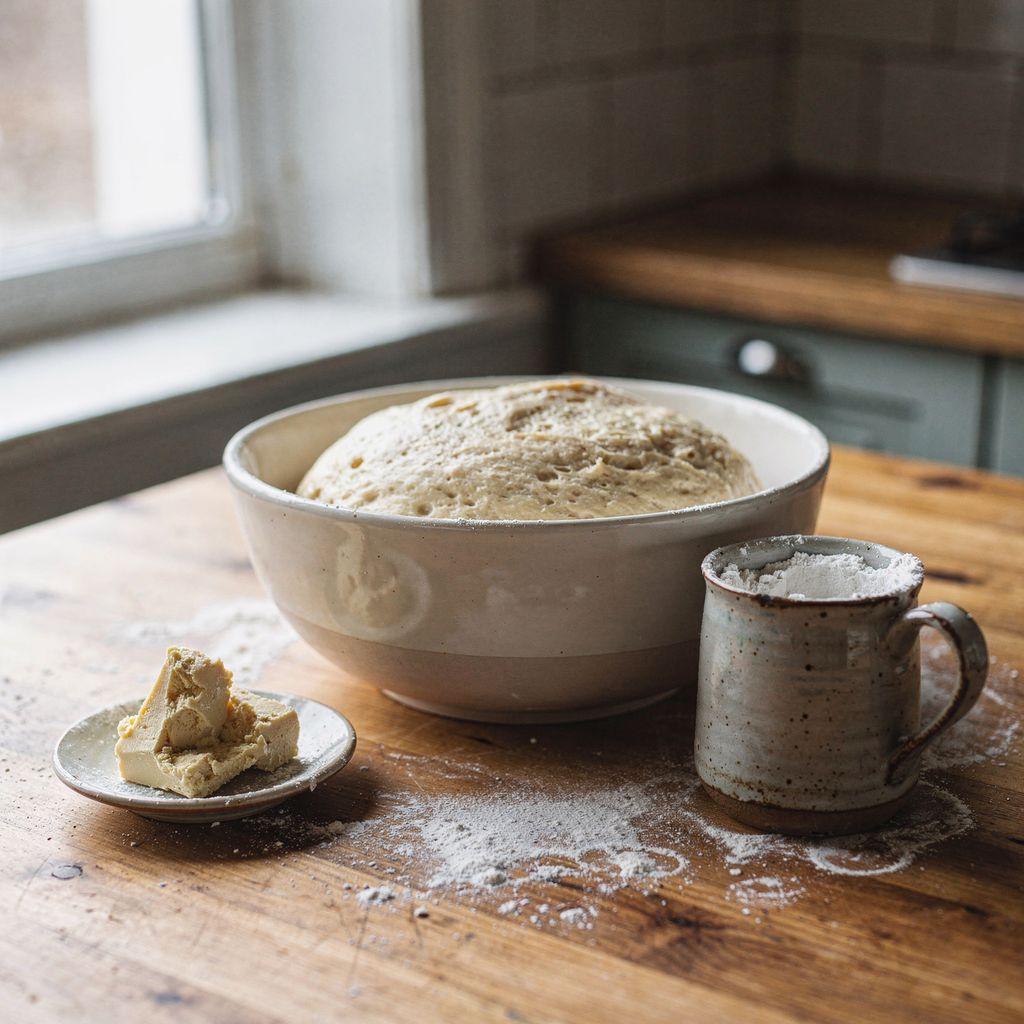
You can remember cup-measure yeast dough as four numbers: 4 cups flour, 1 cup warm milk, ½ cup fat and ¼ cup sugar. Add half a cube of yeast, two egg yolks and a teaspoon of salt, and you've got the base for cakes, buchty, dumplings and even Christmas bread — no scale required. Below you'll find cup-to-gram conversions, proofing times, and the one thing that can throw off cup measuring every time.
Cup-measure yeast dough is built on the ratio 4 cups flour : 1 cup milk : ½ cup fat : ¼ cup sugar. This simple four-part ratio holds the whole dough together and works for cakes, buchty and Christmas bread alike.
For one batch (one tray of cakes or about twelve buchty), you'll need:
4 cups plain flour (≈ 520 g)
1 cup warm milk (250 ml, 30–35°C / 86–95°F)
½ cup oil or melted butter (≈ 110 g)
¼ cup granulated sugar (≈ 55 g)
½ cube fresh yeast (21 g) or 1 packet dried yeast (7 g)
2 egg yolks
1 teaspoon salt (≈ 6 g)
The ratio of fresh to dried yeast is 3:1 — a 42 g cube equals two 7 g packets, and is meant for roughly a kilo of flour, so half of that is exactly right for our batch.
Hold back the last half-cup of flour and only add it if the dough is sticking to your hands. Different flours absorb liquid differently, and it's always easier to add more than to thin things out.
Why this exact ratio works: flour and milk give the dough structure, fat keeps it soft even the next day, sugar feeds the yeast, and salt slows it down just enough so the dough has time to develop flavour before it over-proofs. Shift one ingredient and you'll need to adjust another to balance it — the rest of this article shows you how.
A 250 ml cup holds roughly 130 g of plain flour. Here's how the other ingredients convert, based on standard kitchen conversions:
plain flour — 130 g
semi-fine flour — ≈ 150 g (range 140–155 g)
coarse flour — ≈ 170 g
milk or water — 250 g (250 ml)
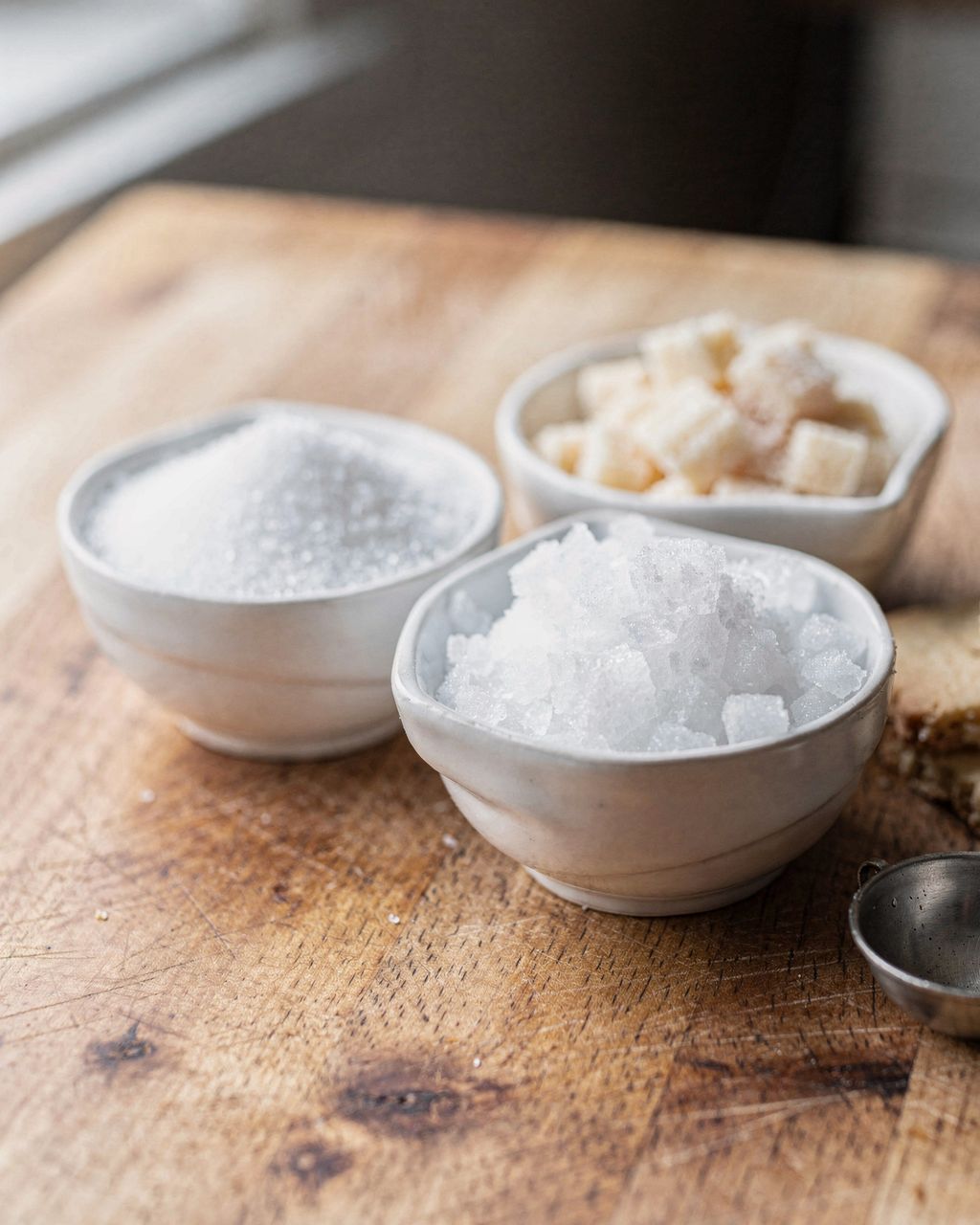
granulated sugar — 210–220 g
icing sugar — 130 g
oil — 225 g
melted butter — 230 g
ground poppy seeds — 130–150 g
curd cheese (tvaroh) — 250 g
For plain flour, expect a swing of about ±10 g per cup if you spoon it loosely into the cup — Czech culinary references list 130 to 135 g per 250 ml. A scooped-and-packed cup is a different story entirely — that can hold up to 30 g more flour. So always spoon the flour in loosely and level it off with the flat side of a knife. Liquids and sugar convert more reliably, since they can't be compacted in the cup the way flour can.
A level tablespoon is 15 ml, a teaspoon 5 ml. The figures below are based on the same weights as the cup table above, so your conversions will match up rather than giving you two different batch sizes:
1 tbsp plain flour — ≈ 8 g
1 tbsp granulated sugar — ≈ 12–13 g
1 tbsp oil — ≈ 14 g
1 tbsp melted butter — ≈ 14 g
1 tsp salt — ≈ 6 g
1 tsp dried yeast — ≈ 3 g
1 tsp cinnamon — ≈ 2.5 g
The difference between a level and a heaped spoon can easily be double. The dough can survive that with flour or sugar, but not with salt or yeast — always level those off.
No, the cup doesn't need to be exactly 250 ml — for cup-measure yeast dough, it's enough to use the same cup for the whole batch. The 4:1:½:¼ ratio holds regardless of whether your cup is 200, 250 or 300 ml, because every ingredient scales together.
There is one trap, though, that can throw off your entire batch: yeast, salt and eggs are not measured in cups. Those are fixed amounts. If your cup is 300 ml instead of 250, you're actually working with 620 g of flour, not 520 — and half a cube of yeast plus a teaspoon of salt won't be enough. The dough will rise slowly and taste flat.
Here's what to do:
Measure your cup once, for good. Pour water into it from a measuring jug and jot the volume down somewhere handy, like inside a cupboard door. Takes a minute, saves you for years.
Cup up to 250 ml: the basic ratio is fine as is — don't touch the yeast or salt.
Cup 280–350 ml: add a quarter cube more yeast (about 10 g) and an extra half teaspoon of salt.
Cup around 200 ml: cut the flour by roughly a fifth, and 15 g of yeast will be enough. If you keep the full 21 g, nothing bad happens — the dough will just rise faster.
And one more time, because it matters: spoon flour into the cup loosely and level it off with a knife. A scooped-and-packed cup can hold up to 30 g more flour, which adds up to over a hundred grams extra across the whole batch.
Cup-measure yeast dough goes through five stages: starter 10–15 minutes → kneading 8–10 minutes → first rise 45–60 minutes → shaping and second rise 20–30 minutes → baking 12–45 minutes depending on what you're making. All in, the whole batch takes 1.5 to 2.5 hours, of which only about 20 minutes is active work. The rest is waiting — and the yeast does that part for you.
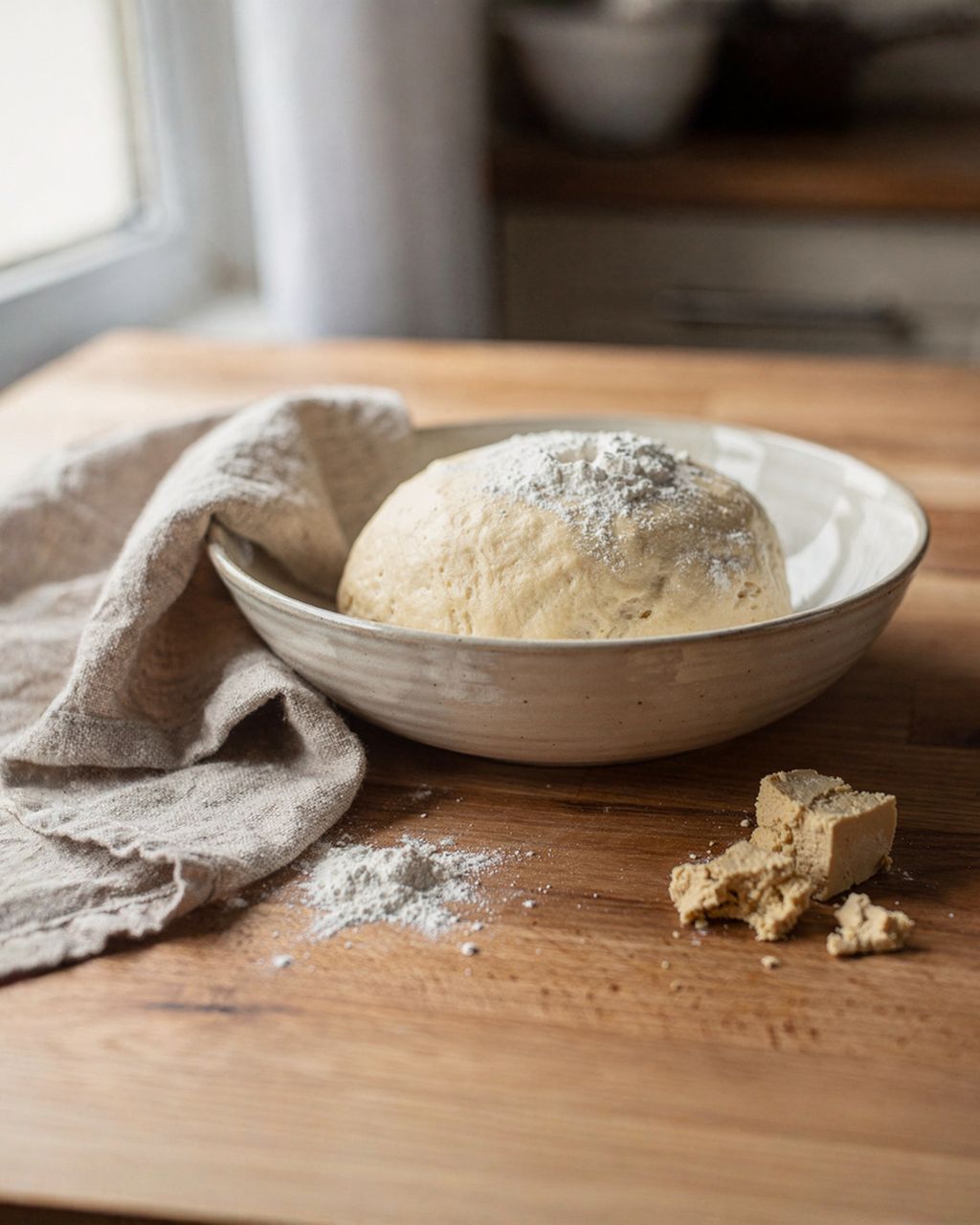
Starter — 10 to 15 minutes. Crumble the yeast into the warm milk, add a teaspoon of sugar and a tablespoon of flour taken from your measured batch. Leave it somewhere warm until a foamy cap forms on top. Instant dried yeast doesn't need a starter — just mix it straight into the flour.
Kneading — 8 to 10 minutes by hand, or 5 to 6 minutes in a stand mixer on low speed. The dough is ready when it's smooth, glossy and no longer sticks to the sides of the bowl. Add the fat only in the second half of kneading — adding it too early coats the gluten and slows its development.
First rise — 45 to 60 minutes at 24–26°C (75–79°F), until the dough has doubled in size. In a cold kitchen this can easily stretch to 90 minutes. Don't be tempted to speed things up with heat above 30°C (86°F) — a fast rise costs you flavour.
Shaping and second rise — 20 to 30 minutes.Let the shaped pieces rise right on the baking tray, covered with a tea towel.
Baking — 12 to 45 minutes depending on what you're making. Small buns: 190°C/375°F for 12–15 minutes; buchty: 180°C/350°F for 25–30 minutes; Christmas bread or Easter bread: 170°C/340°F for 35–45 minutes. Yeast dumplings steam for 12–15 minutes, or boil for 8–10 minutes, turning them halfway through.
If you're not sure the dough has risen enough, press a finger about a centimetre into it. If the dent springs back slowly and only halfway, it's ready. If it springs back instantly, give the dough another twenty minutes. If it doesn't spring back at all and the surface looks wrinkled, the dough has over-proofed — knock it back, let it rest ten minutes, and reshape it.
Shift the basic 4:1:½:¼ ratio using two levers — fat and sugar. More fat makes the dough softer and more tender; less fat makes it springier and lighter. Sugar controls sweetness and how quickly the bake browns in the oven. Leave the flour and milk alone — they're what holds the structure together.
For cakes, increase the fat to ⅔ cup and leave the sugar at ¼ cup. Cake dough spreads out over the tray, so it needs to be softer than dough for buchty. Add the zest of half a lemon, roll it out to about 1 cm thick, and remember it will puff up further in the oven. Add the filling only once the dough sheet has fully risen, not before the second rise — a wet filling would weigh it down.
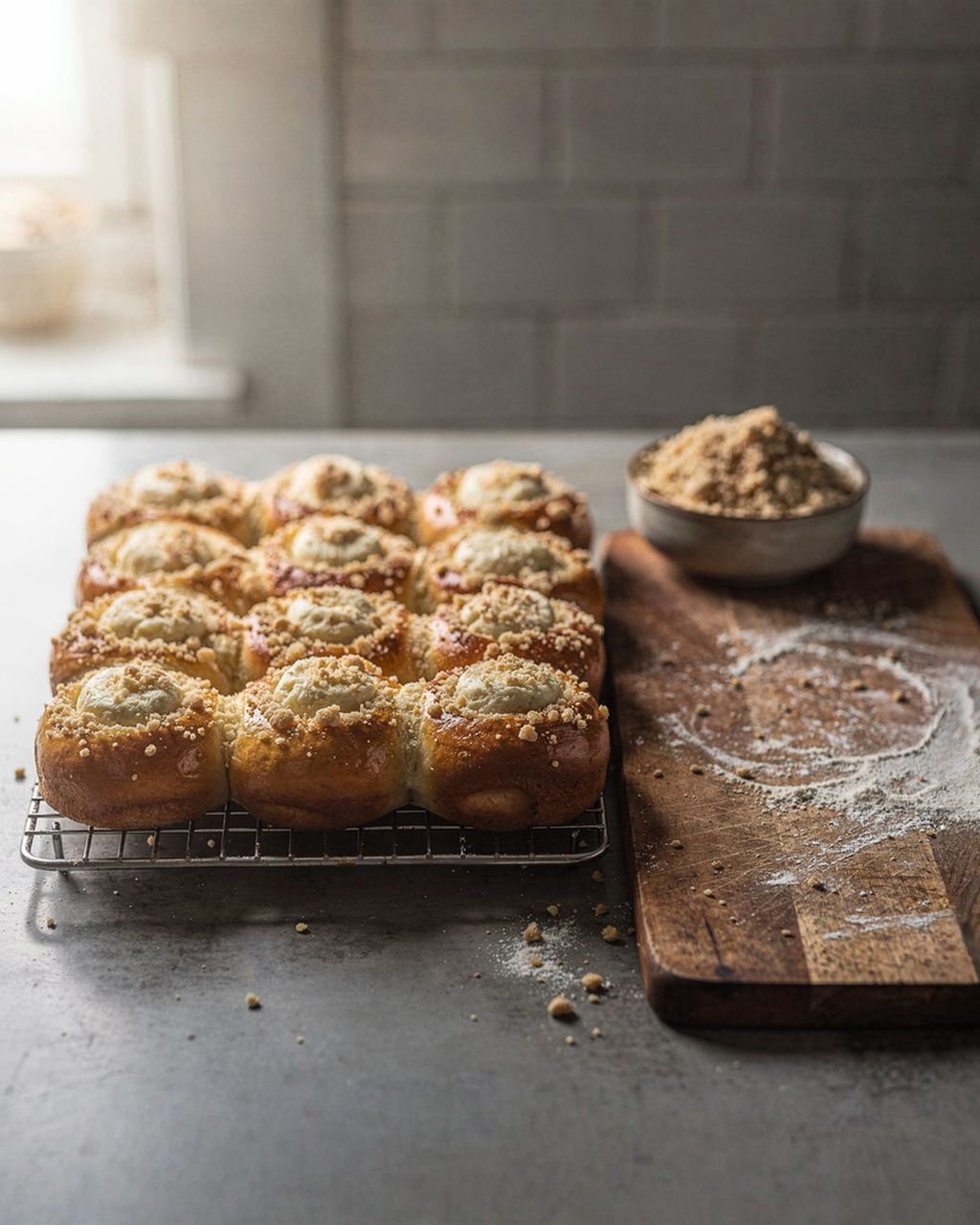
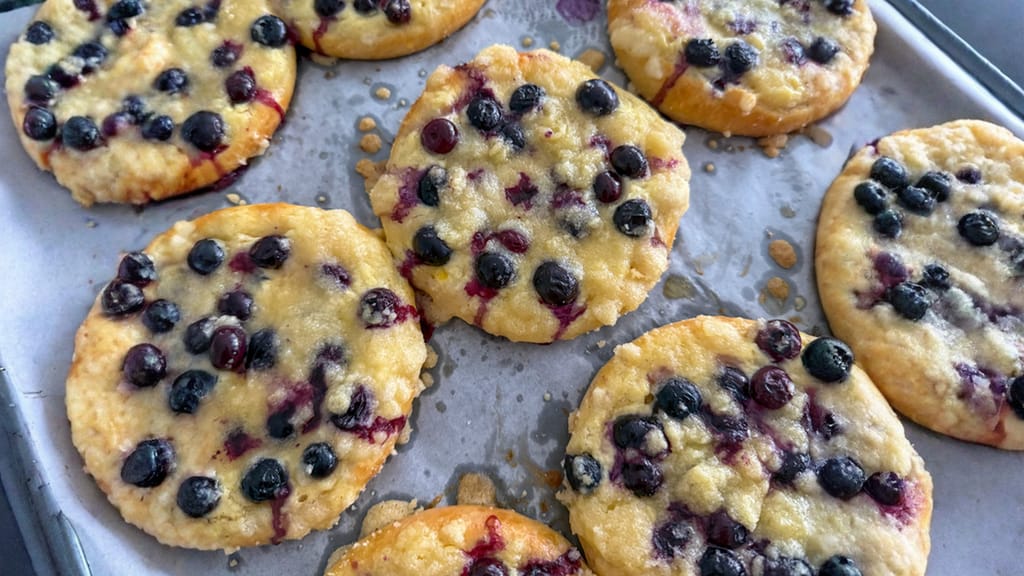
Yeasted blueberry buns with curd cheese and crumble
Blueberry yeast cakes with curd cheese and crumble topping — a classic use for cup-measure yeast dough
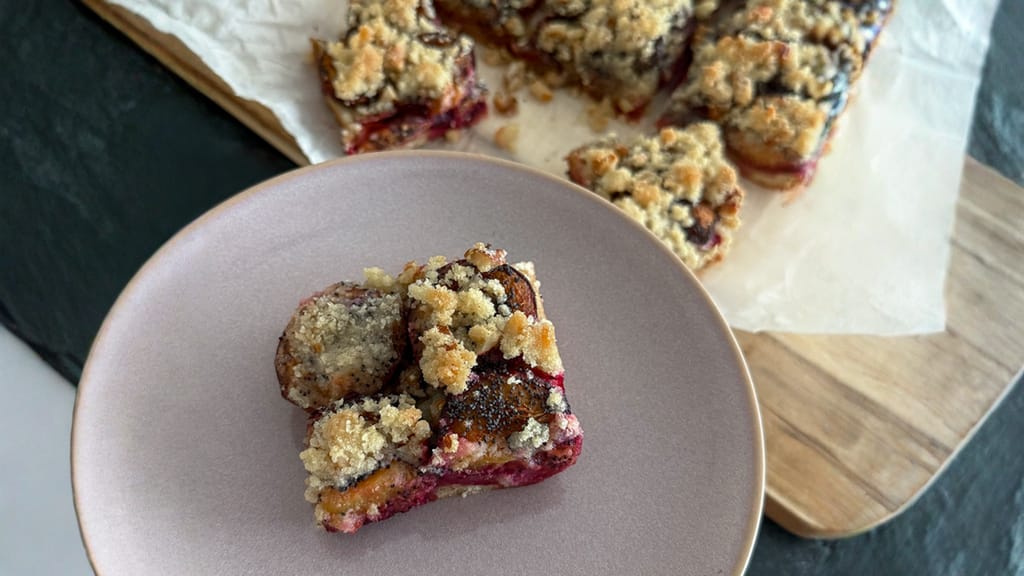
Yeasted plum cake with walnut crumble
Yeast plum cake with a walnut crumble, baked on a full tray
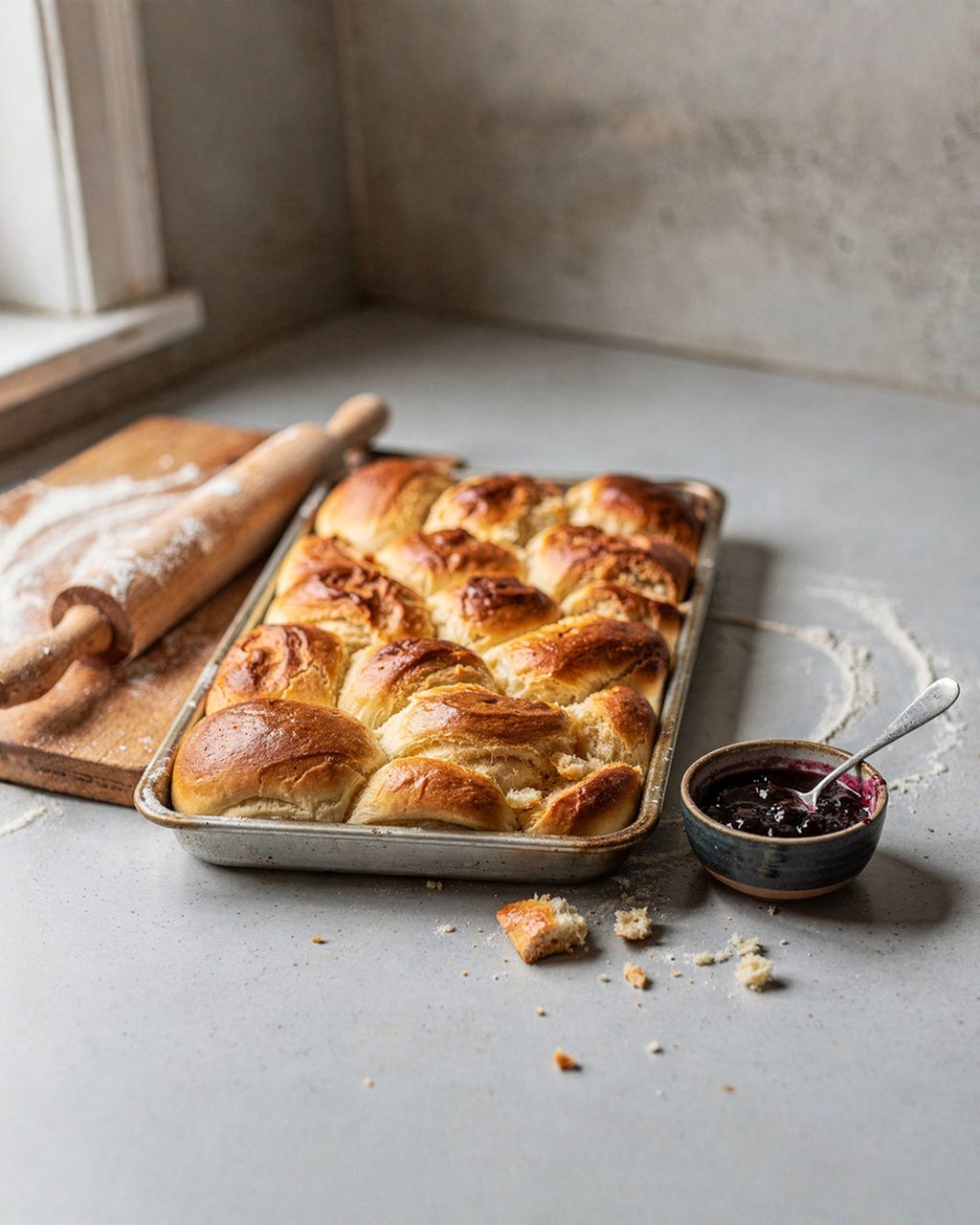
For buchty and rolls, leave the basic ratio unchanged — just swap in butter for the fat, since you'll actually taste it more here than in cakes. Divide the dough into 60–70 g pieces, fill them, and pack them tightly into a greased tin so they lean against each other and rise upward as they prove.
For savoury rolls, cut the sugar to 1 tablespoon, increase the salt to 1.5 teaspoons, and replace half the milk with water.

Fluffy sweet buns with chaudeau custard sauce
Soft buchtičky in vanilla custard sauce (šodó), made from yeast dough
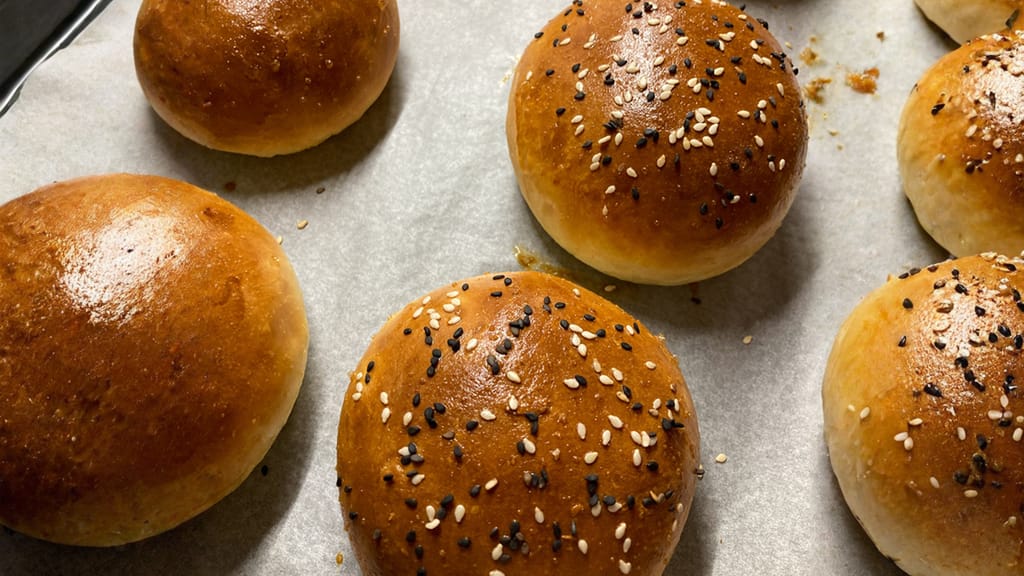
Soft homemade burger buns
Soft homemade burger buns — the savoury version of yeast dough
For yeast dumplings, swap the plain flour for a semi-fine flour (4 cups of semi-fine flour weighs ≈ 600 g, a bit more than 520 g of plain flour), cut the fat to 2 tablespoons and the sugar to 1 tablespoon. Dumplings should be springy, not buttery — too much fat makes them soggy in the steam and the dough falls apart. You can replace all the milk with water for a lighter dumpling.
Let dumpling dough rise just once, and shape it with wet hands rather than flour.
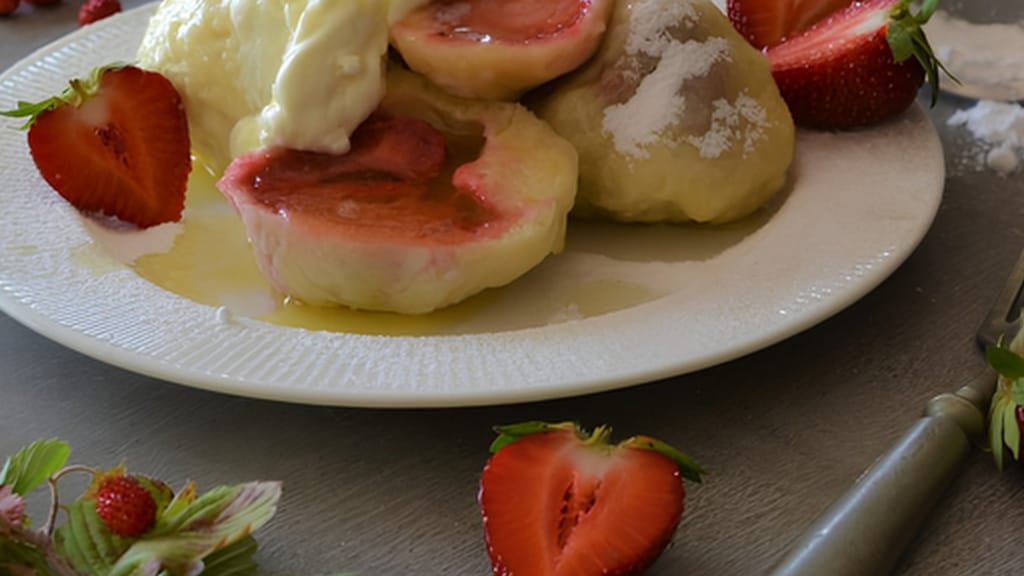
Summer fling: yeasted dumplings with fruit
Fruit-filled yeast dumplings — a summer classic made with semi-fine flour
For Christmas bread and Easter bread, push the ratio furthest: fat up to ¾ cup (butter is best), sugar up to ½ cup and three egg yolks, plus a cup of raisins and almonds. Soak the raisins in warm water or rum beforehand, and pat them dry before folding them in — wet fruit will make the dough soggy.
The more fat and sugar, the slower the dough rises. For Christmas bread, allow an hour and a half for the first rise, and add an extra 5 g of yeast.
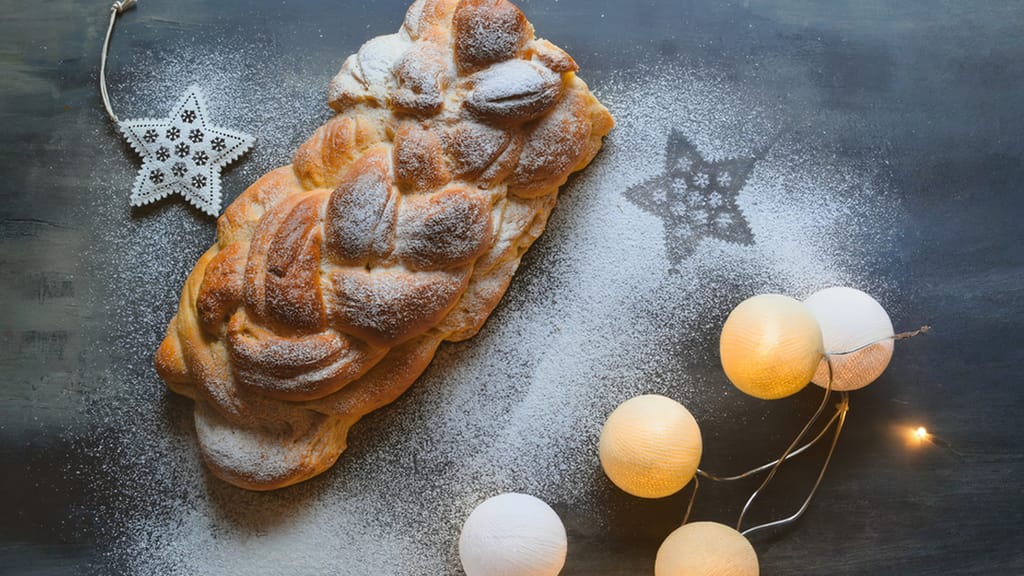
Mom's christmas braid
Mum's Christmas bread — braided from a rich yeast dough
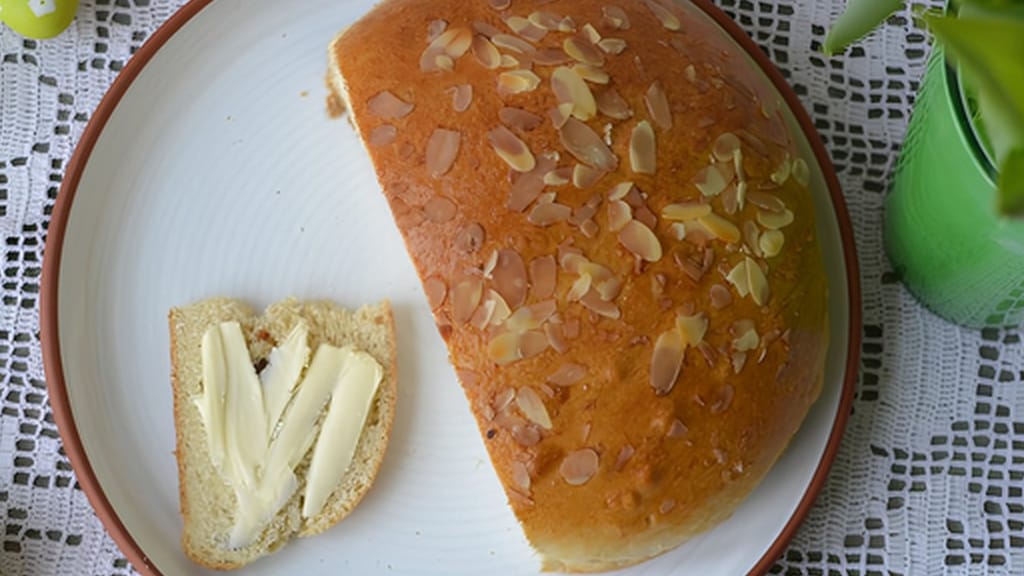
Easter classic: fragrant mazanec bread
Easter bread (mazanec) made from yeast dough with raisins and almonds
The most common culprit is temperature — either the milk was too hot and killed the yeast, or the kitchen is too cold and the dough is just sluggish. Work through this checklist:
The milk was too hot. Above 50°C (122°F), yeast is damaged; around 60°C (140°F), it's dead. If the starter doesn't foam, there's no point waiting — start over.
The yeast was old. Fresh yeast keeps in the fridge for about two weeks and should be pale and crumbly. Brown, slimy, or hard around the edges means it's no longer active. This is exactly why making a starter first is a good habit — it tells you within ten minutes, not an hour.
Salt landed directly on the yeast. Direct contact draws water out of the yeast cells. Mix salt into the flour, not into the starter.
There was too much flour. The single most common cup-measuring mistake. Heaped and packed cups can add up to a hundred grams extra, leaving the dough heavy and dry.
A cold kitchen. Below 20°C (68°F), rising time can double. Put the bowl in the (turned-off) oven with just the light on, or next to a bowl of hot water.
Too much sugar and fat at once. Rich doughs always rise more slowly. Either add 5 g more yeast, or just add more time — both work.
And the good news to finish on: almost none of this is a lost cause. A slow dough usually just needs more time and warmth, not more yeast.
For cakes, buchty and Christmas bread, plain (all-purpose) flour is best; for yeast dumplings, go for a slightly coarser flour (semi-fine/polohrubá). Plain flour gives a softer crumb and a more tender result, while the coarser flour holds its shape and has more bite — exactly what a steamed dumpling needs. A half-and-half blend is a good compromise for buchty if you want them a touch firmer. Bread flour can be used for savoury bakes too — it gives a stronger flavour and a firmer crumb; the flour 'type' number refers to mineral (ash) content, not gluten.
Yes — you can let cup-measure yeast dough proof in the fridge for 8 to 12 hours, and it actually improves the flavour. Cover the mixed dough with plastic wrap and refrigerate; the cold slows fermentation, but the yeast keeps working and develops more flavour compounds. In the morning, let it sit on the counter for an hour to come to temperature, knock it back, and shape it straight away — your first rise is done. For an overnight rise, cut the yeast by about half, or the dough will over-ferment by morning.
Yes — the two egg yolks in the basic ratio can be left out entirely and replaced with 2 extra tablespoons of milk or sour cream. In this dough, the yolks are mainly there for colour and richness, not structure — that job belongs to the gluten. The dough will be a bit paler and lighter, but it will rise and taste just as good. For an egg-wash substitute, brush with milk mixed with a teaspoon of sugar, or with melted butter.
Yes, cup-measure yeast dough freezes well — ideally shaped after the first rise. Freeze the individual pieces on a tray first, then transfer them to a bag; they'll keep in the freezer for about 3 months. Before baking, arrange them on a tray, let them thaw and rise at room temperature for 3 to 4 hours, then bake as usual. Baked and cooled pastries can also be frozen — just refresh them for five minutes in a 150°C (300°F) oven after thawing.
Baked goods made from cup-measure yeast dough stay fresh for two to three days in a sealed container or wrapped in a tea towel at room temperature. The fat in the dough is what keeps it soft — that's why a buttery Christmas bread stays fresher longer than plain rolls with minimal fat. Don't refrigerate baked goods, as the cold speeds up starch staling, and by the next day your buchty will feel spongy and dry. If you know you won't eat it for a week, freeze it as soon as it's cooled.
One recipe worth heating the oven for, one tip, and one deal from the shop. Nothing else.