At a glance
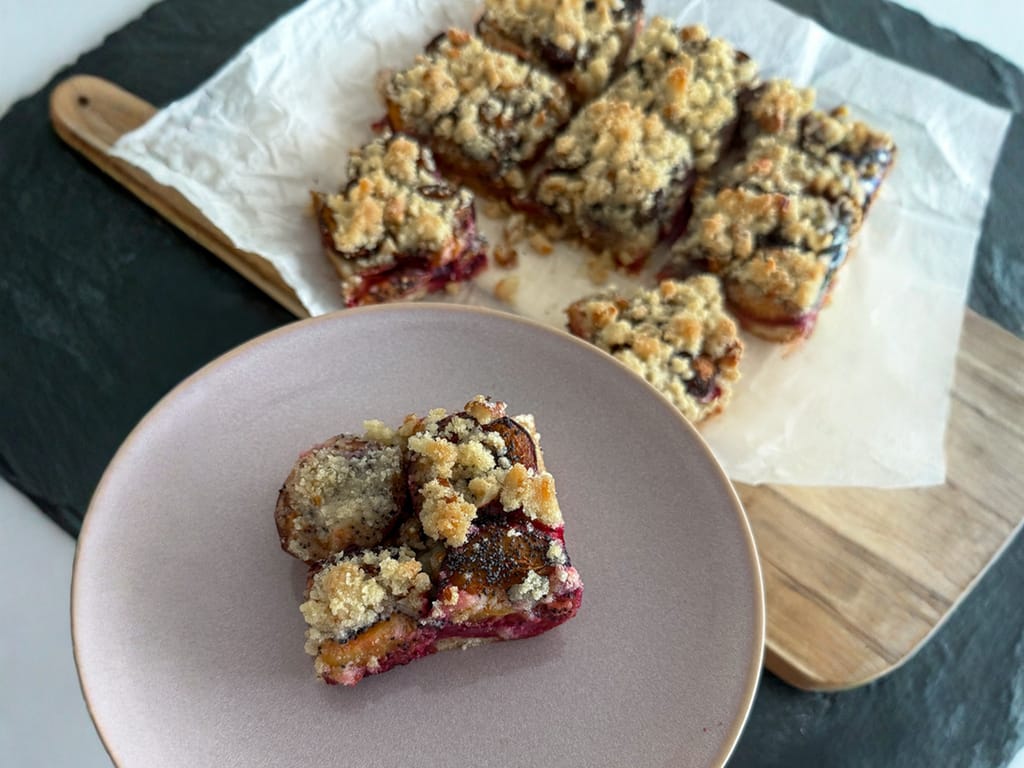
You're making a fluffy yeasted sheet cake that combines sweet plums, warm cinnamon spices, and a crunchy walnut crumble—the most time-consuming part is letting the dough rise for about 1.5 hours, but it's worth the wait for that tender, aromatic result. Once the dough has doubled, assembly is quick and straightforward, and you'll finish with a buttery rum brush right out of the oven.
1/6
Making the yeasted dough in a stand mixer
Put both types of flour into a bowl. Add the yeast, sugars, salt and lemon zest. Mix well, make a well in the centre and pour in the lukewarm milk, cream, egg yolk, rum and lukewarm butter. Knead in a stand mixer for about 10 minutes, until you have a smooth, elastic dough.
For this step
0/122/6
Letting the dough rise
Cover the bowl with the finished dough with a clean tea towel. Leave it to rise in a warm place for roughly 1 to 1.5 hours. The dough needs to at least double in volume, so give it plenty of time.
3/6
Preparing the plums and walnut crumble
Wash the plums, remove the stones and halve them. Mix with cinnamon and poppy seeds. In a smaller bowl, rub the cold butter, sugar, coarse flour, ground walnuts, salt and cinnamon between your fingers to form crumbs. Pop the finished crumble in the fridge to rest.
For this step
0/9
How it went
1 person tried it
Not enough tries for a success rate yet.
Be one of the first
Your result gets everyone closer to a success rate.
Anyone can answer, without signing in or buying. Answers aren't verified. The percentage is the share of “Worked out” answers, shown from 5 answers.
Tips from the Yumsto kitchen
Why it works
The dough is enriched with cream, an egg yolk and butter, so it stays soft into the next day. Mixing all-purpose and medium-fine flour gives it tenderness plus enough structure to carry juicy plums. The plum halves go cut side up, so their juice evaporates in the oven instead of running into the dough. Poppy seeds tossed with the plums soak up some of that juice, and the crumble rested in the fridge stays loose and crisp as it bakes.
If something goes wrong
Dough won't rise: the milk and butter were probably too hot, or your kitchen is cold. Keep the liquids lukewarm and put the bowl somewhere warm and draft-free. Crumble melts into a paste: the butter was soft, or the crumble didn't chill long enough. Soggy base: very juicy plums. Next time halve them right before assembling and don't leave them sitting in the bowl.
Substitutions
Swap the walnuts for hazelnuts or almonds, or leave them out for a plain butter crumble. Instead of rum for brushing the edges, use melted butter on its own; the edges won't carry the rum aroma. Fresh yeast works in place of dried at about three times the weight, roughly 15 g; crumble it into the lukewarm milk. Apricots can stand in for plums with the same method.
Storage
Let the cake cool in the pan, then cover it with a dish towel or put it in a container. It stays soft at room temperature for about 2 days. For longer, slice and freeze it in portions; thaw at room temperature and warm briefly in the oven so the crumble crisps up again.
Common questions
Can I use frozen plums?
Yes. Thaw them in a sieve and pour off the juice, or the dough will go soggy. Expect them to be softer and juicier than fresh ones.
How do I scale it up for a full baking sheet?
The recipe is for a 23 × 23 cm pan. For a standard baking sheet of about 30 × 40 cm, make roughly two to two and a half times all the ingredients. Baking time stays similar; watch the color of the edges.
Why brush the edges with butter and rum?
Bare dough edges dry out a little in the oven. Brushing them with butter straight after baking softens them, and the rum adds aroma.
Is it better warm or cold?
It's best slightly warm, when it slices cleanly and the cinnamon is most fragrant. Straight from the oven it crumbles and the plum juice is still runny.
Want a recipe like this every Thursday?
One recipe worth heating the oven for, and one tip that saves you time. Nothing else.