Bundt Pan - Tradition
What to Bake With Quark: Block or Tub, Quick, With Fruit and With No Flour
Updated Nov 18, 2026
What to bake with quark (tvaroh, a Czech fresh curd cheese) depends mostly on which kind you have at home. Drier block quark makes grated quark cake, bábovka (Czech bundt-style cake), quark dumplings or a filling for small yeast koláče (Czech filled yeast pastries). Creamy tub quark makes quark cake, cheesecake or bublanina (Czech fruit sponge cake), but you need to drain it first. We go through it by type of quark, by how much time you have, and then with no flour. At the end you'll find baking temperatures and times, how to rescue a filling that stayed runny, and how long a baked quark dessert keeps in the fridge.
Block quark and tub quark are usually the same soft quark (low-fat, semi-fat or full-fat). The block is just drier and firmer; the tub is creamy and holds more whey. That's why you can't swap them one for one in baking. Manufacturers only sometimes print the dry matter on the package, so you mostly judge it by texture. Those few extra percent of water decide whether a filling sets or runs.
Block quark (often wrapped in aluminum foil): crumbly and drier. Good for doughs, grated quark cake, quark dumplings and fillings that mustn't run.
Tub quark: smooth and moist. Ideal for creamy baked fillings and no-bake desserts, but don't put it in dough without draining it.
Watch out for "tvrdý tvaroh" (hard quark): that's the label on dry, pressed hard quark meant for grating, for example over dumplings. Don't buy it for fillings; look for ordinary semi-fat or full-fat block quark.
Fat content: semi-fat quark is the all-round choice. Full-fat quark gives a creamier, sturdier filling that cracks less. Low-fat quark releases more water in baked fillings and tends to turn rubbery after baking.
How to drain tub quark: line a sieve with cheesecloth, a cloth diaper or two layers of paper towels and set it over a bowl. Spoon in the quark, cover it and leave it in the fridge for at least 2 hours, ideally overnight for a creamy baked cake. The quark gets close to block quark in texture. Don't pour away the whey; use it instead of milk in pancakes or bread.
How to make a smooth filling from block quark: block quark is grainy. For a creamy filling, either press it through a sieve or blend it briefly with an egg. If it's very dry, add 1–2 tablespoons of cream or milk per 250 g. Blend only until smooth, because air beaten in makes the filling puff up in the oven and then collapse.
We send seasonal cooking and baking plans and recipes made from everyday ingredients. Unsubscribe in one click.
Block quark makes grated quark cake and bábovka, tub quark makes creamy quark cake and cheesecake, and with fruit you get small koláče and bublanina. Below you'll find options for block quark, tub quark, quark with cream, quark with mascarpone and quark with fruit. For each, there are 2–3 proven bakes with baking temperature and time. You'll always find exact amounts in the linked recipe.
Block quark is best for grated quark cake, quark bábovka and quark-and-poppy-seed cake. The drier quark holds its shape and doesn't make the dough soggy.
Grated quark cake: you grate frozen or well-chilled shortcrust dough on the coarse side of a grater. Put half in the pan, spread the quark filling over it and cover with the rest of the dough. Bake at 175–180°C (350°F) for about 40–50 minutes, until the top is golden. Drier block quark is a must here; with moist tub quark the bottom layer would turn soggy.
Dvěstěpadesátka, quark bábovka with chocolate and almonds: the quark goes straight into the batter, so the bábovka stays moist on the second and third day too. Grease and flour the pan well, because quark batter likes to stick. Bake at 170°C (340°F) for about 50–60 minutes and check that it's done with a skewer.
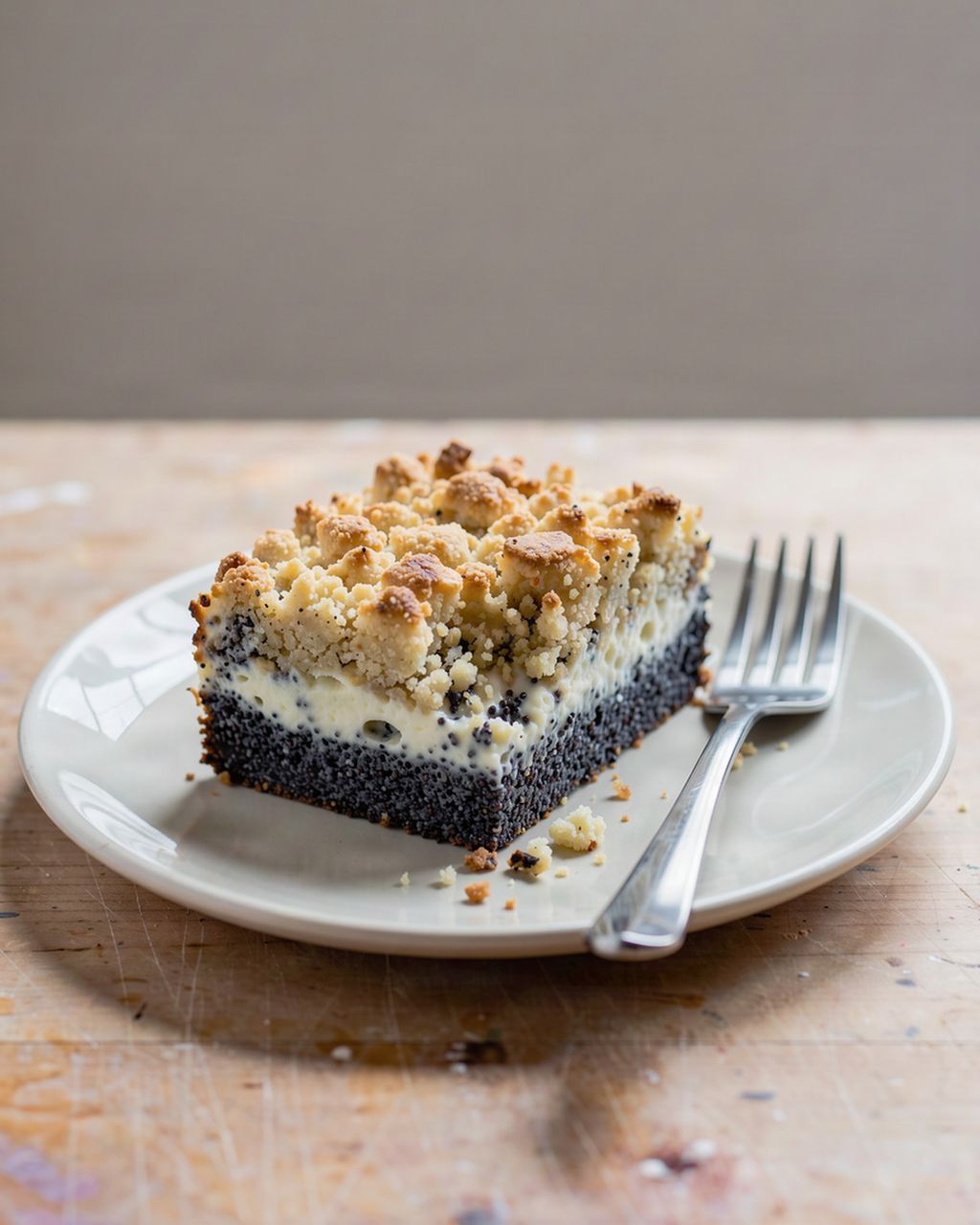
Quark-and-poppy-seed cake: a layer of quark and a layer of poppy seeds on one base. Block quark keeps the layers from mixing and gives a clean cut. Bake at 170–180°C (340–350°F) for around 45 minutes and slice only once it's cooled.
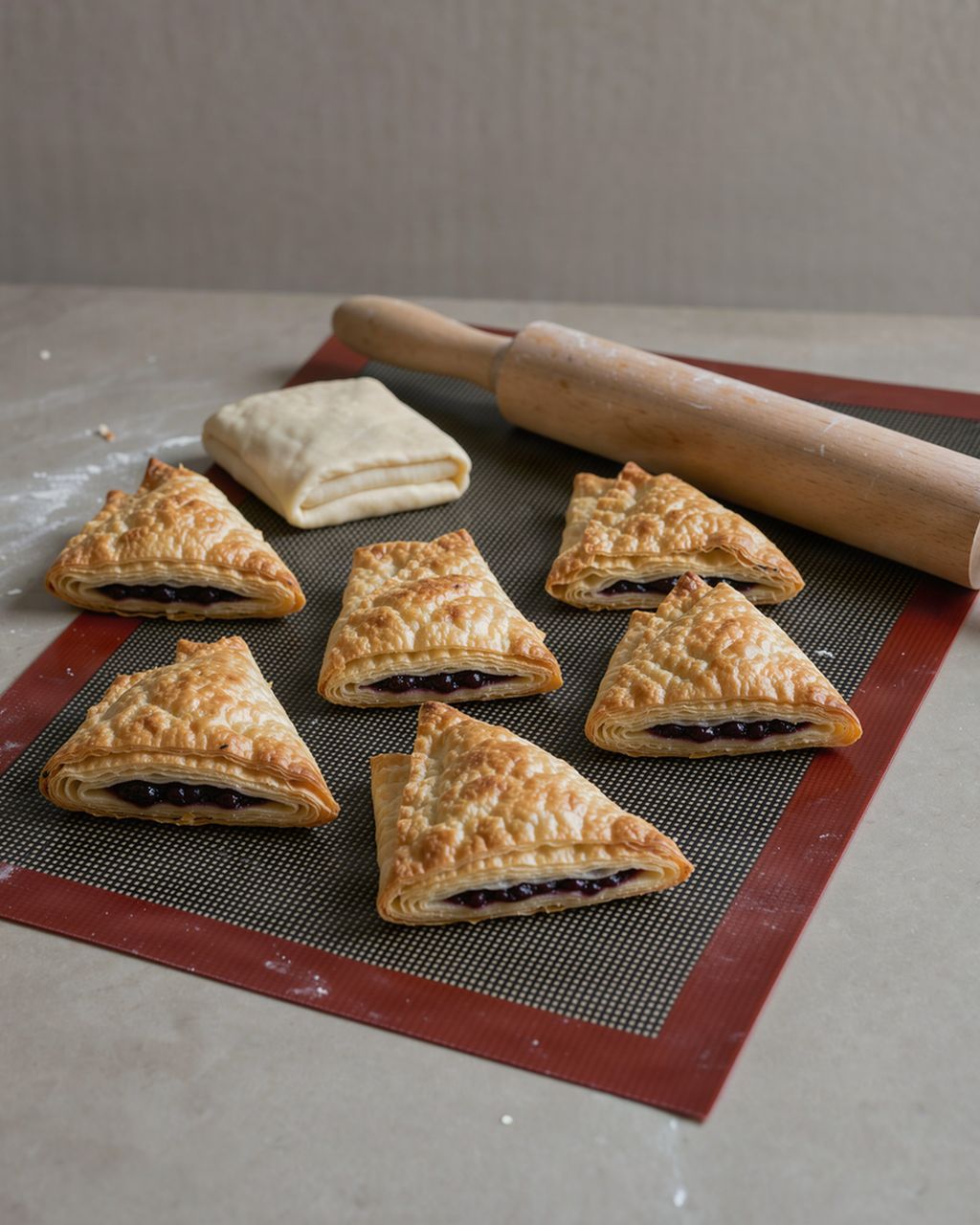
Block quark is also great in flaky quark dough (mock puff pastry) for turnovers, savory biscuits (pagáčky) or cheese sticks. The quark replaces part of the butter and the dough layers as it bakes.
Tub quark makes creamy quark cake, baked cheesecake or quark torte. Always drain it first, though.
Easy, quick quark cake with raspberries: you mix drained quark with eggs and sugar, pour it onto a thin base and top it with raspberries. Bake at 160–170°C (320–340°F) for about 40–50 minutes, until the edges are set and the center only wobbles slightly when you shake the pan. Add the raspberries only on top, not in the filling, or they'll release juice.
Quark torte with salted caramel and peanuts: a creamy quark layer baked slowly at a low temperature, like a cheesecake. Bake at 150–160°C (300–320°F), ideally with a dish of water on the bottom rack, and let the torte finish in the switched-off oven with the door ajar. Add the caramel only once the torte is chilled.
If you need quark cream for a layer cake rather than for the oven, read how to make a quark cream that holds its shape.
Quark with cream most often becomes a quark cake with a sour cream topping or a creamy filling that doesn't crack. The cream adds fat, which softens and smooths the filling.
Quark cake with sour cream on top: bake a classic quark cake at 170°C (340°F) for about 40 minutes. Then spread it with sour cream mixed with a little sugar and vanilla and return it to the oven for 8–10 minutes. The topping sets into a satiny layer and covers any cracks.
Creamy filling with whipping cream: you replace part of the quark with whipping cream, and the filling is smoother and cracks less. But the cream adds liquid, so the quark must be drained and you can't leave out the binder (eggs, pudding mix).
Baked quark pudding (nákyp) with raisins: quark, egg yolks, sour cream and semolina. At the end you fold in beaten egg whites, pour it into a greased baking dish and bake at 180°C (350°F) for about 35–40 minutes, until it rises and turns golden. Serve warm, because it settles a little as it cools.
Use quark with mascarpone where you want the creaminess of cheesecake but a fresher taste. It works best at roughly 2:1 (quark to mascarpone).
Summer cake with mascarpone, quark and heaps of fresh fruit: a quark-and-mascarpone cream between the layers and a mountain of fruit on top. Mascarpone firms the cream up and quark lightens it. Whip the mascarpone only briefly and cold, or it will curdle.
Tartlets with a delicate ricotta and quark cream: you fill baked shortcrust shells with the cream just before serving, so they soften as little as possible. You can use mascarpone instead of ricotta; the cream will be denser and a little sweeter.
Baked cheesecake from quark and mascarpone: drained quark with mascarpone on a cookie crust, baked low and slow. Mascarpone adds fat, so the filling cracks less than a pure quark one. If your cheesecake stayed soft after cooling, see why cheesecake won't set.
With fruit, quark becomes small yeast koláče, bublanina or a tray bake with quark and fruit. But fruit releases juice, so the quark should be drier and the fruit on top, not in the filling.
Small yeast apple koláče with quark and streusel: you put a spoonful of quark into a dent in the yeast dough, top it with grated or diced apple and streusel. Briefly simmer the apple with cinnamon beforehand so it doesn't release water into the quark. Bake at 180–190°C (350–375°F) for about 15–20 minutes.
Small yeast blueberry koláče with quark and streusel and apricot koláče with quark and almond streusel: the same principle, just with summer fruit. Use block quark for the filling; with tub quark the koláče would run. You can lightly toss blueberries in a teaspoon of starch so the juice thickens.
Rhubarb cake with quark and chia seeds: tart rhubarb and sweet quark. The chia seeds soak up the rhubarb juice and the cake stays sliceable. Bake at 180°C (350°F) for about 40–50 minutes, until the rhubarb softens and the filling sets.
With strawberries: quark with strawberries most often ends up in bublanina. How to keep the strawberries from soaking the batter is covered in our article on strawberry bublanina with quark. A faster option is the easy bublanina that always works. You can scatter strawberries over it together with a few spoonfuls of quark and bake at 180°C (350°F) for about 30–35 minutes.
With bananas: an overripe banana mashed with quark and an egg makes a thick cake filling or a pancake batter. The banana sweetens, so cut the sugar by about a third. Don't put sliced banana into the quark; it browns and turns watery as it bakes.
Within 30 minutes you can make quark dumplings, pancakes and fruit dumplings. Within an hour, a bublanina or a simple quark cake. Save the small yeast koláče, bábovka and layered quark torte for the weekend.
Within 30 minutes you can make quark dumplings, pancakes or fruit dumplings, because they're only boiled or pan-fried, not baked.
Quark dumplings (noky) with fruit sauce: block quark, eggs, a little flour or semolina. You spoon the noky straight into boiling water and cook them for 3–5 minutes, until they float. Make the sauce from blended fruit while the water heats.
Cottage cheese pancakes with fruit and vanilla quark: the batter has cottage cheese, and vanilla quark from a tub goes on top. Cook the pancakes over medium heat and flip them once bubbles form on the surface. For the cream, tub quark with vanilla and a little sugar is enough.
Buckwheat dumplings with peaches and quark: you wrap quark dough made with buckwheat flour around a piece of peach and boil for about 8–10 minutes. Buckwheat adds a nutty flavor. Serve with grated hard quark, butter and sugar.
Within an hour you can bake a simple quark cake or a bublanina.
Easy, quick quark cake with raspberries: prep takes 15 minutes, then it's 40–50 minutes in the oven, so it's done in roughly an hour. If you don't have time to drain quark overnight, use block quark or add a spoonful of vanilla pudding mix (cook-and-serve, similar to custard powder) to the tub quark. Slice it only once it's cooled; a warm cake won't cut cleanly.
Moist, fluffy yogurt bublanina with fruit: instead of the yogurt you can use the same amount of tub quark stirred with a little milk. The batter will be a bit denser and moister. Bake at 180°C (350°F) for about 30–40 minutes.
For the weekend, quark is worth using in small yeast koláče, quark bábovka or a layered cake, because they need time to rise, a long bake or a night in the fridge.
Small yeast koláče with quark (apple, blueberry): the dough needs to rise twice, so count on 2–3 hours. The baking itself is short, 15–20 minutes at 180–190°C (350–375°F). Prepare the quark filling while the dough rises.
Dvěstěpadesátka, quark bábovka: an hour of baking and then at least an hour of cooling in the pan before you turn it out. It's worth baking on Saturday; on Sunday it's even better.
Rhubarb cake with pudding and quark: a rhubarb cake with quark and pudding on a shortcrust base. It needs time to cool and set in the fridge, ideally overnight.
With no flour, you can make baked cheesecake, crustless quark cake or quark muffins. In them, eggs, pudding mix or starch take the place of flour (semolina is wheat too). Quark has enough protein to firm up on its own after baking. It needs a binder mainly because of the water.
Quark cake with no flour and no crust: quark, eggs and pudding mix instead of flour, baked low until the edges are set and the center only wobbles slightly.
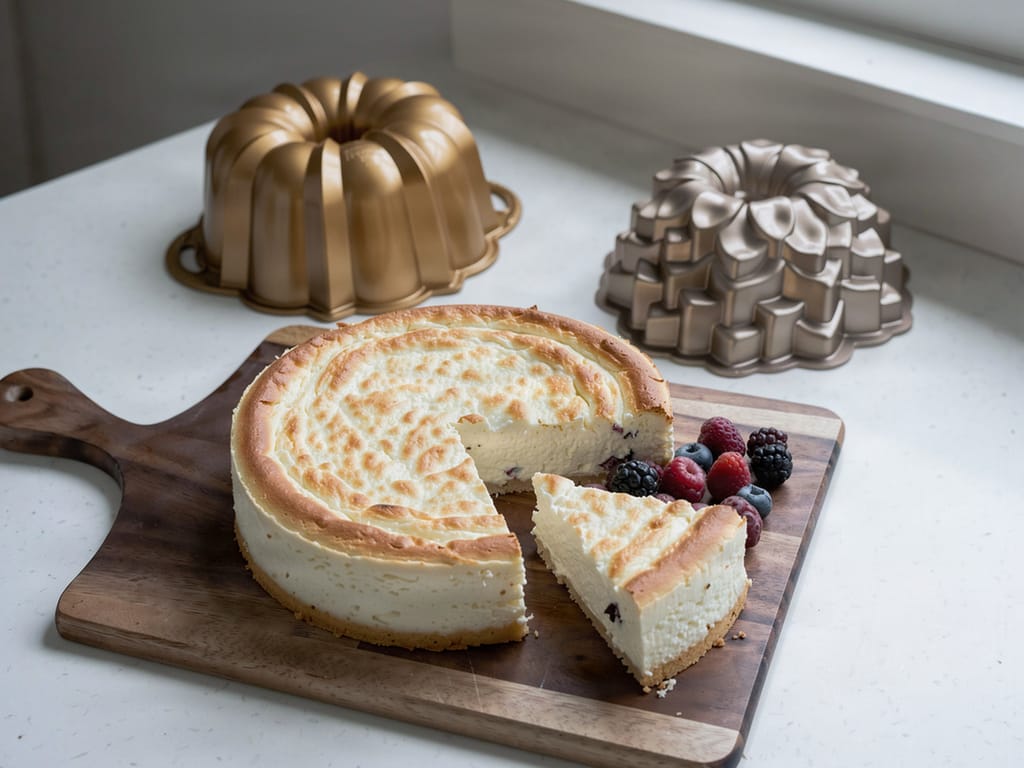
Baked cheesecake: there's no flour in the filling even in the classic version. Only the cookie crust contains flour. If you leave it out or replace it with ground almonds, the whole dessert is flour-free. Bake low, at 150°C (300°F), and let it cool in the oven with the door ajar so it doesn't crack.
Quark muffins with no flour: quark, eggs and ground almonds instead of flour. The almonds hold the structure and add moistness.
No-bake quark desserts: the quark dessert with wild berries and the quark chia dessert are flour-free by nature. All you need is a glass and a few hours in the fridge.
If you're baking without flour because of celiac disease, leave out the semolina (it's wheat and contains gluten) and check the ingredients of the pudding mix, starch and baking powder. They're mostly gluten-free, but not always.
A quark filling stays runny for one of six reasons: undrained quark, too little binder, fruit in the filling, too much sugar or liquid, underbaking, or slicing the cake while warm. Remember that a quark filling only firms up as it cools, often not until after 4–6 hours in the fridge. Most runny fillings can still be rescued, depending on the stage at which you spot the problem.
A runny filling is almost always caused by excess water, a weak binder or impatience. Specifically:
Undrained tub quark. The whey is released during baking and the filling floats. Drain tub quark for at least 2 hours, overnight for a cake.
Too little binder. For 500 g of quark, count on 2–3 eggs, or 2 eggs and 1–2 tablespoons of pudding mix, starch or semolina.
Fruit in the filling. Strawberries, peaches and frozen fruit release juice. Put them on top, or toss them in starch.
Too much sugar or liquid. Sugar binds water and softens the filling. Honey, syrup and milk add extra liquid.
Underbaked. The center should only wobble slightly like jelly when you take it out; it must not ripple like liquid. A finished cheesecake is roughly 65°C (150°F) in the center.
Slicing a warm cake. A warm filling is always soft. Let the cake cool first, then put it in the fridge overnight.
You fix a runny quark filling according to its stage: thicken it if raw, finish baking it if baked, firm it up in the freezer if cooled.
The filling is still raw and thin: stir in 1 tablespoon of pudding mix or cornstarch for every 250 g of quark. Or add one extra egg.
The cake is baked and the center is runny: return it to the oven at 150°C (300°F) for 10–20 minutes. Cover the top with aluminum foil so it doesn't burn.
The cake has cooled and is still soft: put it in the freezer for 1–2 hours. It can often then be sliced cleanly and served cold.
Nothing helped: cut it into cubes and layer it in glasses with cookies and fruit. You'll get a dessert nobody will recognize as an accident.
We cover it in more detail, including no-bake versions, in our article on why cheesecake won't set and stays runny.
Quark desserts are baked at lower temperatures than ordinary bundt cakes, mostly at 150–180°C (300–350°F). The more quark and the less dough in a dessert, the lower and longer the bake. The temperatures given are for top and bottom heat. For a fan oven, reduce them by about 10–20°C.
Baked cheesecake / creamy quark cake (20–24 cm pan): 150–160°C (300–320°F), 60–75 min. Then 1 hour in the switched-off oven with the door ajar.
Quark cake with filling on a base: 160–170°C (320–340°F), 40–50 min.
Quark cake with no flour and no crust: 160°C (320°F), 50–60 min.
Grated quark cake: 175–180°C (350°F), 40–50 min.
Quark bábovka: 170°C (340°F), 50–60 min.
Bublanina with quark and fruit (tray): 180°C (350°F), 30–40 min.
Small yeast koláče with quark: 180–190°C (350–375°F), 15–20 min.
Baked quark pudding (nákyp): 180°C (350°F), 35–40 min.
Quark muffins: 180°C (350°F), 20–25 min.
Quark dumplings (boiling): 3–5 min in boiling water.
How to tell it's done: check dough (bábovka, bublanina) with a skewer, which should come out dry. Don't test a creamy filling with a skewer. Shake the pan: the edges should be set and the center may only wobble slightly. Cracks on the surface mean the oven was too hot or the cake baked too long.
Baked quark cake, cheesecake or koláče with a quark filling keep in the fridge for 3–4 days, covered and stored at up to 4°C (40°F). We're going by the general USDA (opens in a new tab) recommendation to use cooked and baked dishes within 3–4 days.
In the fridge within 2 hours. Let the dessert cool to room temperature, but don't leave it out for more than 2 hours. Then cover it and refrigerate. This applies to anything with a quark filling: cake, cheesecake and small yeast koláče alike.
Covered. Quark absorbs smells from the fridge (onions, cured meats). Use a lid, a container or plastic wrap laid loosely over the pan.
The exception is quark baked right into the dough. A bábovka with quark in the batter rather than in a filling is hardier. Even so, keep it at most a day in a warm kitchen and then put it somewhere cool.
Fruit on top shortens keeping time. Fresh strawberries or raspberries on a cake soften and release juice within 2 days, even if the filling is still fine.
Freezing: baked cheesecake can be frozen in portions, but the filling may turn slightly watery after thawing. Thaw slowly in the fridge. You'll find more on freezing dairy in our article on whether you can freeze cheese, quark and mascarpone.
If the filling turns sour, smells off or shows mold, throw away the whole cake, not just the affected spot.
You can replace quark with ricotta 1:1, and with Greek yogurt only after draining it overnight. Ricotta gives a softer, sweeter filling. With yogurt, add an extra spoonful of pudding mix, or the filling will stay soft.
Yes, you can use frozen quark in a quark cake. Just thaw it slowly in the fridge and pour off the whey that separates. Thawed quark is often grainier and more watery, so press it through a sieve or blend it briefly and let it drain. It works best in doughs, bábovka and grated quark cake; for a creamy cheesecake fresh quark is better.
A quark cake cracks and sinks mainly because of too high a temperature, air beaten into the filling, and cooling too quickly. Bake at 150–160°C (300–320°F), only stir the filling, don't whip it, and let the cake cool in the switched-off oven with the door ajar. A sour cream topping or fruit will cover a crack.
Pudding mix or cornstarch can replace eggs in a quark filling, about 1 tablespoon per egg. The filling will be thicker and less fluffy, but it will set. A fully vegan version needs a different method, which you'll find in our article on vegan cake and vegan cheesecake.
For a cake pan 22–24 cm in diameter, count on 500–750 g of quark; for a 30 × 40 cm baking tray, roughly 750 g to 1 kg. For every 500 g of quark, add 2–3 eggs and 80–120 g sugar, to taste.
Don't bake with quark past its use-by date. For quark it's a "use by" date, not a "best before" date, and baking won't save it. If it's more sour but the date is still valid, it's fine for baking. Throw away any quark that smells off or is moldy, all of it.
One recipe worth heating the oven for, one tip, and one deal from the shop. Nothing else.