Poppy seed cake with plums and almonds
What to Bake with Poppy Seeds: Poppy Seed Cake, Koláče, Buchty, Strudel, Quark Bakes and White Poppy Seed Treats
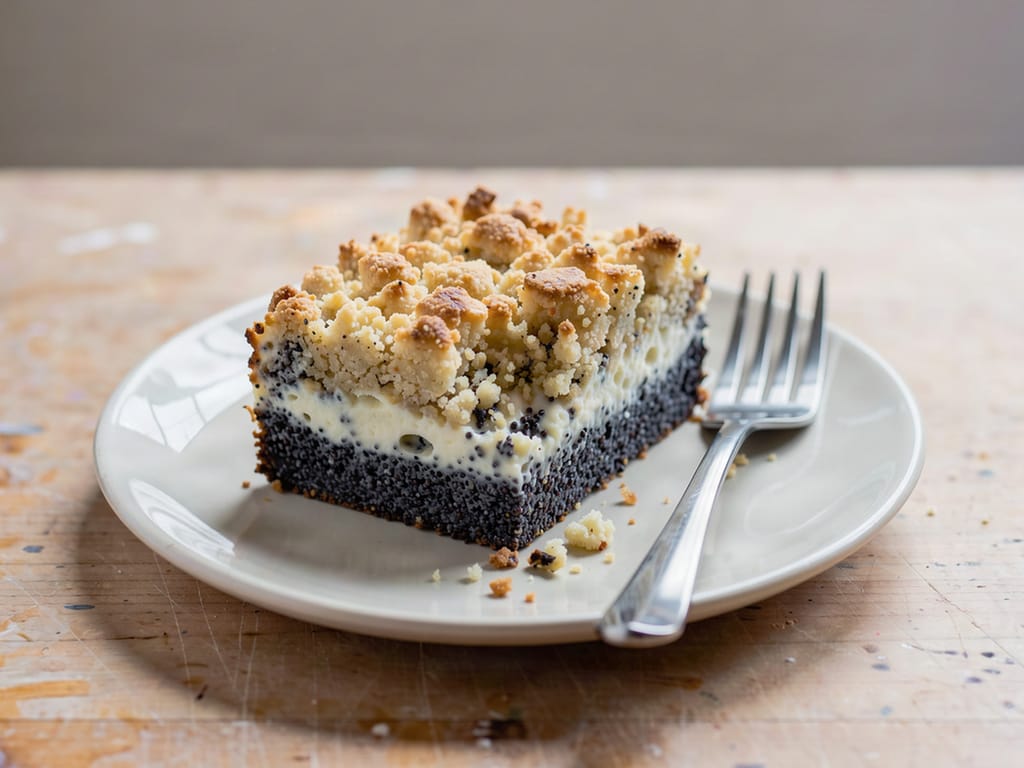
Updated Nov 18, 2026
What can you bake with poppy seeds? Most often a poppy seed cake (makovec), a poppy seed sheet cake, yeast buchty and koláčky with poppy seed filling, poppy seed strudel, a poppy seed and quark cake, and a poppy seed and apple cake. Whole poppy seeds go into Christmas cookies, lemon cakes and savory bakes. Below you'll find the essentials for each bake: what dough, what temperature, how long and what to serve with it. First we'll settle three things that matter more than any recipe: blue or white poppy seeds, whole or ground, and why you should grind them fresh.
Blue poppy seeds are a classic of Czech cooking, with a pronounced, slightly sweet and lightly nutty flavor; white poppy seeds are milder, gentler and almost unnoticeable in baked goods. Both are seeds of the same plant and differ in variety and seed coat color.
Blue poppy seeds – rich poppy aroma, dark filling, the typical flavor of makovec, buchty and koláčky. When a recipe just says "poppy seeds," it means blue.
White poppy seeds – lower intensity, creamier flavor, light filling. Use them where you don't want a dark color: in light cakes, with white chocolate, in delicate creams, or for kids who find blue poppy seeds "too poppy."
Gray poppy seeds – you'll occasionally see them for sale; use them the same way as blue.
In a filling you can swap white poppy seeds for blue 1:1, just expect a milder flavor. That's why they go well with more vanilla, lemon zest or a little honey. In batters (creamed or sponge) use them just like blue ones.
Quality matters more than color. Cheap poppy seeds of unknown origin tend to be bland and, when old, bitter. Czech blue poppy seeds have a reputation as some of the best, and they're worth paying extra for.
With white poppy seeds you can bake the same things as with blue, just with a gentler flavor and a light color; they shine most in bakes where they meet lemon, vanilla, white chocolate or fruit. Three proven options:
White flourless poppy seed cake – the same method as the classic flourless makovec below, just with ground white poppy seeds, lemon zest and a spoonful of lemon juice. Bake at 170°C (340°F) for 40–50 minutes in a Bundt pan. The result is pale cream, moist and tastes a little like an almond cake; serve it with berries.
Creamed sheet cake with white poppy seeds and raspberries – add 3–4 tablespoons of whole white poppy seeds to a creamed batter, pour it onto a baking sheet, scatter with raspberries and bake at 175°C (350°F) for 30–35 minutes. Tart raspberries and delicate poppy seeds go together better than you'd expect.
Light poppy seed filling for koláčky – cook white poppy seeds with milk, vanilla and a little white chocolate, stirring the chocolate in only at the end. The filling stays light, and on the tray the koláčky look lovely next to the quark and blue poppy seed ones.
Poppy seeds also pair well with cold desserts: try homemade poppy seed ice cream, where whole and ground poppy seeds meet.
We send seasonal cooking and baking plans and recipes made from everyday ingredients. Unsubscribe in one click.
Whole poppy seeds give crunch and looks; ground poppy seeds give flavor, moisture and filling. They aren't interchangeable, even though it's the same ingredient.
Whole poppy seeds go into batters (lemon cake, muffins, linecké), onto baked goods or into dressings. They stay crunchy and the flavor is milder because the seeds stay intact.
Ground poppy seeds are the base of every poppy seed filling and of flourless makovec. Grinding opens the seeds and releases the oil and with it the typical flavor. Ground poppy seeds also absorb liquid, which is why you can cook a thick filling from them.
Typical amount: for a sheet of koláče or two poppy seed rolls, count on 250–300 g of ground poppy seeds for the filling. For a creamed cake with whole poppy seeds, 2–4 tablespoons is enough.
The best-known bake with whole poppy seeds is lemon poppy seed cake: a creamed or yogurt batter with lemon zest and 3–4 tablespoons of whole poppy seeds, baked in a loaf pan at 170°C (340°F) for 45–55 minutes and, once cool, topped with a lemon glaze of powdered sugar and lemon juice. Here the poppy seeds add texture, not flavor – a tiny crunch in every bite.
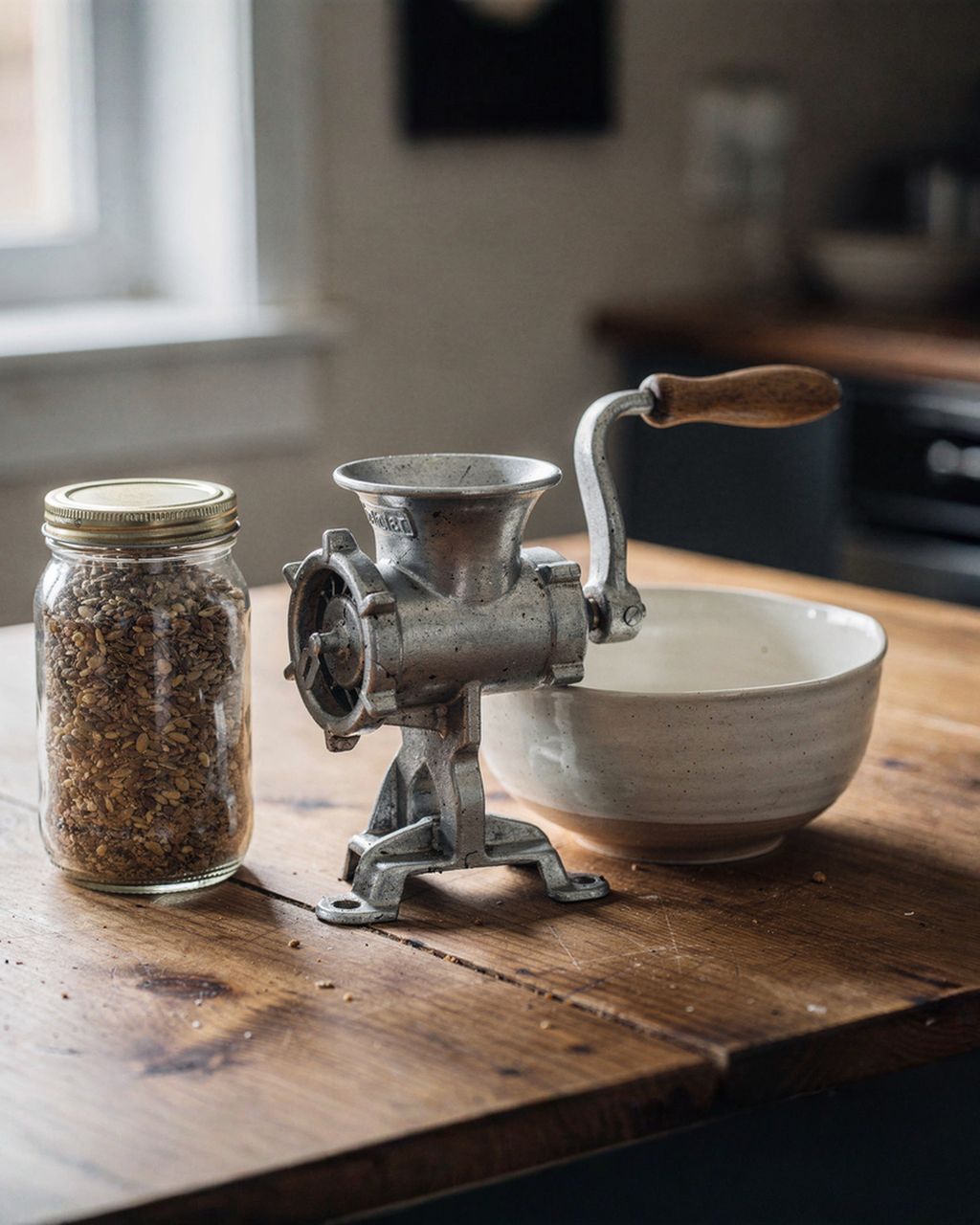
Grind poppy seeds just before baking, because they contain a lot of oil and begin to lose aroma quickly after grinding and eventually turn rancid. Rancid poppy seeds are easy to recognize: they smell like old oil and the filling turns bitter. That's why a poppy seed grinder, or even a sturdy coffee grinder, is worth having.
Store-bought ground poppy seeds are not a mistake, just buy smaller packs with the longest shelf life, taste them before using and use them quickly. How to grind poppy seeds, how much liquid to add to the filling and how to cook it so it's neither rubbery nor dry is covered in detail in our article on how to prepare poppy seeds and cook poppy seed filling. Here we assume you already have the finished filling.
Makovec is a cup-measure or sponge-style cake in which ground poppy seeds play the main role; it is baked either completely without flour or with just a small amount. Both versions bake at 170–180°C (340–355°F) and are done when a skewer comes out dry.
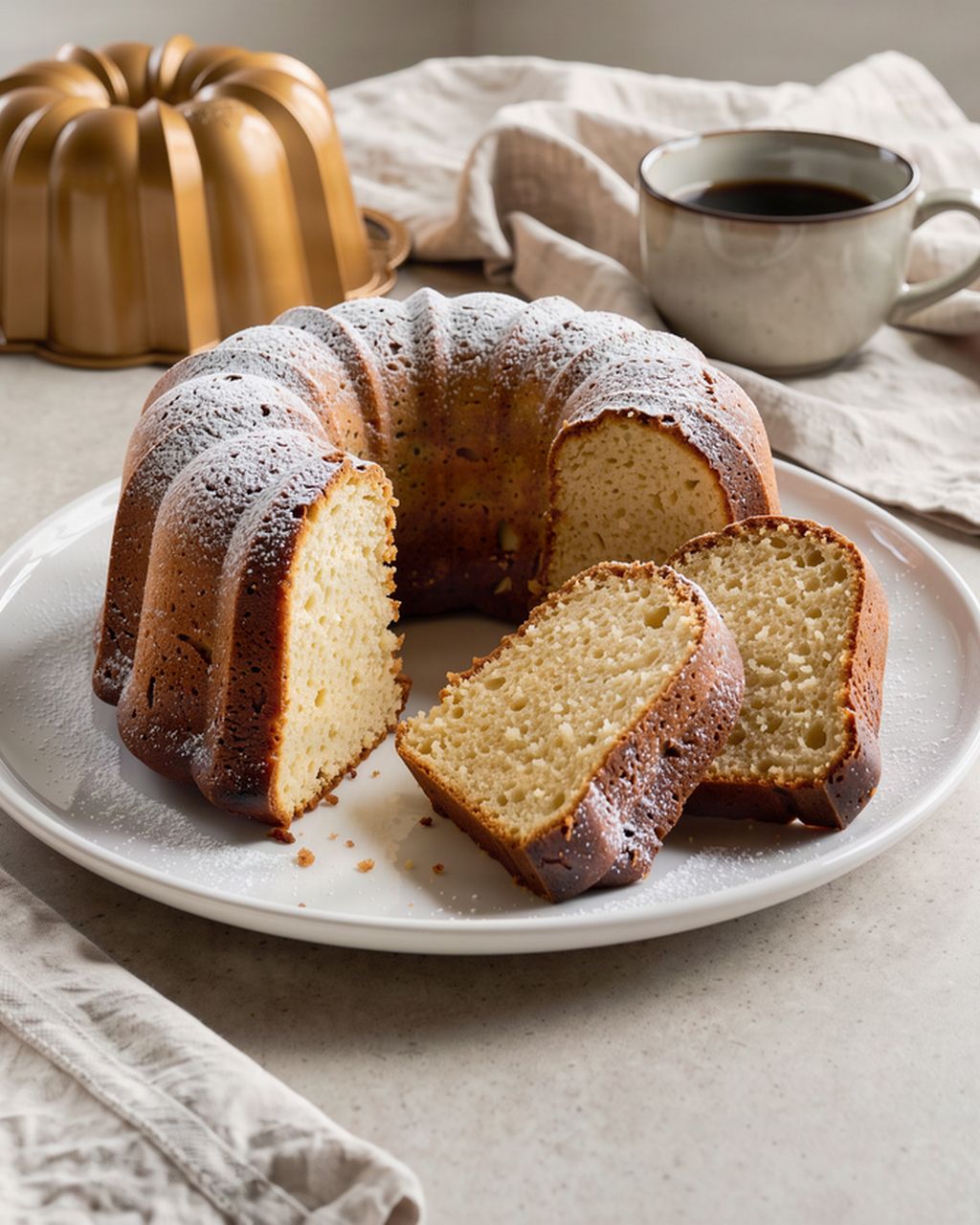
Flourless makovec is built on ground poppy seeds, egg yolks beaten with sugar and stiffly whipped egg whites; the poppy seeds replace the flour entirely. Fold in the whites in several batches with a spatula so the batter doesn't deflate, and bake in a greased and floured Bundt pan or "deer back" (srnčí hřbet) pan at 170°C (340°F) for about 40–50 minutes. The result is moist, compact and strongly poppy-flavored, because nothing dilutes it. Serve it plain, dusted with powdered sugar, or with thick sour cream or whipped cream with lemon zest. For something more festive, slice it horizontally and spread with red currant jam.
Cup-measure makovec is a simple creamed batter in which ground poppy seeds make up about half of the dry ingredients: poppy seeds, all-purpose (plain) flour, sugar, eggs, oil and milk, measured with a cup. Mix only briefly, until wet and dry ingredients come together, and bake in a sheet pan or Bundt pan at 175–180°C (350–355°F) for 35–50 minutes depending on height. It's denser than the flourless version, but it holds its shape and slices beautifully, so it suits snacks and lunchboxes. Top it with a chocolate or lemon glaze, or brush with plum butter (povidla).
If you want a quick version without cooking a filling, see the quick poppy seed cake with chocolate ganache – the poppy seeds aren't cooked in it, just mixed with flour.
Two common mistakes with both makovec versions: an oven that's too hot (the surface darkens before the center bakes through) and turning the cake out while hot. Let the makovec cool in the pan for 10–15 minutes, then turn it out.
A poppy seed sheet cake is yeast dough rolled out onto a baking sheet, spread with a thick layer of poppy seed filling and topped with streusel, baked at 180°C (355°F) for 25–35 minutes until the edges and streusel turn golden. A large round poppy seed koláč is thinly rolled yeast dough with a thin layer of filling and streusel, baked briefly and hot at 200–220°C (400–425°F) for 12–15 minutes.
A yeast poppy seed sheet cake is a sheet of yeast dough with a layer of poppy seed filling about a centimeter thick and butter streusel, baked at 180°C (355°F) for 25–35 minutes. Leave the dough made from semi-coarse flour (Czech polohrubá, slightly grittier than all-purpose), milk, yeast, butter and egg yolks to rise until doubled (about an hour in a warm place), roll it out onto a greased baking sheet and let it rise for another 15–20 minutes. Then spread the cooled poppy seed filling over it and sprinkle with streusel. The bottom should be golden after baking, not pale. Serve it lukewarm with coffee or a glass of milk; the next day it's almost better.
The same dough also handles combinations: half the sheet poppy seed, half quark, or stripes of poppy seed, quark (tvaroh, a Czech fresh curd cheese) and plum butter. Just keep all the fillings similarly thick so they don't run into each other while baking.
A large round koláč of thin yeast dough with poppy seed filling is a homemade version of Wallachian frgál: a disc about 30 cm across, a thin layer of filling and streusel. Roll the risen dough out thin (about 3–4 mm), leave a slightly higher edge, spread the filling in only a thin layer and bake on a preheated baking sheet at 200–220°C (400–425°F) for about 12–15 minutes, until the edge turns golden. The short, hot bake is the point – the thin dough doesn't dry out and the filling stays soft. Cut it like a pizza, into triangles, and eat it cold or the next day.
A note on the name: Valašský frgál has been an EU protected geographical indication since 2013, and only bakers in the Wallachia region may make it under that name; a typical frgál is about 30 cm across. At home you're baking a "frgál our way," not the original.
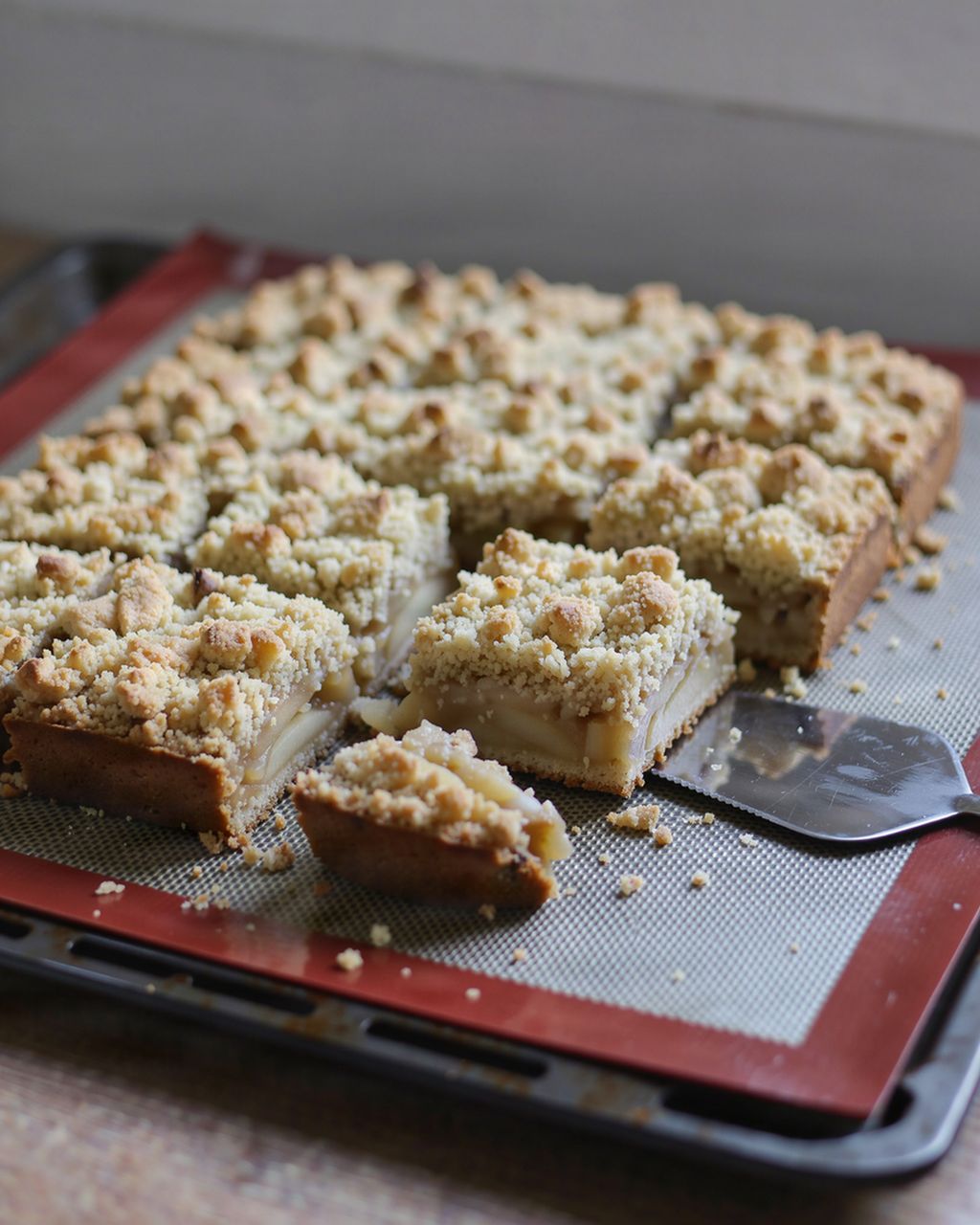
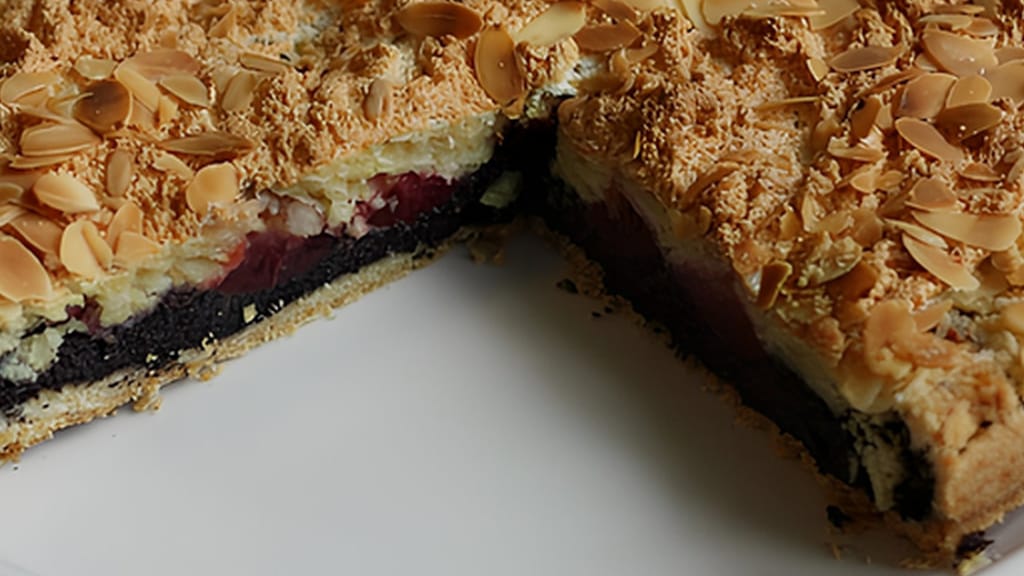
A poppy seed sheet cake with fruit is a poppy seed dough or filling with a layer of tarter fruit, such as plums, cherries or pears, baked until golden; the fruit freshens the sweet, oily flavor of poppy seeds. A proven tip is the divine poppy seed cake with plums: tender dough, poppy seed filling, plums and streusel on top. In spring or summer try the cherry rolled cake with quark and poppy seeds, and in autumn the yogurt and poppy seed cake with pears, where poppy seeds and a yogurt cream are layered over an oat base. We have more yogurt bakes in the article what to bake with yogurt.
Poppy seed cake with plums and almonds
Divine poppy seed cake with plums: poppy seed filling and tart fruit under streusel
Poppy seed buchty (Czech filled sweet yeast buns) and koláčky are made from yeast dough that wraps or holds the poppy seed filling; buchty bake at 170–180°C (340–355°F) for 25–35 minutes, small koláčky at 180–190°C (355–375°F) for 15–20 minutes.
Poppy seed buchty are pieces of yeast dough wrapped around a spoonful of thick poppy seed filling and baked snugly side by side in a baking dish at 170–180°C (340–355°F) for 25–35 minutes. Pinch off pieces of the risen dough, flatten them into rounds, put filling in the middle and pinch closed carefully. Place the buchty seam side down in a greased baking dish, brush each with melted butter so they pull apart easily after baking, and let them rise for another 20 minutes. Bake until golden, brush with butter again when they come out and dust with powdered sugar. Buchty are traditionally served with vanilla custard or šodó, which you'll find with the soft buchtičky with šodó sauce; you can pour the same sauce over poppy seed buchty.
The key point: filling for buchty must be thicker than for a sheet cake. A thin filling boils during baking, bursts the seams and runs onto the bottom of the dish, where it burns.
Wedding koláčky with poppy seeds are small round yeast koláčky with a well full of poppy seed filling and streusel, baked at 180–190°C (355–375°F) for 15–20 minutes. Press balls of dough into rounds, make a well in the middle, fill it with poppy seed filling and brush the edge with beaten egg. Then sprinkle with streusel and bake until the edge turns golden. At weddings and village feasts they're traditionally combined with quark and plum butter ones; the poppy seeds are often drizzled with a little plum butter so the filling doesn't dry out. Serve them the day after baking, when the flavors of filling and dough come together.
If you have both quark and poppy seeds and want more koláčky variations, you'll find the whole overview of quark bakes in the article what to bake with quark.
A poppy seed roll (závin) is dough rolled up around poppy seed filling; it's made from yeast, stretched or puff pastry dough and baked at 170–200°C (340–400°F) for 20–40 minutes depending on the dough.
A yeast poppy seed roll, or makovník, is a sheet of yeast dough rolled up tightly around poppy seed filling and baked at 170–180°C (340–355°F) for 30–40 minutes. Roll the risen dough out into a rectangle about 30 × 40 cm, spread with filling leaving a 2 cm border, then roll up tightly from the longer side and place seam side down on a baking sheet. Let it rise for another 20–30 minutes, brush with egg and prick a few times with a fork (otherwise steam will tear the surface). Slice only when lukewarm, or the filling will smear. Tea, coffee or a glass of cold milk goes well with poppy seed rolls.
Poppy seed strudel from stretched dough is translucent-thin dough with a thin layer of poppy seed filling, rolled up and baked at 190–200°C (375–400°F) for about 30 minutes; with puff pastry it's done in 20–25 minutes at 200°C (400°F). Stretch the dough until you can see through it, drizzle with butter, spread a thinner layer of poppy seed filling (with grated apple or raisins if you like) and roll it up using a kitchen towel. Brush it with butter once or twice during baking. You'll find the stretching and rolling technique in the recipe for apple strudel from homemade stretched dough – you just use poppy seeds instead of apples.
The quick route is puff pastry: roll out a sheet, spread the filling, roll up, brush with egg and bake at 200°C (400°F) for 20–25 minutes until golden. The method is the same as for the quick apple roll from puff pastry. Serve with powdered sugar and perhaps a scoop of vanilla ice cream.
A poppy seed and quark cake combines the two most popular Czech fillings: a dense poppy seed layer and a creamy quark one. It's most often baked as a creamed or shortcrust sheet cake or in a pan at 170–175°C (340–350°F) for 40–50 minutes, until the quark in the center no longer ripples when you give it a shake.
The basic scheme: dough on the bottom (creamed, shortcrust or yeast), on top a quark filling of quark, eggs, sugar and vanilla, then a poppy seed layer, or the other way round, or the two fillings alternate in stripes or are "marbled" with a spoon. Use block-style quark in the filling rather than tub quark; the tub kind is wetter and the cake could stay gooey. Let it cool for at least two hours, or the quark layer will tear when you slice it. Serve it cold, with coffee or as a dessert after lunch.
On Yumsto you'll find two quite different versions. The quark and poppy seed cake on an oat base has a crunchy base of flour and rolled oats with separate quark and spiced poppy seed layers on top. The creamy cake with poppy seeds mixed into the quark sits on a shortcrust base in a springform pan, and the poppy seeds form one smooth filling with the quark and mascarpone.
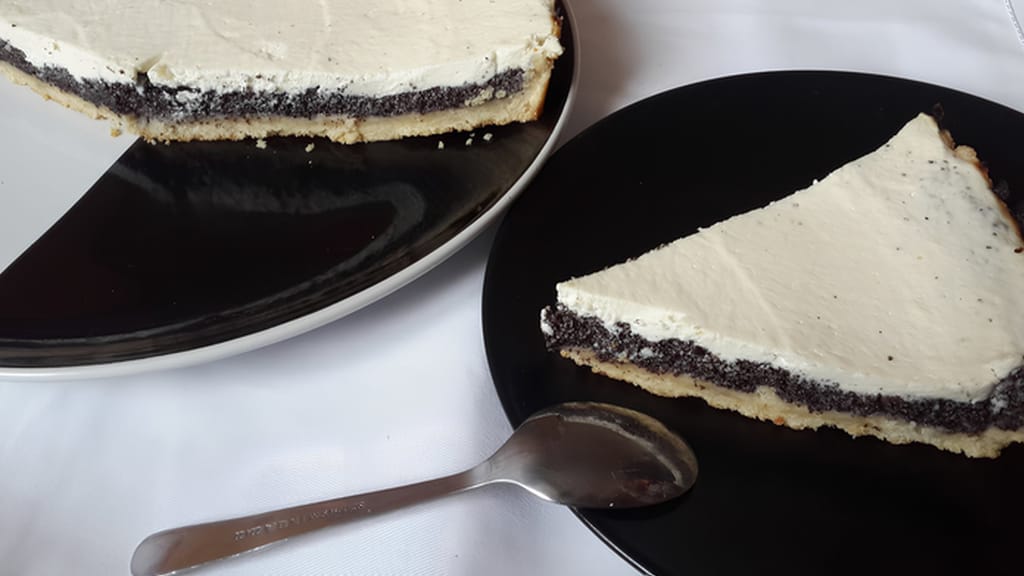
Cottage cheese and poppy seed cake
Quark and poppy seed cake on an oat base with poppy seed and quark layers
A poppy seed and apple cake is most often a layered sheet cake of dough, grated apples and poppy seed filling, baked at 175°C (350°F) for 45–55 minutes. Poppy seeds and apples belong together: tart, juicy apples lighten the dense poppy seeds, and the poppy seeds give the apples depth.
The method: shortcrust or creamed dough on the bottom, then coarsely grated apples mixed with cinnamon and a little sugar (squeeze out some of the juice), on top a layer of poppy seed filling or poppy seed creamed batter, all sprinkled with streusel. Apples release juice during baking, so bake the cake longer at a lower temperature so the bottom bakes through and doesn't stay raw. It's best cooled, the next day, with whipped cream or sour cream.
For a poppy seed cake choose tarter, firmer apples that won't collapse into mush; we go through which varieties suit in the article apple varieties for strudel and apple butter.
For Christmas cookies, put poppy seeds whole into the dough for crunch and looks, or ground in a thicker filling for filled cookies. Small cookies bake at 160–170°C (320–340°F) for 8–12 minutes.
Linecké (Czech Linzer-style jam cookies) and cut-out cookies with whole poppy seeds – mix 2–3 tablespoons of whole poppy seeds and a little lemon zest into the linecké dough, cut out shapes and bake at 160–170°C (320–340°F) for 8–10 minutes until light golden. Sandwich with currant or apricot jam; you'll find the dough method in the classic linecké cookies with red currant jam.
Filled pockets and cups with poppy seed filling – cut circles from shortcrust dough, put a bit of very thick poppy seed filling in the middle, fold over or press into little cups and bake for 10–12 minutes at 170°C (340°F). Cook the filling thicker than for buchty; Christmas cookies bake briefly and there wouldn't be time for more water to evaporate.
Poppy seed cookies – roll buttery dough with whole poppy seeds into a log, chill, slice into rounds and bake at 170°C (340°F) for about 10 minutes. They keep in a tin for several weeks and look pretty with the poppy seeds even without icing.
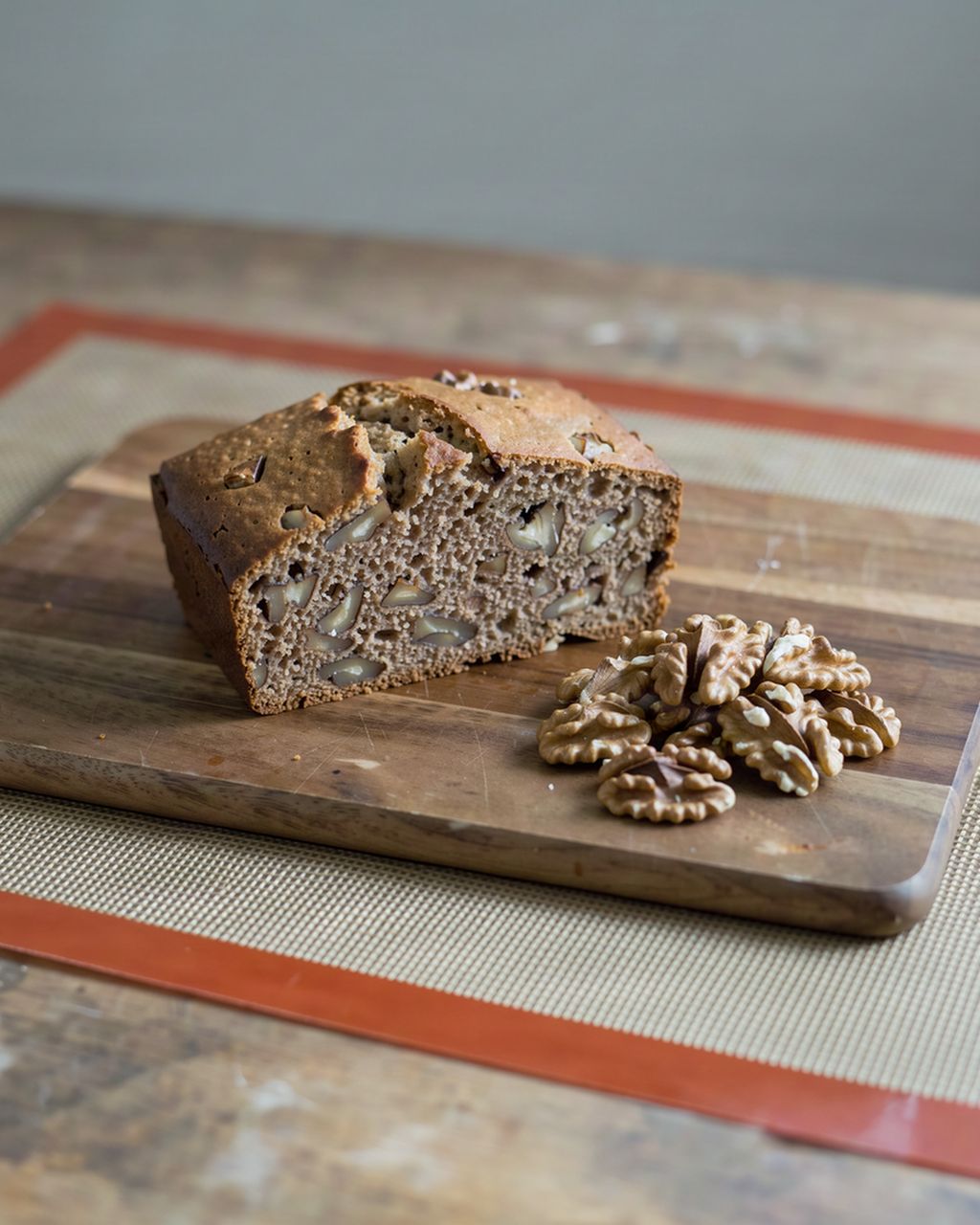
Poppy seeds in Christmas cookies are worth combining with nuts; for ideas for nut cookies and nut dough, see the article what to bake with nuts.
In savory cooking almost only whole poppy seeds are used: as a topping on baked goods, in savory sticks and crackers or in dressings. Savory poppy seed bakes are baked briefly and hot, at 200–220°C (400–425°F) for 12–20 minutes.
Rohlíky, rolls and buns with poppy seeds – brush the shaped rolls with water or beaten egg and sprinkle with whole poppy seeds right away so they stick. Bake at 210–220°C (410–425°F) for 15–20 minutes, ideally with a dish of water in the oven. You can also top homemade soft burger buns with them instead of sesame.
Puff pastry sticks – brush a sheet with egg, sprinkle with poppy seeds, coarse salt and perhaps grated cheese, cut into strips, twist and bake at 200°C (400°F) for 12–15 minutes. They go well with wine or soup.
Seed crackers – combine poppy seeds with flax and sunflower seeds and sesame, a little flour and water, spread thin on parchment paper and bake at 160–170°C (320–340°F) for 30–40 minutes until completely dry and crisp.
Poppy seeds in dressing – a teaspoon of whole poppy seeds in a honey-mustard or lemon dressing gives a cabbage or fruit salad some crunch and a mild nutty note.
Tip: toast whole poppy seeds in a dry skillet for a minute until fragrant before sprinkling. They lose the raw taste and are more pronounced in baked goods.
Store whole poppy seeds in a dry, cool, dark place in a well-sealed container; use ground ones as soon as possible, ideally right away, and freeze the rest. Poppy seeds contain a lot of oil, and that is what goes rancid with heat and light.
Whole poppy seeds – a jar or tin with a lid, in the pantry or fridge. How long they last depends on the producer and packaging, so follow the date on the package. Always smell them before baking.
Ground poppy seeds – ideally straight into the filling. If you have leftovers, seal them in an airtight bag and freeze; in the freezer they keep their aroma much longer than in the pantry.
Store-bought ground poppy seeds – follow the use-by date on the package and use them as soon as possible after opening.
How to tell rancid poppy seeds: they smell like old oil or paint, taste bitter and sharp, and that bitterness carries into the filling despite the sugar. Nothing will rescue such poppy seeds; throw them out.
Yeast poppy seed bakes without quark keep 2–3 days covered with a kitchen towel or in a tin at room temperature; makovec stays moist even longer thanks to the moist poppy seeds.
Buchty, koláčky, rolls – in a tin or under a towel for 2–3 days. Stale buchty can be revived for a few minutes in a 150°C (300°F) oven under aluminum foil.
Cakes with quark – quark filling spoils quickly, so once the cake has cooled put it in the fridge and eat it within 2–3 days.
Makovec – wrapped in plastic wrap it keeps several days and is usually tastier the next day than fresh.
Freezing – yeast poppy seed buchty, rolls and makovec can be frozen once cool, wrapped airtight, for about 2–3 months. Thaw slowly at room temperature and warm them briefly before serving.
Christmas cookies with poppy seeds – in a tin in a cool room; linecké with jam soften, while cookies with whole poppy seeds stay crisp.
Yes. Ground poppy seeds are almost always briefly cooked with milk or water for the filling, because that is what makes them swell, soften and thicken the filling. Raw ground poppy seeds mixed only with sugar would stay dry and crumbly in a bake. You'll find exact ratios and the method in our article on how to prepare poppy seeds.
The best substitute is ground walnuts or hazelnuts, prepared the same way as poppy seeds. The flavor will be different, but the texture and method stay the same. Half poppy seeds and half nuts also works well if you don't have enough poppy seeds.
Yes, cooked poppy seed filling can be frozen for about 2–3 months. Let it cool completely, divide it into bags in portions for one bake and press out the air. After thawing it in the fridge, stir it and thicken it with a spoonful of breadcrumbs or loosen it with a spoonful of milk, as needed.
Heat-treated ground poppy seed is store-bought ground poppy seed that the manufacturer has treated with heat so it keeps longer. It works for baking and saves time, but its aroma can't match freshly ground poppy seeds. The same rule applies: use it as soon as possible after opening.
A flourless poppy seed cake most often collapses or stays gooey because the whipped egg whites deflated or it was baked too briefly. The whites must be whipped to stiff peaks and folded in gently with a spatula, not a whisk. Don't open the oven during the first 30 minutes, and take the cake out only when a skewer inserted in the center comes out dry.
Makovec is a Bundt-style or loaf-style cake with the poppy seeds mixed right into the batter, while a poppy seed koláč is a dough (most often a yeast dough) with poppy seed filling on top or inside. That makes makovec dense and moist all the way through, while a poppy seed koláč alternates soft dough with sweet filling. For makovec you don't cook the poppy seeds; for a koláč you do.
One recipe worth heating the oven for, one tip, and one deal from the shop. Nothing else.