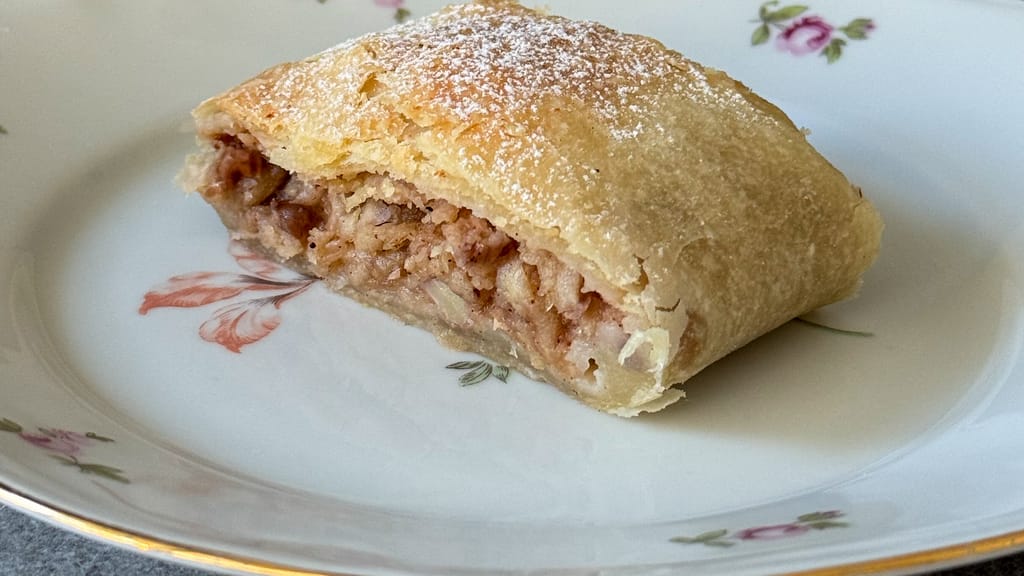
Apple strudel with homemade stretched pastry
What to Bake with Apples: Sheet Pan Cake, Strudel, Puff Pastry, Quark and Pudding Apple Bakes
Updated Nov 18, 2026
What can you bake with apples? Most often an apple sheet cake, strudel, quick puff pastry turnovers, a quark or pudding apple cake, crumb cakes and one-cup cakes, and apples in a dressing gown. The variety matters most: firm, tart apples hold their shape in the oven, while soft ones collapse into a purée. Below you'll find the temperature, the time, what to watch out for and what to serve with each bake.
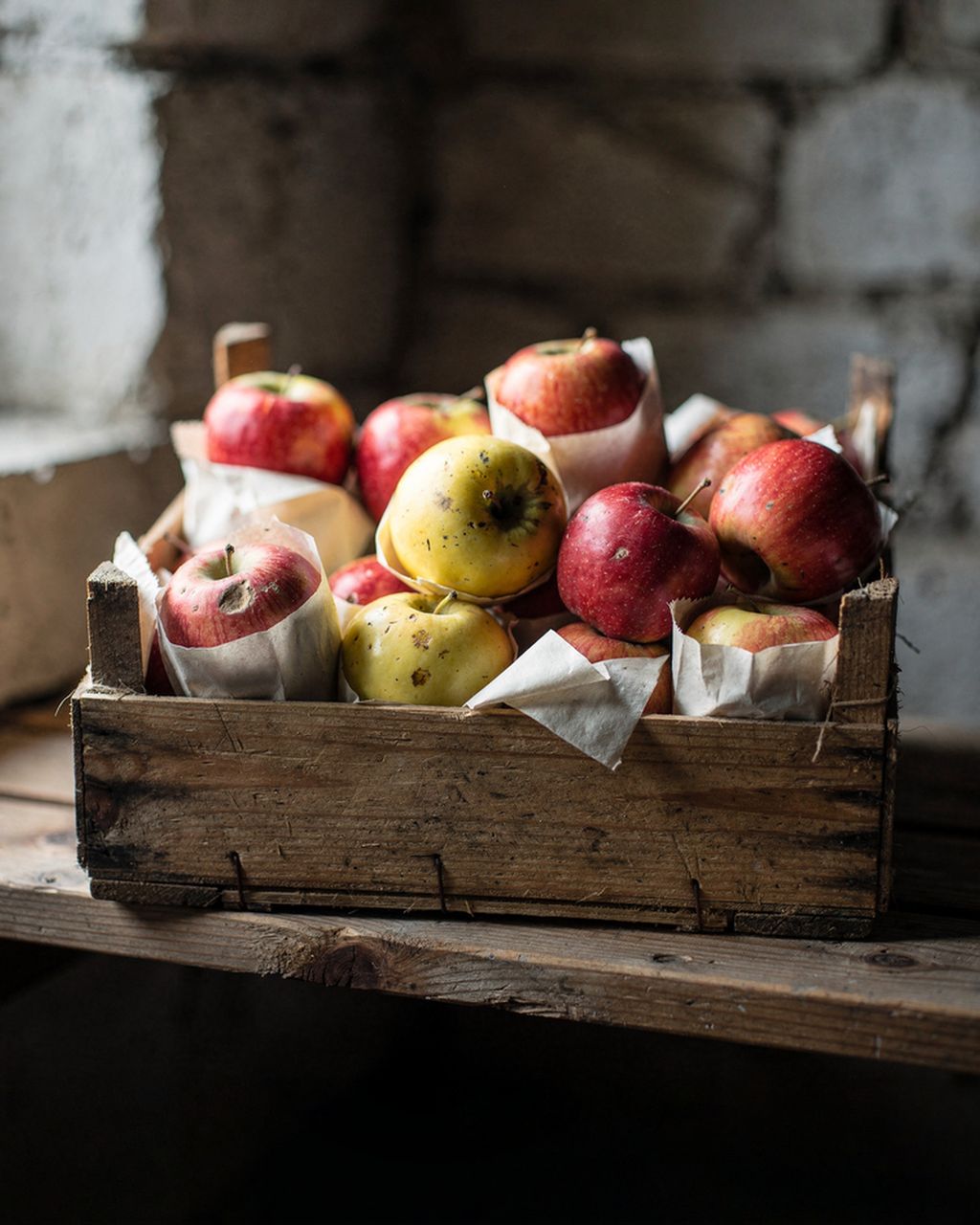
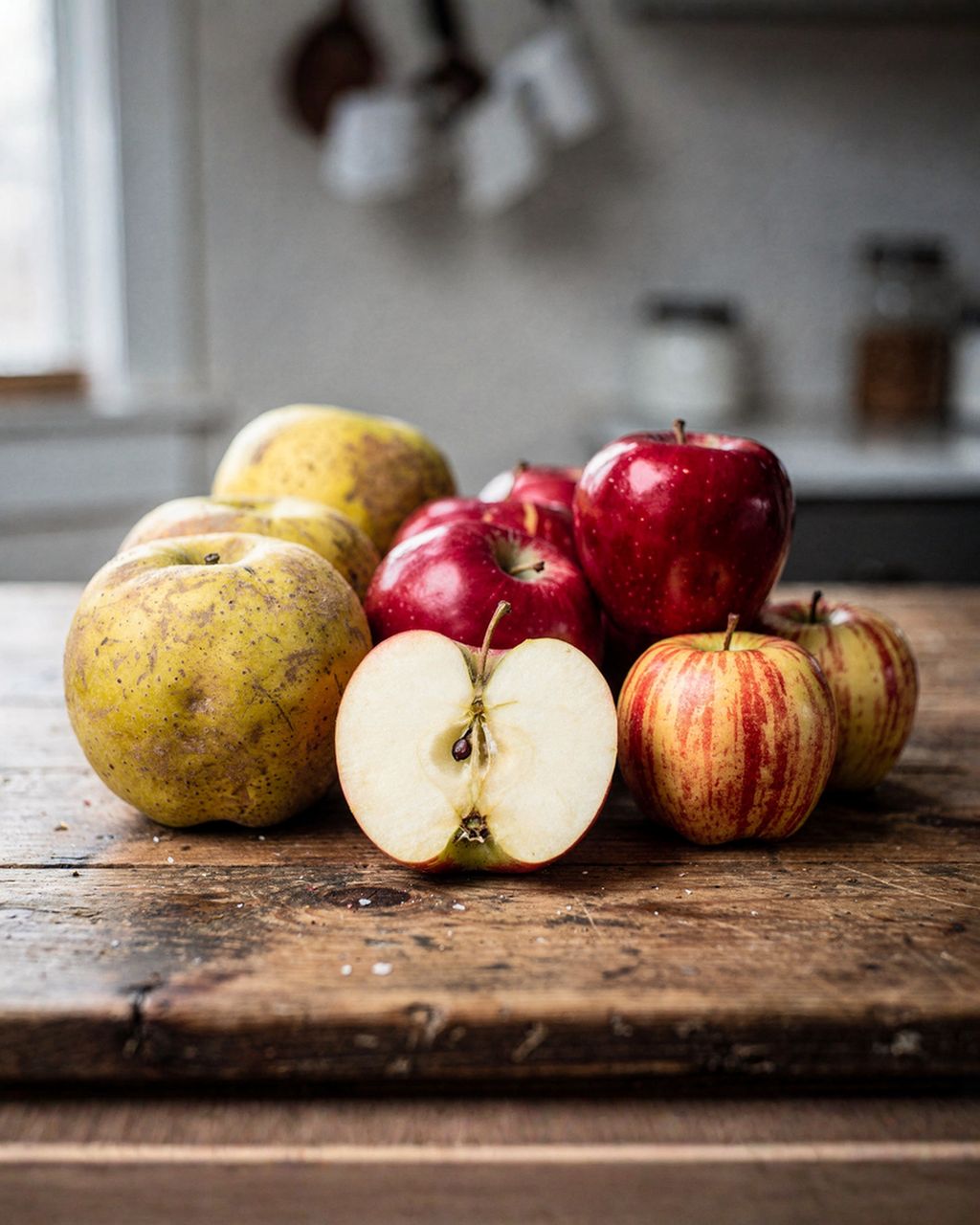
For baking, choose firm, slightly tart autumn and winter apples. They hold their shape, release less juice, and their acidity balances the sugar in the dough. Soft, mealy apples collapse in the oven, which only suits recipes where you want a purée or cream. You'll find more about the fruit itself on the apple page, and a detailed overview of varieties in the article apple varieties for strudel and apple butter.
These firm apples hold their shape in the oven and suit sheet cakes, galettes, apples in a dressing gown and tarts:
Boskoop (Red Boskoop): distinctly tart and aromatic, the classic for strudel and cakes.
Rubín: a Czech variety, juicy and slightly tart, it holds its shape when baked.
Topaz: firm and sweet-tart, it copes well with longer baking.
Gloster and Jonagold: firm flesh, good for baked apples and for slices on a cake.
Granny Smith: the most reliable supermarket choice when you can't find another tart variety.
These soft apples fall apart in the oven, so use them for purée, filling for buchty (Czech filled sweet yeast buns), one-cup cakes and crumble:
Summer varieties such as White Transparent: they cook down almost instantly.
Golden Delicious and Idared after long storage: they turn mealy and soften in the oven.
Any overripe or wrinkled apples from the cellar: ideal for grating into dough.
A mix works best: two thirds firm apples and one third soft. The firm ones give the cake structure, while the soft ones fill the gaps with juicy mush. Got a full crate from the garden? Read how to sort it in the article what to do with windfall apples. Apples also pair beautifully with pears, but pears bake faster and release more juice. So cut them into larger pieces than the apples, or try the recipe yogurt poppy seed cake with pears and replace half of the pears with apples.
We send seasonal cooking and baking plans and recipes made from everyday ingredients. Unsubscribe in one click.
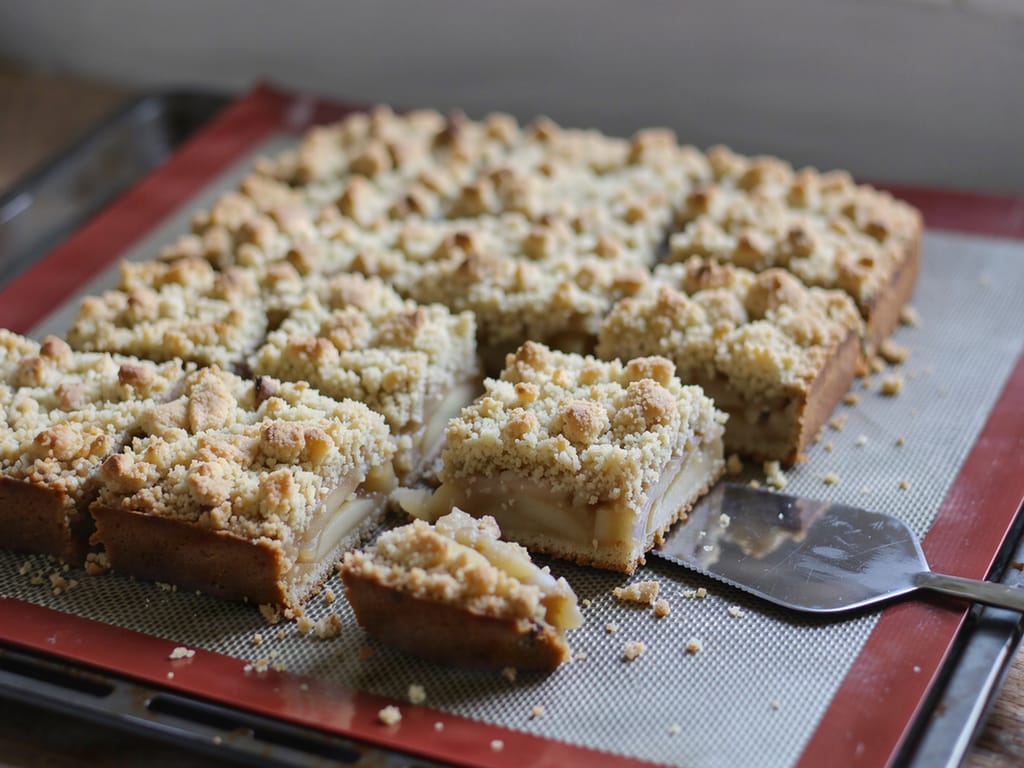
Apple sheet cake comes in three main forms: creamed (the fastest), yeast with crumb topping (the most traditional) and sprinkled (no dough to mix). All are baked on a standard baking sheet of roughly 30 × 40 cm (12 × 16 in), and one sheet makes 20–24 pieces.
Creamed apple sheet cake is the fastest apple cake: no rising, and it's ready in under an hour. Cream the butter with the sugar until pale and fluffy, beat in the eggs, then mix in the flour with baking powder and a little milk. Spread the batter on a baking sheet lined with parchment paper, cover it with apple slices (use 1–1.2 kg / 2.2–2.6 lb) and sprinkle with cinnamon sugar. Bake at 180°C (350°F) for about 35–40 minutes, until a skewer inserted between the apples comes out dry. Serve lukewarm with a spoonful of sour cream or vanilla ice cream.
The most common mistake is a layer of batter that's too thick. A layer of 1–1.5 cm (½ in) on the sheet is enough, as the apples weigh it down while baking and the batter rises around them. If you arrange the slices tightly side by side in diagonal rows, the cake looks neat and the apples bake evenly.
Yeast apple cake with crumb topping is a soft yeast dough with a thick layer of apples and a buttery crumb topping, baked at 180°C (350°F) for 30–35 minutes. Leave the dough to rise (prove) for about an hour in a warm spot, roll it out onto the baking sheet, let it rise for another 20 minutes, and only then cover it with thinly sliced apples and a generous layer of crumbs. Bake until golden. You can borrow the yeast dough and crumb topping from the recipe classic yeast plum sheet cake with crumb topping, just swap the plums for apples tossed with cinnamon.
Sprinkled cake needs no dough at all. Mix coarse flour (Czech hrubá), semolina, sugar and baking powder, then layer this dry mixture with grated apples straight in a greased baking dish, ideally three layers of the mixture and two of apples. Grate cold butter over the top and drizzle with a little milk. The apple juice moistens the dry mixture, and in the oven it turns into a dense, moist cake. Bake at 180°C (350°F) for 45–50 minutes, until the surface turns golden. Cut it only once cooled, as it crumbles when warm.
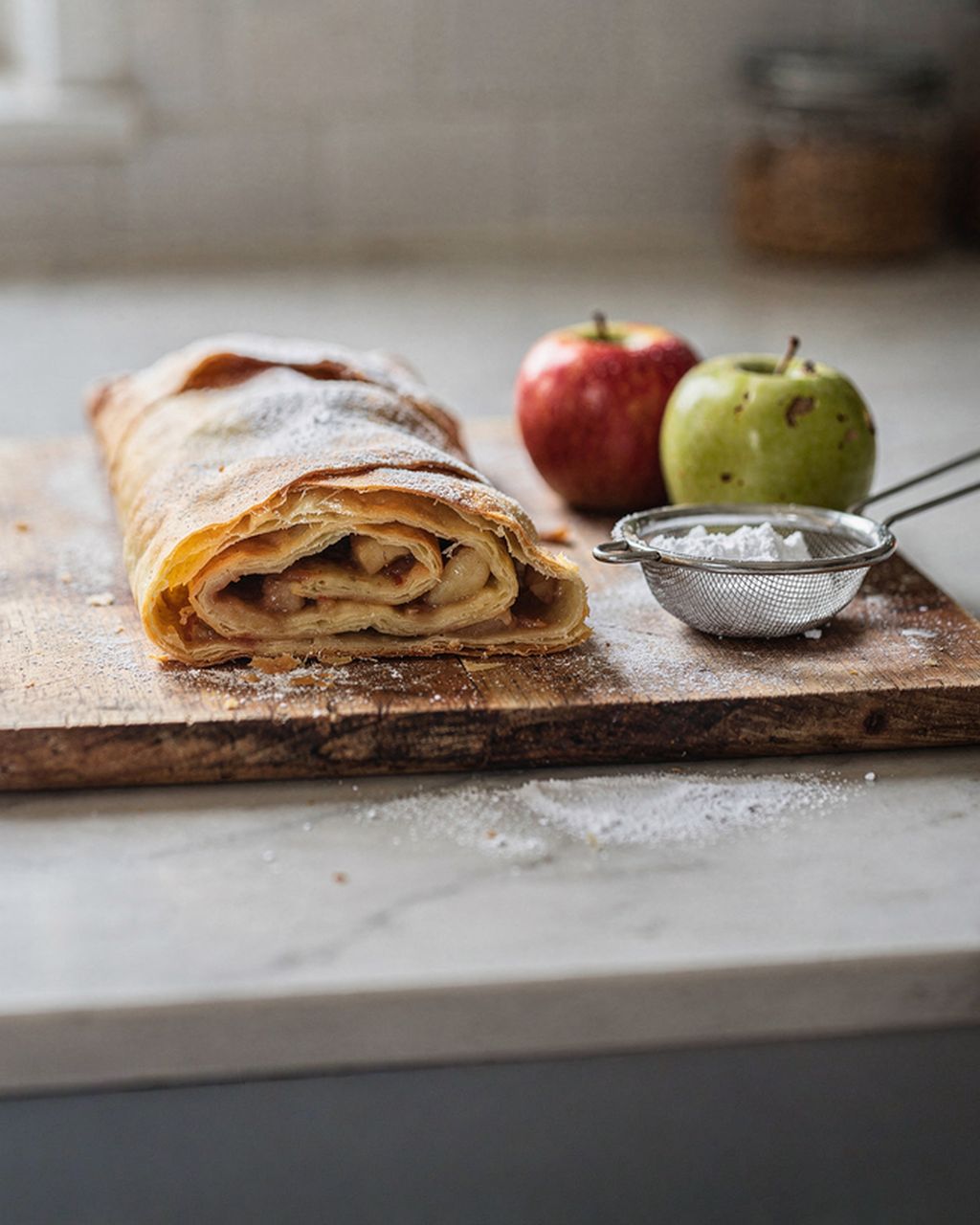
Apple strudel is made with one of two doughs: homemade stretched dough, which is paper-thin and the most delicate, or store-bought puff pastry, which gets you a strudel in under an hour. The filling is the same either way: tart apples, sugar, cinnamon, raisins, nuts and breadcrumbs toasted in butter to soak up the juice.
Stretched strudel: after kneading, let the dough rest for at least 30 minutes under a warm bowl, then stretch it over the backs of your hands on a floured cloth until you can see the pattern through it. Add the filling, roll it up with the help of the cloth and bake at 190°C (375°F) for about 35–40 minutes, brushing it twice with melted butter during baking. You'll find a step-by-step method in the recipe apple strudel from homemade stretched dough.
Puff pastry strudel: a quick weeknight version, described below in the puff pastry section.
Serve the strudel lukewarm, dusted with sugar, with vanilla sauce, whipped cream or ice cream. Everything about the dough, the filling and why strudel cracks is covered in a separate article, apple strudel: a guide to homemade strudel.
Apple strudel with homemade stretched pastry
Apple strudel from homemade stretched dough
With apples and puff pastry you can bake turnovers, a quick strudel, a galette and apple roses in 30–40 minutes. There is one rule for puff pastry: it must be cold and the oven hot. That's the only way the butter between the layers turns to steam and puffs the pastry up. Never put raw, wet apples in it. Either chop them finely and coat them in breadcrumbs, or simmer them in a pan with butter and sugar for 3–4 minutes and let them cool.
Puff pastry apple turnovers are the quickest apple pastry: from a single sheet and softened apples, they're ready in half an hour. Cut a sheet of puff pastry into squares of about 10 × 10 cm (4 × 4 in), put a spoonful of cinnamon-spiced softened apples in the middle and fold into a triangle. Press the edges with a fork, cut a small steam vent in the top and brush with beaten egg. Bake at 200°C (400°F) for 15–20 minutes, until puffed and golden. They're best within an hour of baking, dusted with sugar or drizzled with a lemon glaze made from powdered sugar and a few drops of juice.
Quick strudel is the best choice when guests turn up unexpectedly: it's ready in under an hour, baking included. Roll a sheet of puff pastry to a thickness of 2–3 mm and sprinkle with breadcrumbs. Spread over grated or diced apples with sugar, cinnamon and raisins, roll it up seam side down and brush with egg. Bake at 200°C (400°F) for 25–30 minutes. You'll find a tested method in the recipe apple roll from puff pastry (quick version).
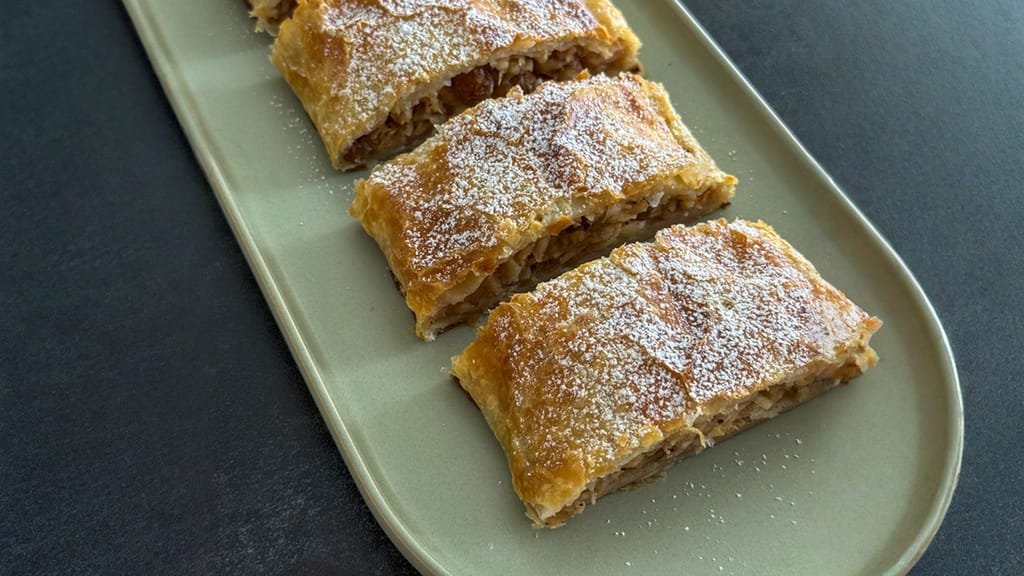
Apple strudel from puff pastry (quick version)
Quick apple roll from puff pastry
A galette is a free-form tart baked without a pan. Roll the dough into a circle about 28 cm (11 in) across, sprinkle the center with ground almonds or breadcrumbs and arrange apple slices on it in a spiral, leaving a 5 cm (2 in) border. Then fold the free edge over the apples in pleats. Brush with egg, sprinkle with raw cane sugar and bake at 200°C (400°F) for 30–35 minutes. It works with puff pastry as well as homemade shortcrust. Serve with crème fraîche or sour cream, whose tang suits the sweet apples.
Puff pastry apple roses are slices of red apples rolled up in a strip of pastry and baked in a muffin tin at 190°C (375°F) for 30–35 minutes. Leave the skin on, cut the apples into half-moons 2 mm thin and simmer for 2–3 minutes in water with lemon juice, so they soften and can bend. Spread a strip of puff pastry with jam, arrange the slices on it with the edges overhanging, roll it up and place it in the muffin tin. If the edges of the slices darken too quickly during baking, cover them with aluminum foil for the last 10 minutes.
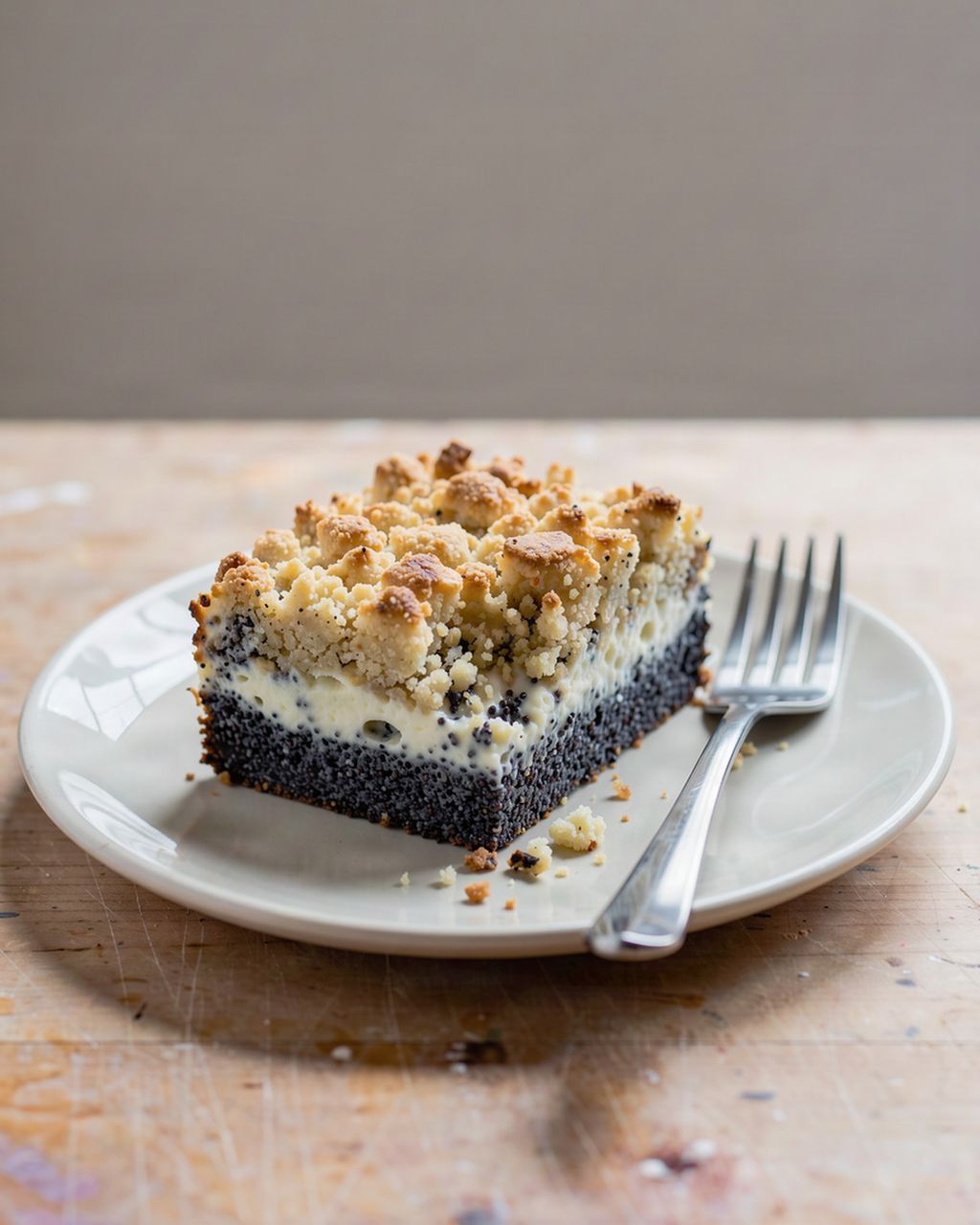
Apples and quark (tvaroh, a Czech fresh curd cheese) complement each other: the tangy quark tones down the sweetness, while the apples add juiciness to the quark filling. The best known are yeast koláčky with quark and apples, quark and apple sheet cake, grated cake with an apple layer and apple žemlovka (Czech baked bread pudding). For the filling, use full-fat block quark; the kind sold in tubs tends to be thinner and the cake can turn watery. More ideas are in the article what to bake with quark.
Yeast apple koláčky with quark and crumb topping are small yeast pastries with a quark filling, softened apples and crumbs in the well. Shape the yeast dough into rounds, make a well in the middle, fill it with quark filling with egg and vanilla sugar, top with diced apples and sprinkle with crumbs. Let them rise for another 15–20 minutes and bake at 180°C (350°F) for 20–25 minutes. They're done when the edges turn golden and the quark is set. The whole method is in the recipe yeast apple koláčky with quark and crumb topping.
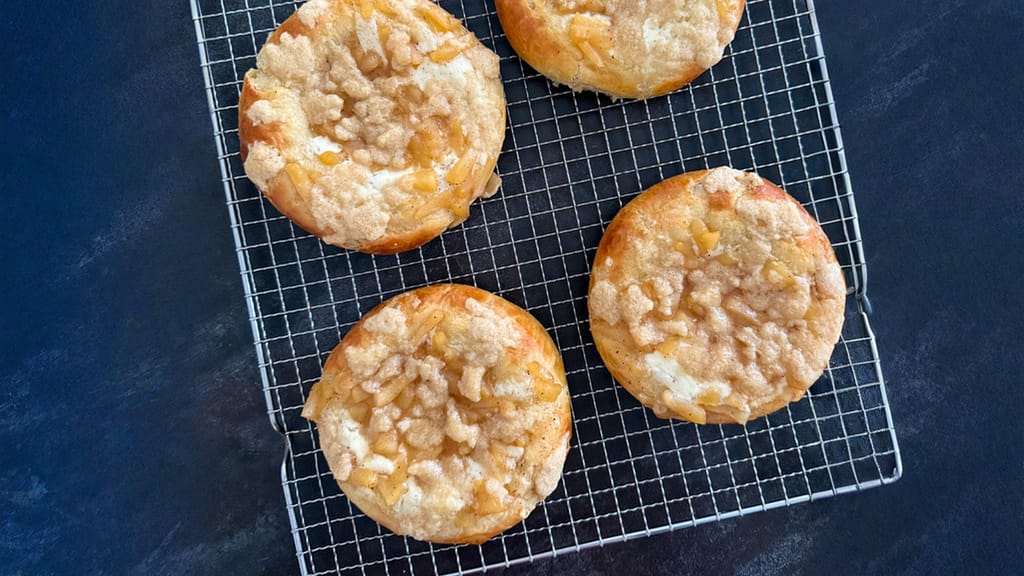
Yeasted apple buns with curd cheese and crumble topping
Yeast apple koláčky with quark and crumb topping
Quark and apple sheet cake has three layers: a thin dough base, a thick layer of quark and apples on top. Over a thin base of creamed or shortcrust dough, spread 500 g of quark beaten with an egg, sugar and a spoonful of vanilla pudding mix (cook-and-serve, similar to custard powder), which firms up the filling. Top the quark with apple slices and sprinkle with crumbs or just cinnamon sugar. Bake at 175°C (350°F) for 40–45 minutes. The quark is done when the center no longer wobbles as you shake the pan. Cut it only once cooled, ideally the next day straight from the fridge.
Grated cake is built on a firm dough that you grate on a coarse grater: half for the bottom, half for the top. In between go the quark and a layer of grated apples with cinnamon. Squeeze the apples lightly beforehand, otherwise they'll make the bottom dough soggy. Bake at 180°C (350°F) for about 45–50 minutes until golden. You'll find the base in the recipe grated quark cake; simply add the apple layer to it.
Žemlovka is a baked bread-roll dessert, so it's a good use for day-old rolls. Slice 6–8 rolls into rounds, pour over milk beaten with eggs, sugar and vanilla, and let them soak for five minutes. In a greased baking dish, layer the rolls, apple slices with cinnamon and quark beaten with an egg and sugar, finishing with a layer of rolls on top. Bake at 180°C (350°F) for 40–45 minutes, until the surface is golden and crisp. Serve it warm as a sweet lunch, on its own or with fruit compote. You can also top it with meringue made from egg whites and bake it for the last 15 minutes, until golden and set.
Apple cake with pudding has three layers: a shortcrust or creamed base, apples and vanilla pudding. It's often topped with crumbs or whipped cream. The pudding softens the apples and helps the cake hold together nicely when sliced. Always cook the pudding thicker than you'd eat from a bowl, ideally from 1.5 packets of pudding mix to 500 ml of milk. A thinner one would run in the oven or after cooling. Cut the apples for a pudding cake into thin slices or cubes under 1 cm (⅜ in). Larger pieces won't soften under the pudding, because the moist pudding layer shields them from the heat.
Baked apple pudding cake with crumb topping is made on a pre-baked shortcrust base and sliced only once cooled, ideally the next day. Press the shortcrust dough into the baking dish and pre-bake it for 10 minutes at 180°C (350°F). Cover it with apple slices, pour over warm thick pudding and top with crumbs. Continue baking at 180°C (350°F) for another 35–40 minutes, until the crumbs turn golden. Let the cake cool, then refrigerate for at least 3 hours, ideally overnight. Only then does the pudding set and the cake cut into clean slices.
Apple bars with pudding and whipped cream are the quickest apple dessert: you bake only a thin base, and layer the apples, pudding and whipped cream cold. On a thin sponge or shortcrust base, put apples softened with cinnamon and lemon zest, then thick vanilla pudding, and once cooled a layer of whipped cream. Only the base is baked (180°C / 350°F, 15–20 minutes); the rest is assembled cold. Chill the bars in the fridge for at least 4 hours to set, and sprinkle with cinnamon or grated chocolate on top.
Crumb cakes and one-cup cakes are the simplest apple bakes. They include crumble, one-cup apple cake, bublanina (Czech fruit sponge cake) and apple Bundt cake. One-cup cake and crumble need neither a scale nor a mixer, just a bowl and a cup; bublanina and Bundt cake need whisking. You can measure the crumbs by the cup too: half a cup of cold cubed butter, a cup of flour and half a cup of sugar (by weight that's roughly 120 g of butter, 140 g of flour and 100 g of sugar). Rub them together with your fingers from cold butter. If you don't work it for long, lumps stay in, and in the oven it turns crisp instead of melting.
Crumble is baked fruit under a crumb topping, with no dough, ready in 45 minutes. Toss diced apples with a little sugar, cinnamon and a spoonful of flour, pour them into a baking dish and cover with crumbs, perhaps with rolled oats or chopped nuts. Bake at 190°C (375°F) for 30–35 minutes, until the juice bubbles at the edges and the crumbs are golden. Serve warm with vanilla ice cream or thick plain yogurt. You can assemble the crumble in the morning and bake it in the evening. Until then, keep the crumbs separate in the fridge, otherwise they soak up the apple juice and won't turn crisp.
In one-cup cake everything is measured with a single cup (about 250 ml): a cup of sugar, two cups of flour, a cup of milk, half a cup of oil, an egg and baking powder. Pour the batter onto a baking sheet, cover with sliced apples and sprinkle with cinnamon. Bake at 180°C (350°F) for 30–35 minutes. You'll find a similar cake with crumbs in the recipe plum one-cup cake; use about 600 g of apples instead of the plums.
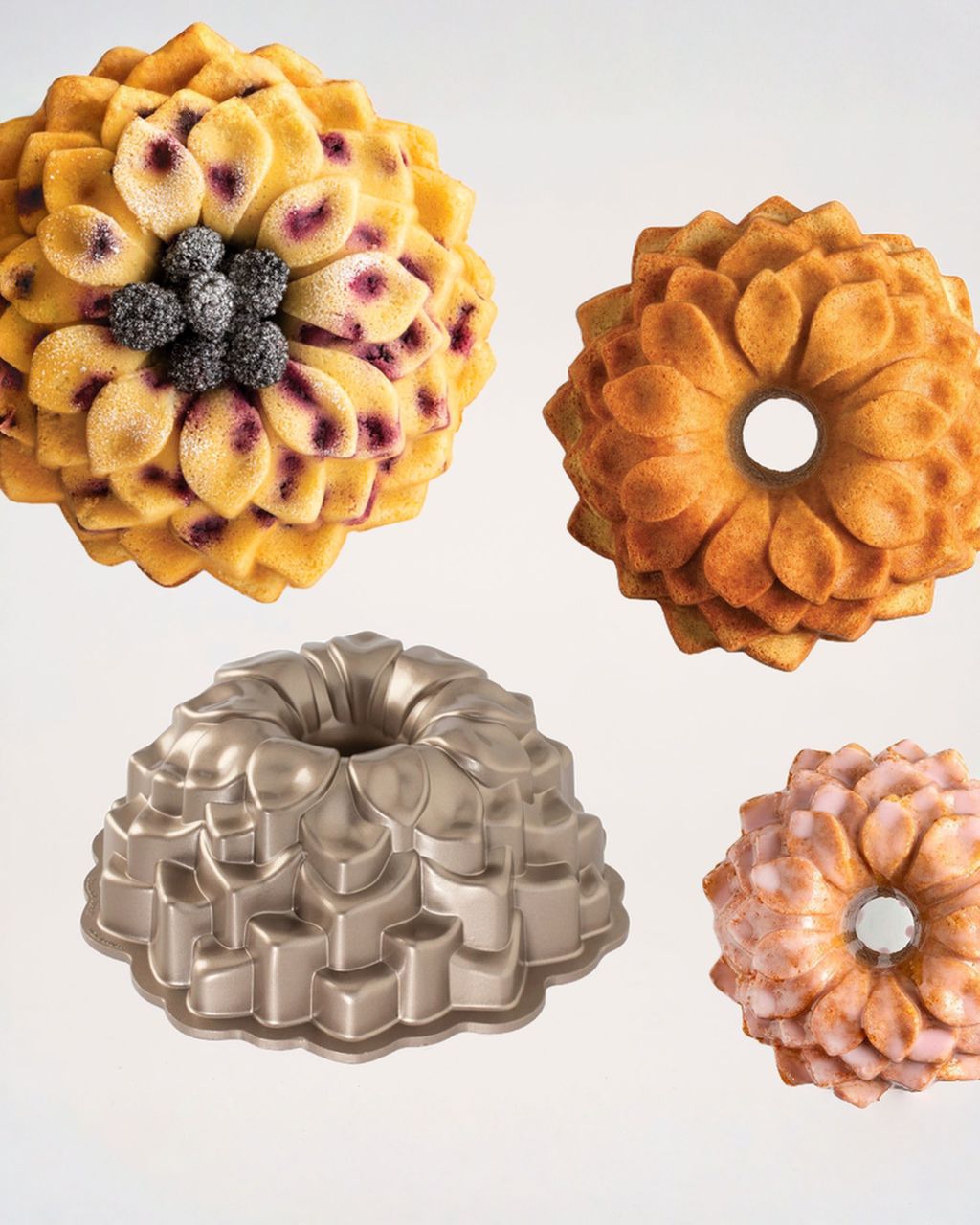
Bublanina is a fluffy sponge with fruit that bubbles up to the surface as it bakes. Press diced apples into a batter of whisked eggs and sugar with flour and bake at 170–180°C (340–350°F) for 30–35 minutes. In spring and summer it's made with other fruit, but in autumn it's just as good with apples, as shown by bublanina with summer fruit and crunchy crumb topping. Apple Bundt cake with grated apples in the batter stays moist for several days. It's baked in a pan at 160°C (320°F) for about 60–80 minutes, for example following the recipe apple Bundt cake with coconut oil.
Without wheat flour you can bake baked stuffed apples, oat cake from ground oats, almond cake and apple chips. Apples have plenty of natural sweetness and juice, so they cope with less sugar and heavier flours that would otherwise dry out the batter.
Baked stuffed apples are whole apples with a nut filling in place of the core, baked until soft with no dough at all. Core whole firm apples and fill the hole with chopped nuts, raisins, cinnamon and a teaspoon of honey or butter. Stand them in a baking dish, pour in 1 cm (⅜ in) of water or apple juice and bake at 180°C (350°F) for 25–35 minutes, depending on size, until soft but the skin hasn't split yet. Serve with plain yogurt, the juices from the dish and perhaps a few spoonfuls of granola.
Oat cake is built on finely ground rolled oats, eggs, yogurt and grated apples, sweetened with honey or a ripe banana. Bake in a pan at 180°C (350°F) for 35–40 minutes. It turns out moister and denser than a classic sponge, so let it cool in the pan. Almond cake made from ground almond flour, on the other hand, is tender and fragrant. Press apple slices into the top and bake at 170°C (340°F) for 40–45 minutes; almond flour browns faster, hence the lower temperature.
Oven apple chips are thin apple slices dried at 100°C (210°F) for about 1.5–2 hours until crisp. Slice the apples 1–2 mm thin (ideally on a mandoline), spread them on a baking sheet lined with parchment paper and sprinkle with cinnamon. Dry them with the oven door propped open with a wooden spoon so moisture can escape, and turn the slices halfway. They're fully crisp only once cooled, and keep for a week in an airtight container.
Apples in a dressing gown (jablka v županu) are whole peeled, cored apples wrapped in dough and baked until golden. When cut, you see the whole apple wrapped in a thin layer of dough. Use firm, medium-sized apples (Boskoop, Topaz, Gloster); soft ones would fall apart in the dough.
Filling: fill the core hole with ground nuts mixed with sugar and cinnamon, raisins, marzipan or a teaspoon of cranberry jam.
Dough: puff pastry is the quickest, yeast dough is fluffier, and quark dough is another option. For each apple, count on a square of about 15 × 15 cm (6 × 6 in).
Wrapping: lift the corners of the square above the apple and seal them; from the trimmings you can cut out a leaf for decoration. Brush with egg.
Baking: at 190°C (375°F) for 30–35 minutes (yeast dough at 180°C / 350°F for 35–40 minutes). They're done when a skewer slides smoothly through the apple.
Serve warm, dusted with sugar, with vanilla sauce or šodo (chaudeau, a warm custard sauce). Make the latter following the recipe soft buchtičky with chaudeau (šodo) sauce.
Cut apples won't brown if you sprinkle them right away with lemon juice or put them in water with lemon. Browning is caused by the enzyme polyphenol oxidase, which comes into contact with air once the apple is cut and turns compounds in the flesh into brown pigments. Acid and vitamin C slow this reaction.
Lemon juice: the juice of half a lemon per kilogram (2.2 lb) of apples, tossed in straight after cutting. It's the best choice for baking, because the acidity benefits the apples.
Lemon water: keep slices for roses or a galette in a bowl of cold water with a spoonful of lemon juice until assembly, then pat dry.
Ascorbic acid (vitamin C powder): works at least as well as lemon and doesn't change the flavor. About a quarter teaspoon (under 1 gram) per liter of water is enough.
Cut at the last moment: for strudel, crumble or a cake with cinnamon, color hardly matters, so the simplest approach is to cut the apples once the dough is ready.
Salt water is said to work too, but we haven't found a convincing comparison with lemon, and the apples would have to be rinsed before baking. For sweet baking, stick with lemon.
A plain apple cake without cream keeps for 2 days covered at room temperature, a few days longer in the fridge. Cakes with quark, pudding or whipped cream belong in the fridge from the start. How long it keeps depends mainly on what's in the cake besides the apples:
Creamed, yeast and sprinkled cake, Bundt cake: 2–3 days covered with a tea towel or in a container at room temperature. Yeast cake tastes best on the first day.
Cakes with quark or pudding: in the fridge, in an airtight container, and eat within 3 days.
Bars with whipped cream: in the fridge for 1–2 days, after which the cream loses volume and the base softens.
Puff pastry (turnovers, roses, strudel): best on the day of baking. On the second day you can bring back the crispness with 5–8 minutes in the oven at 180°C (350°F). The microwave makes it soggy.
Freezing: freeze cakes without cream (creamed, yeast, Bundt, strudel) in pieces wrapped in plastic wrap for up to 3 months. Quark and pudding cakes curdle after thawing and release water.
If you have more raw apples than you can bake, the article how long apples keep and how to store them over winter will help.
You don't have to peel apples for a cake. For slices on a cake or galette, the skin helps them hold their shape and adds color. Do peel apples with thick, tough skin (such as older winter varieties), and always peel those you grate into dough or put in strudel, where the skin would form tough strips.
For a 30 × 40 cm (12 × 16 in) baking sheet, use 1–1.2 kg (2.2–2.6 lb) of apples, about 6–8 medium ones. For a cake that is heavy on apples, with an apple layer thicker than the dough, use up to 1.5 kg (3.3 lb).
An apple cake is most often wet because the apples released more juice than the dough could absorb. Sprinkle breadcrumbs or ground nuts on the dough under the apples, squeeze out juicy apples beforehand, and bake longer at a lower temperature. If the top browns before the center is done, cover the cake with aluminum foil.
Frozen apples work well for baking, best in crumble, strudel, one-cup cakes and Bundt cakes. Let them thaw in a colander before using, and either discard the juice that drains off or use it to moisten the breadcrumbs. They aren't suitable for slices in a galette or for rose-shaped pastries, as they turn soft after thawing.
Ground cinnamon is the main one, roughly 1–2 teaspoons per kilogram (2.2 lb) of apples. A pinch of ground cloves, cardamom or nutmeg, grated lemon zest and vanilla also go well with apples. Rum, or raisins soaked in rum, gives strudel its typical aroma.
One-cup cakes and creamed apple cakes can be made without eggs. One egg can be replaced with 60 g of plain yogurt or half a mashed ripe banana. The batter then tends to be denser, so add half a teaspoon more baking powder. Crumble and puff pastry strudel don't need eggs at all, apart from the egg wash.
One recipe worth heating the oven for, one tip, and one deal from the shop. Nothing else.