- Season
- Year-round
- Price
- Medium
Calories and nutrition per 100 g
- 117 kcal
- 24.4 g protein
- 0.8 g fat
- 2.4 g carbs
Hard Curd Cheese
Hard curd cheese (tvaroh tvrdý) is a firm, drier Czech curd cheese with at most 5 % fat in dry matter, sold as a block or ready-grated and grated mainly over fruit dumplings and pasta. It is an unripened lean curd cheese made from milk and cultures, with about 110–125 kcal and over 22 g protein per 100 g.
Not recommended. Keep it out of the fridge only while serving, grated over a hot dish.
Keep it in the fridge at 2–8 °C, as the producers state, and use unopened packs by the date on the label. Once opened, wrap it well and use it within 48 hours, as the maker of Olešnický tvaroh advises.
It can be frozen, but after thawing it releases water and changes texture, so it is then fit only for baking and cooking, not grating. Buying smaller packs and using it fresh is better.
Look for "tvaroh tvrdý" on the pack; the ingredients should be just milk and cultures. The block should be firm and white to cream, with no yellow edges, slime, or sour or bitter smell. Ready-grated curd is handy for a quick topping, but grating your own from the block gives a fresher result. In Czech shops it sits in the chiller next to the other curd cheeses.
Fat-free or soft curd cheese squeezed well in a cloth and chilled. It will not grate, but it crumbles over dumplings.
For savoury dishes, grated hard cheese. It is fattier and saltier and melts on a hot dish instead of staying crumbly.
Grate it on the coarse or medium side of a grater while it is cold, so it does not stick. For fruit dumplings, scatter it over the hot dumplings, dust with icing sugar and pour over melted butter. For savoury dishes you can salt it and mix it with caraway or chives. Crumble any piece too small to grate with your fingers.
Crumble dried edges and bits too small to grate into bun dough, stuffing or a sweet curd filling. Stir leftover grated curd into eggs for an omelette or into a spread.
Roughly what one measure weighs, scooped the way you normally would in the kitchen.
Hard curd cheese is rarely cooked; it is grated over the finished dish: plum, apricot and other fruit dumplings, noodles and pasta with butter and sugar, gnocchi or potato dumplings. It can be baked into a pudding or crumbled into fillings for cakes and buns. In savoury dishes it works as a lean topping instead of cheese, as the producers also suggest.
Hard curd cheese (tvaroh tvrdý) is a firm, drier Czech curd cheese with at most 5 % fat in dry matter, sold as a block or ready-grated and grated mainly over fruit dumplings and pasta. It is an unripened lean curd cheese made from milk and cultures, with about 110–125 kcal and over 22 g protein per 100 g. The Czech decree on dairy products defines tvaroh as an unripened, acid-set cheese and puts hard tvaroh in the same fat group as fat-free and soft tvaroh: at most 5 % fat in dry matter. It differs from soft tvaroh in texture: it is drained and pressed more, so it holds its shape and can be grated. Czech shops sell it in 200 g packs, such as Olešnický tvaroh tvrdý or Jaroměřický tvaroh tvrdý, and ready-grated as tvaroh tvrdý strouhaný.
Mildly tangy, clean and milky, with little salt. It is drier and firmer than soft curd cheese and grates into dry flakes. On a hot dish it softens slightly but does not melt like cheese.
Seasonal baking plans, tested recipes and kitchen tricks that save you time. Unsubscribe in one click.
2 min read
Under the Czech decree on dairy products, tvaroh (curd cheese, quark) is an unripened cheese made by acid coagulation. The decree classifies curd cheese by texture and fat in dry matter: full-fat at least 38 %, semi-skimmed 15–25 %, low-fat or fine at most 15 %, and fat-free, soft and hard at most 5 % fat in dry matter. Hard curd cheese is therefore a lean curd cheese that is drained and pressed more than the soft kind, which is why it holds its shape.
It is not a ripened or dried cheese and has nothing to do with Olomouc tvarůžky. Producers make it from milk and cultures with no other ingredients; Jaroměřická mlékárna lists pasteurised milk.
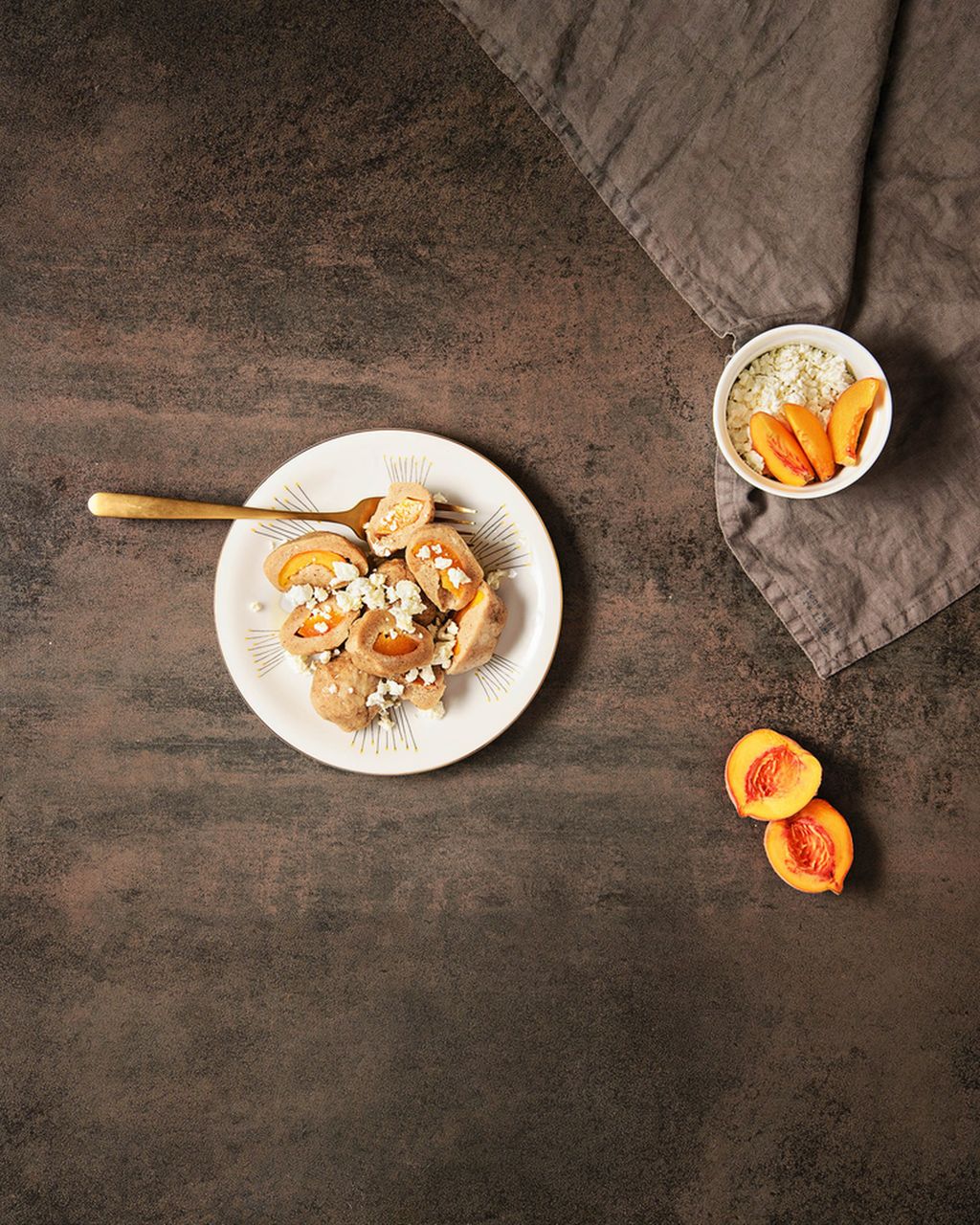
Mainly fruit dumplings: grated curd, icing sugar and melted butter are the Czech classic with plum and apricot dumplings. It is scattered the same way over noodles and pasta with butter. You can try it in our recipe for buckwheat dumplings with peaches and curd cheese.
Producers also suggest it as a lighter replacement for fattier cheeses. On baked pasta or potatoes, though, do not expect it to melt and stretch like Edam; it stays crumbly.
Hard curd cheese is lean and high in protein. According to the labels, Olešnický tvaroh tvrdý has 110 kcal, 22.5 g protein, 0.7 g fat and 3.4 g carbohydrate per 100 g; Jaroměřický tvaroh tvrdý has 124 kcal, 26.3 g protein, 0.8 g fat and 1.3 g carbohydrate. Salt is only 0.1–0.2 g. It contains milk, including lactose, and is not suitable for a milk protein allergy.
Keep it unopened in the fridge at 2–8 °C and use it by the date on the pack. Wrap an opened block well; the maker of Olešnický tvaroh advises using it within 48 hours. Throw away curd cheese with slime, mould or a bitter taste entirely.
Curd cheese can be frozen, but after thawing it releases whey and turns grainy, so it is fit only for baking and cooking. How different cheeses and curd cheeses behave in the freezer is covered in can you freeze cheese?.
Soft and hard curd cheese are equally low in fat; they differ only in how much whey is left in them. Soft curd cheese is moist and spoonable, good for doughs, fillings and spreads. Hard curd cheese is for grating. Full-fat curd cheese has at least 38 % fat in dry matter and is the creamiest; more about it on our full-fat curd cheese page.