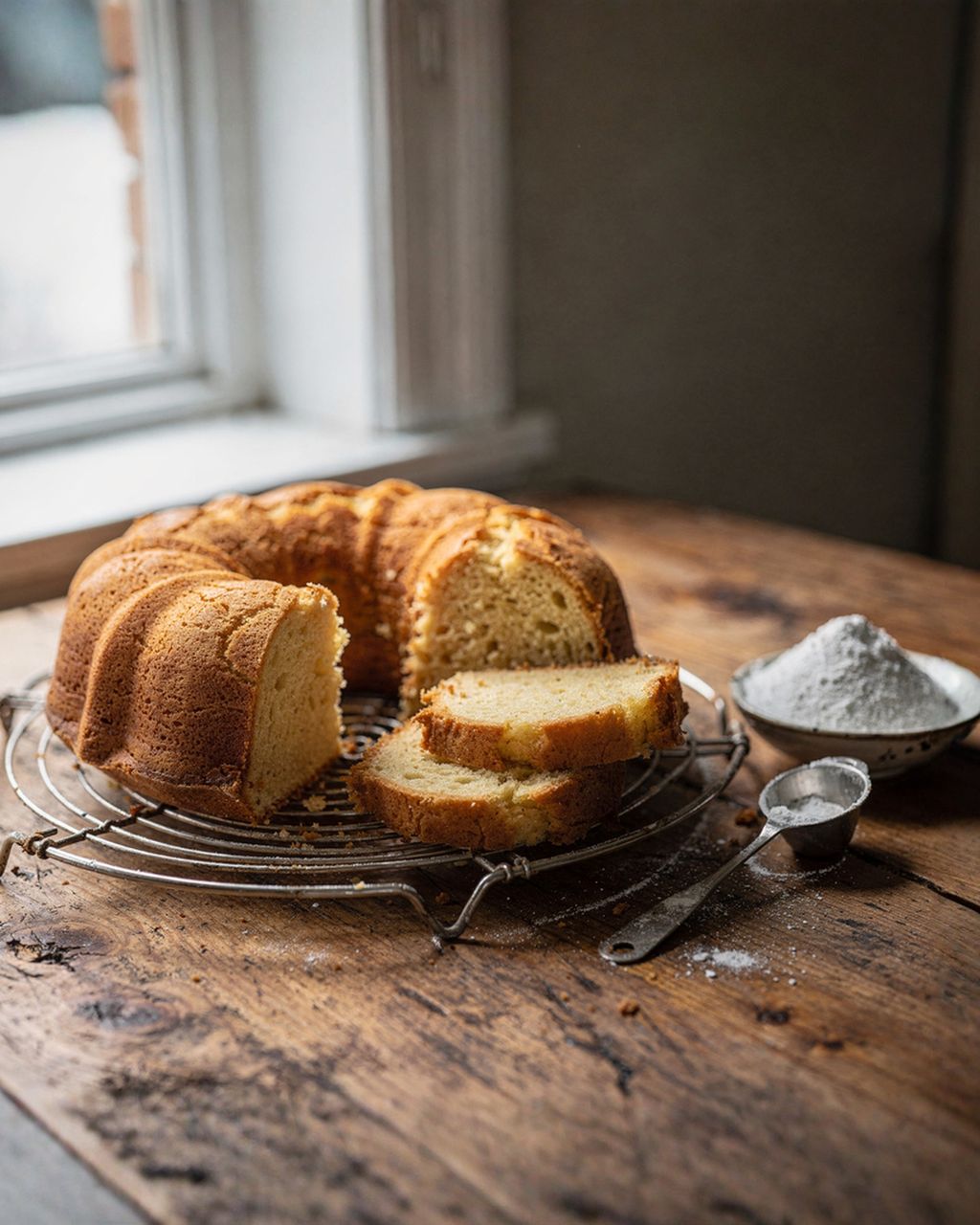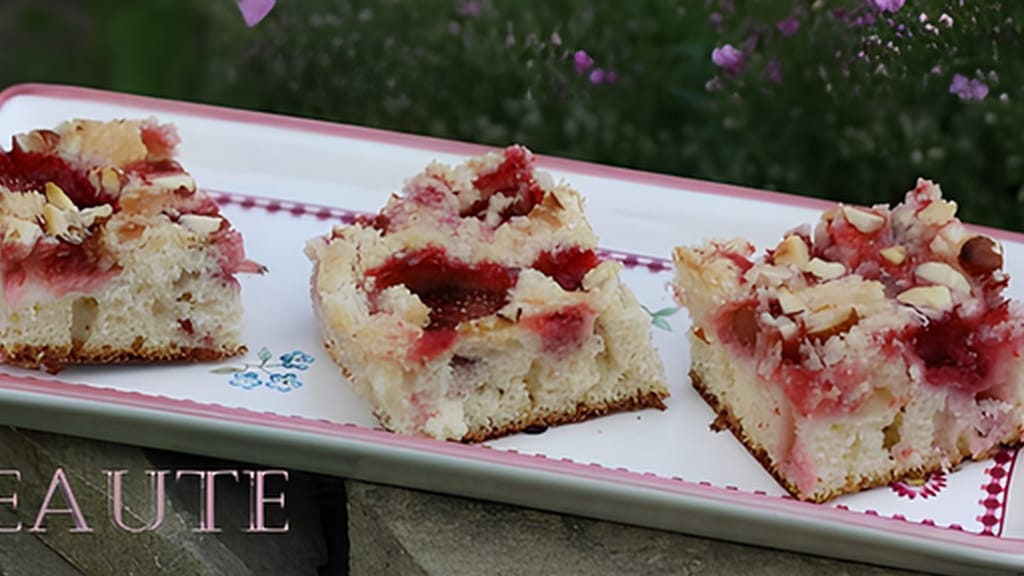
Foolproof bubbly cake (bublanina)
Strawberry Bublanina with Curd Cheese: Light Batter That Won't Turn Soggy
Updated Aug 23, 2026
Strawberry bublanina with curd cheese lives or dies by water. Strawberries are roughly 91% water, and curd cheese adds even more, so a batter that would easily hold up cherries turns soggy under strawberries, with the fruit sinking straight to the bottom. Three fixes make it work: halve the strawberries and coat them in fine semolina flour, use well-drained curd cheese and spoon it on in clumps rather than mixing it into the batter, and bake at 170°C (340°F) a little longer than you would for cherry bublanina. Read on for why this works, where it most often goes wrong, and how to tell when it's done.
Strawberries have soft flesh and no firm skin, so they break down in the oven and release their juice straight into the batter — cherries, by contrast, hold their juice in until baking is done. According to nutritional tables, water makes up roughly 91% of a strawberry's weight, with about 32 kcal per 100 g and around 60 mg of vitamin C per 100 g, though depending on variety and ripeness that can swing anywhere from 40 to 90 mg. For the batter, though, only that first number matters: every 300 g of strawberries adds up to nearly a quarter litre of water that has to go somewhere.
Curd cheese (tvaroh) makes things worse. Soft curd cheese must be at least 17% dry matter by Czech guild standards, and the classic tub-pressed kind runs over 20% — meaning four-fifths of the block is also water. Add the two together and you get exactly the bublanina you already know: a soggy layer at the bottom, an underbaked centre, and strawberries all sunk into one layer.
Three fixes counter this, and the article walks through them in order:
Less free water — halve the strawberries, drain the curd cheese.
More friction — a flour coating on the fruit, a slightly denser batter underneath.
Longer, gentler baking — 170°C (340°F) instead of 180°C (355°F), five to ten minutes more.
Seasonal baking plans, tested recipes and kitchen tricks that save you time. Unsubscribe in one click.
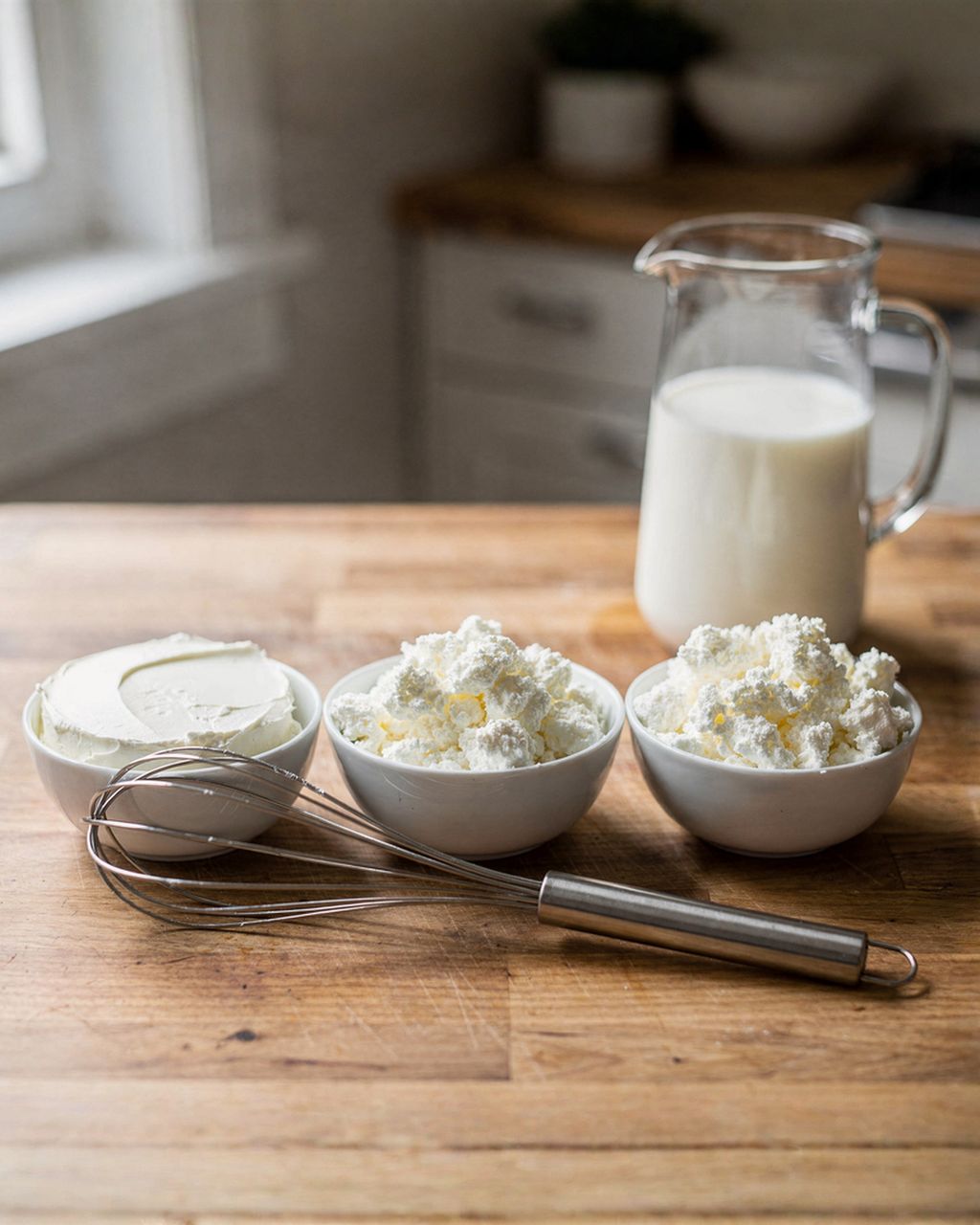
For strawberry bublanina, choose block-style, semi-fat curd cheese (tvaroh), and cap it at 250 g for a 30 × 20 cm (12 × 8 in) tray. Tub-style curd cheese desserts and whipped curd creams are diluted with cream and water — in bublanina, they just turn into a puddle.
Go for semi-fat curd cheese, 15–25% fat in dry matter — it holds its shape, stays creamy, and adds a touch of tang that wakes the strawberries up. Full-fat works too, but it weighs the batter down.
Czech regulation No. 397/2016 splits curd cheese by fat content like this, and the difference shows up in the bake:
Low-fat (max 5% fat in dry matter) — turns firm and crumbly once baked, giving the bublanina a rubbery texture.
Reduced-fat (max 15%) — usable, but a bit flat in flavour.
Semi-fat (15–25%) — the best balance for bublanina.
Full-fat (at least 38%) — creamiest, but heavy; cut the amount by a quarter or it'll drag the batter down.
The 25–38% band isn't officially named, so cheeses that fall there are just sold by their fat percentage on the label. In practice they behave like full-fat: creamy but heavy — scale them back the same way and make up the difference with extra batter.
Draining squeezes 20–40 g of whey out of a block of curd cheese — exactly the water that would otherwise soak the bottom of your bake. Spread the curd cheese over doubled cheesecloth or a fine sieve, let it drain 30 minutes in the fridge, and don't throw the whey away — it's great in pancake batter or bread dough.
Then give it a quick whip with a fork along with a spoonful of sugar, vanilla seeds, and the zest of half a lemon. The lemon isn't there for lemon flavour — it's there so the curd cheese doesn't taste bland: the acidity pulls out aroma from the strawberries that baking would otherwise mute.
Curd cheese for baked bublanina, mascarpone for no-bake desserts. Mascarpone is around 40% fat with no whey, so it melts away in the oven and you lose those creamy white pockets that are the whole point of adding curd cheese to bublanina in the first place. Save mascarpone for things that don't get baked — like spring strawberry and mascarpone tartlets.
A good middle ground: two-thirds drained curd cheese to one-third mascarpone — mascarpone's creaminess with the structure of curd cheese.
What makes bublanina light isn't baking powder — it's the air trapped in whipped egg whites, and that air can be wrecked in three ways: whipping badly, folding in flour roughly, and letting the batter sit around. Here's the method that actually holds:
Whip egg whites with salt to soft peaks, then add sugar.
Beat yolks with the fat separately, then fold together gently.
Fold in sifted flour in three additions, using a spatula from the bottom up.
Straight into the tin, straight into a preheated oven.
Add a few drops of lemon juice (or a pinch of cream of tartar) before the whites start to foam — an acidic environment gives the foam more volume and stability. Save the salt for the yolk mixture; in the whites it just slows down whipping and lowers stability. Sugar, on the other hand, only goes in once the whites hold soft peaks — add it too early and it binds water, making the whites take much longer to whip and much harder to get right.
Small details that matter more than they seem:
Bowl and beaters completely grease-free. Even a trace of fat or a speck of yolk will stop the whites from whipping properly.
Room-temperature egg whites — take the eggs out of the fridge at least 30 minutes ahead.
Don't overwhip. If it starts breaking into clumps with a watery layer along the sides, it's gone too far and will collapse once folded into the batter.
Add sifted flour in three batches and work it in with a spatula, bottom to top, not with a mixer. Every turn of the beaters knocks out volume you worked hard to build up.
Plain flour works well for strawberry bublanina with about a fifth of it swapped for fine semolina flour (polohrubá) — it gives the crumb a bit more structure to carry the wet fruit. Swapping one tablespoon of flour for cornstarch lightens the crumb while also soaking up moisture from the strawberries — both work in your favour here.
A small bit of history that still holds up: interwar hotelier Karel Šroubek weighed his bublanina by the eggs — however much the eggs weighed, that's how much flour, sugar and fat went in. If you're ever unsure of the ratio, weigh the eggs in their shells and measure the rest against that.
Don't fold the curd cheese into the batter — spoon it in clumps onto the batter once it's already in the tin, then just lightly swirl with the tip of a knife. Folded in, curd cheese makes the batter denser and the bublanina stays flat; spooned on in clumps, it creates creamy pockets that meet the strawberries in every bite.
And above all: as soon as the batter is ready, it goes into the oven. Whipped egg whites start deflating within minutes, so grease your tin and preheat the oven before you even crack an egg.
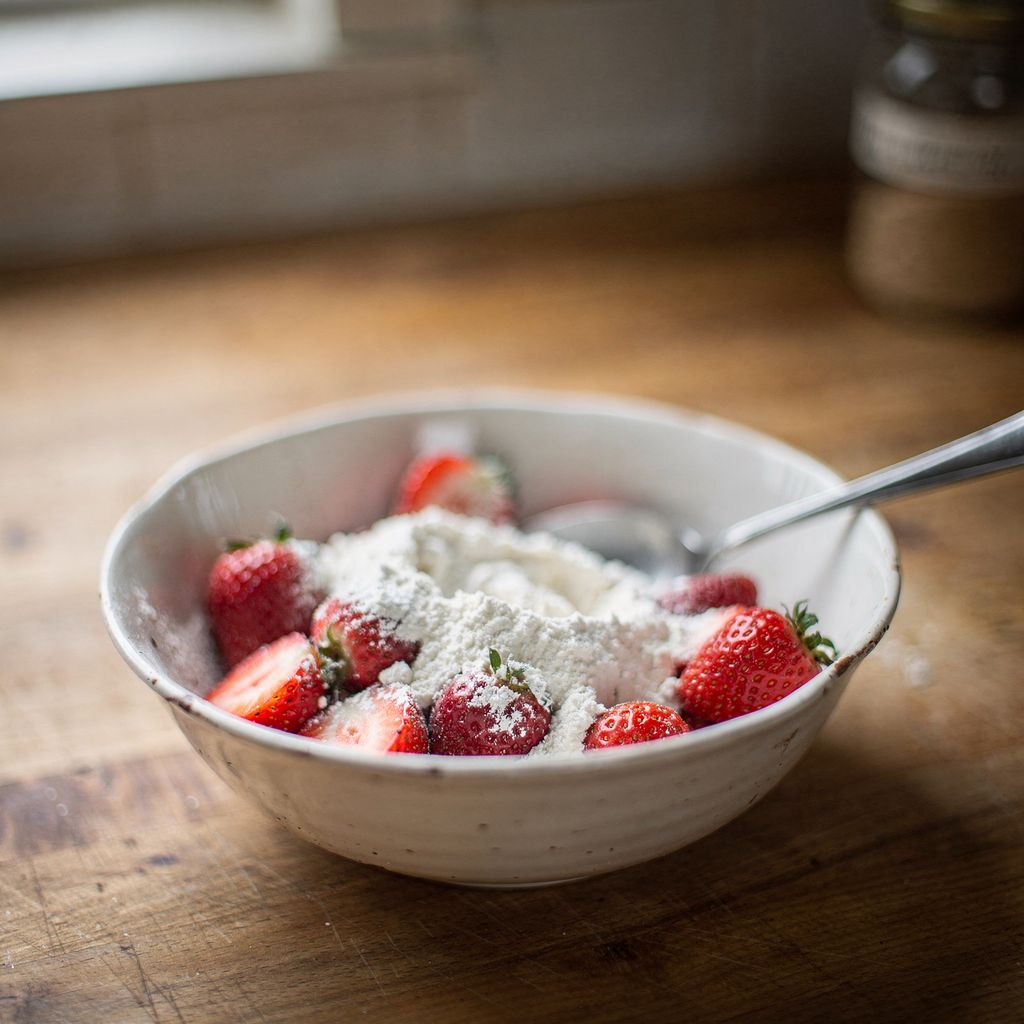
Halve the strawberries (quarter the large ones), toss them in a spoonful of fine semolina flour or cornstarch, and place them on top of the batter, cut side up. The flour coating soaks up surface moisture and roughens the fruit's surface so it doesn't slide down into the loose batter — an old kitchen trick with a perfectly logical explanation.
A few more things that help:
Cut side up. Juice then runs onto the surface where it evaporates, rather than seeping into the crumb.
Don't slice them thin. Thin slices turn to mush; halves hold their shape.
Don't overload the tray. For a 30 × 20 cm (12 × 8 in) tray, use 400–500 g of strawberries. More fruit doesn't mean a better bublanina — it means a wetter one.
Add sugar only after baking. Sprinkled on raw strawberries beforehand, it draws out their juice by osmosis before they even hit the oven.
Bake at 170°C/340°F (conventional top and bottom heat) or 150°C/300°F fan, for roughly 35–45 minutes in a 30 × 20 cm (12 × 8 in) tray. Classic cherry bublanina recipes call for 180°C/355°F and 25–35 minutes, but strawberries with curd cheese need a lower temperature and longer time — if the surface sets too soon, the moisture stays trapped inside and the centre turns gluey.
Always preheat the oven thoroughly — bublanina doesn't tolerate a lukewarm start or a temperature shock. And don't open the oven for the first 25 minutes; every time you open it, you knock down both the temperature and the volume you worked to whip up.
Poke a skewer between the strawberries, not into them — the fruit itself will always come out wet. A finished bublanina leaves just a few moist crumbs on the skewer, no liquid batter.
Two more clues: the edges start pulling away from the sides of the tin, and the surface springs back when you press it lightly with a finger. If a dent stays, give it another five minutes.
A bit of sinking is normal for traditional bublanina, not a mistake. This poured sponge batter has no raising agent at all — it's held up purely by air and steam, and once both cool down, the volume settles back a notch. It only stays fully puffed while it's hot.
Still, you can soften the drop:
Let it rest 10 minutes in the switched-off oven with the door slightly ajar before taking it out.
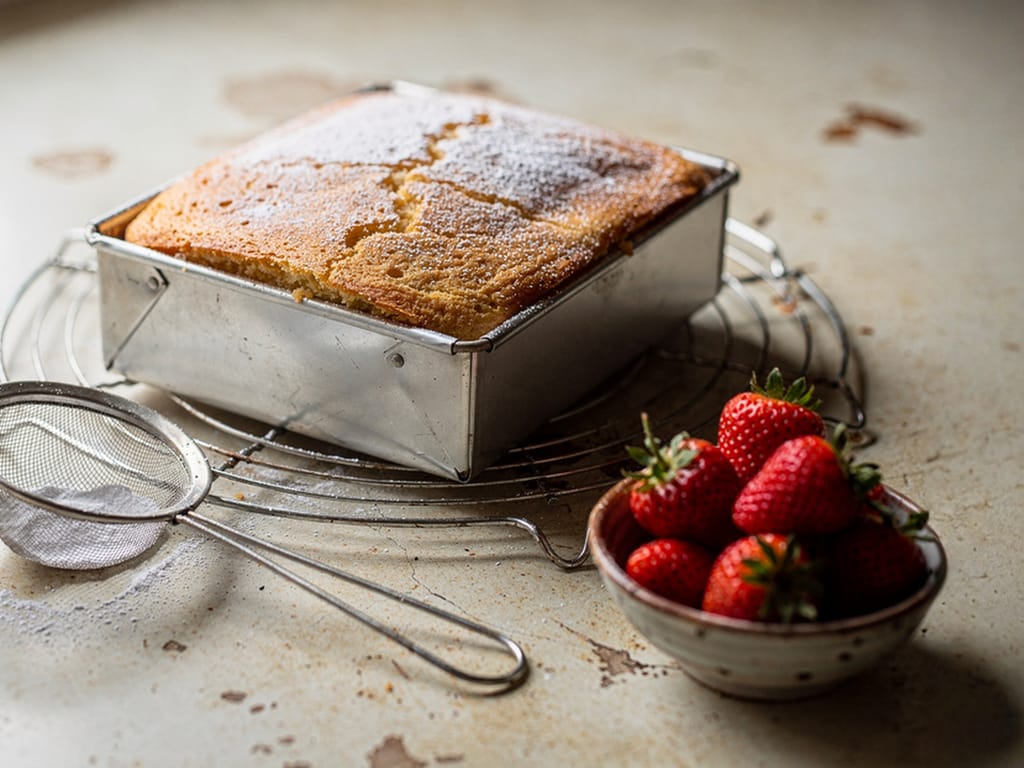
Cool it on a wire rack, not on the tray — otherwise steam condenses underneath and softens the base.
For guaranteed height, add half a teaspoon of baking powder to the flour. With curd cheese and strawberries in the mix, that's not cheating — it's insurance.
Sprinkle frozen strawberries onto the batter straight from the freezer, still frozen and tossed in one to two teaspoons of cornstarch. Thawed strawberries release all their juice before baking even starts, turning your bublanina into more of a pudding — which is exactly why the usual advice to "let them drain" needs flipping on its head here.
Two adjustments from the fresh-fruit method:
Drop the temperature to 160°C/320°F and bake 5–10 minutes longer. Frozen fruit cools the surrounding batter, and at a higher temperature the surface would burn before the centre finishes cooking.
Add an extra tablespoon of flour to the batter so it has more to bind.
Outside the season, it's worth keeping your own stash — we cover how to freeze strawberries without them turning mushy in our article on preserving summer fruit without sugar. Czech field strawberries are only really around from late May/early June through mid-July, greenhouse ones from April — the rest of the year, the freezer is your only honest option.
You can riff on the base recipe four ways: a crunchy crumble topping, yoghurt or buttermilk batter instead of whipped egg whites, a fruit mix (strawberries plus rhubarb or raspberries), and a cup-measure ratio if you'd rather not weigh anything.
Crumble is smarter with strawberries than it sounds: the butter, sugar and flour on top form a layer that soaks up some of the juice rising from the fruit, so the bublanina looks better once it's cooled. Yoghurt or buttermilk batter, meanwhile, contains acid that reacts with the raising agent — it turns out more tender and forgives more mistakes than whipped egg whites do.
Tart rhubarb pairs beautifully with strawberries; the same combination shows up in rhubarb and strawberry strudel with a buttery crumble.
Foolproof bubbly cake (bublanina)
The basic poured bublanina batter, ready for you to top with strawberries and curd cheese
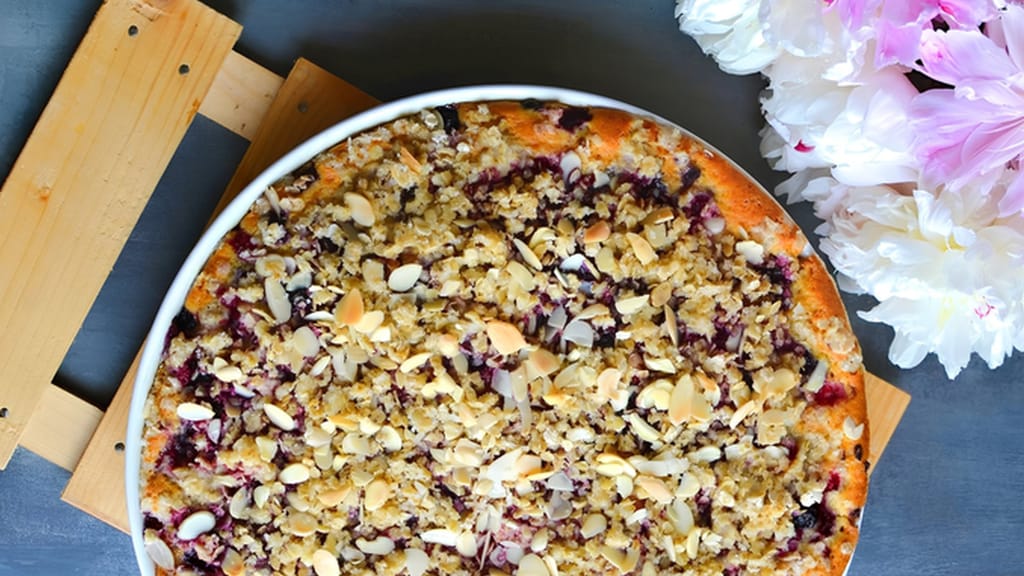
Summer fruit bubblanina with crunchy crumble
Bublanina with summer fruit and a crunchy crumble that soaks up the strawberry juice
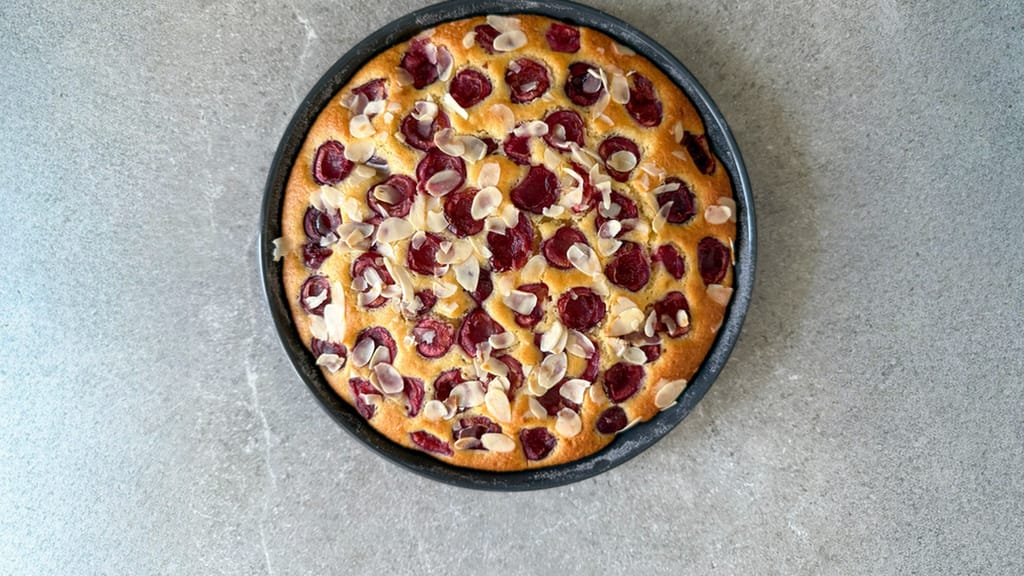
Soft & fluffy yogurt bublanina with fruit
Tender yoghurt bublanina with fruit — a no-whip version
Serve it warm, about an hour after baking — that's the point when the crumb is still soft but the curd cheese pockets have set and won't run all over the plate. Hot bublanina falls apart; cold, it tastes flat.
A few practical storage notes:
Add icing sugar only just before serving. On a moist surface it dissolves into blotches within ten minutes.
With curd cheese, it belongs in the fridge and should be eaten within 48 hours; without curd cheese, it keeps 3 days at room temperature in a sealed container.
Cover with a tea towel, not plastic wrap. Wrap traps steam and leaves the surface damp.
A slice pairs well with lightly sweetened whipped cream or a scoop of homemade strawberry basil and vanilla ice cream if you've got extra strawberries left over from shopping. For plating ideas, we've got a whole guide on serving desserts.
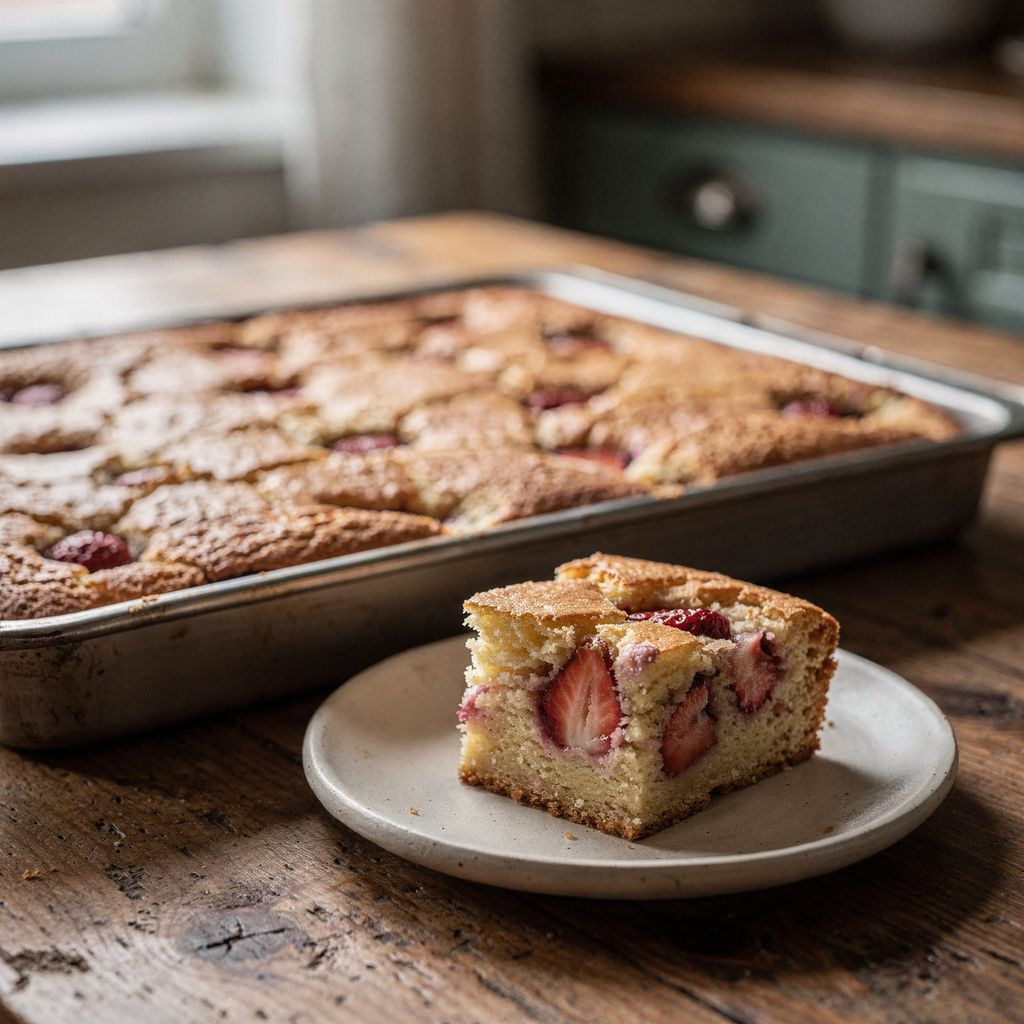
The quantities in this article are built for a 30 × 20 cm (12 × 8 in) tray; for any other tin, scale the batter and fruit to match the surface area. A round 26 cm (10 in) tin has almost the same area as that tray, so keep the quantities as they are. A large stovetop-sized baking sheet (40 × 30 cm / 16 × 12 in) has double the area — double the batter, strawberries and curd cheese, and add 5–10 minutes to the bake. A deeper cake tin, on the other hand, needs a lower temperature (160°C/320°F) and longer baking, or the centre will stay wet. The raw batter layer should never be more than 2 cm (¾ in) deep, or the strawberries won't have a chance of staying on top.
Well-drained Greek yoghurt or skyr are the best substitutes for curd cheese, but expect them to run more in the oven. Skyr is very dry and can turn firm once baked — stir in a spoonful of sour cream to soften it. Soft cheese like Philadelphia tastes good but won't hold its shape; it melts into the batter, so you lose the creamy pockets. Let Greek yoghurt drain for at least an hour, or you'll be adding back exactly the water you're trying to get rid of.
Strawberries lose both colour and aroma to heat — the anthocyanins that give them their red colour start breaking down at surprisingly low temperatures, so the longer and hotter you bake, the more the juice fades to a brick colour. You can limit this with a shorter bake at a lower temperature, a touch of acid (lemon zest or juice in the curd cheese), and by placing the strawberries only on top of the batter rather than mixing them in. Top up the flavour afterwards with a few fresh strawberry halves arranged on the cooled bublanina.
You can freeze it, but expect some loss of texture — as the strawberries thaw, their water breaks down the crumb and the bublanina ends up soggier. Cut it into portions, wrap each one separately, and freeze for no longer than a month. Thaw in the fridge, then warm it for 8–10 minutes in a 150°C/300°F oven to dry out the surface. Bublanina without curd cheese freezes noticeably better.
Yes — swap the flour for a 1:1 gluten-free baking blend and add half a teaspoon of psyllium or xanthan gum per 150 g of flour. Gluten-free flours absorb moisture differently, so let the batter rest for 10 minutes before baking and bake 5 minutes longer at 165°C/330°F. Whipped egg whites work exactly the same way, since gluten has nothing to do with them — you won't lose any lightness.
Wash them, but leave the stems on, and dry them thoroughly afterwards. A strawberry without its stem soaks up water like a sponge and then releases it straight into the batter — so only remove the stem after washing and drying. Let them dry on a towel for at least 15 minutes before halving and coating in flour — a flour coating won't stick to a wet surface.
One recipe worth heating the oven for, one tip, and one deal from the shop. Nothing else.