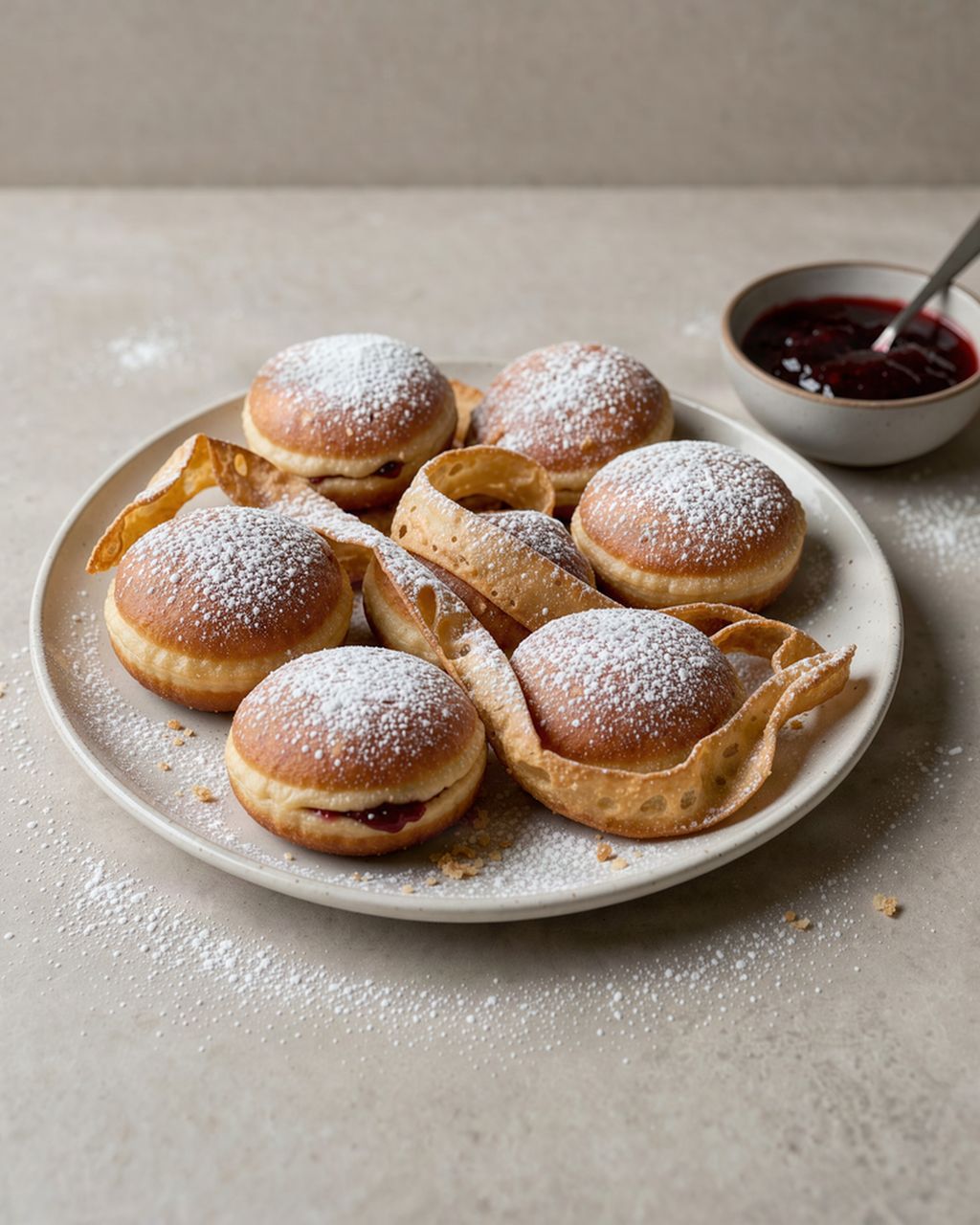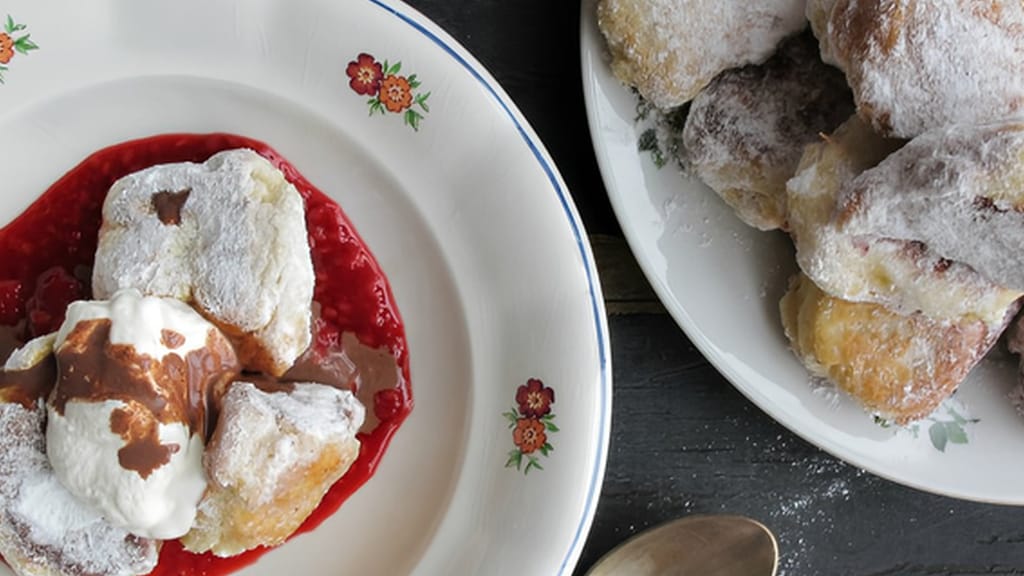
Cottage cheese doughnuts with raspberry sauce
No-Yeast Quark, Yogurt or Kefir Doughnut Bites: Why They Hold Their Shape and What Temperature to Fry Them At
Updated Nov 17, 2026
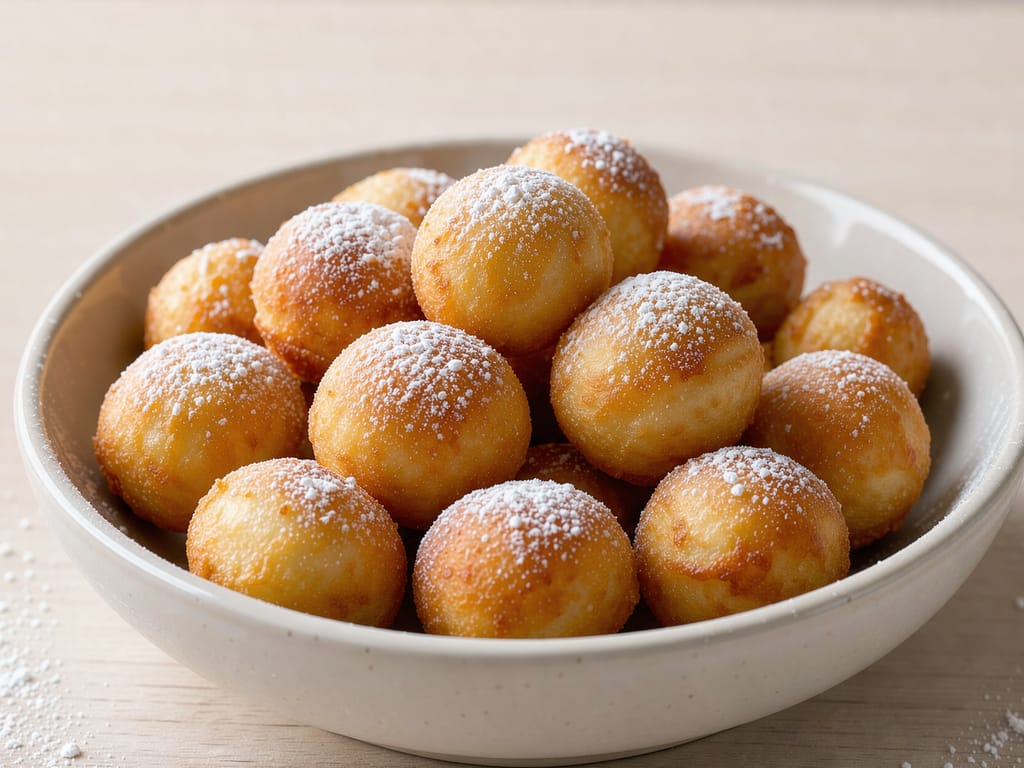
For no-yeast quark doughnuts, you need 250 g quark (tvaroh, a Czech fresh curd cheese), 250 g semi-coarse flour (Czech polohrubá, slightly grittier than all-purpose), 2 eggs and 1 packet of baking powder (12 g), and you fry them at 165–170°C (330–340°F). That makes about 40 walnut-sized doughnut bites, meaning balls about 3 cm across, each made from about 16 g of dough. We fry them a little cooler than yeast doughnuts are usually fried: the dense quark dough cooks through more slowly, and in oil that is too hot the outside would brown before the center is done. No yeast, no waiting: from mixing bowl to sugar on your fingers takes about three quarters of an hour. Below you'll find why they crack, why they sometimes stay raw inside or soak up oil, whether to shape them with a spoon or by hand, and what changes when you swap the quark for yogurt or kefir.
For about 40 walnut-sized quark doughnut bites, the ratio is simple: quark and flour 1:1, with 2 eggs and 1 packet of baking powder for every 250 g of quark. This batch makes about 650 g of dough, or roughly 40 balls 3 cm across, at about 16 g each.
250 g quark – ideally full-fat, from a tub; if it's very wet, let it drain for a while
250 g semi-coarse flour (all-purpose (plain) flour works too, but the dough will be a touch stickier)
2 eggs
1 packet of baking powder (12 g)
40–50 g sugar, a tablespoon of vanilla sugar, a pinch of salt and, if you like, grated lemon zest
Here the quark does the job that yeast and milk do in yeast doughnuts: it adds moisture, protein that firms up the dough after frying, and a gentle tang that helps the baking powder lift the dough faster. That's why the doughnut bites hold their shape even without rising, and why you shouldn't knead the dough for long. Just bring it together; the more you work it, the tougher and chewier the bites will be.
For a tested method with exact amounts and a raspberry dipping sauce, see our recipe for quark doughnut bites with raspberry sauce.
Cottage cheese doughnuts with raspberry sauce
No-yeast quark doughnut bites with raspberry sauce
Seasonal baking plans, tested recipes and kitchen tricks that save you time. Unsubscribe in one click.
Fry quark doughnut bites at 165–170°C (330–340°F) for about 3–4 minutes, turning them halfway. Yeast doughnuts are usually fried at 170–180°C (340–355°F); for these small quark bites, we've found it works better to go a little lower. Treat it as a practical guide, not a hard rule: depending on your pot, oil and the size of the balls, a degree or two higher or lower may suit better.
The reason is the density of the dough. A yeast doughnut is full of air and heat passes through it quickly. Quark dough is compact and moist, so the center takes longer to heat through. It also contains sugar and the milk proteins from the quark, which brown on the surface faster than plain yeast dough. In oil that's too hot, you easily end up with a dark brown outside and a gooey center.
Below 160°C (320°F) it's the other way around: the surface doesn't set fast enough, the dough soaks up oil and the bites turn out heavy and greasy. The 165–170°C range is the compromise where the bite cooks through to the center and stays golden outside.
Oil: a neutral oil that handles higher heat – canola or sunflower, at least 4–5 cm deep so the bites float
Size: a ball 3 cm across (about 16 g), no bigger – larger ones won't cook through
At a time: 5–6 pieces in an ordinary pot; each batch of cold dough cools the oil, so wait between batches until the temperature recovers
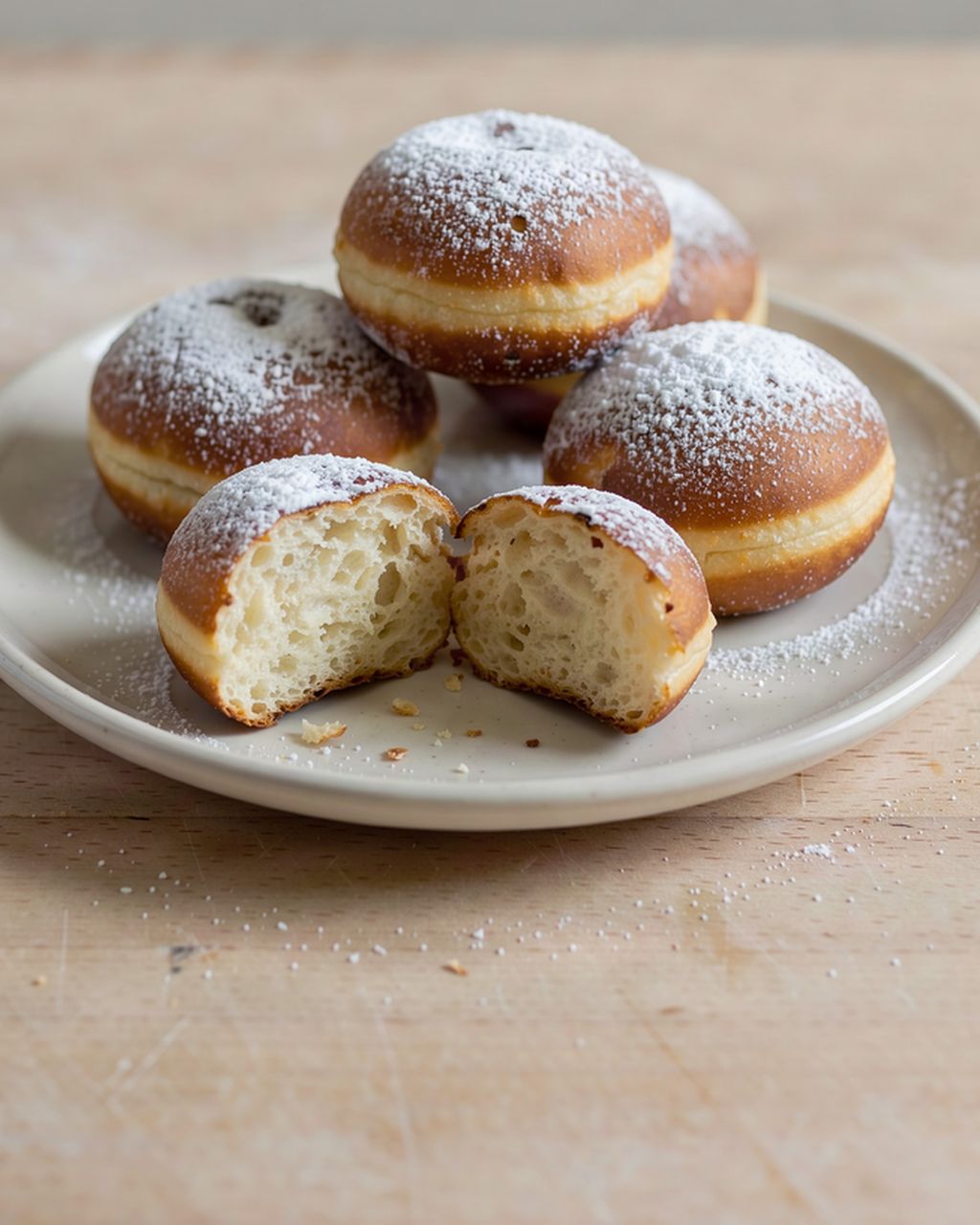
Check: always cut the first one open. The center should be tender and look dry, not shiny and sticky. After that, a toothpick is enough – it should come out clean
All three problems usually come down to the same thing: the wrong oil temperature, balls that are too big or an unbalanced dough. In detail:
They crack. A slight split on the side is normal for no-yeast bites – the baking powder keeps working in the oil, the surface has already set and the dough finds its way out. Big cracks, though, mean the oil is too hot (the crust sets too early), or there's too much baking powder or flour in the dough and it's dry. Hold 165–170°C and don't add flour "just in case."
They're raw inside. Either the oil is too hot and the surface browns before the center cooks, or the balls are too big. Make them 3 cm and lower the temperature. If the dough spreads, chill it for 15 minutes, but fry the cold balls a little longer and always cut the first one open.
They soak up oil. The oil is too cold – typically because you put too many pieces in the pot at once and the temperature dropped below 160°C (320°F). Fry in smaller batches and put the fried bites straight on a rack or paper towels to drain.
One more trap: quark that's too wet. A runny dough spreads into flat patties in the oil and absorbs more fat. The fix is to drain the quark, not to sprinkle in flour – that makes the bites tough.
It depends on the dough's thickness: shape soft, sticky dough with a spoon, and roll firmer dough between your palms.
Spoon – faster, and the dough can stay softer, so the bites are more tender. Take two spoons and dip them in the oil (not in water – a drop of water in hot oil spatters), scoop up some dough with one and push it into the pot with the other. The bites will be irregular, with little "tails" that fry up crisp. That's the best part of them.
Hands – the balls come out even and nicely round, but the dough has to be firm enough not to stick to your palms. Rub your hands with oil and just lightly round the balls, without squeezing them. If you have to add a lot of flour to be able to roll them, you pay for it with tougher bites.
If you want the bites for a festive platter rather than a bowl, roll them; for flavor and speed, choose the spoon.
Yogurt and kefir can both replace quark, but the dough will be thinner, needs more flour and can only be shaped with a spoon. Quark is thick and supplies protein that helps the bites hold their shape; yogurt and kefir are mostly liquid.
Plain yogurt – the closest substitute. Thick (Greek-style) yogurt behaves almost like quark; regular plain yogurt needs more flour, roughly 300 g flour to 250 g yogurt. The bites are fluffier and less "cheesy" than the quark ones.
Kefir – the thinnest, and the dough is more of a thick batter. Add enough flour that the dough falls from the spoon in clumps rather than running. Kefir is acidic, so it helps to add a pinch of baking soda alongside the baking powder – the acid activates it and the bites rise more. The result is the lightest, but it soaks up the most oil, so watch the temperature especially closely with kefir.
Cup version – the amounts can be measured with a cup (for example a cup of yogurt, two and a half cups of flour, an egg and baking powder). It's convenient but less precise; if the dough spreads, add flour a spoonful at a time.
The same temperature of 165–170°C and the same ball size apply to all the variations.
Roll the fried bites in sugar while they're still warm – the sugar sticks to the slightly greasy surface but won't cling to cooled bites.
The most flavor comes from homemade vanilla sugar made with real vanilla. Scrape the seeds from a vanilla bean, mix them into granulated or powdered sugar and tuck the scraped pod into the sugar – in a few days it will scent all of it. Uganda vanilla beans with a pronounced, creamy aroma are a good fit, or the more floral Tahitian vanilla beans. You can also put the seeds straight into the dough.
The classic partner for quark doughnut bites is cinnamon sugar or a raspberry dipping sauce. If you'd like to glaze the bites, you'll find tips in our article on glaze for donuts and doughnuts.
Doughnuts are part of masopust (the Czech pre-Lent carnival), and no-yeast quark ones are the quick version when you don't have time for dough to rise. They're fried mostly in the last days before Shrove Tuesday, when fat, eggs and dairy were traditionally used up before the fast. For what else gets baked and cooked at that time, see the article masopust at home, and for more inspiration browse the recipes tagged masopust.
If you'd like to avoid frying altogether, reach for a yeast dough (quark dough sticks and spreads in hot air) and take a look at air fryer doughnuts or baked doughnuts.
Full-fat quark sold in a tub works best: it's smooth, blends well with the flour and makes the doughnut bites more tender. Block quark needs to be pressed through a sieve or blended first, otherwise you'll get lumps in the dough. If the quark is very wet, let it drain in a sieve for 15–30 minutes so you don't have to add extra flour.
Better not. Baking powder starts working as soon as it meets a wet ingredient, and overnight in the fridge it loses some of its power, so the doughnut bites would turn out denser and tougher. You can make the dough at most an hour or two ahead and keep it covered in the fridge. What you can prepare in advance is the dry mix (flour, baking powder, sugar) and, separately, the quark with the eggs.
They are best on the day they're fried. Cover whatever you don't eat by evening and keep it in the fridge, and eat it by the next day. The next day, refresh them for 3–4 minutes in a 160°C (320°F) oven or briefly in an air fryer; the microwave makes them soft. Fried and cooled doughnut bites can also be frozen, then briefly warmed in the oven after thawing, and only then rolled in sugar.
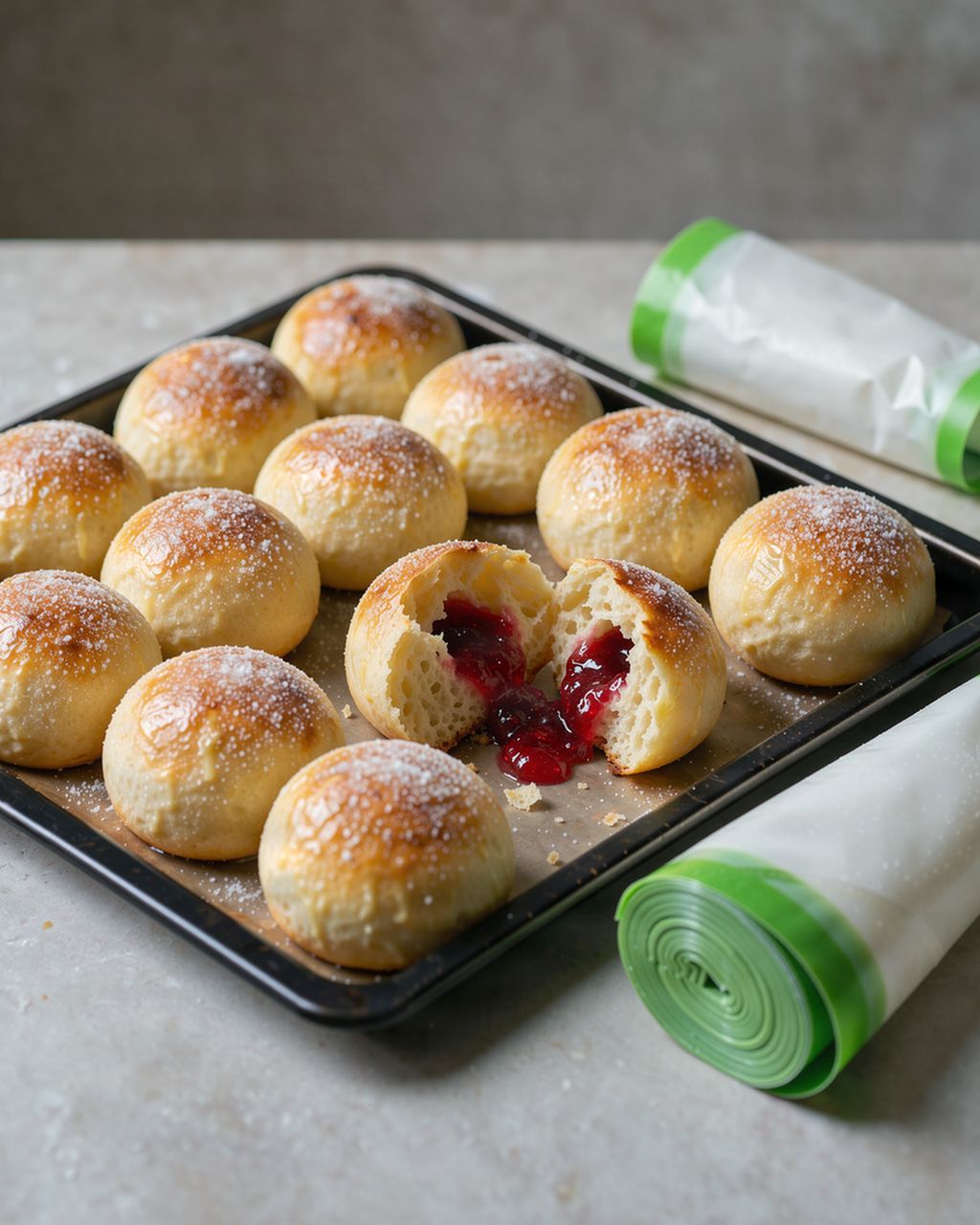
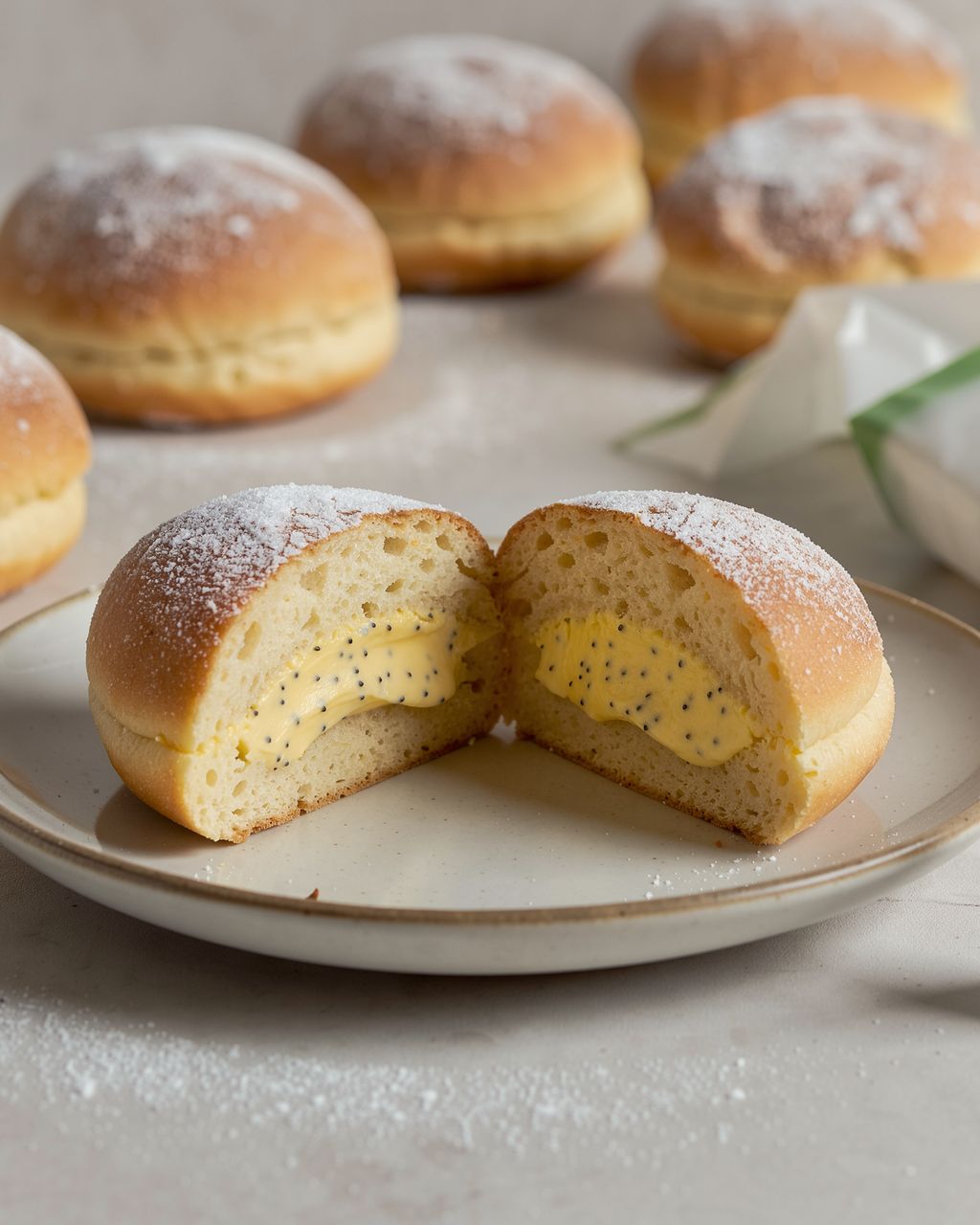
Yes, but only after frying: filling inside raw dough would cook and leak out during frying. Let jam cool a little and cream cool completely, then pipe the filling in with a piping bag fitted with a long, narrow tip. Doughnut bites with cream filling should go in the fridge within 2 hours at most. Because they're small, a teaspoon of filling in each is enough.
No. Quark doughnut bites are denser, moister and slightly tangy, while yeast doughnuts are light and soft like bread. On the other hand, the quark ones take about three quarters of an hour with no waiting for dough to rise. They're more like small fried cakes than a replacement for the classic jam-filled Shrovetide doughnut.
One recipe worth heating the oven for, one tip, and one deal from the shop. Nothing else.